
WEF NEXUS MODELS DSTs Daniel Gilmour Ruth Falconer
- Slides: 22
WEF NEXUS: MODELS & DST’s Daniel Gilmour, Ruth Falconer, , Abertay University Liz Varga, Cranfield University
Talk outline • • • Landscape of nexus models and tools Discipline perspectives Challenges in NEXUS modelling & some examples Challenges in NEXUS DST’s & some examples Summary
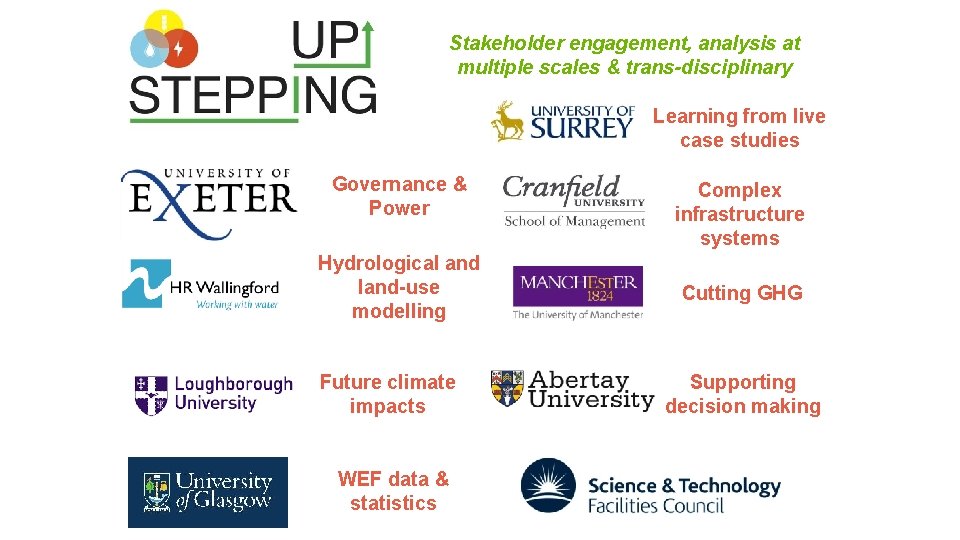
Stakeholder engagement, analysis at multiple scales & trans-disciplinary Learning from live case studies Governance & Power Hydrological and land-use modelling Future climate impacts WEF data & statistics Complex infrastructure systems Cutting GHG Supporting decision making
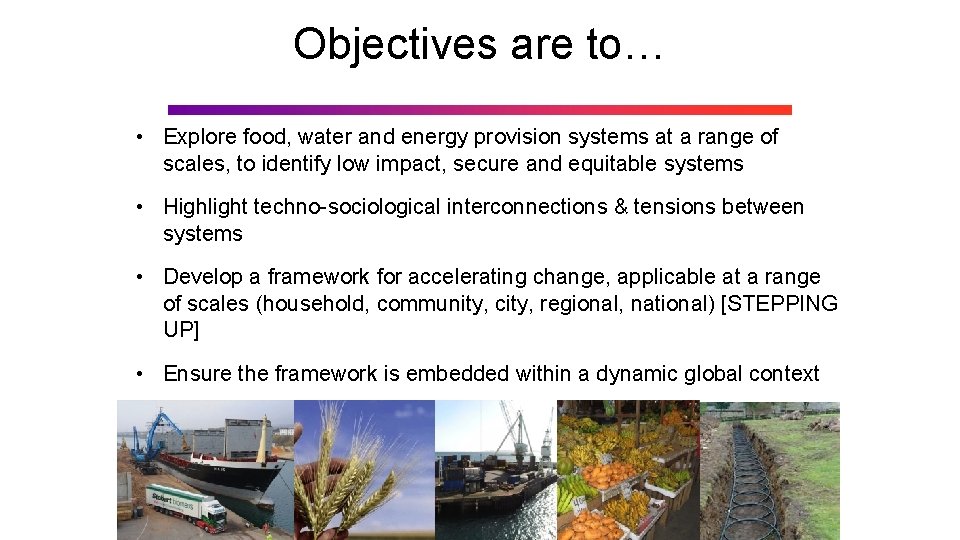
Objectives are to… • Explore food, water and energy provision systems at a range of scales, to identify low impact, secure and equitable systems • Highlight techno-sociological interconnections & tensions between systems • Develop a framework for accelerating change, applicable at a range of scales (household, community, city, regional, national) [STEPPING UP] • Ensure the framework is embedded within a dynamic global context • Involve stakeholders throughout 05/05/2017 4
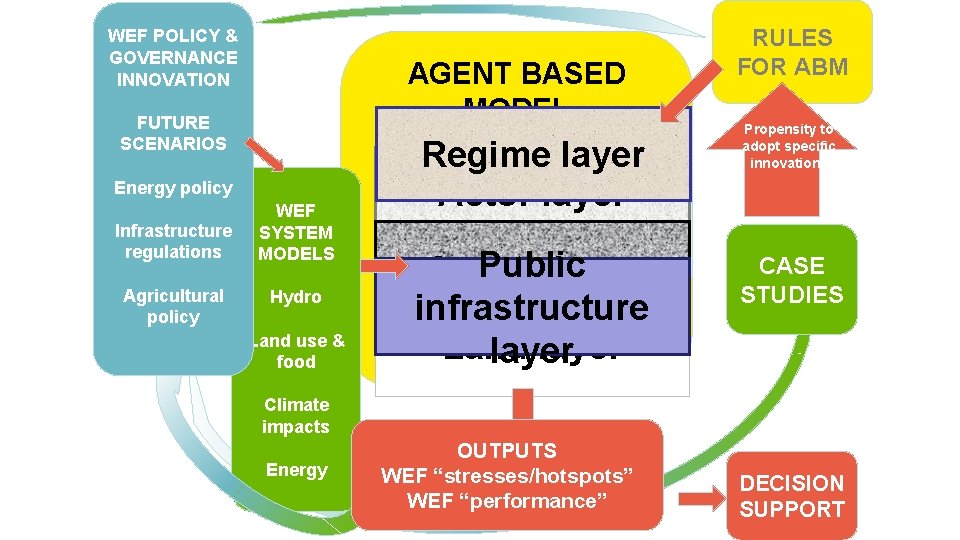
Architecture of the research 5
WEF POLICY & GOVERNANCE INNOVATION AGENT BASED MODEL FUTURE SCENARIOS Energy policy Infrastructure regulations Agricultural policy WEF SYSTEM MODELS Hydro Land use & food Regime layer Actor layer Resource layer Public Assets layer infrastructure Land layer RULES FOR ABM Propensity to adopt specific innovations CASE STUDIES Climate impacts Energy OUTPUTS WEF “stresses/hotspots” WEF “performance” DECISION SUPPORT
Nexus Models • At a practical level, a suite of techniques and guidance documents exist to understand manage WEF – Categorised as: Sustainability Assessment (SA), Modelling & Optimisation, and Visualisation of Nexus • Nexus models predominantly focus on: – Biophysical modelling of resource flows – Sustainability assessment models – Social simulation --- including policy driven and human disaggregated decision making
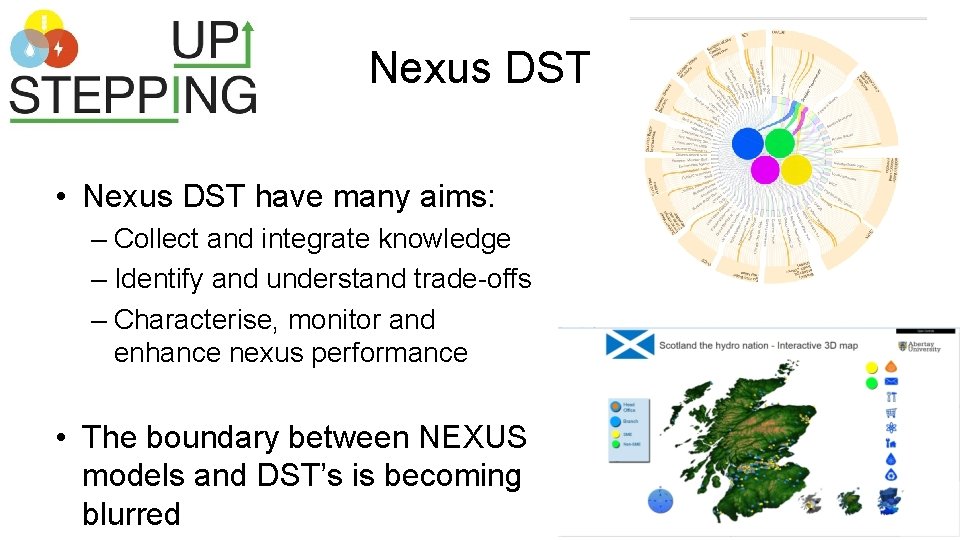
Nexus DST • Nexus DST have many aims: – Collect and integrate knowledge – Identify and understand trade-offs – Characterise, monitor and enhance nexus performance • The boundary between NEXUS models and DST’s is becoming blurred
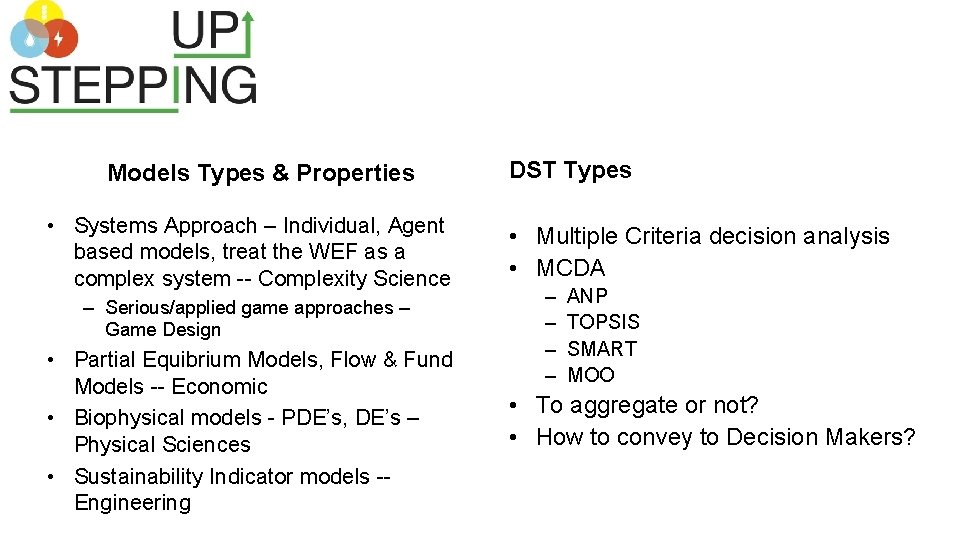
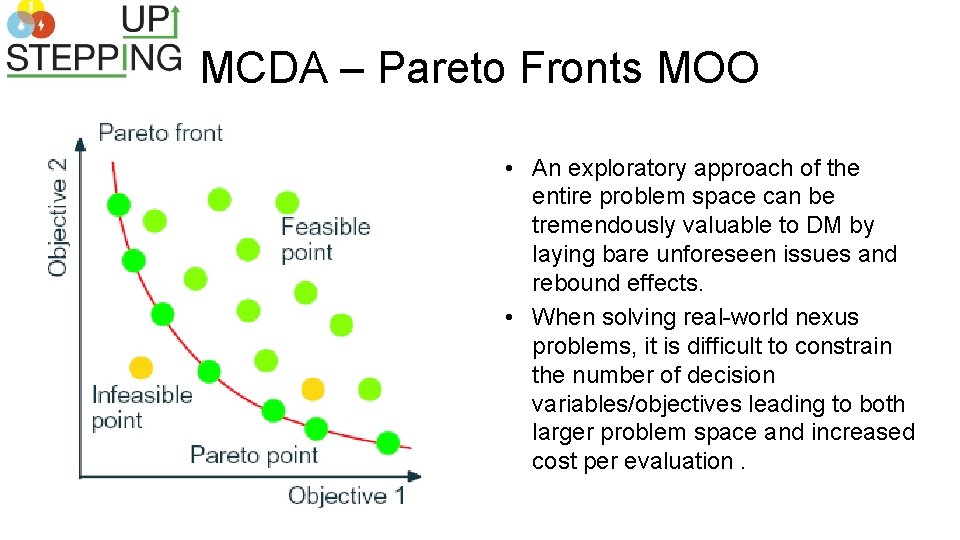
Models Types & Properties • Systems Approach – Individual, Agent based models, treat the WEF as a complex system -- Complexity Science – Serious/applied game approaches – Game Design • Partial Equibrium Models, Flow & Fund Models -- Economic • Biophysical models - PDE’s, DE’s – Physical Sciences • Sustainability Indicator models -- Engineering DST Types • Multiple Criteria decision analysis • MCDA – – ANP TOPSIS SMART MOO • To aggregate or not? • How to convey to Decision Makers?
Nexus Modelling Challenges • Complexity • Emergence, Self organisation, Adaptation, Feedbacks, nonlinearity • Data availability and accessibility is a key challenge for a nexus models & assessment • Communicate model findings • Which model?
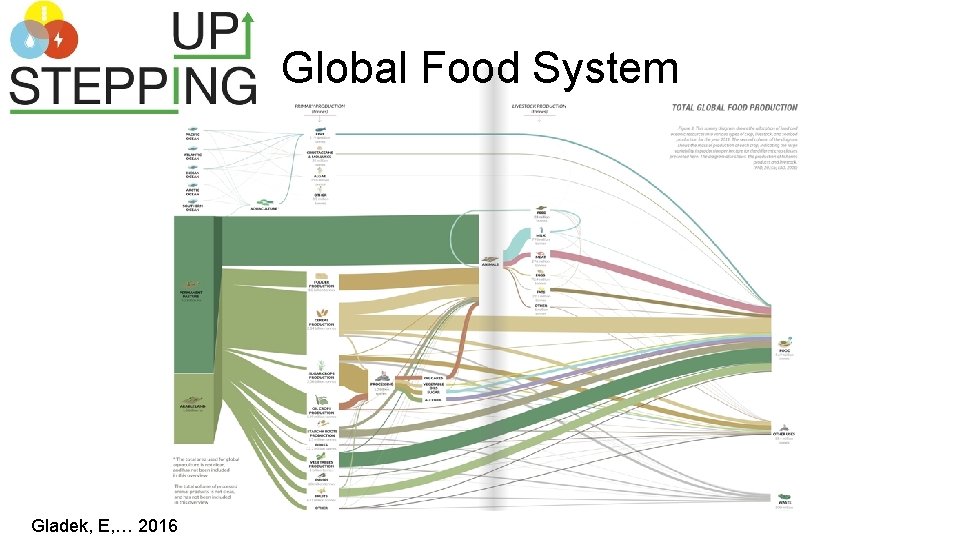
Global Food System Gladek, E, … 2016
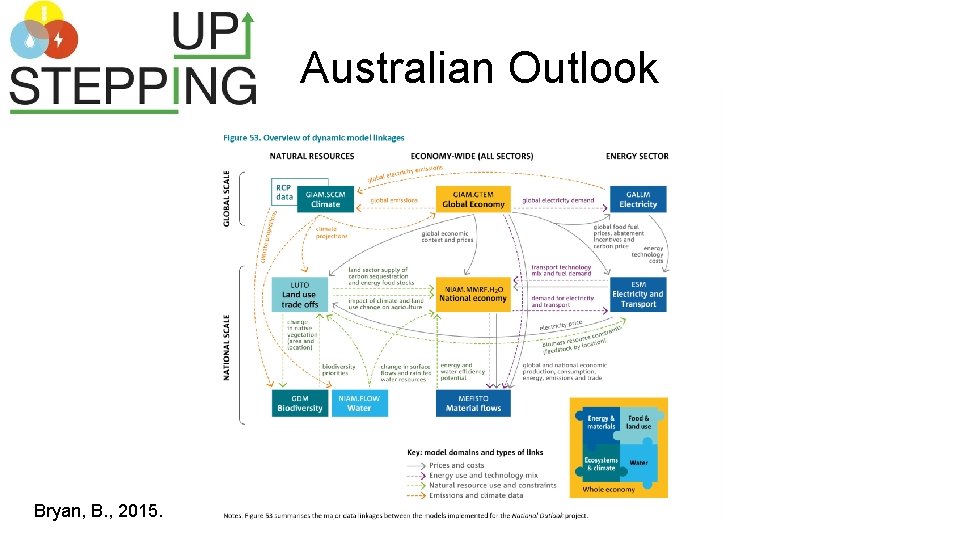
Australian Outlook Bryan, B. , 2015.
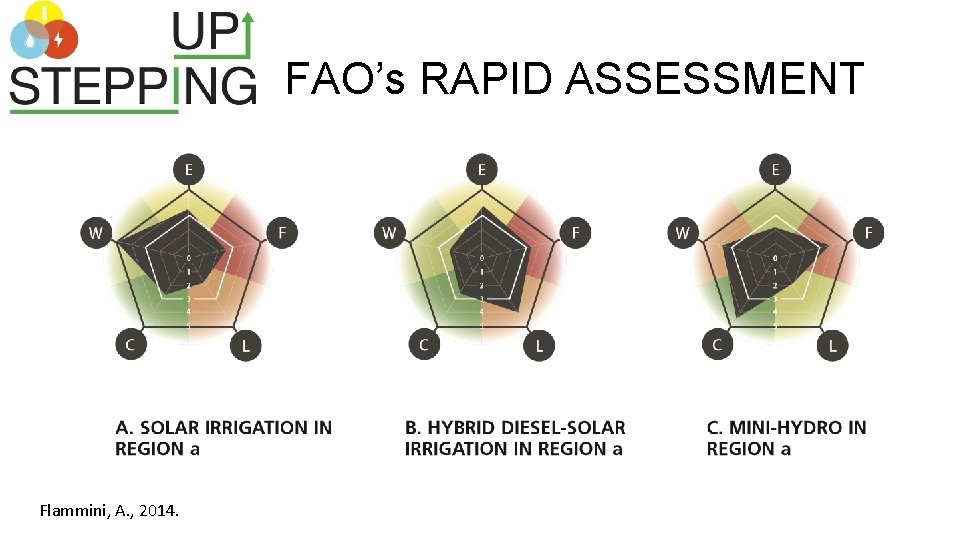
FAO’s RAPID ASSESSMENT Flammini, A. , 2014.
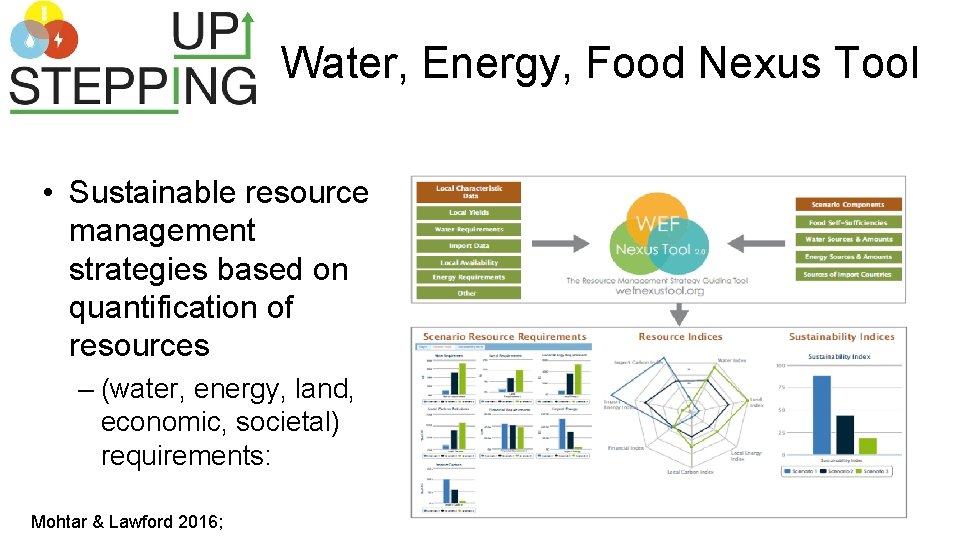
The Water, Energy, Food Nexus Tool • Sustainable resource management strategies based on quantification of resources – (water, energy, land, economic, societal) requirements: Mohtar & Lawford 2016;
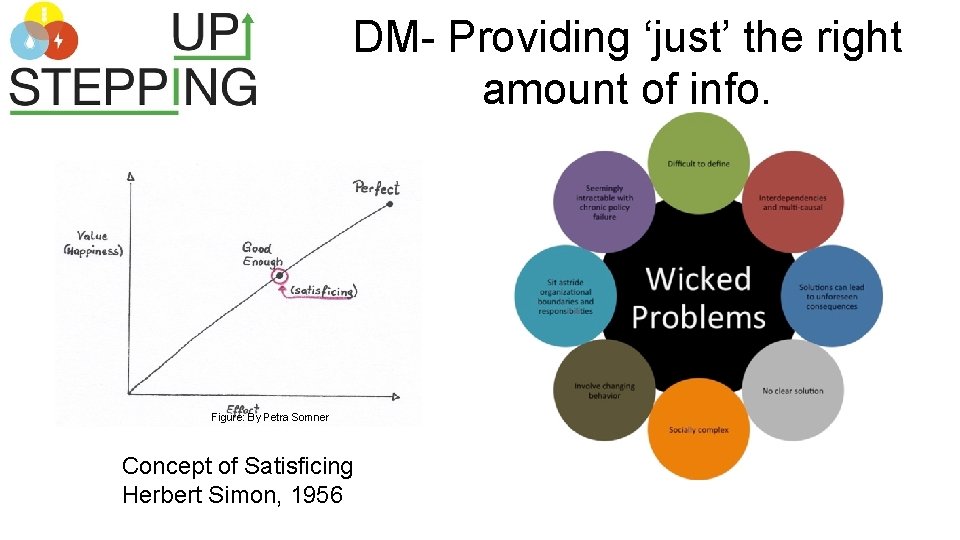
DM- Providing ‘just’ the right amount of info. Figure: By Petra Somner Concept of Satisficing Herbert Simon, 1956
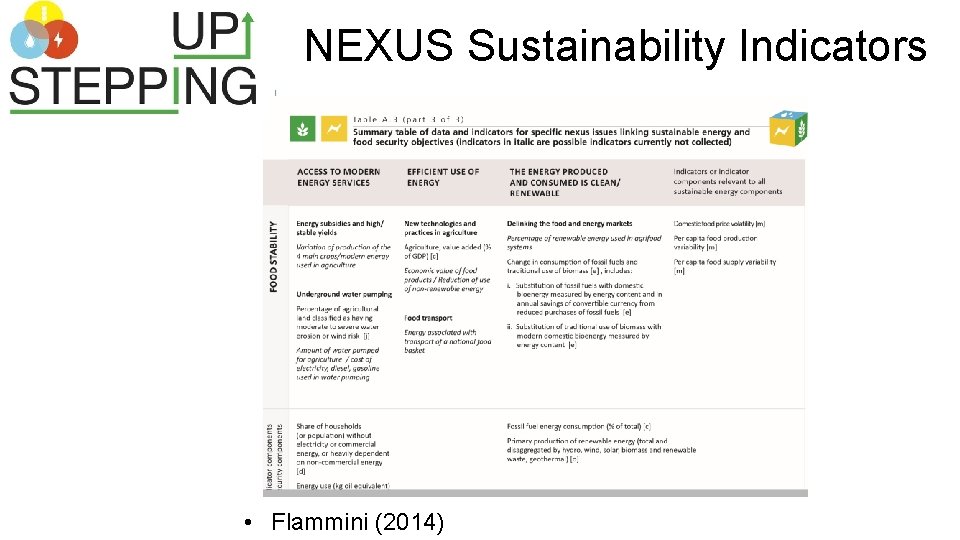
NEXUS Sustainability Indicators • Flammini (2014)
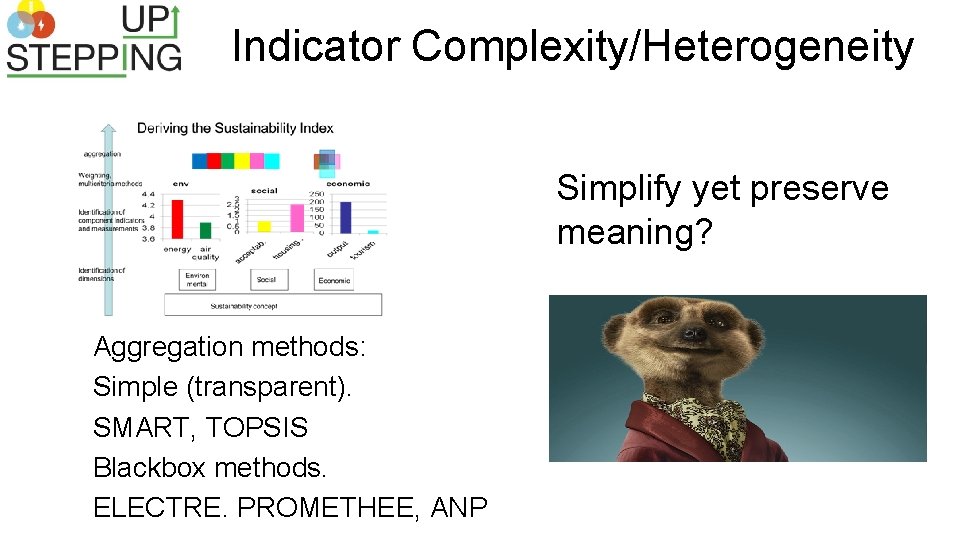
Indicator Complexity/Heterogeneity Simplify yet preserve meaning? Aggregation methods: Simple (transparent). SMART, TOPSIS Blackbox methods. ELECTRE. PROMETHEE, ANP
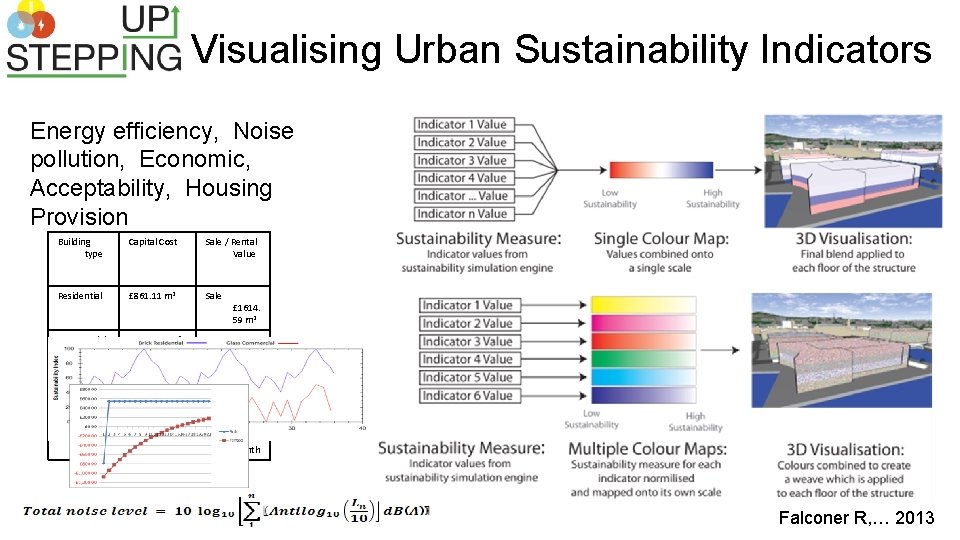
Visualising Urban Sustainability Indicators Energy efficiency, Noise pollution, Economic, Acceptability, Housing Provision Building type Capital Cost Sale / Rental Value Residential £ 861. 11 m 2 Sale Commercial £ 1184. 03 m 2 Rent £ 161. 46 m 2 per month Leisure £ 1345. 03 m 2 Rent £ 161. 46 m 2 per month Retail £ 1130. 21 m 2 Rent £ 134. 55 m 2 per month £ 1614. 59 m 2 Falconer R, … 2013
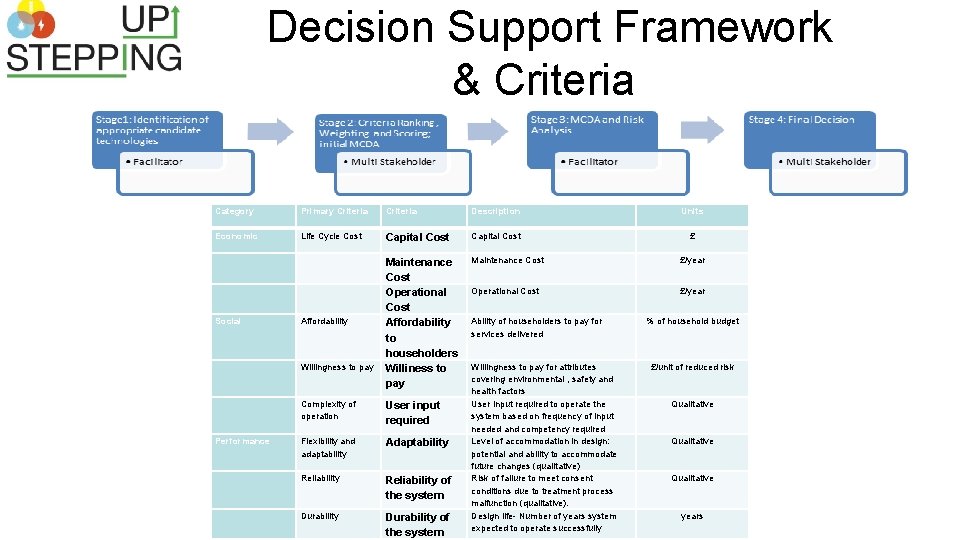
Decision Support Framework & Criteria Category Primary Criteria Description Economic Life Cycle Cost Capital Cost Maintenance Cost Social Affordability Willingness to pay Maintenance Cost Operational Cost Affordability to householders Williness to pay Complexity of operation User input required Performance Flexibility and adaptability Adaptability Reliability of the system Durability of the system Operational Cost Ability of householders to pay for services delivered Willingness to pay for attributes covering environmental , safety and health factors User input required to operate the system based on frequency of input needed and competency required Level of accommodation in design: potential and ability to accommodate future changes (qualitative) Risk of failure to meet consent conditions due to treatment process malfunction (qualitative). Design life- Number of years system expected to operate successfully Units £ £/year % of household budget £/unit of reduced risk Qualitative years
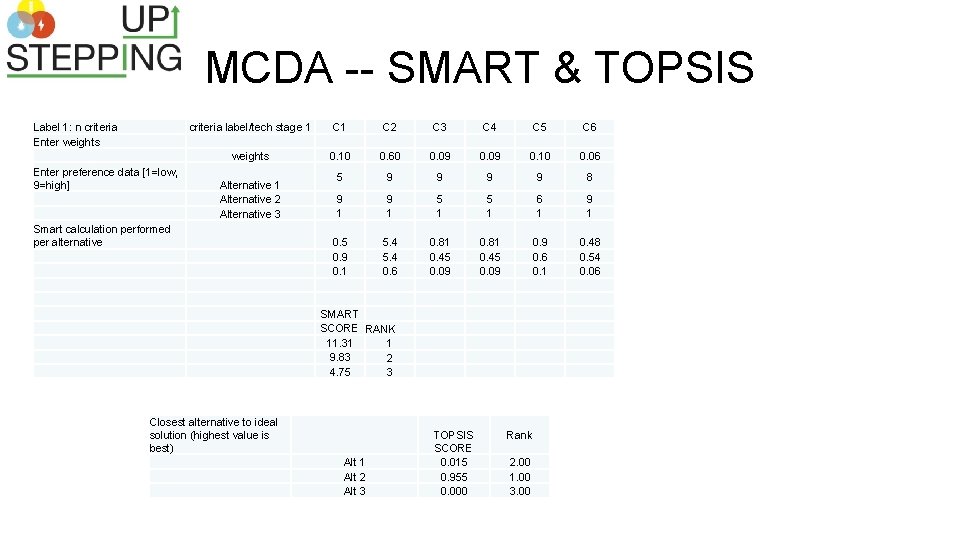
MCDA -- SMART & TOPSIS Label 1: n criteria Enter weights Enter preference data [1=low, 9=high] criteria label/tech stage 1 C 2 C 3 C 4 C 5 C 6 weights 0. 10 0. 60 0. 09 0. 10 0. 06 5 9 9 8 9 1 5 1 6 1 9 1 0. 5 0. 9 0. 1 5. 4 0. 6 0. 81 0. 45 0. 09 0. 6 0. 1 0. 48 0. 54 0. 06 Alternative 1 Alternative 2 Alternative 3 Smart calculation performed per alternative SMART SCORE RANK 11. 31 1 9. 83 2 4. 75 3 Closest alternative to ideal solution (highest value is best) Alt 1 Alt 2 Alt 3 TOPSIS SCORE 0. 015 0. 955 0. 000 Rank 2. 00 1. 00 3. 00
MCDA – Pareto Fronts MOO • An exploratory approach of the entire problem space can be tremendously valuable to DM by laying bare unforeseen issues and rebound effects. • When solving real-world nexus problems, it is difficult to constrain the number of decision variables/objectives leading to both larger problem space and increased cost per evaluation.
Summary • No silver bullet – method depends on the aim: understand, govern or enhance the nexus • Mixture of methods will be required reflecting the interdisciplinary nature of WEF problem. • Stakeholder engagement will be key in model/tool development as no one discipline can build a NEXUS model • Visualisation will be a key tool in conveying and understanding the complexity