
WEEKLY NOTES Open up a word document Title

- Slides: 45
WEEKLY NOTES Open up a word document Title it: 2/02 Weekly Notes Put a ✔ by your name
ASTRONOMY 101 Formation & The Members of our Solar System
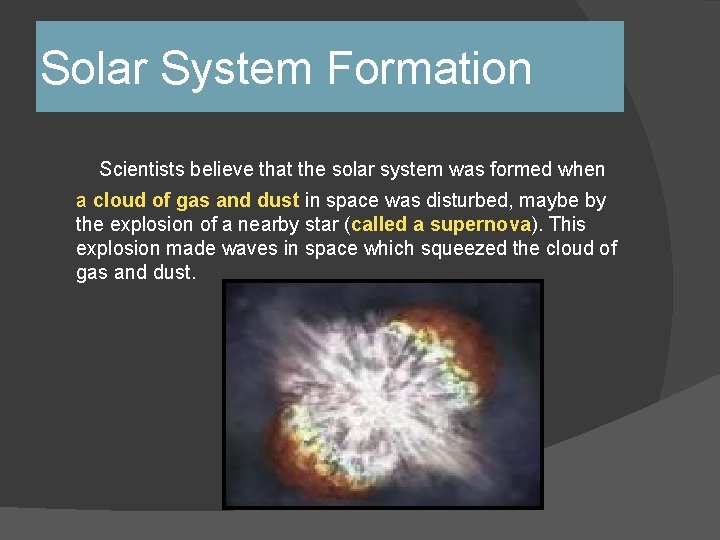
Solar System Formation Scientists believe that the solar system was formed when a cloud of gas and dust in space was disturbed, maybe by the explosion of a nearby star (called a supernova). This explosion made waves in space which squeezed the cloud of gas and dust.
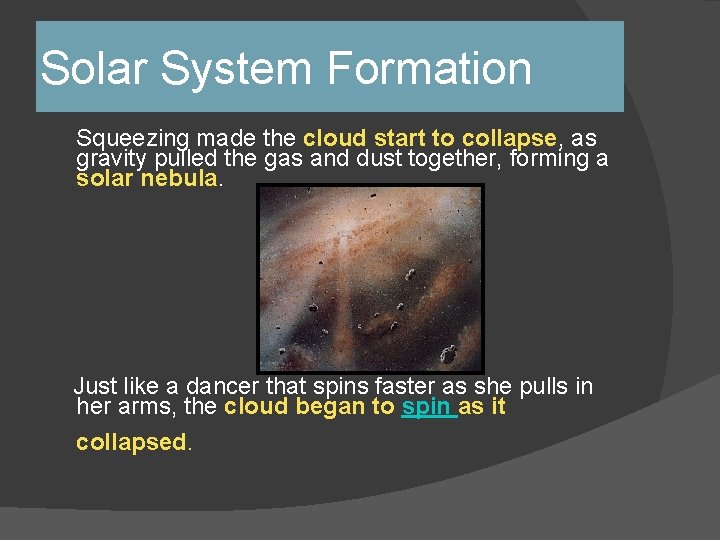
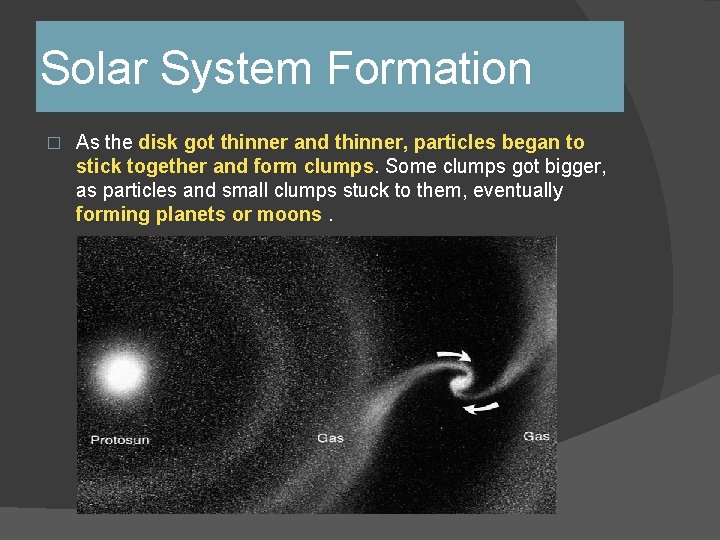
Solar System Formation Squeezing made the cloud start to collapse, as gravity pulled the gas and dust together, forming a solar nebula. Just like a dancer that spins faster as she pulls in her arms, the cloud began to spin as it collapsed.
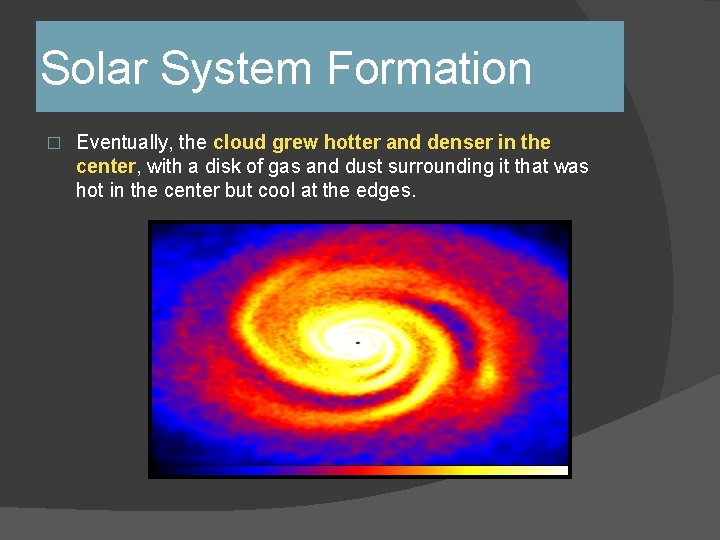
Solar System Formation � Eventually, the cloud grew hotter and denser in the center, with a disk of gas and dust surrounding it that was hot in the center but cool at the edges.
Solar System Formation � As the disk got thinner and thinner, particles began to stick together and form clumps. Some clumps got bigger, as particles and small clumps stuck to them, eventually forming planets or moons.
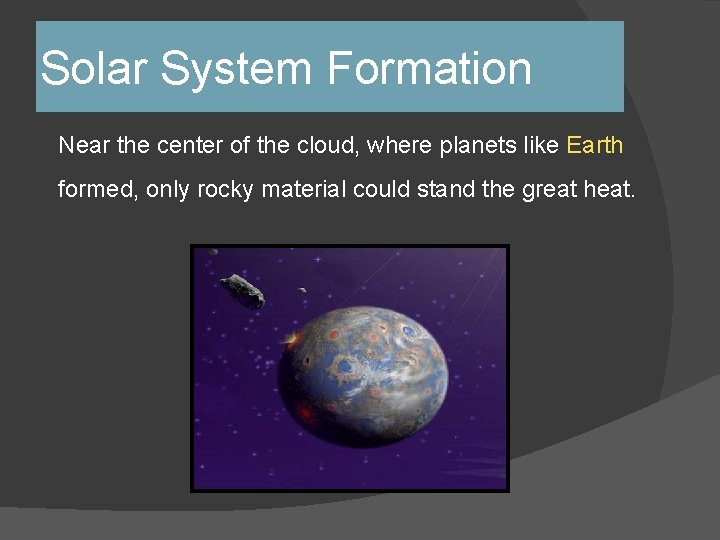
Solar System Formation Near the center of the cloud, where planets like Earth formed, only rocky material could stand the great heat.
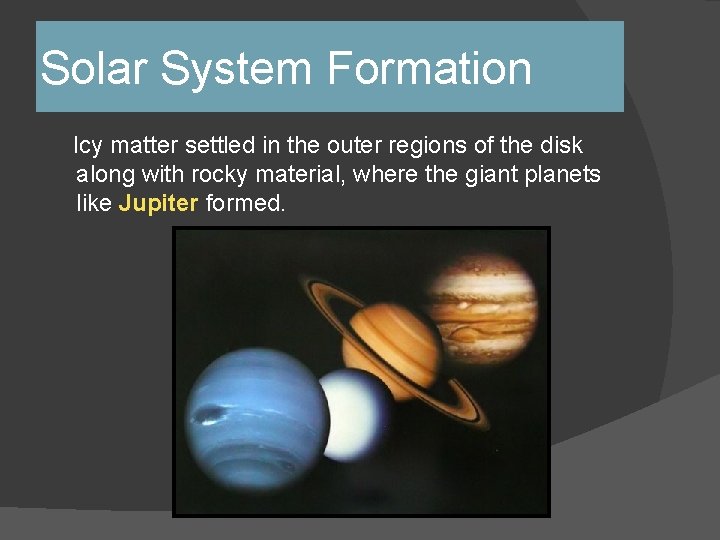
Solar System Formation Icy matter settled in the outer regions of the disk along with rocky material, where the giant planets like Jupiter formed.
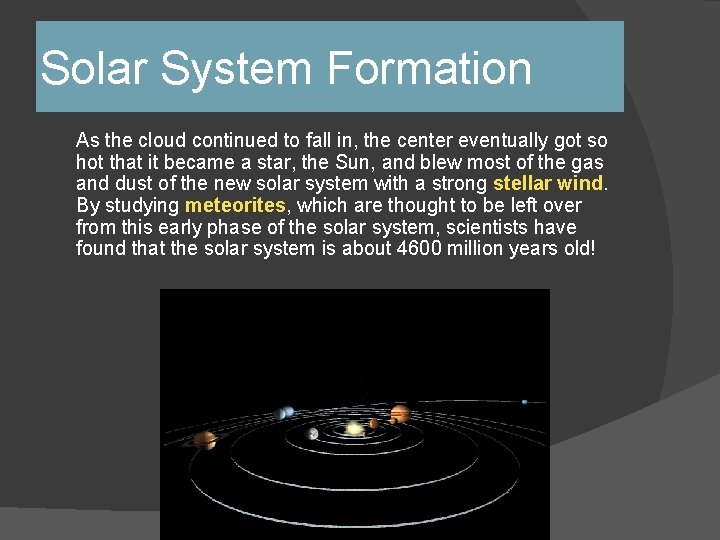
Solar System Formation As the cloud continued to fall in, the center eventually got so hot that it became a star, the Sun, and blew most of the gas and dust of the new solar system with a strong stellar wind. By studying meteorites, which are thought to be left over from this early phase of the solar system, scientists have found that the solar system is about 4600 million years old!
Stephen Hawking: Formation of the Solar System � http: //www. youtube. com/watch? v=Uhy 1 f uc. SRQI
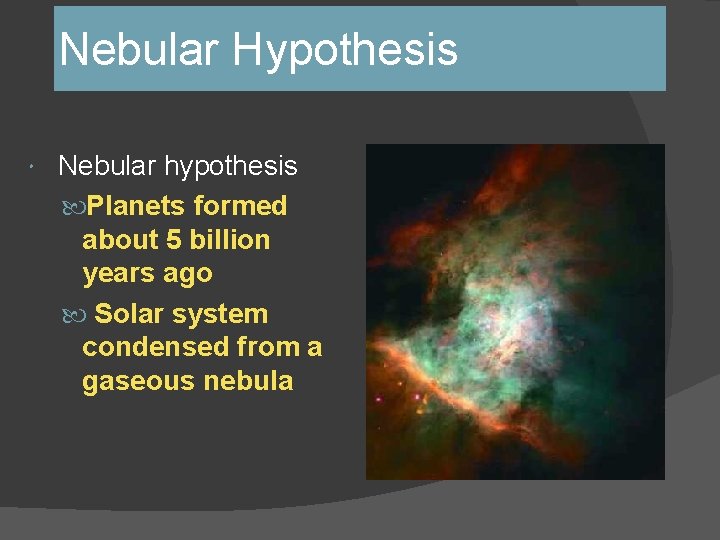
Nebular Hypothesis Nebular hypothesis Planets formed about 5 billion years ago Solar system condensed from a gaseous nebula
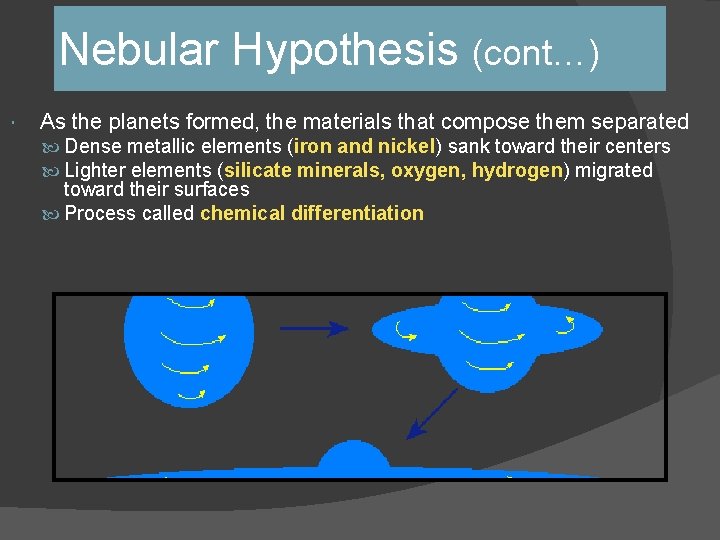
Nebular Hypothesis (cont…) As the planets formed, the materials that compose them separated Dense metallic elements (iron and nickel) sank toward their centers Lighter elements (silicate minerals, oxygen, hydrogen) migrated toward their surfaces Process called chemical differentiation
Nebular Hypothesis (cont…) Due to their surface gravities, Venus and Earth retained atmospheric gases Due to frigid temperatures, the Jovian planets contain a high percentage of ices
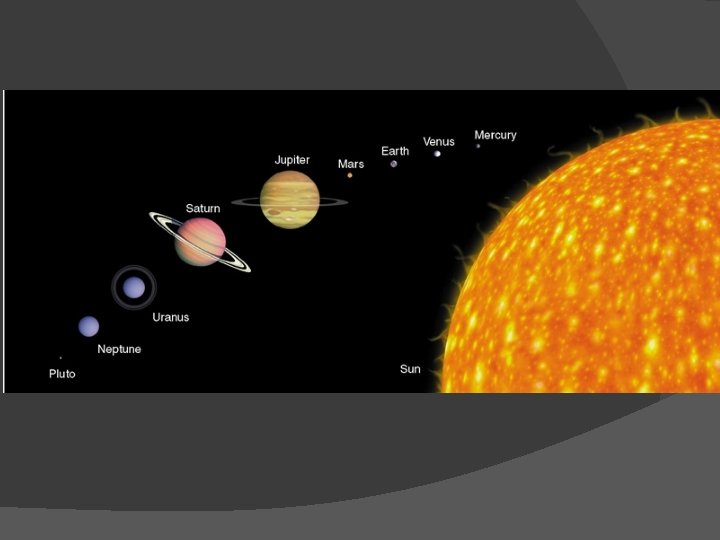
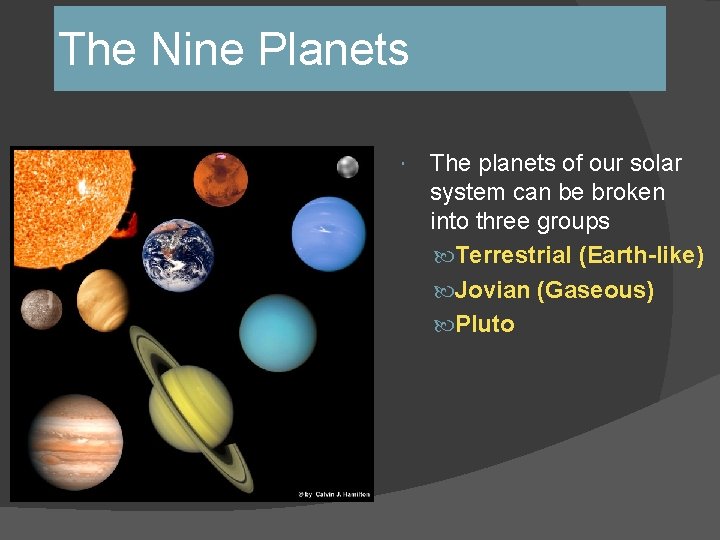
The Nine Planets The planets of our solar system can be broken into three groups Terrestrial (Earth-like) Jovian (Gaseous) Pluto
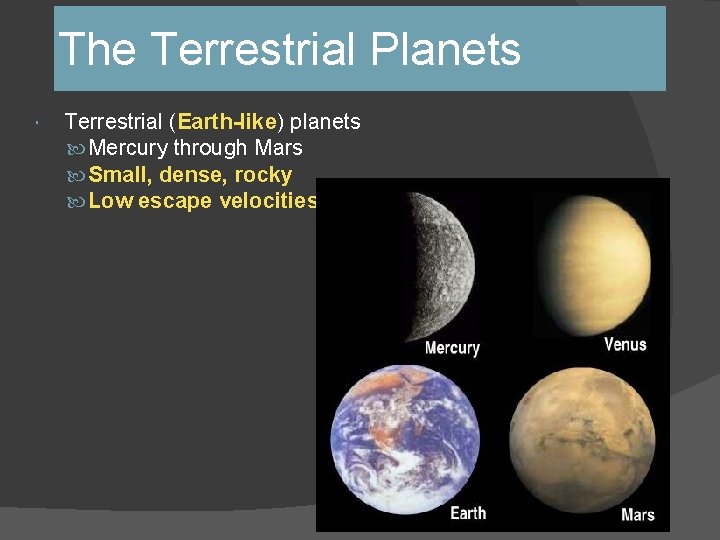
The Terrestrial Planets Terrestrial (Earth-like) planets Mercury through Mars Small, dense, rocky Low escape velocities
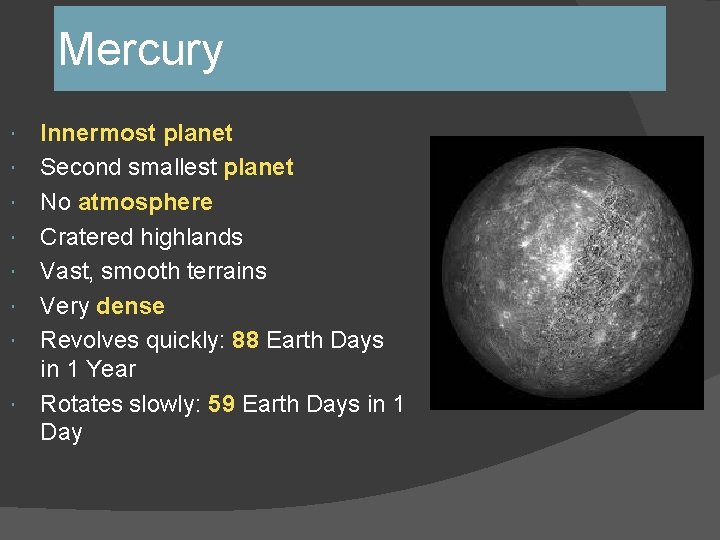
Mercury Innermost planet Second smallest planet No atmosphere Cratered highlands Vast, smooth terrains Very dense Revolves quickly: 88 Earth Days in 1 Year Rotates slowly: 59 Earth Days in 1 Day
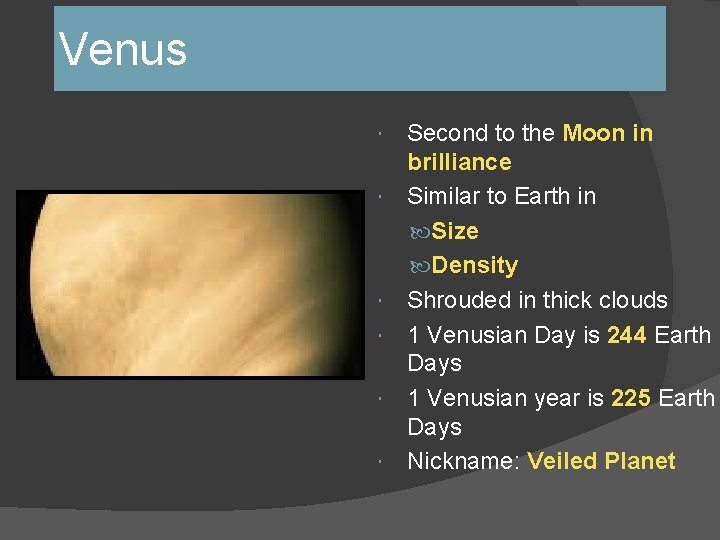
Venus Second to the Moon in brilliance Similar to Earth in Size Density Shrouded in thick clouds 1 Venusian Day is 244 Earth Days 1 Venusian year is 225 Earth Days Nickname: Veiled Planet
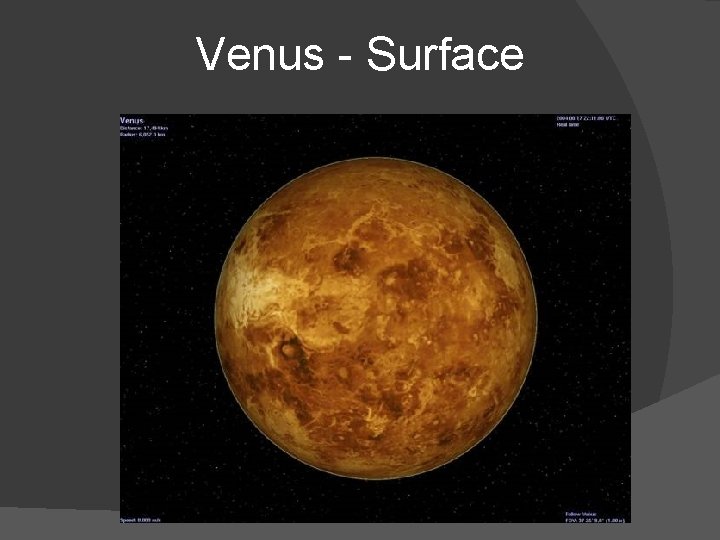
Venus - Surface
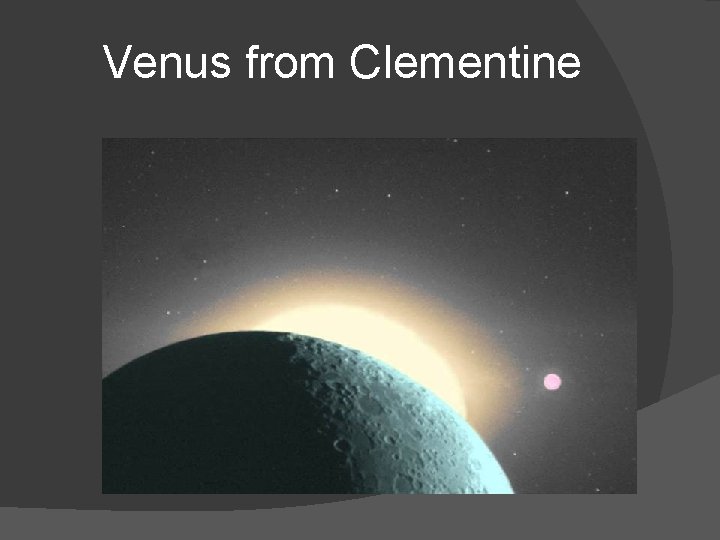
Venus from Clementine
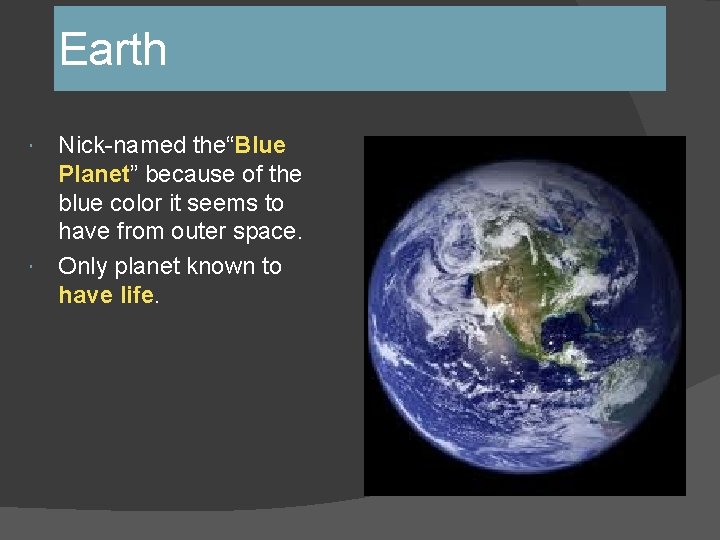
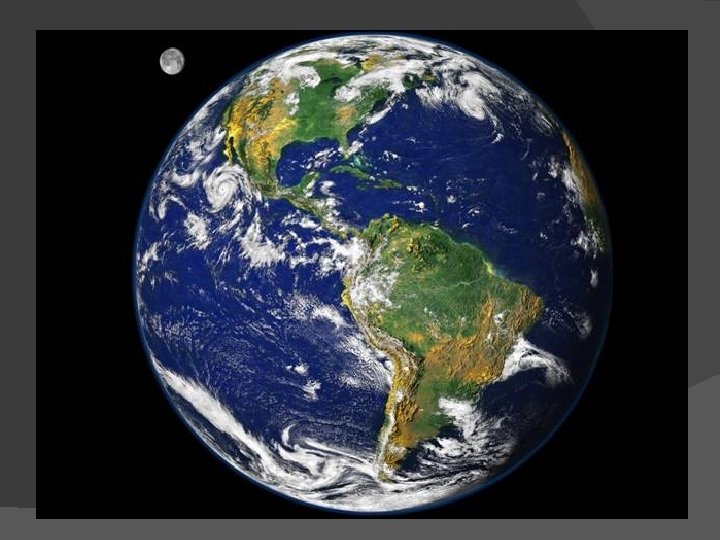
Earth Nick-named the“Blue Planet” because of the blue color it seems to have from outer space. Only planet known to have life.
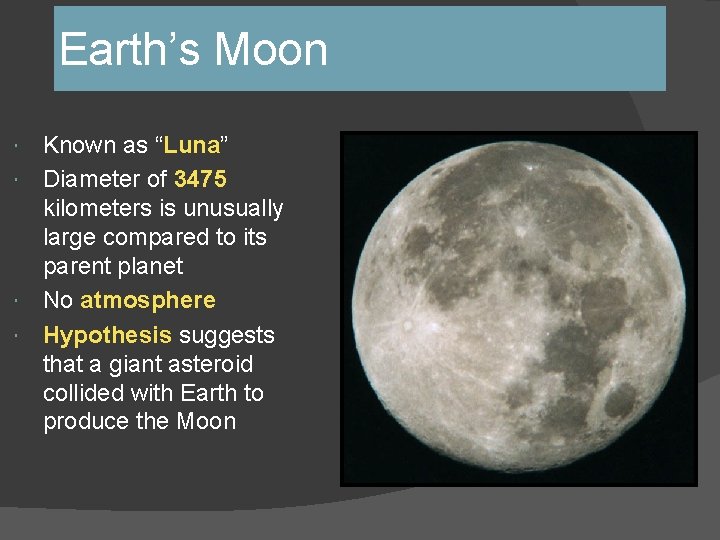
Earth’s Moon Known as “Luna” Diameter of 3475 kilometers is unusually large compared to its parent planet No atmosphere Hypothesis suggests that a giant asteroid collided with Earth to produce the Moon
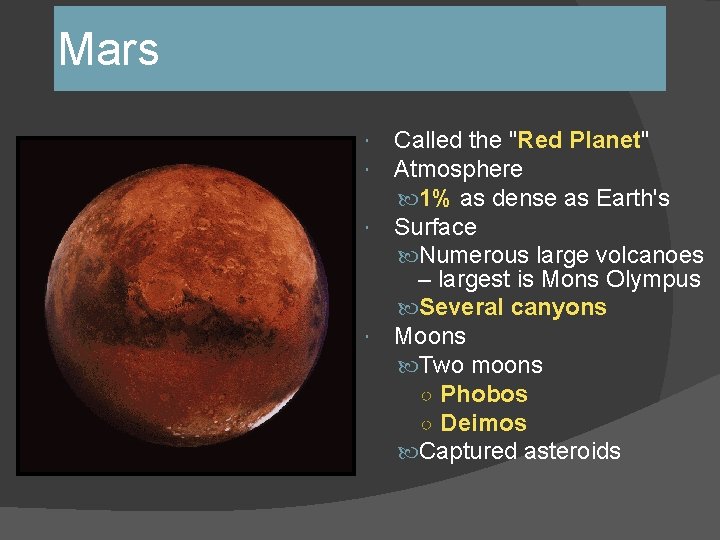
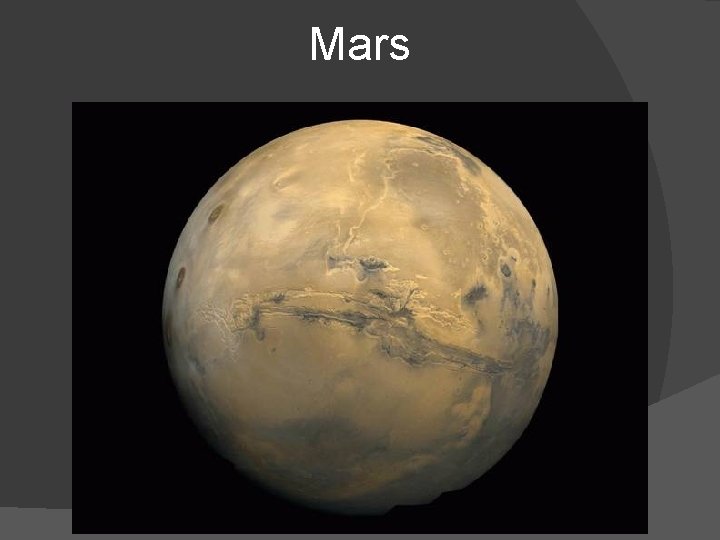
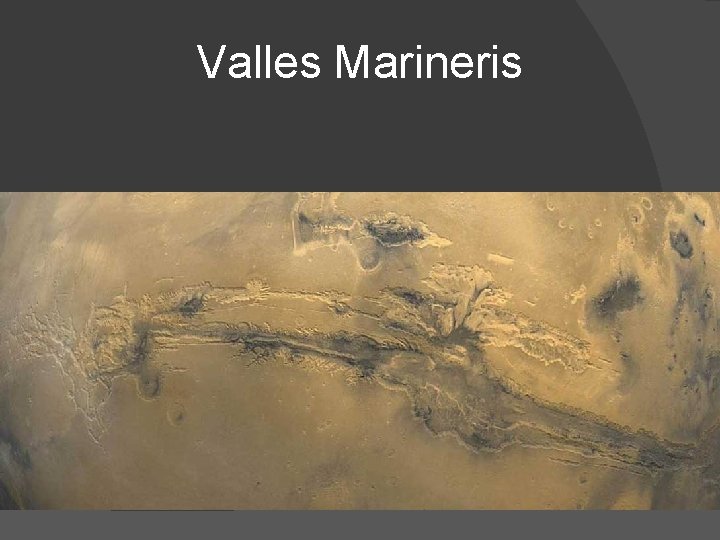
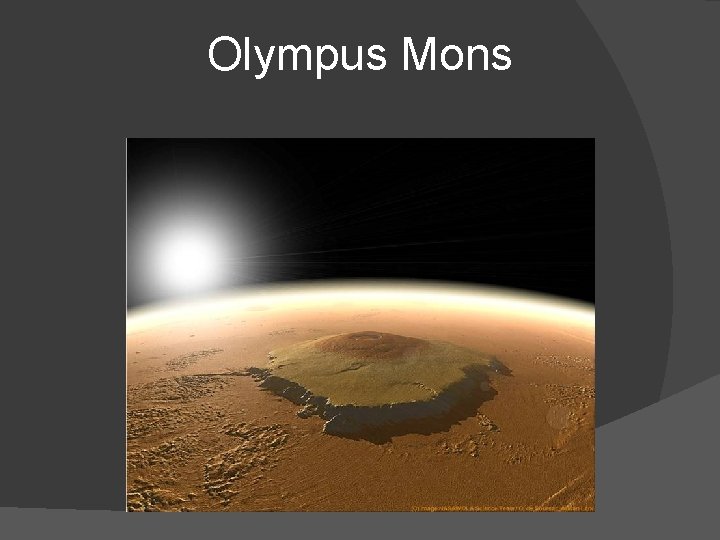
Mars Called the "Red Planet" Atmosphere 1% as dense as Earth's Surface Numerous large volcanoes – largest is Mons Olympus Several canyons Moons Two moons ○ Phobos ○ Deimos Captured asteroids
Mars
Valles Marineris
Olympus Mons
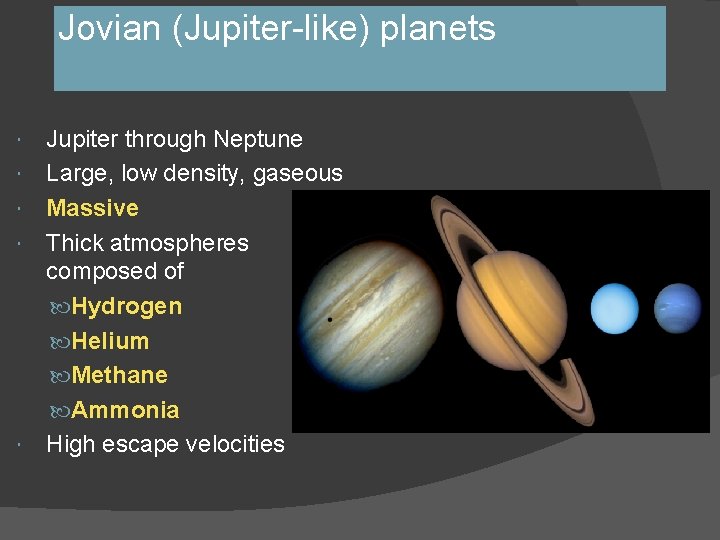
Jovian (Jupiter-like) planets Jupiter through Neptune Large, low density, gaseous Massive Thick atmospheres composed of Hydrogen Helium Methane Ammonia High escape velocities
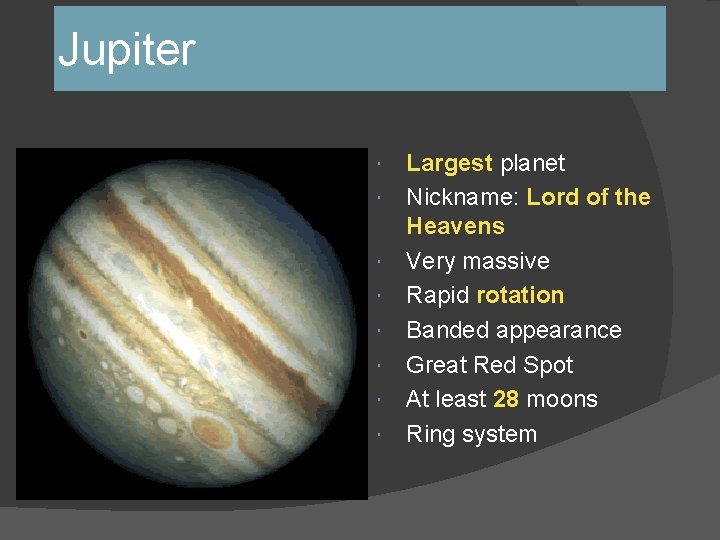
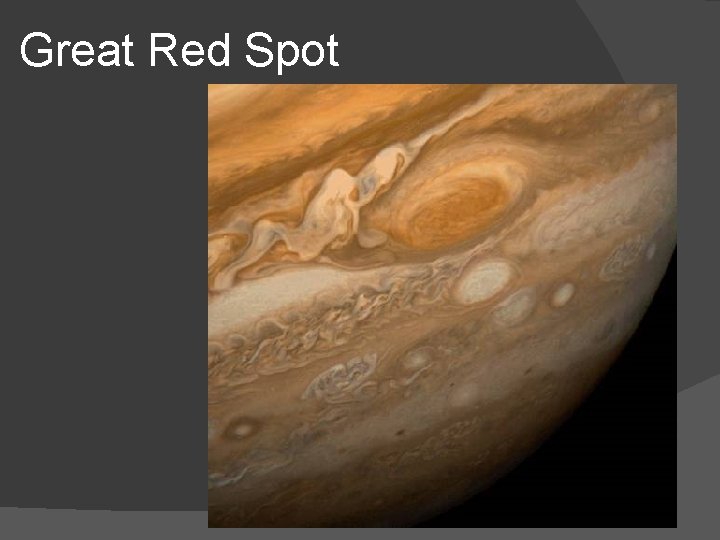
Jupiter Largest planet Nickname: Lord of the Heavens Very massive Rapid rotation Banded appearance Great Red Spot At least 28 moons Ring system
Great Red Spot
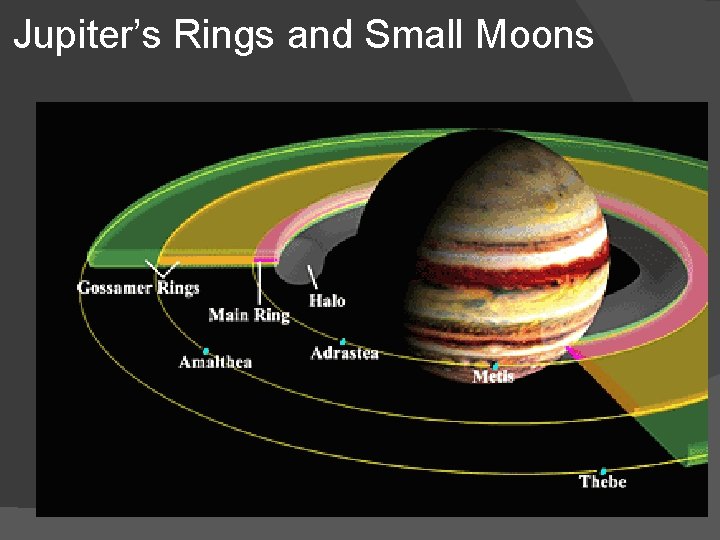
Jupiter’s Rings and Small Moons
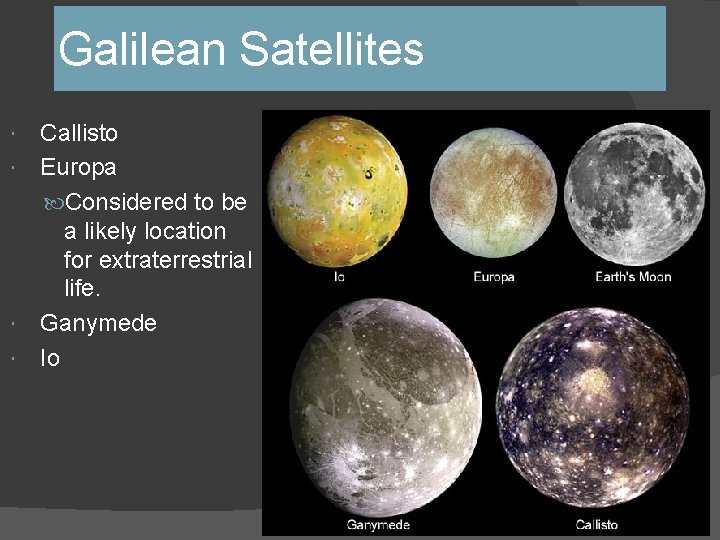
Galilean Satellites Callisto Europa Considered to be a likely location for extraterrestrial life. Ganymede Io
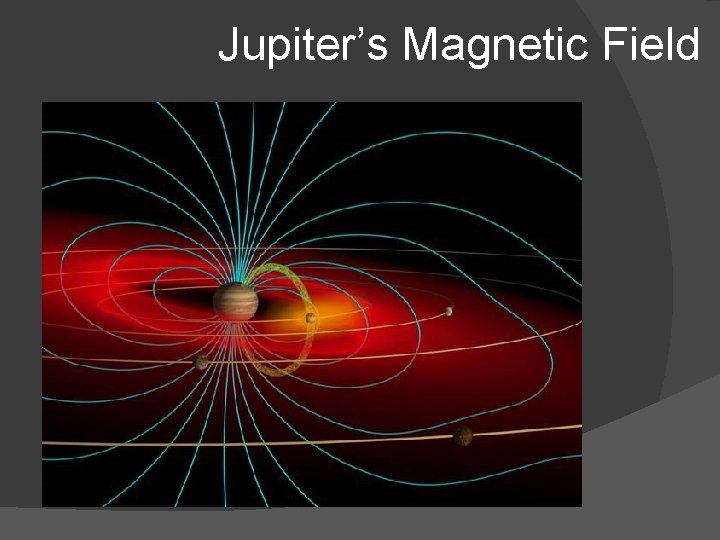
Jupiter’s Magnetic Field
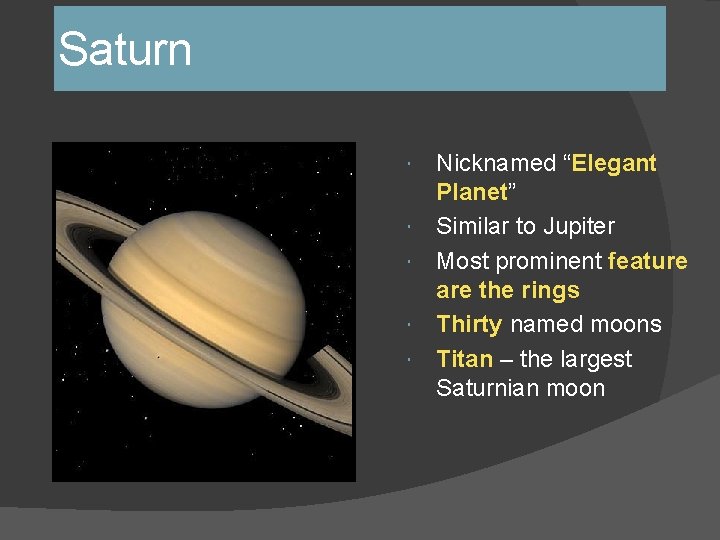
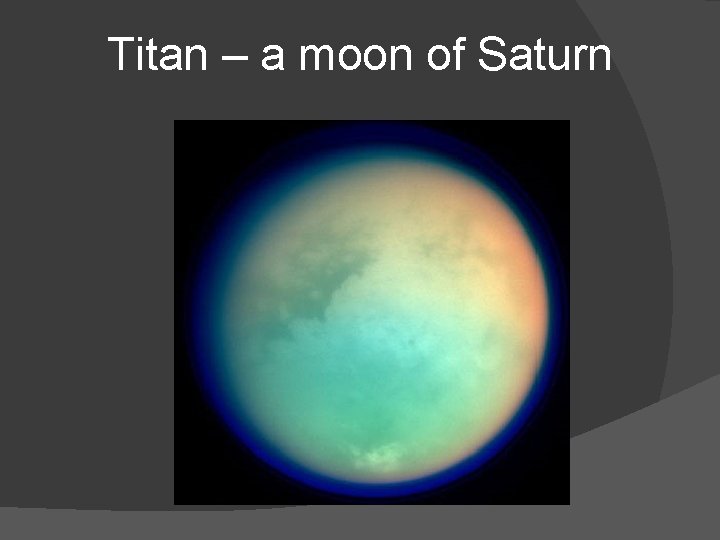
Saturn Nicknamed “Elegant Planet” Similar to Jupiter Most prominent feature are the rings Thirty named moons Titan – the largest Saturnian moon
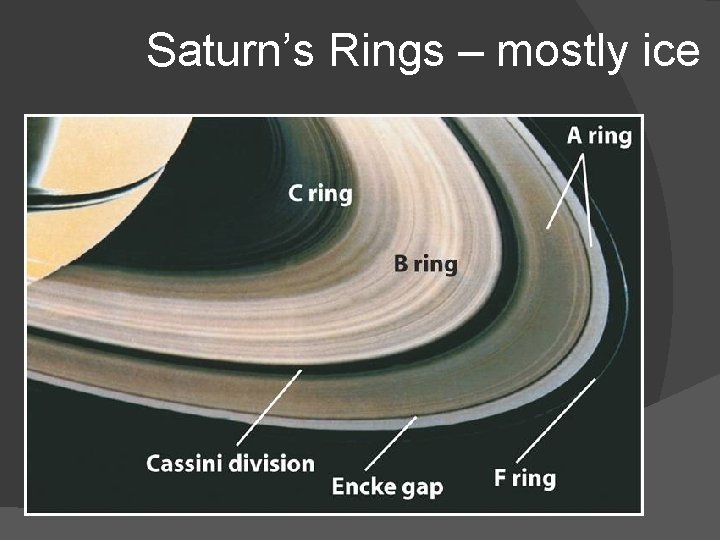
Saturn’s Rings – mostly ice
Titan – a moon of Saturn
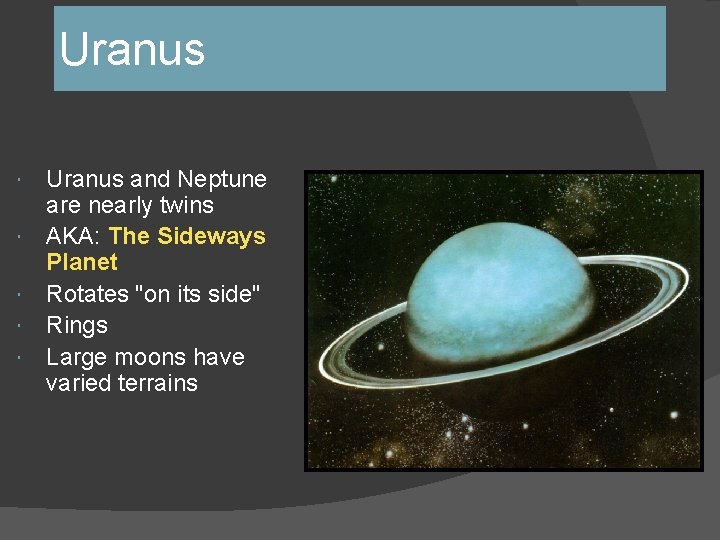
Uranus and Neptune are nearly twins AKA: The Sideways Planet Rotates "on its side" Rings Large moons have varied terrains
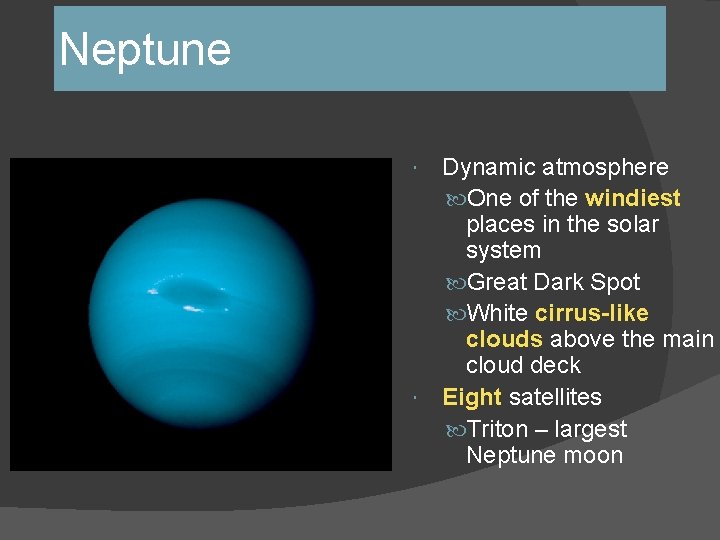
Neptune Dynamic atmosphere One of the windiest places in the solar system Great Dark Spot White cirrus-like clouds above the main cloud deck Eight satellites Triton – largest Neptune moon
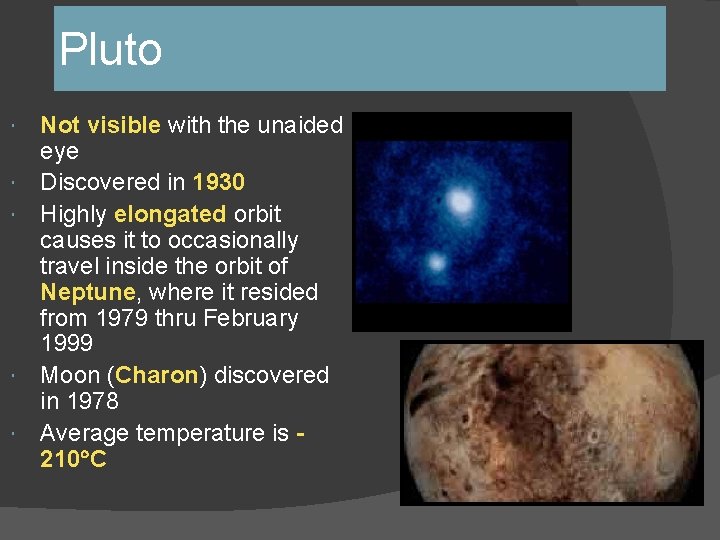
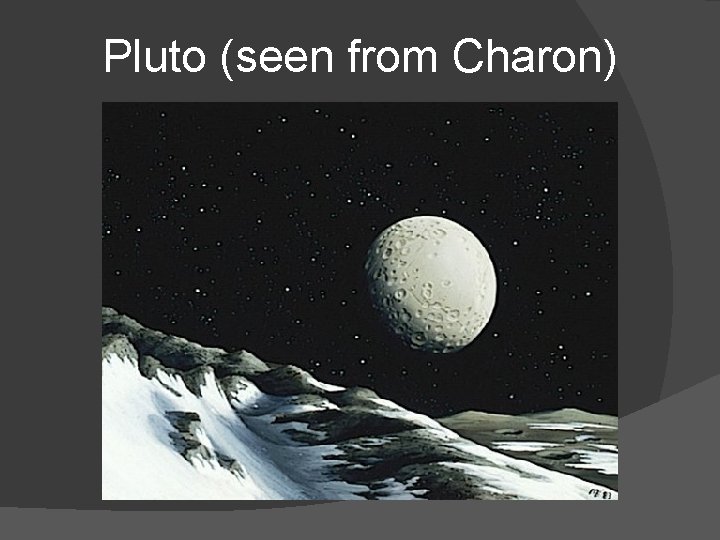
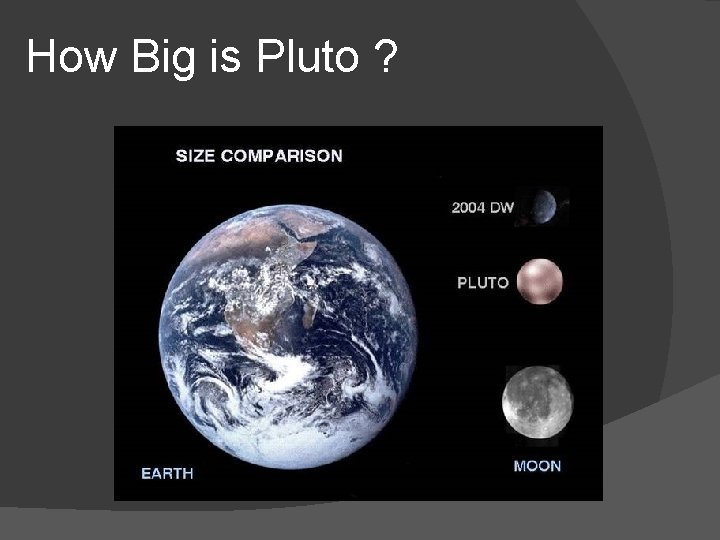
Pluto Not visible with the unaided eye Discovered in 1930 Highly elongated orbit causes it to occasionally travel inside the orbit of Neptune, where it resided from 1979 thru February 1999 Moon (Charon) discovered in 1978 Average temperature is 210 C
Pluto (seen from Charon)
How Big is Pluto ?
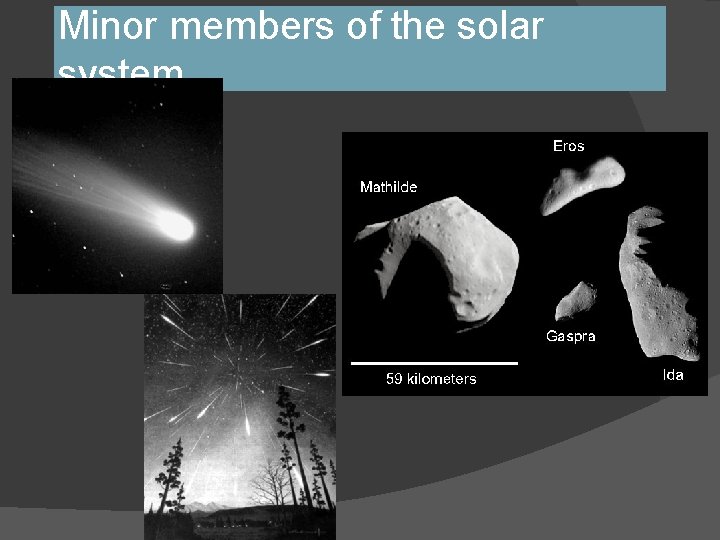
Minor members of the solar system
Planet Brochure Project Use the Planet Brochure Template (posted in Moodle) All of the facts and information that needs to go in your Planet Brochure, is on the Template Website: ○ http: //solarsystem. nasa. go v/planets/index. cfm Due: When thinking about what to suggest that the travelers take with them on the trip and how they will survive consider the following questions. . . 1. 2. 3. 4. 5. 6. 7. What are the conditions that humans need to live? What is the planets temperature? What is the quality of the atmosphere of the planet? What other conditions on the planet are harmful to humans? What are the surroundings of the planet like? How would humans navigate the planet? Inside what kind of vessel or hotel would humans best stay--remember you must consider what the surface of the planet is made of.