
Week 9 Teaching Young Learners Spring 2014 The





- Slides: 43
Week 9 Teaching Young Learners Spring 2014
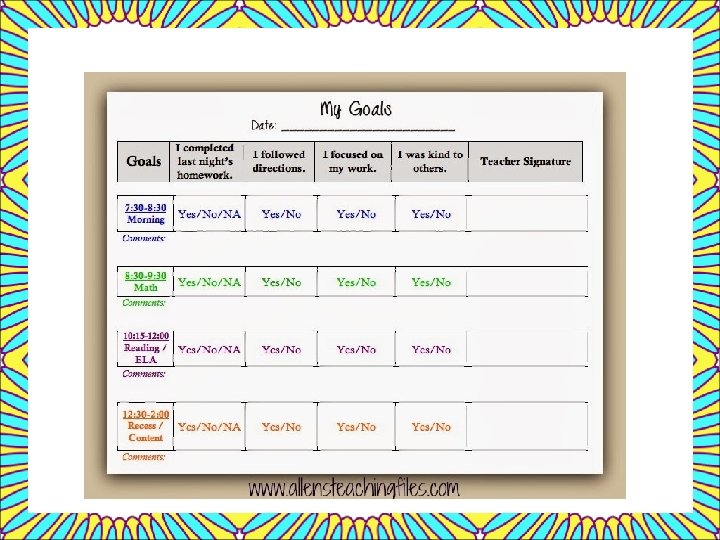
The School Visit: Let’s Talk Classroom Management! • What did you think? Did you pick up any tips from the teachers? – How did the teachers deal with: • • Misbehavior? Praise? Getting the kids’ attention? Other signs/signals? – How was the classroom set up? • What did you like? • What didn’t you like?
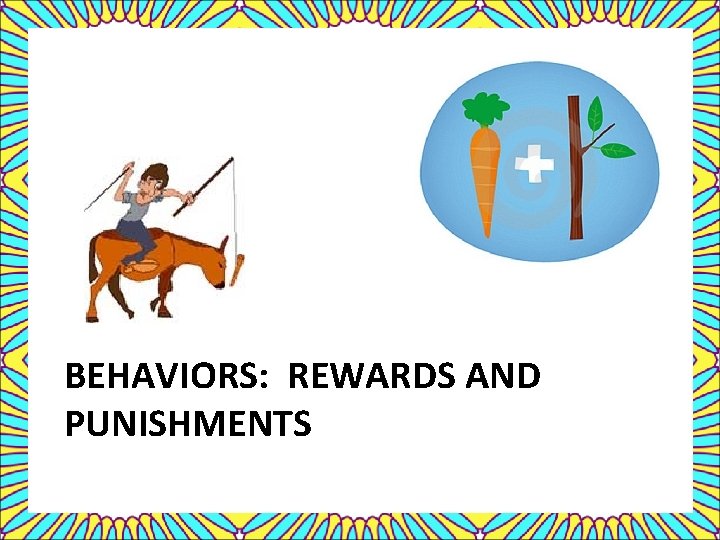
BEHAVIORS: REWARDS AND PUNISHMENTS
First. . . • Think intrinsic, not extrinsic! • To prevent is better than to cure!
INDIVIDUAL PRAISE: CLASSROOM ECONOMIES
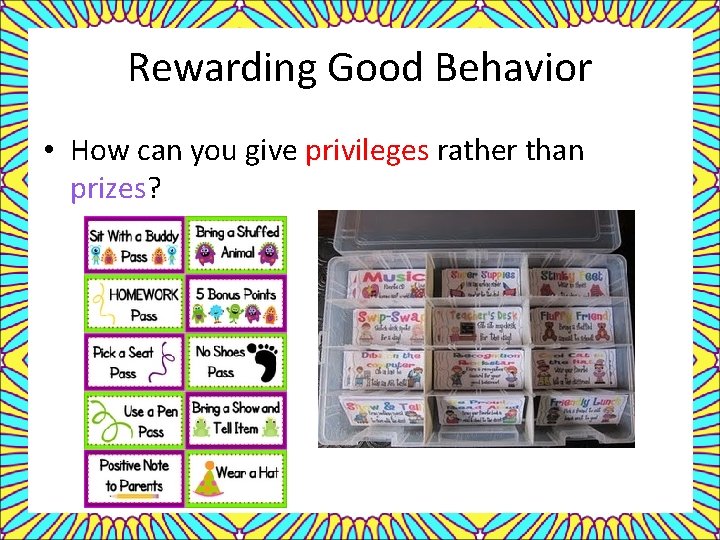
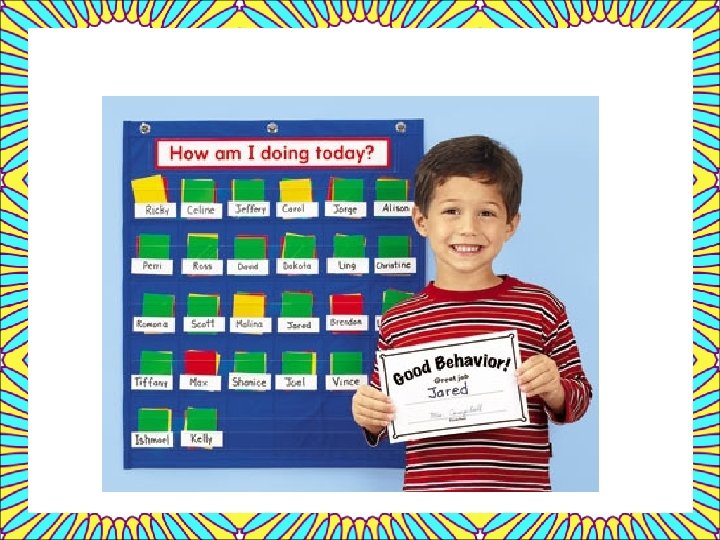
Rewarding Good Behavior • How can you give privileges rather than prizes?
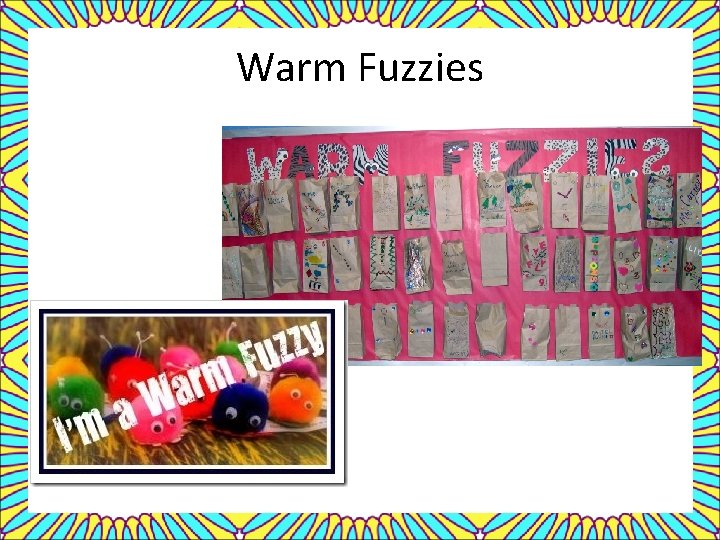
Warm Fuzzies
Other Ideas for Economies • Teaching Channel Video
GROUP PRAISE
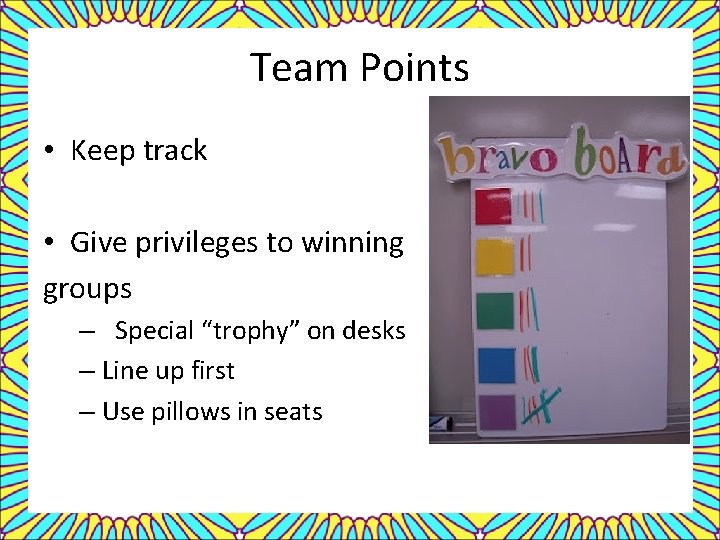
Team Points • Keep track • Give privileges to winning groups – Special “trophy” on desks – Line up first – Use pillows in seats
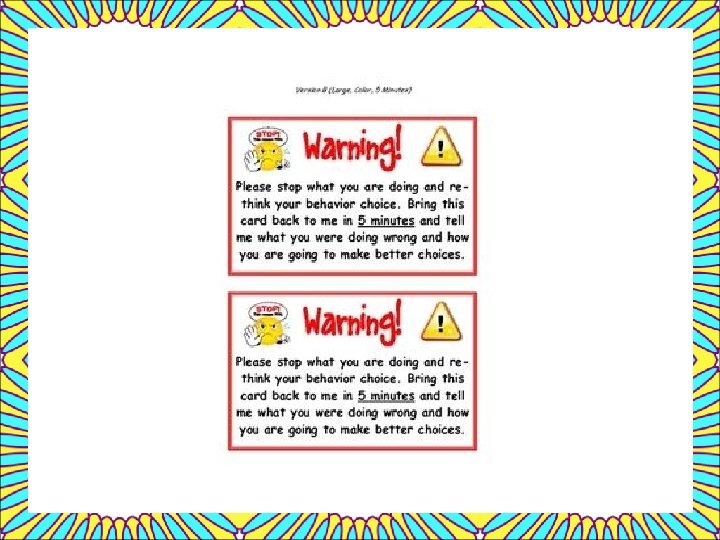
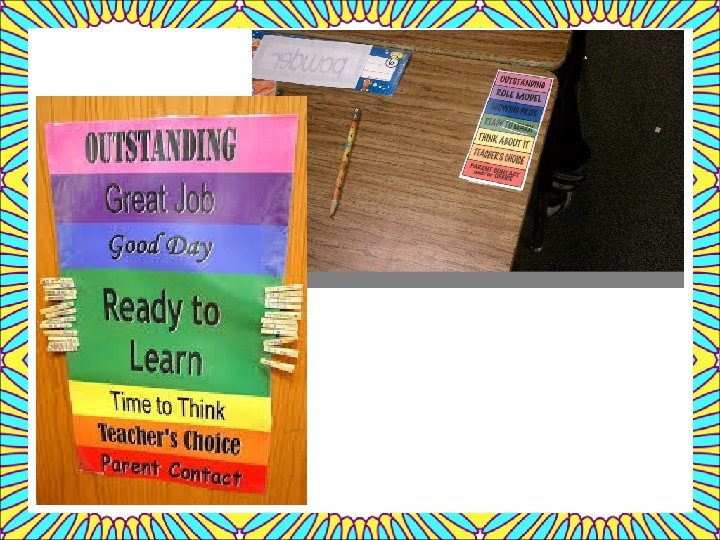
PUNISHMENT / BEHAVIOR MODIFICATION
When a student breaks a rule, always ask: • “Which rule did you break? ” • “Why is it important to follow this rule? ” • Bad Behavior Prevention: Randomly “catch” students obeying rules; praise them in front of the class and explain which rule they were following
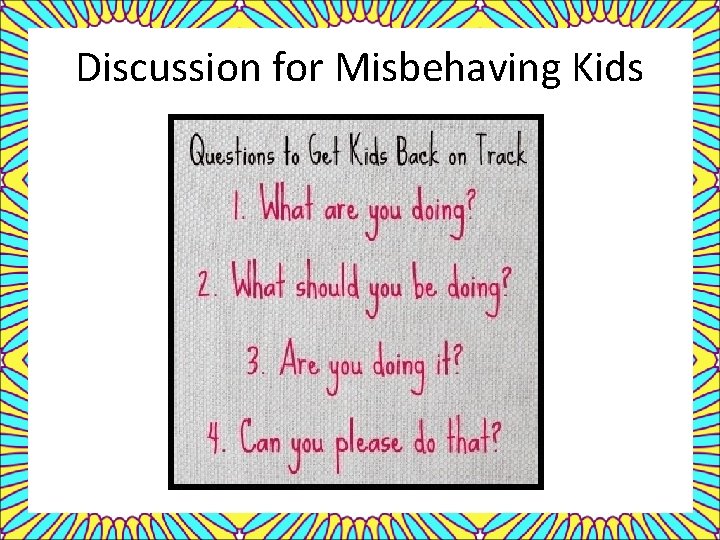
Discussion for Misbehaving Kids
IN CONCLUSION. . .
Think, Pair, Share: • What will be your approach to reward and punishment in your future classroom? • Did you pick up some tips that you’d like to remember for the future?
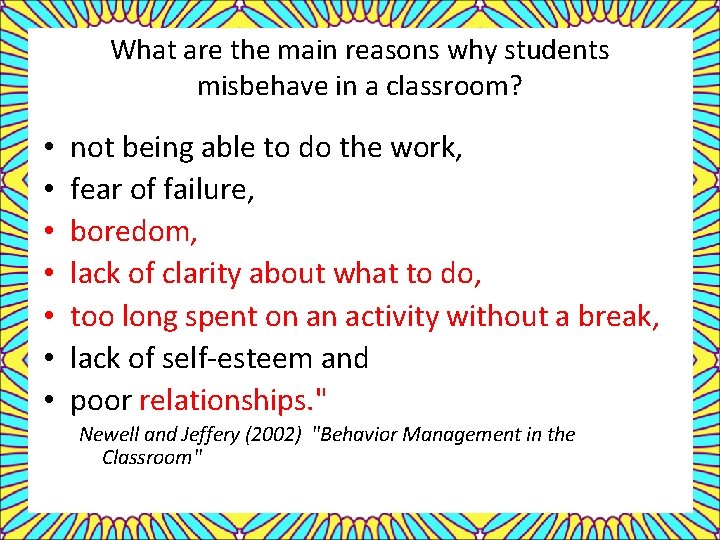
What are the main reasons why students misbehave in a classroom? • • not being able to do the work, fear of failure, boredom, lack of clarity about what to do, too long spent on an activity without a break, lack of self-esteem and poor relationships. " Newell and Jeffery (2002) "Behavior Management in the Classroom"
ASSESSMENT FOR KIDS: IDEAS TO REMEMBER
Think-Pair-Share • What is assessment? • Why do we assess learners?
Think-Pair-Share • What forms of assessment are most common for young learners in your country? – When you were in elementary school, what were your assessments like? – If you’ve taught young learners (under 12), what forms of assessment have you used?
Traditional Assessment Methods (“Paper and Pencil Tests”) • Benefits (for Yls)? • Weaknesses (for YLs)?
ASSESSMENT TECHNIQUES
Assessment: • NOT just used for grades. • Also used to get feedback so you can – Provide extra assistance – Re-teach, or – alter your instruction
Jigsaw 1) With your color group, discuss your assigned technique and write on the graphic organizer 2) Make a new group with different colors (1 pink, 1 purple, 1 -2 yellows) 3) Teach other about your technique. 4) Take notes.
OBSERVATION
Observation • 2 approaches: • Child per Day (Anecdotal Notes): – Choose one child per day and observe him/her closely in regards to behavior, language use, motivation, etc. Take notes on a graphic organizer. • During a Task: – Walk around during the task and take notes on all students’ language use. Use a graphic organizer.
SELF-ASSESSMENT
Self-Assessment--Do NOT use for a grade • Best if it’s very explicit and linked to lessons you’ve taught in the past • Best with writing, but also good for speaking or behavior • Use simple rubrics for kids – 1, 2, 3 or Smiley Face • Do at the end of lessons to check in with “Can do” objectives
PORTFOLIO
Portfolio • Collection of work over time (drawings, writing, oral recordings, speaking transcripts) • If you use self-assessment rubrics, students will know which pieces are best (particularly with writing) • Students can reflect on how they’ve improved over time
Portfolio: Writing • Watch this video • Periodically, have students. . . – Choose 2 of their best pieces of writing. – Tag the 2 pieces and explain why they think they’re best. – Do a self-reflection rubric for each story. (Teachers evaluate with a rubric, too. ) – Put them in the portfolio.
Portfolio • Strengths – Encourages self-reflection – Shows students how they’ve progressed over time – Performance Assessment—authentic – Can share with parents and friends • Weaknesses – They take up a lot of space
PROJECT WORK
Project Work • Advantages – Combines all four skills – Improves motivation • Disadvantages – Grading is difficult – Hard to know who did what
OTHER PERFORMANCE-BASED ASSESSMENTS
My own contribution Reading with partners Retelling stories Dialogue journal Role playing Giving descriptions or instructions using visual or written prompts • Oral reporting to the whole class • Telling a story by using a sequence of three or more pictures • Playing a game • • •
The Bottom Line. . . • Choose a form of assessment that matches your classroom activities • Be creative! • Anything can be an assessment if you create the right rubrics
Think, Pair, Share: • Which assessment techniques will you be most likely to use if you teach children in the future?