
Week 7 Lecture 12 Digital Communications System Architecture

- Slides: 46
Week 7 Lecture 1+2 Digital Communications System Architecture + Signals basics
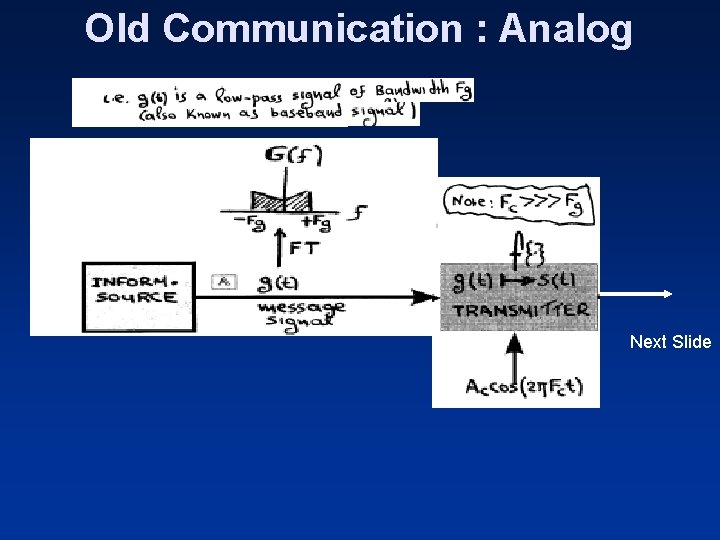
Old Communication : Analog Next Slide
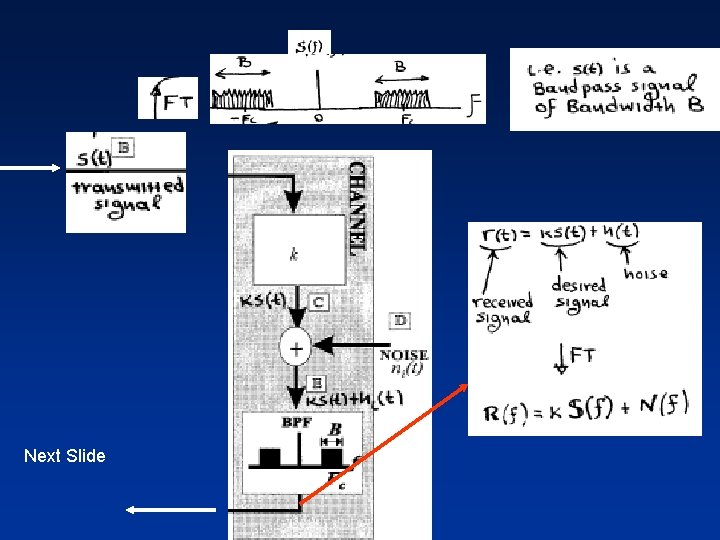
Next Slide
Today: we use “Digital” Block Diagram on Digital Communication Systems
Review: Why Digital Comm?
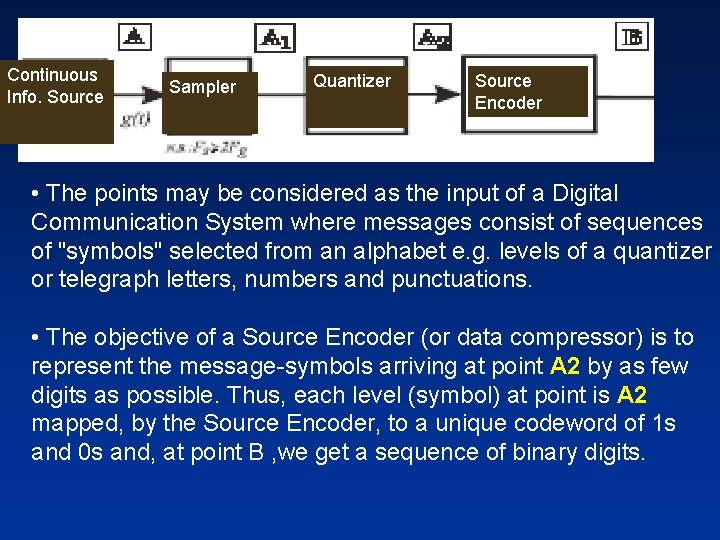
Continuous Info. Source Sampler Quantizer Source Encoder • The points may be considered as the input of a Digital Communication System where messages consist of sequences of "symbols" selected from an alphabet e. g. levels of a quantizer or telegraph letters, numbers and punctuations. • The objective of a Source Encoder (or data compressor) is to represent the message-symbols arriving at point A 2 by as few digits as possible. Thus, each level (symbol) at point is A 2 mapped, by the Source Encoder, to a unique codeword of 1 s and 0 s and, at point B , we get a sequence of binary digits.
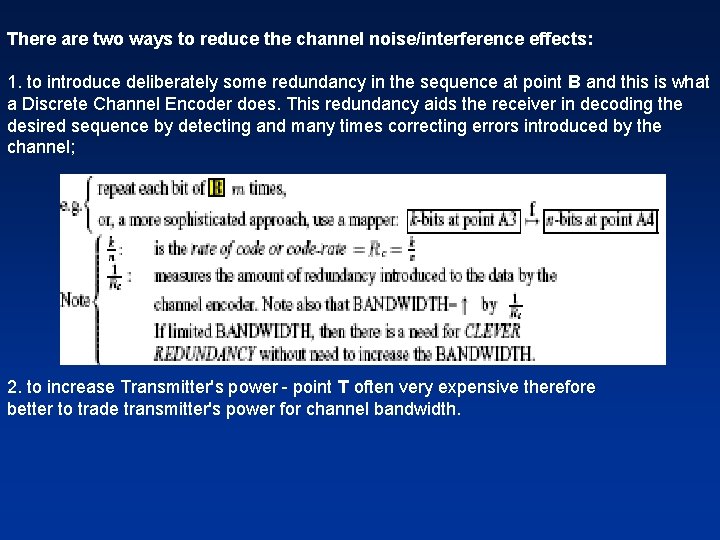
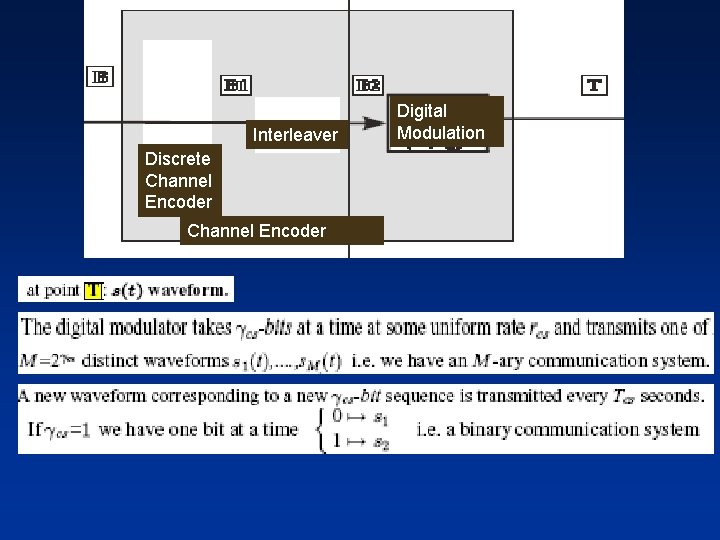
There are two ways to reduce the channel noise/interference effects: 1. to introduce deliberately some redundancy in the sequence at point B and this is what a Discrete Channel Encoder does. This redundancy aids the receiver in decoding the desired sequence by detecting and many times correcting errors introduced by the channel; 2. to increase Transmitter's power - point T often very expensive therefore better to trade transmitter's power for channel bandwidth.
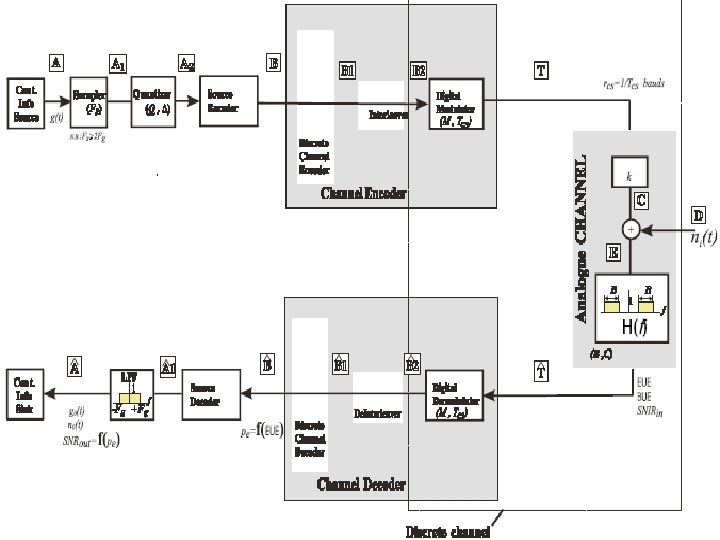
Interleaver Discrete Channel Encoder Digital Modulation
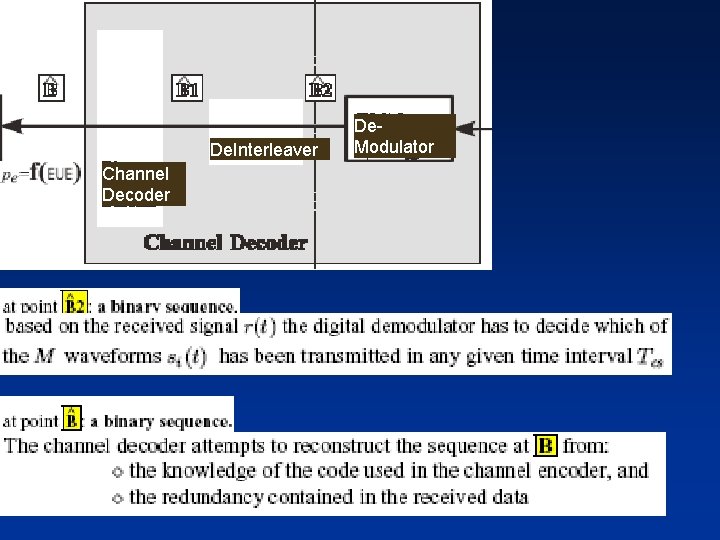
De. Interleaver Channel Decoder De. Modulator
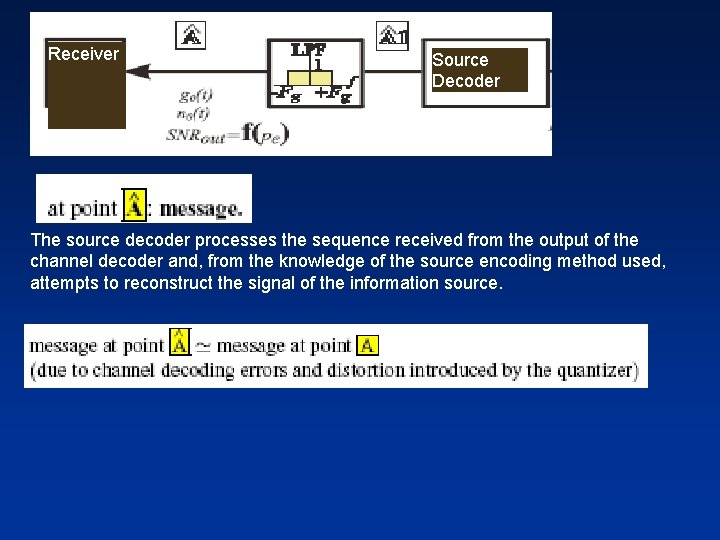
Receiver Source Decoder The source decoder processes the sequence received from the output of the channel decoder and, from the knowledge of the source encoding method used, attempts to reconstruct the signal of the information source.
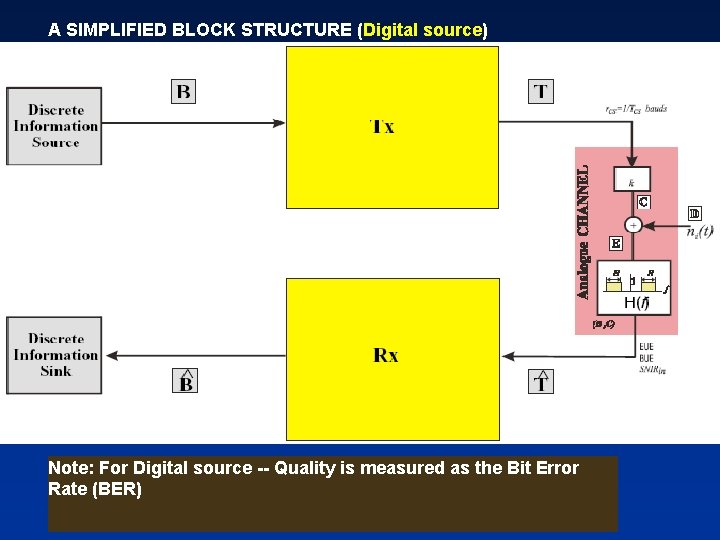
A SIMPLIFIED BLOCK STRUCTURE (Digital source) Note: For Digital source -- Quality is measured as the Bit Error Rate (BER)
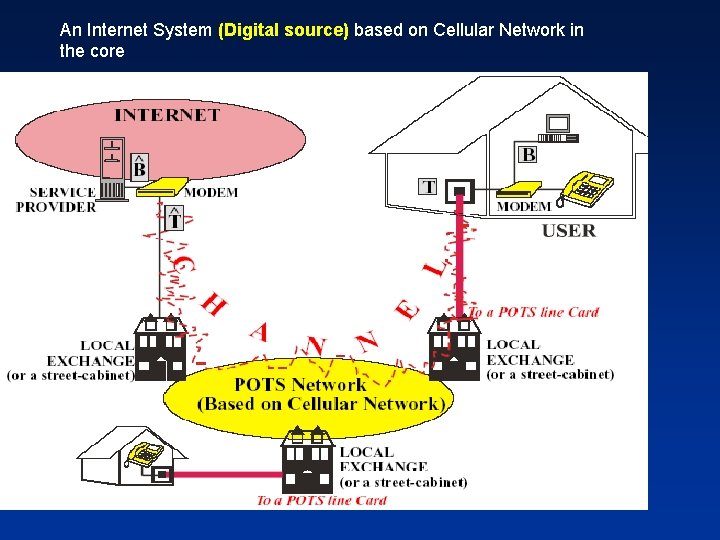
An Internet System (Digital source) based on Cellular Network in the core
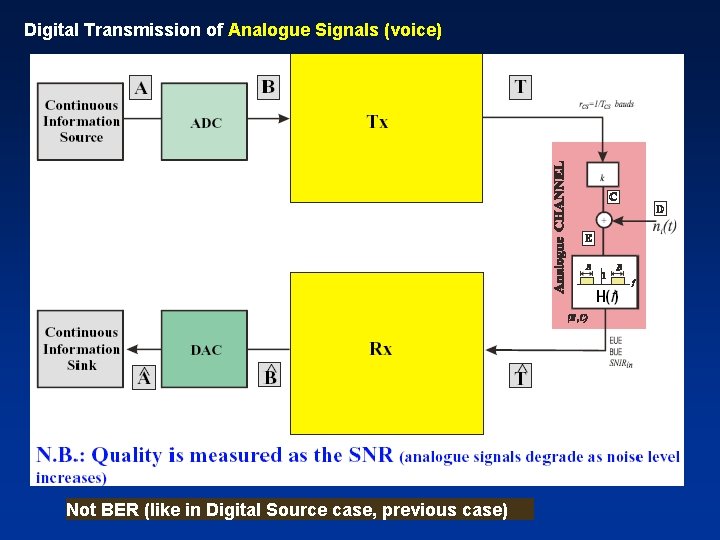
Digital Transmission of Analogue Signals (voice) Not BER (like in Digital Source case, previous case)
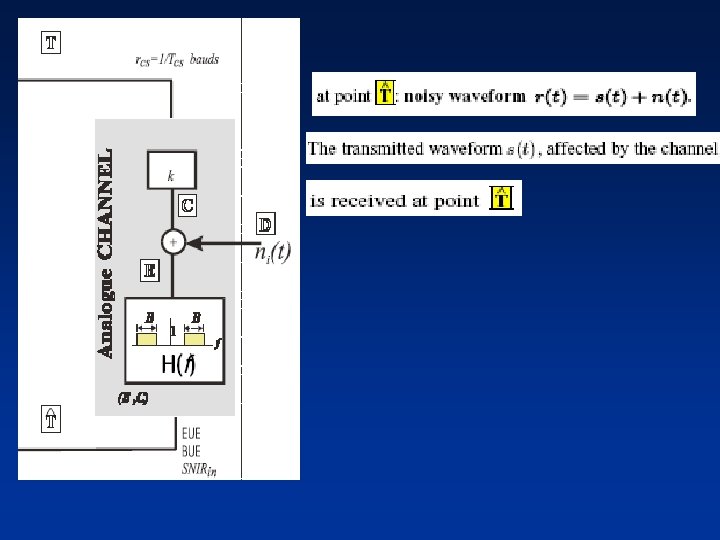
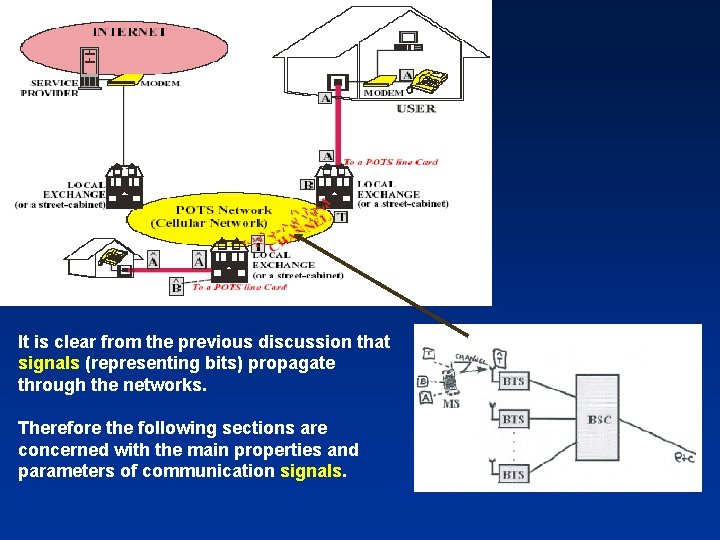
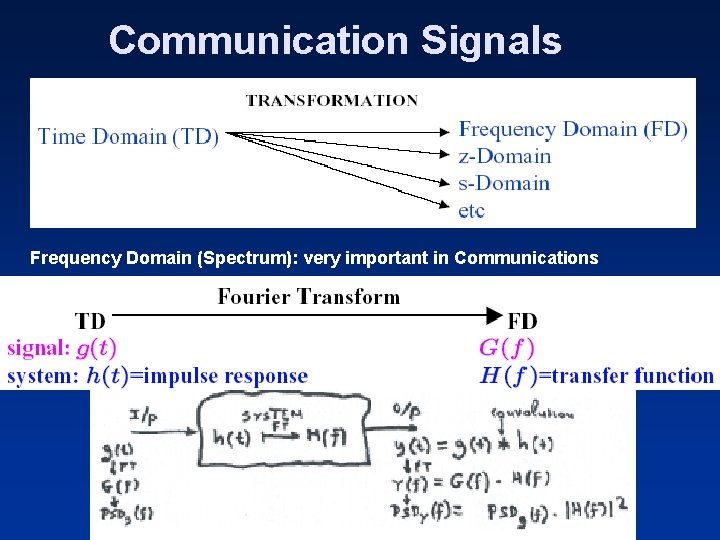
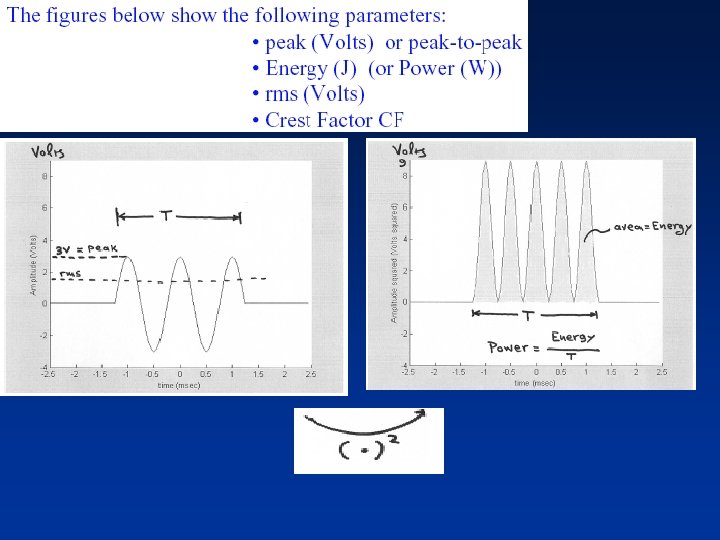
It is clear from the previous discussion that signals (representing bits) propagate through the networks. Therefore the following sections are concerned with the main properties and parameters of communication signals.
Communication Signals Frequency Domain (Spectrum): very important in Communications
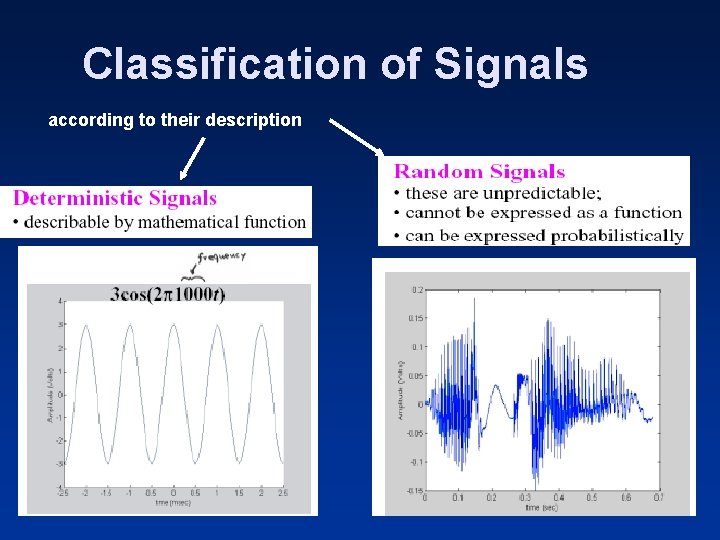
Classification of Signals according to their description
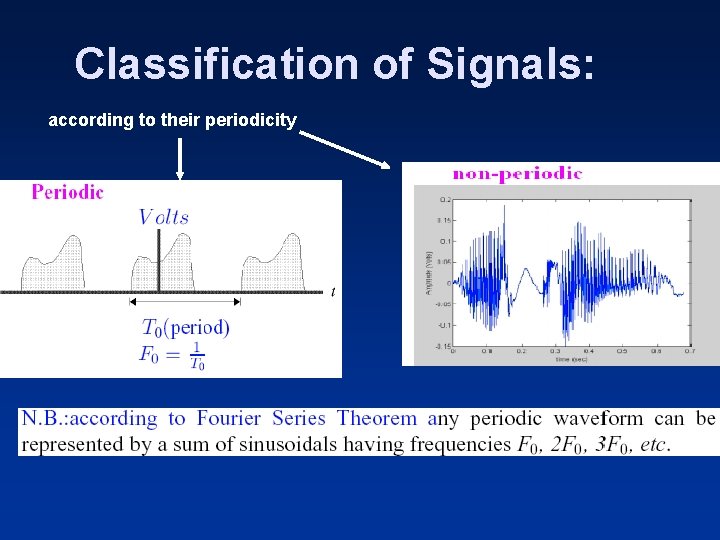
Classification of Signals: according to their periodicity
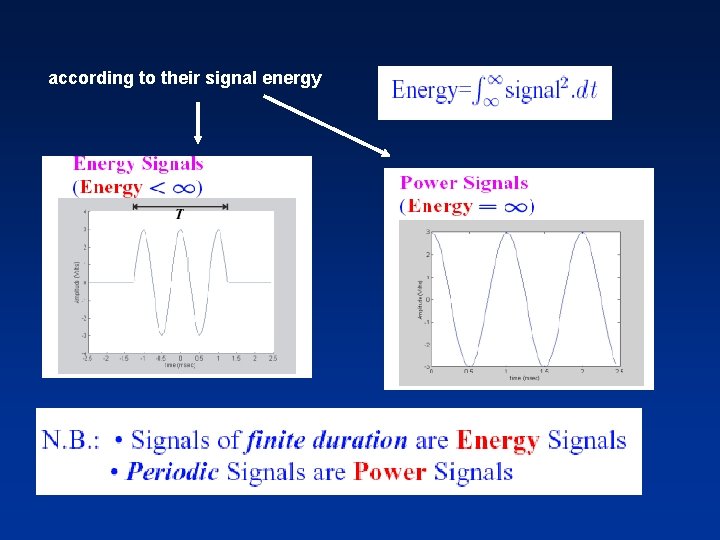
according to their signal energy
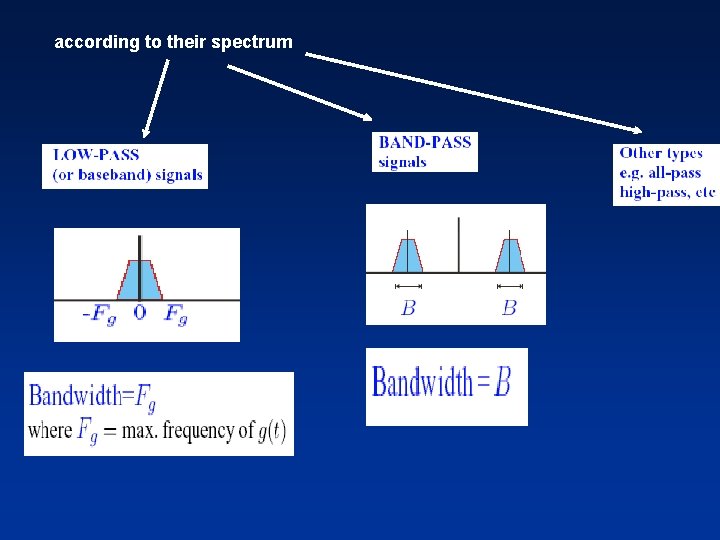
according to their spectrum
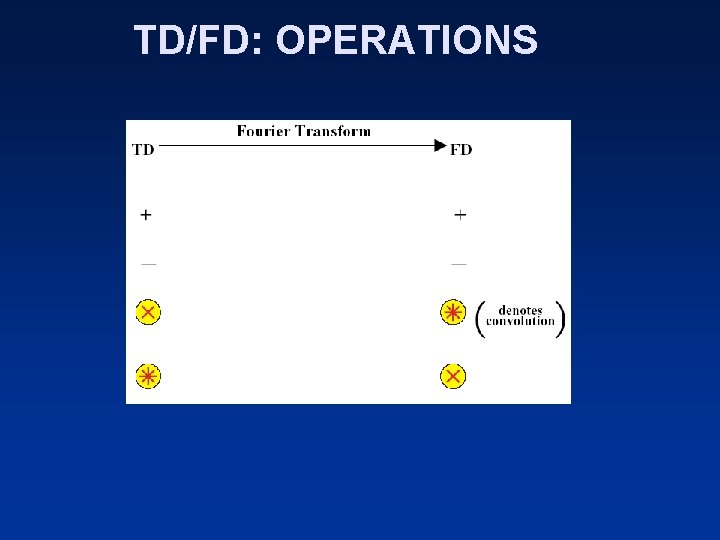
TD/FD: OPERATIONS
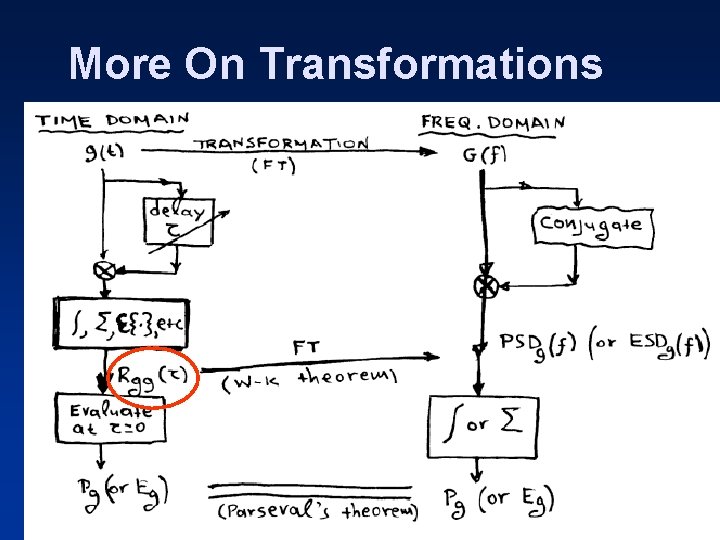
More On Transformations
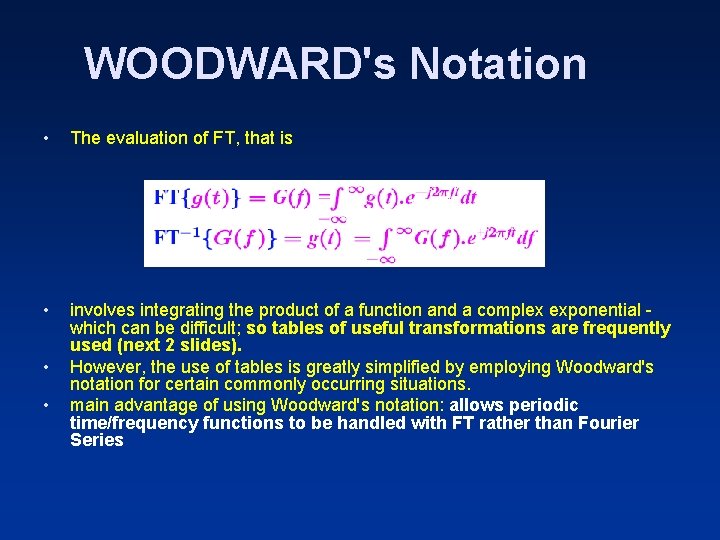
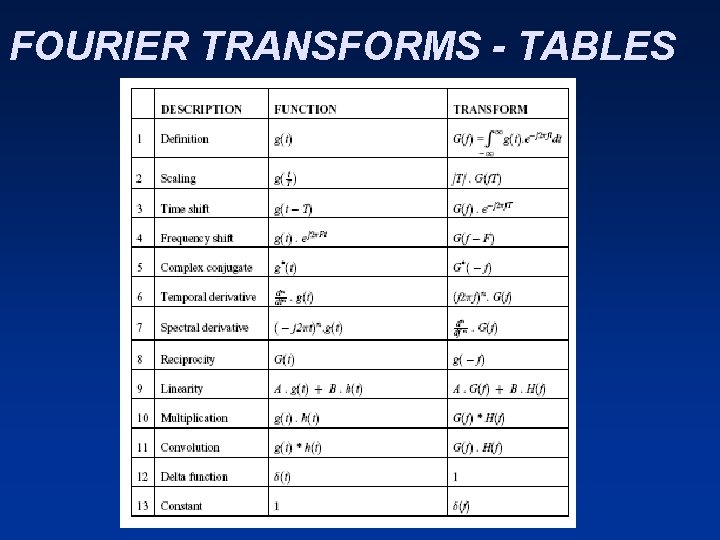
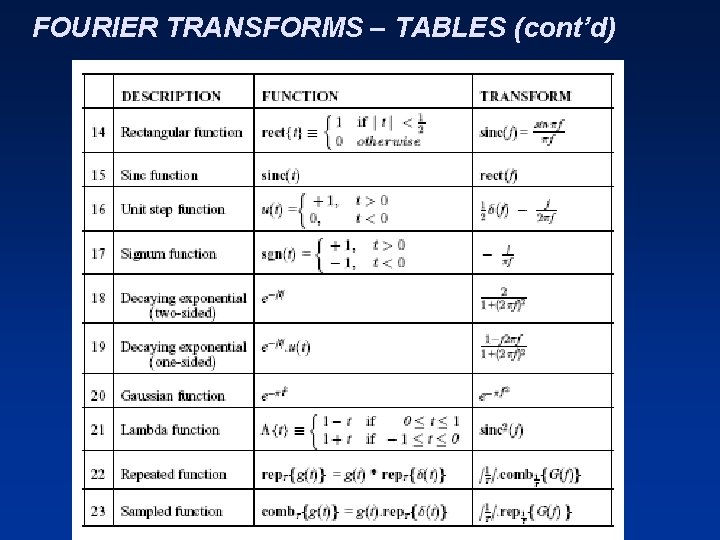
WOODWARD's Notation • The evaluation of FT, that is • involves integrating the product of a function and a complex exponential which can be difficult; so tables of useful transformations are frequently used (next 2 slides). However, the use of tables is greatly simplified by employing Woodward's notation for certain commonly occurring situations. main advantage of using Woodward's notation: allows periodic time/frequency functions to be handled with FT rather than Fourier Series • •
FOURIER TRANSFORMS - TABLES
FOURIER TRANSFORMS – TABLES (cont’d)
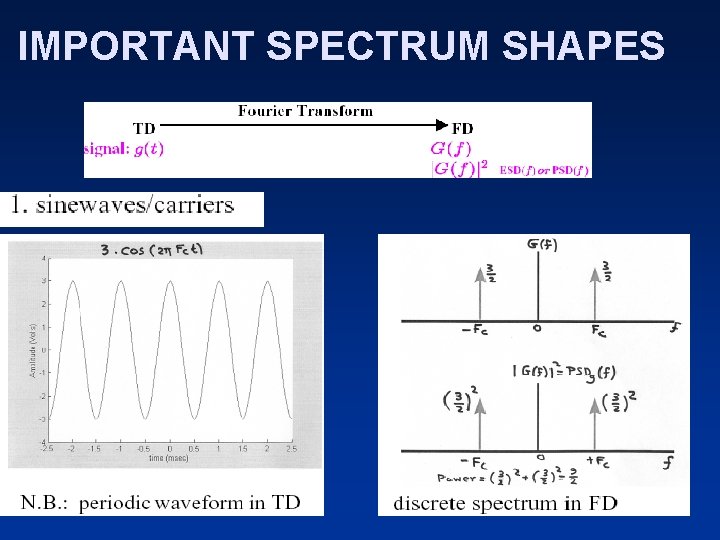
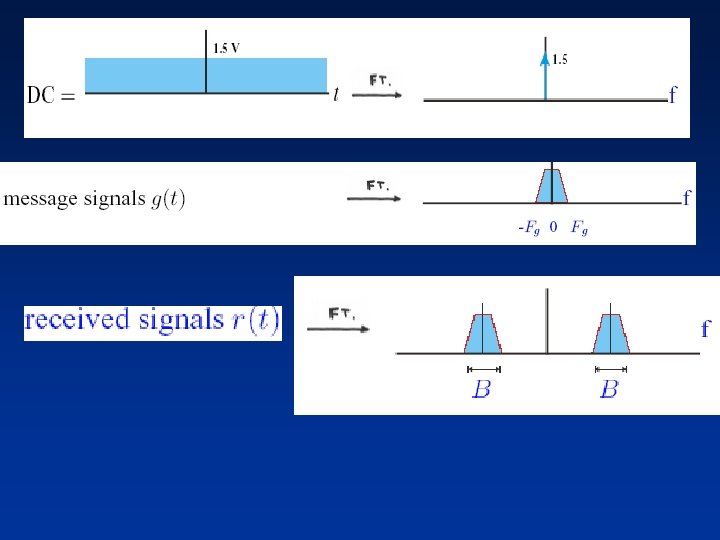
IMPORTANT SPECTRUM SHAPES
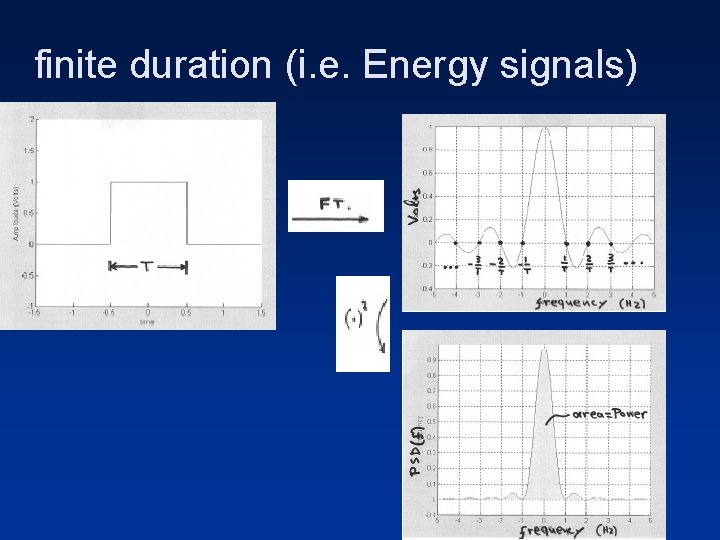
finite duration (i. e. Energy signals)
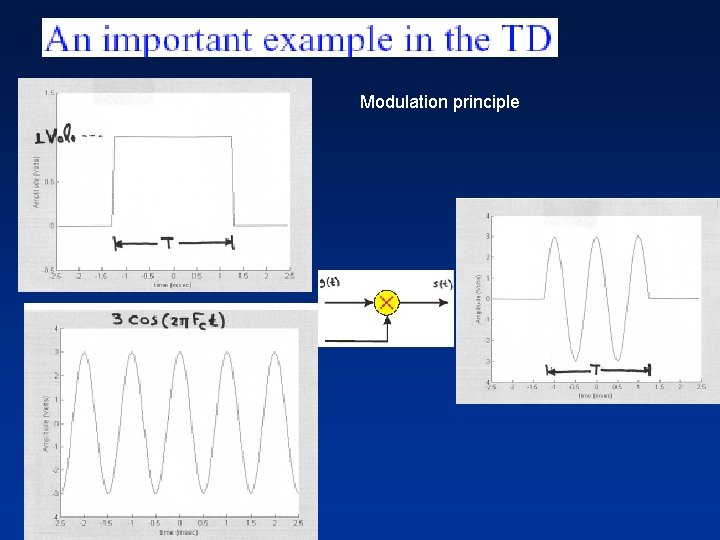
Modulation principle
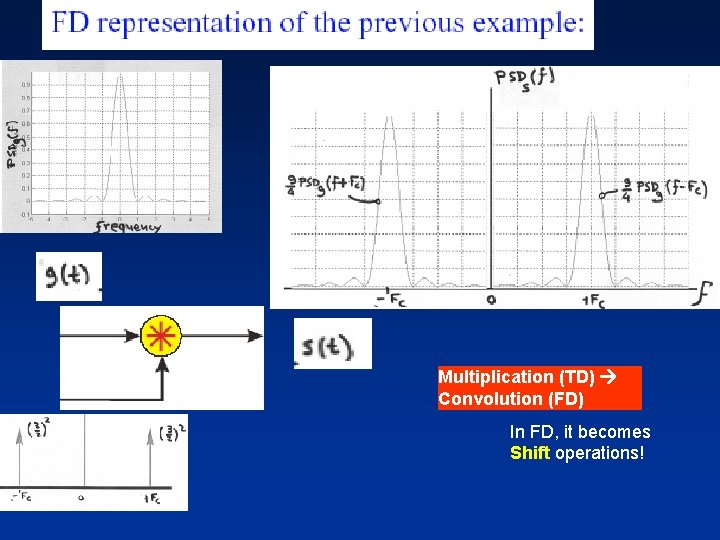
Multiplication (TD) Convolution (FD) In FD, it becomes Shift operations!
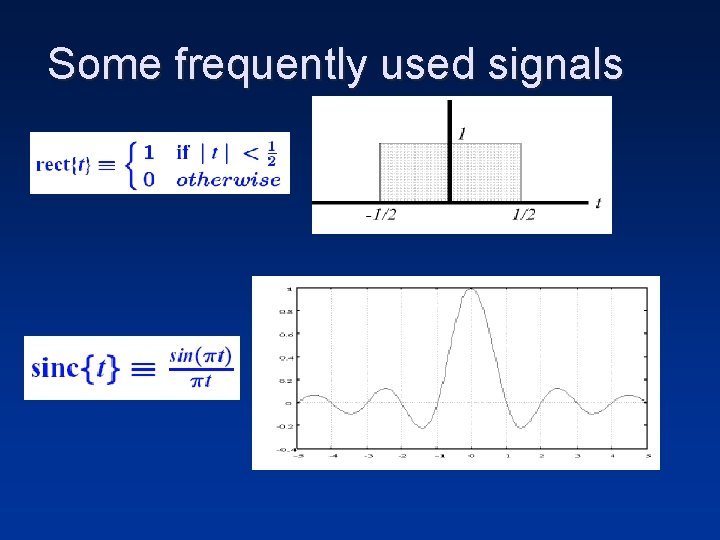
Some frequently used signals
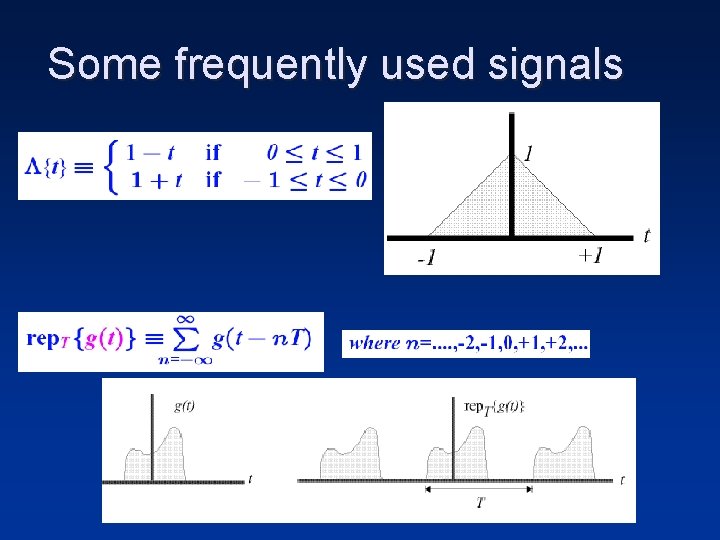
Some frequently used signals
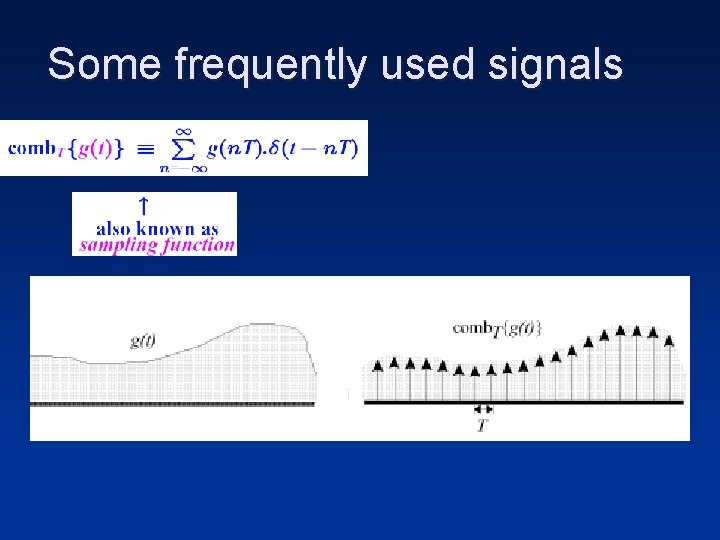
Some frequently used signals
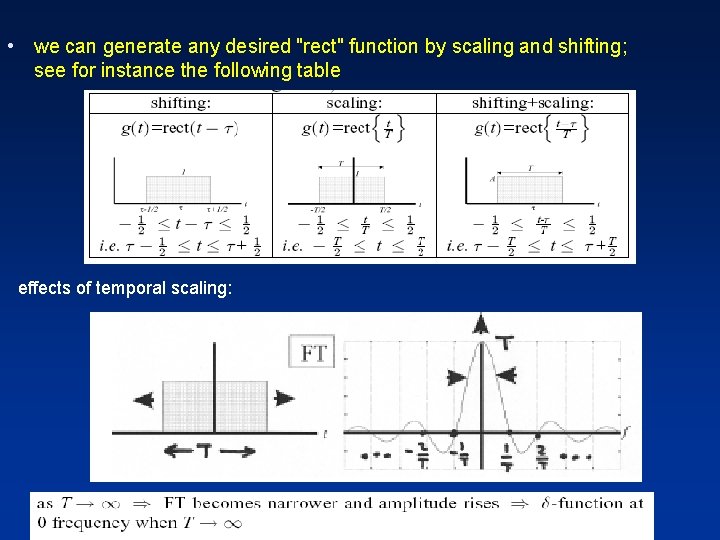
• we can generate any desired "rect" function by scaling and shifting; see for instance the following table effects of temporal scaling:
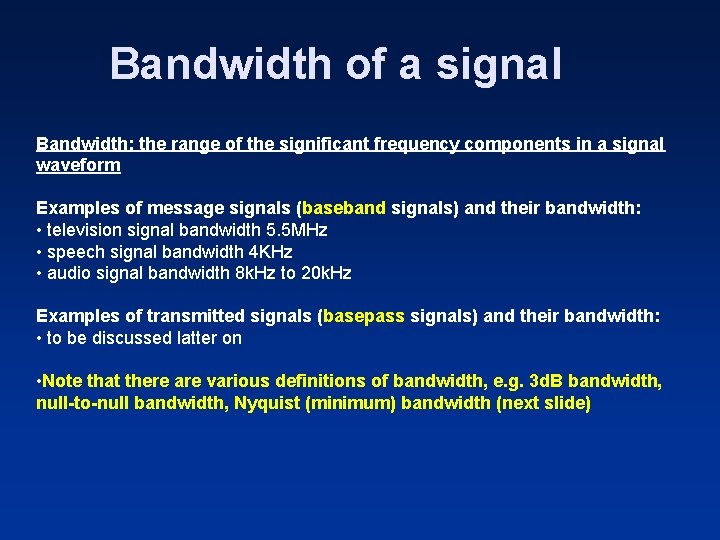
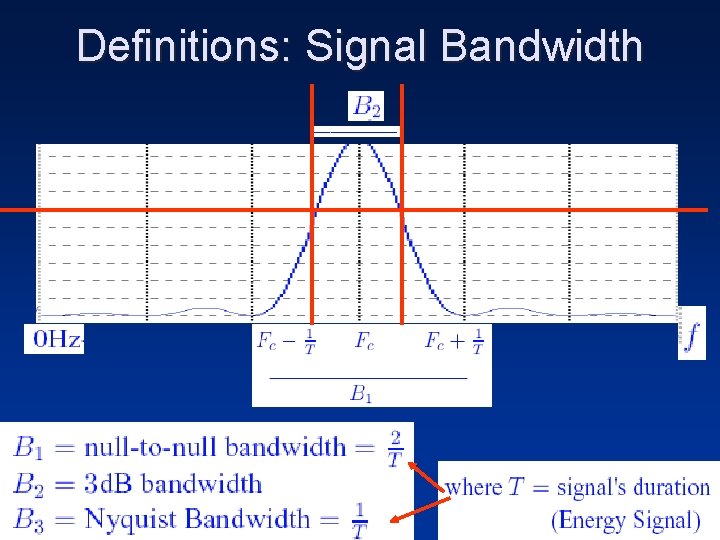
Bandwidth of a signal Bandwidth: the range of the significant frequency components in a signal waveform Examples of message signals (baseband signals) and their bandwidth: • television signal bandwidth 5. 5 MHz • speech signal bandwidth 4 KHz • audio signal bandwidth 8 k. Hz to 20 k. Hz Examples of transmitted signals (basepass signals) and their bandwidth: • to be discussed latter on • Note that there are various definitions of bandwidth, e. g. 3 d. B bandwidth, null-to-null bandwidth, Nyquist (minimum) bandwidth (next slide)
Definitions: Signal Bandwidth
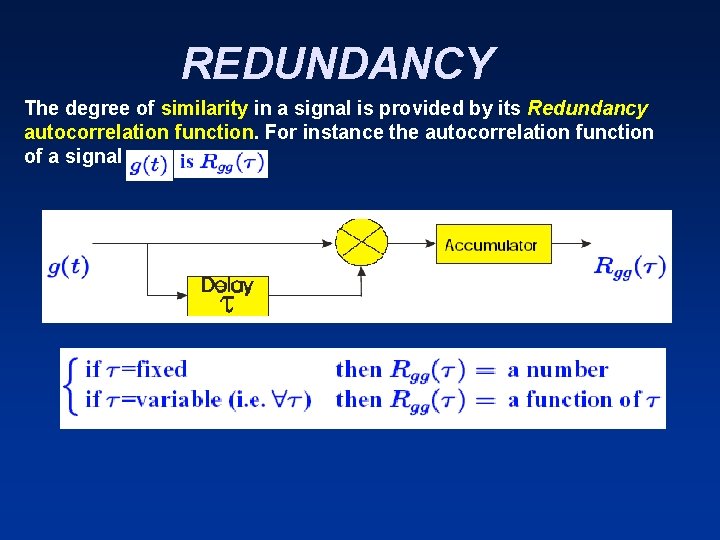
REDUNDANCY The degree of similarity in a signal is provided by its Redundancy autocorrelation function. For instance the autocorrelation function of a signal
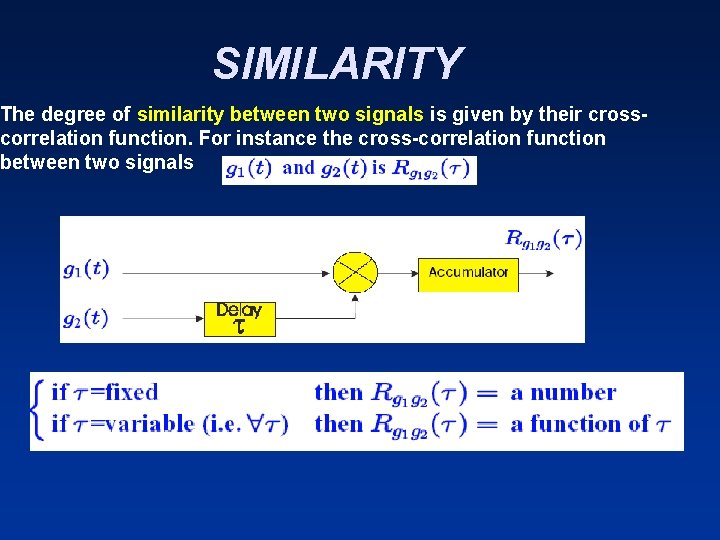
SIMILARITY The degree of similarity between two signals is given by their crosscorrelation function. For instance the cross-correlation function between two signals
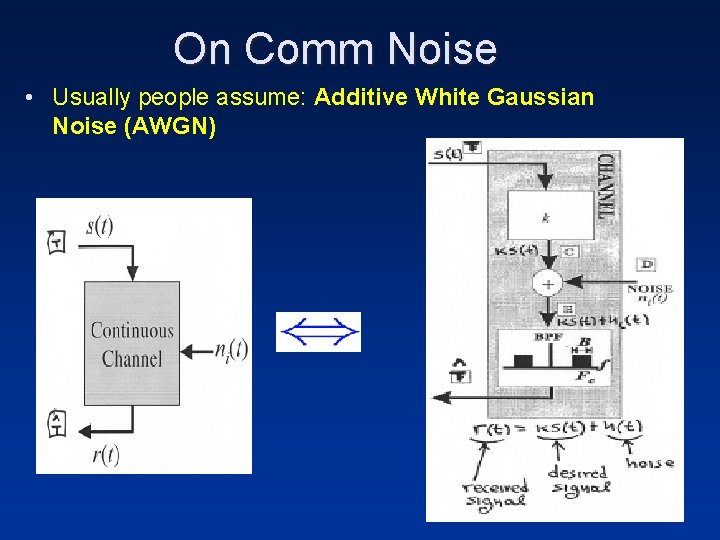
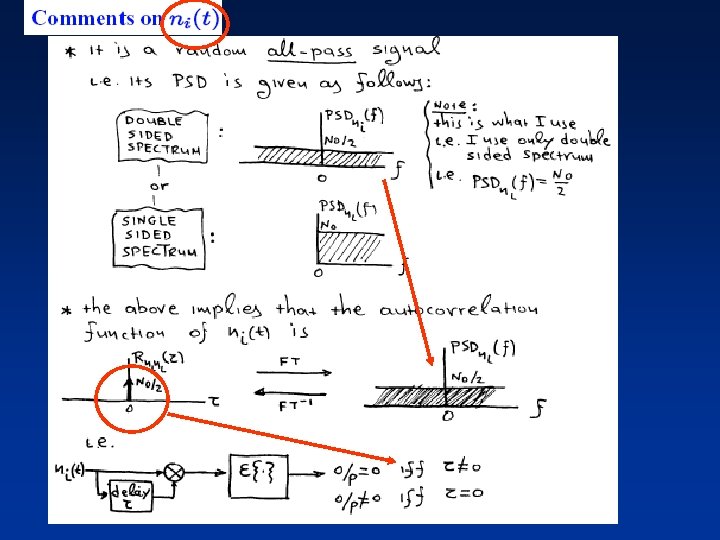
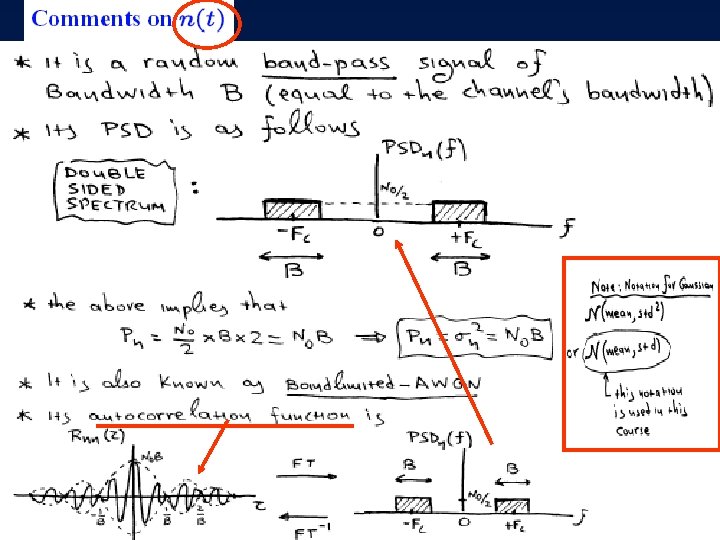
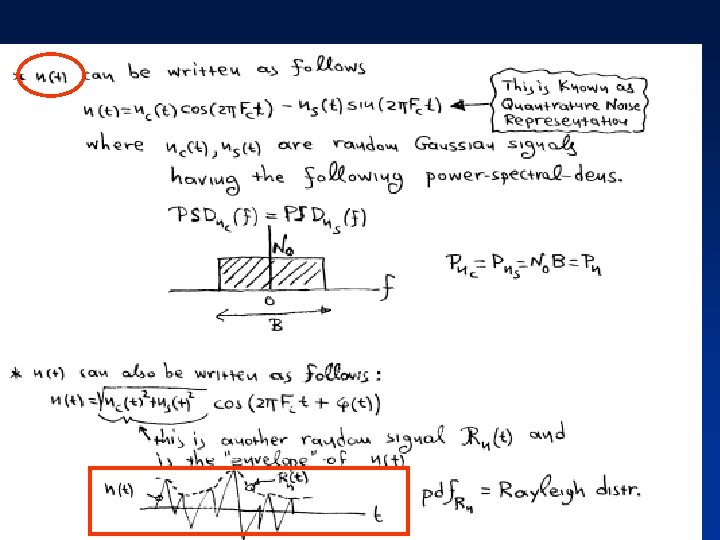
On Comm Noise • Usually people assume: Additive White Gaussian Noise (AWGN)
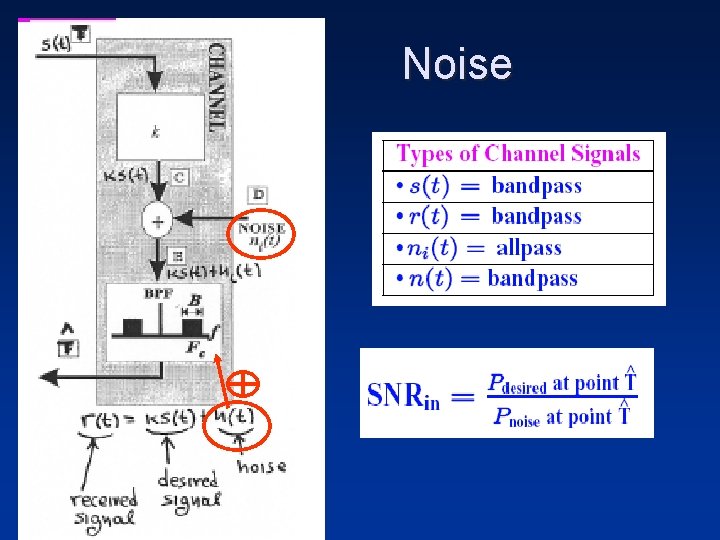
Noise