
Week 6 Work Motivation MGT 30525 ORGANIZATIONAL BEHAVIOR
Week 6 – Work Motivation MGT 30525 - ORGANIZATIONAL BEHAVIOR Dr. K. A. S. P. Kaluarachchi Senior Lecturer Department of Management and Organization Studies Faculty of Management and Finance University of Colombo 1
Learning Outcomes At the end of this lesson, you will be able to: § § § Define the concept of work motivation Know the process of motivation Identify the two types of motivation Describe theories of motivation Know the dimensions of job satisfaction 10/7/2020 2

The Concept of Work Motivation Work motivation is the creation of stimuli, incentives and working environments that enable people to perform to the best of their ability. The heart of motivation is to give people what they really want most from work. In return managers should expect more in the form of productivity, quality and service 10/7/2020 3
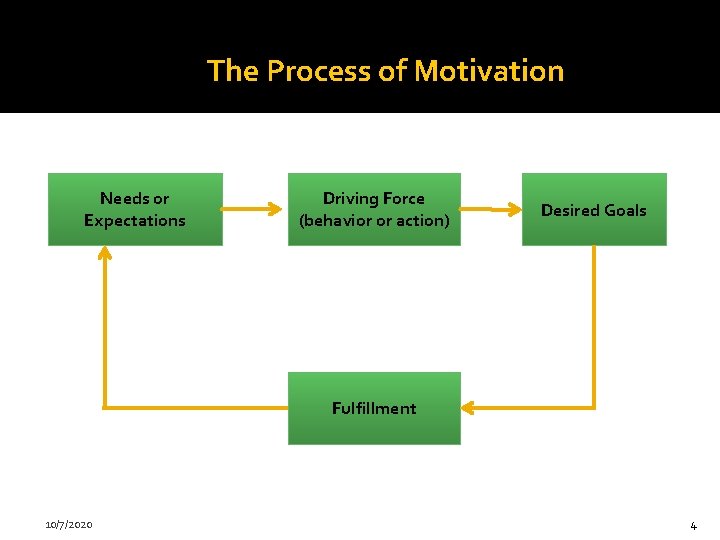
The Process of Motivation Needs or Expectations Driving Force (behavior or action) Desired Goals Fulfillment 10/7/2020 4
The Two Types of Motivation Extrinsic motivation ‘tangible’ rewards such as salary and fringe benefits, security, promotion, contract of service, the work environment and conditions of work Intrinsic motivation ‘psychological’ rewards such as the opportunity to use one’s ability, a sense of challenge and achievement, receiving appreciation, positive recognition and being treated in a caring and considerate manner 10/7/2020 5
The Two Types of Motivation Theories Content theories attempt to explain the specific things that actually motivate the individual at work. They try to identify people’s needs and their relative strengths, and the goals they pursue in order to satisfy these needs. Content theories place emphasis on the nature of needs and what motivates Process theories attempt to identify the relationship among the dynamic variables that make up motivation. These try to explain how behavior is initiated, directed and sustained. Process theories place emphasis on the actual process of motivation 10/7/2020 6

The Content Theories of Motivation Major content theories of motivation include: Maslow’s hierarchy of needs theory Alderfer’s ERG theory Herzberg’s two-factor theory Mc. Clelland’s achievement motivation theory 10/7/2020 7
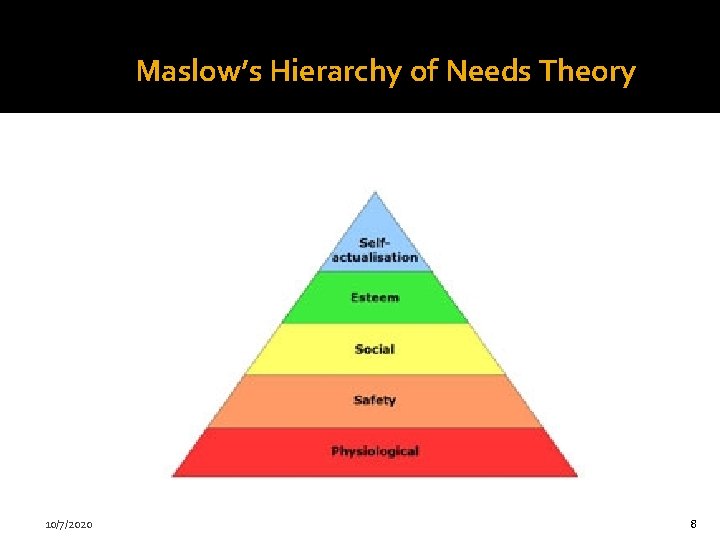
Maslow’s Hierarchy of Needs Theory 10/7/2020 8
Alderfer’s ERG Theory Existence needs are concerned with sustaining human existence and survival and cover physiological and safety needs of a material nature Relatedness needs are concerned with relationships to the social environment and cover love or belonging, affiliation and meaningful interpersonal relationships of a safety or esteem nature Growth needs are concerned with the development of potential and cover self-esteem and self-actualization 10/7/2020 9
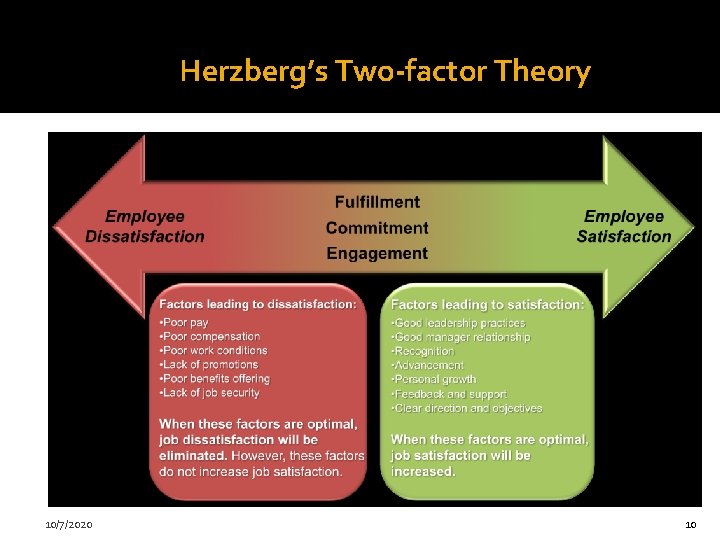
Herzberg’s Two-factor Theory 10/7/2020 10
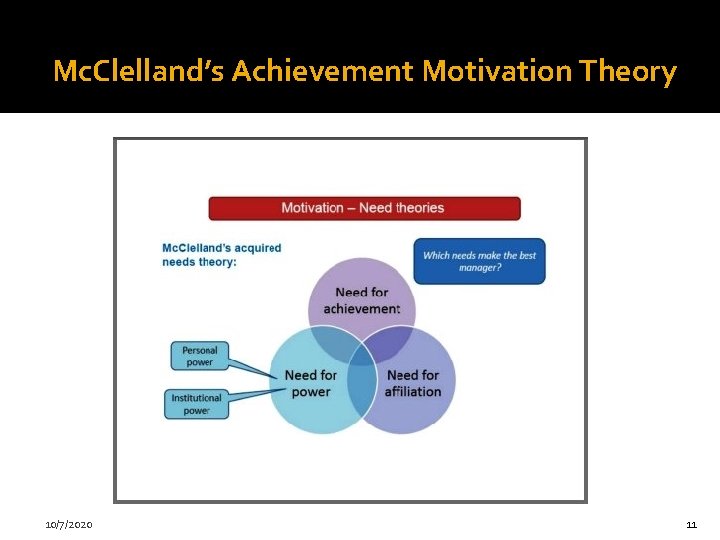
Mc. Clelland’s Achievement Motivation Theory 10/7/2020 11
The Process Theories of Motivation Major process theories of motivation include: Vroom’s expectancy theory Porter and Lawler’s theory Adam’s equity theory Lock’s goal setting theory 10/7/2020 12
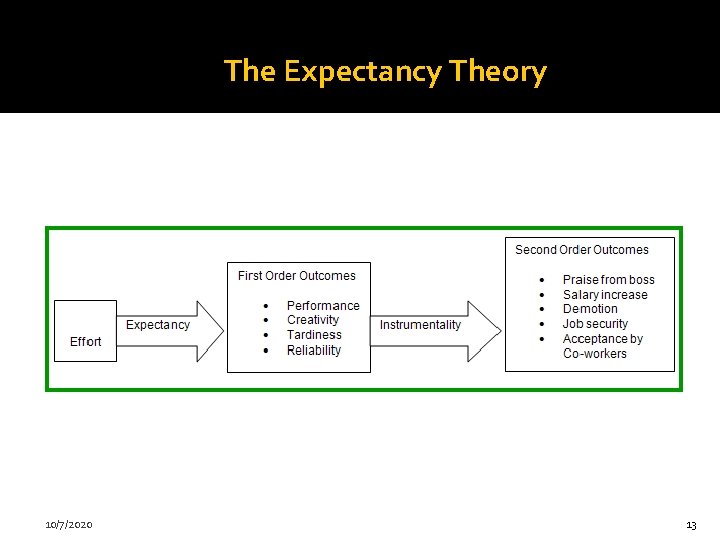
The Expectancy Theory 10/7/2020 13
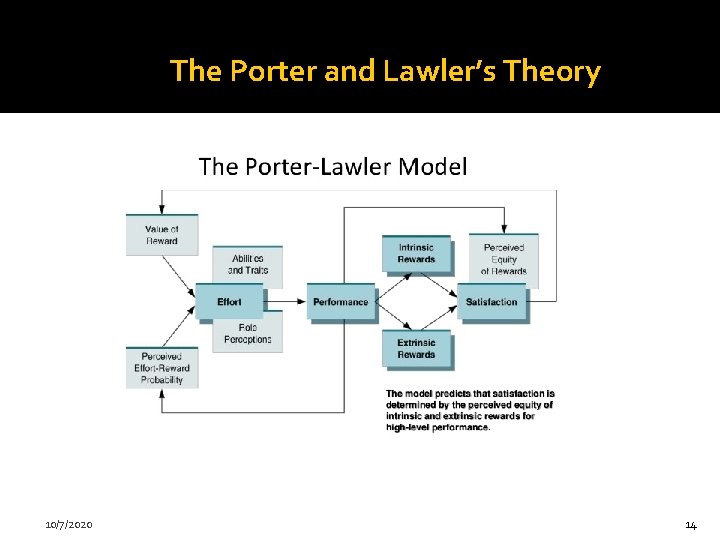
The Porter and Lawler’s Theory 10/7/2020 14
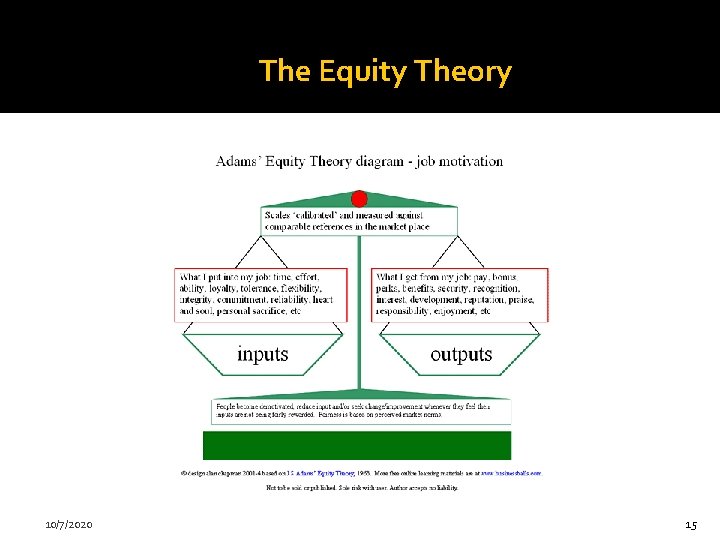
The Equity Theory 10/7/2020 15

The Lock’s Goal Setting Theory 10/7/2020 16
The Dimensions of Job Satisfaction Individual factors include personality, education and qualifications, intelligence and abilities, age, marital status, orientation to work Social factors refer to relationships with coworkers, group working and norms, opportunities for interaction, informal organization Cultural factors are the underlying attitudes, beliefs and values 10/7/2020 17
The Dimensions of Job Satisfaction…. . Organizational factors include nature and size, formal structure, HR policies and procedures, employee relations, nature of the work, technology and work organization, supervision and styles of leadership, management systems, working conditions Environmental factors consist of economic, social, technical and governmental influences 10/7/2020 18

Questions and Answers ? ? // Thank you very much! 10/7/2020 19
- Slides: 19