
WEEK 6 Functional Behavior Assessments and Behavior Intervention
WEEK 6 Functional Behavior Assessments and Behavior Intervention Plans
• http: //www. youtube. com/watch? v=18 cwpz ZNsjk
Keys to Effective Intervention Plans • Flexibility • Think outside the box • Baby Steps
Yes, we must get a consent for assessment to conduct a Functional Behavior Assessment (FBA)
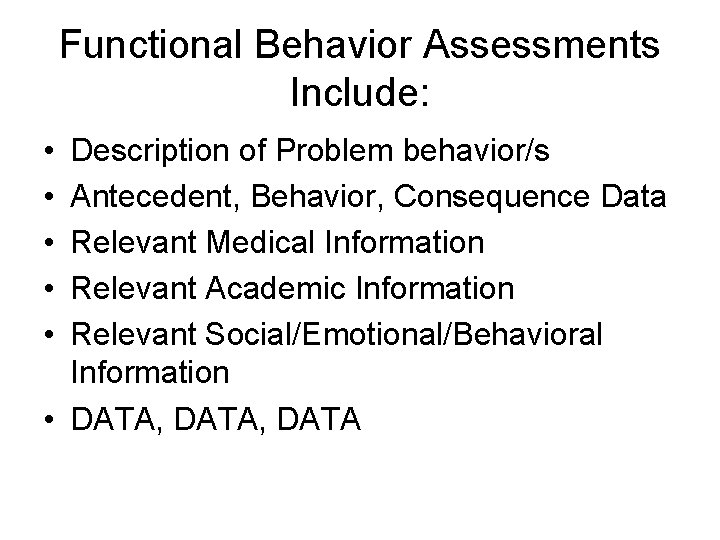
Functional Behavior Assessments Include: • • • Description of Problem behavior/s Antecedent, Behavior, Consequence Data Relevant Medical Information Relevant Academic Information Relevant Social/Emotional/Behavioral Information • DATA, DATA
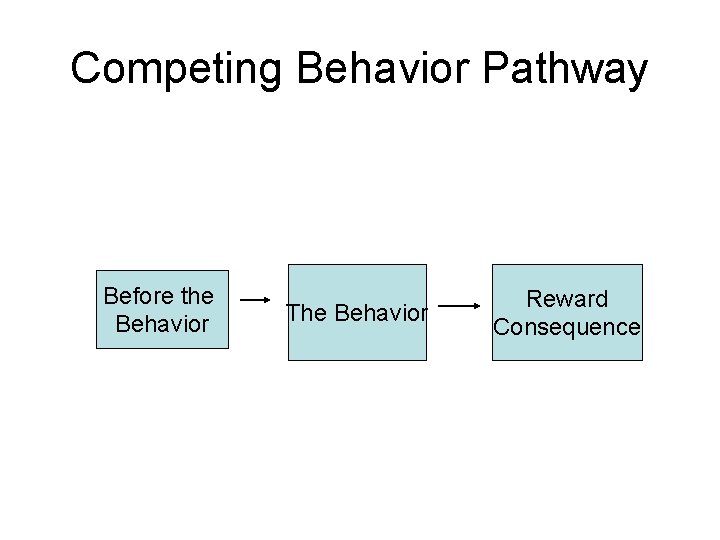
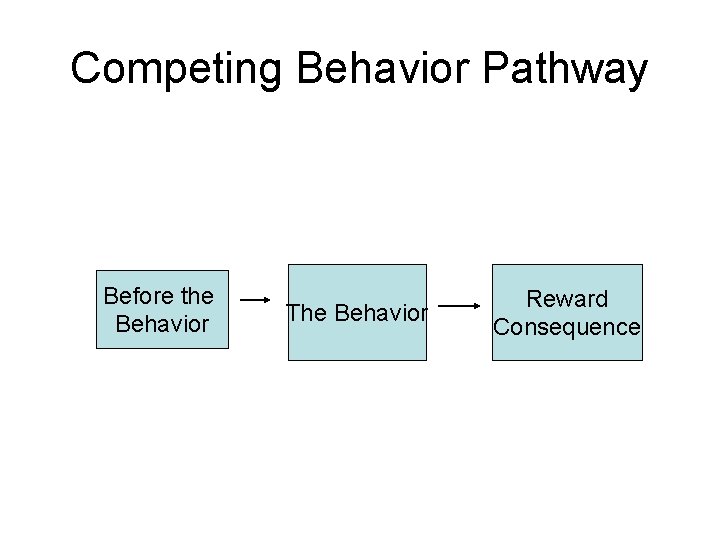
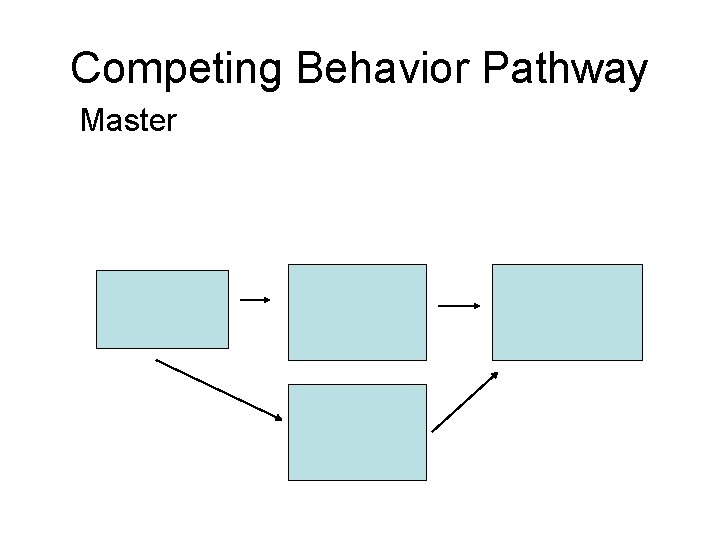
Competing Behavior Pathway Before the Behavior The Behavior Reward Consequence
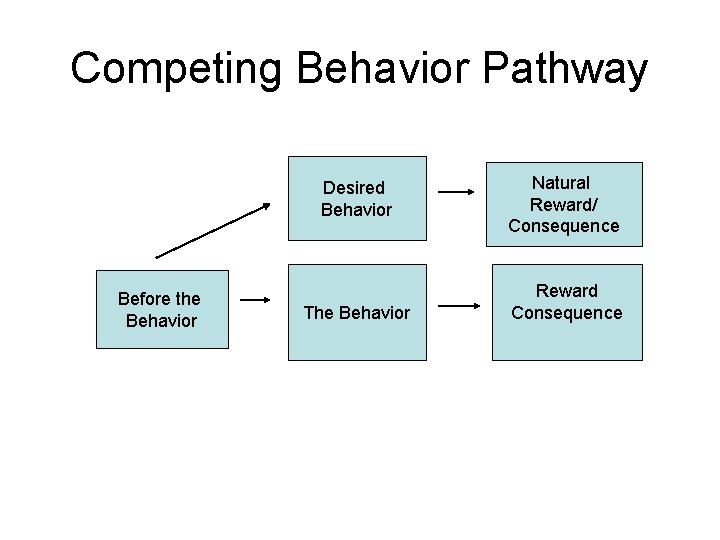
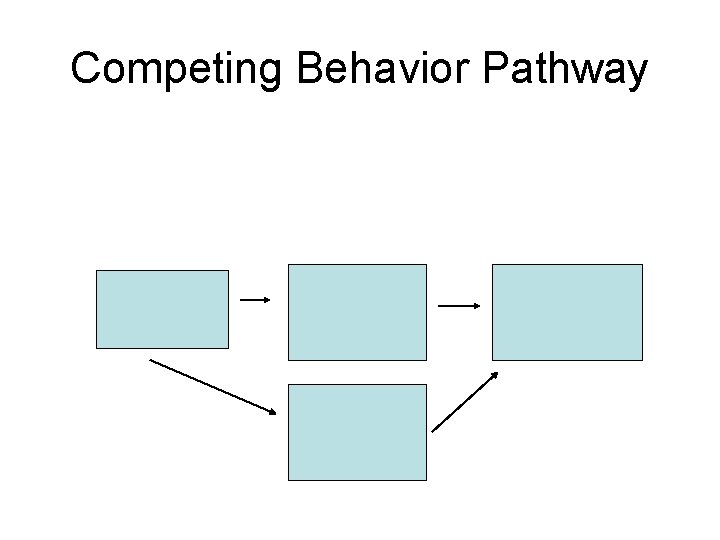
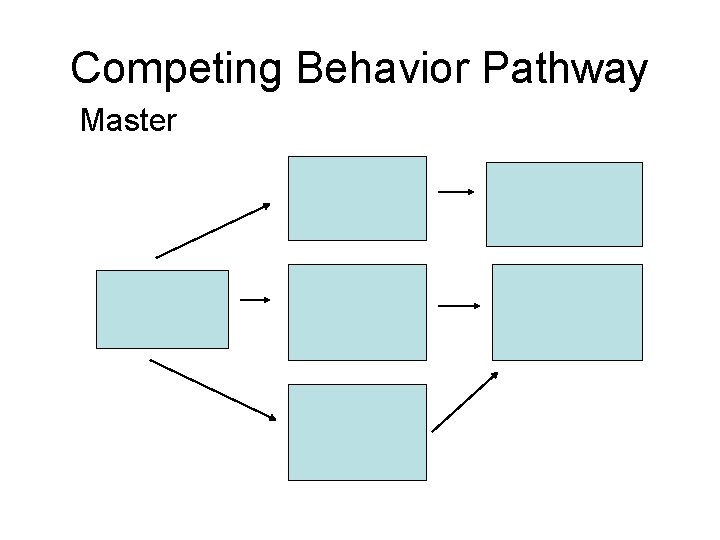
Competing Behavior Pathway Desired Behavior Before the Behavior The Behavior Natural Reward/ Consequence Reward Consequence
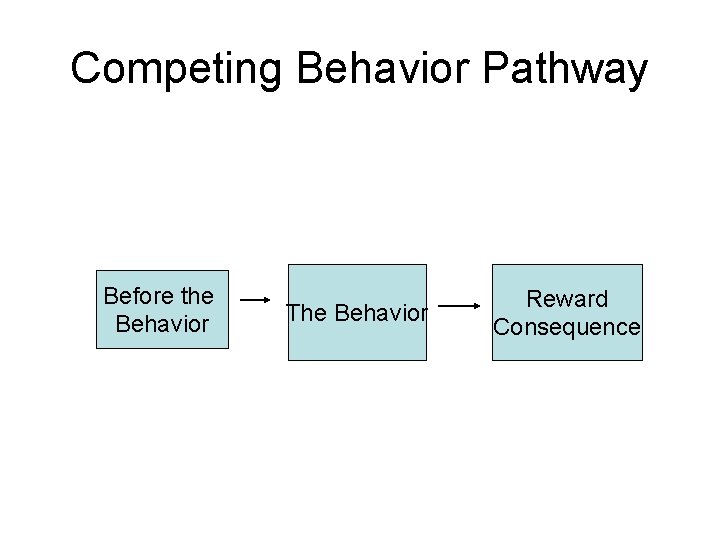
Competing Behavior Pathway Before the Behavior The Behavior Reward Consequence
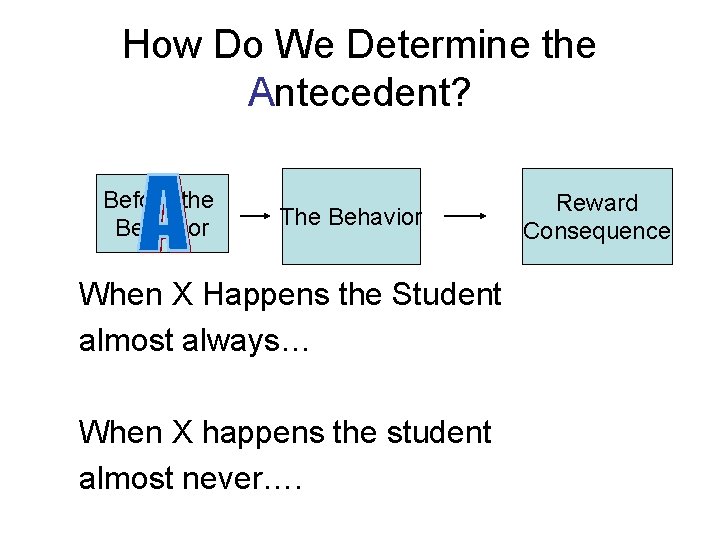
How Do We Determine the Antecedent? Before the Behavior The Behavior When X Happens the Student almost always… When X happens the student almost never…. Reward Consequence
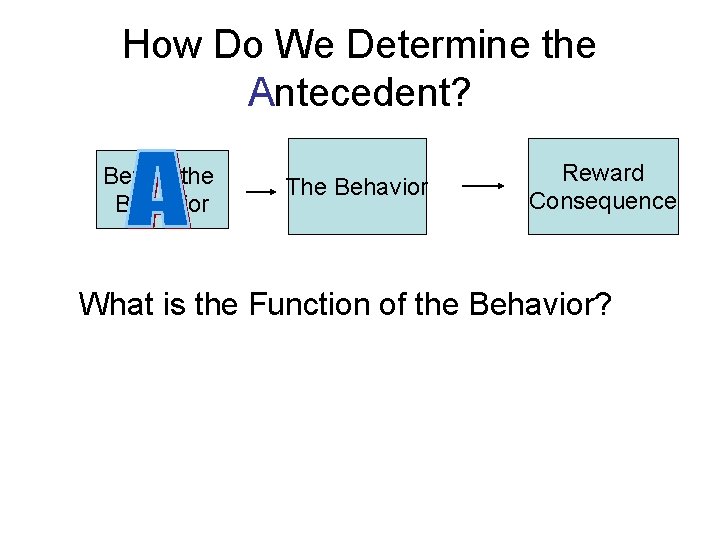
How Do We Determine the Antecedent? Before the Behavior The Behavior Reward Consequence What is the Function of the Behavior?
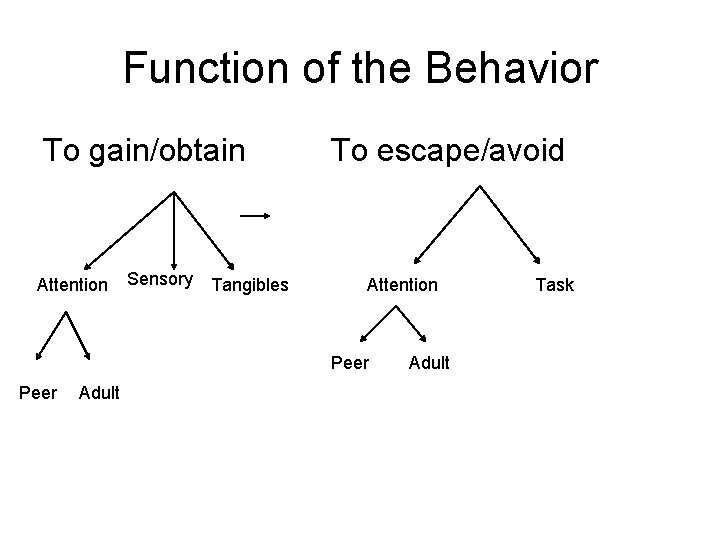
Function of the Behavior To gain/obtain Attention Sensory Tangibles To escape/avoid Attention Peer Adult Task
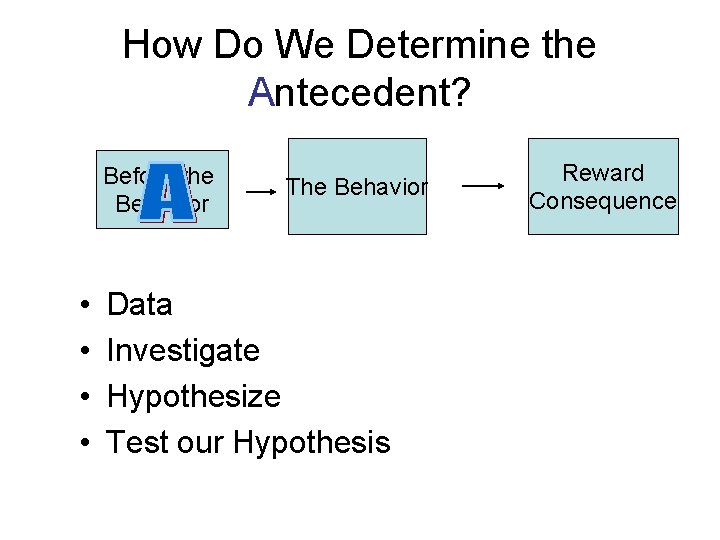
How Do We Determine the Antecedent? Before the Behavior • • The Behavior Data Investigate Hypothesize Test our Hypothesis Reward Consequence
How Do We Determine the Antecedent? Before the Behavior The Behavior Reward Consequence What happens when we don’t know what the Antecedent is?
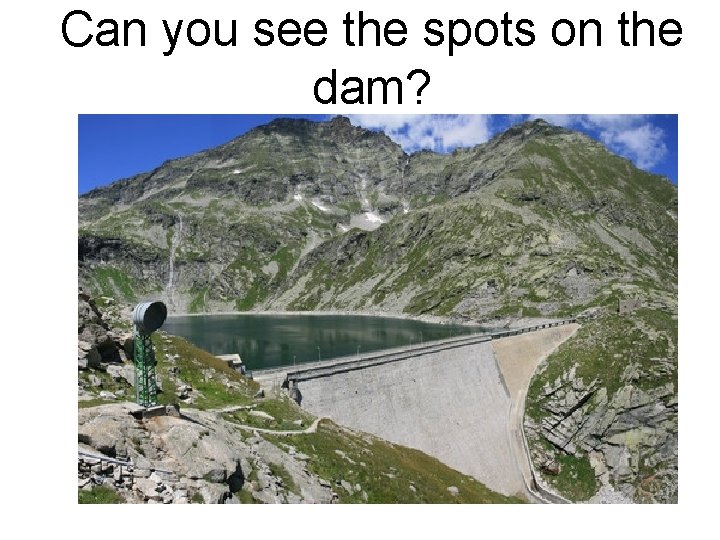
Can you see the spots on the dam?
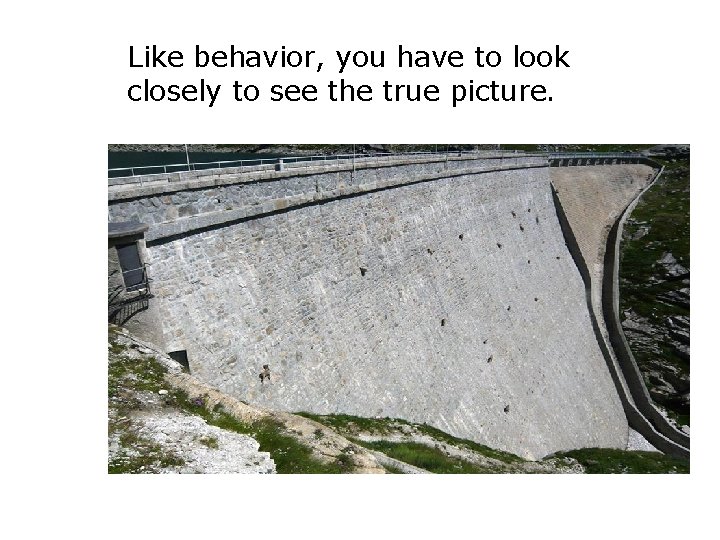
Like behavior, you have to look closely to see the true picture.
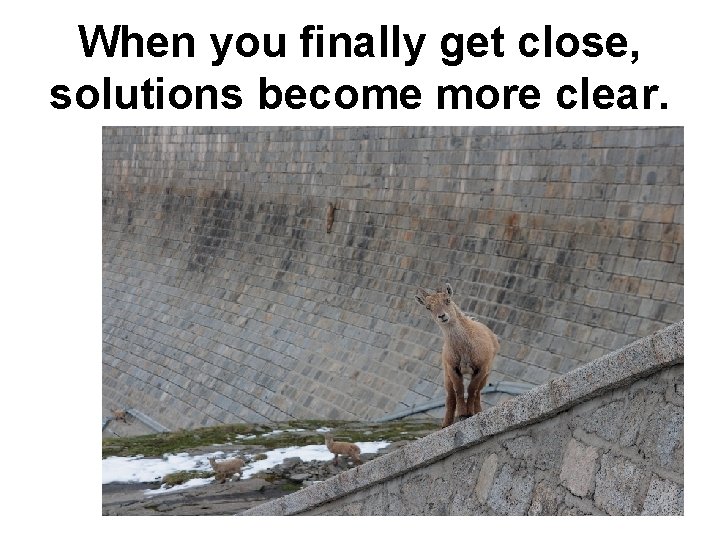
When you finally get close, solutions become more clear.
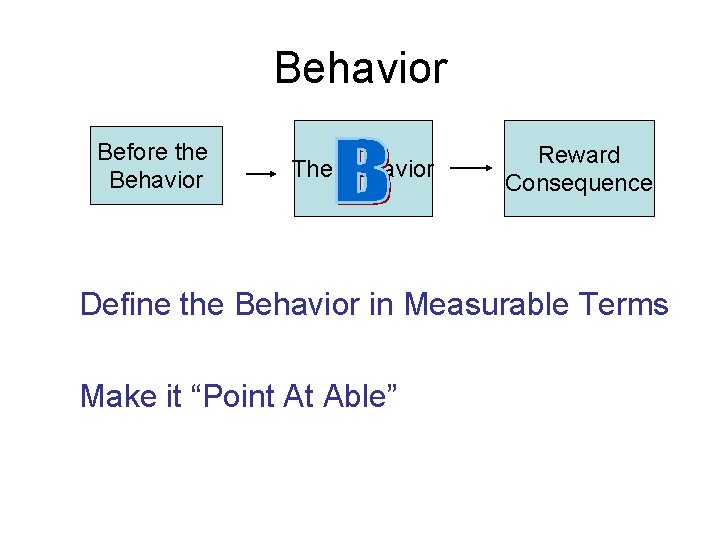
Behavior Before the Behavior The Behavior Reward Consequence Define the Behavior in Measurable Terms Make it “Point At Able”
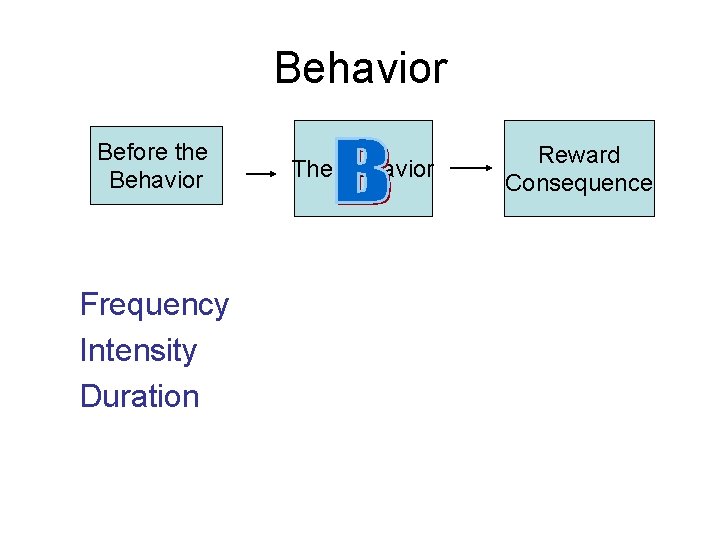
Behavior Before the Behavior Frequency Intensity Duration The Behavior Reward Consequence
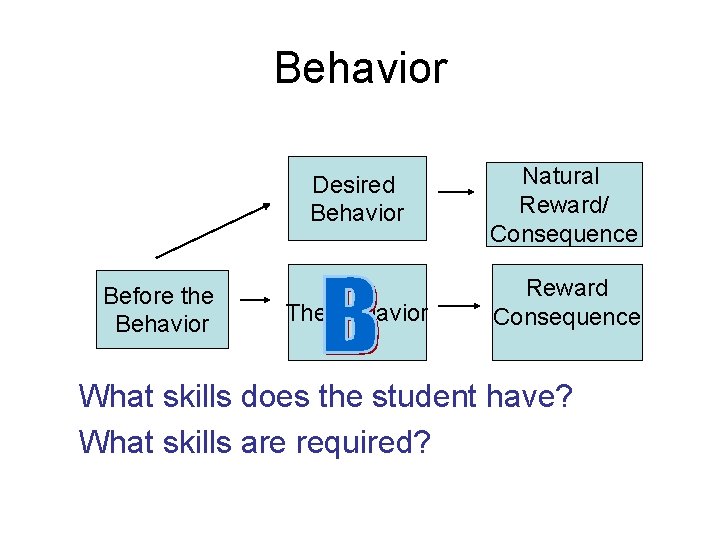
Behavior Before the Behavior Desired Behavior Natural Reward/ Consequence The Behavior Reward Consequence What skills does the student have? What skills are required?
If a child CAN do WELL he WILL do WELL! • We must identify the “Lagging” or “Lacking” skills • We must teach new skills
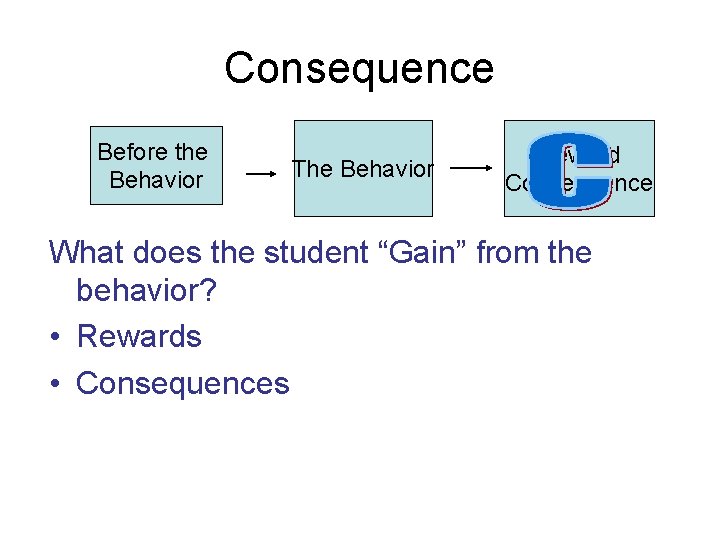
Consequence Before the Behavior The Behavior Reward Consequence What does the student “Gain” from the behavior? • Rewards • Consequences
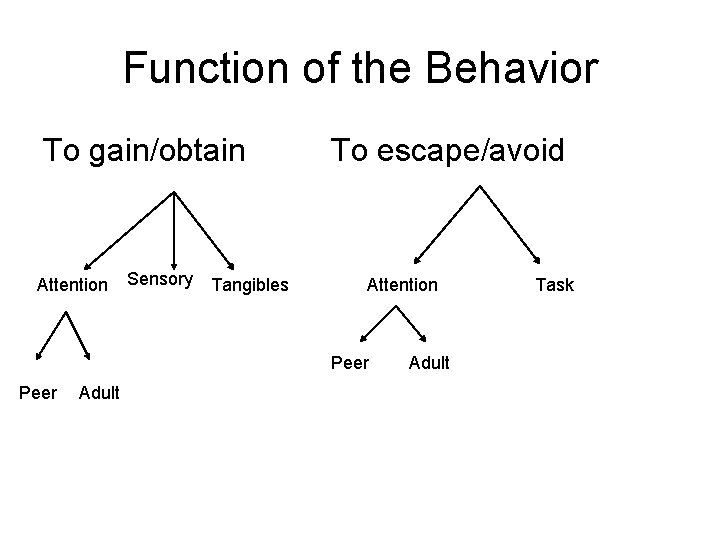
Function of the Behavior To gain/obtain Attention Sensory Tangibles To escape/avoid Attention Peer Adult Task
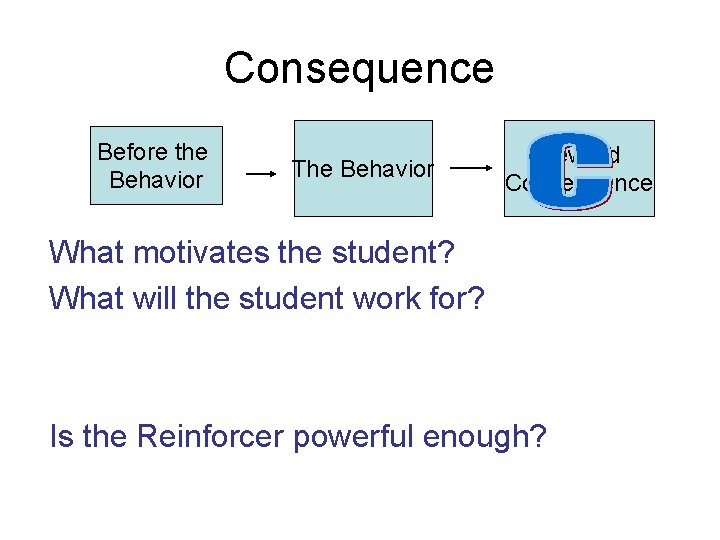
Consequence Before the Behavior The Behavior Reward Consequence What motivates the student? What will the student work for? Is the Reinforcer powerful enough?
How do we eliminate the behavior? Change the behavior?
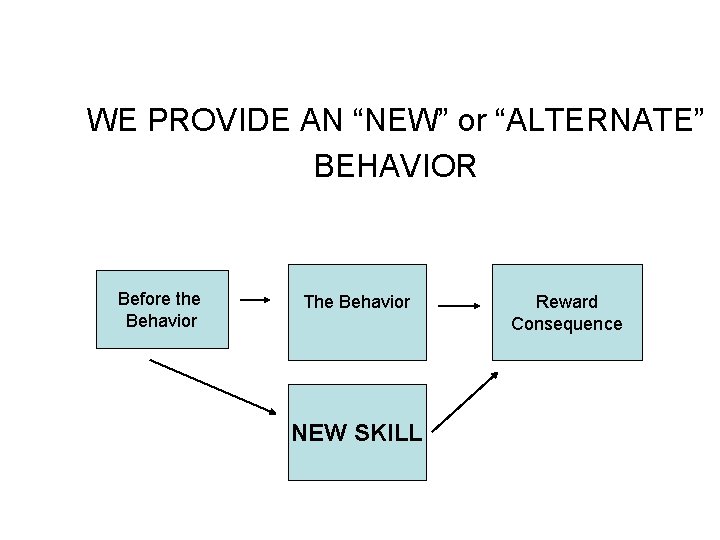
WE PROVIDE AN “NEW” or “ALTERNATE” BEHAVIOR Before the Behavior The Behavior NEW SKILL Reward Consequence
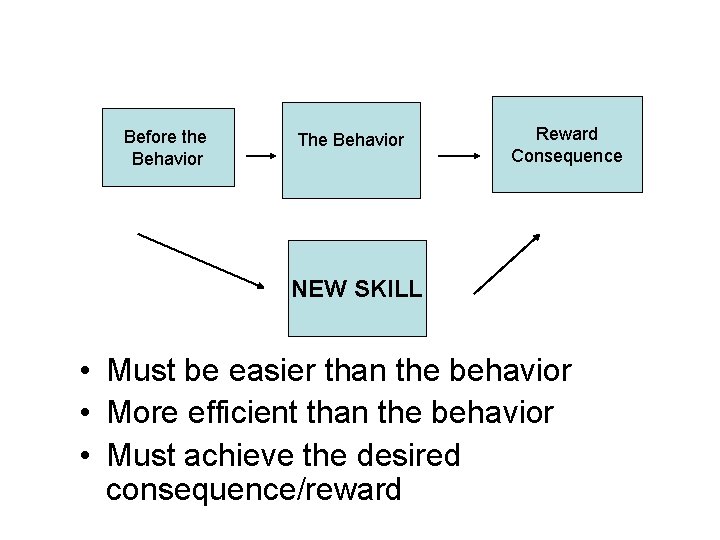
Before the Behavior The Behavior Reward Consequence NEW SKILL • Must be easier than the behavior • More efficient than the behavior • Must achieve the desired consequence/reward
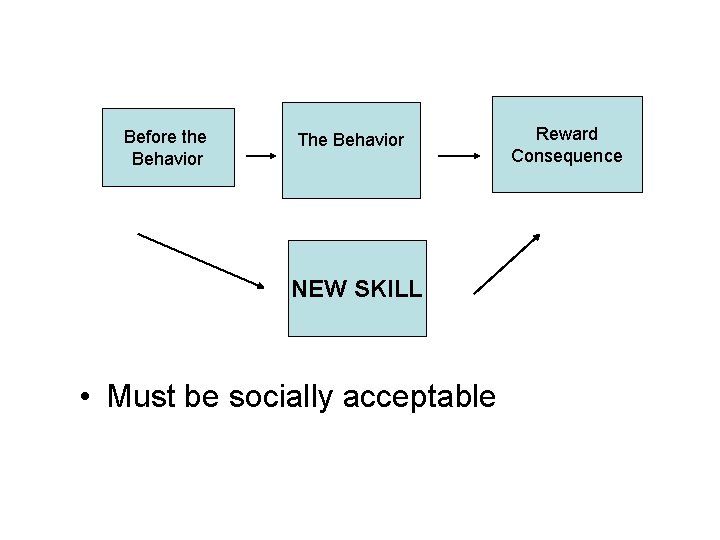
Before the Behavior The Behavior NEW SKILL • Must be socially acceptable Reward Consequence
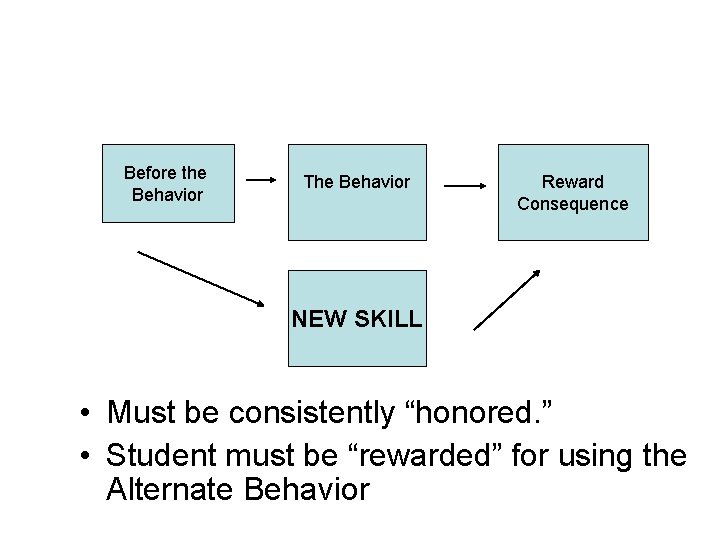
Before the Behavior The Behavior Reward Consequence NEW SKILL • Must be consistently “honored. ” • Student must be “rewarded” for using the Alternate Behavior
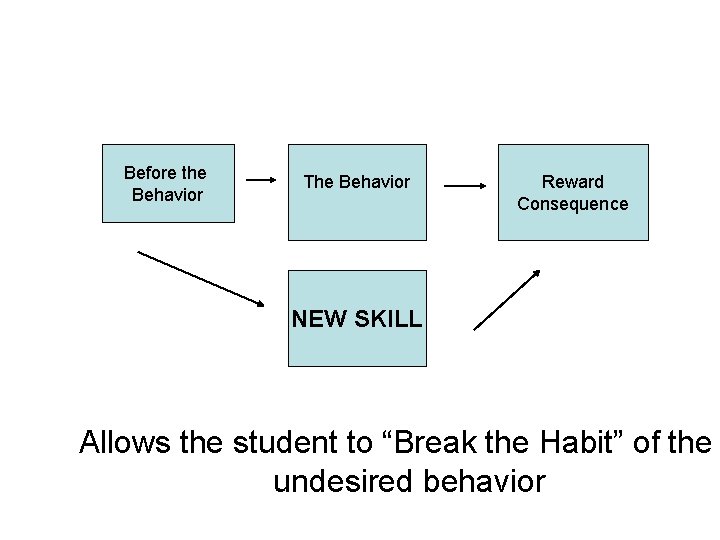
Before the Behavior The Behavior Reward Consequence NEW SKILL Allows the student to “Break the Habit” of the undesired behavior
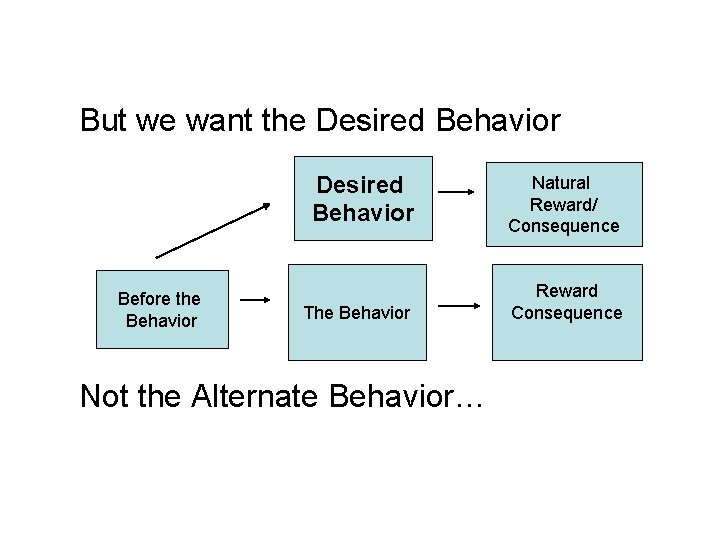
But we want the Desired Behavior Before the Behavior The Behavior Not the Alternate Behavior… Natural Reward/ Consequence Reward Consequence
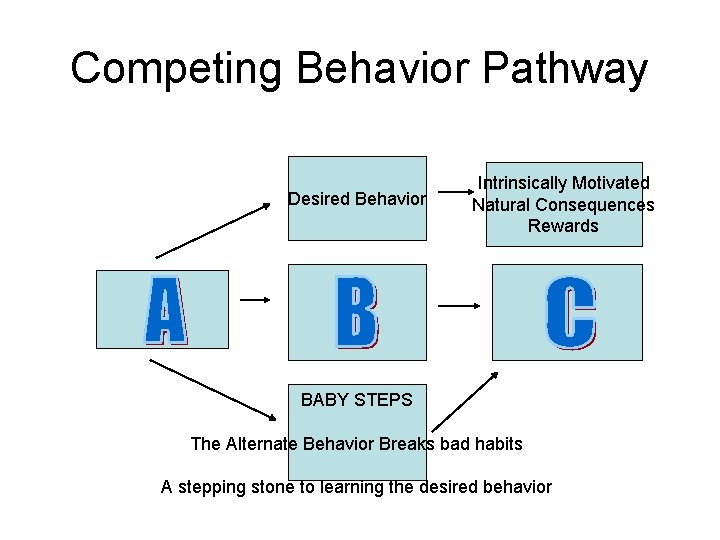
Competing Behavior Pathway Desired Behavior Intrinsically Motivated Natural Consequences Rewards BABY STEPS The Alternate Behavior Breaks bad habits A stepping stone to learning the desired behavior
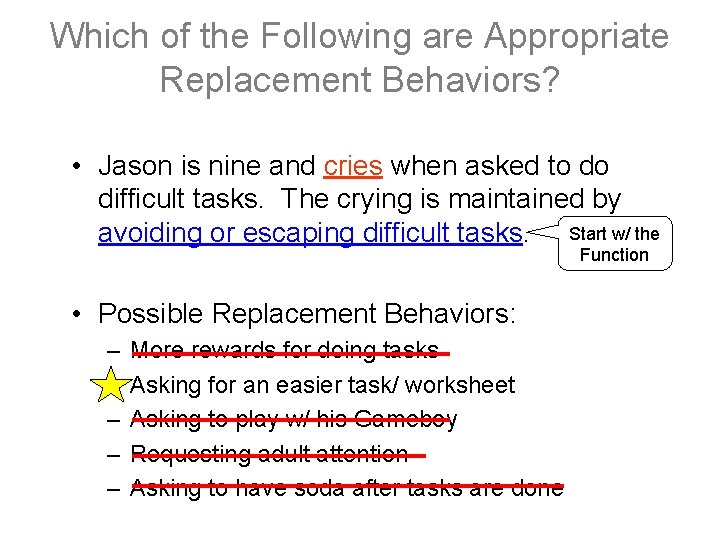
Which of the Following are Appropriate Replacement Behaviors? • Jason is nine and cries when asked to do difficult tasks. The crying is maintained by avoiding or escaping difficult tasks. Start w/ the Function • Possible Replacement Behaviors: – – – More rewards for doing tasks Asking for an easier task/ worksheet Asking to play w/ his Gameboy Requesting adult attention Asking to have soda after tasks are done
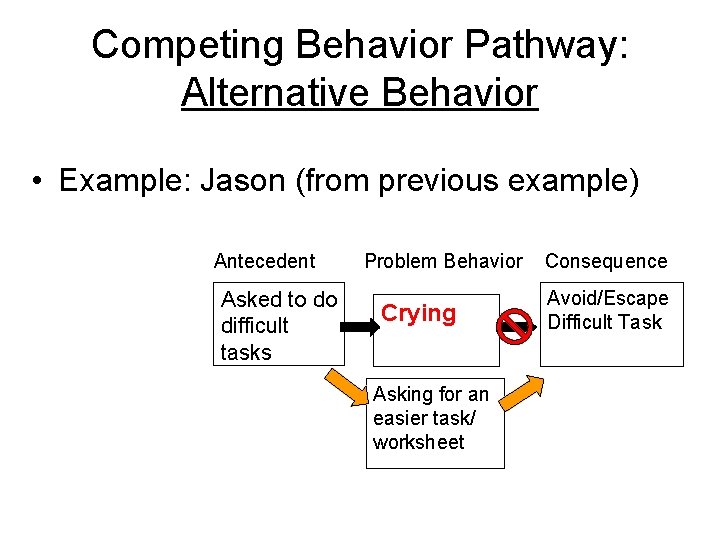
Competing Behavior Pathway: Alternative Behavior • Example: Jason (from previous example) Antecedent Asked to do difficult tasks Problem Behavior Crying Asking for an easier task/ worksheet Consequence Avoid/Escape Difficult Task
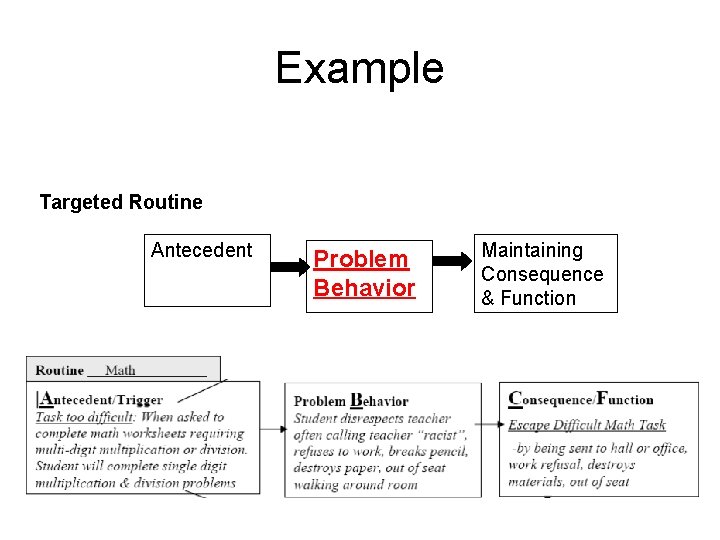
Example Targeted Routine Antecedent Problem Behavior Maintaining Consequence & Function
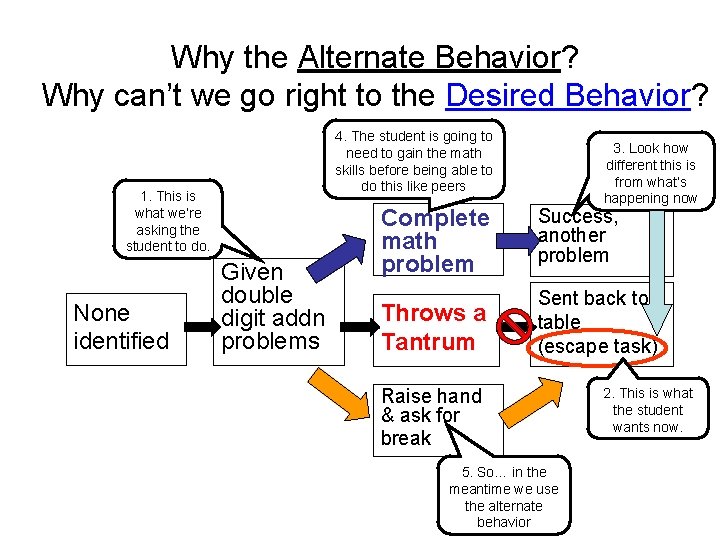
Why the Alternate Behavior? Why can’t we go right to the Desired Behavior? 4. The student is going to need to gain the math skills before being able to do this like peers 1. This is what we’re asking the student to do. None identified Given double digit addn problems 3. Look how different this is from what’s happening now Complete math problem Success, another problem Throws a Tantrum Sent back to table (escape task) Raise hand & ask for break 5. So… in the meantime we use the alternate behavior 2. This is what the student wants now.
TOOLS • There a variety of ways to take data • There a variety of Functional Behavior Assessment tools that can be used
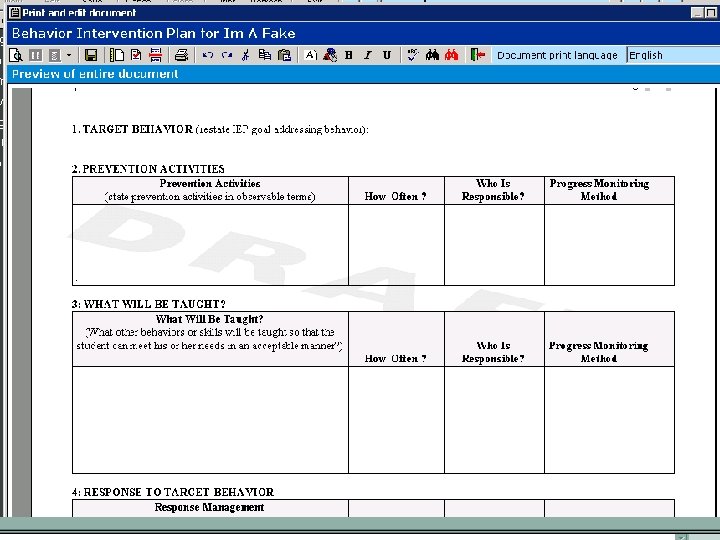
BIP FORM 1. Define The Target Behavior Jason will raise his hand ask for a break rather than tantrum Johnny will ask his peers a question to get attention instead of hitting
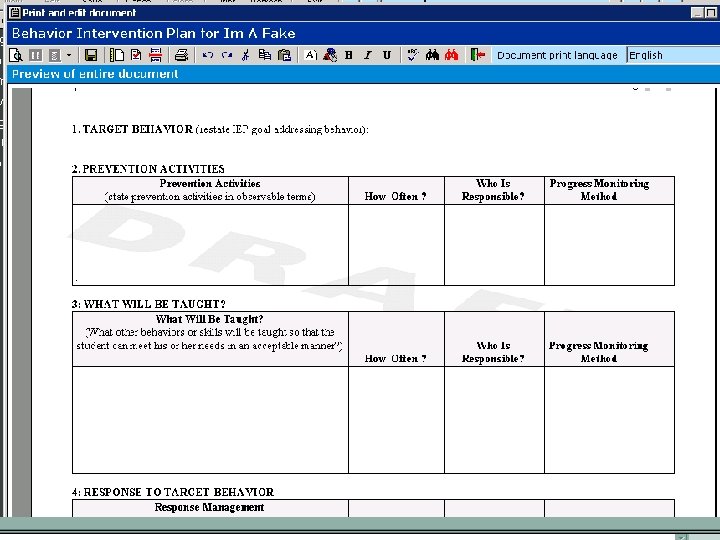
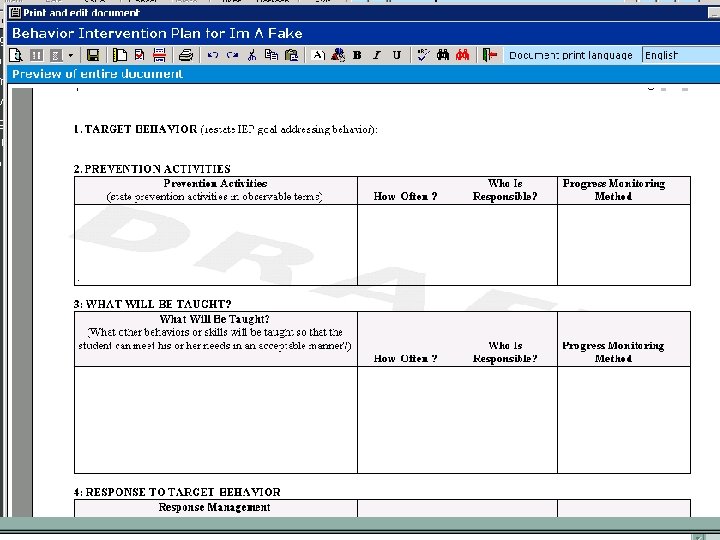
BIP FORM 2. Prevention Activities Warn student of upcoming event in advance Pre-teach Practice using alternate behavior Give fewer problems on worksheet
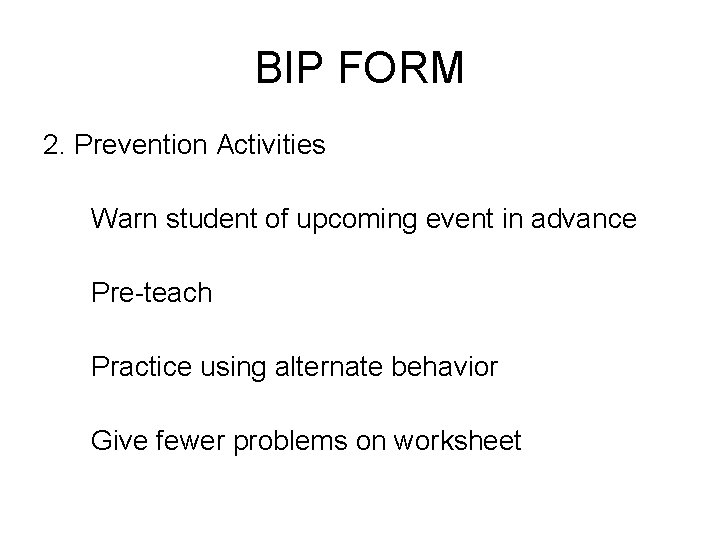
BIP FORM 2. Prevention Activities Warn student of upcoming event in advance Pre-teach Practice using alternate behavior Give fewer problems on worksheet
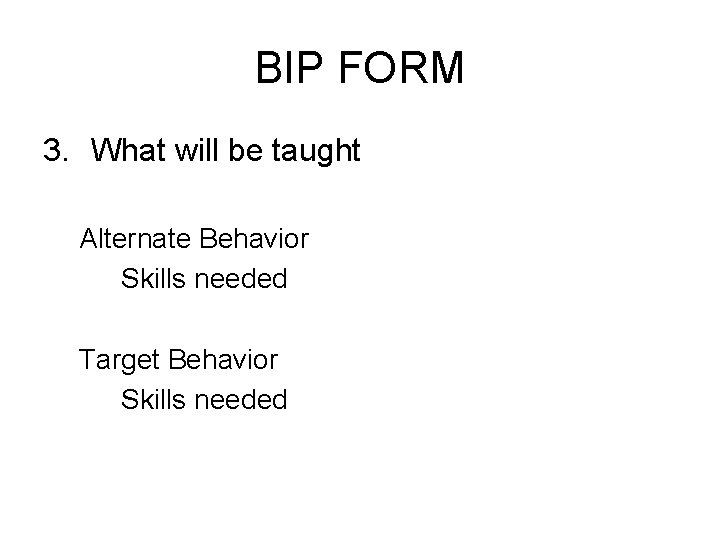
BIP FORM 3. What will be taught Alternate Behavior Skills needed Target Behavior Skills needed
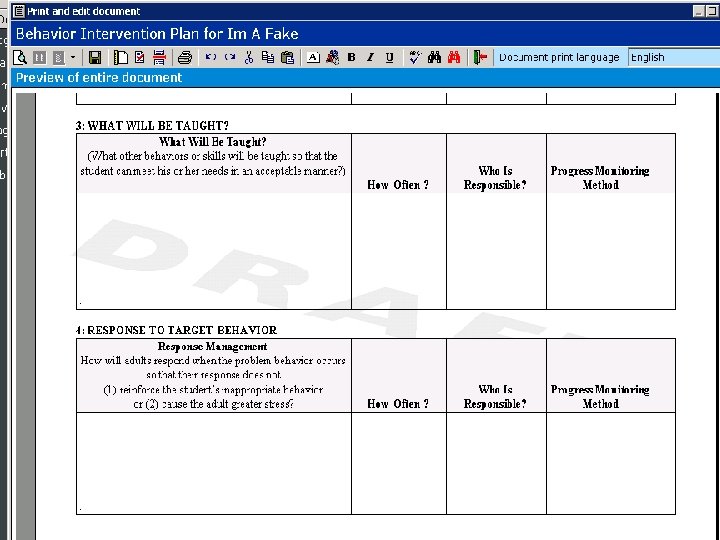
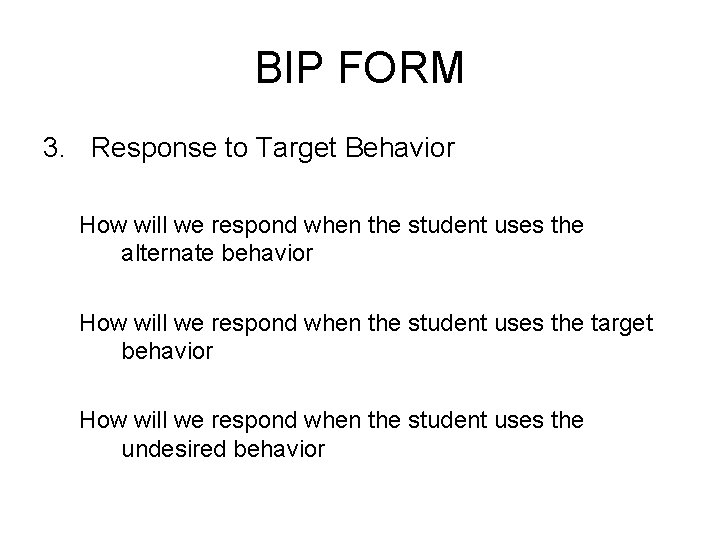
BIP FORM 3. Response to Target Behavior How will we respond when the student uses the alternate behavior How will we respond when the student uses the target behavior How will we respond when the student uses the undesired behavior
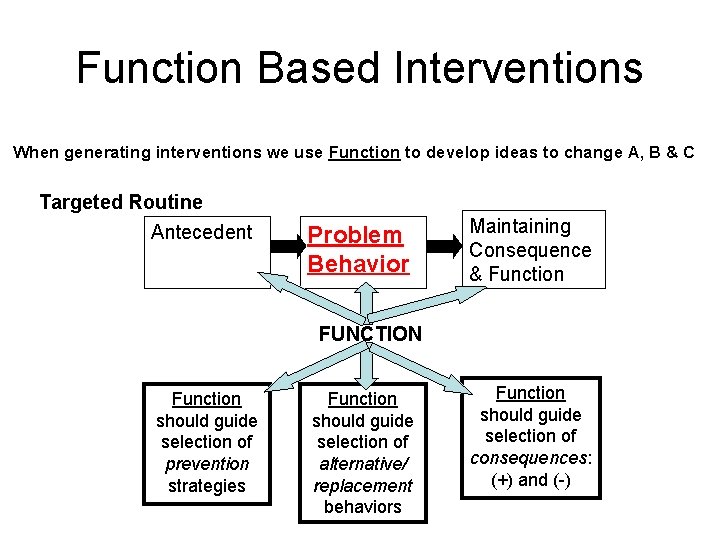
Function Based Interventions When generating interventions we use Function to develop ideas to change A, B & C Targeted Routine Antecedent Problem Behavior Maintaining Consequence & Function FUNCTION Function should guide selection of prevention strategies Function should guide selection of alternative/ replacement behaviors Function should guide selection of consequences: (+) and (-)
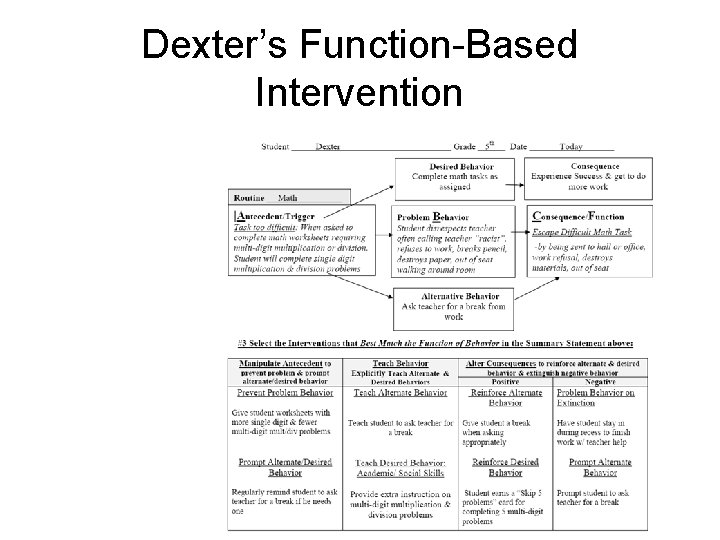
Dexter’s Function-Based Intervention

Competing Behavior Pathway Before the Behavior The Behavior Reward Consequence
Competing Behavior Pathway
Competing Behavior Pathway
Competing Behavior Pathway Master
Competing Behavior Pathway Master
Competing Behavior Pathway Master
Competing Behavior Pathway Master
- Slides: 56