
WEEK 6 20 Techniques for Visual Fixing Exercise

- Slides: 29
WEEK 6 - 20
Techniques for Visual Fixing Exercise - Debrief
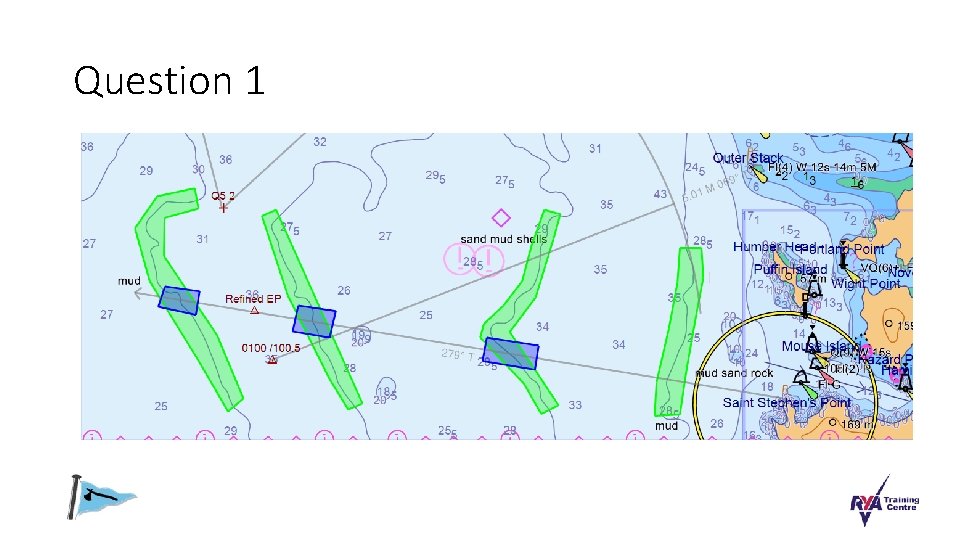
Question 1
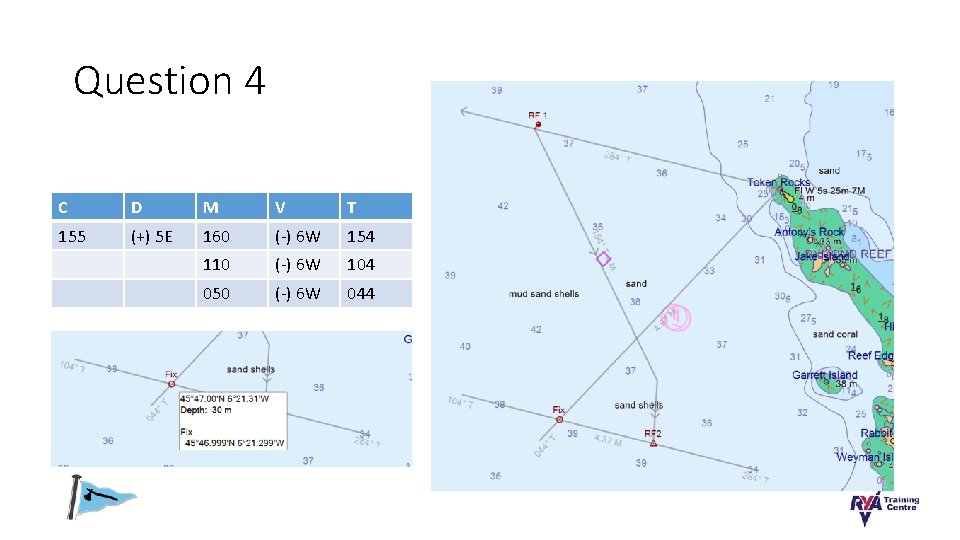
Question 4 C D M V T 155 (+) 5 E 160 (-) 6 W 154 110 (-) 6 W 104 050 (-) 6 W 044
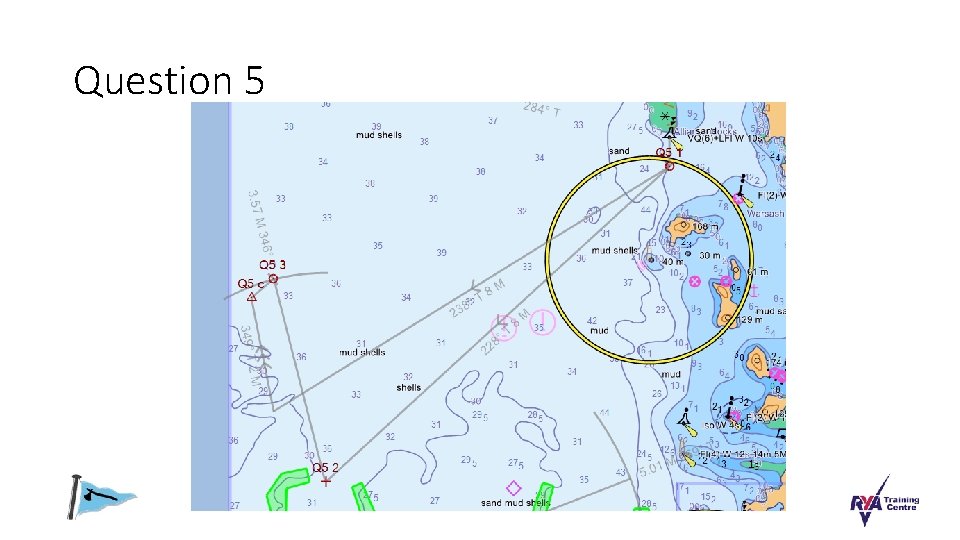
Question 5
Tides 1
References: • Yachtmaster Shorebased Notes pp 12 - 19
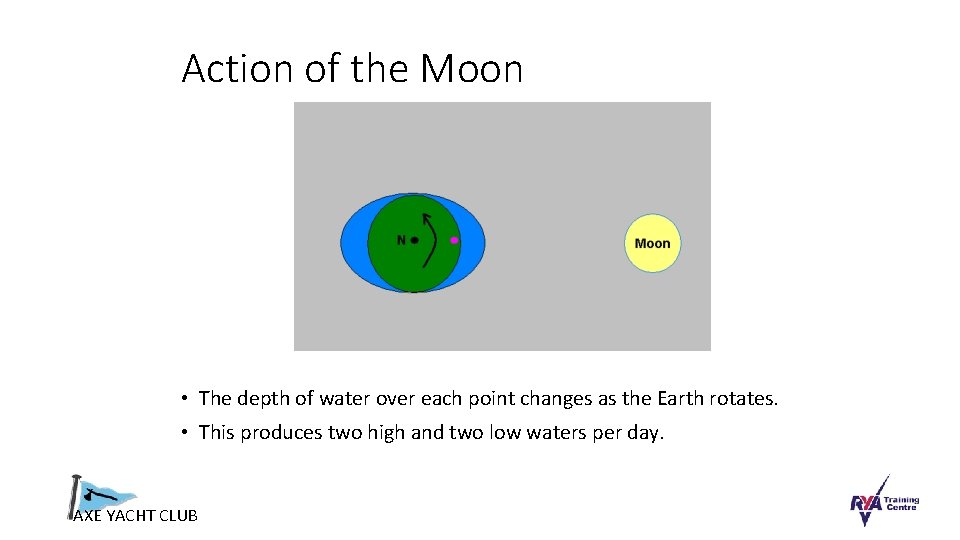
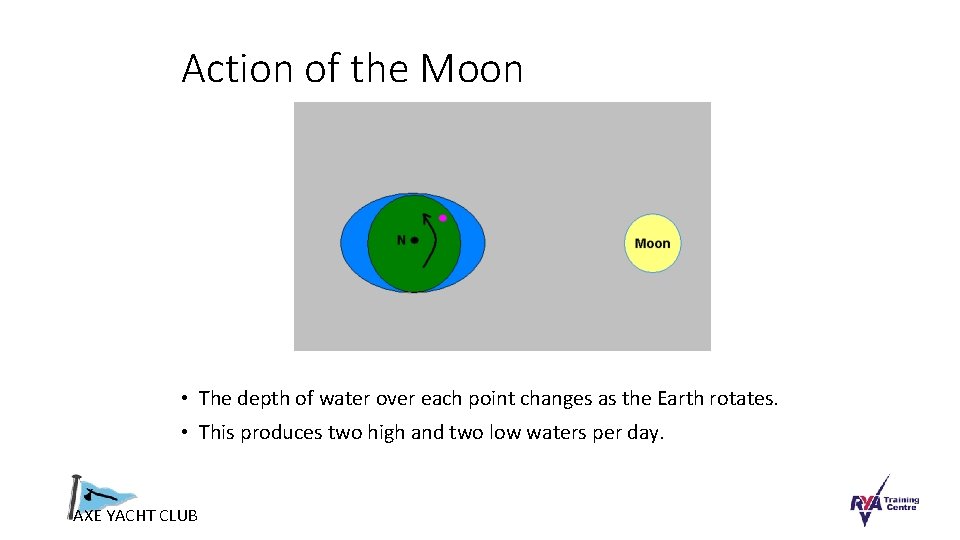
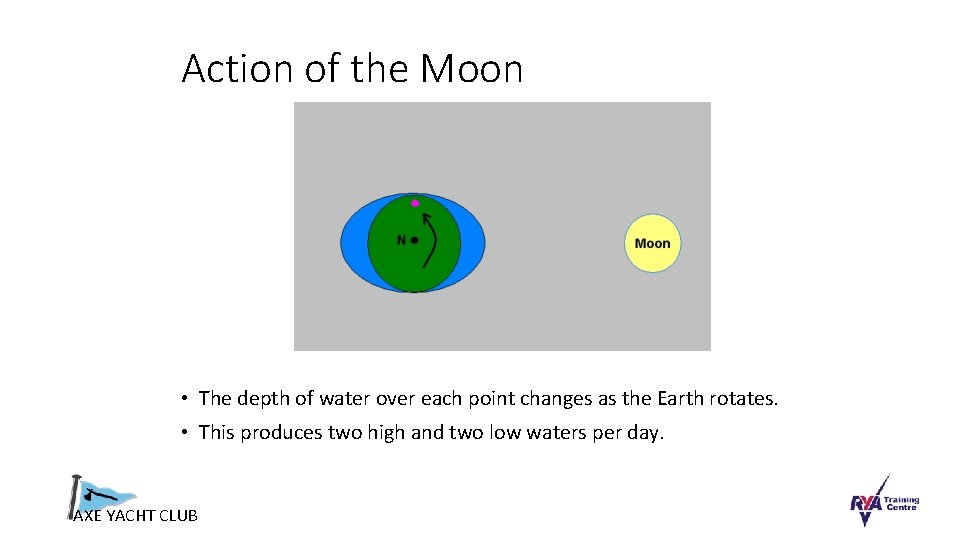
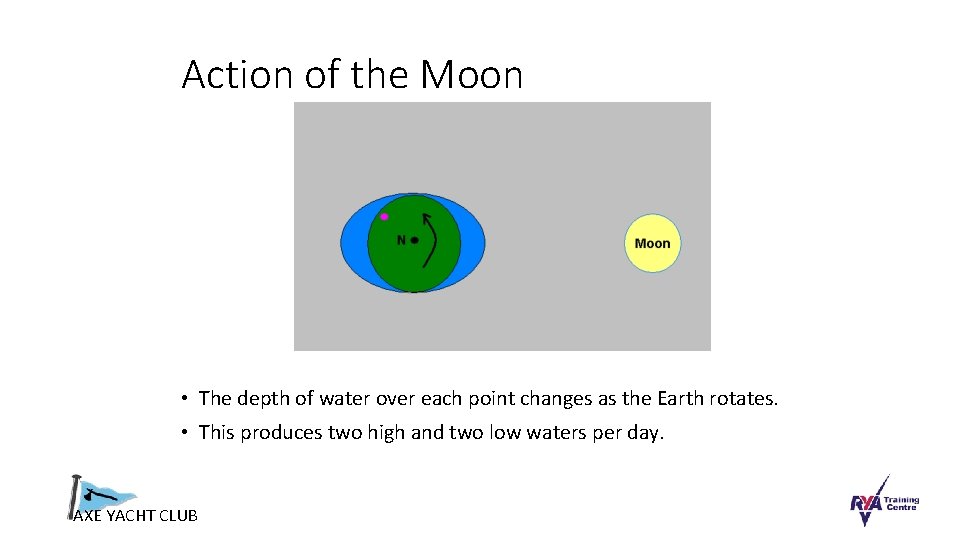
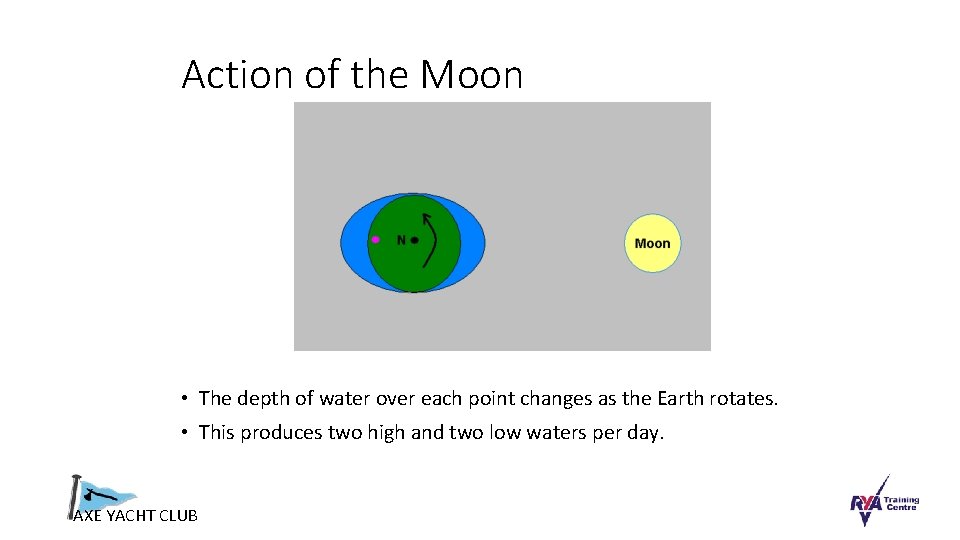
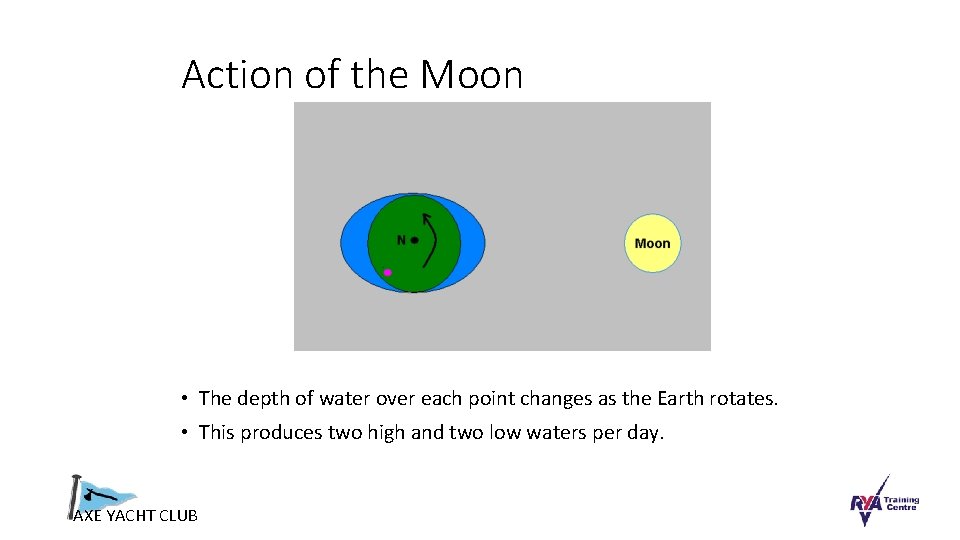
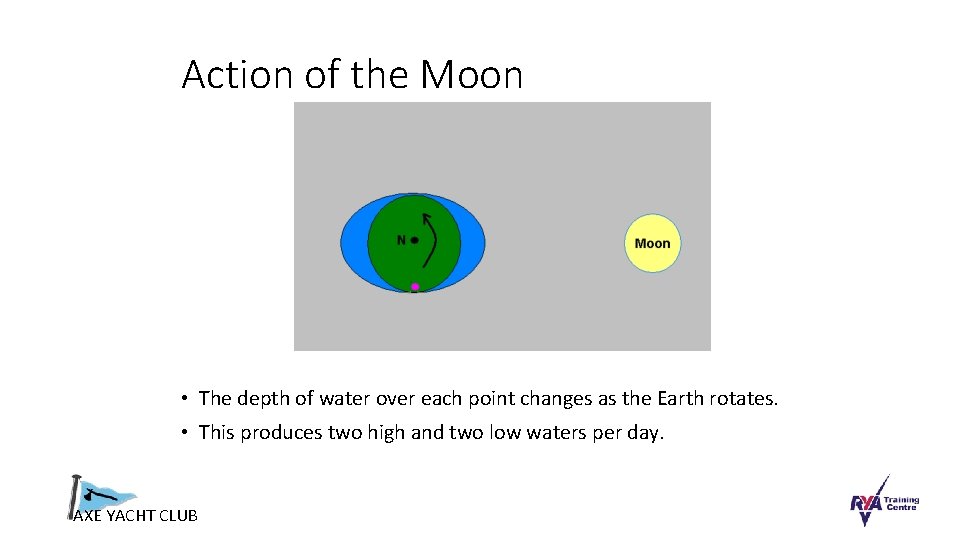
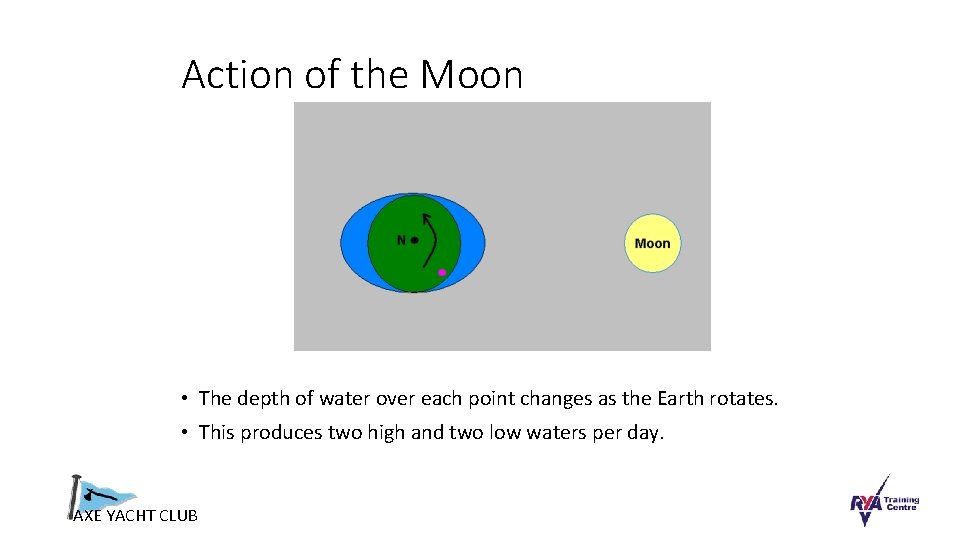
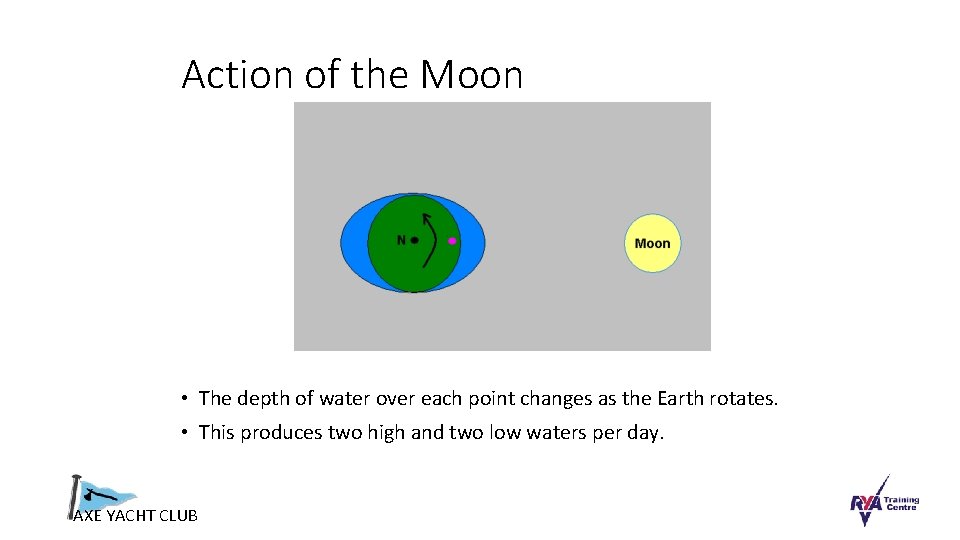
Action of the Moon • The Moon’s gravity attracts the water on the Earth’s surface producing two “humps”. • The rotation of the Earth results in the two humps passing over each point on the Earth’s surface in a day. • These “humps” cause high and low tides. AXE YACHT CLUB
Action of the Moon • The depth of water over each point changes as the Earth rotates. • This produces two high and two low waters per day. AXE YACHT CLUB
Action of the Moon • The depth of water over each point changes as the Earth rotates. • This produces two high and two low waters per day. AXE YACHT CLUB
Action of the Moon • The depth of water over each point changes as the Earth rotates. • This produces two high and two low waters per day. AXE YACHT CLUB
Action of the Moon • The depth of water over each point changes as the Earth rotates. • This produces two high and two low waters per day. AXE YACHT CLUB
Action of the Moon • The depth of water over each point changes as the Earth rotates. • This produces two high and two low waters per day. AXE YACHT CLUB
Action of the Moon • The depth of water over each point changes as the Earth rotates. • This produces two high and two low waters per day. AXE YACHT CLUB
Action of the Moon • The depth of water over each point changes as the Earth rotates. • This produces two high and two low waters per day. AXE YACHT CLUB
Action of the Moon • The depth of water over each point changes as the Earth rotates. • This produces two high and two low waters per day. AXE YACHT CLUB
Action of the Moon • The depth of water over each point changes as the Earth rotates. • This produces two high and two low waters per day. AXE YACHT CLUB
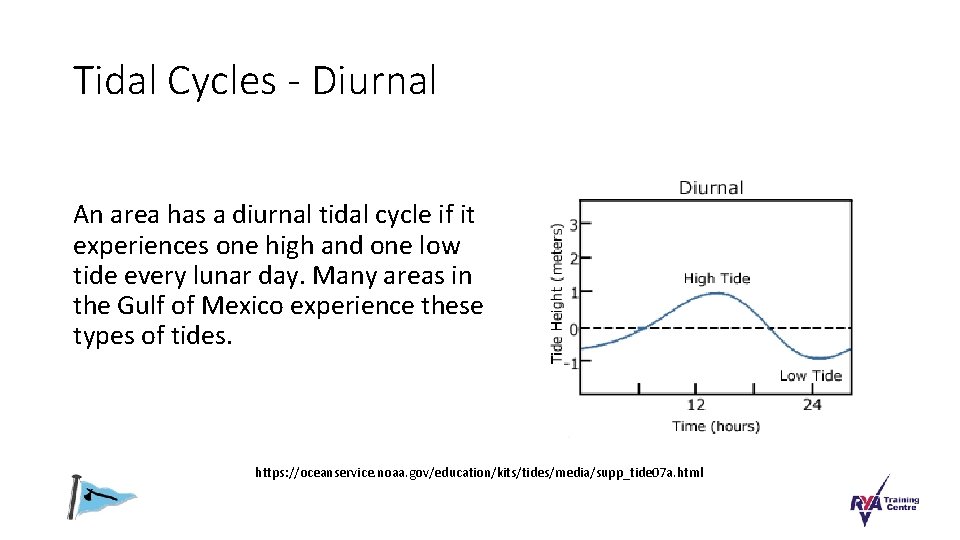
Tidal Cycles - Diurnal An area has a diurnal tidal cycle if it experiences one high and one low tide every lunar day. Many areas in the Gulf of Mexico experience these types of tides. https: //oceanservice. noaa. gov/education/kits/tides/media/supp_tide 07 a. html
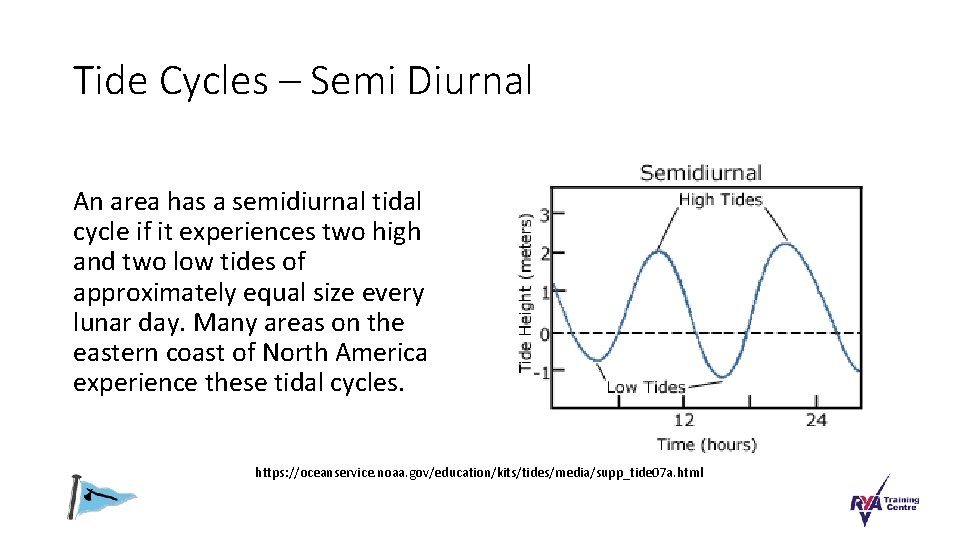
Tide Cycles – Semi Diurnal An area has a semidiurnal tidal cycle if it experiences two high and two low tides of approximately equal size every lunar day. Many areas on the eastern coast of North America experience these tidal cycles. https: //oceanservice. noaa. gov/education/kits/tides/media/supp_tide 07 a. html
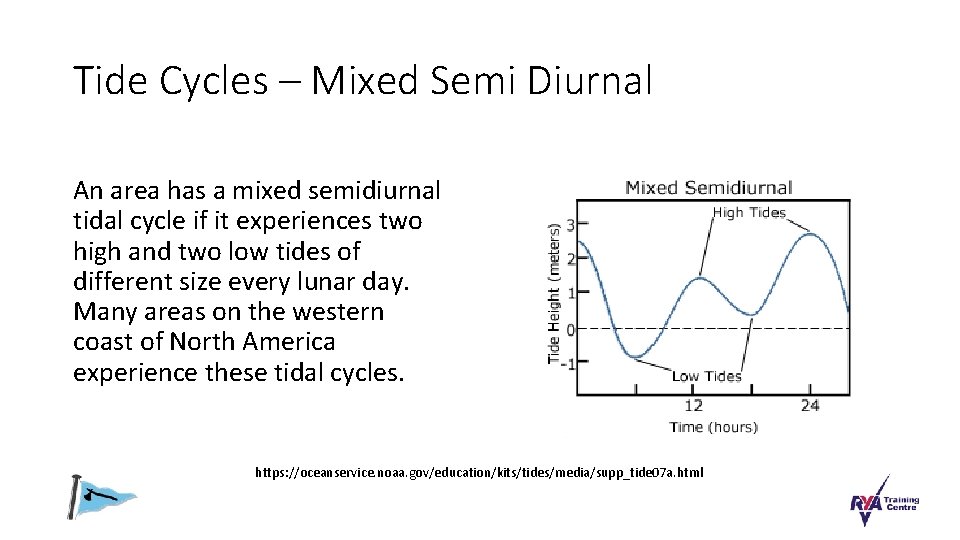
Tide Cycles – Mixed Semi Diurnal An area has a mixed semidiurnal tidal cycle if it experiences two high and two low tides of different size every lunar day. Many areas on the western coast of North America experience these tidal cycles. https: //oceanservice. noaa. gov/education/kits/tides/media/supp_tide 07 a. html
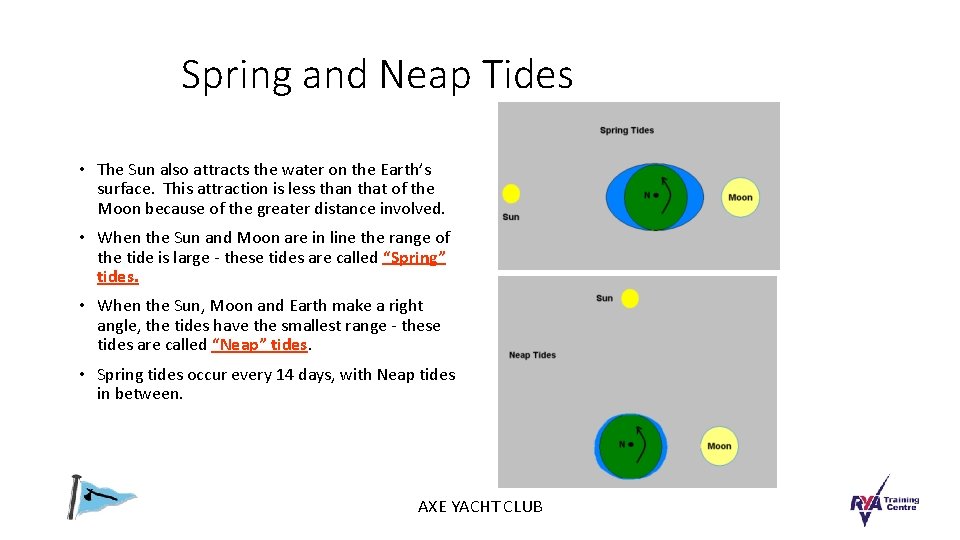
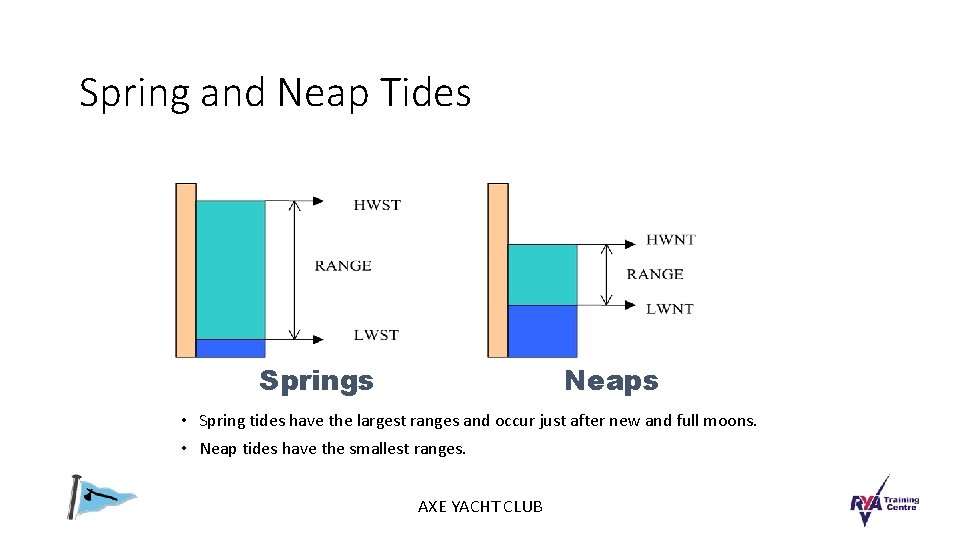
Spring and Neap Tides • The Sun also attracts the water on the Earth’s surface. This attraction is less than that of the Moon because of the greater distance involved. • When the Sun and Moon are in line the range of the tide is large - these tides are called “Spring” tides. • When the Sun, Moon and Earth make a right angle, the tides have the smallest range - these tides are called “Neap” tides. • Spring tides occur every 14 days, with Neap tides in between. AXE YACHT CLUB
Spring and Neap Tides Springs Neaps • Spring tides have the largest ranges and occur just after new and full moons. • Neap tides have the smallest ranges. AXE YACHT CLUB
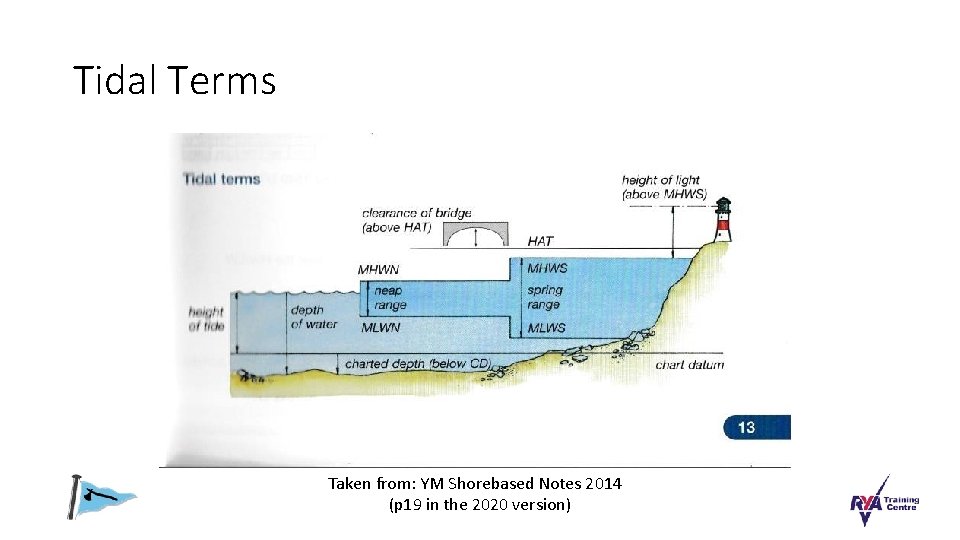
Chart Datum (CD) By international agreement Chart Datum is defined as a level so low that the tide will not frequently fall below it. In the United Kingdom, this level is normally approximately the level of Lowest Astronomical Tide.
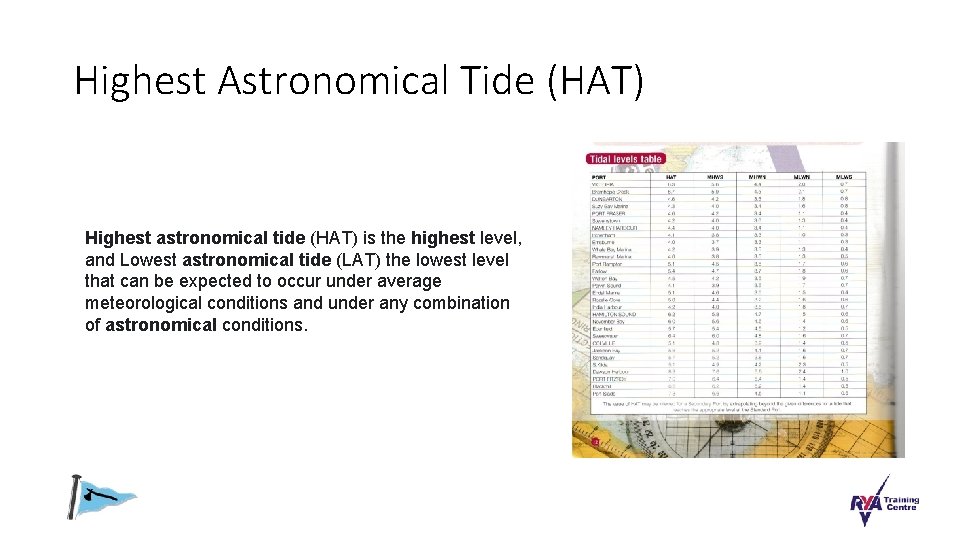
Highest Astronomical Tide (HAT) Highest astronomical tide (HAT) is the highest level, and Lowest astronomical tide (LAT) the lowest level that can be expected to occur under average meteorological conditions and under any combination of astronomical conditions.
Tidal Terms Taken from: YM Shorebased Notes 2014 (p 19 in the 2020 version)
Tidal Heights – other factors • The predicted height of tide can be affected by: • Barometric Pressure • Strong winds • Geographic effects • Funneling – e. g. Bristol Channel • Local – Solent / Axmouth Harbour
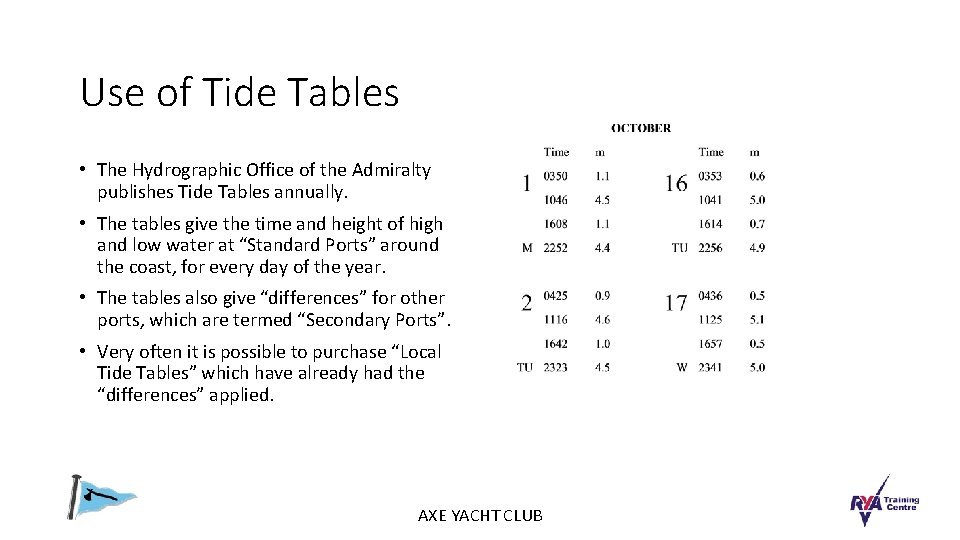
Use of Tide Tables • The Hydrographic Office of the Admiralty publishes Tide Tables annually. • The tables give the time and height of high and low water at “Standard Ports” around the coast, for every day of the year. • The tables also give “differences” for other ports, which are termed “Secondary Ports”. • Very often it is possible to purchase “Local Tide Tables” which have already had the “differences” applied. AXE YACHT CLUB
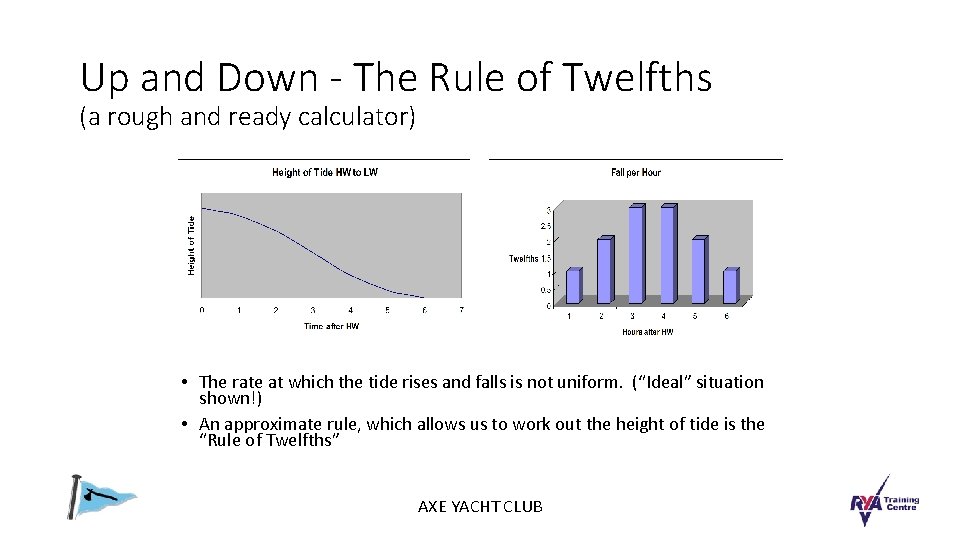
Up and Down - The Rule of Twelfths (a rough and ready calculator) • The rate at which the tide rises and falls is not uniform. (“Ideal” situation shown!) • An approximate rule, which allows us to work out the height of tide is the “Rule of Twelfths” AXE YACHT CLUB
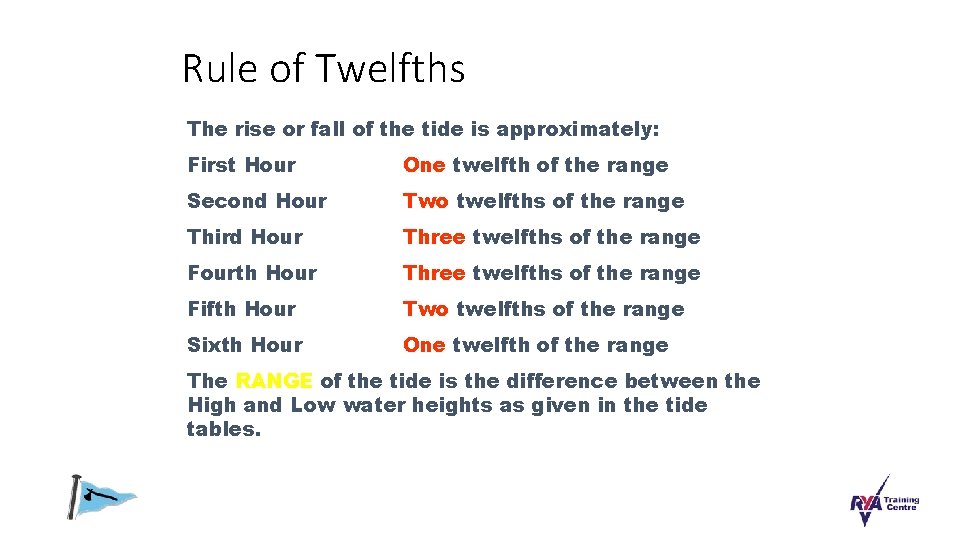
Rule of Twelfths The rise or fall of the tide is approximately: First Hour One twelfth of the range Second Hour Two twelfths of the range Third Hour Three twelfths of the range Fourth Hour Three twelfths of the range Fifth Hour Two twelfths of the range Sixth Hour One twelfth of the range The RANGE of the tide is the difference between the High and Low water heights as given in the tide tables.