
Week 5 Pain Compensatory Patterns CONOR HARRIS CSCS


- Slides: 38
Week 5 – Pain & Compensatory Patterns CONOR HARRIS – CSCS, XPS, CES, CPT
Learning Objectives Appreciate differences between primary & secondary compensatory strategies for a given respiratory bias Understand differences in assessment results for secondary compensation patterns Address a pelvis that appears to be the inverse of the normal human pattern (Left AIC) Appreciate biomechanical presentations of extremity & neck pain
GLOBAL COMPENSATION PATTERNS
Secondary compensations are larger, more superficial musculature
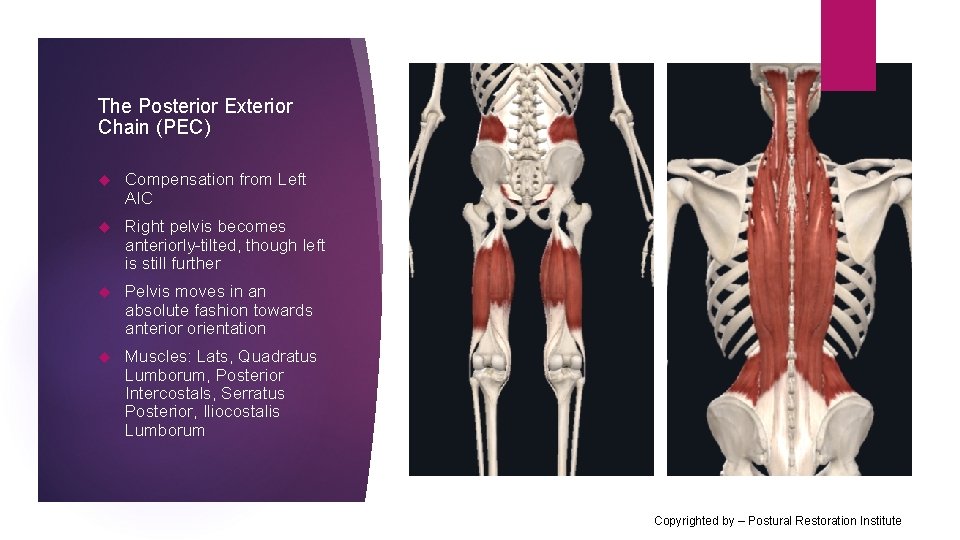
The Posterior Exterior Chain (PEC) Compensation from Left AIC Right pelvis becomes anteriorly-tilted, though left is still further Pelvis moves in an absolute fashion towards anterior orientation Muscles: Lats, Quadratus Lumborum, Posterior Intercostals, Serratus Posterior, Iliocostalis Lumborum Copyrighted by – Postural Restoration Institute
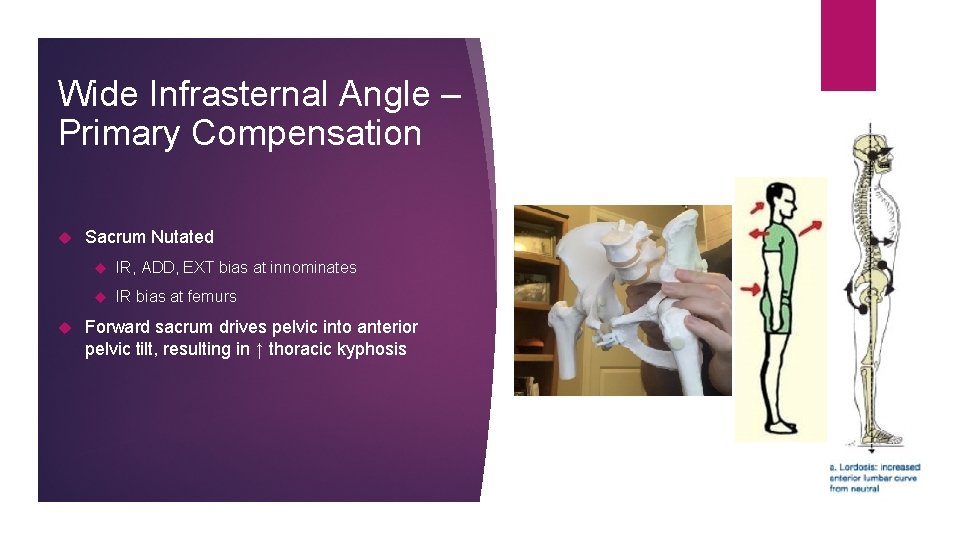
Wide Infrasternal Angle – Primary Compensation Sacrum Nutated IR, ADD, EXT bias at innominates IR bias at femurs Forward sacrum drives pelvic into anterior pelvic tilt, resulting in ↑ thoracic kyphosis
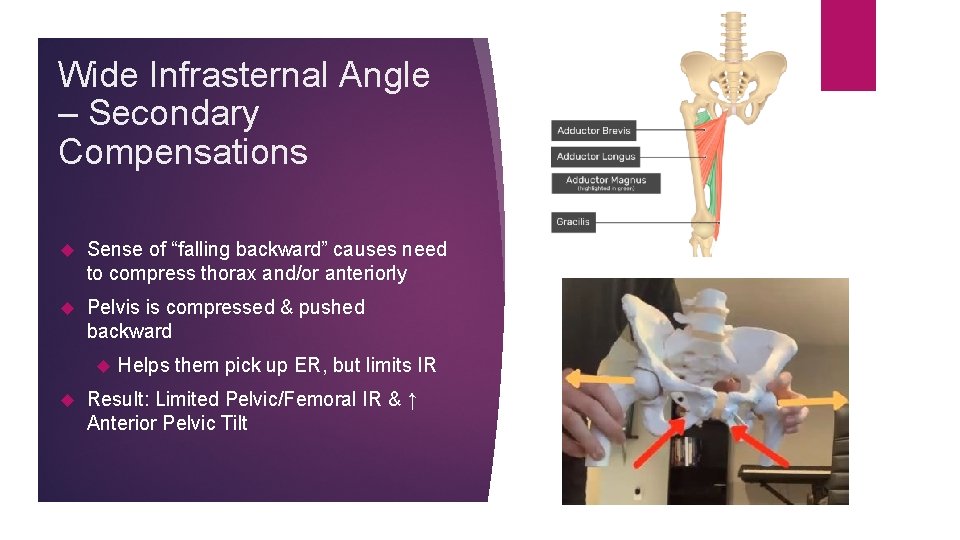
Wide Infrasternal Angle – Secondary Compensations Sense of “falling backward” causes need to compress thorax and/or anteriorly Pelvis is compressed & pushed backward Helps them pick up ER, but limits IR Result: Limited Pelvic/Femoral IR & ↑ Anterior Pelvic Tilt
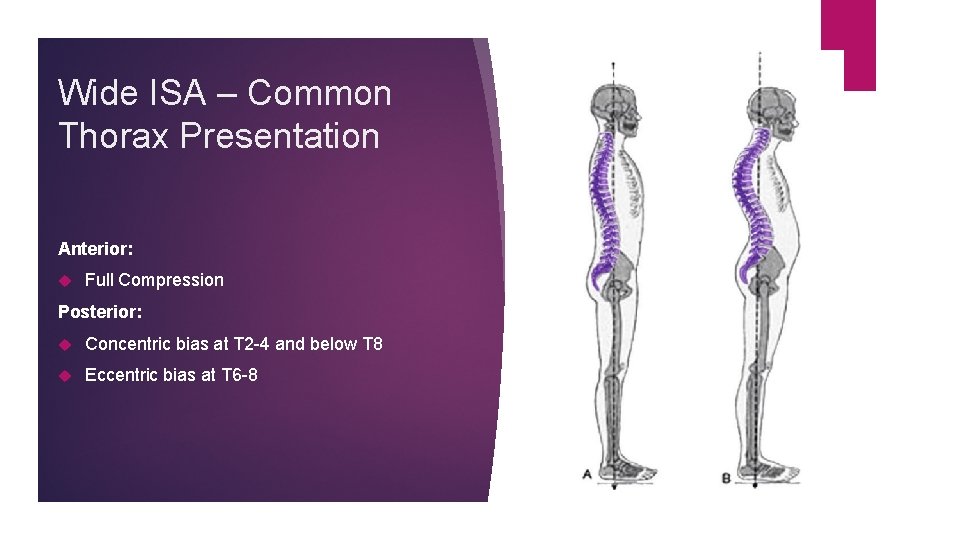
Wide ISA – Common Thorax Presentation Anterior: Full Compression Posterior: Concentric bias at T 2 -4 and below T 8 Eccentric bias at T 6 -8
Common Results: Wide ISA Thorax - Secondary Compensations HG IR: + HG ER: Shoulder Flexion: + Shoulder Abduction: -/+ (Depends) Shoulder Adduction: +
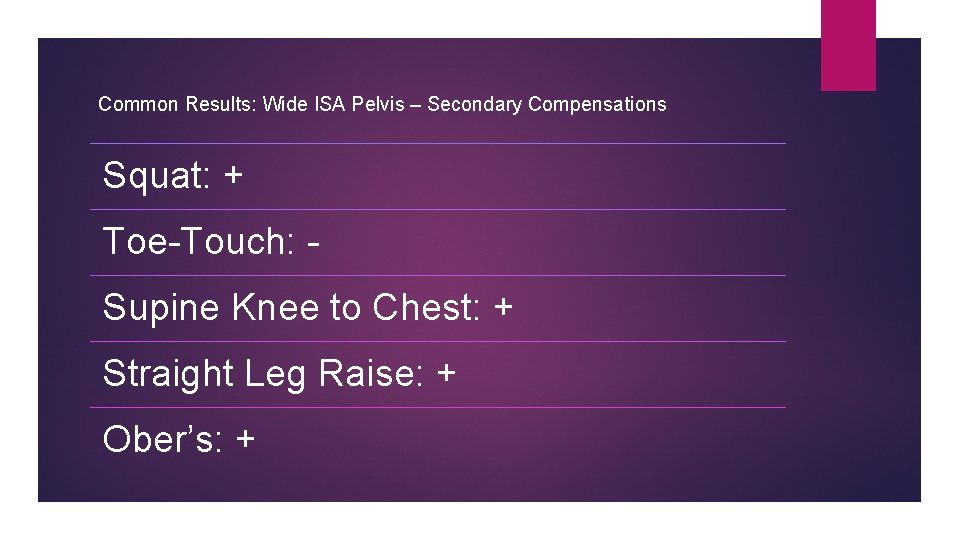
Common Results: Wide ISA Pelvis – Secondary Compensations Squat: + Toe-Touch: Supine Knee to Chest: + Straight Leg Raise: + Ober’s: +
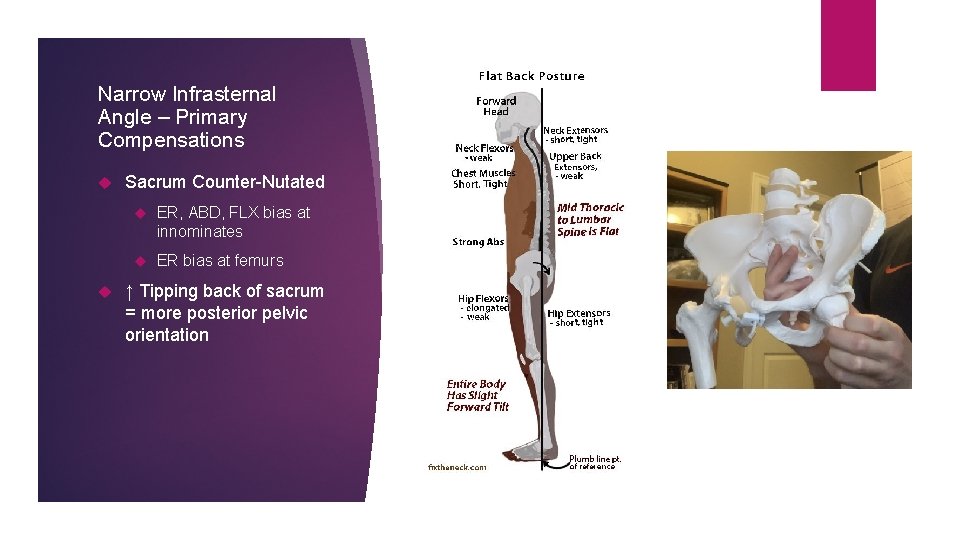
Narrow Infrasternal Angle – Primary Compensations Sacrum Counter-Nutated ER, ABD, FLX bias at innominates ER bias at femurs ↑ Tipping back of sacrum = more posterior pelvic orientation
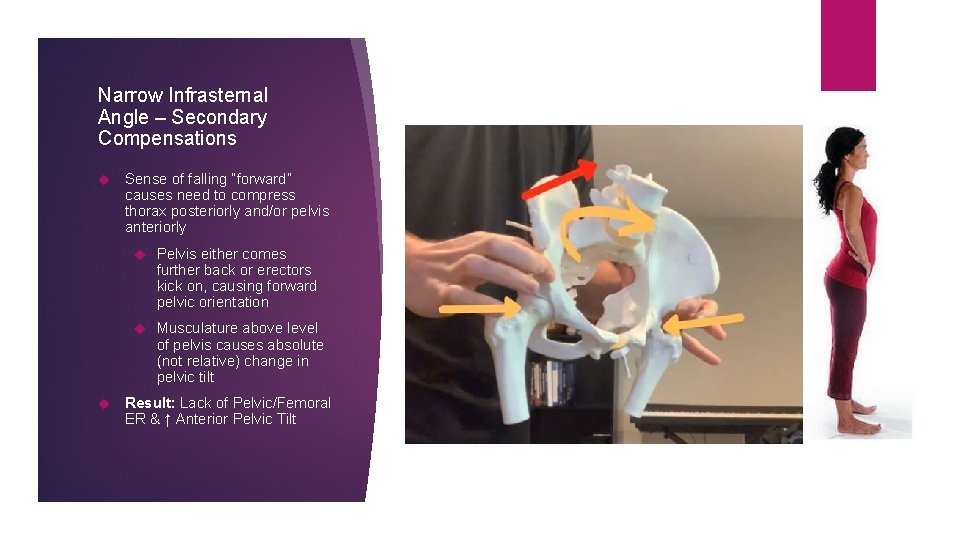
Narrow Infrasternal Angle – Secondary Compensations Sense of falling “forward” causes need to compress thorax posteriorly and/or pelvis anteriorly Pelvis either comes further back or erectors kick on, causing forward pelvic orientation Musculature above level of pelvis causes absolute (not relative) change in pelvic tilt Result: Lack of Pelvic/Femoral ER & ↑ Anterior Pelvic Tilt
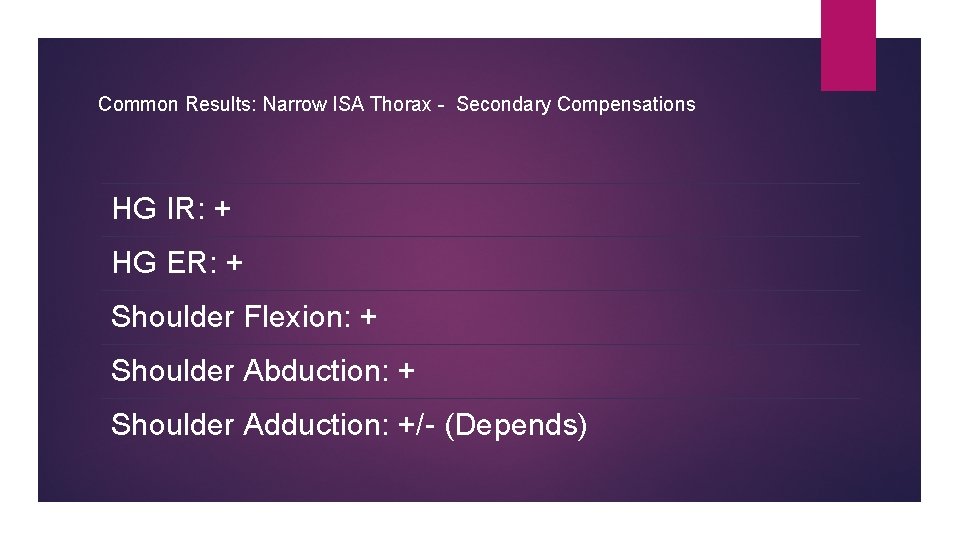
Common Results: Narrow ISA Thorax - Secondary Compensations HG IR: + HG ER: + Shoulder Flexion: + Shoulder Abduction: + Shoulder Adduction: +/- (Depends)
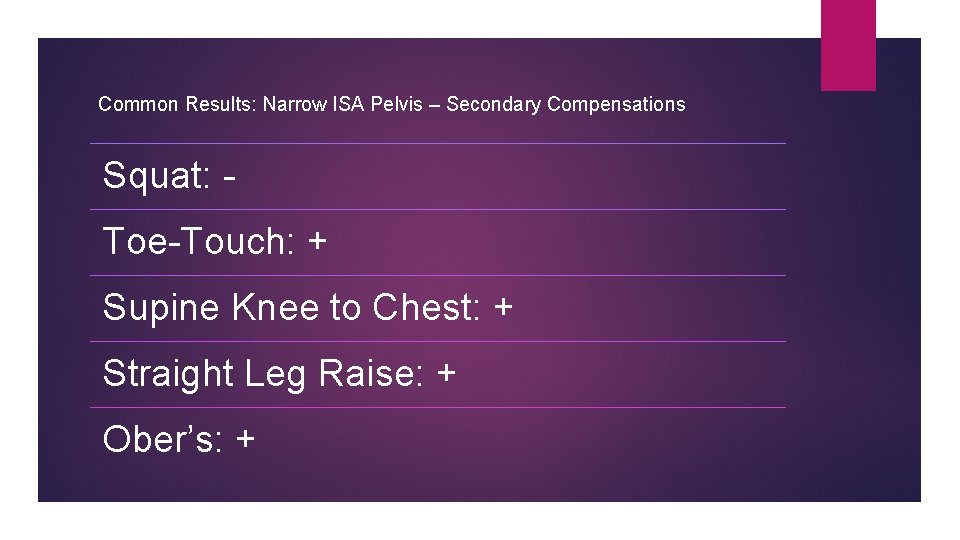
Common Results: Narrow ISA Pelvis – Secondary Compensations Squat: Toe-Touch: + Supine Knee to Chest: + Straight Leg Raise: + Ober’s: +
TERITARY COMPENSATIONS BILL HARTMAN: “THE LAST STRATEGY IS AN INHALATION STRATEGY, AS WE’VE BEEN SQUEEZING TO STAY UPRIGHT AGAINST GRAVITY. ”
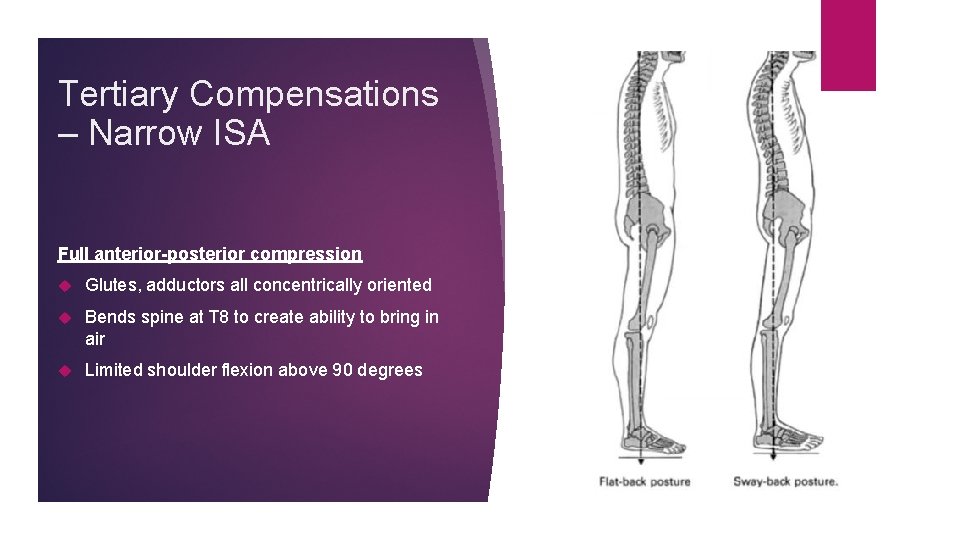
Tertiary Compensations – Narrow ISA Full anterior-posterior compression Glutes, adductors all concentrically oriented Bends spine at T 8 to create ability to bring in air Limited shoulder flexion above 90 degrees
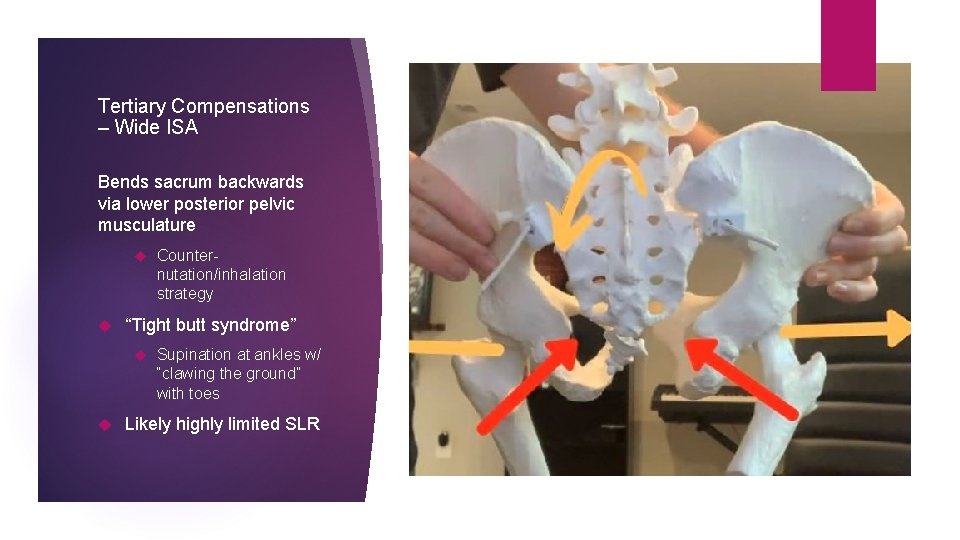
Tertiary Compensations – Wide ISA Bends sacrum backwards via lower posterior pelvic musculature “Tight butt syndrome” Counternutation/inhalation strategy Supination at ankles w/ “clawing the ground” with toes Likely highly limited SLR
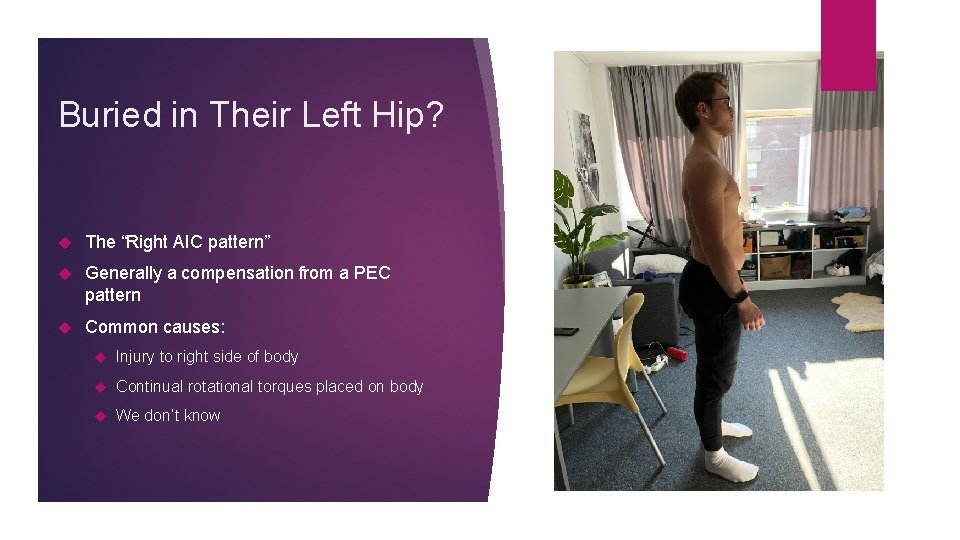
Buried in Their Left Hip? The “Right AIC pattern” Generally a compensation from a PEC pattern Common causes: Injury to right side of body Continual rotational torques placed on body We don’t know
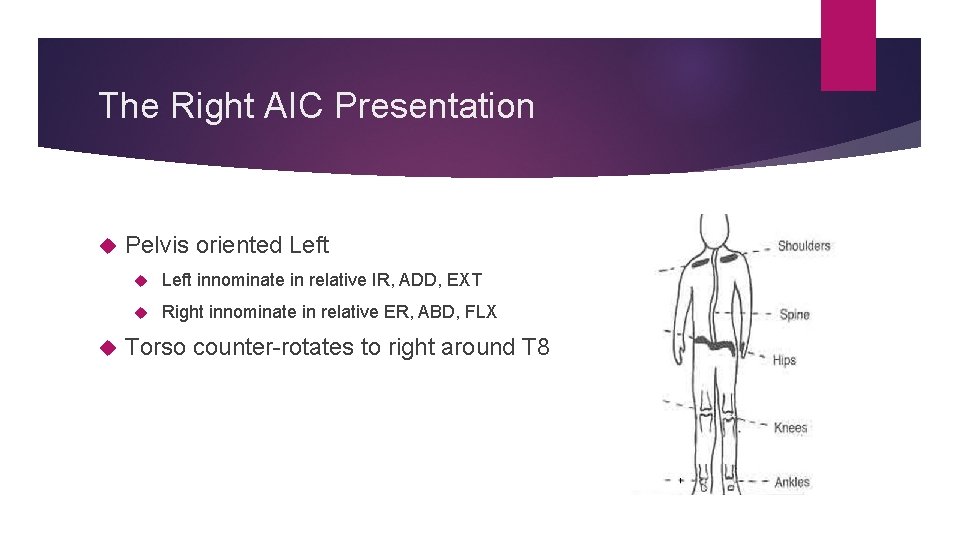
The Right AIC Presentation Pelvis oriented Left innominate in relative IR, ADD, EXT Right innominate in relative ER, ABD, FLX Torso counter-rotates to right around T 8
Other Compensations? There an unlimited amount of potential compensations It’s all about managing gravity Understand where they’re starting from, then you can understand how they’ve gotten to where they are Simply put: If they’re missing what they should have, restore that first. Then move on to what they “shouldn’t” have
LOCAL COMPENSATION PATTERNS
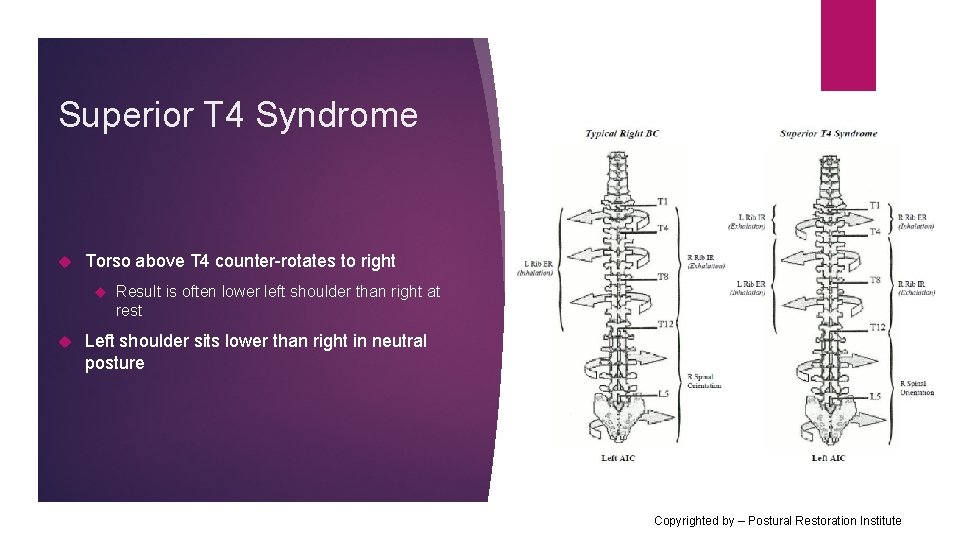
Superior T 4 Syndrome Torso above T 4 counter-rotates to right Result is often lower left shoulder than right at rest Left shoulder sits lower than right in neutral posture Copyrighted by – Postural Restoration Institute
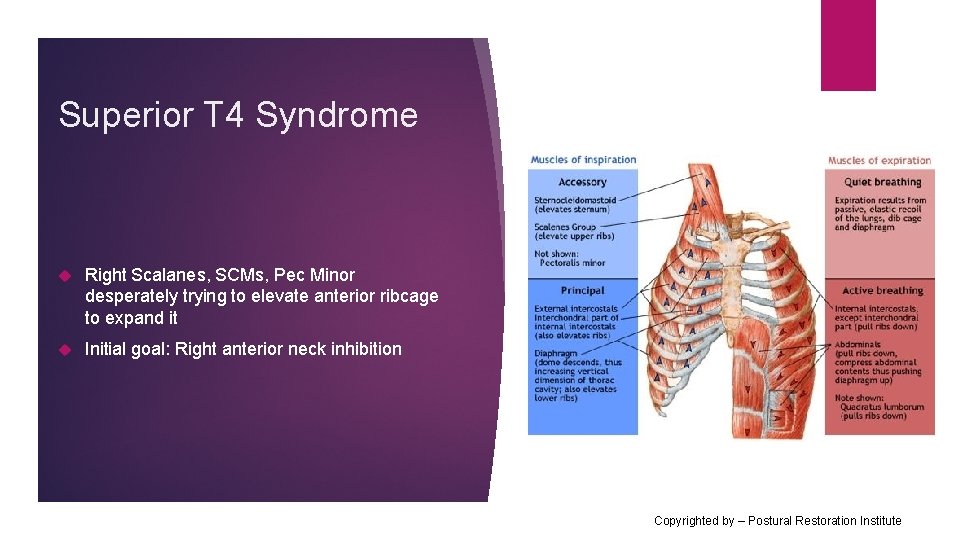
Superior T 4 Syndrome Right Scalanes, SCMs, Pec Minor desperately trying to elevate anterior ribcage to expand it Initial goal: Right anterior neck inhibition Copyrighted by – Postural Restoration Institute
So what changes with Superior T 4? OFTEN NOT MUCH. DON’T OVERTHINK IT, JUST FOCUS MORE ON NECK INHIBITION
Common Results: “Superior T 4” – Secondary Compensations HG IR: +R HG ADD: +R HG FLX: +R Left Shoulder Sits Lower Than Right
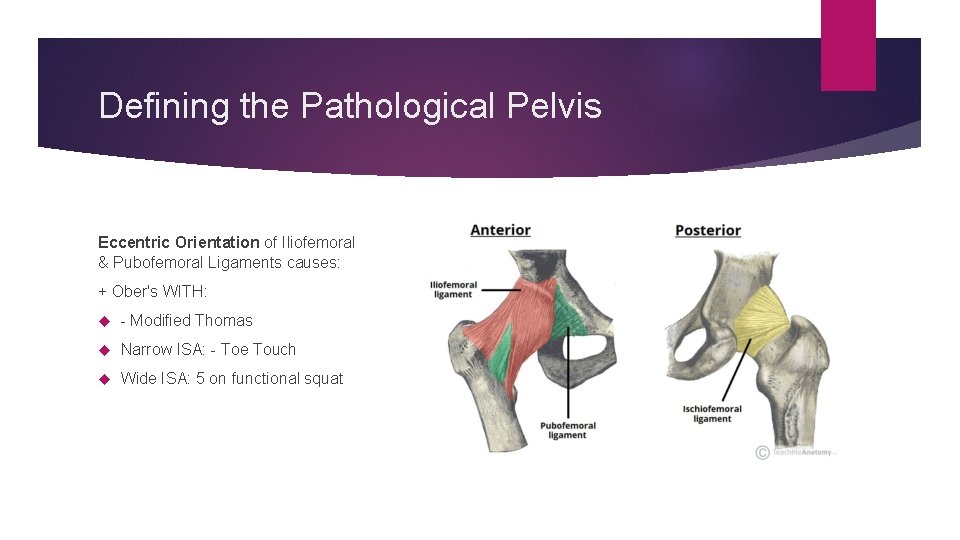
Defining the Pathological Pelvis Eccentric Orientation of Iliofemoral & Pubofemoral Ligaments causes: + Ober's WITH: - Modified Thomas Narrow ISA: - Toe Touch Wide ISA: 5 on functional squat
PAIN & INJURIES
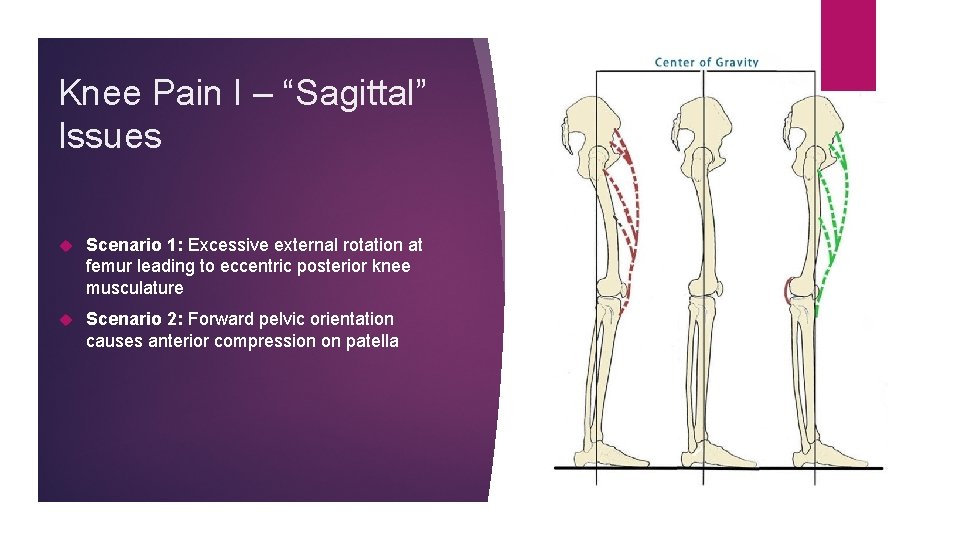
Knee Pain I – “Sagittal” Issues Scenario 1: Excessive external rotation at femur leading to eccentric posterior knee musculature Scenario 2: Forward pelvic orientation causes anterior compression on patella
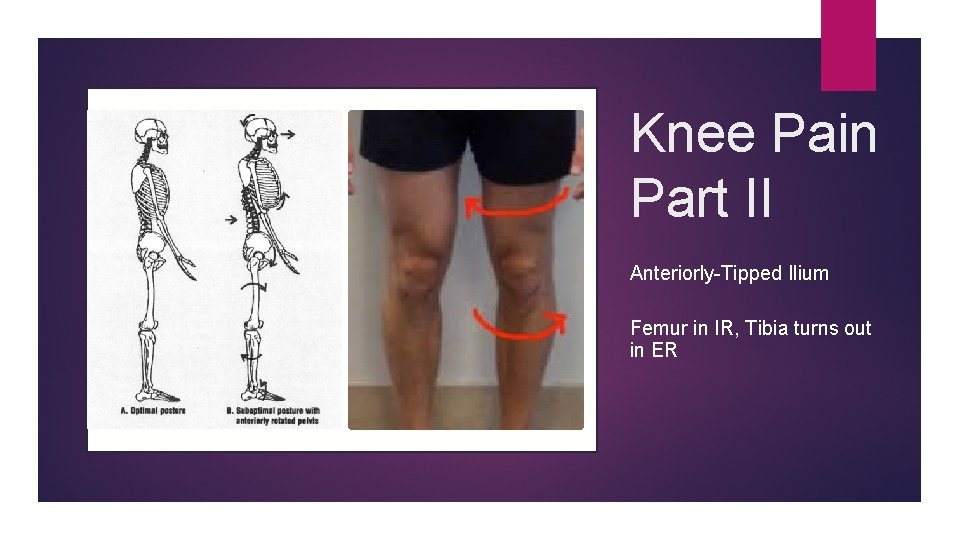
Knee Pain Part II Anteriorly-Tipped Ilium Femur in IR, Tibia turns out in ER
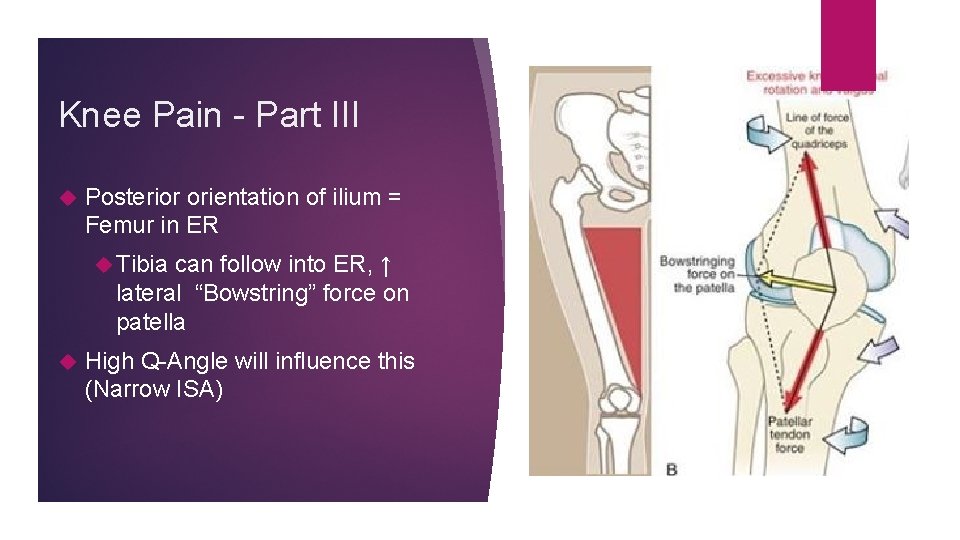
Knee Pain - Part III Posterior orientation of ilium = Femur in ER Tibia can follow into ER, ↑ lateral “Bowstring” force on patella High Q-Angle will influence this (Narrow ISA)
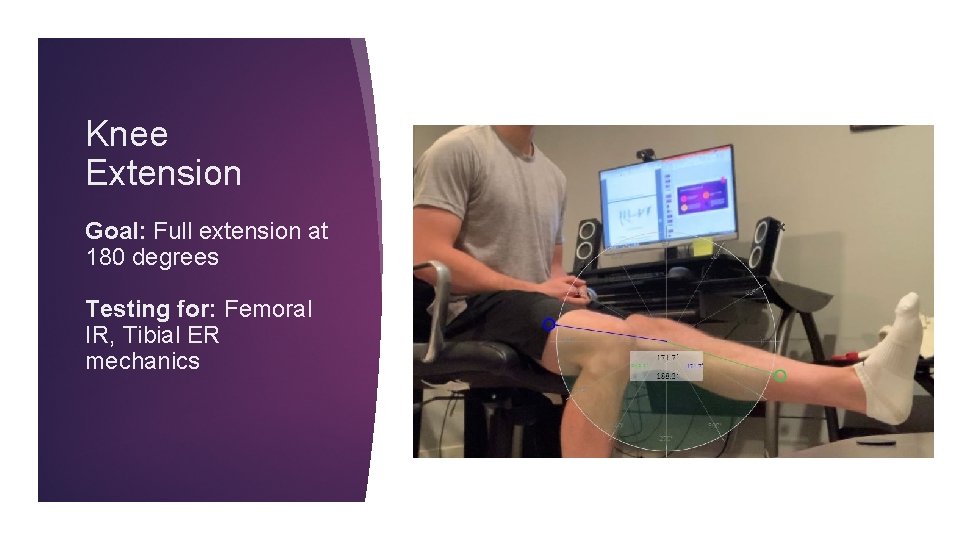
Knee Extension Goal: Full extension at 180 degrees Testing for: Femoral IR, Tibial ER mechanics
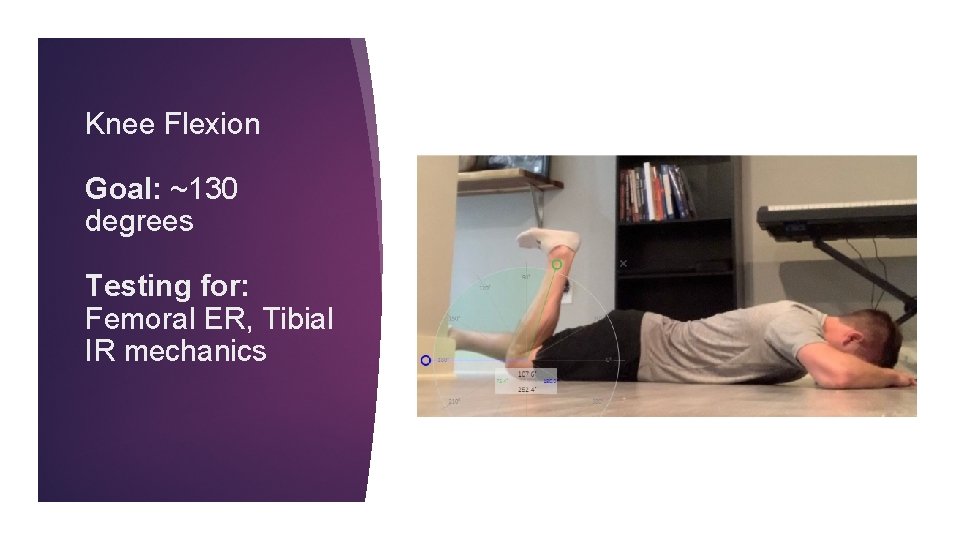
Knee Flexion Goal: ~130 degrees Testing for: Femoral ER, Tibial IR mechanics
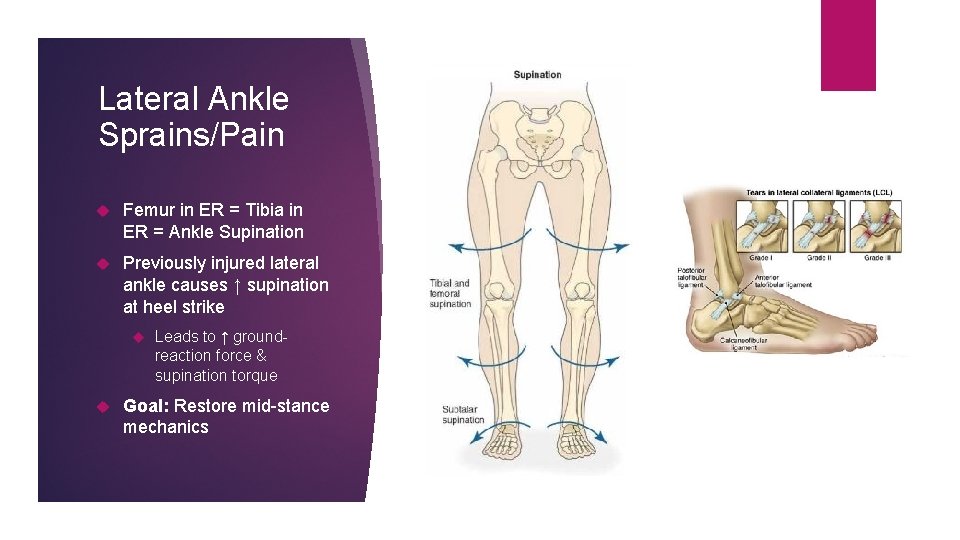
Lateral Ankle Sprains/Pain Femur in ER = Tibia in ER = Ankle Supination Previously injured lateral ankle causes ↑ supination at heel strike Leads to ↑ groundreaction force & supination torque Goal: Restore mid-stance mechanics
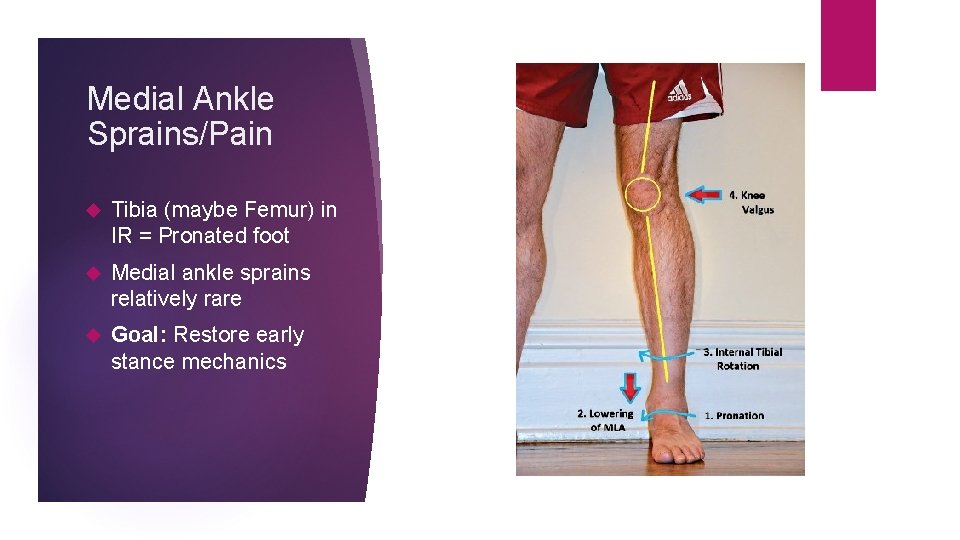
Medial Ankle Sprains/Pain Tibia (maybe Femur) in IR = Pronated foot Medial ankle sprains relatively rare Goal: Restore early stance mechanics
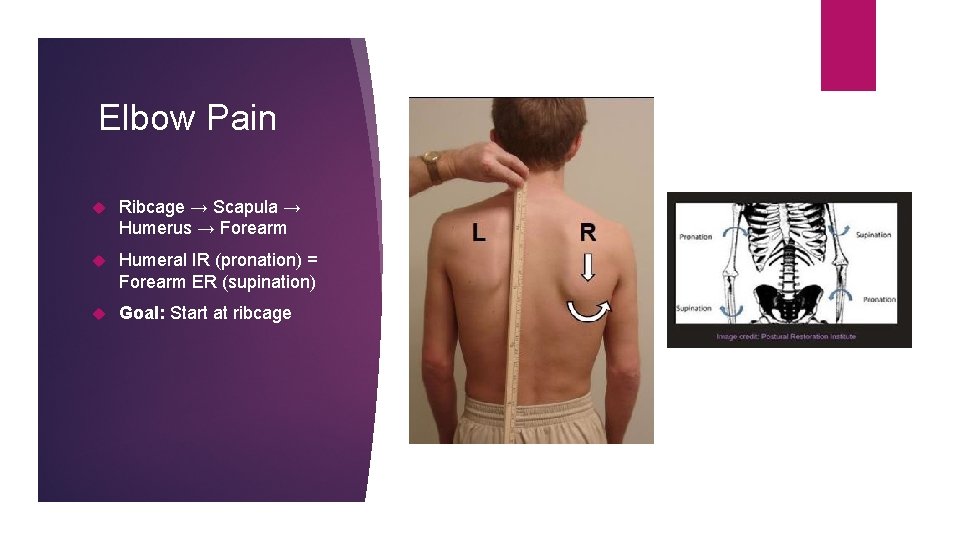
Elbow Pain Ribcage → Scapula → Humerus → Forearm Humeral IR (pronation) = Forearm ER (supination) Goal: Start at ribcage
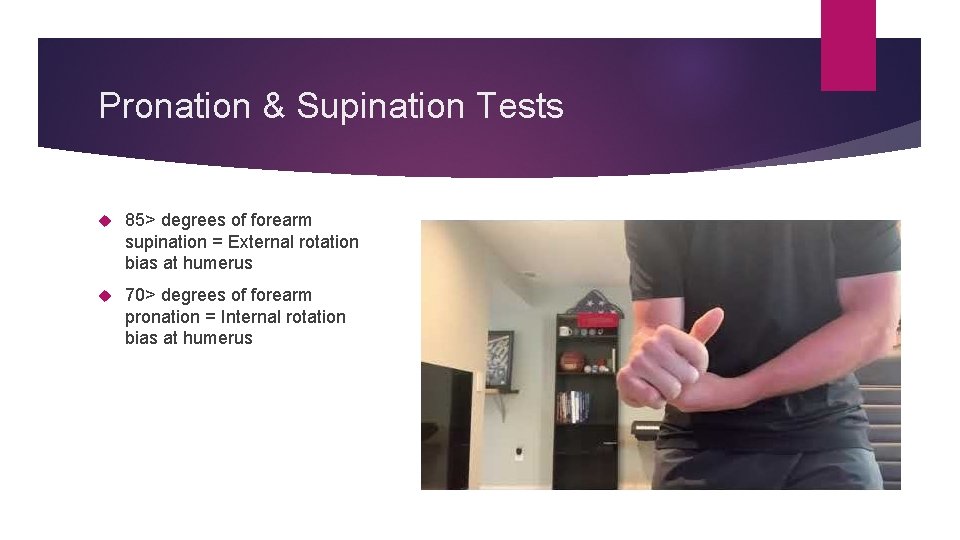
Pronation & Supination Tests 85> degrees of forearm supination = External rotation bias at humerus 70> degrees of forearm pronation = Internal rotation bias at humerus
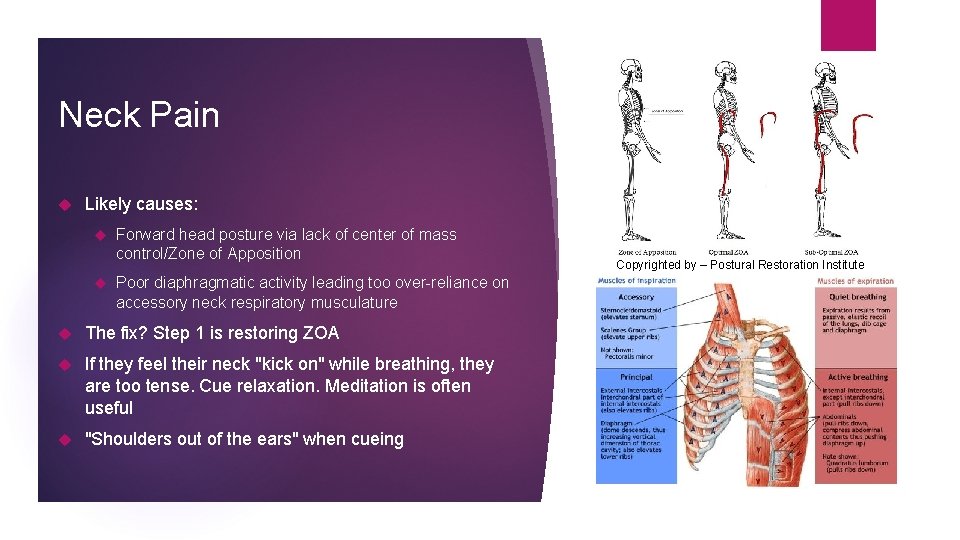
Neck Pain Likely causes: Forward head posture via lack of center of mass control/Zone of Apposition Poor diaphragmatic activity leading too over-reliance on accessory neck respiratory musculature The fix? Step 1 is restoring ZOA If they feel their neck "kick on" while breathing, they are too tense. Cue relaxation. Meditation is often useful "Shoulders out of the ears" when cueing Copyrighted by – Postural Restoration Institute
ARTICLES: Suggested Reading Restriction in hip internal rotation is associated with an increased risk of ACL injury The relationship between pelvic torsion and anatomical leg length inequality: a review of the literature The Biopsychosocial Pain Model