
Week 3 Lecture 1 Mobile Health MHealth What
Week 3 Lecture 1 Mobile Health (M-Health)
What is Mobile Health (M-Health)? � One way to achieve tele-healthcare � [Wi. Ki definition] m. Health (also written as mhealth or mobile health) is a term used for the practice of medicine and public health, supported by mobile devices. The term is most commonly used in reference to using mobile communication devices, such as mobile phones, tablet computers and PDAs, for health services and information. � It is based on Wireless & Mobile technologies (such as Wireless LAN, Wi. Max, Cellular networks, Satellite, Sensor Networks, Ad hoc Networks, etc. )
Thinking: How to monitor a patient whenever he/she goes to? � When the patient is at home � -- can use telephone (dial-up) – too slow � -- Comcast – Cable Modem - Fast � -- ADSL (Asymmetric Digital Subscriber Line) from AT & T � -- Bluetooth + Internet (the above 3 also need Internet) � When the patient is in a building � -- Wireless LAN (also called Wi. Fi) � -- Wired LAN (high speed!) � When the patient is driving /walking � -- Cell phone � -- Wi. Max � -- Mobile Ad hoc Network, Vehicle Ad hoc Network, etc.
What wireless & mobile networks can be used? � Wireless is convenient – anywhere, anytime � No cable needed � However, in the backbone networks, to achieve high -speed, long-distance transmission, in many times we may still use Internet with wires (most likely optical fiber) � Wireless Networks are much slower (most times) than wired ones (especially optical fiber); But Wi. Max can achieve >100 Mbps in good conditions. � Wireless also brings much higher data transmission errors or data loss due to noise / interference � In the remaining contents we will discuss popular wireless
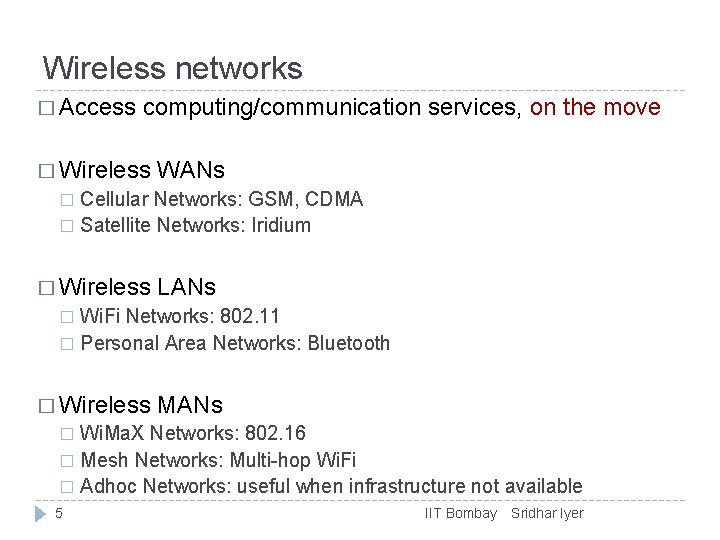
Wireless networks � Access computing/communication services, on the move � Wireless WANs Cellular Networks: GSM, CDMA � Satellite Networks: Iridium � � Wireless LANs Wi. Fi Networks: 802. 11 � Personal Area Networks: Bluetooth � � Wireless MANs Wi. Ma. X Networks: 802. 16 � Mesh Networks: Multi-hop Wi. Fi � Adhoc Networks: useful when infrastructure not available � 5 IIT Bombay Sridhar Iyer
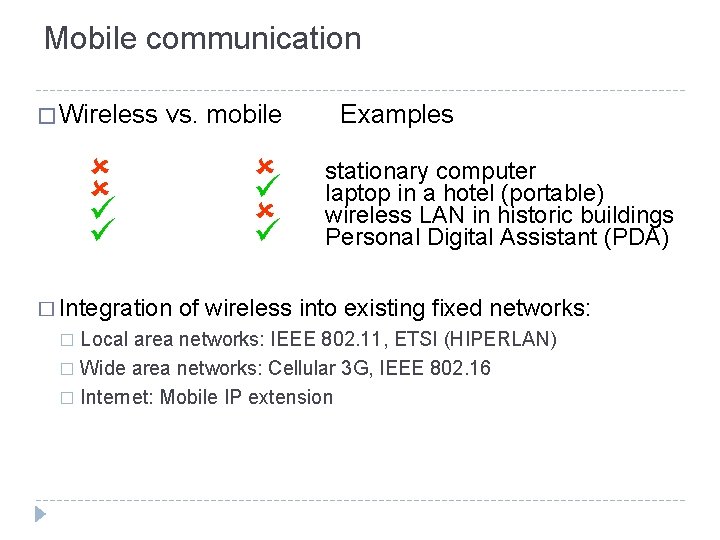
Mobile communication � Wireless vs. mobile � Integration Examples stationary computer laptop in a hotel (portable) wireless LAN in historic buildings Personal Digital Assistant (PDA) of wireless into existing fixed networks: Local area networks: IEEE 802. 11, ETSI (HIPERLAN) � Wide area networks: Cellular 3 G, IEEE 802. 16 � Internet: Mobile IP extension �
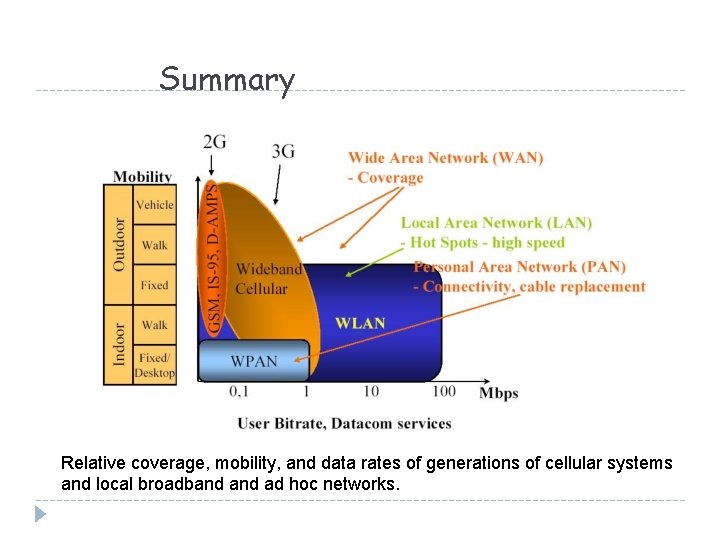
Summary Relative coverage, mobility, and data rates of generations of cellular systems and local broadband ad hoc networks.
Waves 8
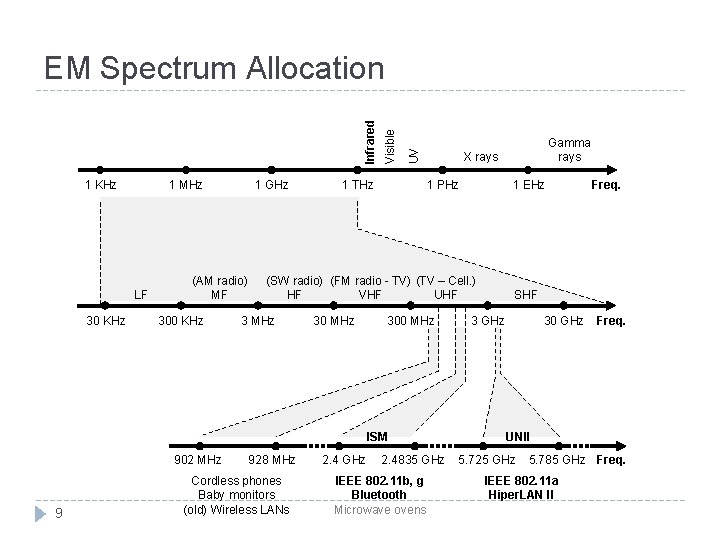
1 KHz 1 MHz LF 30 KHz 1 GHz (AM radio) MF 300 KHz UV Visible Infrared EM Spectrum Allocation 1 THz X rays 1 PHz 30 MHz 300 MHz ISM 902 MHz 9 1 EHz (SW radio) (FM radio - TV) (TV – Cell. ) HF VHF UHF 3 MHz 928 MHz Cordless phones Baby monitors (old) Wireless LANs 2. 4 GHz 2. 4835 GHz IEEE 802. 11 b, g Bluetooth Microwave ovens Gamma rays Freq. SHF 3 GHz 30 GHz Freq. UNII 5. 725 GHz 5. 785 GHz Freq. IEEE 802. 11 a Hiper. LAN II
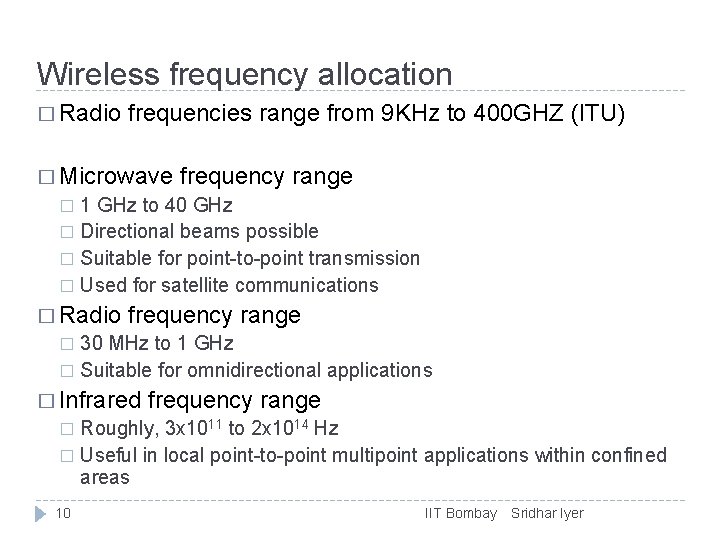
Wireless frequency allocation � Radio frequencies range from 9 KHz to 400 GHZ (ITU) � Microwave frequency range 1 GHz to 40 GHz � Directional beams possible � Suitable for point-to-point transmission � Used for satellite communications � � Radio frequency range 30 MHz to 1 GHz � Suitable for omnidirectional applications � � Infrared frequency range Roughly, 3 x 10¹¹ to 2 x 10¹⁴ Hz � Useful in local point-to-point multipoint applications within confined areas � 10 IIT Bombay Sridhar Iyer
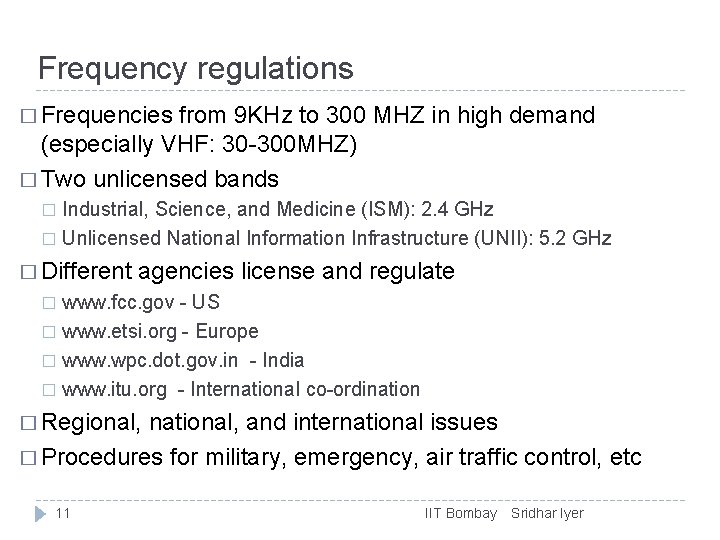
Frequency regulations � Frequencies from 9 KHz to 300 MHZ in high demand (especially VHF: 30 -300 MHZ) � Two unlicensed bands Industrial, Science, and Medicine (ISM): 2. 4 GHz � Unlicensed National Information Infrastructure (UNII): 5. 2 GHz � � Different agencies license and regulate www. fcc. gov - US � www. etsi. org - Europe � www. wpc. dot. gov. in - India � www. itu. org - International co-ordination � � Regional, national, and international issues � Procedures for military, emergency, air traffic control, etc 11 IIT Bombay Sridhar Iyer
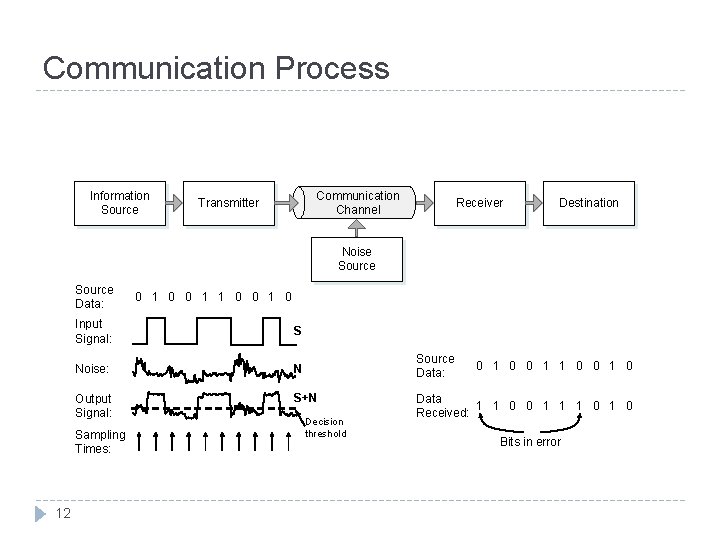
Communication Process Information Source Communication Channel Transmitter Receiver Destination Noise Source Data: Input Signal: S Noise: N Output Signal: S+N Sampling Times: 12 0 1 0 Source Data: Decision threshold 0 1 0 Data 1 1 0 0 1 1 1 0 Received: Bits in error
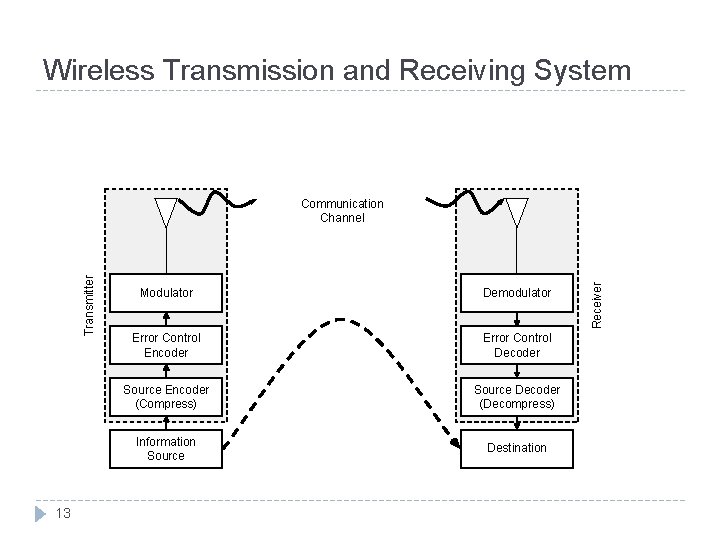
Wireless Transmission and Receiving System 13 Modulator Demodulator Error Control Encoder Error Control Decoder Source Encoder (Compress) Source Decoder (Decompress) Information Source Destination Receiver Transmitter Communication Channel
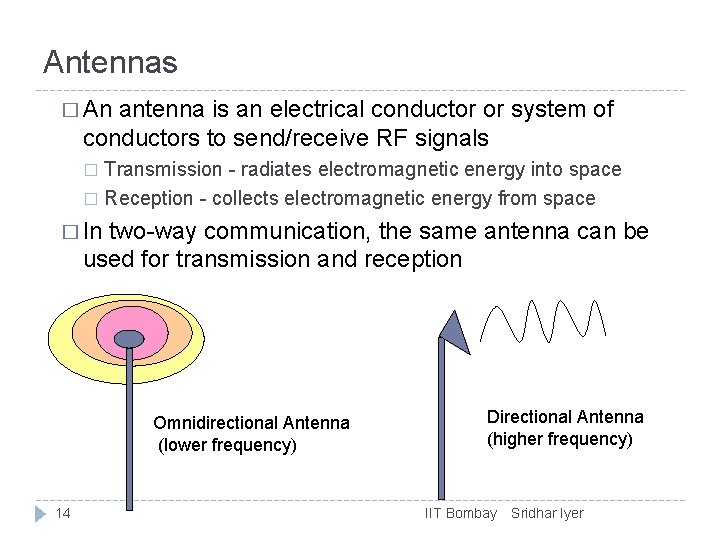
Antennas � An antenna is an electrical conductor or system of conductors to send/receive RF signals Transmission - radiates electromagnetic energy into space � Reception - collects electromagnetic energy from space � � In two-way communication, the same antenna can be used for transmission and reception Omnidirectional Antenna (lower frequency) 14 Directional Antenna (higher frequency) IIT Bombay Sridhar Iyer
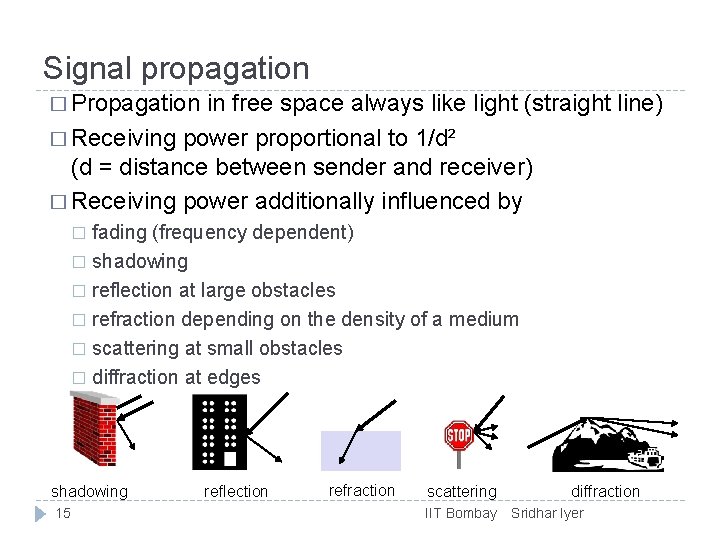
Signal propagation � Propagation in free space always like light (straight line) � Receiving power proportional to 1/d² (d = distance between sender and receiver) � Receiving power additionally influenced by fading (frequency dependent) � shadowing � reflection at large obstacles � refraction depending on the density of a medium � scattering at small obstacles � diffraction at edges � shadowing 15 reflection refraction scattering IIT Bombay diffraction Sridhar Iyer
Bandwidth � Amount of data that can be transmitted per unit time expressed in cycles per second, or Hertz (Hz) for analog devices � expressed in bits per second (bps) for digital devices � KB = 2^10 bytes; Mbps = 10^6 bps � � Link 16 v/s End-to-End IIT Bombay Sridhar Iyer
Latency (delay) � Time it takes to send message from point A to point B � Latency = Propagation + Transmit + Queue � Propagation = Distance / Speed. Of. Light � Transmit = Size / Bandwidth Queueing not relevant for direct links � Bandwidth not relevant if Size = 1 bit � Software overhead can dominate when Distance is small � � RTT: 17 round-trip time IIT Bombay Sridhar Iyer
802. 11 (Wi. Fi) Overview
Wireless LANs � Infrared (Ir. DA) or radio links (Wavelan) � Advantages � very flexible within the reception area � Ad-hoc networks possible � (almost) no wiring difficulties � Disadvantages � low bandwidth compared to wired networks � many proprietary solutions � Infrastructure 19 v/s ad-hoc networks (802. 11) IIT Bombay Sridhar Iyer
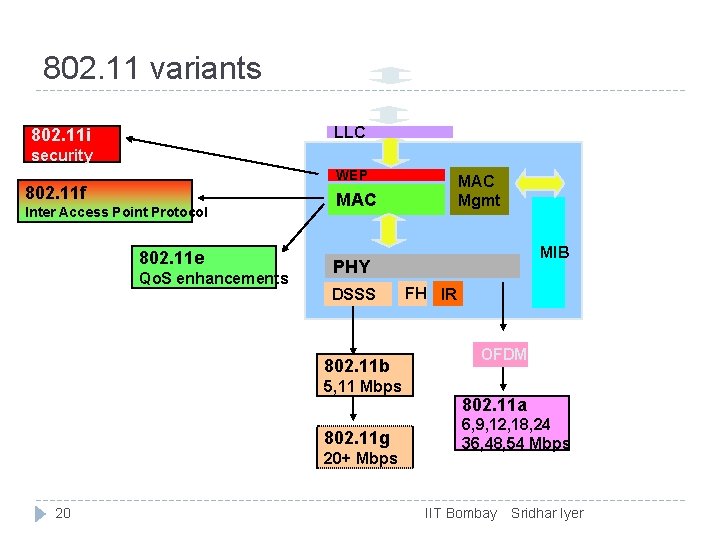
802. 11 variants LLC 802. 11 i security WEP 802. 11 f Inter Access Point Protocol 802. 11 e Qo. S enhancements MAC MIB PHY DSSS 802. 11 b 5, 11 Mbps 802. 11 g 20+ Mbps 20 MAC Mgmt FH IR OFDM 802. 11 a 6, 9, 12, 18, 24 36, 48, 54 Mbps IIT Bombay Sridhar Iyer
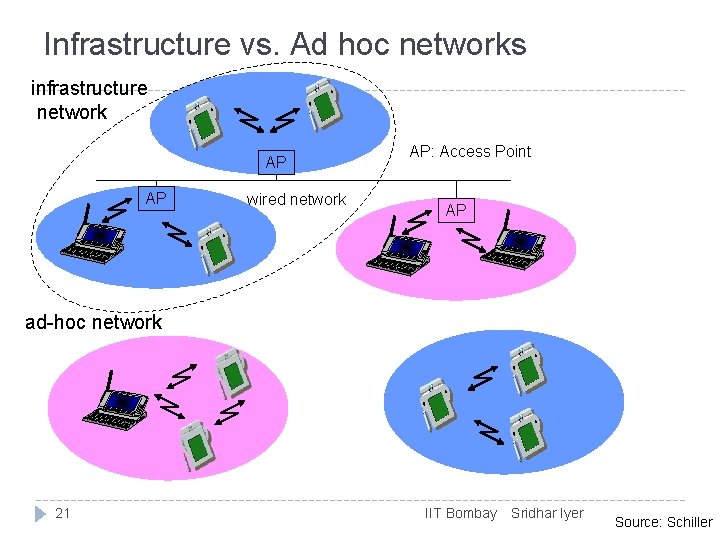
Infrastructure vs. Ad hoc networks infrastructure network AP AP wired network AP: Access Point AP ad-hoc network 21 IIT Bombay Sridhar Iyer Source: Schiller
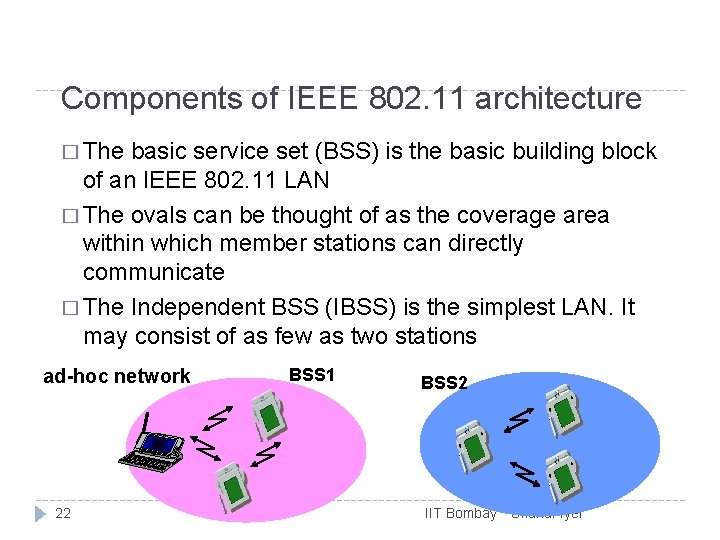
Components of IEEE 802. 11 architecture � The basic service set (BSS) is the basic building block of an IEEE 802. 11 LAN � The ovals can be thought of as the coverage area within which member stations can directly communicate � The Independent BSS (IBSS) is the simplest LAN. It may consist of as few as two stations ad-hoc network 22 BSS 1 BSS 2 IIT Bombay Sridhar Iyer
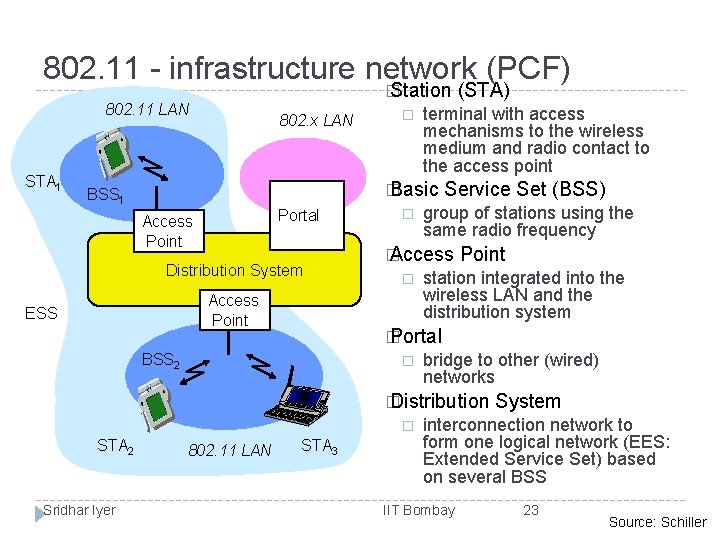
802. 11 - infrastructure network (PCF) � Station 802. 11 LAN STA 1 802. x LAN � terminal with access mechanisms to the wireless medium and radio contact to the access point � Basic BSS 1 Portal Access Point Distribution System Access Point ESS � Service Set (BSS) group of stations using the same radio frequency � Access � (STA) Point station integrated into the wireless LAN and the distribution system � Portal BSS 2 � bridge to other (wired) networks � Distribution � STA 2 Sridhar Iyer 802. 11 LAN STA 3 System interconnection network to form one logical network (EES: Extended Service Set) based on several BSS IIT Bombay 23 Source: Schiller
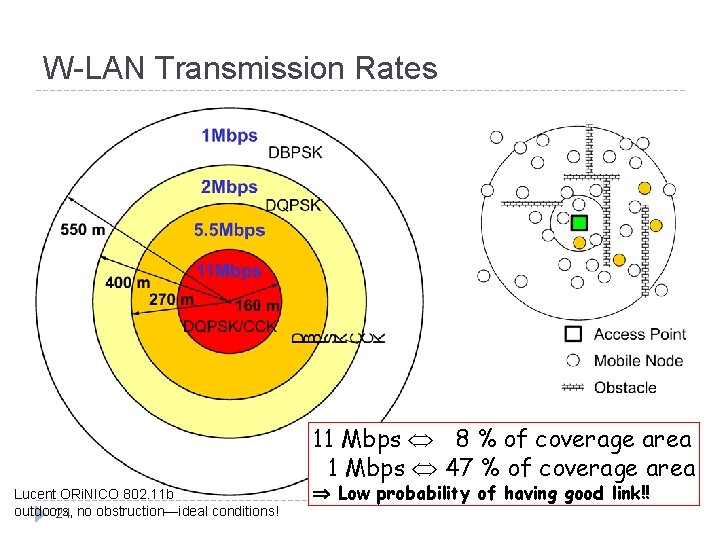
W-LAN Transmission Rates 11 Mbps 8 % of coverage area 1 Mbps 47 % of coverage area Lucent ORi. NICO 802. 11 b outdoors, 24 no obstruction—ideal conditions! Low probability of having good link!!
802. 16 (Wi. Ma. X) Overview
Motivation for 802. 16 � Broadband: �A transmission facility having a bandwidth sufficient to carry multiple voice, video or data, simultaneously. � High-capacity fiber to every user is expensive. � Broadband Wireless Access: � provides “First-mile” network access to buildings. � Cost effective and easy deployment. 26 IIT Bombay Sridhar Iyer
IEEE 802. 16 � Wireless. MAN � for air interface fixed point to multi-point BWA � Broad bandwidth: 10 -66 GHz � Channel as wide as 28 MHz and � Data rate upto 134 Mbps � MAC designed for efficient use of spectrum � Bandwidth on demand � Qo. S Support 27 IIT Bombay Sridhar Iyer
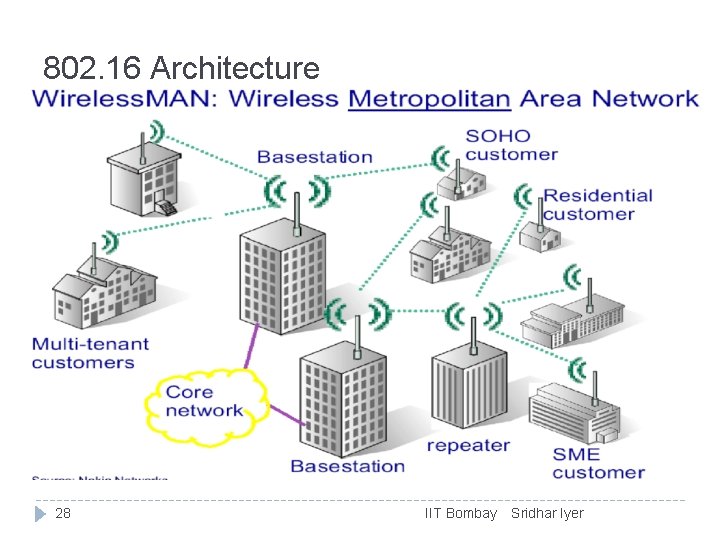
802. 16 Architecture 28 IIT Bombay Sridhar Iyer
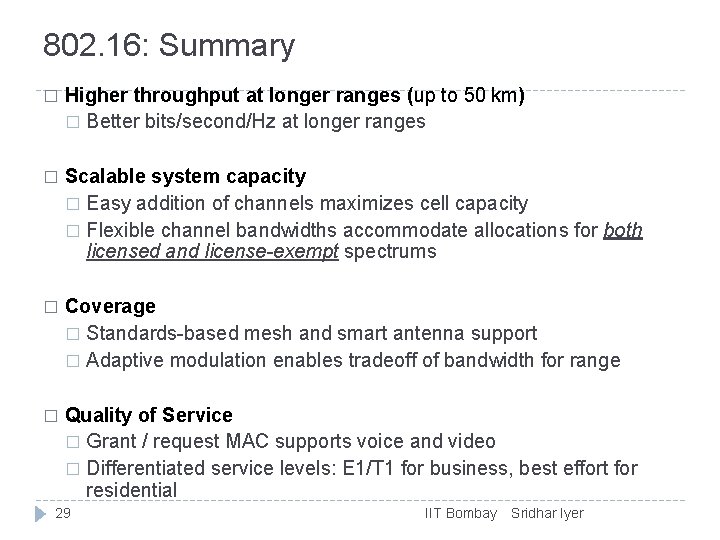
802. 16: Summary � Higher throughput at longer ranges (up to 50 km) � Better bits/second/Hz at longer ranges � Scalable system capacity � Easy addition of channels maximizes cell capacity � Flexible channel bandwidths accommodate allocations for both licensed and license-exempt spectrums � Coverage � Standards-based mesh and smart antenna support � Adaptive modulation enables tradeoff of bandwidth for range � Quality of Service � Grant / request MAC supports voice and video � Differentiated service levels: E 1/T 1 for business, best effort for residential 29 IIT Bombay Sridhar Iyer
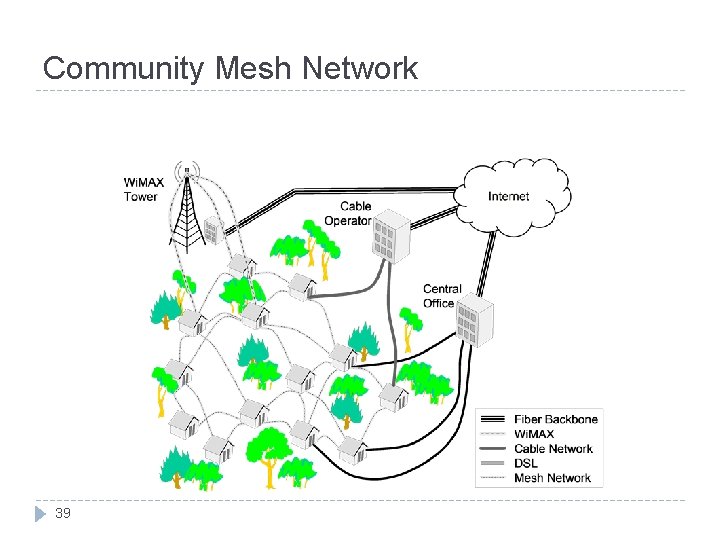
Mesh and Adhoc Networks 30 IIT Bombay Sridhar Iyer
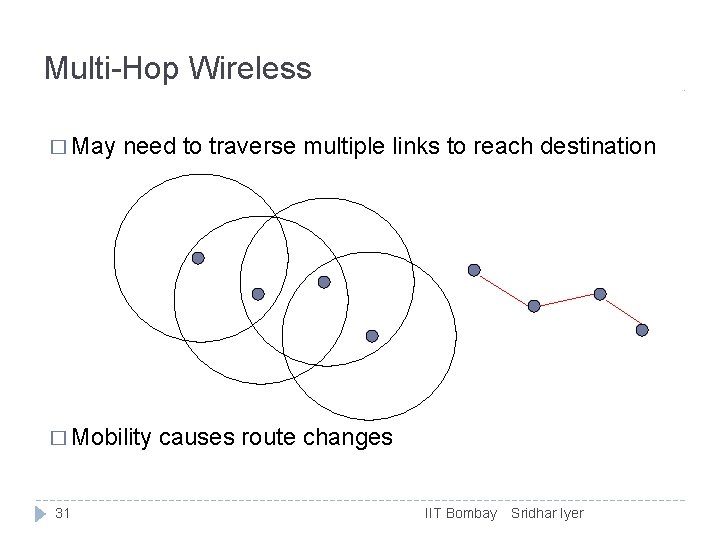
Multi-Hop Wireless � May need to traverse multiple links to reach destination � Mobility 31 causes route changes IIT Bombay Sridhar Iyer
![Route discovery Y S E Z [S, E] F B C A M J](http://slidetodoc.com/presentation_image_h2/5a9b40e2a09f4b447a1392a4dcb577f8/image-32.jpg "Route discovery Y S E Z [S, E] F B C A M J")
Route discovery Y S E Z [S, E] F B C A M J [S, C] H L G K D I N • Node H receives packet RREQ from two neighbors: potential for collision 32 IIT Bombay Sridhar Iyer
Cellular Networks (cell phone)
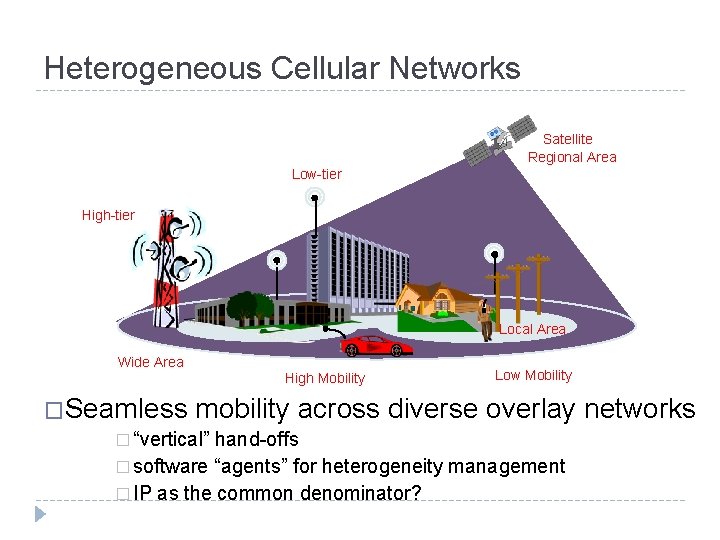
Heterogeneous Cellular Networks Satellite Regional Area Low-tier High-tier Local Area Wide Area High Mobility �Seamless Low Mobility mobility across diverse overlay networks � “vertical” hand-offs � software “agents” for heterogeneity management � IP as the common denominator?
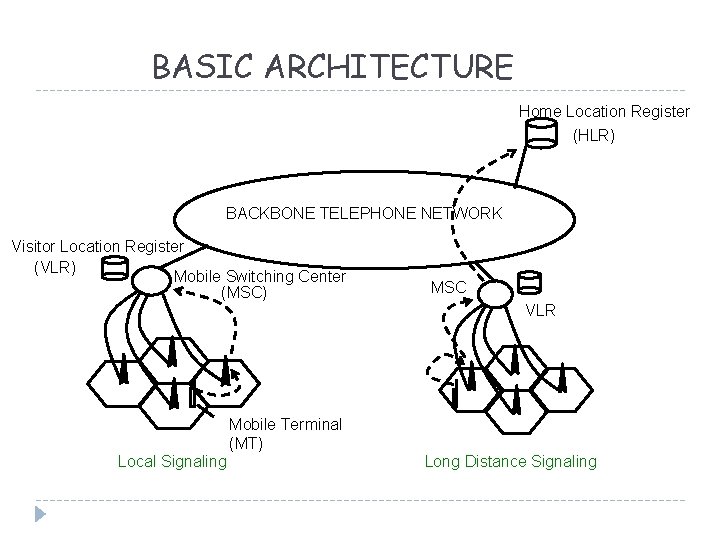
BASIC ARCHITECTURE Home Location Register (HLR) BACKBONE TELEPHONE NETWORK Visitor Location Register (VLR) Mobile Switching Center (MSC) MSC VLR Mobile Terminal (MT) Local Signaling Long Distance Signaling
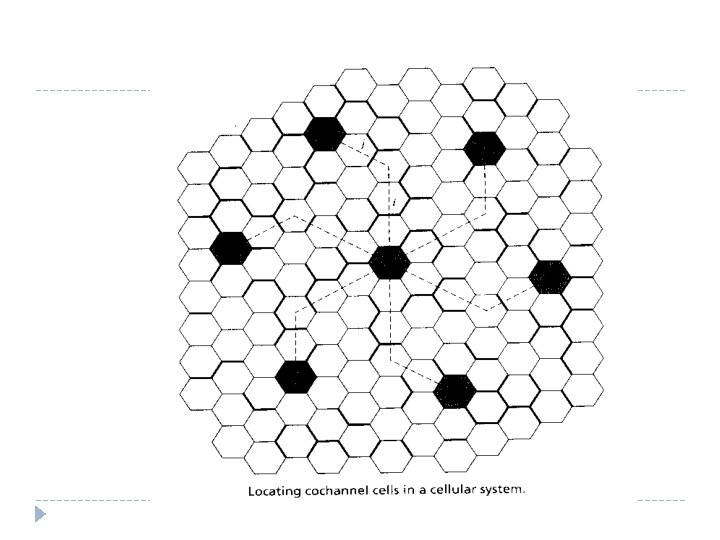
Cellular Concept The most important factor is the size and the shape of a CELL. � A cell is the radio coverage area by a transmitting station or a BS. � Ideally, the area covered a by a cell could be represented by a circular cell with a radius R from the center of a BS. � Many factors may cause reflections and refractions of the signals, e. g. , elevation of the terrain, presence of a hill or a valley or a tall building and presence in the surrounding area. � The actual shape of the cell is determined by the received signal strength. � Thus, the coverage area may be a little distorted. � We need an appropriate model of a cell for the analysis and evaluation. � Many posible models: HEXAGON, SQUARE, EQUILATERAL TRIANGLE. �
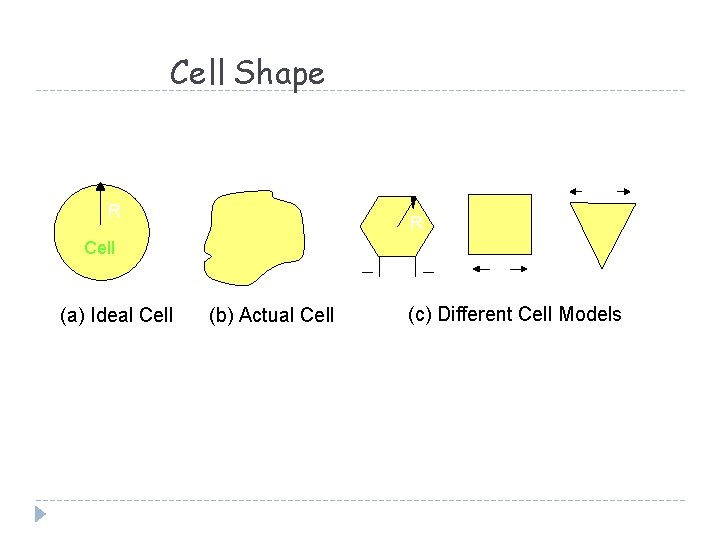
Cell Shape R R R Cell R (a) Ideal Cell (b) Actual Cell R (c) Different Cell Models
Community Mesh Network 39
- Slides: 39