
Week 3 Barriers in Communication Components of Communication
Week 3 Barriers in Communication

Components of Communication Verbal Messages the words we choose Paraverbal Messages how we say the words Nonverbal Messages our body language

Verbal Messages Effective Verbal Messages 1. Are brief, concise, and organized 2. Are free of jargon 3. Do not create resistance in the listener
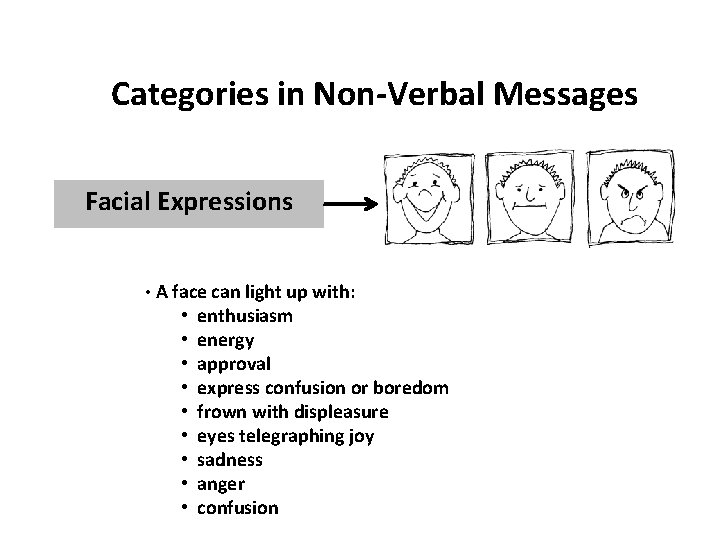
Categories in Non-Verbal Messages Facial Expressions • A face can light up with: • • • enthusiasm energy approval express confusion or boredom frown with displeasure eyes telegraphing joy sadness anger confusion
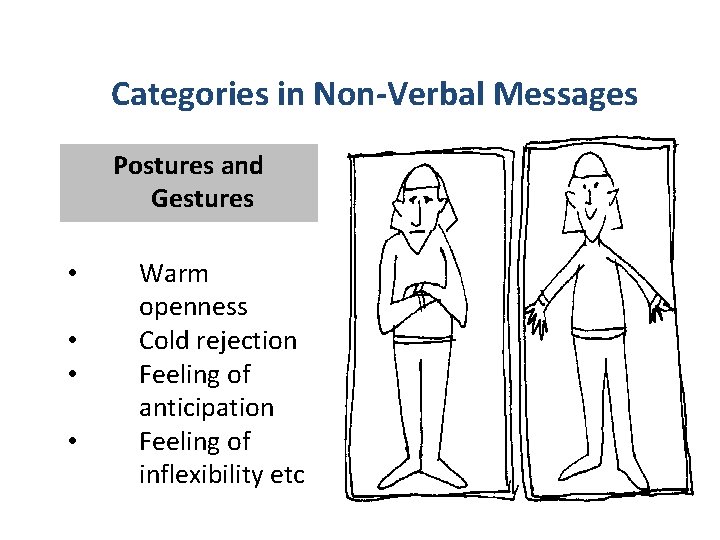
Categories in Non-Verbal Messages Postures and Gestures • • Warm openness Cold rejection Feeling of anticipation Feeling of inflexibility etc
Non-Verbal Messages 1. Account for about 55% of what is perceived and understood by others. 2. expressions as well as our postures and gestures.

Paraverbal Messages • Messages that we transmit through the tone, pitch, and pacing of our voices. • It is how we say something, not what we say.
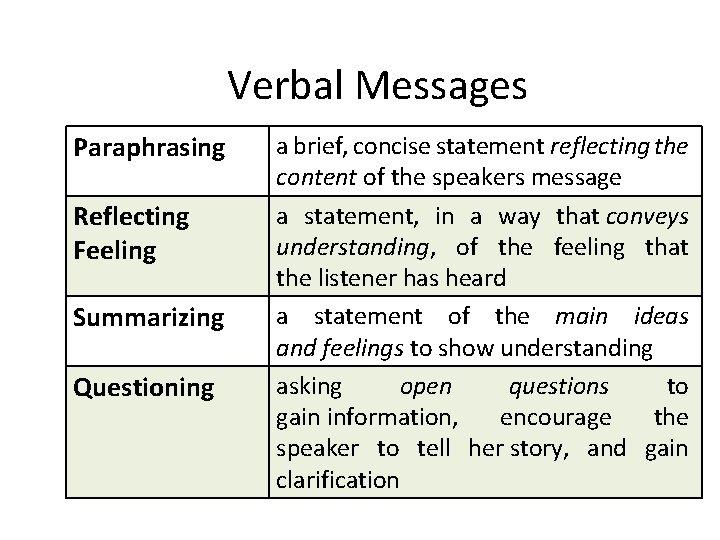
Verbal Messages Paraphrasing Reflecting Feeling Summarizing Questioning a brief, concise statement reflecting the content of the speakers message a statement, in a way that conveys understanding, of the feeling that the listener has heard a statement of the main ideas and feelings to show understanding asking open questions to gain information, encourage the speaker to tell her story, and gain clarification
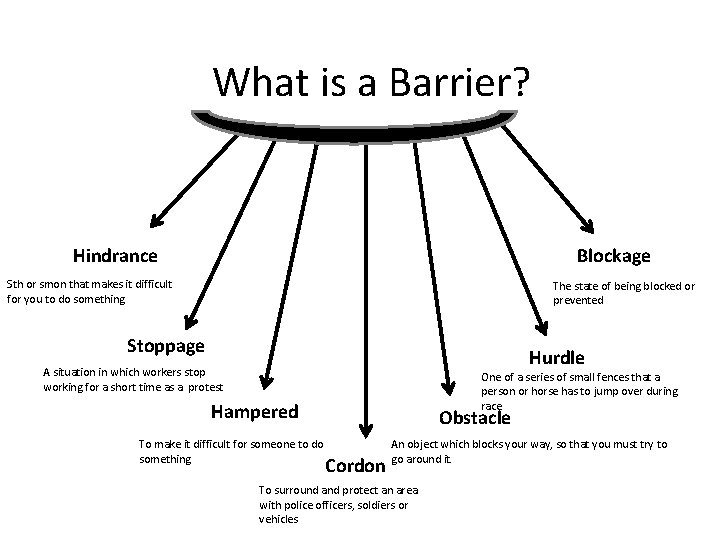
What is a Barrier? Hindrance Blockage Sth or smon that makes it difficult for you to do something The state of being blocked or prevented Stoppage Hurdle A situation in which workers stop working for a short time as a protest One of a series of small fences that a person or horse has to jump over during race Hampered To make it difficult for someone to do something Obstacle Cordon An object which blocks your way, so that you must try to go around it. To surround and protect an area with police officers, soldiers or vehicles

How would you define a Communication Barrier? Message is misinterpreted Receiver Sender
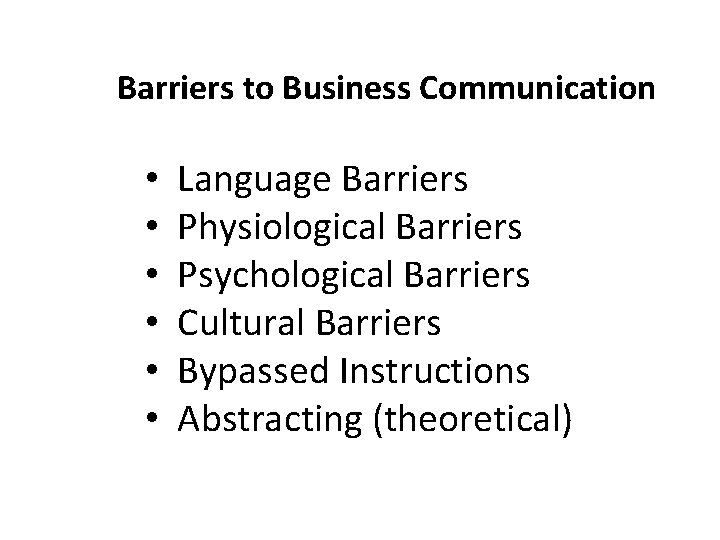
Barriers to Business Communication • • • Language Barriers Physiological Barriers Psychological Barriers Cultural Barriers Bypassed Instructions Abstracting (theoretical)
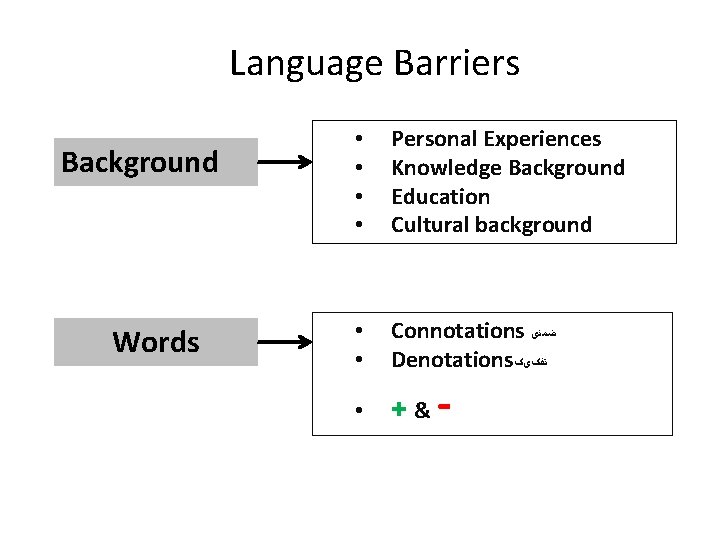
Language Barriers Background Words • • Personal Experiences Knowledge Background Education Cultural background • • Connotations ﺿﻤﻨی Denotations ﺗﻔکیک • + &-
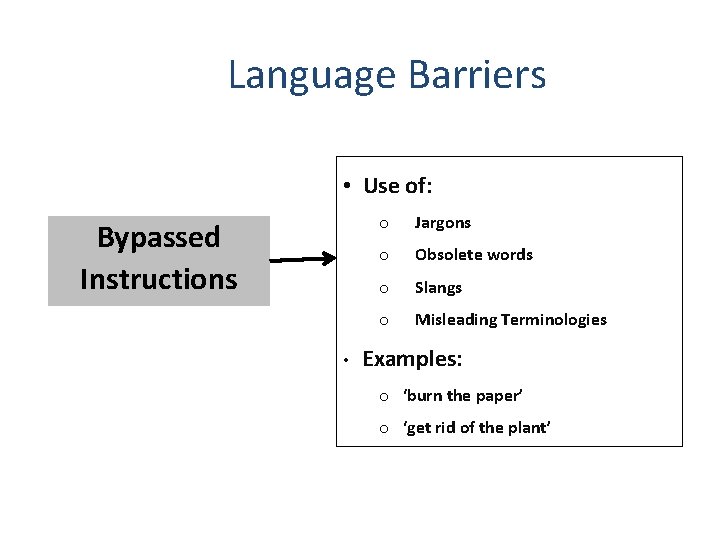
Language Barriers • Use of: Bypassed Instructions • o Jargons o Obsolete words o Slangs o Misleading Terminologies Examples: o ‘burn the paper’ o ‘get rid of the plant’
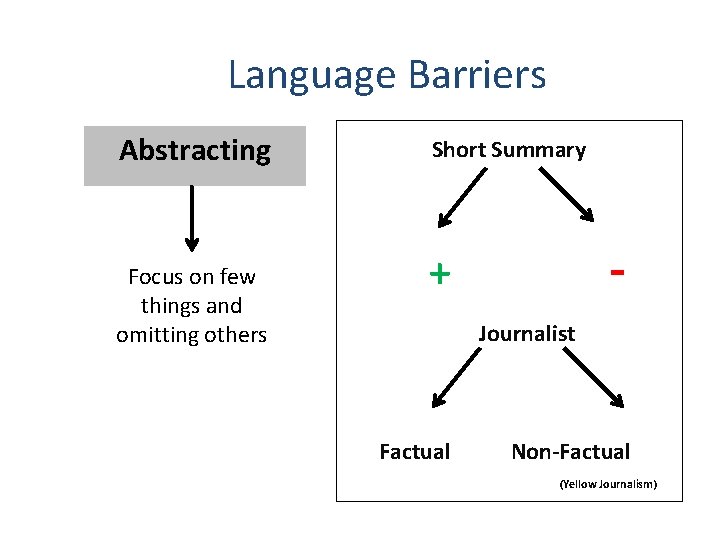
Language Barriers Abstracting Focus on few things and omitting others Short Summary - + Journalist Factual Non-Factual (Yellow Journalism)
Physiological Barriers • • • Context • • • Physical Environment Dull voice Too many others talking in the room at the same time Outside noises interruptions Visual distraction ګیچ Mobile phones Interesting People around Proper light Music Talking loud Sounds etc
Physiological Barriers Physical Conditions • • • Drowsy/dizzy Air-conditioning Hot/stuffy/cold room Day dreaming (something on mind) Hunger/ overeating Health Problems Anxiety Flue/ Cough Exhausted Starving etc ﻗﺤﻄی
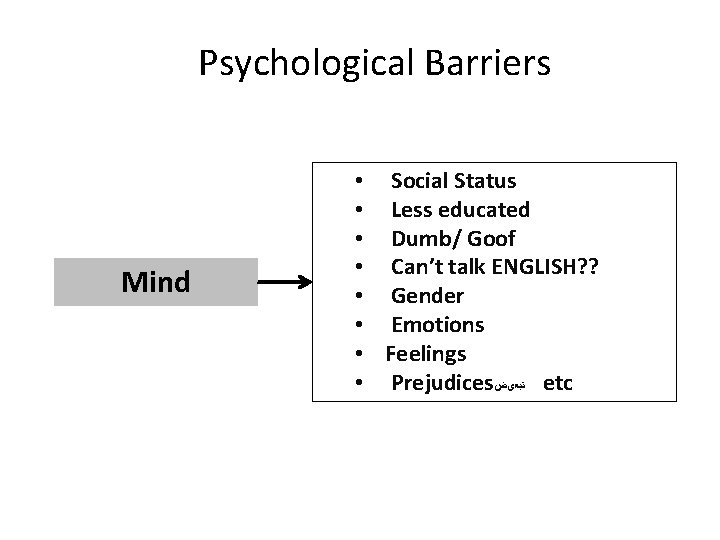
Psychological Barriers Mind • Social Status • Less educated • Dumb/ Goof • Can’t talk ENGLISH? ? • Gender • Emotions • Feelings • Prejudices ﺗﺒﻌیﺾ etc
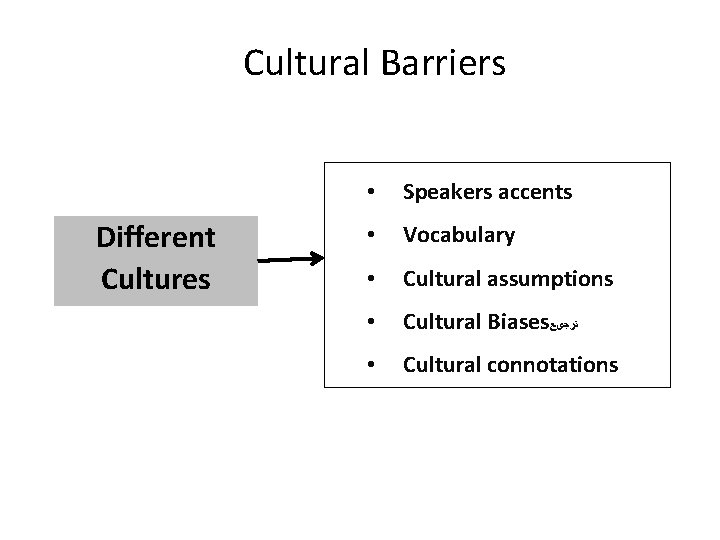
Cultural Barriers Different Cultures • Speakers accents • Vocabulary • Cultural assumptions • Cultural Biases ﺗﺮﺟیﻊ • Cultural connotations
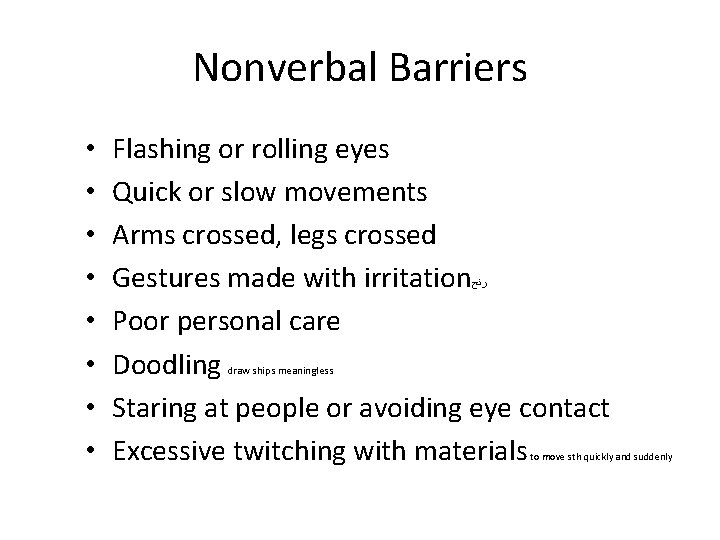
Nonverbal Barriers • • Flashing or rolling eyes Quick or slow movements Arms crossed, legs crossed Gestures made with irritation Poor personal care Doodling Staring at people or avoiding eye contact Excessive twitching with materials ﺭﻧﺢ draw ships meaningless to move sth quickly and suddenly
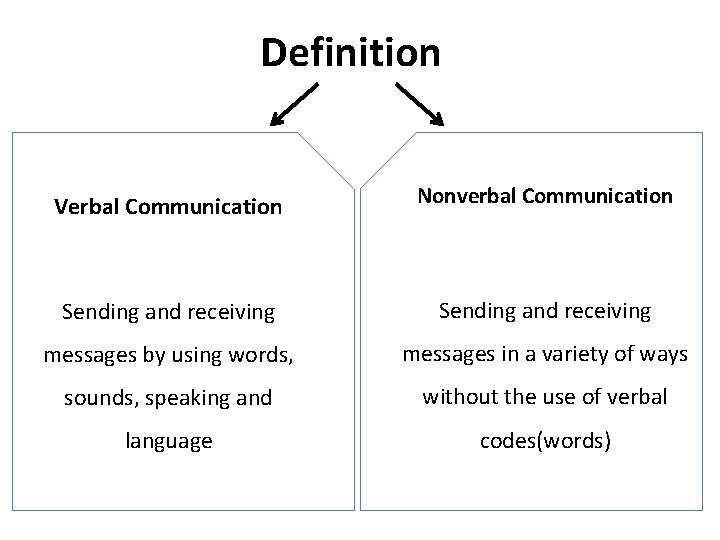
Definition Verbal Communication Nonverbal Communication Sending and receiving messages by using words, messages in a variety of ways sounds, speaking and without the use of verbal language codes(words)
Summary • • • Verbal Communication Non verbal Communication Paraverbal communication Barriers in Communication Verbal & Nonverbal Communication
- Slides: 21