
WEEK 2 Information Technology Project Management Magister Sistem

- Slides: 35
WEEK 2 Information Technology Project Management • Magister Sistem Informasi • Universitas Komputer Indonesia
THE ORGANIZATIONAL CONTEXT STRATEGY, STRUCTURE, and CULTURE
STRATEGY
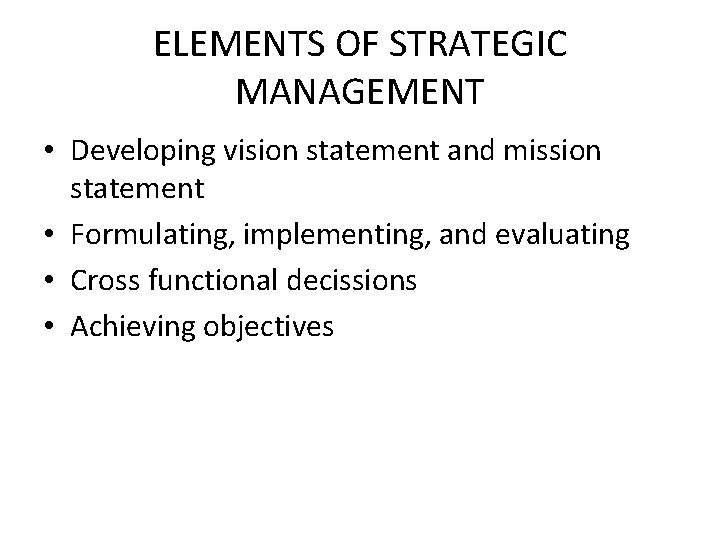
STRATEGIC MANAGEMENT • Strategic management is the science of formulating, implementing, and evaluating cross functional decission thats enabling the organization achieving its objective
ELEMENTS OF STRATEGIC MANAGEMENT • Developing vision statement and mission statement • Formulating, implementing, and evaluating • Cross functional decissions • Achieving objectives
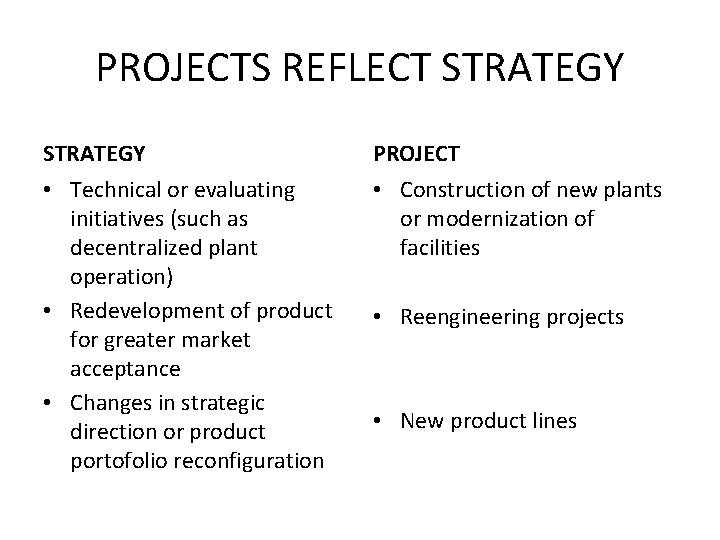
PROJECTS REFLECT STRATEGY PROJECT • Technical or evaluating initiatives (such as decentralized plant operation) • Redevelopment of product for greater market acceptance • Changes in strategic direction or product portofolio reconfiguration • Construction of new plants or modernization of facilities • Reengineering projects • New product lines
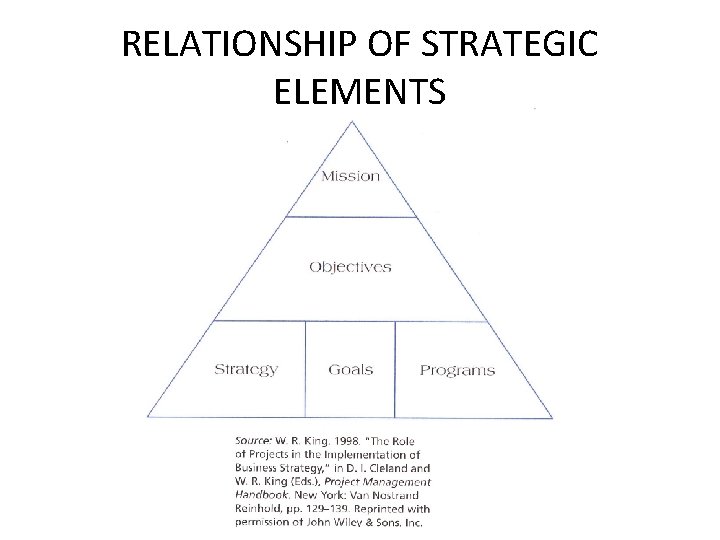
RELATIONSHIP OF STRATEGIC ELEMENTS
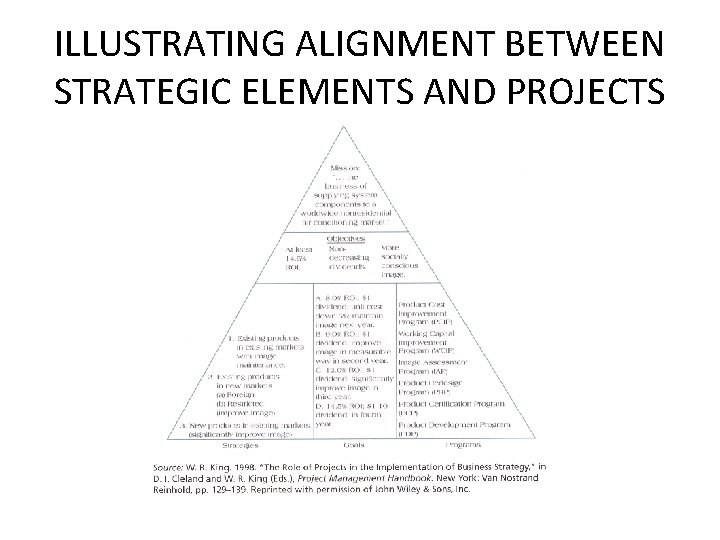
ILLUSTRATING ALIGNMENT BETWEEN STRATEGIC ELEMENTS AND PROJECTS
STAKEHOLDER
PROJECT STAKEHOLDER • All individuals or groups who have an active stake in the project and can potentially impact, either positively or negatively, its development.
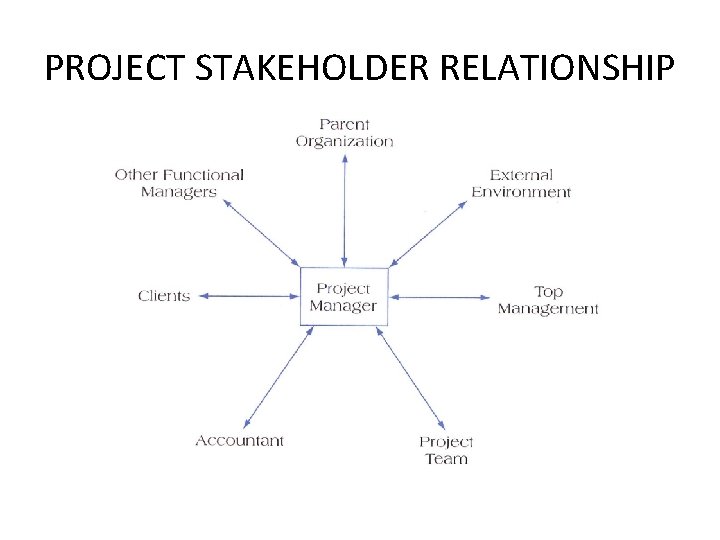
PROJECT STAKEHOLDER RELATIONSHIP
MANAGING STAKEHOLDER • • • Assess the environment Identify the goals of the principal actors Assess your own capabilities Define the problems Develop solutions Test and refine the solutions
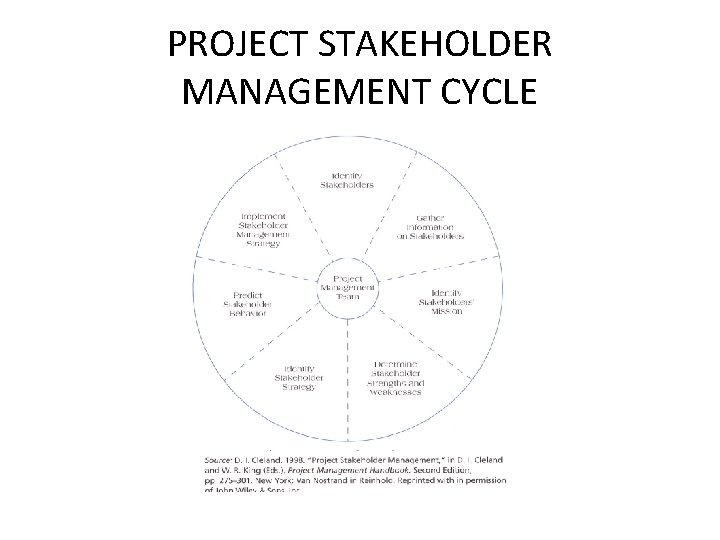
PROJECT STAKEHOLDER MANAGEMENT CYCLE
ORGANIZATIONAL STRUCTURE
FORMS OF ORGANIZATIONAL STRUCTURE
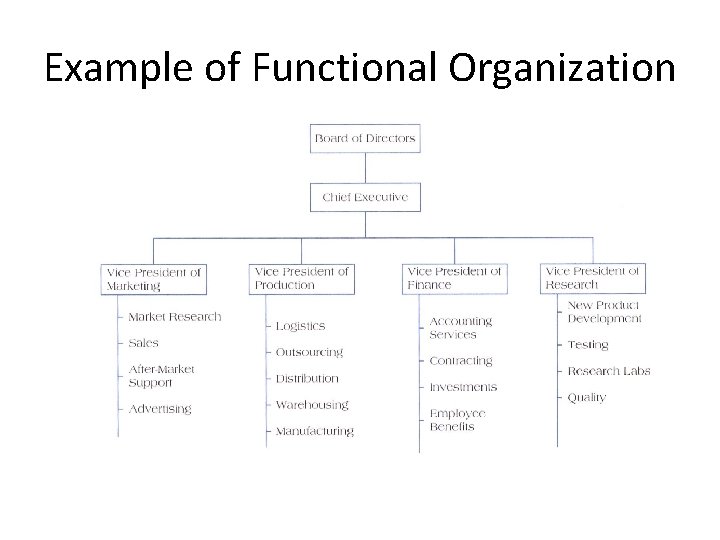
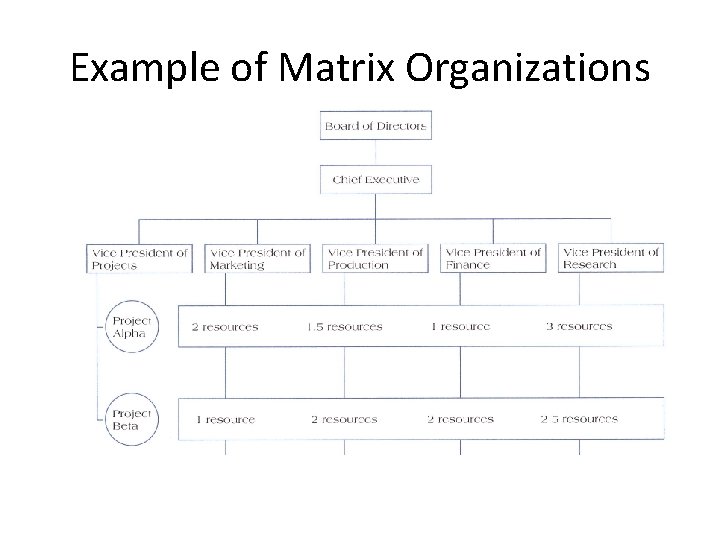
FORMS OF ORGANIZATIONAL STRUCTURE • FUNCTIONAL ORGANIZATIONS – Companies are structured by grouping people performing similar activities into departments. • PROJECT ORGANIZATIONS – Companies are structured by grouping people into project teams on temporary assignment. • MATRIX ORGANIZATIONS - Companies are structured by creating a dual hirarchy in which functions and projects have equal prominence.
Example of Functional Organization
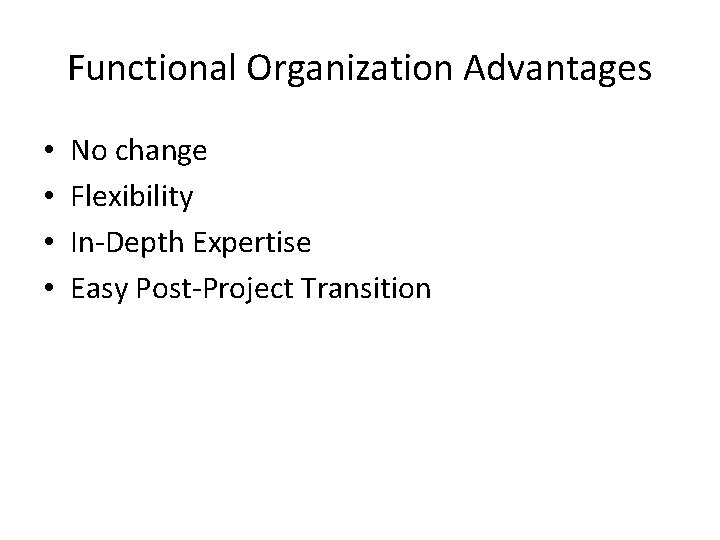
Functional Organization Advantages • • No change Flexibility In-Depth Expertise Easy Post-Project Transition
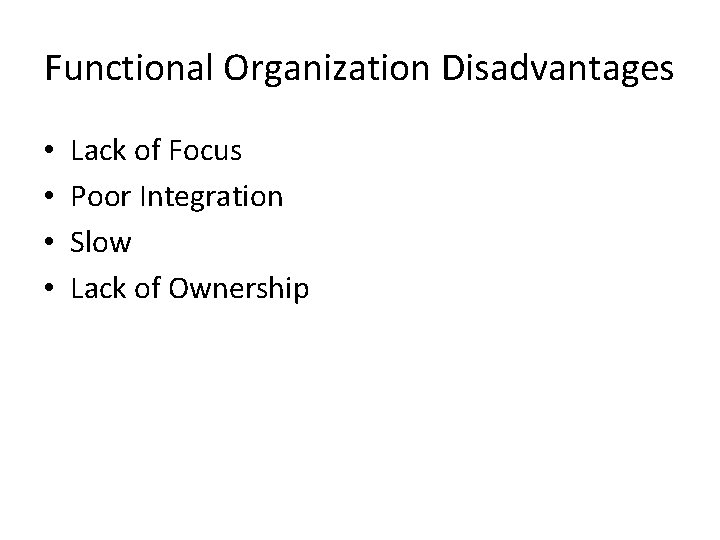
Functional Organization Disadvantages • • Lack of Focus Poor Integration Slow Lack of Ownership
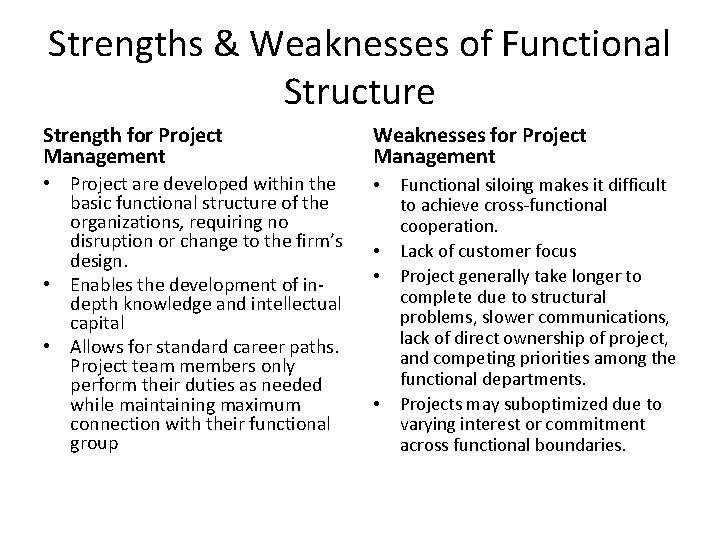
Strengths & Weaknesses of Functional Structure Strength for Project Management Weaknesses for Project Management • Project are developed within the basic functional structure of the organizations, requiring no disruption or change to the firm’s design. • Enables the development of indepth knowledge and intellectual capital • Allows for standard career paths. Project team members only perform their duties as needed while maintaining maximum connection with their functional group • • Functional siloing makes it difficult to achieve cross-functional cooperation. Lack of customer focus Project generally take longer to complete due to structural problems, slower communications, lack of direct ownership of project, and competing priorities among the functional departments. Projects may suboptimized due to varying interest or commitment across functional boundaries.
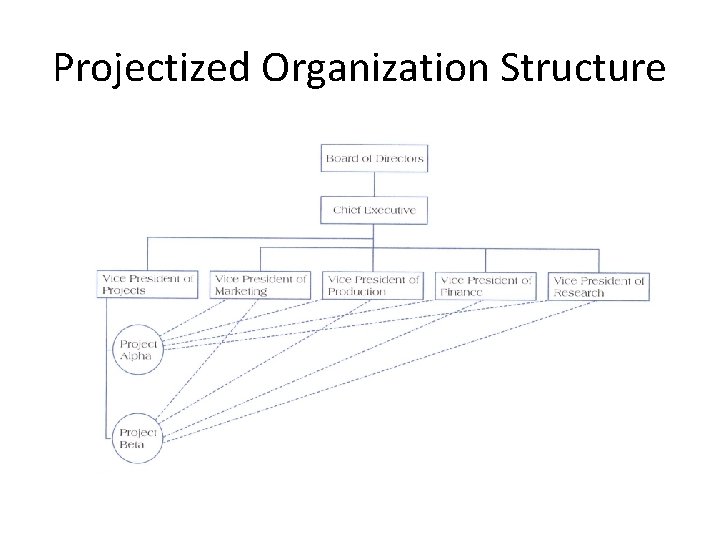
Projectized Organization Structure
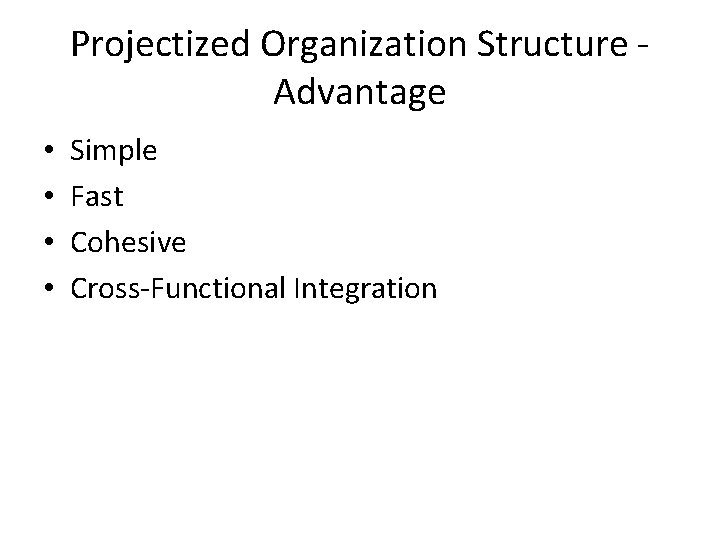
Projectized Organization Structure Advantage • • Simple Fast Cohesive Cross-Functional Integration
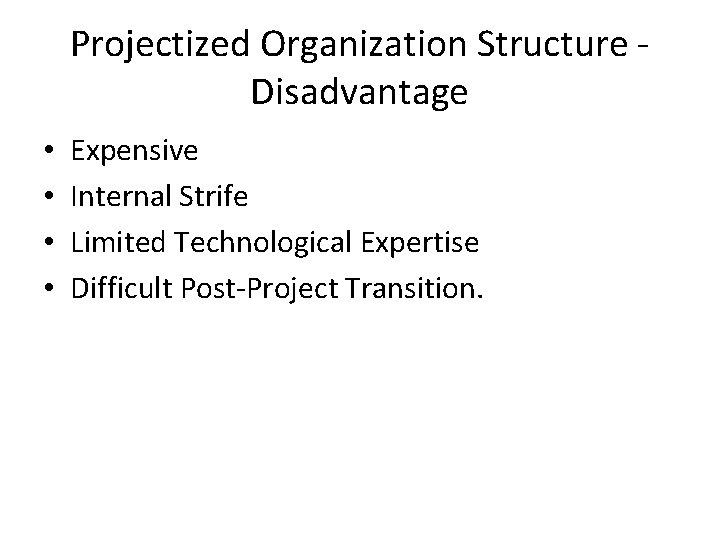
Projectized Organization Structure Disadvantage • • Expensive Internal Strife Limited Technological Expertise Difficult Post-Project Transition.
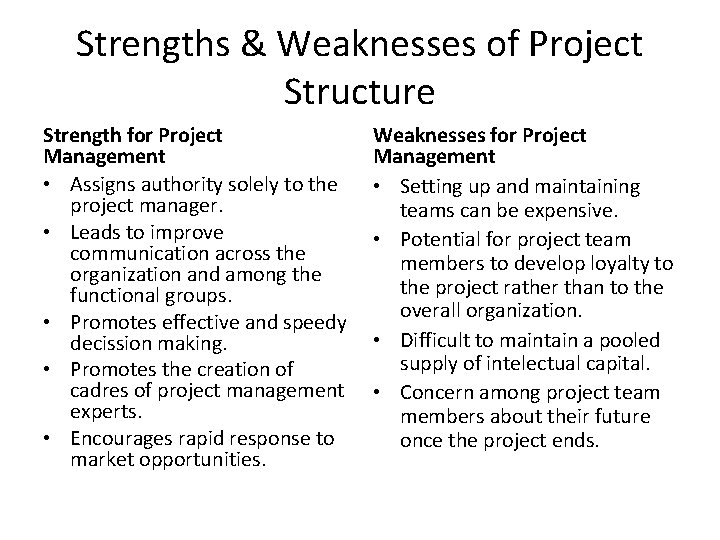
Strengths & Weaknesses of Project Structure Strength for Project Management • Assigns authority solely to the project manager. • Leads to improve communication across the organization and among the functional groups. • Promotes effective and speedy decission making. • Promotes the creation of cadres of project management experts. • Encourages rapid response to market opportunities. Weaknesses for Project Management • Setting up and maintaining teams can be expensive. • Potential for project team members to develop loyalty to the project rather than to the overall organization. • Difficult to maintain a pooled supply of intelectual capital. • Concern among project team members about their future once the project ends.
MATRIX STRUCTURE Matrix management works, but it sure is difficult at time. All matrix managers must keep up their health and take Stress-Tabs. A PROJECT MANAGER
Example of Matrix Organizations
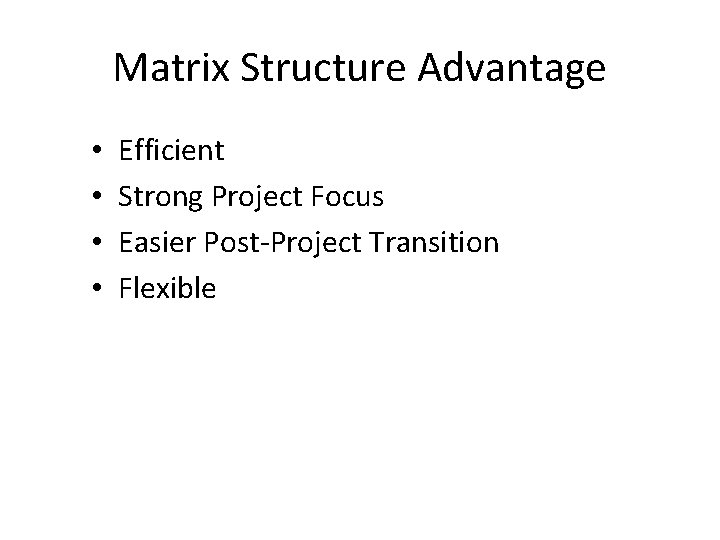
Matrix Structure Advantage • • Efficient Strong Project Focus Easier Post-Project Transition Flexible
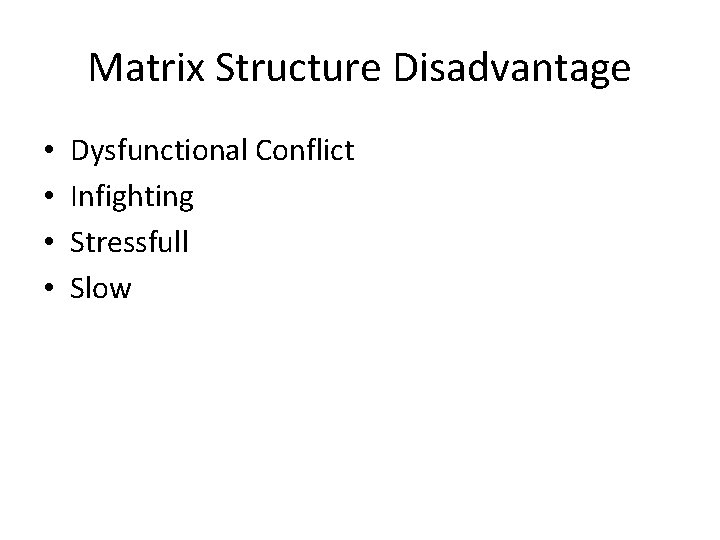
Matrix Structure Disadvantage • • Dysfunctional Conflict Infighting Stressfull Slow
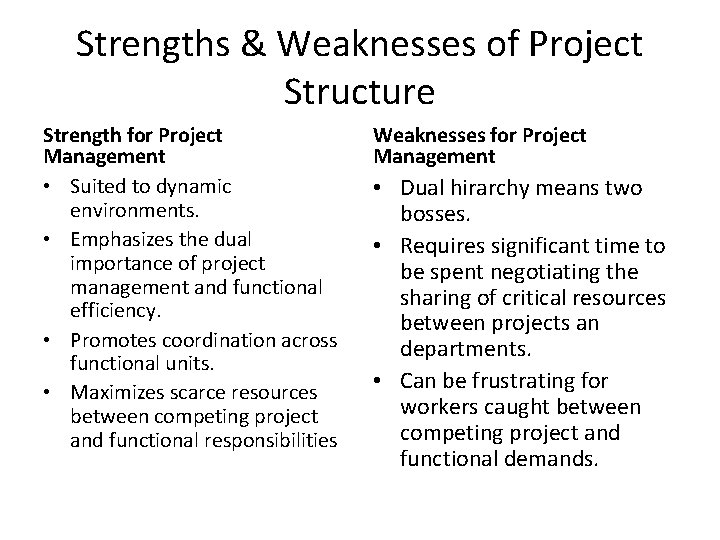
Strengths & Weaknesses of Project Structure Strength for Project Management • Suited to dynamic environments. • Emphasizes the dual importance of project management and functional efficiency. • Promotes coordination across functional units. • Maximizes scarce resources between competing project and functional responsibilities Weaknesses for Project Management • Dual hirarchy means two bosses. • Requires significant time to be spent negotiating the sharing of critical resources between projects an departments. • Can be frustrating for workers caught between competing project and functional demands.
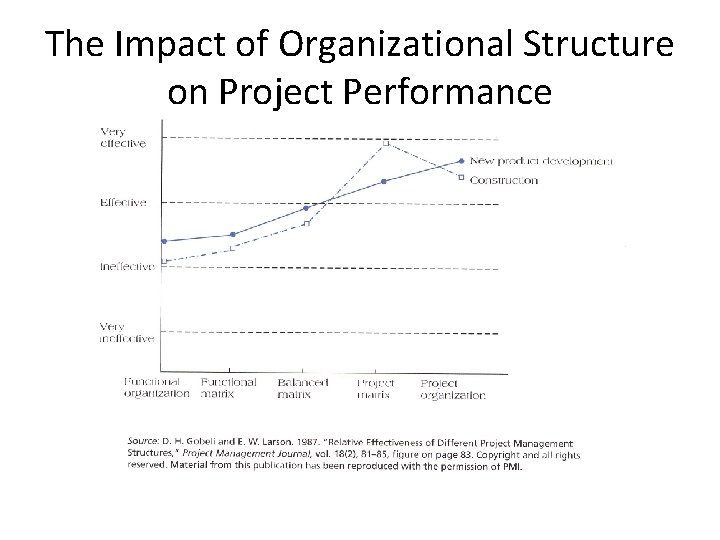
The Impact of Organizational Structure on Project Performance
ORGANIZATIONAL CULTURE
Culture • Refer to unwritten rules of behaviour, or norms that are used to shape and guide behaviour, that are shared by some subset of organizational members, and are taught to all new members of the company.
Key Factors that Affect the Development of Culture • • Technology Environment Geographical location Reward Systems Rules and Procedures Key Organizational Members Critical Incidents
Implications of an Organizational Culture on the Project Management Process • • Departmental interaction Employee commitment to goals Project Planning Performance Evaluation