
WEEK 2 17 TH WAS THERE A CENTURY

- Slides: 24
WEEK 2 17 TH WAS THERE A CENTURY YEOMAN’S AGRICULTURAL REVOLUTION? Dr Frances Richardson frances. richardson@ conted. ox. ac. uk http: //open. conted. ox. ac. uk/series/womans-worknever-done-womenswork-england-wales 1600 -1914 https: //drive. google. com/ drive/folders/1 T 2 z 3 pq_9 C_m. MAak. DPib 3742 CSH u. D-ztm
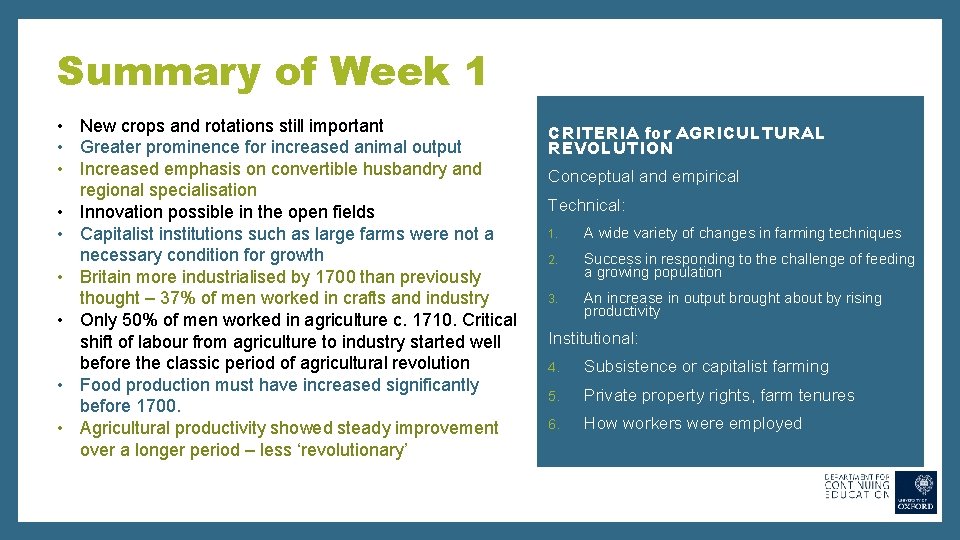
Summary of Week 1 • New crops and rotations still important • Greater prominence for increased animal output • Increased emphasis on convertible husbandry and regional specialisation • Innovation possible in the open fields • Capitalist institutions such as large farms were not a necessary condition for growth • Britain more industrialised by 1700 than previously thought – 37% of men worked in crafts and industry • Only 50% of men worked in agriculture c. 1710. Critical shift of labour from agriculture to industry started well before the classic period of agricultural revolution • Food production must have increased significantly before 1700. • Agricultural productivity showed steady improvement over a longer period – less ‘revolutionary’ CRITERIA for AGRICULTURAL REVOLUTION Conceptual and empirical Technical: 1. A wide variety of changes in farming techniques 2. Success in responding to the challenge of feeding a growing population 3. An increase in output brought about by rising productivity Institutional: 4. Subsistence or capitalist farming 5. Private property rights, farm tenures 6. How workers were employed
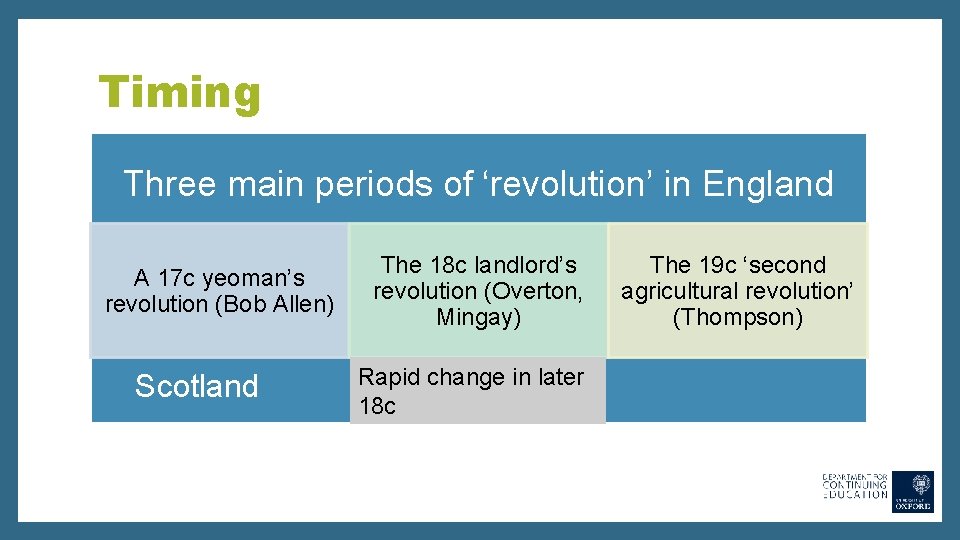
Timing Three main periods of ‘revolution’ in England A 17 c yeoman’s revolution (Bob Allen) Scotland The 18 c landlord’s revolution (Overton, Mingay) Rapid change in later 18 c The 19 c ‘second agricultural revolution’ (Thompson)
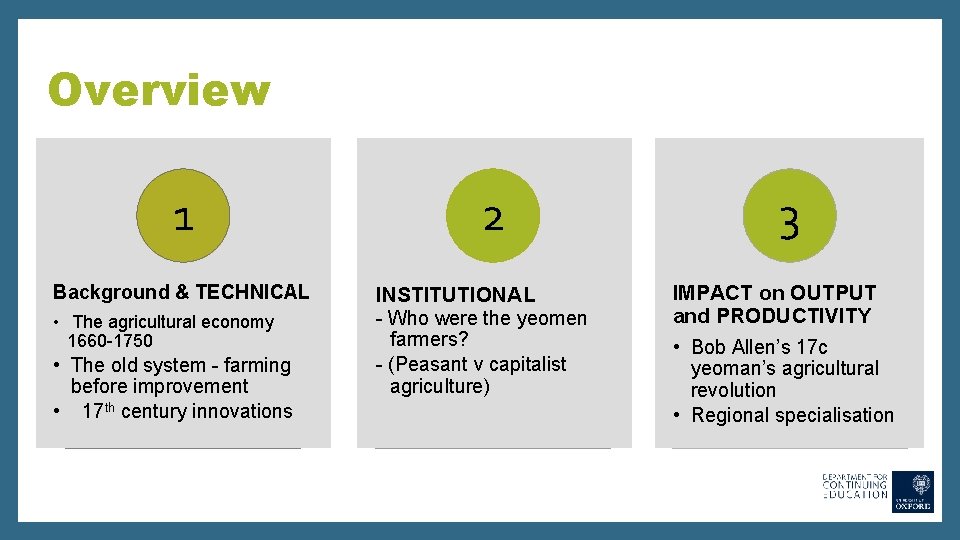
Overview 1 Background & TECHNICAL • The agricultural economy 1660 -1750 • The old system - farming before improvement • 17 th century innovations 2 INSTITUTIONAL - Who were the yeomen farmers? - (Peasant v capitalist agriculture) 3 IMPACT on OUTPUT and PRODUCTIVITY • Bob Allen’s 17 c yeoman’s agricultural revolution • Regional specialisation
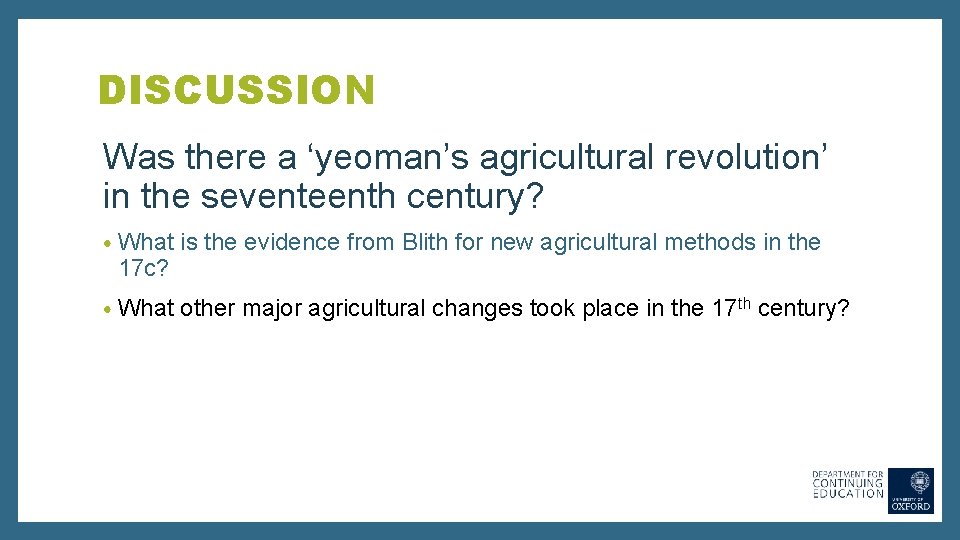
DISCUSSION Was there a ‘yeoman’s agricultural revolution’ in the seventeenth century? • What is the evidence from Blith for new agricultural methods in the • What other major agricultural changes took place in the 17 th century? 17 c?
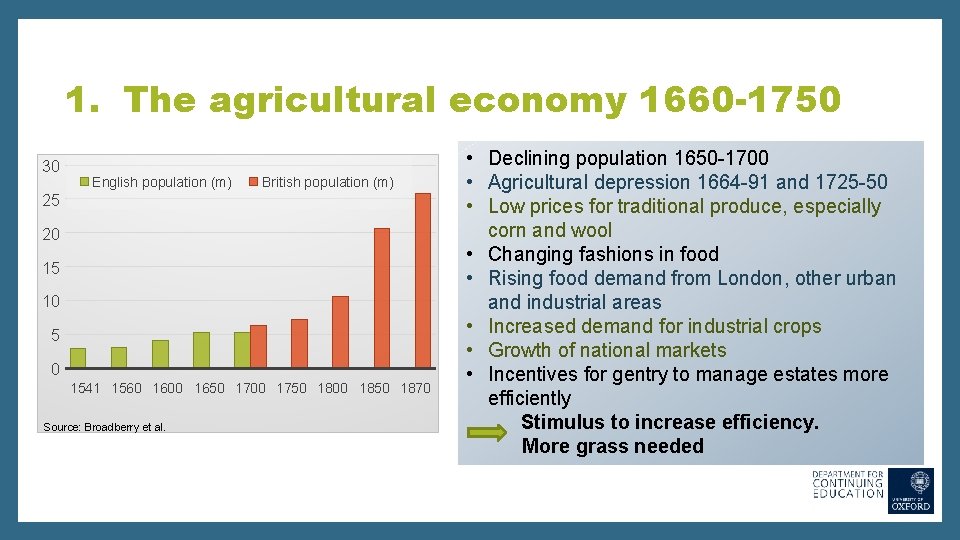
1. The agricultural economy 1660 -1750 30 English population (m) British population (m) 25 20 15 10 5 0 1541 1560 1600 1650 1700 1750 1800 1850 1870 Source: Broadberry et al. • Declining population 1650 -1700 • Agricultural depression 1664 -91 and 1725 -50 • Low prices for traditional produce, especially corn and wool • Changing fashions in food • Rising food demand from London, other urban and industrial areas • Increased demand for industrial crops • Growth of national markets • Incentives for gentry to manage estates more efficiently Stimulus to increase efficiency. More grass needed
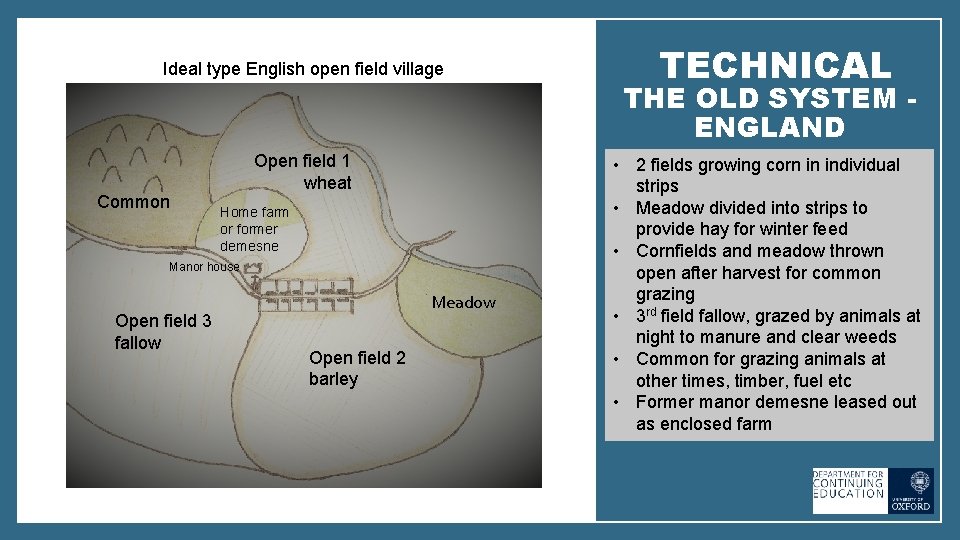
Ideal type English open field village Common Open field 1 wheat Home farm or former demesne Manor house Open field 3 fallow Meadow Open field 2 barley TECHNICAL THE OLD SYSTEM ENGLAND • 2 fields growing corn in individual strips • Meadow divided into strips to provide hay for winter feed • Cornfields and meadow thrown open after harvest for common grazing • 3 rd field fallow, grazed by animals at night to manure and clear weeds • Common for grazing animals at other times, timber, fuel etc • Former manor demesne leased out as enclosed farm
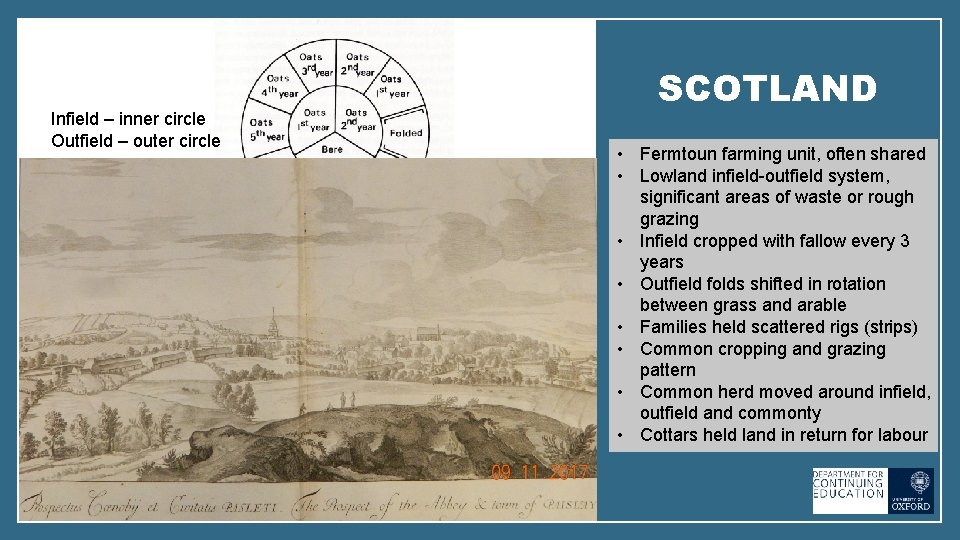
Infield – inner circle Outfield – outer circle J. Slezer, Theatrum Scotiae (1693) SCOTLAND • Fermtoun farming unit, often shared • Lowland infield-outfield system, significant areas of waste or rough grazing • Infield cropped with fallow every 3 years • Outfield folds shifted in rotation between grass and arable • Families held scattered rigs (strips) • Common cropping and grazing pattern • Common herd moved around infield, outfield and commonty • Cottars held land in return for labour
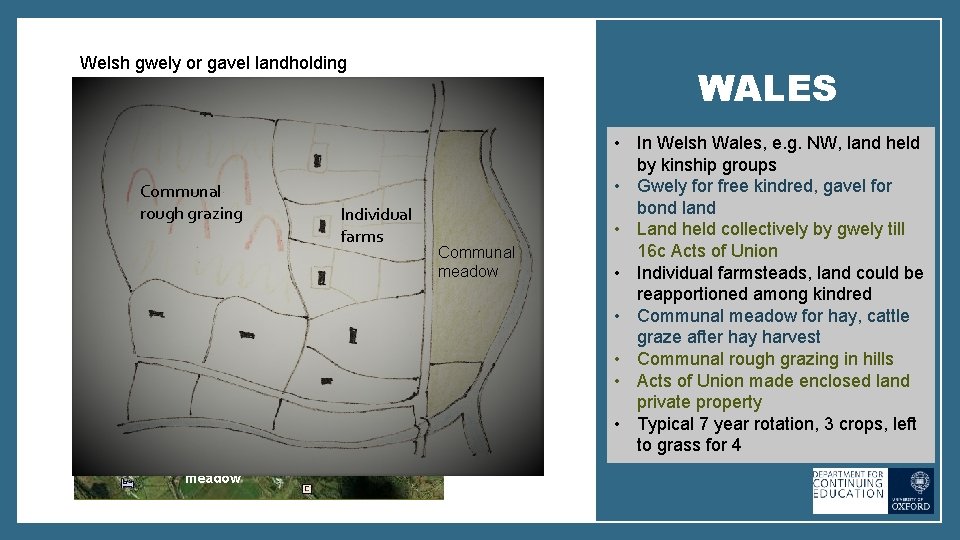
Welsh gwely or gavel landholding Communal rough grazing Individual farms Cefn Cyfarwydd meadow WALES Communal meadow • In Welsh Wales, e. g. NW, land held by kinship groups • Gwely for free kindred, gavel for bond land • Land held collectively by gwely till 16 c Acts of Union • Individual farmsteads, land could be reapportioned among kindred • Communal meadow for hay, cattle graze after hay harvest • Communal rough grazing in hills • Acts of Union made enclosed land private property • Typical 7 year rotation, 3 crops, left to grass for 4
TECHNICAL – 17 th century innovations • New crops v new farming systems • New crops: - turnips - clover, sainfoin, ryegrass - potatoes - tobacco • New system – convertible husbandry • Land improvement – water meadows • Land reclamation - fen drainage
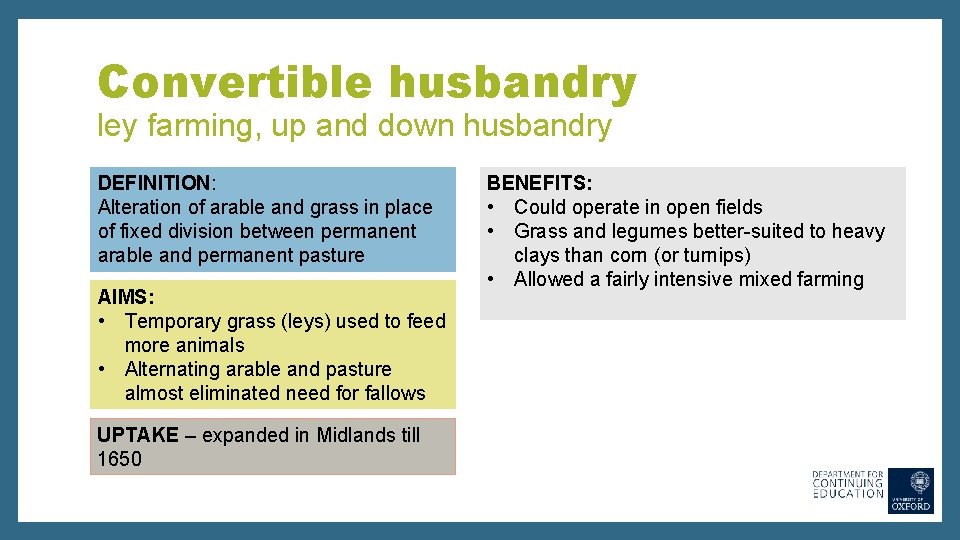
Convertible husbandry ley farming, up and down husbandry DEFINITION: Alteration of arable and grass in place of fixed division between permanent arable and permanent pasture AIMS: • Temporary grass (leys) used to feed more animals • Alternating arable and pasture almost eliminated need for fallows UPTAKE – expanded in Midlands till 1650 BENEFITS: • Could operate in open fields • Grass and legumes better-suited to heavy clays than corn (or turnips) • Allowed a fairly intensive mixed farming
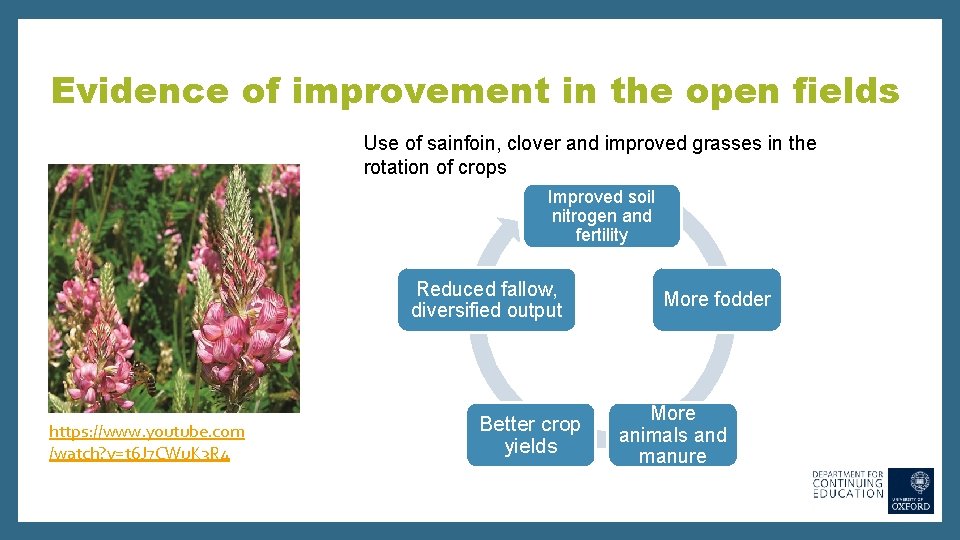
Evidence of improvement in the open fields Use of sainfoin, clover and improved grasses in the rotation of crops Improved soil nitrogen and fertility Reduced fallow, diversified output https: //www. youtube. com /watch? v=t 6 J 7 CWu. K 3 R 4 Better crop yields More fodder More animals and manure
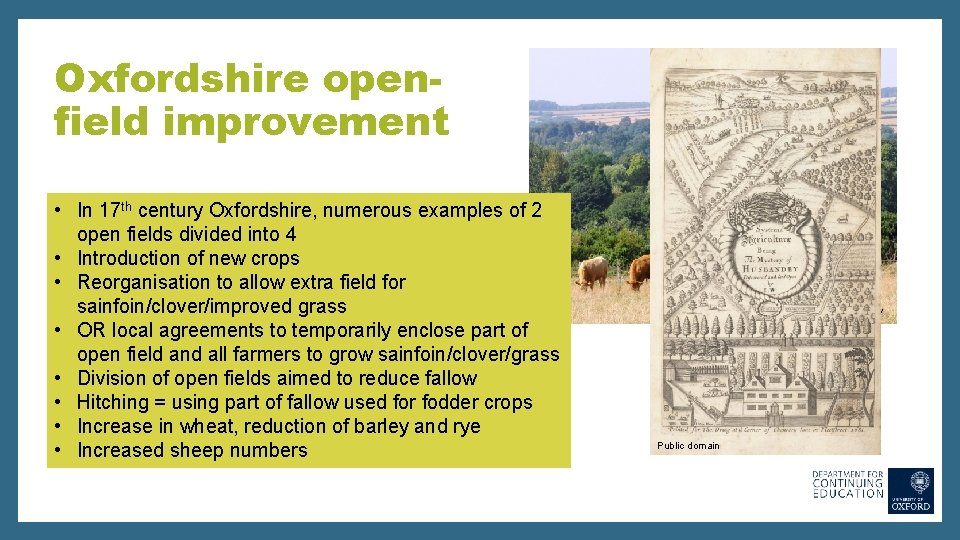
Oxfordshire openfield improvement • In 17 th century Oxfordshire, numerous examples of 2 open fields divided into 4 • Introduction of new crops • Reorganisation to allow extra field for sainfoin/clover/improved grass • OR local agreements to temporarily enclose part of open field and all farmers to grow sainfoin/clover/grass • Division of open fields aimed to reduce fallow • Hitching = using part of fallow used for fodder crops • Increase in wheat, reduction of barley and rye • Increased sheep numbers Spelsbury Public domain
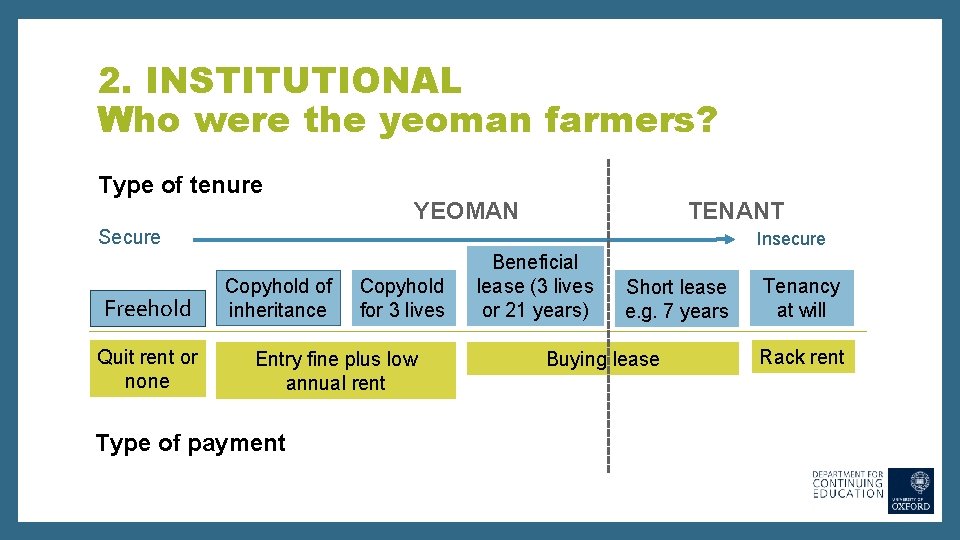
2. INSTITUTIONAL Who were the yeoman farmers? Type of tenure TENANT YEOMAN Secure Freehold Quit rent or none Insecure Copyhold of inheritance Copyhold for 3 lives Entry fine plus low annual rent Type of payment Beneficial lease (3 lives or 21 years) Short lease e. g. 7 years Buying lease Tenancy at will Rack rent
DISCUSSION • Why does Allen argue that agricultural productivity was increased more by a yeoman’s agricultural revolution in the 17 c? • Why is Allen’s view contested? 3. Allen’s yeoman’s agricultural revolution
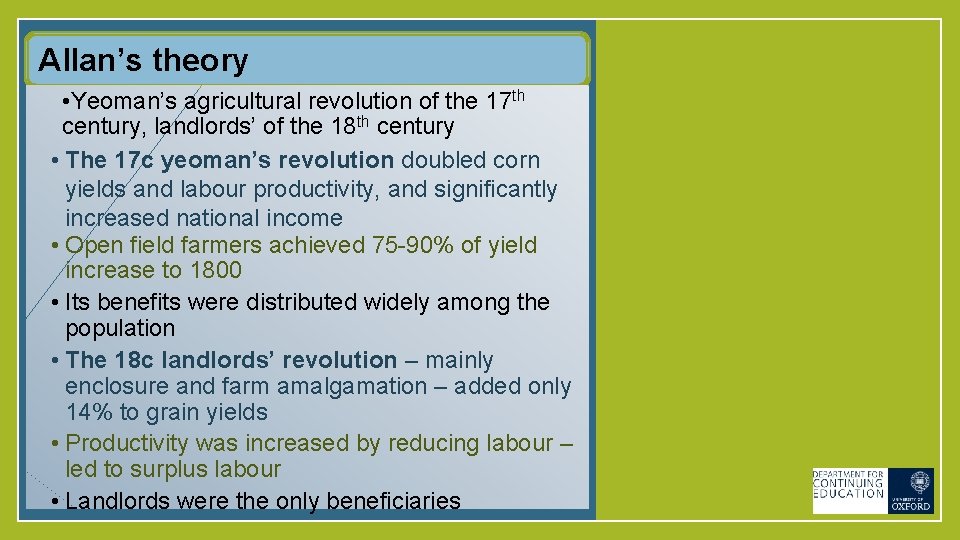
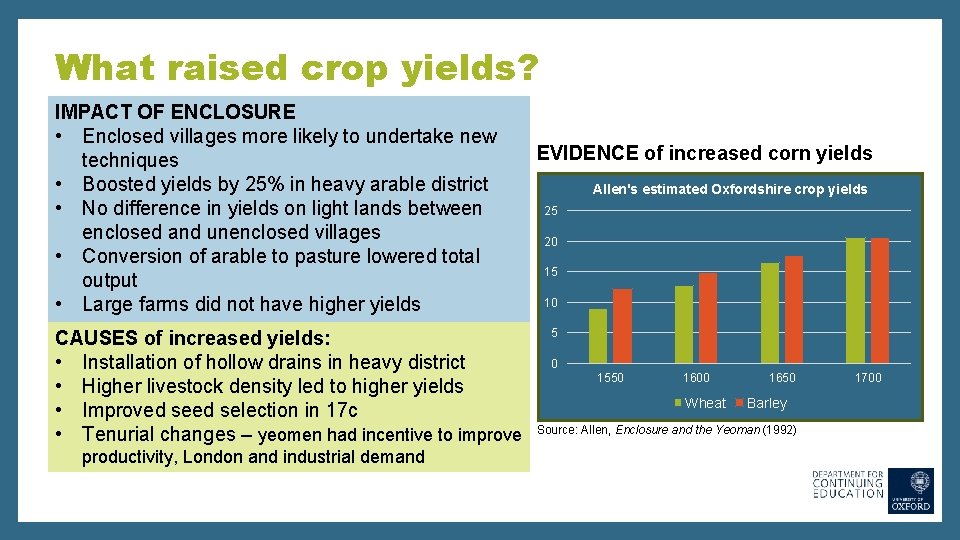
Allan’s theory • Yeoman’s agricultural revolution of the 17 th century, landlords’ of the 18 th century • The 17 c yeoman’s revolution doubled corn yields and labour productivity, and significantly increased national income • Open field farmers achieved 75 -90% of yield increase to 1800 • Its benefits were distributed widely among the population • The 18 c landlords’ revolution – mainly enclosure and farm amalgamation – added only 14% to grain yields • Productivity was increased by reducing labour – led to surplus labour • Landlords were the only beneficiaries
What raised crop yields? IMPACT OF ENCLOSURE • Enclosed villages more likely to undertake new techniques • Boosted yields by 25% in heavy arable district • No difference in yields on light lands between enclosed and unenclosed villages • Conversion of arable to pasture lowered total output • Large farms did not have higher yields CAUSES of increased yields: • Installation of hollow drains in heavy district • Higher livestock density led to higher yields • Improved selection in 17 c • Tenurial changes – yeomen had incentive to improve productivity, London and industrial demand EVIDENCE of increased corn yields Allen's estimated Oxfordshire crop yields 25 20 15 10 5 0 1550 1600 Wheat 1650 Barley Source: Allen, Enclosure and the Yeoman (1992) 1700
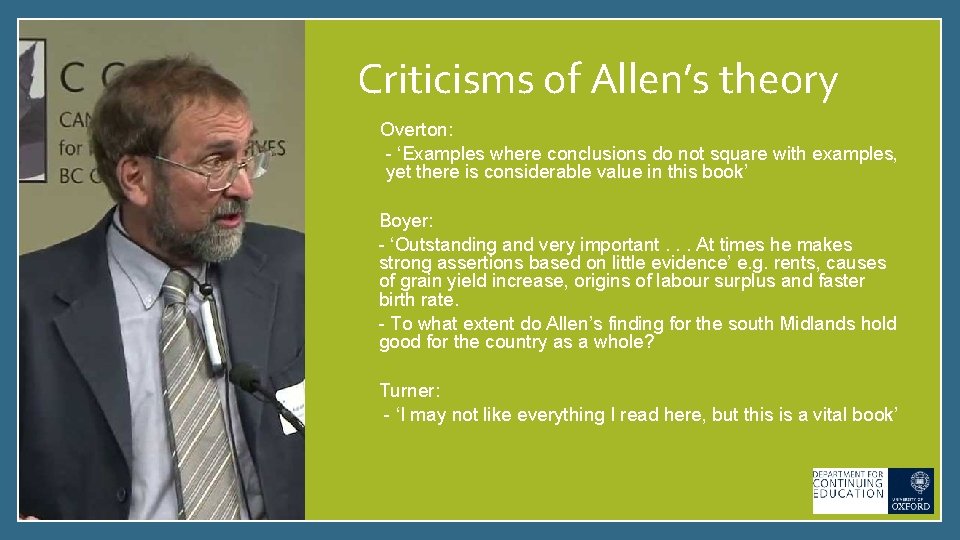
Criticisms of Allen’s theory • Overton: • - ‘Examples where conclusions do not square with examples, yet there is considerable value in this book’ Boyer: - ‘Outstanding and very important. . . At times he makes strong assertions based on little evidence’ e. g. rents, causes of grain yield increase, origins of labour surplus and faster birth rate. • - To what extent do Allen’s finding for the south Midlands hold good for the country as a whole? • • Turner: - ‘I may not like everything I read here, but this is a vital book’
REGIONAL SPECIALIZATION
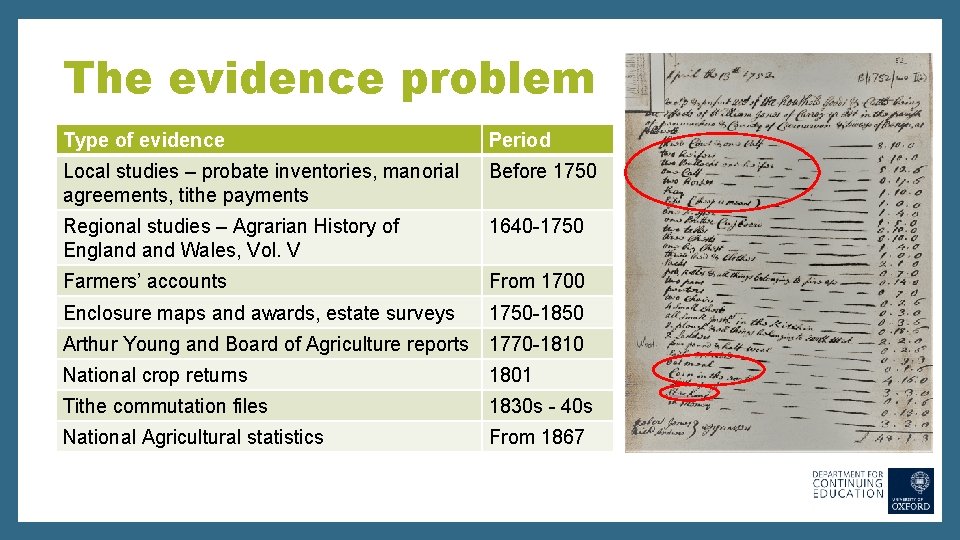
The evidence problem Type of evidence Period Local studies – probate inventories, manorial agreements, tithe payments Before 1750 Regional studies – Agrarian History of England Wales, Vol. V 1640 -1750 Farmers’ accounts From 1700 Enclosure maps and awards, estate surveys 1750 -1850 Arthur Young and Board of Agriculture reports 1770 -1810 National crop returns 1801 Tithe commutation files 1830 s - 40 s National Agricultural statistics From 1867
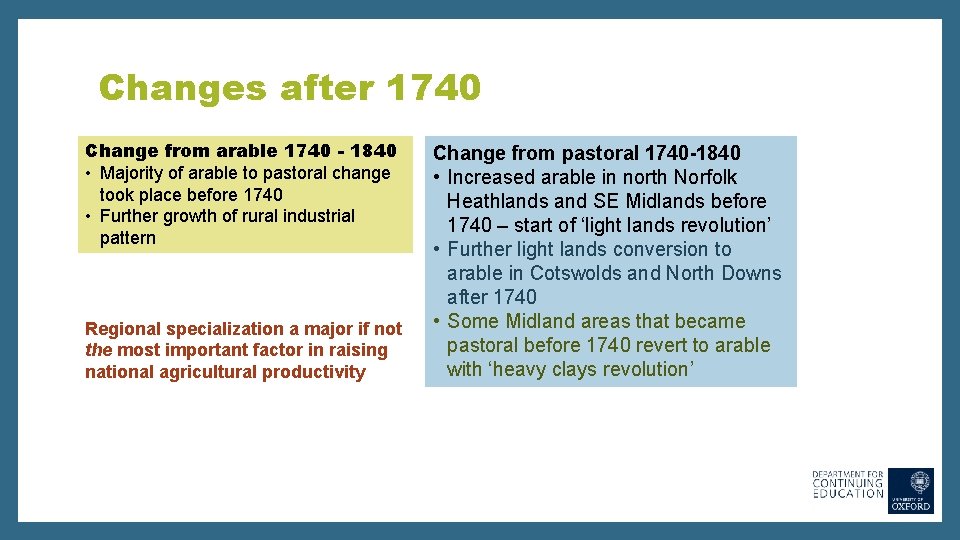
Kussmaul’s General View of rural economy Kussmaul used marriage registers for 542 English rural parishes to explore marriage seasons: - Autumn marriages after harvest in mainly arable areas - Spring marriages in pastoral areas after lambing - No clear pattern in rural industrial areas Before 1600, most areas had autumn marriages = importance of arable farming Changes between 1640 and 1740 • Dramatic changes in regional farming types: • West and Midlands become more pastoral • East becomes more arable • Growth of rural industry in Midlands and Pennines
Changes after 1740 Change from arable 1740 - 1840 • Majority of arable to pastoral change took place before 1740 • Further growth of rural industrial pattern Regional specialization a major if not the most important factor in raising national agricultural productivity Change from pastoral 1740 -1840 • Increased arable in north Norfolk Heathlands and SE Midlands before 1740 – start of ‘light lands revolution’ • Further light lands conversion to arable in Cotswolds and North Downs after 1740 • Some Midland areas that became pastoral before 1740 revert to arable with ‘heavy clays revolution’
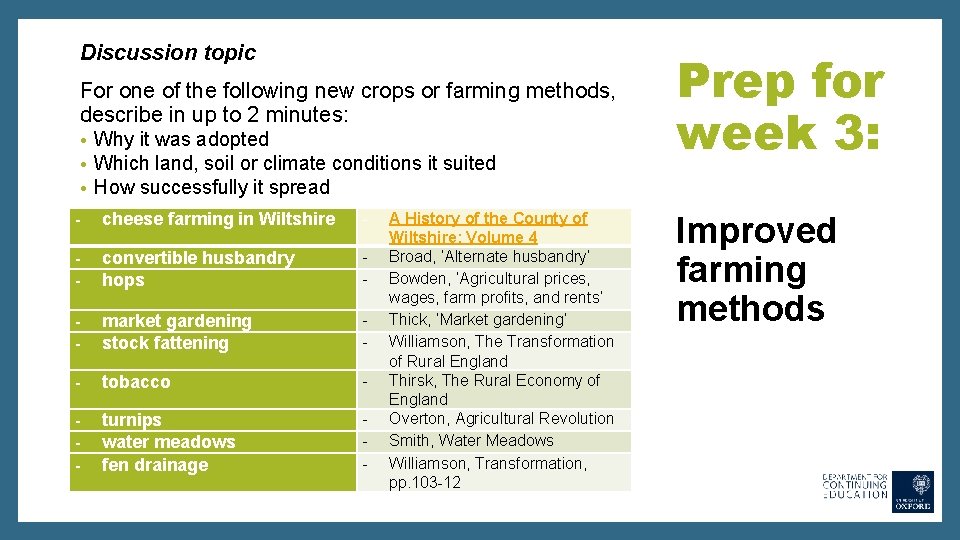
Discussion topic For one of the following new crops or farming methods, describe in up to 2 minutes: • • • Why it was adopted Which land, soil or climate conditions it suited How successfully it spread - cheese farming in Wiltshire - - convertible husbandry hops - - market gardening stock fattening - - tobacco - - turnips water meadows fen drainage - A History of the County of Wiltshire: Volume 4 Broad, ‘Alternate husbandry’ Bowden, ‘Agricultural prices, wages, farm profits, and rents’ Thick, ‘Market gardening’ Williamson, The Transformation of Rural England Thirsk, The Rural Economy of England Overton, Agricultural Revolution Smith, Water Meadows Williamson, Transformation, pp. 103 -12 Prep for week 3: Improved farming methods
Background reading: - Overton, Agricultural Revolution, Ch. 3 Conted. Library - Williamson, Transformation of Rural England, Ch. 3, 4 or 7 - J. Thirsk (ed. ) The Agrarian History of England Wales, Vol VI 1750 -1850, Part I Ch. I. II, ‘Changes in land use’