
Week 12 The Cell as the Functional Unit
- Slides: 34
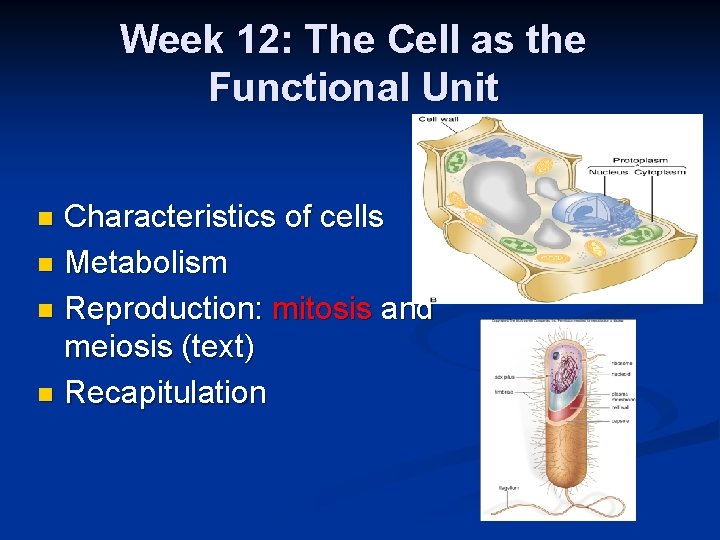
Week 12: The Cell as the Functional Unit Characteristics of cells n Metabolism n Reproduction: mitosis and meiosis (text) n Recapitulation n
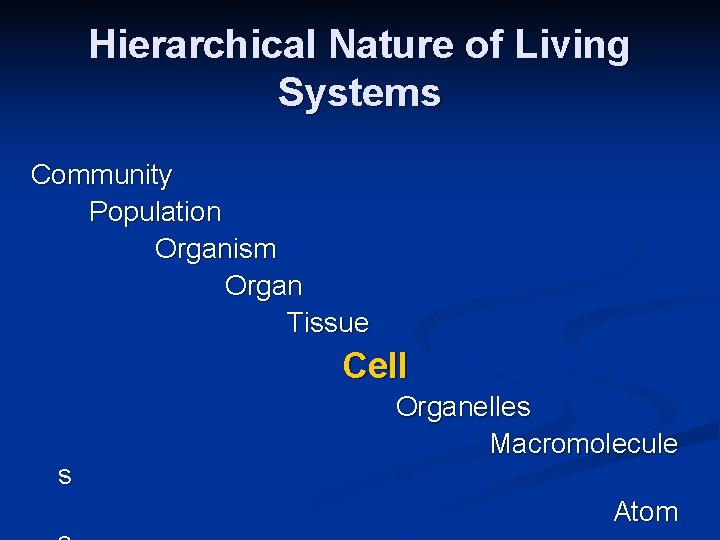
Hierarchical Nature of Living Systems Community Population Organism Organ Tissue Cell s Organelles Macromolecule Atom
Structural and Functional Characteristics of Cells as the physical infrastructure n Cell membranes: gate keeper of outflow and inflow of materials n Water: medium of cell’s biochemistry n Compartmentation via organelles: a good thing! n Major types of cells (see text) n
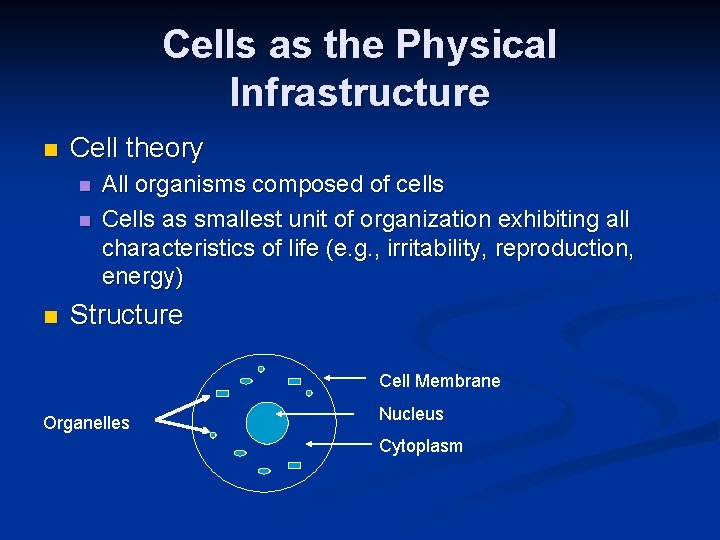
Cells as the Physical Infrastructure n Cell theory n n n All organisms composed of cells Cells as smallest unit of organization exhibiting all characteristics of life (e. g. , irritability, reproduction, energy) Structure Cell Membrane Organelles Nucleus Cytoplasm
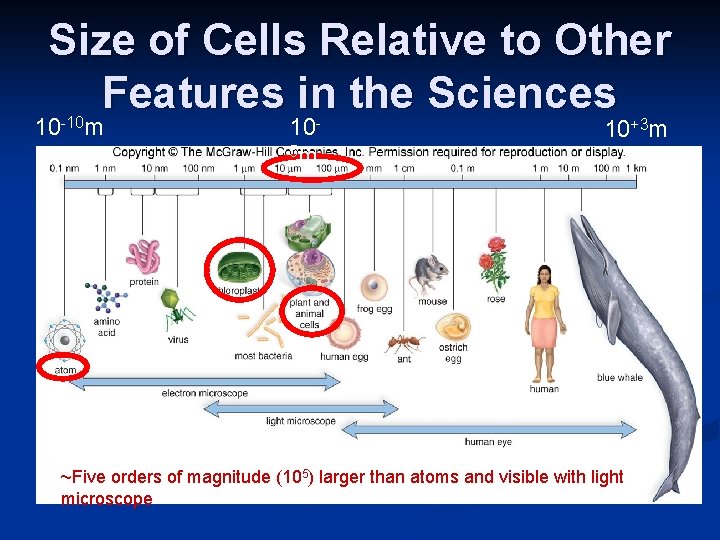
Size of Cells Relative to Other Features in the Sciences 10 -10 m 105 m 10+3 m ~Five orders of magnitude (105) larger than atoms and visible with light microscope
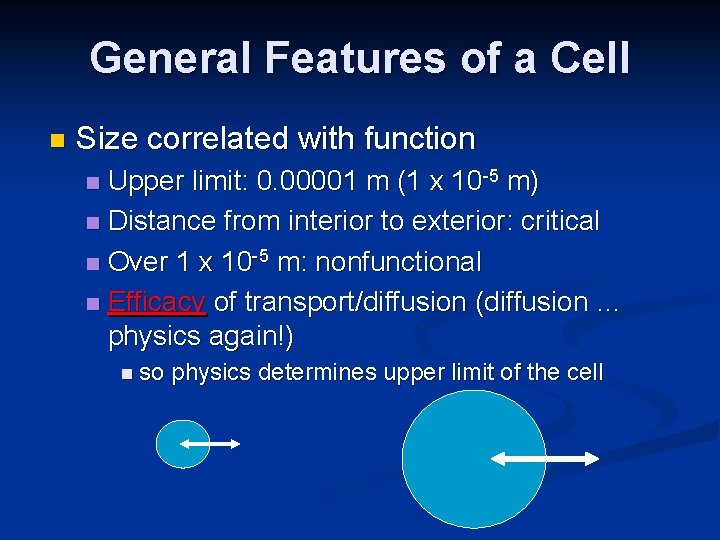
General Features of a Cell n Size correlated with function Upper limit: 0. 00001 m (1 x 10 -5 m) n Distance from interior to exterior: critical n Over 1 x 10 -5 m: nonfunctional n Efficacy of transport/diffusion (diffusion … physics again!) n n so physics determines upper limit of the cell
Structural and Functional Characteristics of Cells as the physical infrastructure n Cell membranes: gate keeper of outflow and inflow of materials – stop … what is a gate? n Water: medium of cell’s biochemistry n Compartmentation via organelles: a good thing! n Major types of cells n
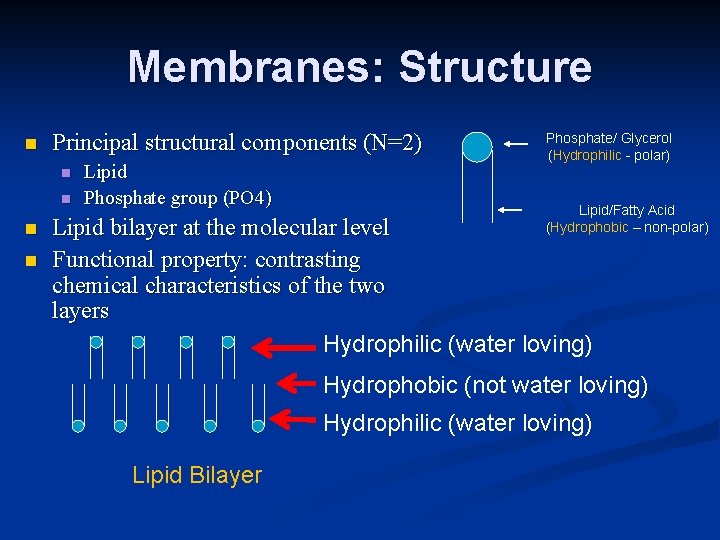
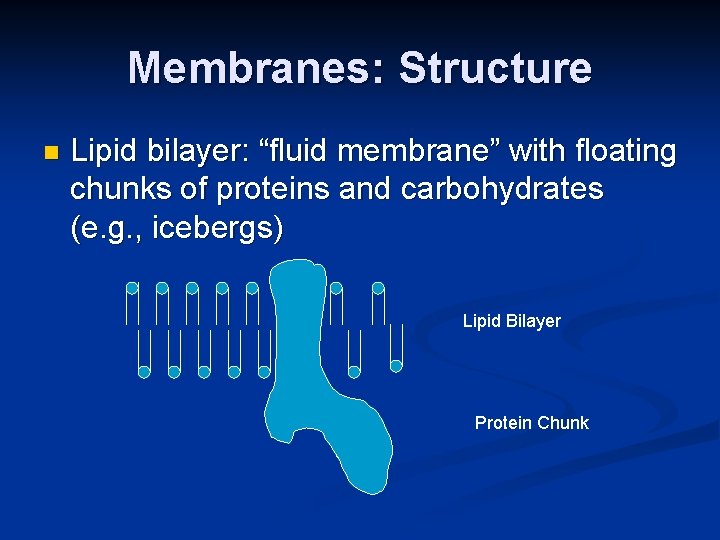
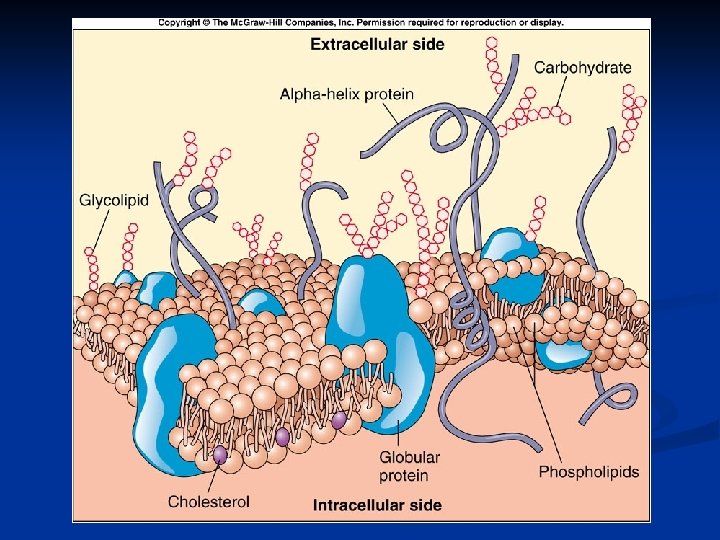
Membranes: Structure n Principal structural components (N=2) n n Lipid Phosphate group (PO 4) Phosphate/ Glycerol (Hydrophilic - polar) Lipid/Fatty Acid (Hydrophobic – non-polar) Lipid bilayer at the molecular level Functional property: contrasting chemical characteristics of the two layers Hydrophilic (water loving) Hydrophobic (not water loving) Hydrophilic (water loving) Lipid Bilayer
Membranes: Structure n Lipid bilayer: “fluid membrane” with floating chunks of proteins and carbohydrates (e. g. , icebergs) Lipid Bilayer Protein Chunk
The Cell as the Functional Unit n Characteristics of cells n Start with membranes Metabolism n Reproduction: mitosis and meiosis (text) n Recapitulation n
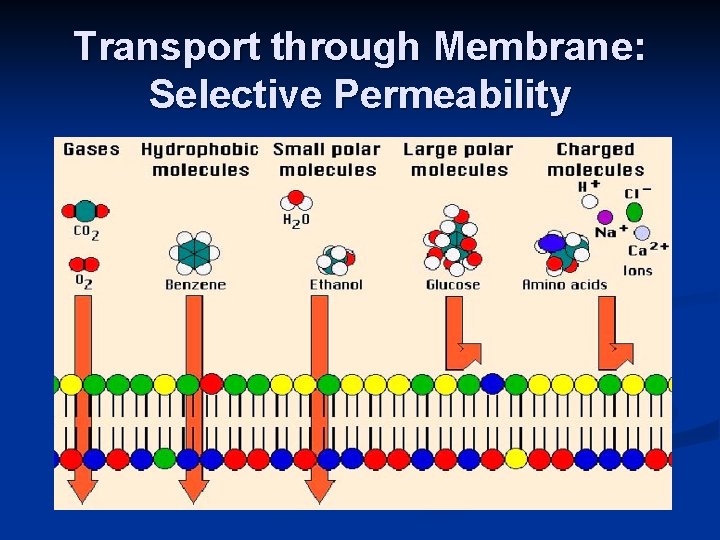
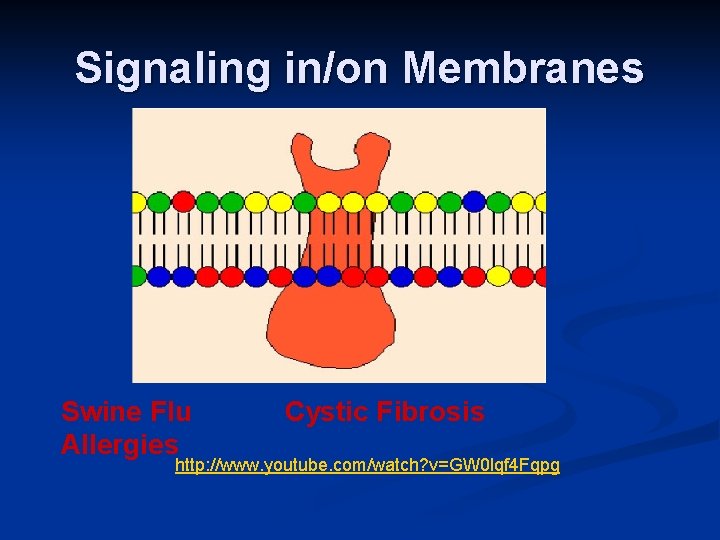
Membranes: from Lipid Bilayer to Functional Properties n Example of hierarchy theory and emergent properties “Parts”: lipid, phosphate, proteins, carbohydrates n When combined: unusual/unexpected properties = emergent properties n Selective permeability (text and lecture) n Active transport (text) n Signaling: cell-to-cell communication (text) n
Transport through Membrane: Selective Permeability
Signaling in/on Membranes Swine Flu Allergies Cystic Fibrosis http: //www. youtube. com/watch? v=GW 0 lqf 4 Fqpg
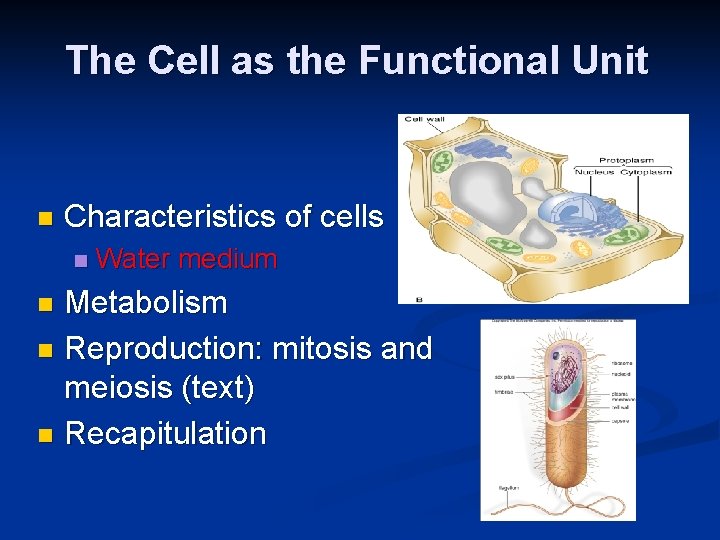
The Cell as the Functional Unit n Characteristics of cells n Water medium Metabolism n Reproduction: mitosis and meiosis (text) n Recapitulation n
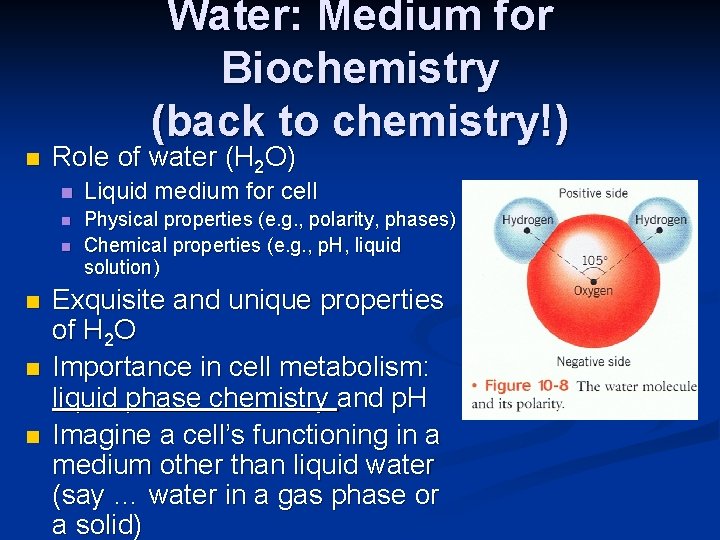
Water: Medium for Biochemistry (back to chemistry!) n Role of water (H 2 O) n Liquid medium for cell n Physical properties (e. g. , polarity, phases) Chemical properties (e. g. , p. H, liquid solution) n n Exquisite and unique properties of H 2 O Importance in cell metabolism: liquid phase chemistry and p. H Imagine a cell’s functioning in a medium other than liquid water (say … water in a gas phase or a solid)
The Cell as the Functional Unit n Characteristics of cells n Compartmentation Metabolism n Reproduction: mitosis and meiosis (text) n Recapitulation n
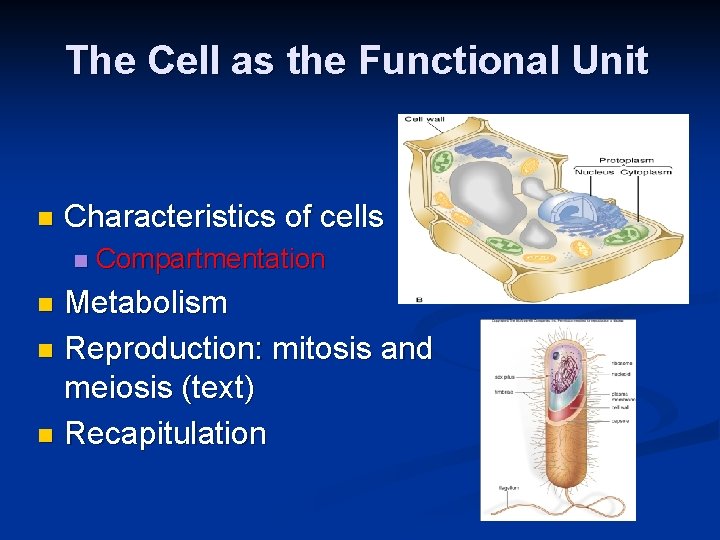
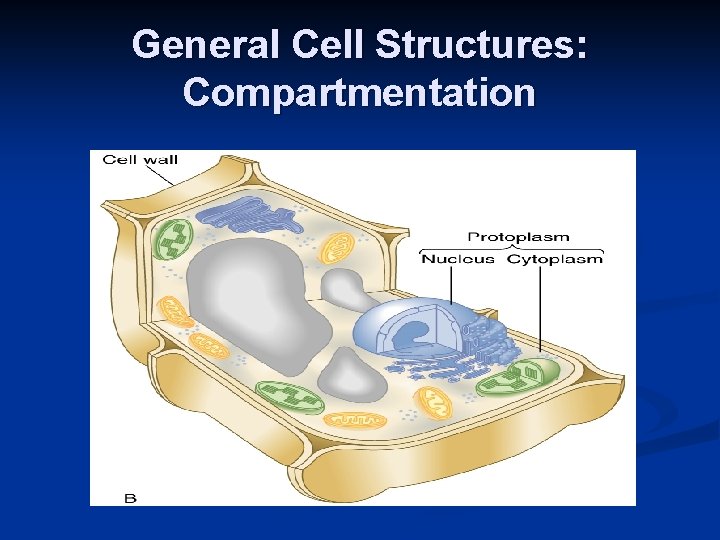
General Cell Structures: Compartmentation
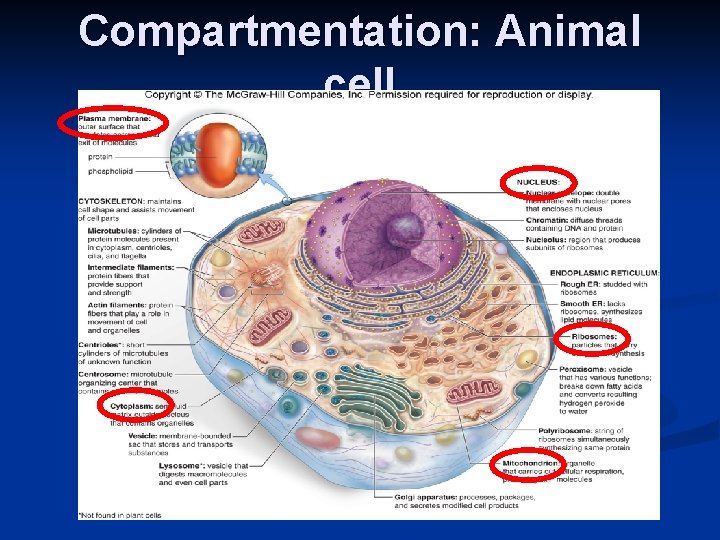
Principle of Compartmentation n Cells are compartmentalized Elaborate and organized infrastructure n Analogy to a dorm n n Corridors as endoplasmic reticulum n Rooms as organelles Consequence of not being compartmentalized … disorder! n Function of individual organelles (text) n
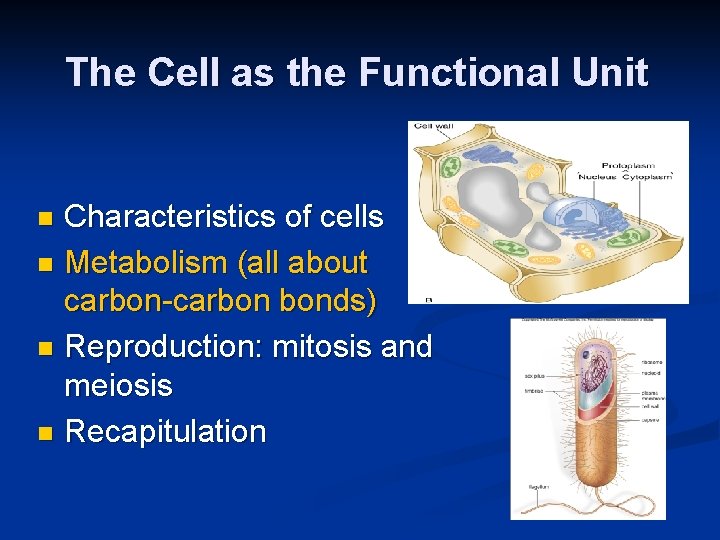
Compartmentation: Animal cell
Structural and Functional Characteristics of Cells as the physical infrastructure n Cell membranes: gate keeper of outflow and inflow of materials n Water: medium of cell’s biochemistry n Compartmentation via organelles: a good thing! n Major types of cells (see text) n
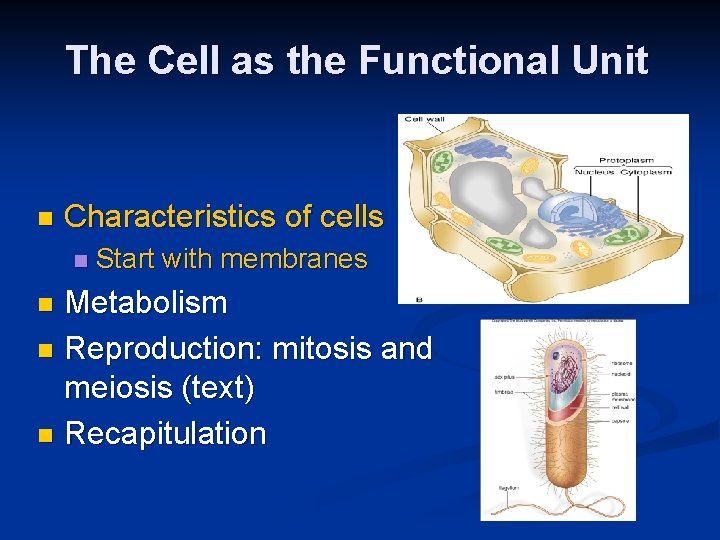
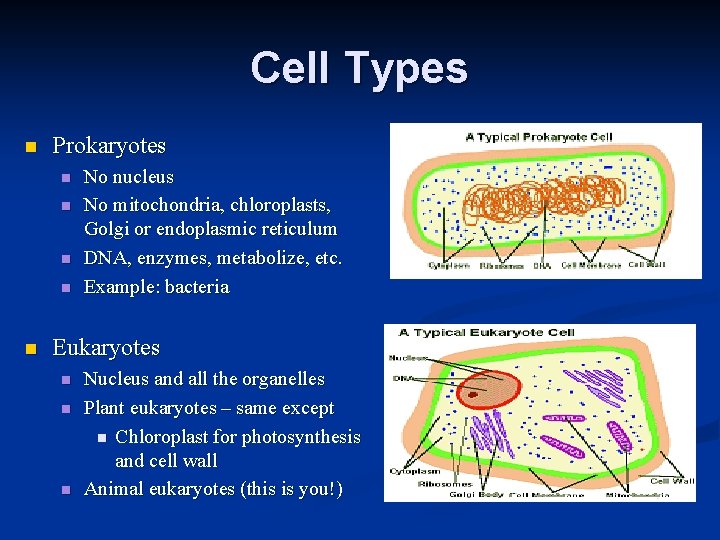
Cell Types n Prokaryotes n n n No nucleus No mitochondria, chloroplasts, Golgi or endoplasmic reticulum DNA, enzymes, metabolize, etc. Example: bacteria Eukaryotes n n n Nucleus and all the organelles Plant eukaryotes – same except n Chloroplast for photosynthesis and cell wall Animal eukaryotes (this is you!)
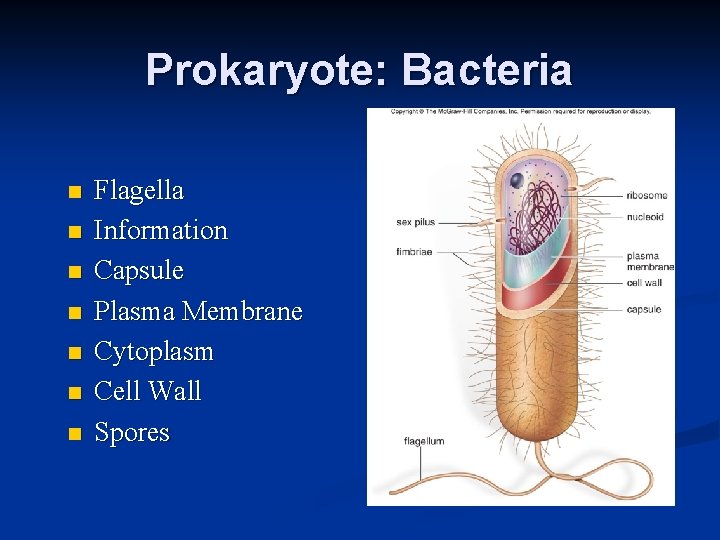
Prokaryote: Bacteria n n n n Flagella Information Capsule Plasma Membrane Cytoplasm Cell Wall Spores
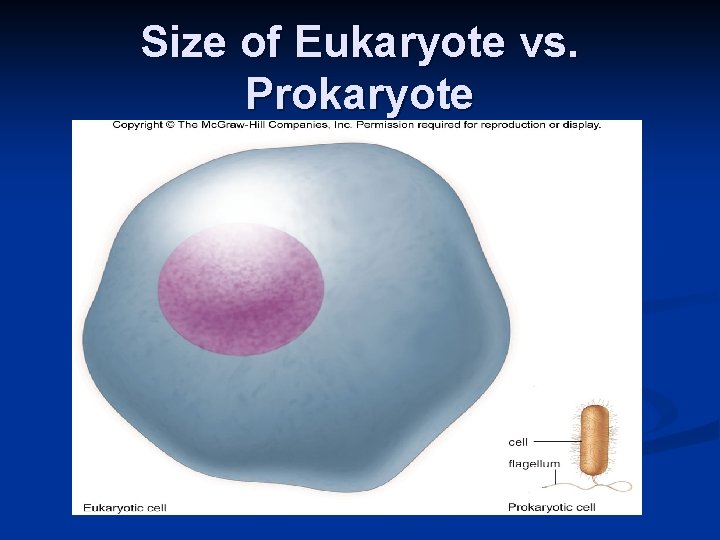
Size of Eukaryote vs. Prokaryote
The Cell as the Functional Unit Characteristics of cells n Metabolism (all about carbon-carbon bonds) n Reproduction: mitosis and meiosis n Recapitulation n
Energy Utilization n n Three related activities: acquisition, utilization, and storage Energy Acquisition n Energy utilization n Energy capture (autotrophs; heterotrophs) First law of Thermodynamics Laws of Thermodynamics (1 st and 2 nd laws) ATP (adenosine triphosphate) and ADP (adenosine diphosphate) Energy storage n n n Chemical bonds (C-C covalent bonds) Carbohydrates, glycogen and lipids In humans and other animals, storage as
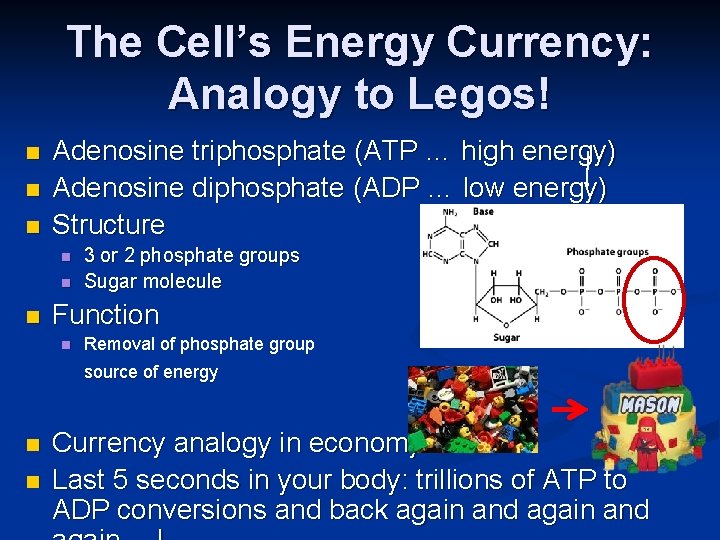
The Cell’s Energy Currency: Analogy to Legos! n n n Adenosine triphosphate (ATP … high energy) Adenosine diphosphate (ADP … low energy) Structure n n n 3 or 2 phosphate groups Sugar molecule Function n Removal of phosphate group source of energy n n Currency analogy in economy Last 5 seconds in your body: trillions of ATP to ADP conversions and back again and
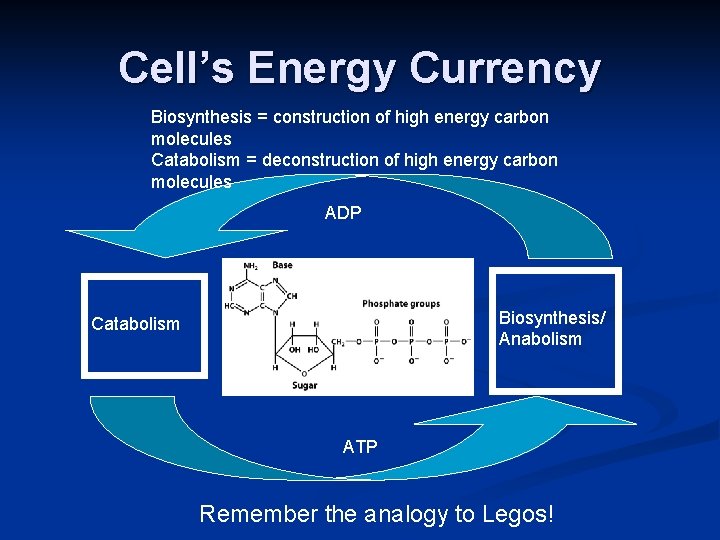
Cell’s Energy Currency Biosynthesis = construction of high energy carbon molecules Catabolism = deconstruction of high energy carbon molecules ADP Biosynthesis/ Anabolism Catabolism ATP Remember the analogy to Legos!
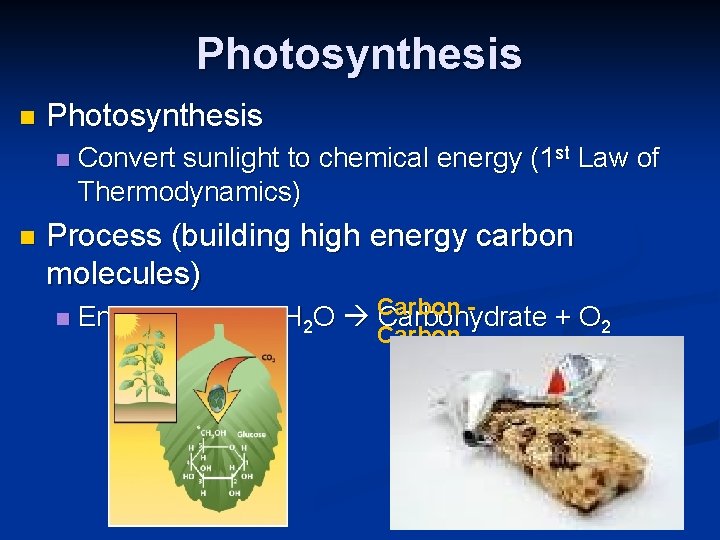
Photosynthesis n n Convert sunlight to chemical energy (1 st Law of Thermodynamics) Process (building high energy carbon molecules) n Energy + CO 2 + H 2 O Carbon Carbohydrate + O 2 Carbon
Now the Granola Bar
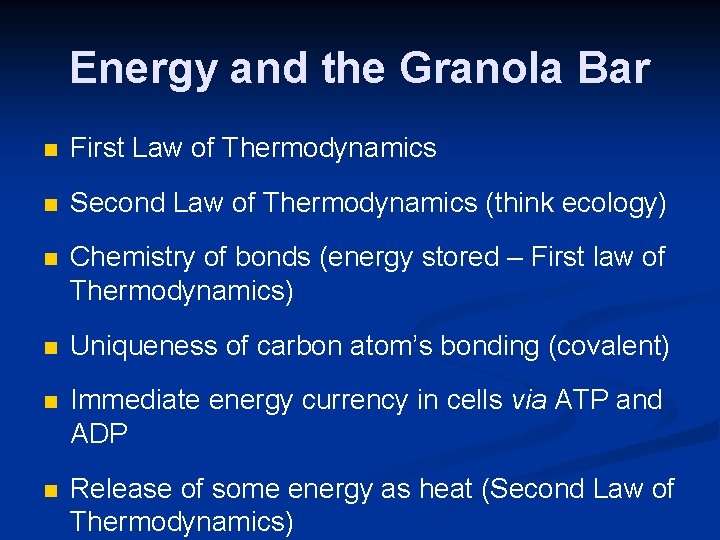
Energy and the Granola Bar n First Law of Thermodynamics n Second Law of Thermodynamics (think ecology) n Chemistry of bonds (energy stored – First law of Thermodynamics) n Uniqueness of carbon atom’s bonding (covalent) n Immediate energy currency in cells via ATP and ADP n Release of some energy as heat (Second Law of Thermodynamics)
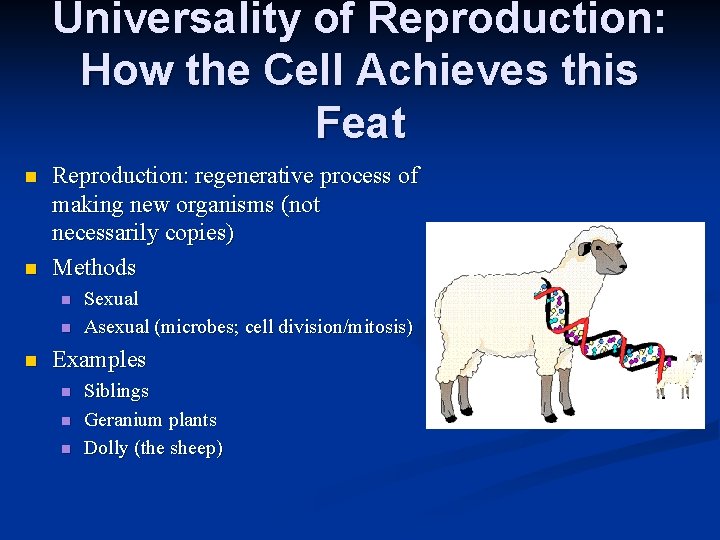
Universality of Reproduction: How the Cell Achieves this Feat n n Reproduction: regenerative process of making new organisms (not necessarily copies) Methods n n n Sexual Asexual (microbes; cell division/mitosis) Examples n n n Siblings Geranium plants Dolly (the sheep)
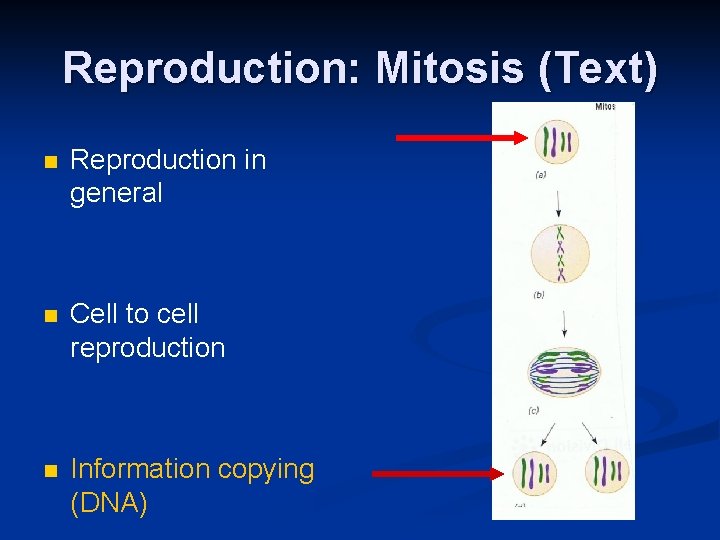
Reproduction: Mitosis (Text) n Reproduction in general n Cell to cell reproduction n Information copying (DNA)
The Cell as the Functional Unit Characteristics of cells n Metabolism n Reproduction: mitosis n Recapitulation n