
Week 10 Sedimentary Environments Rocks Transport and Deposition
- Slides: 41
Week 10: Sedimentary Environments & Rocks Transport and Deposition of Sedimentation and Sedimentary Structures Sedimentary Rock Classification
What is sediment? 1. 2. 3. 4. 5. Loose fragments of rocks or minerals broken off of bedrock Mineral crystals that precipitate directly out of solution Fragments of organic material, such as shells, bones, teeth, and spicules All of the above are correct None of the above are correct
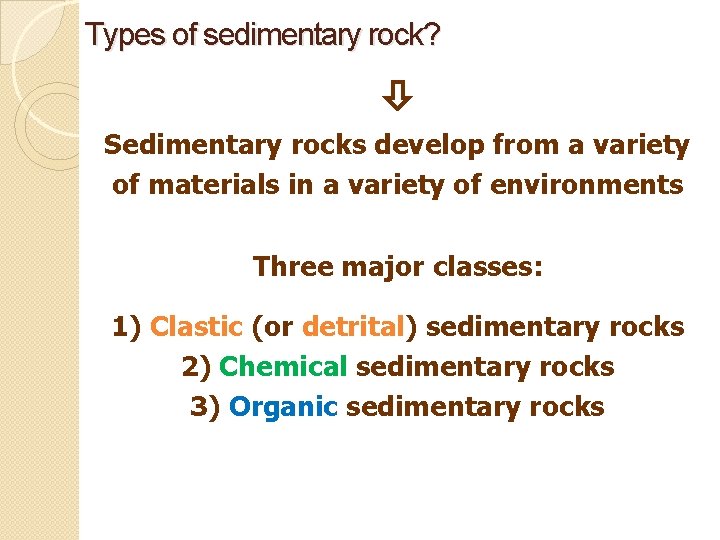
Types of sedimentary rock? Sedimentary rocks develop from a variety of materials in a variety of environments Three major classes: 1) Clastic (or detrital) sedimentary rocks 2) Chemical sedimentary rocks 3) Organic sedimentary rocks
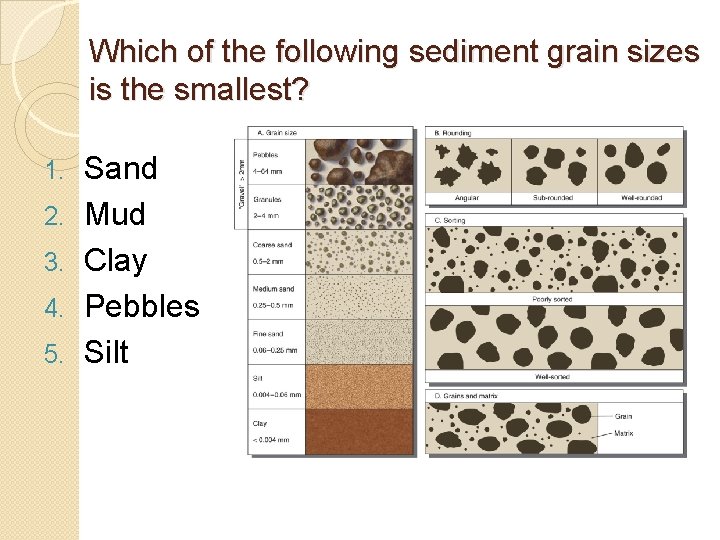
Which of the following sediment grain sizes is the smallest? 1. 2. 3. 4. 5. Sand Mud Clay Pebbles Silt
What processes form sediment? Weathering: Refers to the process of rock disaggregation in smaller pieces (sediment) Erosion: Refers to the process of removal of weathered material by moving water, wind, ice, or gravity
Types of weathering? Physical (mechanical) weathering (air, water, ice, gravity) Chemical weathering (chemical reactions that alter/destroy rock from the contact with water or air) Biological weathering (living organisms: roots, fungi, worms)
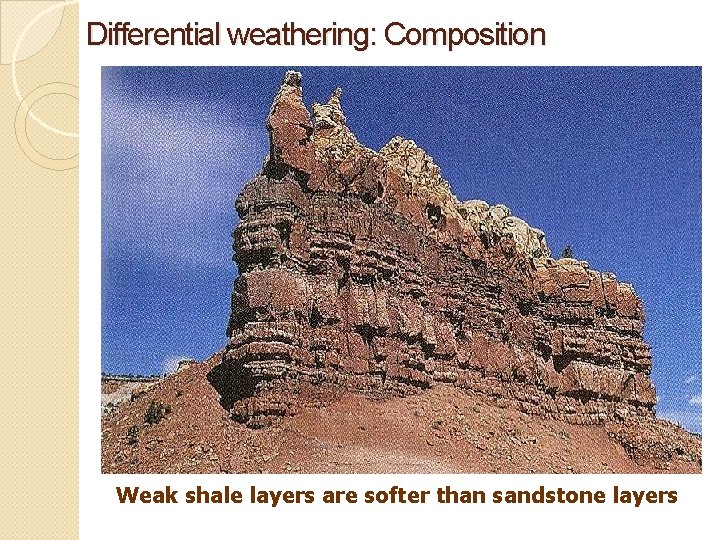
Differential weathering: Composition Weak shale layers are softer than sandstone layers
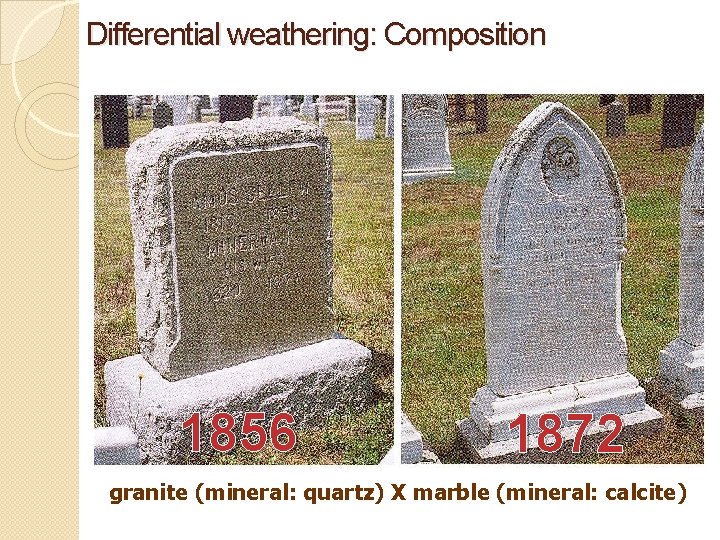
Differential weathering: Composition 1856 1872 granite (mineral: quartz) X marble (mineral: calcite)
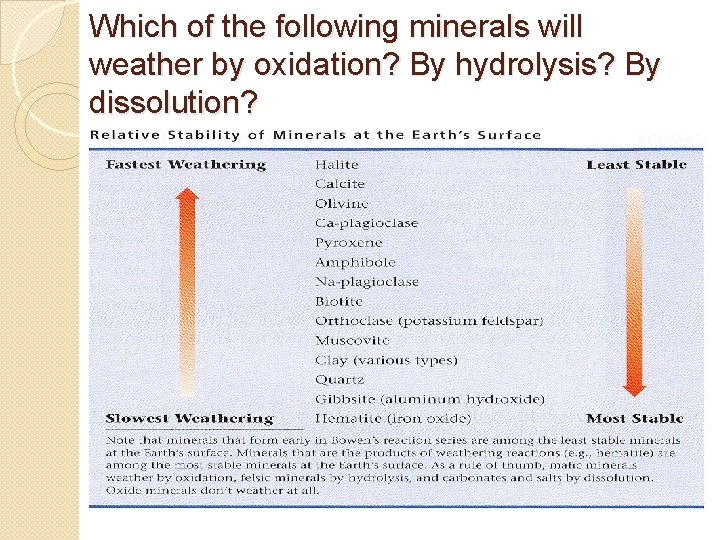
Which of the following minerals will weather by oxidation? By hydrolysis? By dissolution?
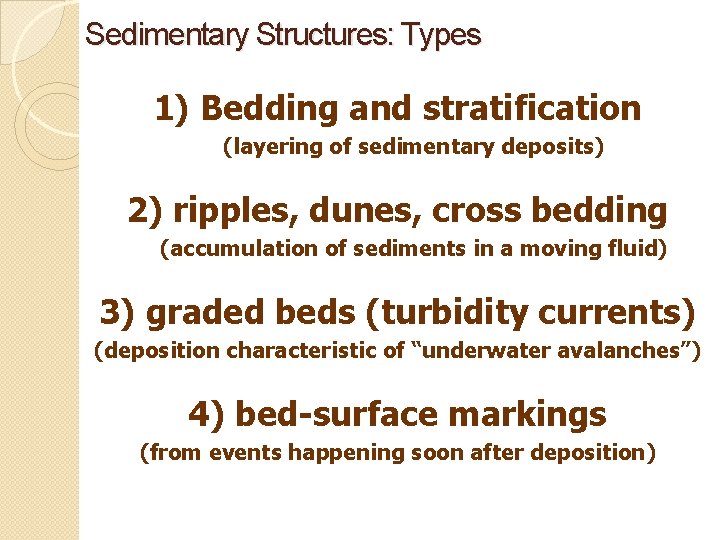
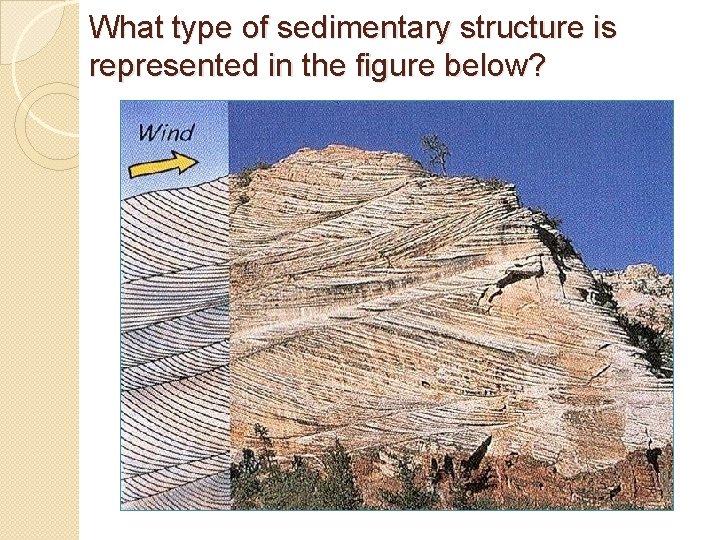
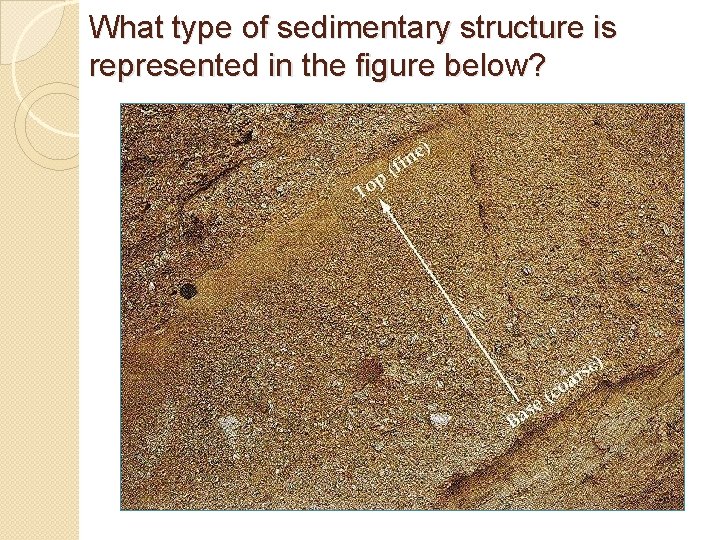
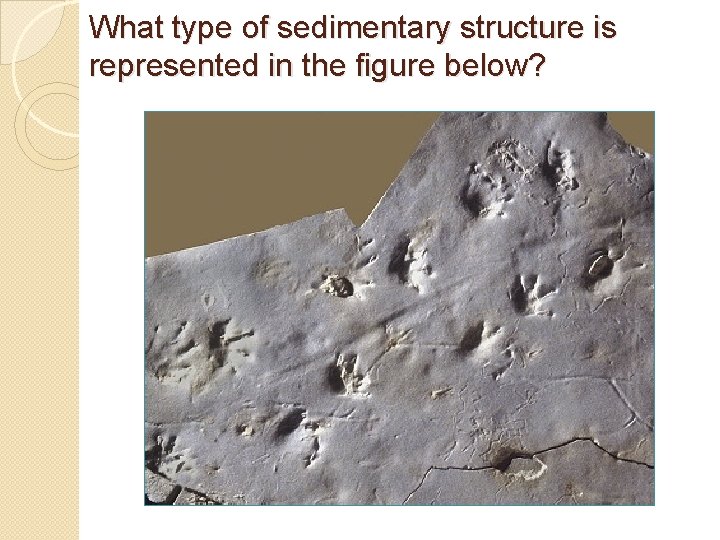
Sedimentary Structures: Types 1) Bedding and stratification (layering of sedimentary deposits) 2) ripples, dunes, cross bedding (accumulation of sediments in a moving fluid) 3) graded beds (turbidity currents) (deposition characteristic of “underwater avalanches”) 4) bed-surface markings (from events happening soon after deposition)
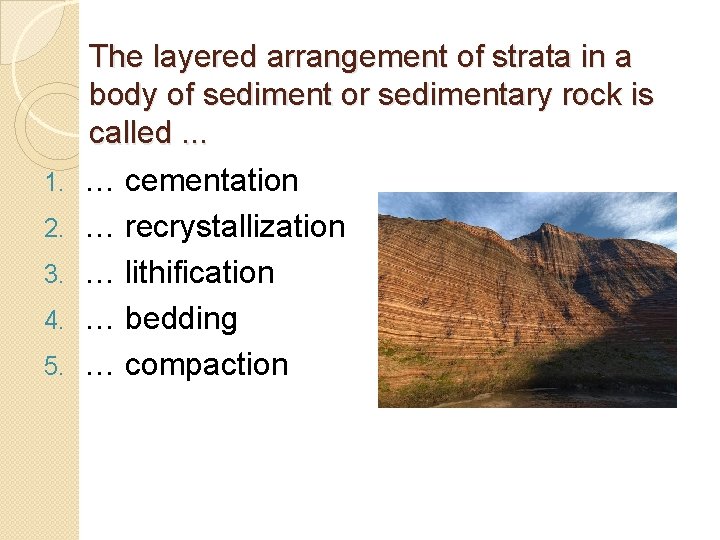
1. 2. 3. 4. 5. The layered arrangement of strata in a body of sediment or sedimentary rock is called. . . … cementation … recrystallization … lithification … bedding … compaction
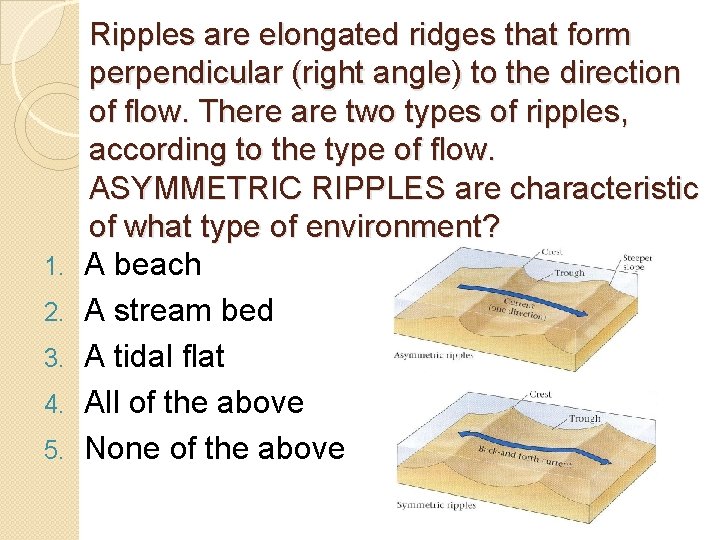
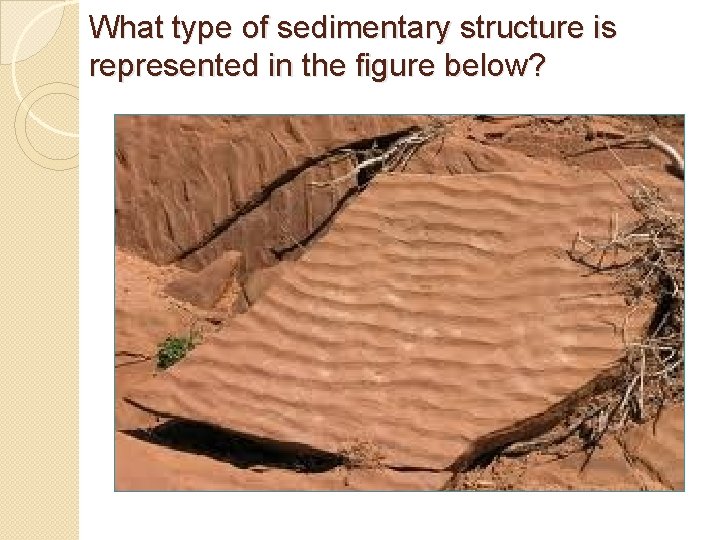
1. 2. 3. 4. 5. Ripples are elongated ridges that form perpendicular (right angle) to the direction of flow. There are two types of ripples, according to the type of flow. ASYMMETRIC RIPPLES are characteristic of what type of environment? A beach A stream bed A tidal flat All of the above None of the above
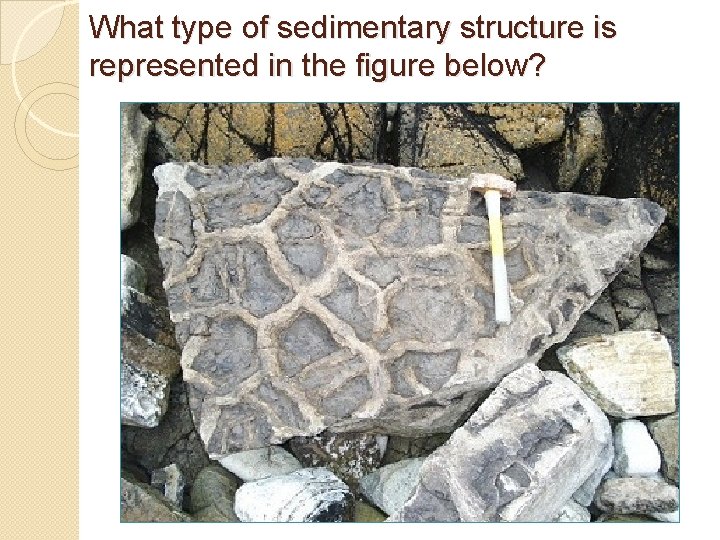
What type of sedimentary structure is represented in the figure below?
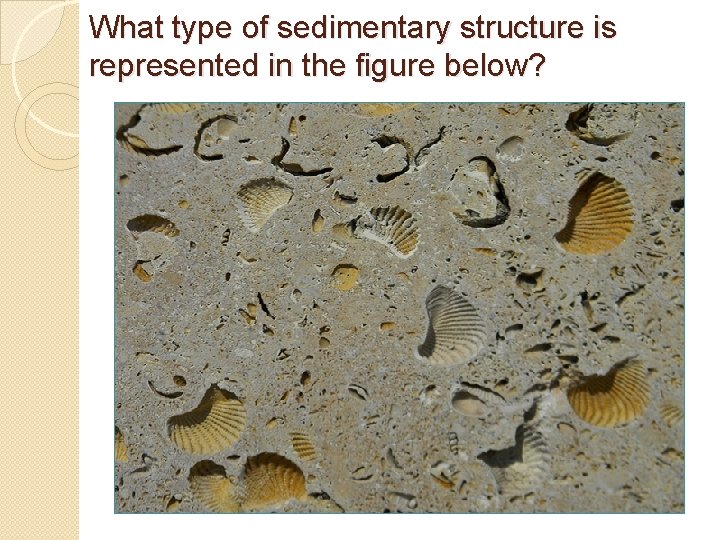
What type of sedimentary structure is represented in the figure below?
What type of sedimentary structure is represented in the figure below?
What type of sedimentary structure is represented in the figure below?
What type of sedimentary structure is represented in the figure below?
What type of sedimentary structure is represented in the figure below?
Depositional (sedimentary) environments Refer to the conditions in which sediment was deposited Terrestrial sedimentary environments Marine sedimentary environments
1. 2. 3. 4. 5. Depositional environments refer to the conditions in which sediment was deposited. There are two types of depositional environments: terrestrial and marine. Which of the following is an example of MARINE sedimentary environment? Lake environment Shallow-water carbonate environment Alluvial fan environment River environment Mountain stream environment
1. 2. 3. 4. 5. Depositional environments refer to the conditions in which sediment was deposited. There are two types of depositional environments: terrestrial and marine. Which of the following is an example of TERRESTRIAL sedimentary environment? Coastal beach environment Shallow-water carbonate environment Alluvial fan environment Marine delta environment Shallow marine clastic environment
1. 2. 3. 4. 5. In a MOUNTAIN STREAM sedimentary environments, turbulent streams rush downslope in mountain valleys with enough power to carry large clasts (boulders and cobbles). The characteristic sedimentary rock formed in those types of environments is … Sandstone Conglomerate Shale Mudstone Glacial till
Which of the following sedimentary rocks is characteristic of GLACIAL SEDIMENTARY ENVIRONMENTS? 1. 2. 3. 4. 5. Sandstone with cross-bedding Coarse conglomerate Finely-laminated shale Sandstone with asymmetric ripple marks Glacial till
1. 2. 3. 4. 5. In COASTAL BEACH DEPOSITS, the sand washes back and forth in the surf zone and becomes well sorted and well rounded. The characteristic sedimentary rock formed in those types of environments is … Sandstone Conglomerate Shale Mudstone Glacial till
Which of the following sedimentary rocks is characteristic of RIVER SEDIMENTARY ENVIRONMENTS? 1. 2. 3. 4. 5. Coarse conglomerate Finely-laminated shale Sandstone with asymmetric ripple marks Sandstone with cross-bedding Sandstone with symmetric ripple marks
Which of the following sedimentary rocks is characteristic of SAND DUNE DEPOSITIONAL ENVIRONMENTS? 1. 2. 3. 4. 5. Coarse conglomerate Finely-laminated shale Sandstone with asymmetric ripple marks Sandstone with cross-bedding Glacial till
Which of the following sedimentary rocks is characteristic of LAKE DEPOSITIONAL ENVIRONMENTS? 1. 2. 3. 4. 5. Sandstone with cross-bedding Coarse conglomerate Finely-laminated shale Sandstone with asymmetric ripple marks Glacial till
Which of the following sedimentary rocks is characteristic of SHALLOW MARINE CLASTIC DEPOSITS? 1. 2. 3. 4. 5. Coarse fossiliferous limestone Mudstone/siltstone with marine fossil imprints Sandstone with asymmetric ripple marks Sandstone with symmetric ripple marks Turbidite deposits
Which of the following sedimentary rocks is characteristic of SHALLOW-WATER CARBONATE DEPOSITS? 1. 2. 3. 4. 5. Sandstone with symmetric ripple marks Coarse fossiliferous limestone Mudstone/siltstone with marine fossil imprints Sandstone with asymmetric ripple marks Turbidite deposits
Which of the following sedimentary rocks is characteristic of DEEP WATER SUBMARINE CANYONS? 1. 2. 3. 4. 5. Coarse fossiliferous limestone Mudstone/siltstone with marine fossil imprints Turbidite deposits Sandstone with asymmetric ripple marks Sandstone with symmetric ripple marks
The process by which loose sediment is transformed into sedimentary rock is called. . . 1. 2. 3. 4. 5. Metamorphism Weathering Crystallization Lithification Orogenesis
The loose grains of sediment transform into sedimentary rock in the following sequence: Deposition 2. Weathering 3. Erosion 4. Lithification 1.
There are three major classes of sedimentary rocks. The sedimentary rock that is composed of solid fragments and grains (derived from pre-existing rocks) that are cemented together is called. . . 1. 2. 3. 4. 5. Organic sedimentary rock Plastic sedimentary rock Inorganic sedimentary rock Clastic sedimentary rock Chemical sedimentary rock
1. 2. 3. 4. 5. There are three major classes of sedimentary rocks. The sedimentary rock that is made up of biological remains from animals (such as shells and other hard parts), as well as carbon-rich relict of plants, is called. . . Organic sedimentary rock Plastic sedimentary rock Inorganic sedimentary rock Clastic sedimentary rock Chemical sedimentary rock
There are three major classes of sedimentary rocks. The sedimentary rock that is made up of minerals that precipitate direct out of water solutions is called. . . 1. 2. 3. 4. 5. Organic sedimentary rock Plastic sedimentary rock Inorganic sedimentary rock Clastic sedimentary rock Chemical sedimentary rock
Which of the following options contain examples of CLASTIC SEDIMENTARY ROCKS? 1. 2. 3. 4. 5. Mudstone Evaporites Limestone Sandstone Conglomerate
Which of the following options contain examples of CHEMICAL SEDIMENTARY ROCKS? 1. 2. 3. 4. 5. Mudstone Evaporites Limestone Sandstone Conglomerate
Which of the following options contain examples of ORGANIC SEDIMENTARY ROCKS? 1. 2. 3. 4. 5. Mudstone Evaporites Limestone Sandstone Conglomerate
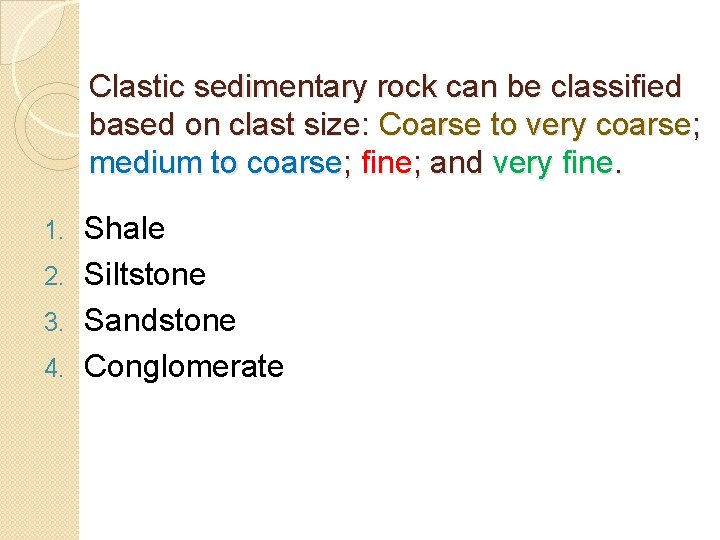
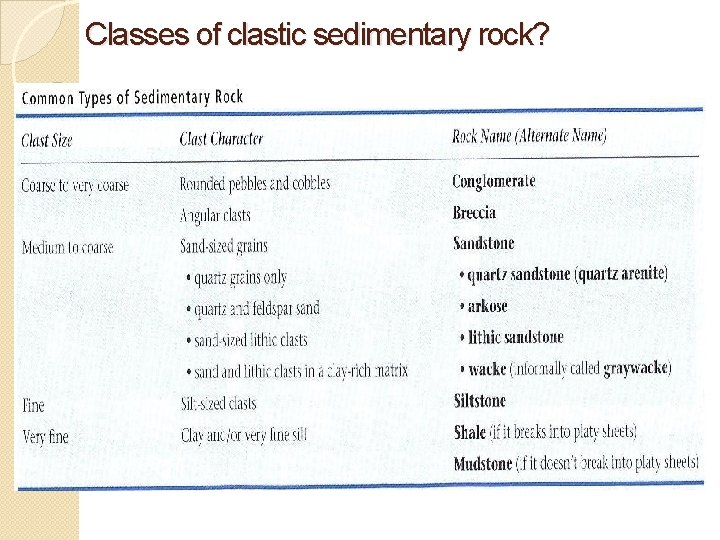
Clastic sedimentary rock can be classified based on clast size: Coarse to very coarse; medium to coarse; fine; and very fine. Shale 2. Siltstone 3. Sandstone 4. Conglomerate 1.
Classes of clastic sedimentary rock?
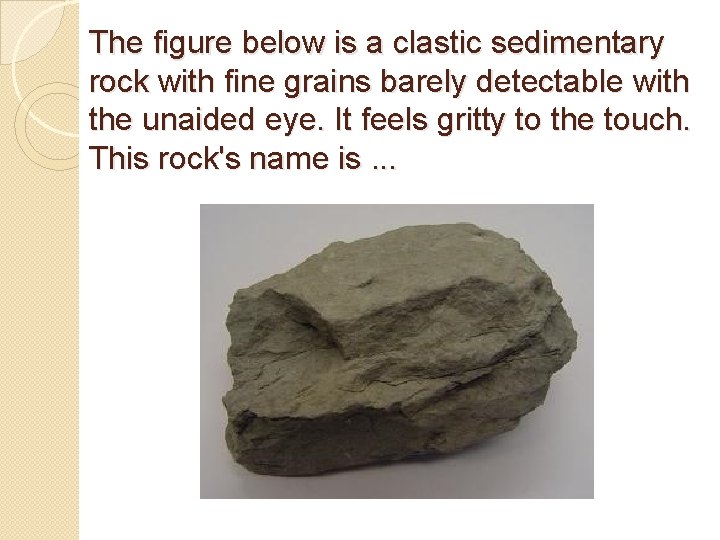
The figure below is a clastic sedimentary rock with fine grains barely detectable with the unaided eye. It feels gritty to the touch. This rock's name is. . .