
WEEK 1 COLONIAL AMERICA Famous Explorers Christopher Columbus
WEEK 1 - COLONIAL AMERICA
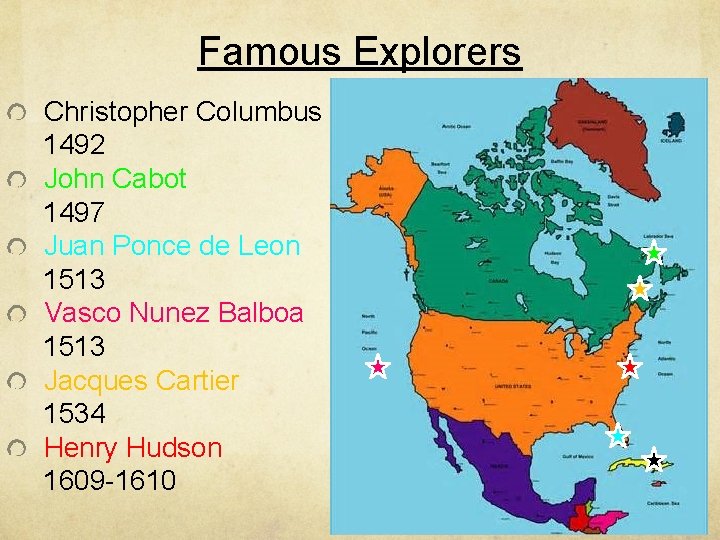
Famous Explorers Christopher Columbus 1492 John Cabot 1497 Juan Ponce de Leon 1513 Vasco Nunez Balboa 1513 Jacques Cartier 1534 Henry Hudson 1609 -1610
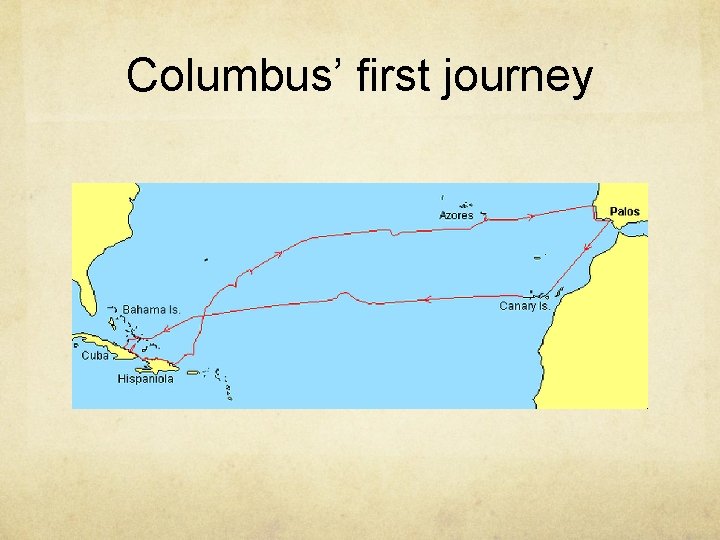
Columbus’ first journey
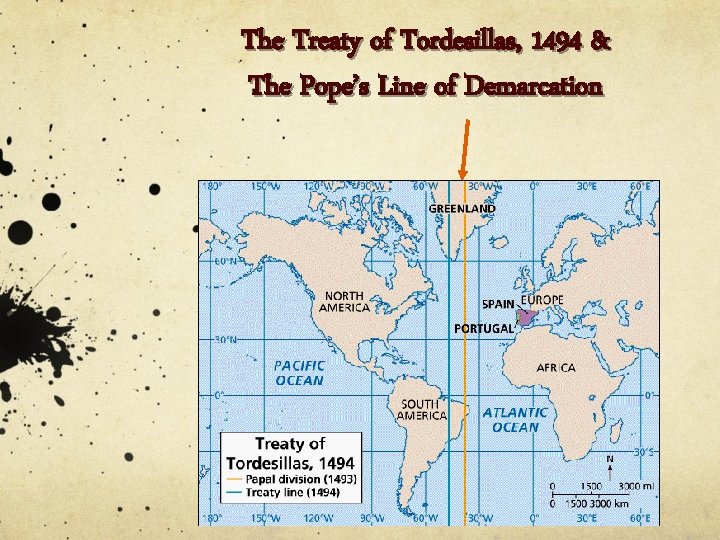
The Treaty of Tordesillas, 1494 & The Pope’s Line of Demarcation
Why colonizing the New World? Political: Rivalry with Spain and Portugal Economic: Trade and mercantilism Demographic: an outlet for the poor and unemployed
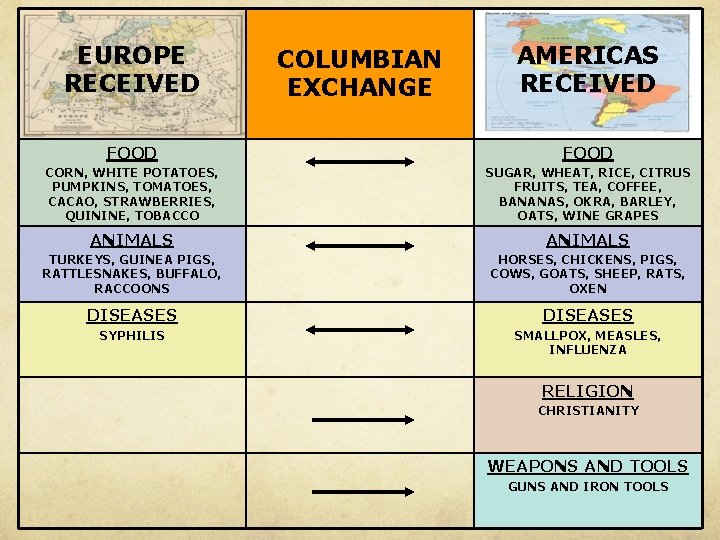
EUROPE RECEIVED COLUMBIAN EXCHANGE AMERICAS RECEIVED FOOD CORN, WHITE POTATOES, PUMPKINS, TOMATOES, CACAO, STRAWBERRIES, QUININE, TOBACCO SUGAR, WHEAT, RICE, CITRUS FRUITS, TEA, COFFEE, BANANAS, OKRA, BARLEY, OATS, WINE GRAPES ANIMALS TURKEYS, GUINEA PIGS, RATTLESNAKES, BUFFALO, RACCOONS HORSES, CHICKENS, PIGS, COWS, GOATS, SHEEP, RATS, OXEN DISEASES SYPHILIS SMALLPOX, MEASLES, INFLUENZA RELIGION CHRISTIANITY WEAPONS AND TOOLS GUNS AND IRON TOOLS
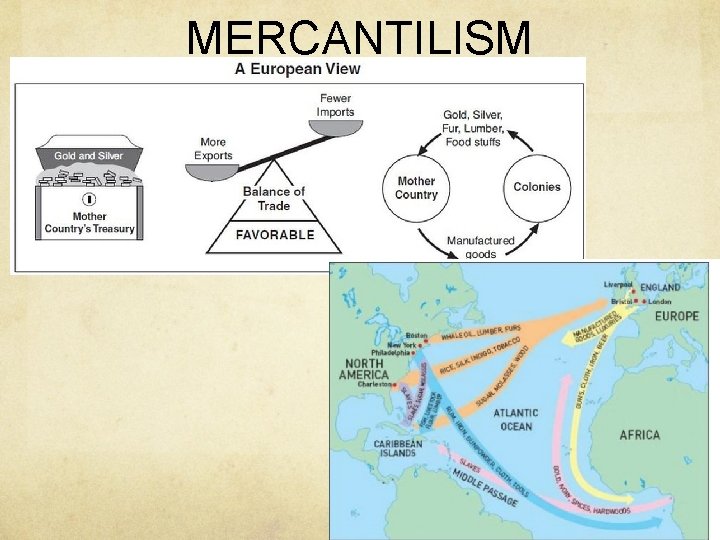
MERCANTILISM
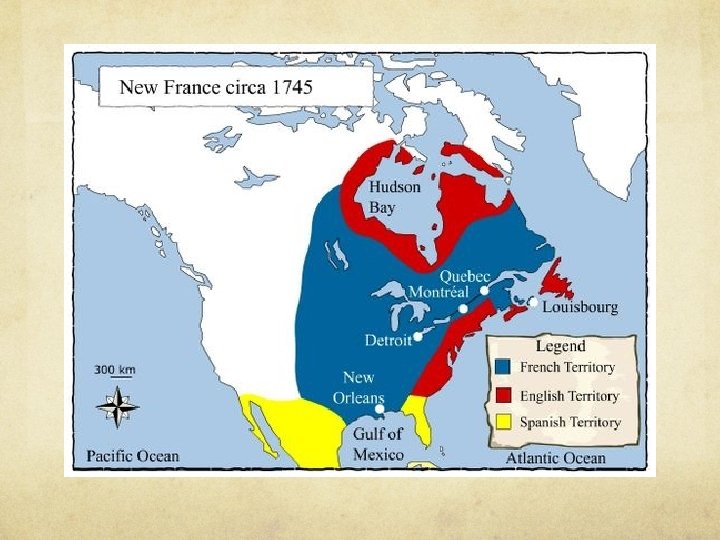
The first settlements in North America 1565: 1 st permanent settlement was founded in St Augustine, Florida by the Spanish 1585 -1587: Roanoke (Sir Walter Raleigh) 1607: Jamestown in Virginia 1608: the Frenchman Samuel Champlain founded Quebec >>> the center of the colony of New France 1620: Plymouth Colony (Massachusetts) was founded by the Pilgrims 1624 -1664: the Dutch established the colony of New Netherland which was conquered in 1664 by England to become New York 1638 -1655: The colony of New Sweden remained for 17 years before it was absorbed by New Netherland
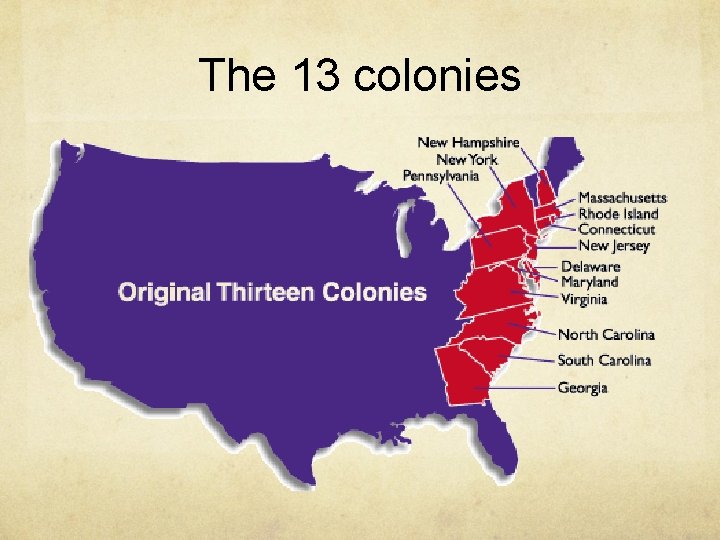
The 13 colonies
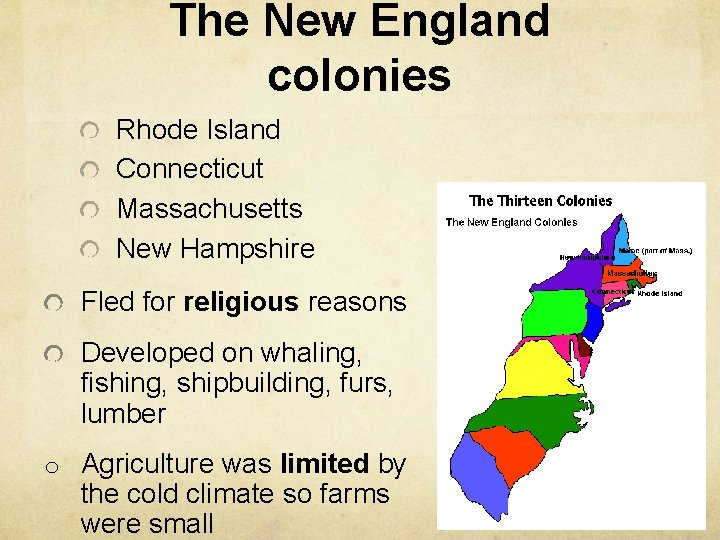
The New England colonies Rhode Island Connecticut Massachusetts New Hampshire Fled for religious reasons Developed on whaling, fishing, shipbuilding, furs, lumber o Agriculture was limited by the cold climate so farms were small
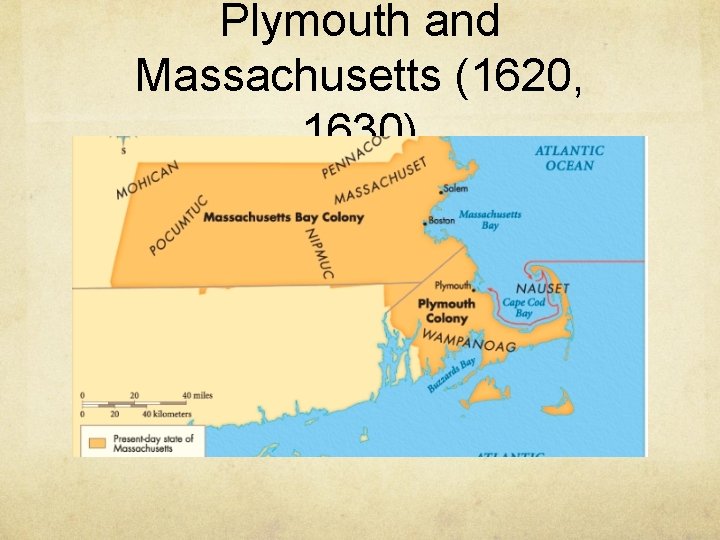
Plymouth and Massachusetts (1620, 1630)
1620= the Pilgrims who set sail for America on the Mayflower and established the Plymouth Colony = Separatists = the most radical group who wanted to break with the Church of England. They were congregationalists who believed in the local autonomy of the Church, strict Calvinists In 1630, Massachusetts Bay Colony = the Puritans who wanted to purify the Anglican church Plymouth Colony was absorbed into
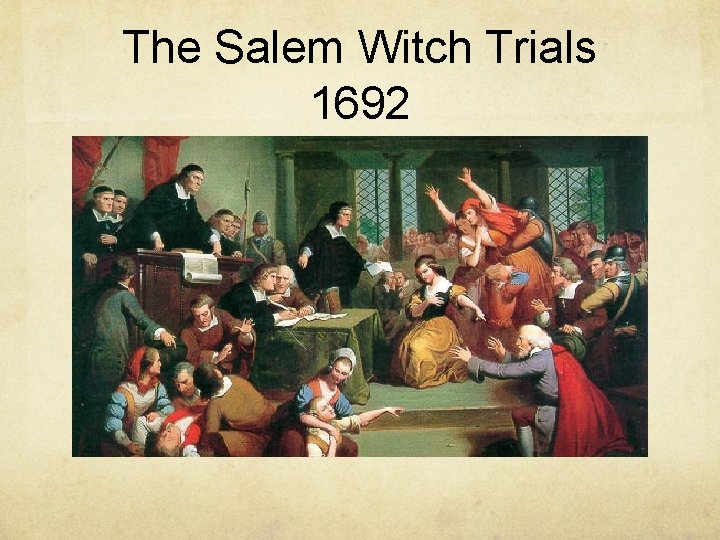
The Salem Witch Trials 1692
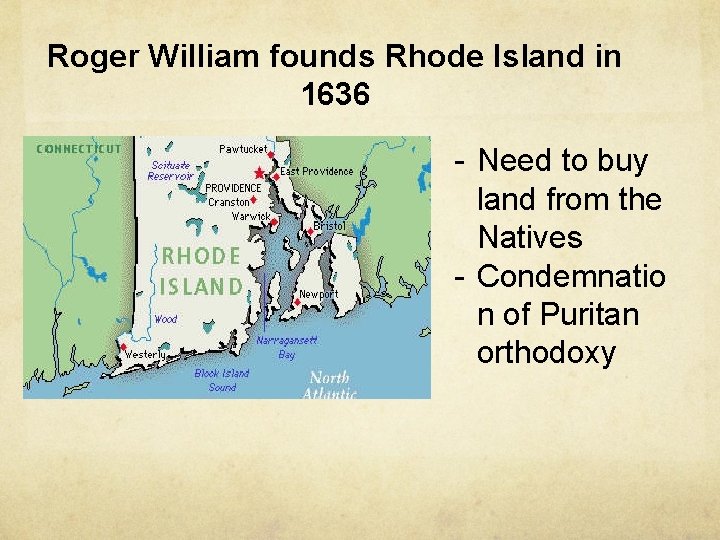
Roger William founds Rhode Island in 1636 - Need to buy land from the Natives - Condemnatio n of Puritan orthodoxy
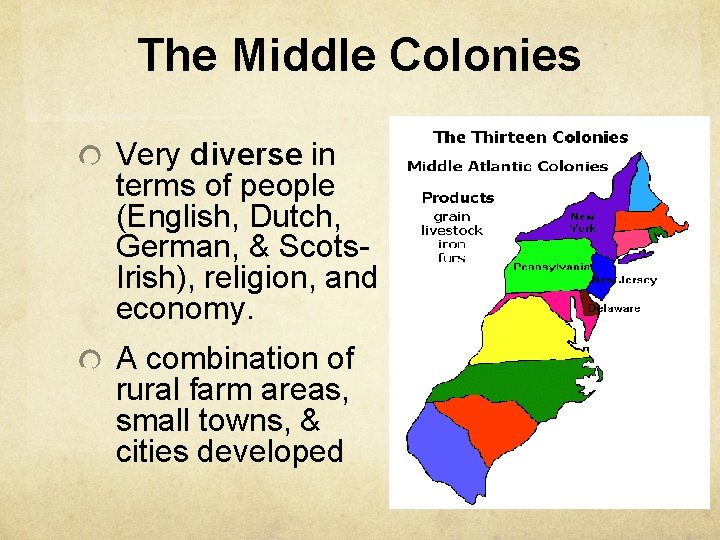
The Middle Colonies Very diverse in terms of people (English, Dutch, German, & Scots. Irish), religion, and economy. A combination of rural farm areas, small towns, & cities developed
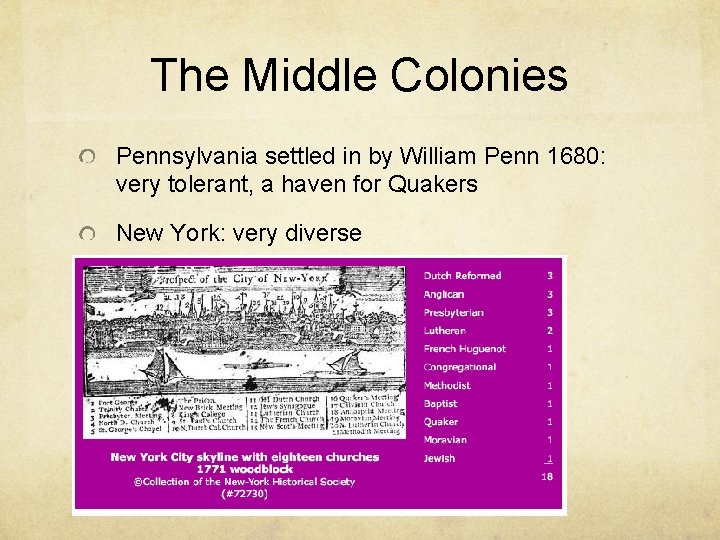
The Middle Colonies Pennsylvania settled in by William Penn 1680: very tolerant, a haven for Quakers New York: very diverse
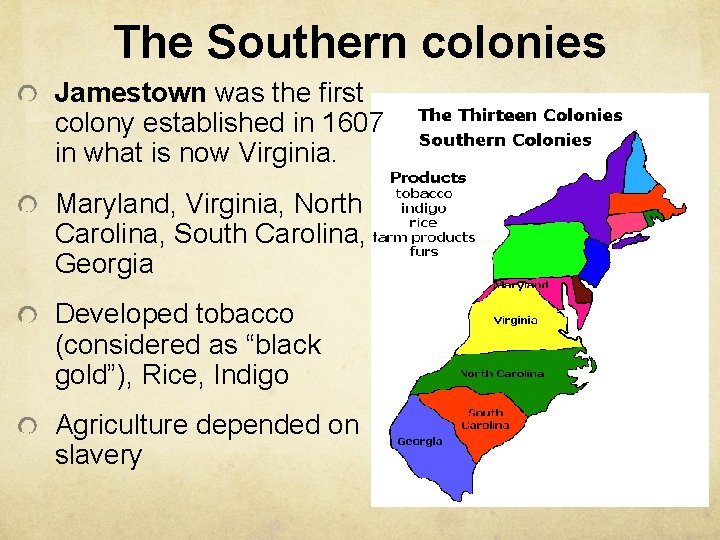
The Southern colonies Jamestown was the first colony established in 1607 in what is now Virginia. Maryland, Virginia, North Carolina, South Carolina, Georgia Developed tobacco (considered as “black gold”), Rice, Indigo Agriculture depended on slavery
The CHESAPPEAKE: VIRGINIA/MARYLAND Virginia settled in 1607 by English colonists who established the Church of England. The name of the colony = the Virgin Queen Yet, the old south was not a very pious place Greater interest in profit + weak ecclesiastical organization Arrival of many Quaker, Baptist, and Presbyterian immigrants MARYLAND : 1632: A haven for Catholic refugees The Maryland Toleration Act in 1649 that allowed all Christians, regardless of sect, to freely worship in Maryland. 1692, the Anglican Church became the official religion of the
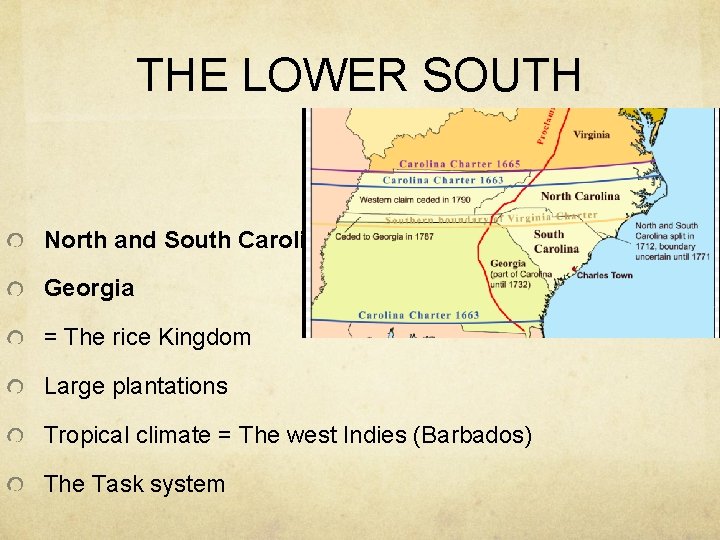
THE LOWER SOUTH North and South Carolina Georgia = The rice Kingdom Large plantations Tropical climate = The west Indies (Barbados) The Task system
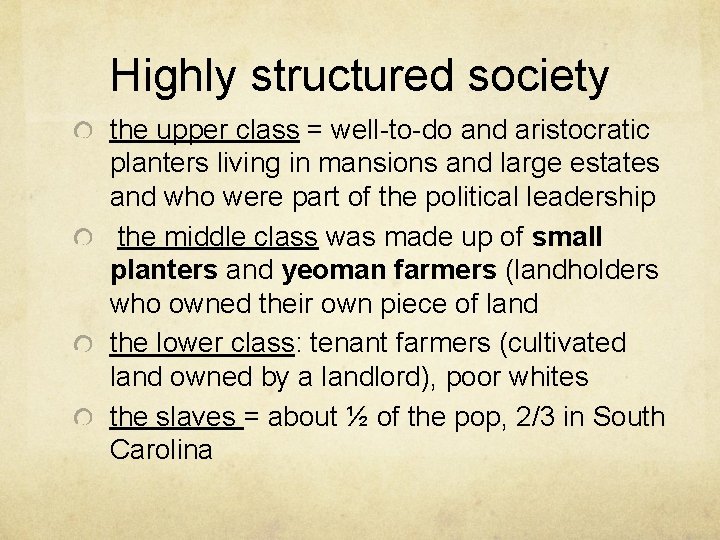
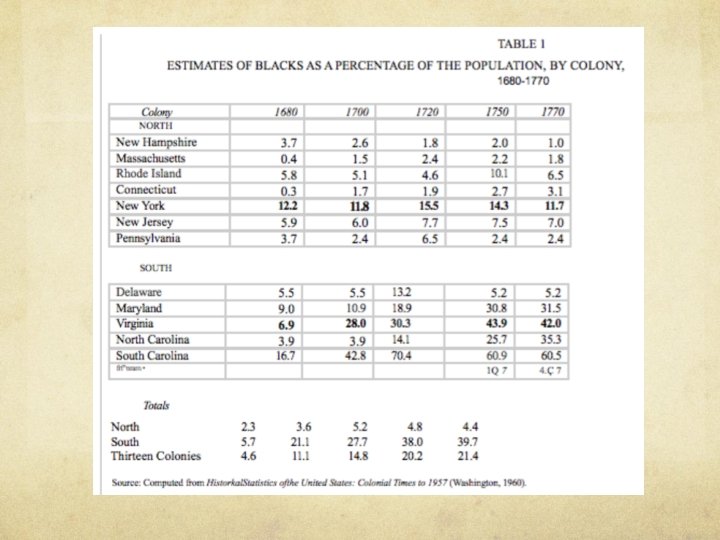
Highly structured society the upper class = well-to-do and aristocratic planters living in mansions and large estates and who were part of the political leadership the middle class was made up of small planters and yeoman farmers (landholders who owned their own piece of land the lower class: tenant farmers (cultivated land owned by a landlord), poor whites the slaves = about ½ of the pop, 2/3 in South Carolina
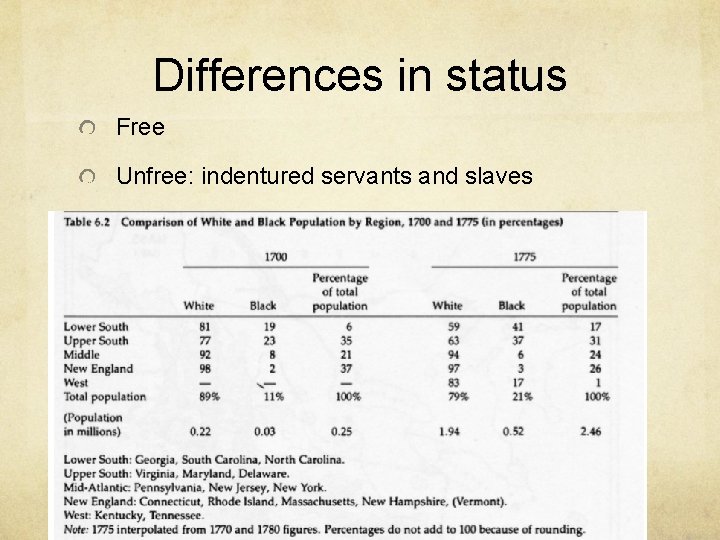
Differences in status Free Unfree: indentured servants and slaves
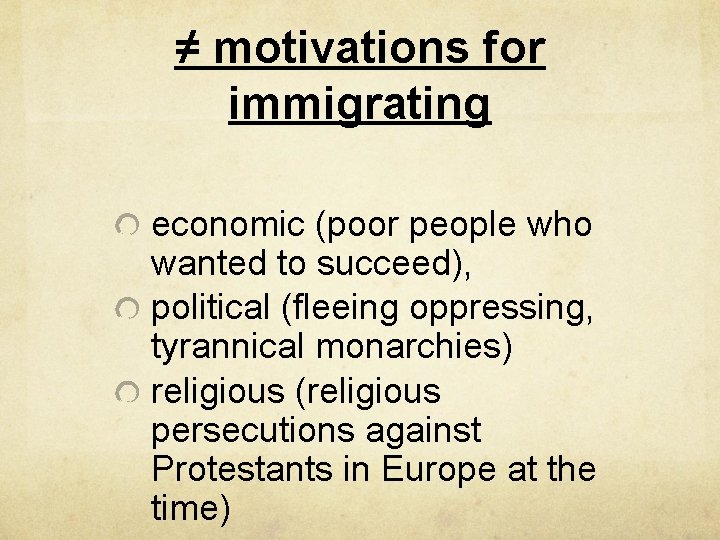
≠ motivations for immigrating economic (poor people who wanted to succeed), political (fleeing oppressing, tyrannical monarchies) religious (religious persecutions against Protestants in Europe at the time)
Political diversity Charter or corporate colonies Proprietary colonies Royal/Crown colonies
Political structure GOVERNOR = appointed by the King = supreme authority = power to convene, or dissolve the legislature + to veto any of its laws COUNCIL = appointed, and they served at the governor's pleasure + served as the supreme court for the colony + had to approve new laws = the upper house of the legislature = the House of Lords LEGISLATIVE ASSEMBLY = = Members were elected annually, by the propertied citizens of the towns or counties = landowners = House of Commons
- Slides: 26