
Wednesday th 6 January Remote Learning Day 1
- Slides: 23
Wednesday th 6 January Remote Learning Day #1 MORNING SESSION
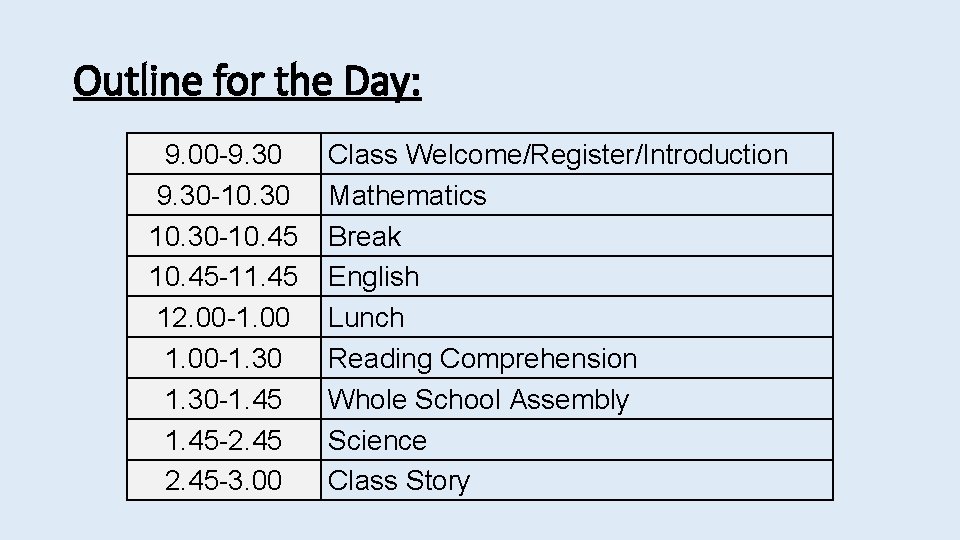
Outline for the Day: 9. 00 -9. 30 -10. 45 -11. 45 12. 00 -1. 30 -1. 45 -2. 45 -3. 00 Class Welcome/Register/Introduction Mathematics Break English Lunch Reading Comprehension Whole School Assembly Science Class Story
Maths: Cube Numbers LO: To identify cube numbers. ___ I understand what a cube number is. ___ I can apply my times table knowledge in order to identify a cube number. ___ I can solve addition and subtraction calculations involving two or more cube numbers. By the end of today’s Maths lesson you will be expected to: • Have watched the White Rose video on Cube Numbers https: //whiterosemaths. com/homelearning/year-5/week-9 -numbermultiplication-division/ • Read through the Mathematics cube numbers slides on this Power. Point. • Complete the class teacher worksheet on ‘Cube Numbers’. There are two levels of difficulty to choose from. Optional/Challenge: • Extensions on this Power. Point.
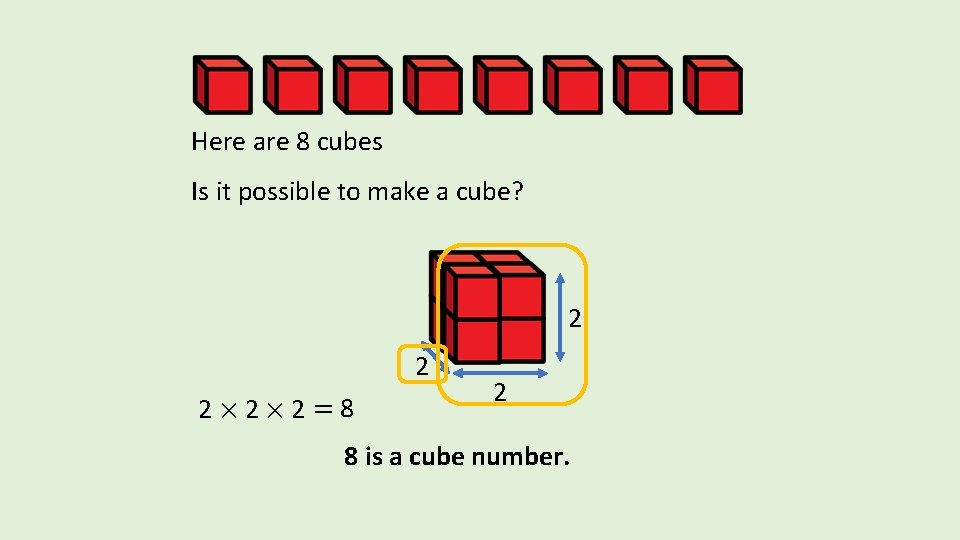
Here are 8 cubes Is it possible to make a cube? 2 2 2× 2× 2 =8 2 8 is a cube number.
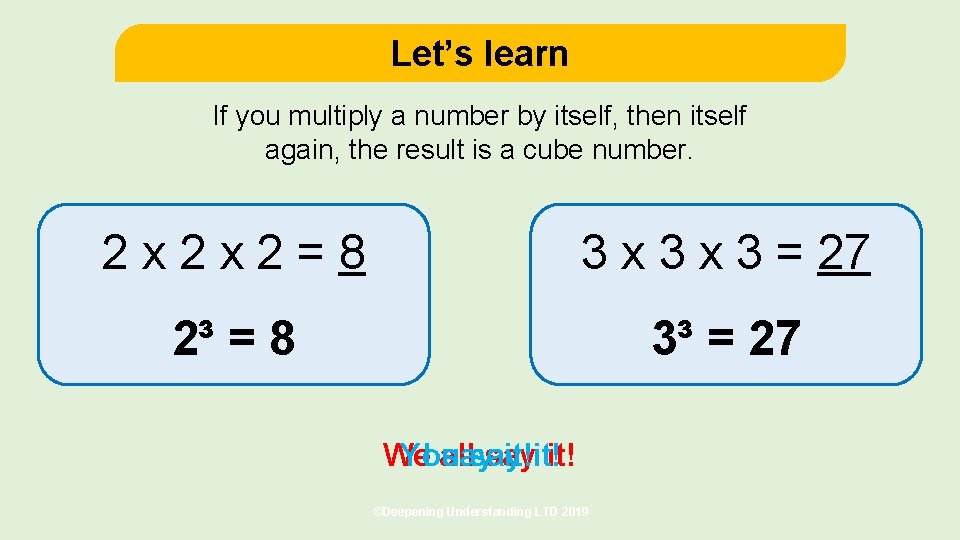
Let’s learn If you multiply a number by itself, then itself again, the result is a cube number. 2 x 2 x 2=8 3 x 3 = 27 2³ = 8 3³ = 27 We say You I all say it!it!it! ©Deepening Understanding LTD 2019
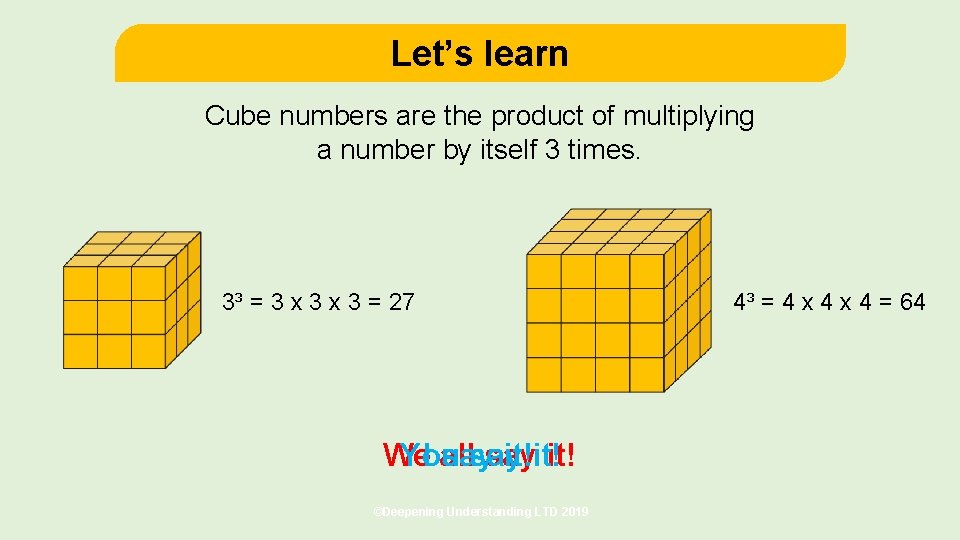
Let’s learn Cube numbers are the product of multiplying a number by itself 3 times. 3³ = 3 x 3 = 27 We say You I all say it!it!it! ©Deepening Understanding LTD 2019 4³ = 4 x 4 = 64
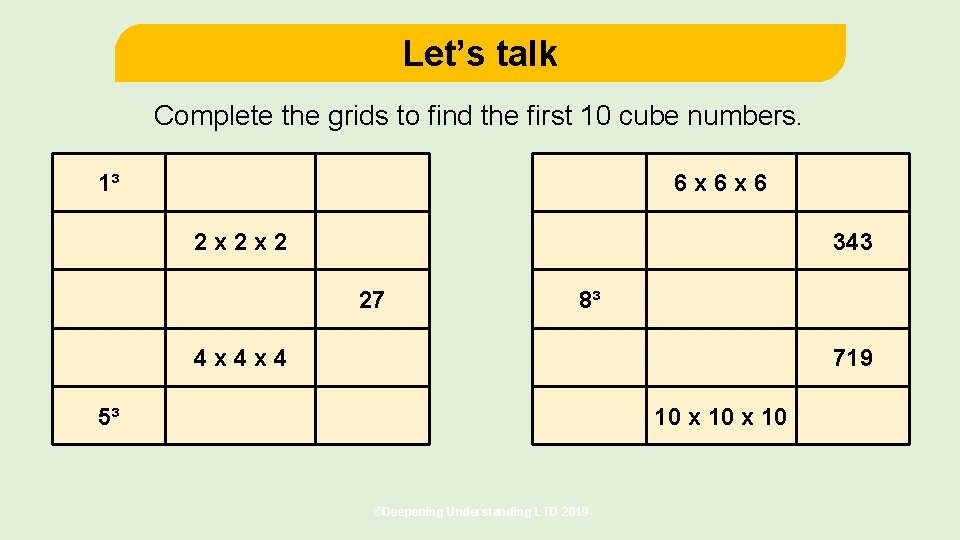
Let’s talk Complete the grids to find the first 10 cube numbers. 1³ 6 x 6 x 6 2 x 2 x 2 343 27 8³ 4 x 4 x 4 719 5³ 10 x 10 ©Deepening Understanding LTD 2019
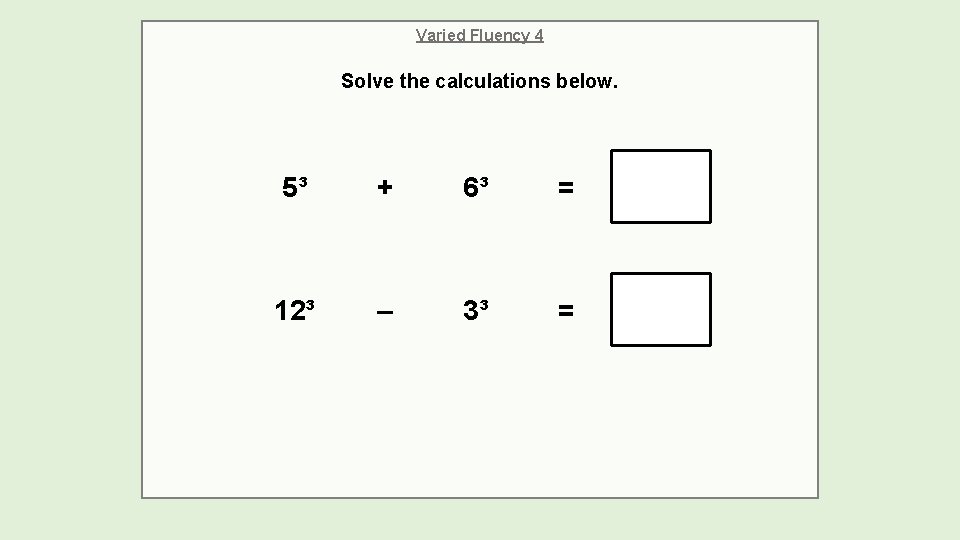
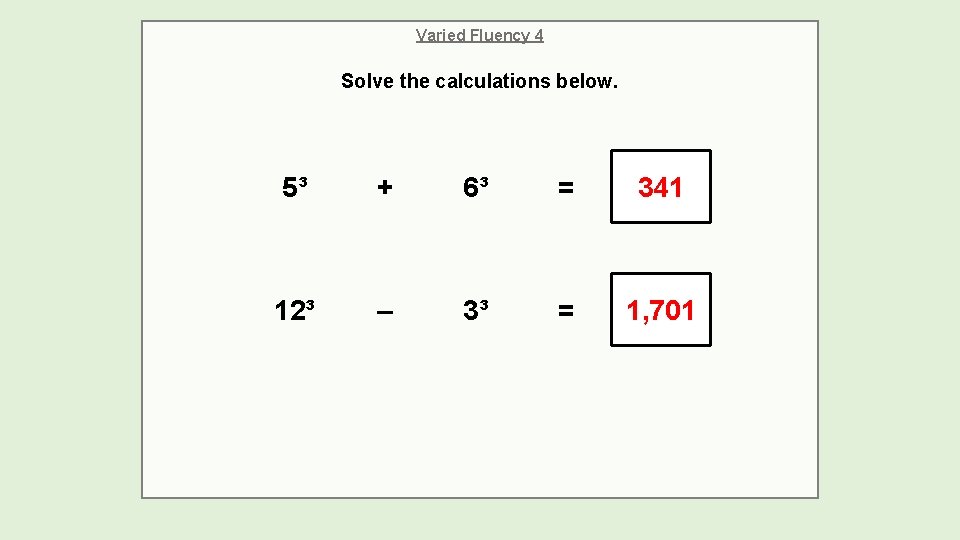
Varied Fluency 4 Solve the calculations below. 5³ + 6³ = 12³ – 3³ =
Varied Fluency 4 Solve the calculations below. 5³ + 6³ = 341 12³ – 3³ = 1, 701
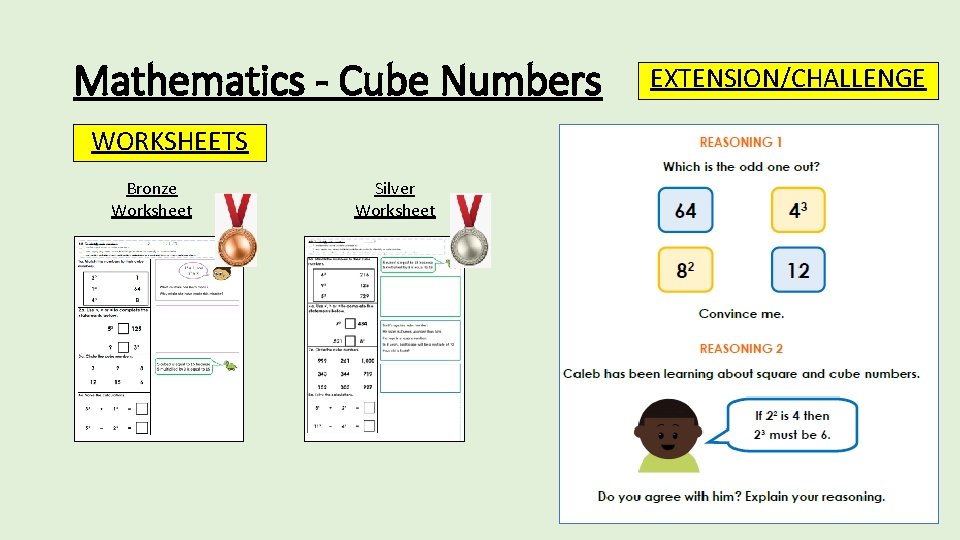
Mathematics - Cube Numbers WORKSHEETS Bronze Worksheet Silver Worksheet EXTENSION/CHALLENGE
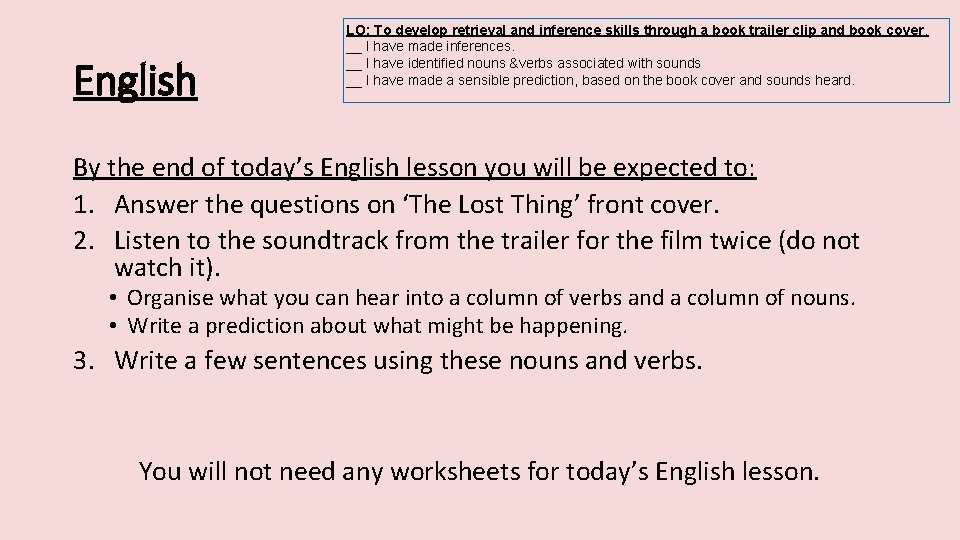
English LO: To develop retrieval and inference skills through a book trailer clip and book cover. __ I have made inferences. __ I have identified nouns &verbs associated with sounds __ I have made a sensible prediction, based on the book cover and sounds heard. By the end of today’s English lesson you will be expected to: 1. Answer the questions on ‘The Lost Thing’ front cover. 2. Listen to the soundtrack from the trailer for the film twice (do not watch it). • Organise what you can hear into a column of verbs and a column of nouns. • Write a prediction about what might be happening. 3. Write a few sentences using these nouns and verbs. You will not need any worksheets for today’s English lesson.
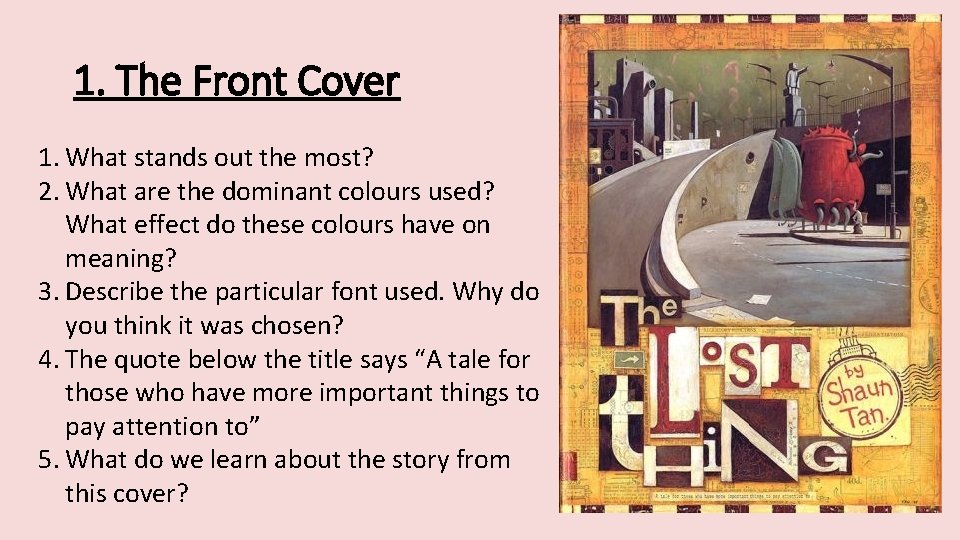
1. The Front Cover 1. What stands out the most? 2. What are the dominant colours used? What effect do these colours have on meaning? 3. Describe the particular font used. Why do you think it was chosen? 4. The quote below the title says “A tale for those who have more important things to pay attention to” 5. What do we learn about the story from this cover?
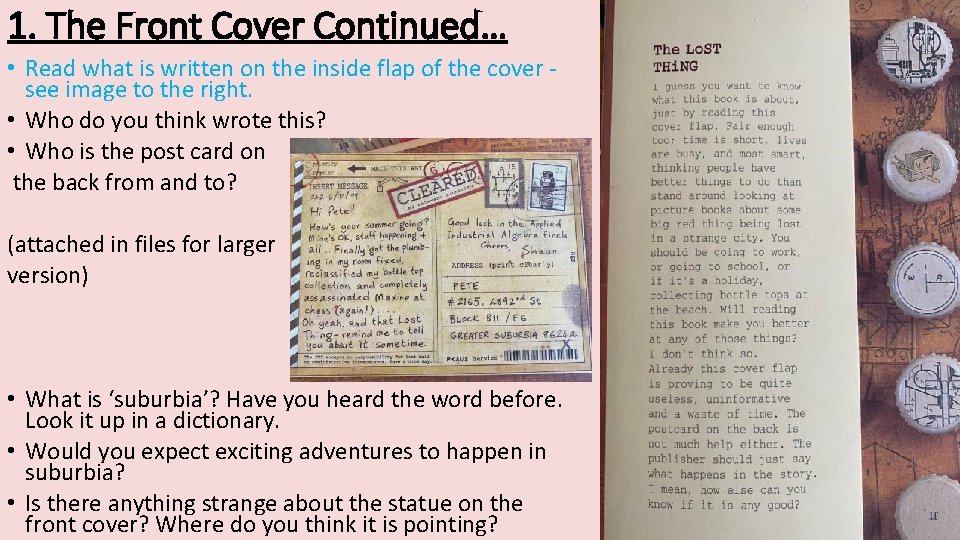
1. The Front Cover Continued… • Read what is written on the inside flap of the cover see image to the right. • Who do you think wrote this? • Who is the post card on the back from and to? (attached in files for larger version) • What is ‘suburbia’? Have you heard the word before. Look it up in a dictionary. • Would you expect exciting adventures to happen in suburbia? • Is there anything strange about the statue on the front cover? Where do you think it is pointing?
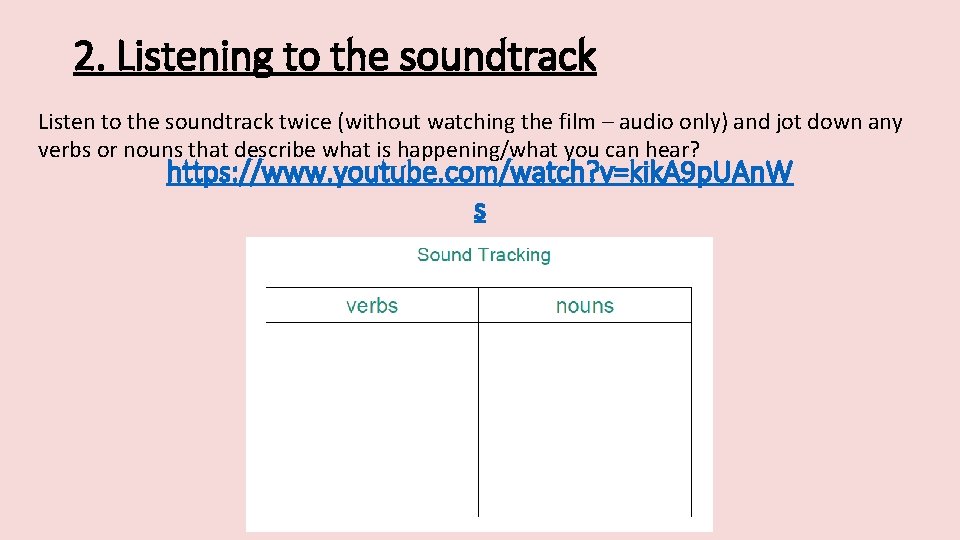
2. Listening to the soundtrack Listen to the soundtrack twice (without watching the film – audio only) and jot down any verbs or nouns that describe what is happening/what you can hear? https: //www. youtube. com/watch? v=kik. A 9 p. UAn. W s
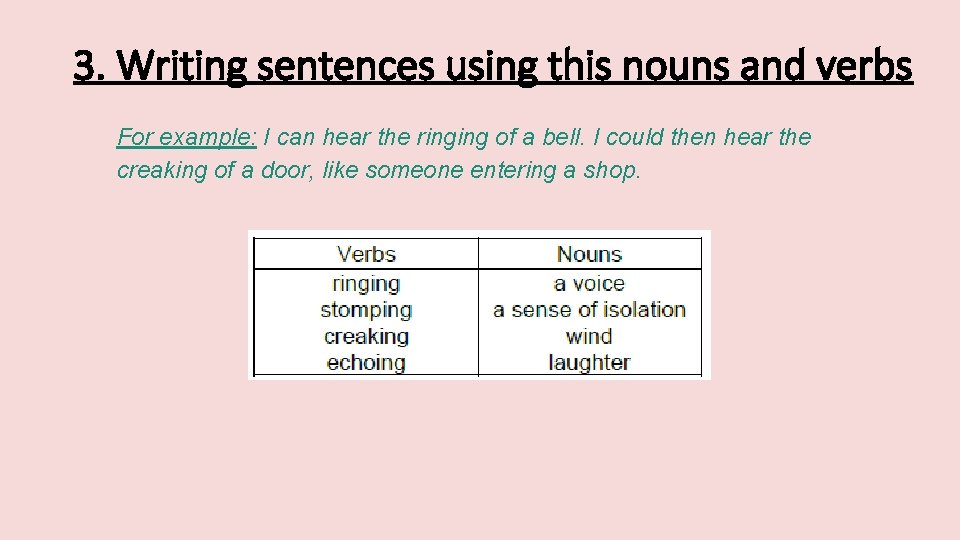
3. Writing sentences using this nouns and verbs For example: I can hear the ringing of a bell. I could then hear the creaking of a door, like someone entering a shop.
Wednesday th 5 January Remote Learning Day #1 AFTERNOON SESSION
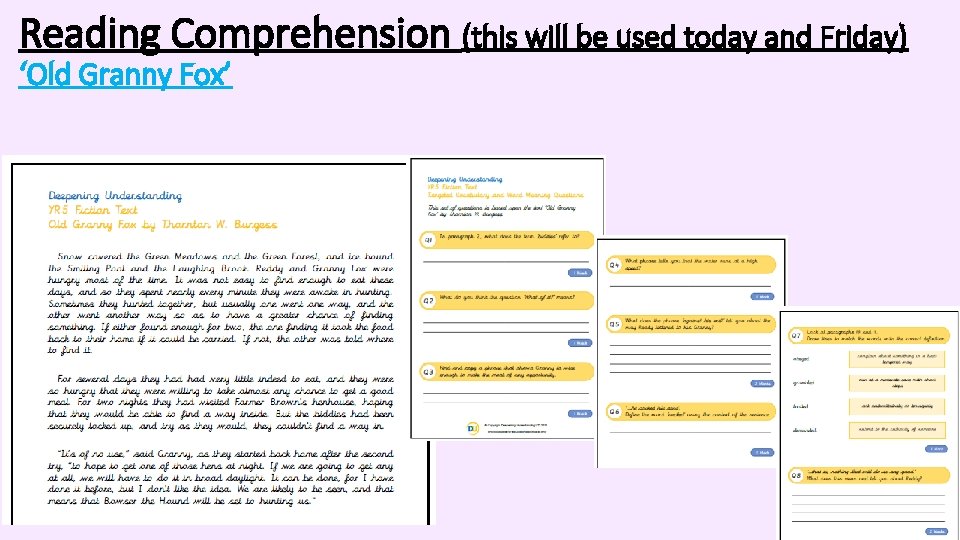
Reading Comprehension (this will be used today and Friday) ‘Old Granny Fox’
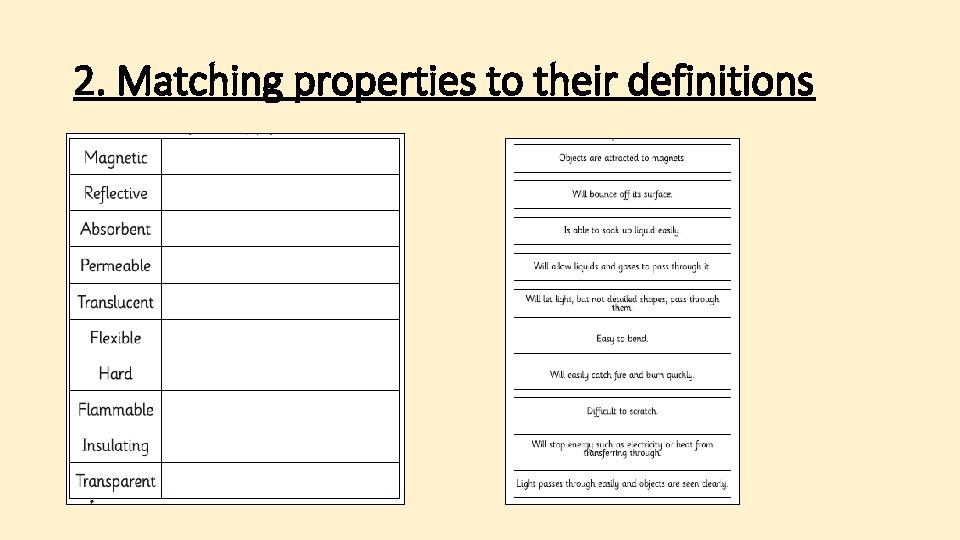
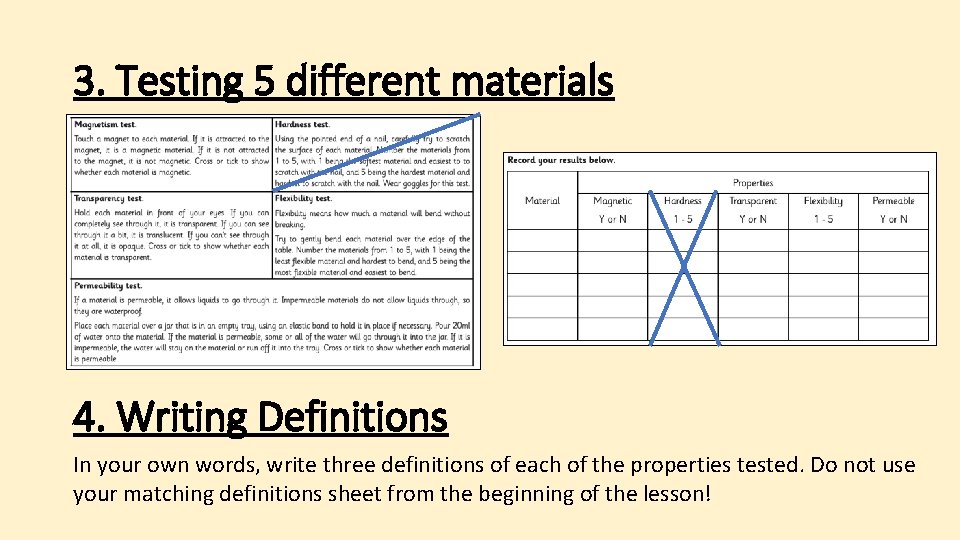
Science LO: To be able to identify properties of materials. ___ I can recognise materials and how they are different. ___ I can use scientific vocabulary relating to properties of materials. ___ I can test materials for their properties. By the end of today’s Science lesson you will be expected to: 1. Complete the prior learning sheet. 2. Match the properties to their definitions on the worksheet. 3. Find 5 different materials around your house. Test these five different materials based on permeability, flexibility, transparency and magnetism. 4. In your own words, write two definitions of each of the properties tested. Do not use your matching definitions sheet from the beginning of the lesson! You will need the prior learning worksheet, the matching pairs worksheet and the testing table worksheet for today’s lesson.
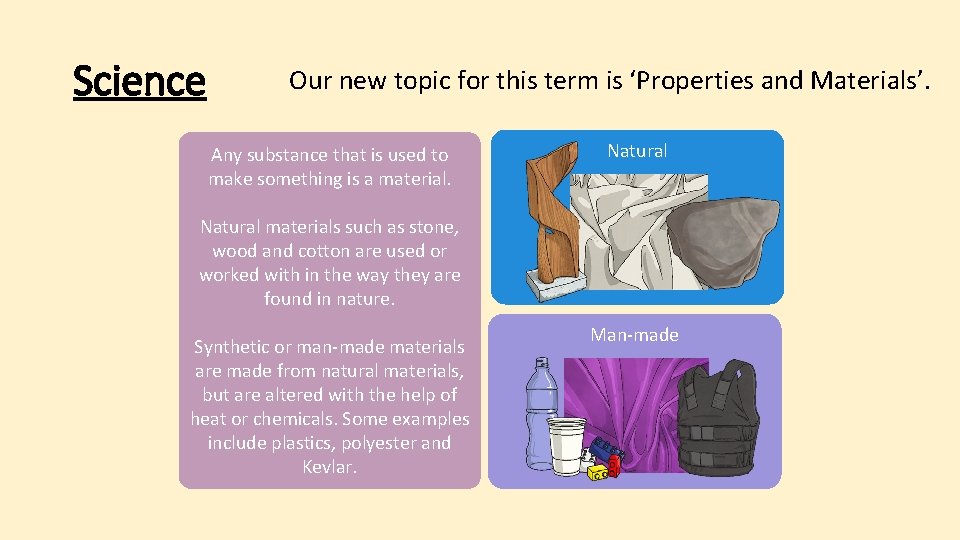
Science Our new topic for this term is ‘Properties and Materials’. Any substance that is used to make something is a material. Natural materials such as stone, wood and cotton are used or worked with in the way they are found in nature. Synthetic or man-made materials are made from natural materials, but are altered with the help of heat or chemicals. Some examples include plastics, polyester and Kevlar. Man-made
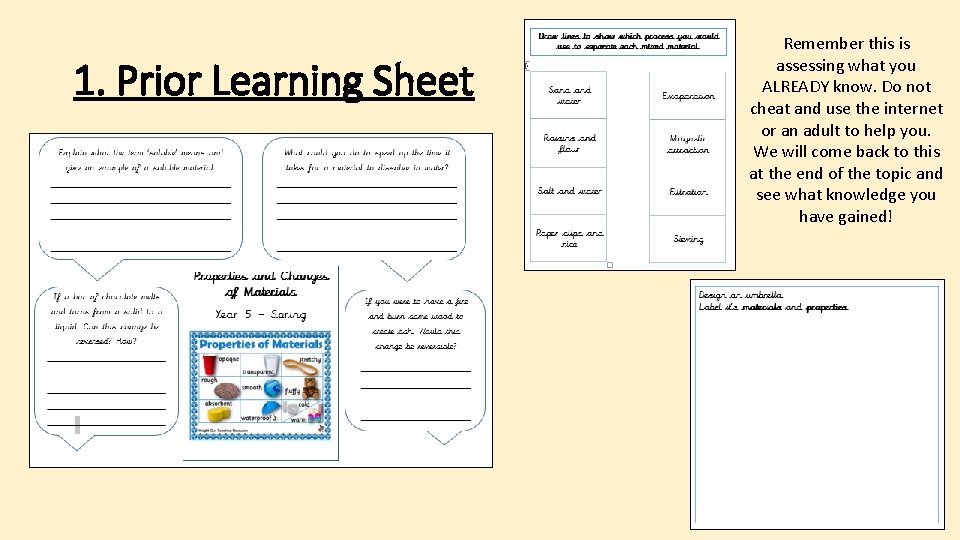
1. Prior Learning Sheet Remember this is assessing what you ALREADY know. Do not cheat and use the internet or an adult to help you. We will come back to this at the end of the topic and see what knowledge you have gained!
2. Matching properties to their definitions
3. Testing 5 different materials 4. Writing Definitions In your own words, write three definitions of each of the properties tested. Do not use your matching definitions sheet from the beginning of the lesson!
Please submit your work to your class teacher.