
Weddell Seal Presentation for High School Biology Connections
Weddell Seal Presentation for High School Biology Connections Anatomy, Physiology, Cell Biology, Human Health Connections Sponsored by Created in collaboration with
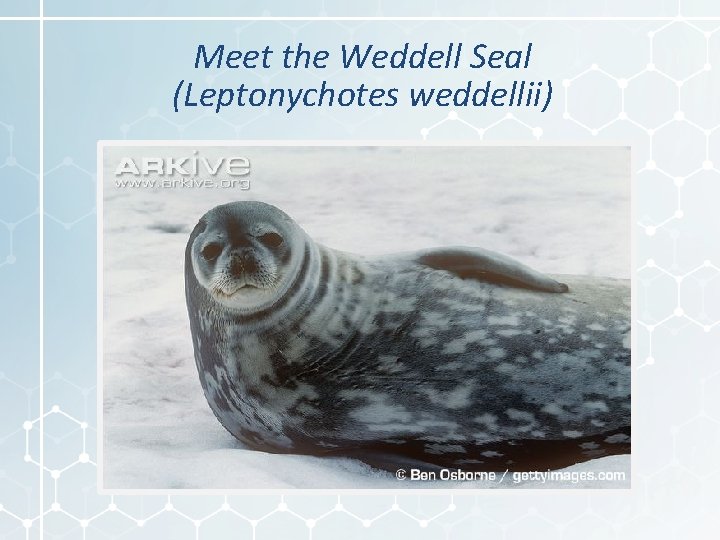
Meet the Weddell Seal (Leptonychotes weddellii)
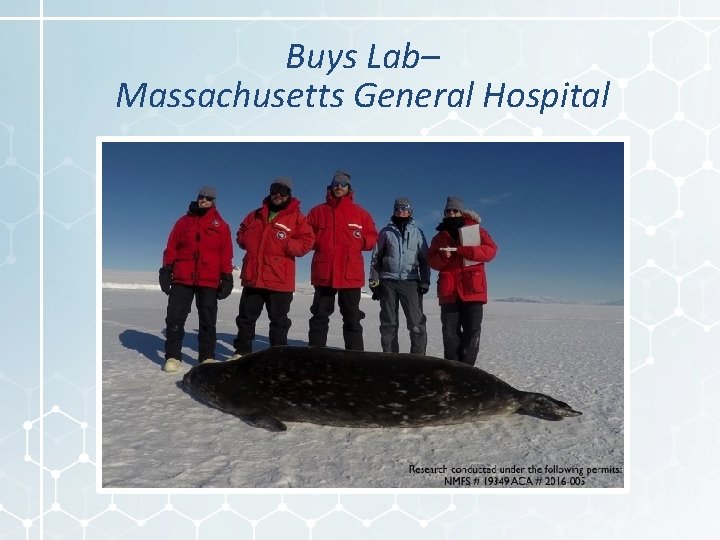
Buys Lab– Massachusetts General Hospital

MGH RESEARCH Seal-Human Health Connections Researchers Dr. Manu Buys, Dr. Allyson Hindle, and Dr. Warren Zapol at MGH and Dr. Dan Costa at UCSC are studying Weddell seals in order to learn how their adaptations may be able to help medical researchers including: Therapies for: • cardiovascular trauma (e. g. stroke, heart attack) • diseases associated with blunted oxygen delivery to tissues (e. g. pneumonia, sepsis, or cancer) Molecular research: • document specific genes that control cardiovascular adjustments in seals, and to compare their abundance and activity with humans • effects of low oxygen conditions on cellular activity

Weddell Seal Taxonomy Source: NSF Polar TREC
What is Mammalian Dive Reflex/Response? Changes in body functions (physiology) that allow an air-breathing animal to prolong its time underwater What types of physiological changes can you think of that would allow a mammal such as a whale, seal, or human to remain submerged underwater while holding its breath?
Mammalian Dive Reflex/Response PRE LAB Fill in the Mammalian Dive Response Student Pre-Lab questions. 1. Hypothesize how submerging your face in cold water, while holding your breath, may impact your resting heart rate. 2. Hypothesize what may happen to your heart rate, blood pressure, and energy levels if you tried to exercise while fully submerged in cold water. 3. Use your textbook, if needed, to answer this question. During cellular respiration, what substance builds up in the body when there is a lack of oxygen? To demonstrate this, perform a wall sit. Stand against the wall. Keeping your back flat against the wall, lower yourself down and walk your feet out until your knees and quads are at a 90 -degree angle. Hold that position for several minutes, until you feel this substance building up in your quadriceps. This substance is building up due to a lack of free oxygen in your muscles. 1. Marine mammals such as dolphins, whales, and seals can hold their breath for extended periods of time while exerting energy during hunting, mating, or migrating. a. How does this impact their heart rate? b. How might the fermentation stage of the Krebs cycle differ in marine mammals compared to humans?
Mammalian Dive Reflex/Response PRE LAB AFTER completing the Pre-Lab Questions to the Mammalian Dive Response Laboratory Investigation: 1) Read: Fifty minutes without a heartbeat-Scientific American Article (great homework article or group discussion paper to introduce the DR) 2) Watch: Freediver Sebastien Murat explains in this video. 3) Read: Your body’s amazing reaction to water
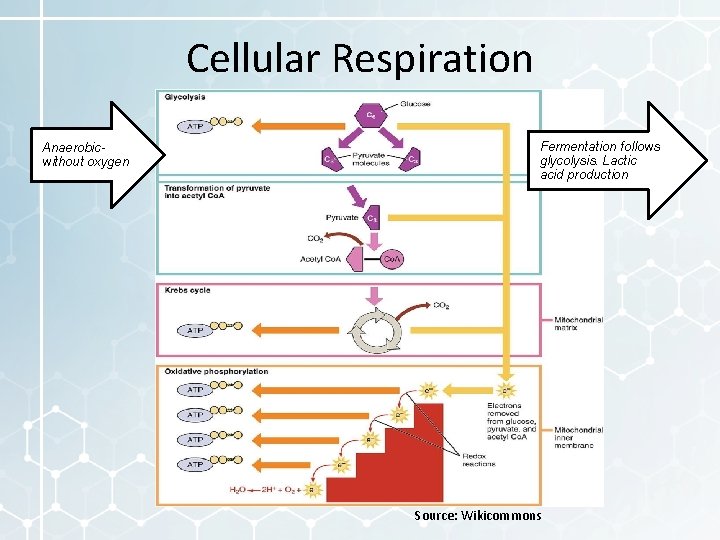
Cellular Respiration Anaerobicwithout oxygen Fermentation follows glycolysis. Lactic acid production Source: Wikicommons
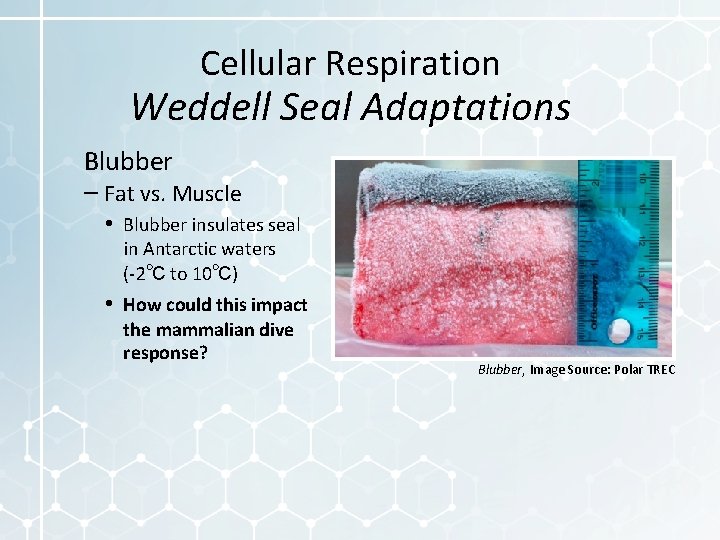
Cellular Respiration Weddell Seal Adaptations Blubber – Fat vs. Muscle • Blubber insulates seal in Antarctic waters (-2℃ to 10℃) • How could this impact the mammalian dive response? Blubber, Image Source: Polar TREC
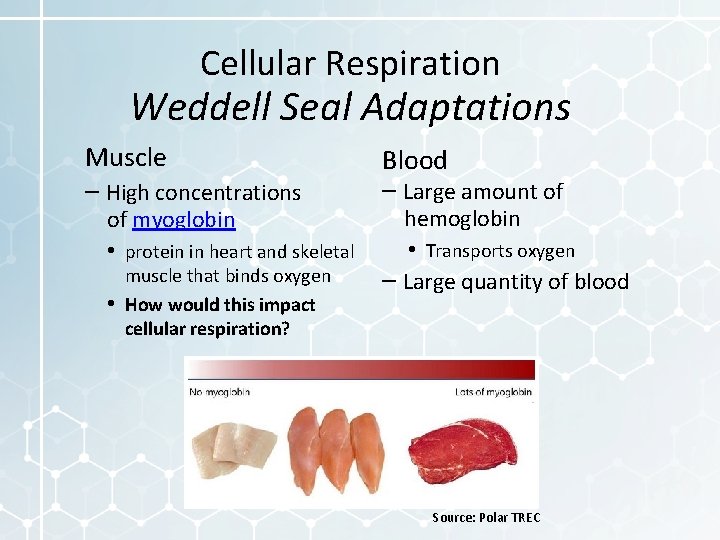
Cellular Respiration Weddell Seal Adaptations Muscle – High concentrations of myoglobin • protein in heart and skeletal • muscle that binds oxygen How would this impact cellular respiration? Blood – Large amount of hemoglobin • Transports oxygen – Large quantity of blood Source: Polar TREC
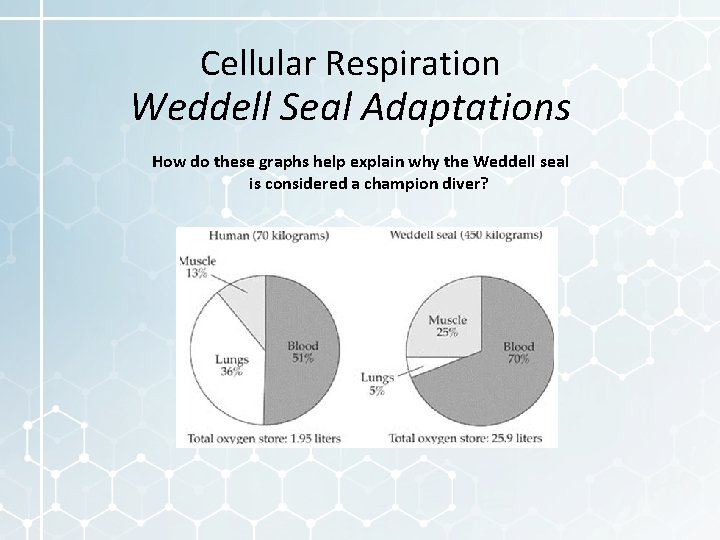
Cellular Respiration Weddell Seal Adaptations How do these graphs help explain why the Weddell seal is considered a champion diver?
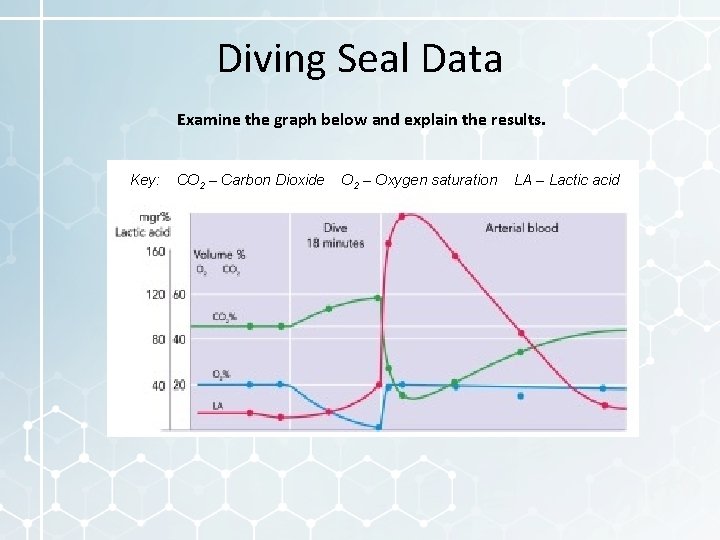
Diving Seal Data Examine the graph below and explain the results. Key: CO 2 – Carbon Dioxide O 2 – Oxygen saturation LA – Lactic acid
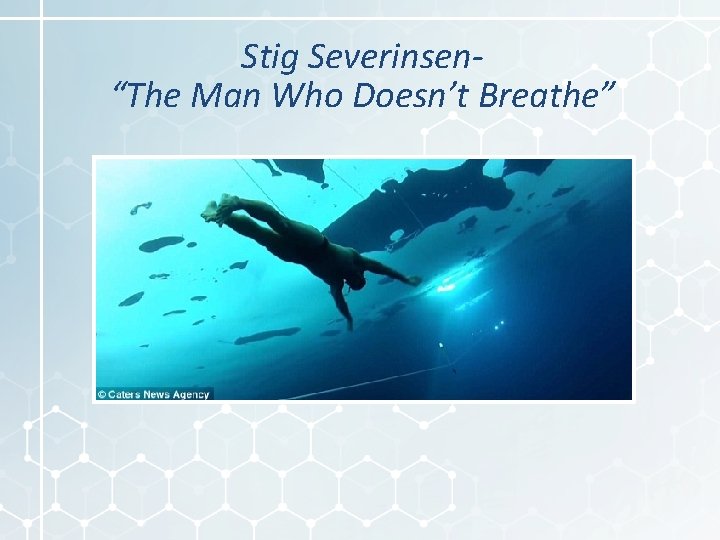
Stig Severinsen“The Man Who Doesn’t Breathe”
60 Minutes and Human Health Connections • • Minute 5: 50 – in 2004 Stig tried to set a world record What was his physical response to this dive? What was the cause of this response? Would the result have been the same in shallow water? • What medical connections can be made using Stig’s techniques?
References "Buys Laboratory. " Buys Laboratory, 2015. Web. 30 June 2016. <http: //buyslab. mgh. harvard. edu/antarctica/project/>. "Coma. " PBS. NOVA Teachers, Apr. 2004. Web. 30 June 2016. <http: //www. pbs. org/wgbh/nova/education/activities/2411_coma. html>. Cosplayer. Productions. "Stig Severinsen Can Hold His Breath For 22 Minutes. " You. Tube, 13 Apr. 2014. Web. 30 June 2016. <https: //www. youtube. com/watch? v=Gl 8 -Ta 2 ujnw>. Eck, David, and Jim Ryan. "The Chi Square Statistic. " Chi Square Statistics. Hobart and William Smith Colleges, n. d. Web. 30 June 2016. <http: //math. hws. edu/javamath/ryan/Chi. Square. html>. "Graph. Pad Quick. Calcs: Chi Square Calculator. " Graph. Pad Quick. Calcs: Chi Square Calculator. Graph. Pad, 2016. Web. 30 June 2016. <http: //graphpad. com/quickcalcs/chisquared 1. cfm>. Jee, Jane J. "How Diving Mammals Stay Underwater for So Long. " National Geographic Society, 15 June 2013. Web. 30 June 2016. <http: //news. nationalgeographic. com/news/2013/06/130614 -diving-mammal-myoglobin-oxygen-ocean-science/>. Laskowski, Edward R. , MD. "Fitness. " Heart Rate: What's Normal? Mayo Clinic, 2016. Web. 30 June 2016. <http: //www. mayoclinic. org/healthy-lifestyle/fitness/expert-answers/heart-rate/faq-20057979>. "The Mammalian Diving Reflex. " DUJS Online. Dartmouth Undergraduate Journal of Science, 11 Mar. 2012. Web. 30 June 2016. <http: //dujs. dartmouth. edu/2012/03/the-mammalian-diving-reflex/#. V 3 VBKZMr. Kxl>. "Methods Manual: T-test, Hand Calculation. " Methods Manual: T-test, Hand Calculation. University of California Davis, n. d. Web. 30 June 2016. <http: //psc. dss. ucdavis. edu/sommerb/sommerdemo/stat_inf/tutorials/tcorrhand. htm>. Nestor, James. "Your Body’s Amazing Reaction to Water. " Ideas. TED. com. TED, 25 June 2014. Web. 30 June 2016. <http: //ideas. ted. com/science_of_freediving/>. Rennie, John. "How the Dive Reflex Extends Breath-Holding. " Scientific American, a division of Nature America, Inc. , 22 Mar. 2012. Web. 30 June 2016. <http: //www. scientificamerican. com/article/breath-holding-dive-reflex-extends/>. Roth, Stephen. "Why Does Lactic Acid Build Up in Muscles? And Why Does It Cause Soreness? " Scientific American, a division of Nature America, Inc. , 23 Jan. 2006. Web. 30 June 2016. <http: //www. scientificamerican. com/article/why-does-lacticacid-buil/>. Stechmann, Jesper. "Mammalian Dive Reflex - Heartrate. " You. Tube, 17 Apr. 2015. Web. 30 June 2016. <https: //www. youtube. com/watch? v=00 RKh 6 NRMqc>. Weddell. Seal. Science. "Introduction to Weddell Seals. " You. Tube, 28 Oct. 2010. Web. 30 June 2016. <https: //www. youtube. com/watch? v=Vo__ds 7 Lgp. E>. © World Health Organization, 2011. All Rights Reser, comp. "Using the Pulse Oximeter. " Using the Pulse Oximeter (n. d. ): n. pag. 2011. Web. 30 June 2016. <http: //www. who. int/patientsafety/safesurgery/pulse_oximetry/who_ps_pulse_oxymetry_tutorial 2_advanced_en. pdf>.
- Slides: 16