
WED WEATHERING EROSION AND DEPOSITION 3 WAYS EARTHS
- Slides: 14
WED WEATHERING, EROSION, AND DEPOSITION
3 WAYS EARTH'S MATERIALS CAN CHANGE (NOTHING IS ADDED OR TAKEN AWAY IT JUST CHANGES) 1. Weathering 2. Erosion 3. Deposition
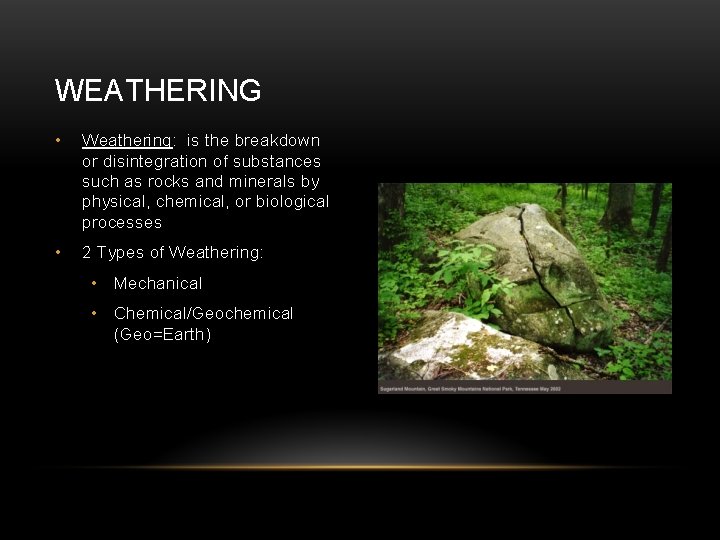
WEATHERING • Weathering: is the breakdown or disintegration of substances such as rocks and minerals by physical, chemical, or biological processes • 2 Types of Weathering: • Mechanical • Chemical/Geochemical (Geo=Earth)
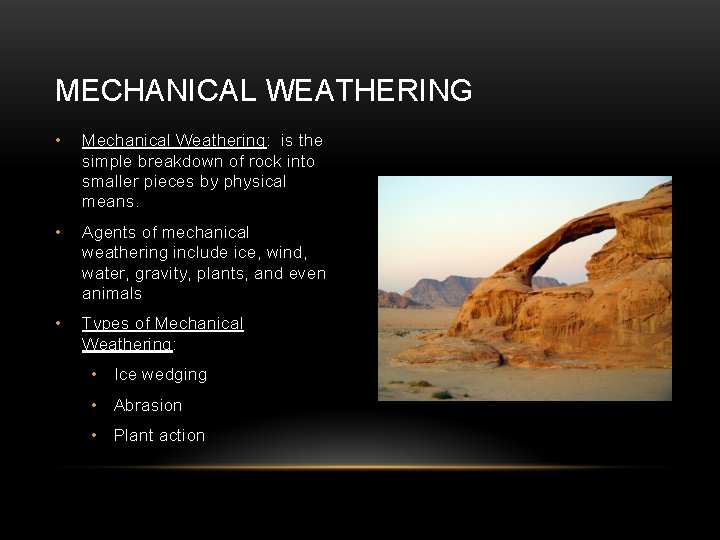
MECHANICAL WEATHERING • Mechanical Weathering: is the simple breakdown of rock into smaller pieces by physical means. • Agents of mechanical weathering include ice, wind, water, gravity, plants, and even animals • Types of Mechanical Weathering: • Ice wedging • Abrasion • Plant action
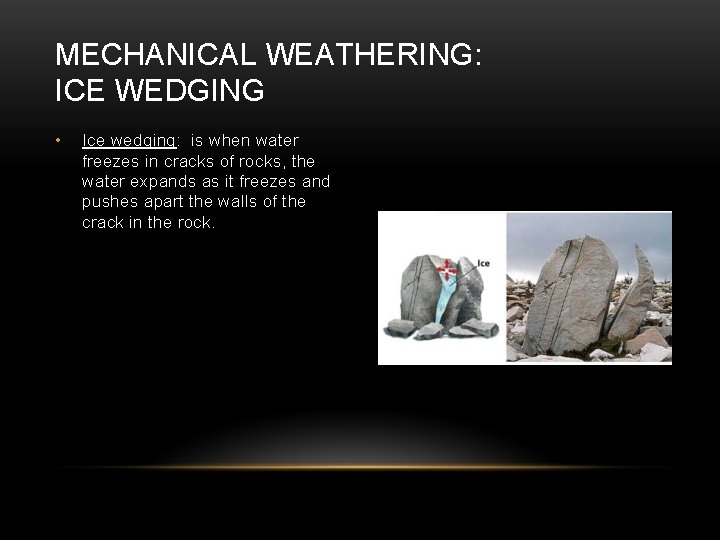
MECHANICAL WEATHERING: ICE WEDGING • Ice wedging: is when water freezes in cracks of rocks, the water expands as it freezes and pushes apart the walls of the crack in the rock.
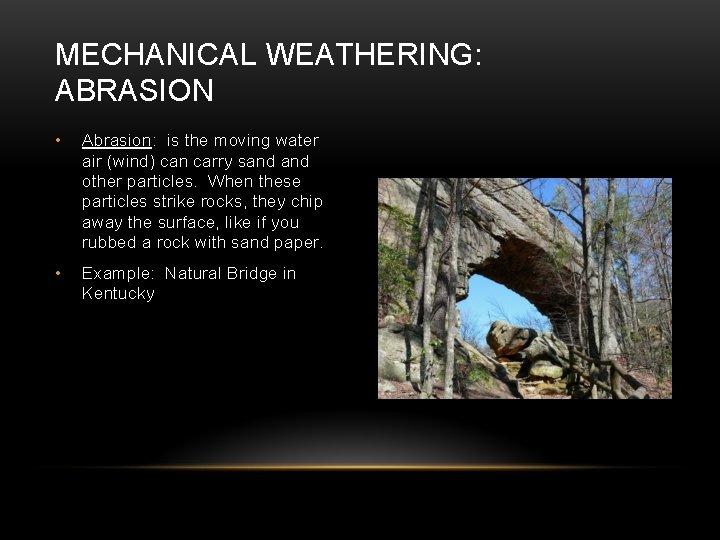
MECHANICAL WEATHERING: ABRASION • Abrasion: is the moving water air (wind) can carry sand other particles. When these particles strike rocks, they chip away the surface, like if you rubbed a rock with sand paper. • Example: Natural Bridge in Kentucky
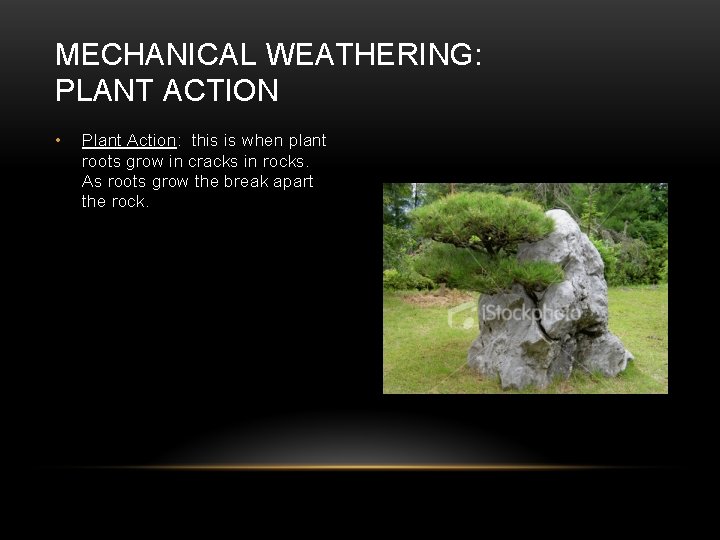
MECHANICAL WEATHERING: PLANT ACTION • Plant Action: this is when plant roots grow in cracks in rocks. As roots grow the break apart the rock.
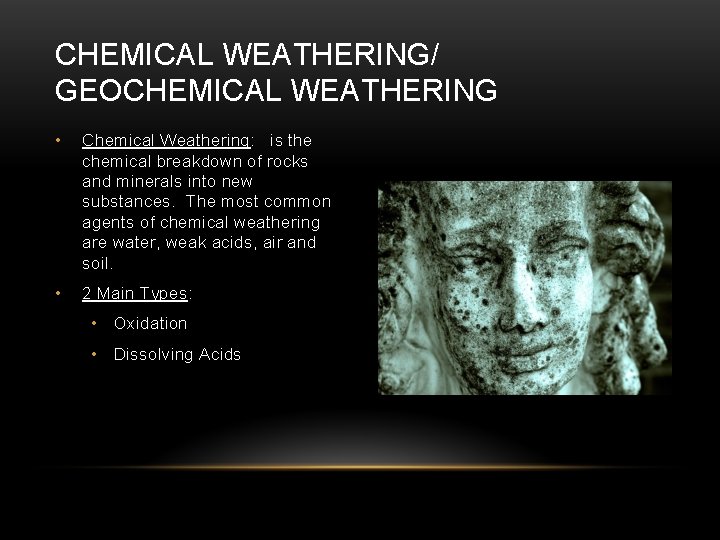
CHEMICAL WEATHERING/ GEOCHEMICAL WEATHERING • Chemical Weathering: is the chemical breakdown of rocks and minerals into new substances. The most common agents of chemical weathering are water, weak acids, air and soil. • 2 Main Types: • Oxidation • Dissolving Acids
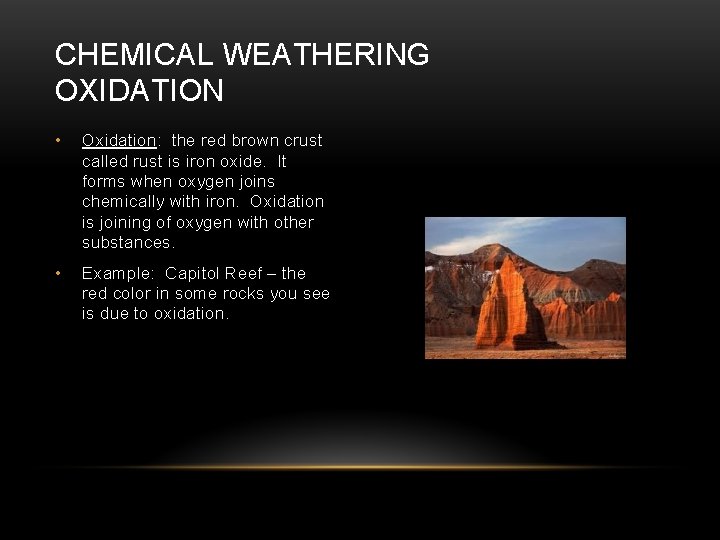
CHEMICAL WEATHERING OXIDATION • Oxidation: the red brown crust called rust is iron oxide. It forms when oxygen joins chemically with iron. Oxidation is joining of oxygen with other substances. • Example: Capitol Reef – the red color in some rocks you see is due to oxidation.
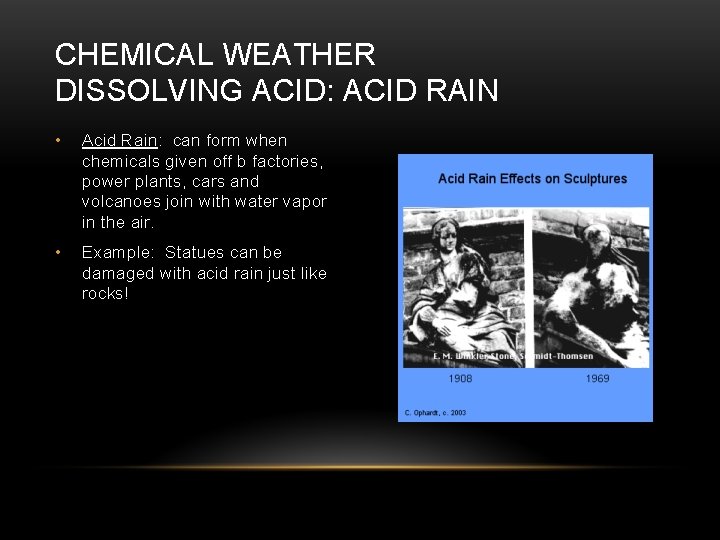
CHEMICAL WEATHER DISSOLVING ACID: ACID RAIN • Acid Rain: can form when chemicals given off b factories, power plants, cars and volcanoes join with water vapor in the air. • Example: Statues can be damaged with acid rain just like rocks!
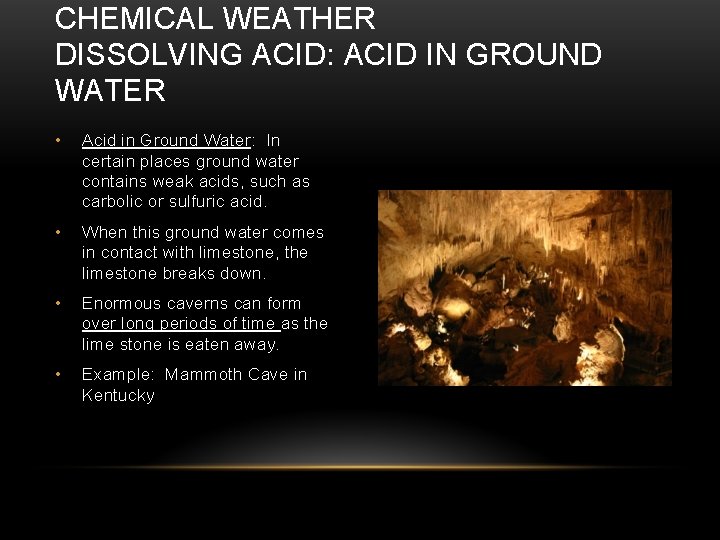
CHEMICAL WEATHER DISSOLVING ACID: ACID IN GROUND WATER • Acid in Ground Water: In certain places ground water contains weak acids, such as carbolic or sulfuric acid. • When this ground water comes in contact with limestone, the limestone breaks down. • Enormous caverns can form over long periods of time as the lime stone is eaten away. • Example: Mammoth Cave in Kentucky
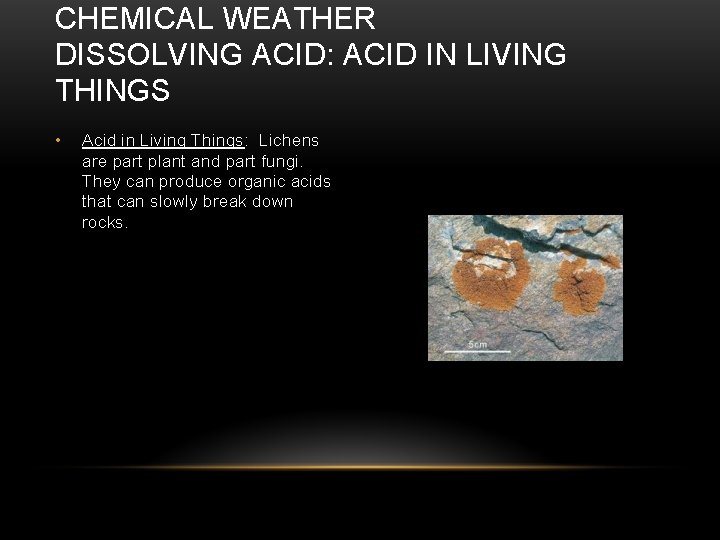
CHEMICAL WEATHER DISSOLVING ACID: ACID IN LIVING THINGS • Acid in Living Things: Lichens are part plant and part fungi. They can produce organic acids that can slowly break down rocks.
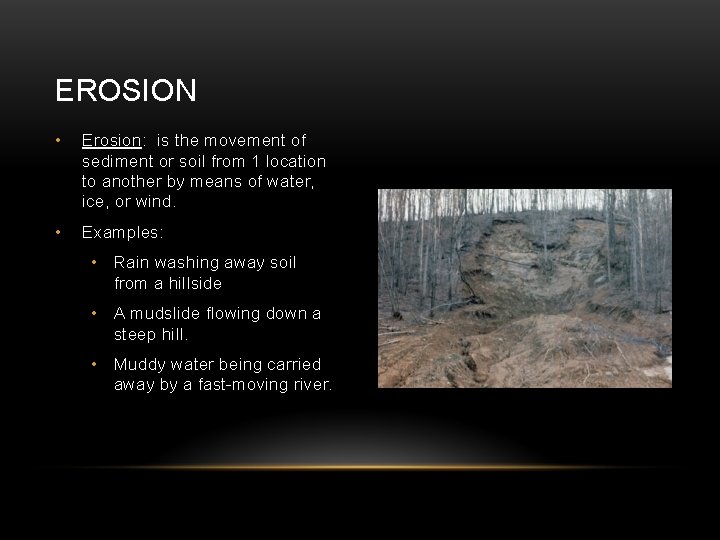
EROSION • Erosion: is the movement of sediment or soil from 1 location to another by means of water, ice, or wind. • Examples: • Rain washing away soil from a hillside • A mudslide flowing down a steep hill. • Muddy water being carried away by a fast-moving river.
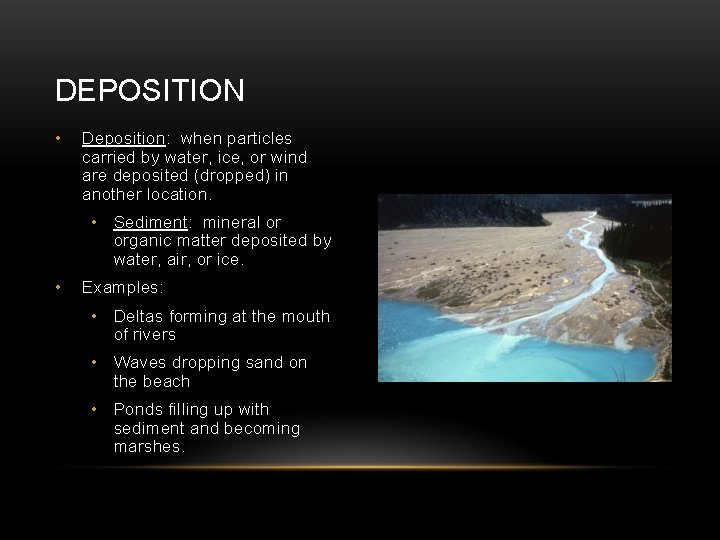
DEPOSITION • Deposition: when particles carried by water, ice, or wind are deposited (dropped) in another location. • Sediment: mineral or organic matter deposited by water, air, or ice. • Examples: • Deltas forming at the mouth of rivers • Waves dropping sand on the beach • Ponds filling up with sediment and becoming marshes.