
Webinar Series 3 May 2017 00 AM UTCGMT
Webinar Series 3 May 2017: 00 AM UTC/GMT Dialogue+: Students learning about assessment in first year Presenters: Dr Rebecca Westrup (University of East Anglia, UK) and Prof Sue Bloxham (University of Cumbria, UK) Your Webinar Hosts Professor Geoff Crisp, PVC Education, University of New South Wales g. crisp[at]unsw. edu. au Dr Mathew Hillier, Office of the Vice-Provost Learning & Teaching, Monash University mathew. hillier[at]monash. edu Just to let you know: By participating in the webinar you acknowledge and agree that: The session may be recorded, including voice and text chat communications (a recording indicator is shown inside the webinar room when this is the case). We may release recordings freely to the public which become part of the public record. We may use session recordings for quality improvement, or as part of further research and publications. e-Assessment SIG
Dialogue+: Promoting first year undergraduate students’ understanding of, and participation with assessment and feedback processes Professor Sue Bloxham Emeritus Professor of Academic Practice University of Cumbria Dr Rebecca Westrup Lecturer in Education University of East Anglia R. Westrup@uea. ac. uk @beccawestrup

Hello! Chair: Professor Sue Bloxham Dr Rebecca Westrup
Focus of the session… • Brief background to the project • What we did… • What we found… • Reflections and future conversations… • Identify how dialogue can be promoted in learning and teaching contexts • Generate discussion/questions to support reflections about curriculum and assessment and feedback design and • To identify any potential challenges
Why encourage dialogue in the assessment & feedback process? Bell Hooks (2010): ‘Conversation as a mode of interaction calls us to open our minds’ ‘How do you know what I would like feedback on so that I can use it in my next assignment? You’ve not asked me. ’
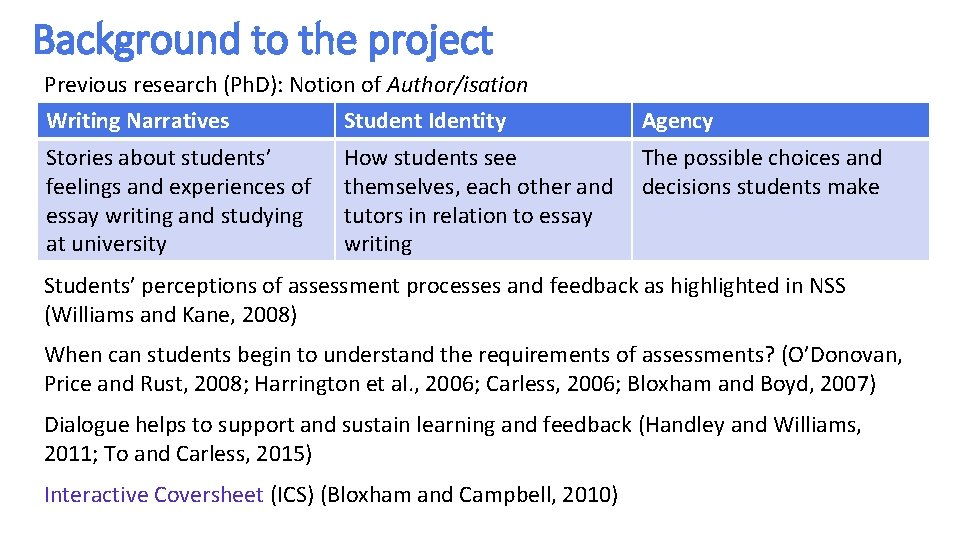
Background to the project Previous research (Ph. D): Notion of Author/isation Writing Narratives Student Identity Agency Stories about students’ feelings and experiences of essay writing and studying at university How students see themselves, each other and tutors in relation to essay writing The possible choices and decisions students make Students’ perceptions of assessment processes and feedback as highlighted in NSS (Williams and Kane, 2008) When can students begin to understand the requirements of assessments? (O’Donovan, Price and Rust, 2008; Harrington et al. , 2006; Carless, 2006; Bloxham and Boyd, 2007) Dialogue helps to support and sustain learning and feedback (Handley and Williams, 2011; To and Carless, 2015) Interactive Coversheet (ICS) (Bloxham and Campbell, 2010)
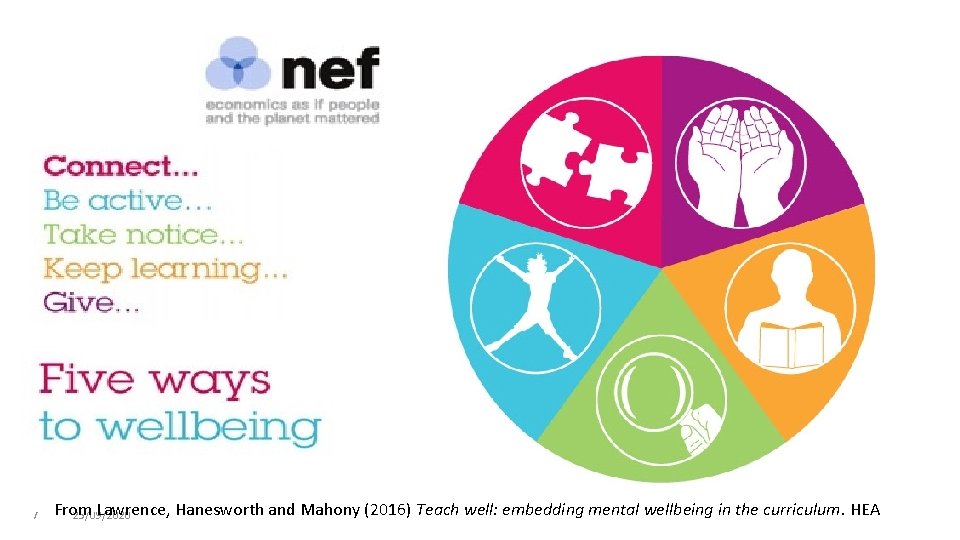
7 From Lawrence, Hanesworth and Mahony (2016) Teach well: embedding mental wellbeing in the curriculum. HEA 25/09/2020
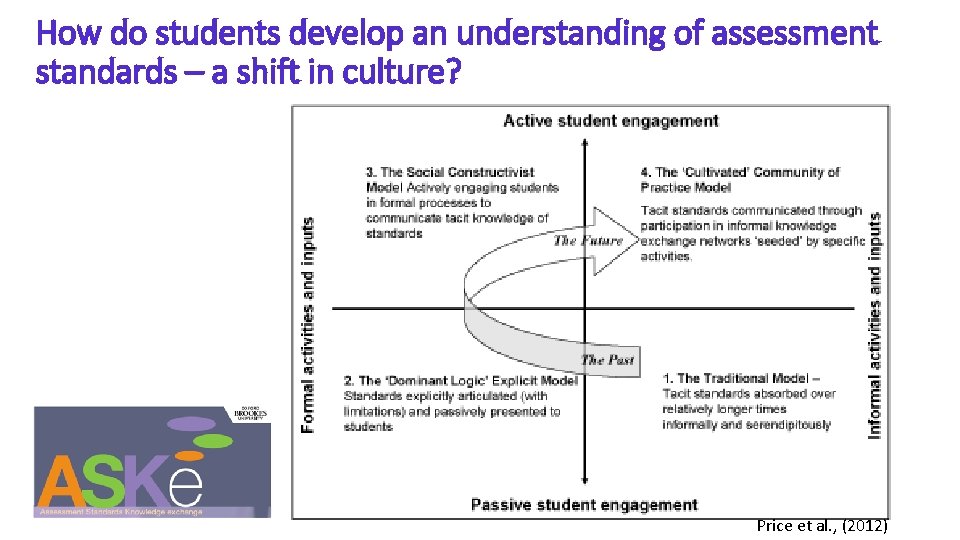
How do students develop an understanding of assessment standards – a shift in culture? Price et al. , (2012)
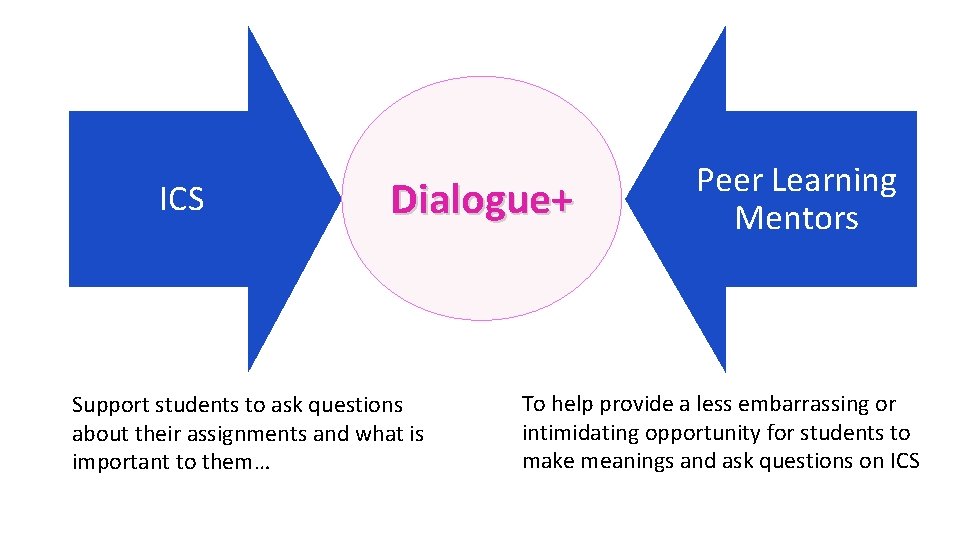
ICS Dialogue+ Support students to ask questions about their assignments and what is important to them… Peer Learning Mentors To help provide a less embarrassing or intimidating opportunity for students to make meanings and ask questions on ICS
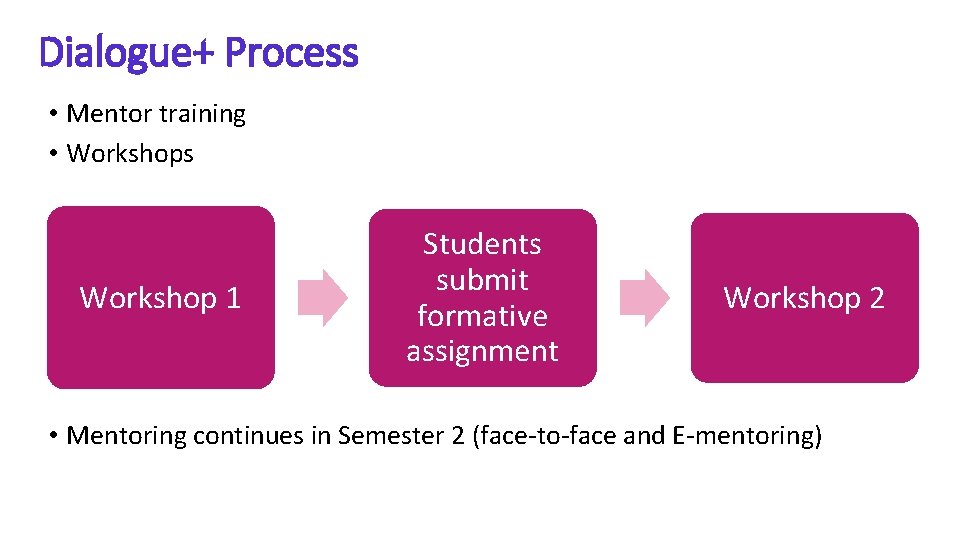
Dialogue+ Process • Mentor training • Workshops Workshop 1 Students submit formative assignment Workshop 2 • Mentoring continues in Semester 2 (face-to-face and E-mentoring)
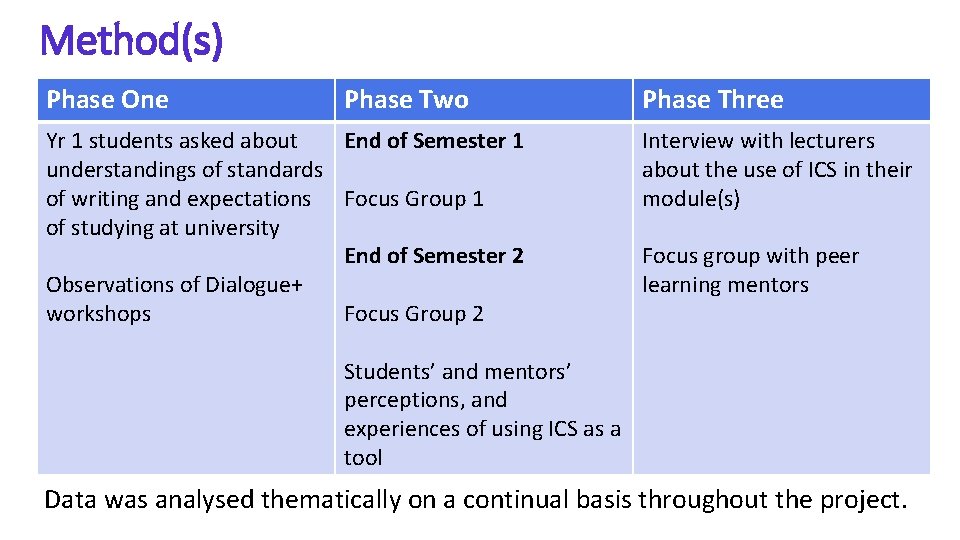
Method(s) Phase One Phase Two Yr 1 students asked about End of Semester 1 understandings of standards of writing and expectations Focus Group 1 of studying at university End of Semester 2 Observations of Dialogue+ workshops Focus Group 2 Phase Three Interview with lecturers about the use of ICS in their module(s) Focus group with peer learning mentors Students’ and mentors’ perceptions, and experiences of using ICS as a tool Data was analysed thematically on a continual basis throughout the project.
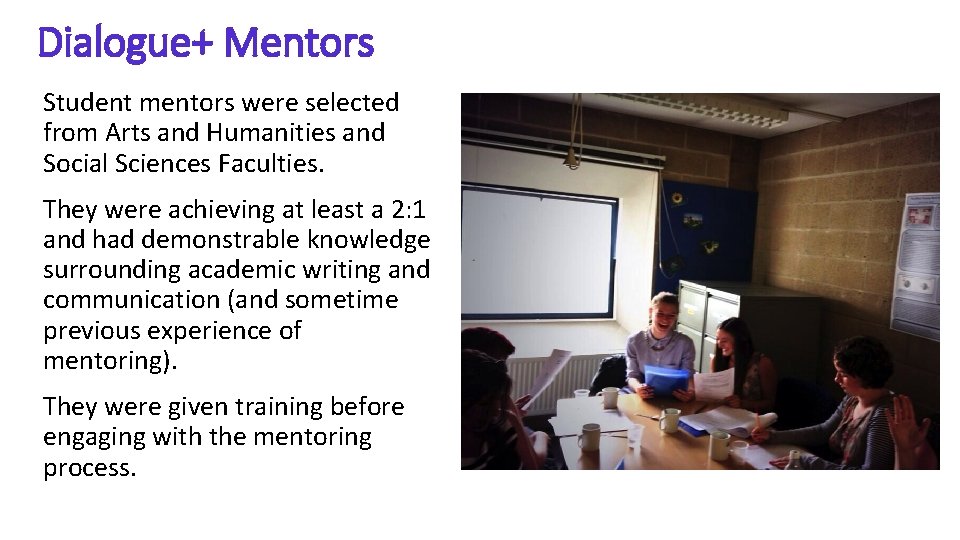
Dialogue+ Mentors Student mentors were selected from Arts and Humanities and Social Sciences Faculties. They were achieving at least a 2: 1 and had demonstrable knowledge surrounding academic writing and communication (and sometime previous experience of mentoring). They were given training before engaging with the mentoring process.
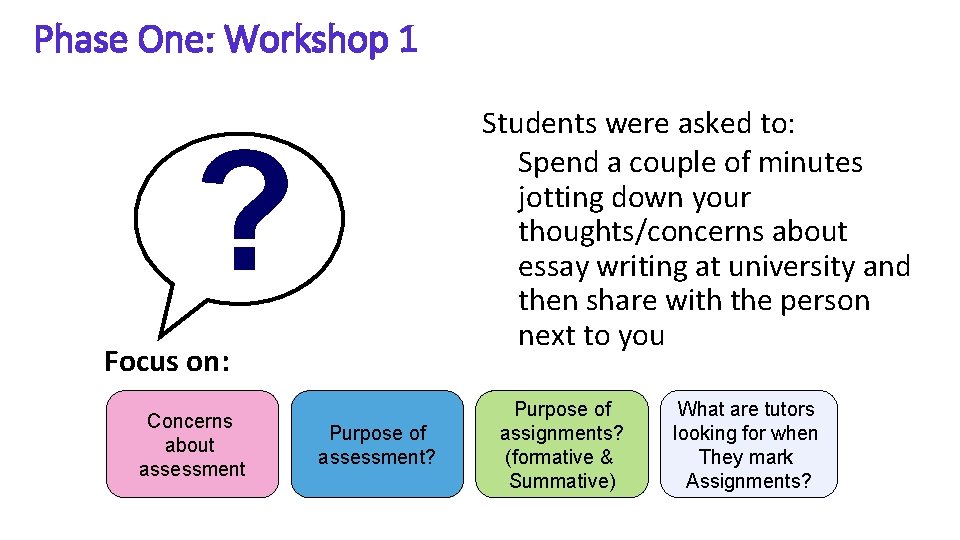
Phase One: Workshop 1 Students were asked to: Spend a couple of minutes jotting down your thoughts/concerns about essay writing at university and then share with the person next to you ? Focus on: Concerns about assessment Purpose of assessment? Purpose of assignments? (formative & Summative) What are tutors looking for when They mark Assignments?
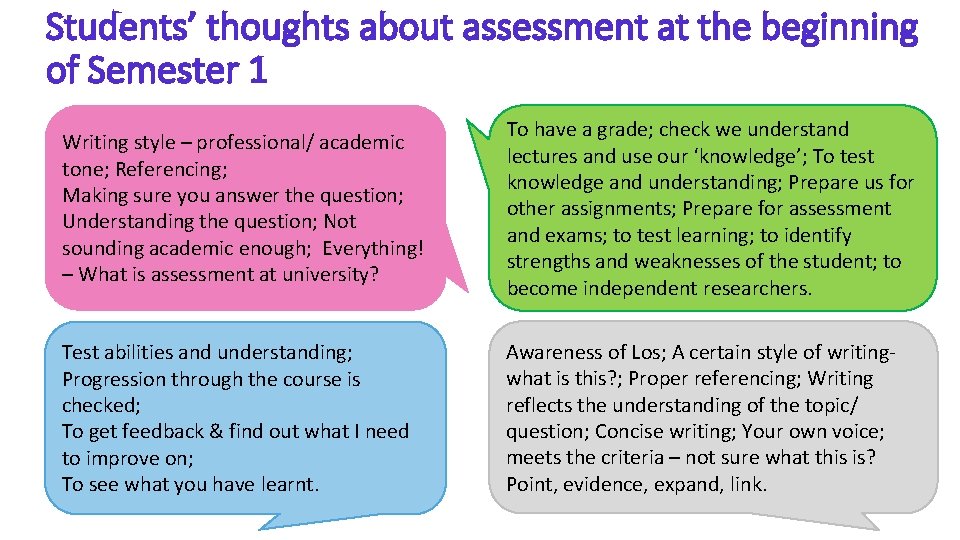
Students’ thoughts about assessment at the beginning of Semester 1 Writing style – professional/ academic tone; Referencing; Making sure you answer the question; Understanding the question; Not sounding academic enough; Everything! – What is assessment at university? To have a grade; check we understand lectures and use our ‘knowledge’; To test knowledge and understanding; Prepare us for other assignments; Prepare for assessment and exams; to test learning; to identify strengths and weaknesses of the student; to become independent researchers. Test abilities and understanding; Progression through the course is checked; To get feedback & find out what I need to improve on; To see what you have learnt. Awareness of Los; A certain style of writingwhat is this? ; Proper referencing; Writing reflects the understanding of the topic/ question; Concise writing; Your own voice; meets the criteria – not sure what this is? Point, evidence, expand, link.
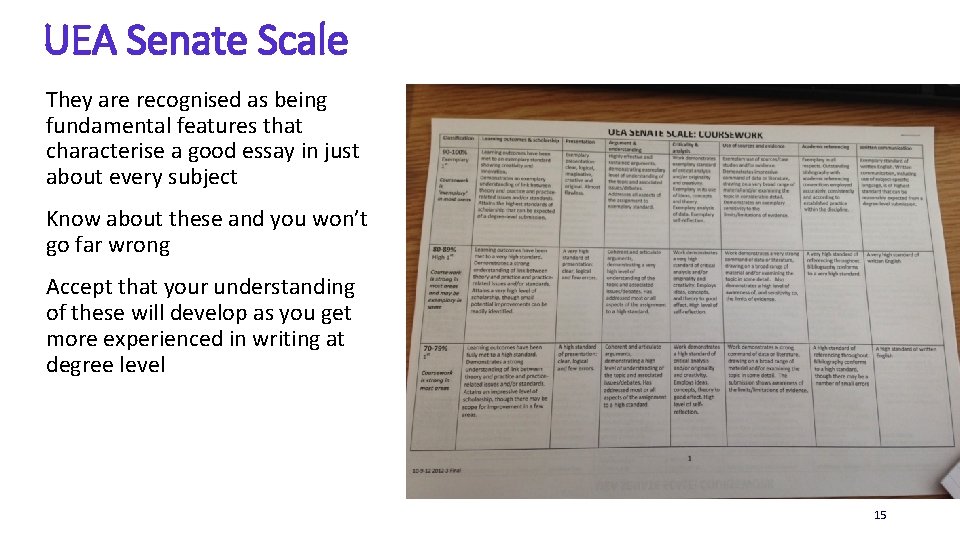
UEA Senate Scale They are recognised as being fundamental features that characterise a good essay in just about every subject Know about these and you won’t go far wrong Accept that your understanding of these will develop as you get more experienced in writing at degree level 15
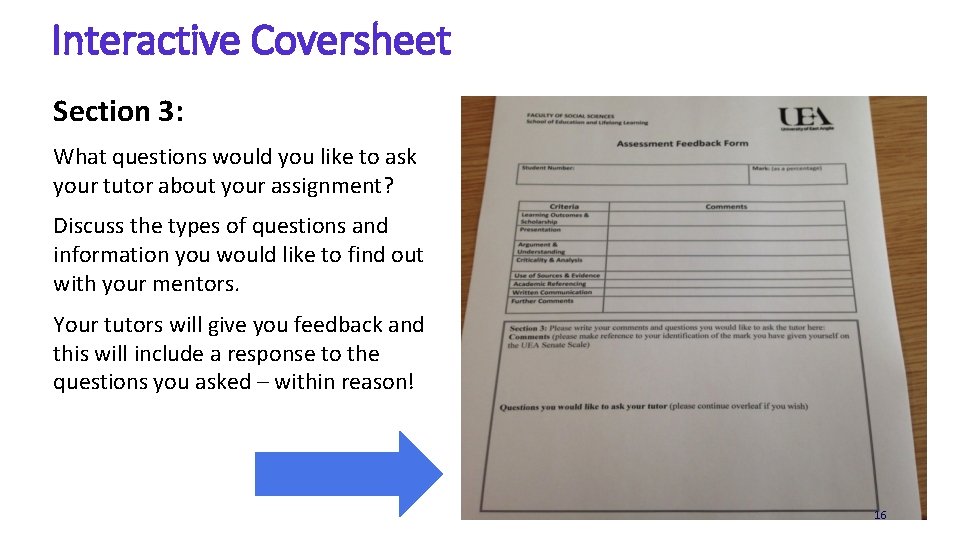
Interactive Coversheet Section 3: What questions would you like to ask your tutor about your assignment? Discuss the types of questions and information you would like to find out with your mentors. Your tutors will give you feedback and this will include a response to the questions you asked – within reason! 16
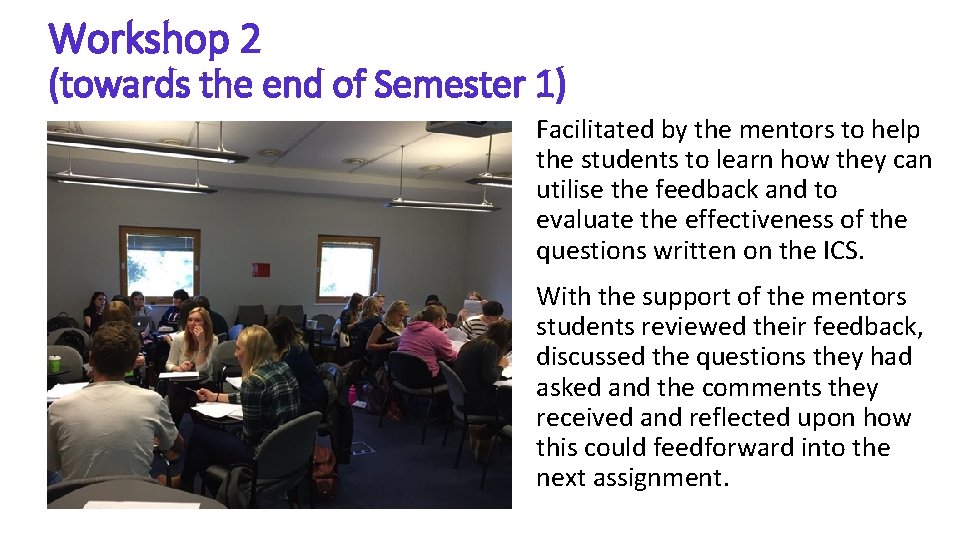
Workshop 2 (towards the end of Semester 1) Facilitated by the mentors to help the students to learn how they can utilise the feedback and to evaluate the effectiveness of the questions written on the ICS. With the support of the mentors students reviewed their feedback, discussed the questions they had asked and the comments they received and reflected upon how this could feedforward into the next assignment.
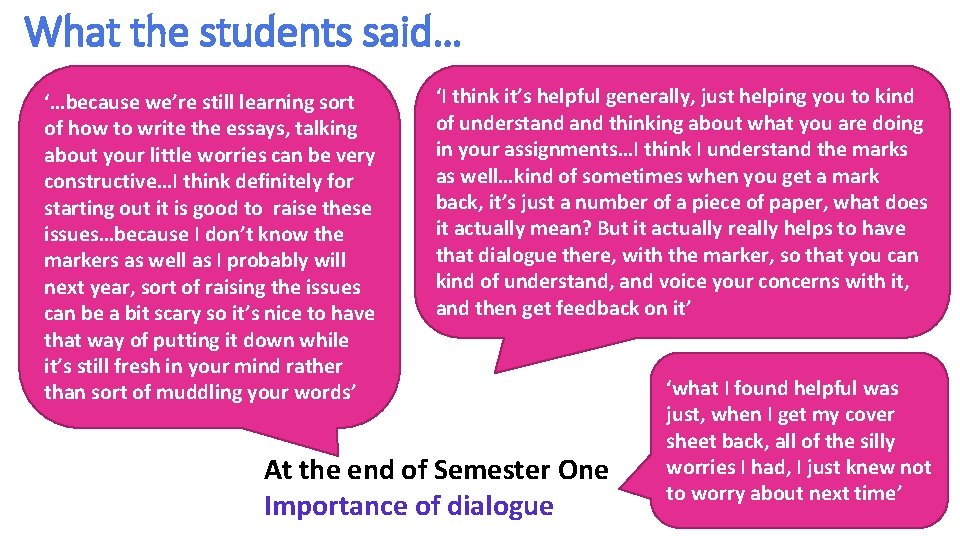
What the students said… ‘…because we’re still learning sort of how to write the essays, talking about your little worries can be very constructive…I think definitely for starting out it is good to raise these issues…because I don’t know the markers as well as I probably will next year, sort of raising the issues can be a bit scary so it’s nice to have that way of putting it down while it’s still fresh in your mind rather than sort of muddling your words’ ‘I think it’s helpful generally, just helping you to kind of understand thinking about what you are doing in your assignments…I think I understand the marks as well…kind of sometimes when you get a mark back, it’s just a number of a piece of paper, what does it actually mean? But it actually really helps to have that dialogue there, with the marker, so that you can kind of understand, and voice your concerns with it, and then get feedback on it’ At the end of Semester One Importance of dialogue ‘what I found helpful was just, when I get my cover sheet back, all of the silly worries I had, I just knew not to worry about next time’
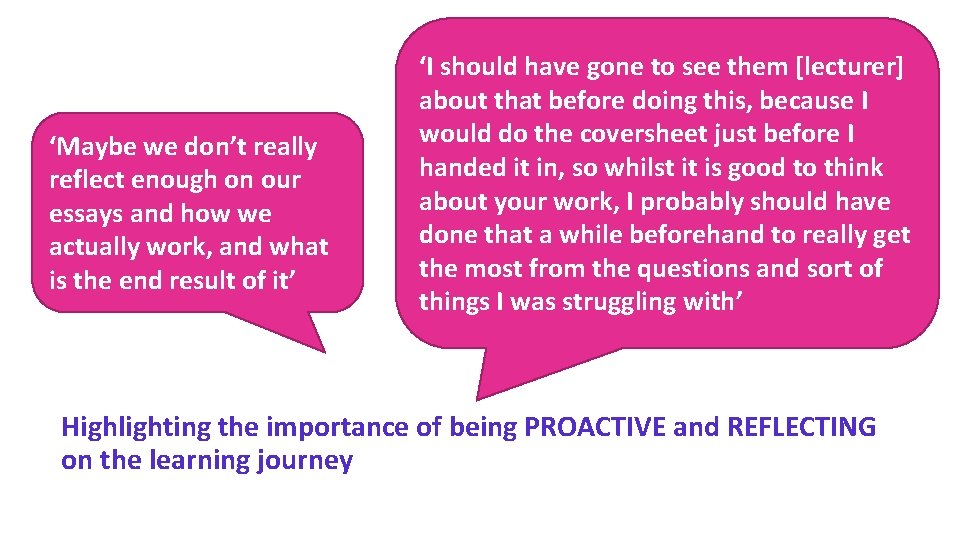
‘Maybe we don’t really reflect enough on our essays and how we actually work, and what is the end result of it’ ‘I should have gone to see them [lecturer] about that before doing this, because I would do the coversheet just before I handed it in, so whilst it is good to think about your work, I probably should have done that a while beforehand to really get the most from the questions and sort of things I was struggling with’ Highlighting the importance of being PROACTIVE and REFLECTING on the learning journey
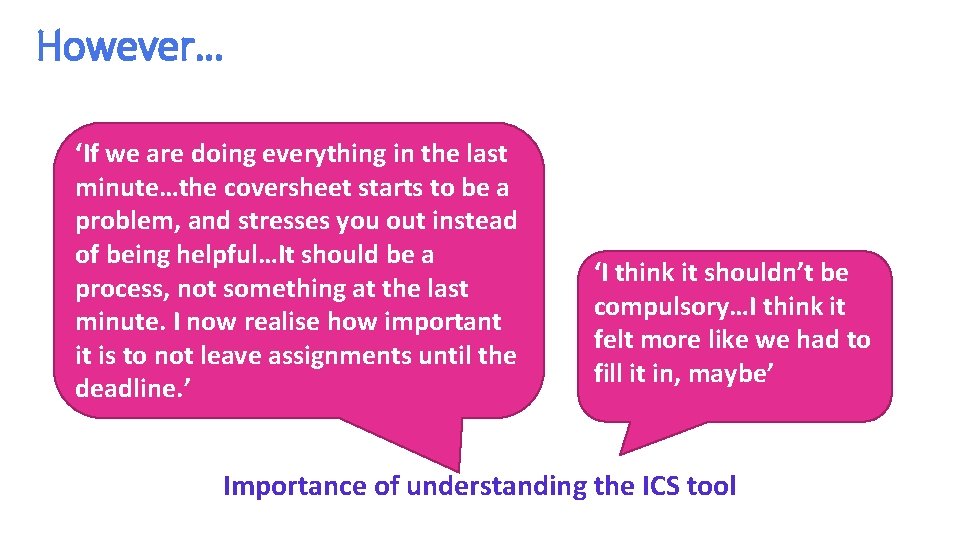
However… ‘If we are doing everything in the last minute…the coversheet starts to be a problem, and stresses you out instead of being helpful…It should be a process, not something at the last minute. I now realise how important it is to not leave assignments until the deadline. ’ ‘I think it shouldn’t be compulsory…I think it felt more like we had to fill it in, maybe’ Importance of understanding the ICS tool
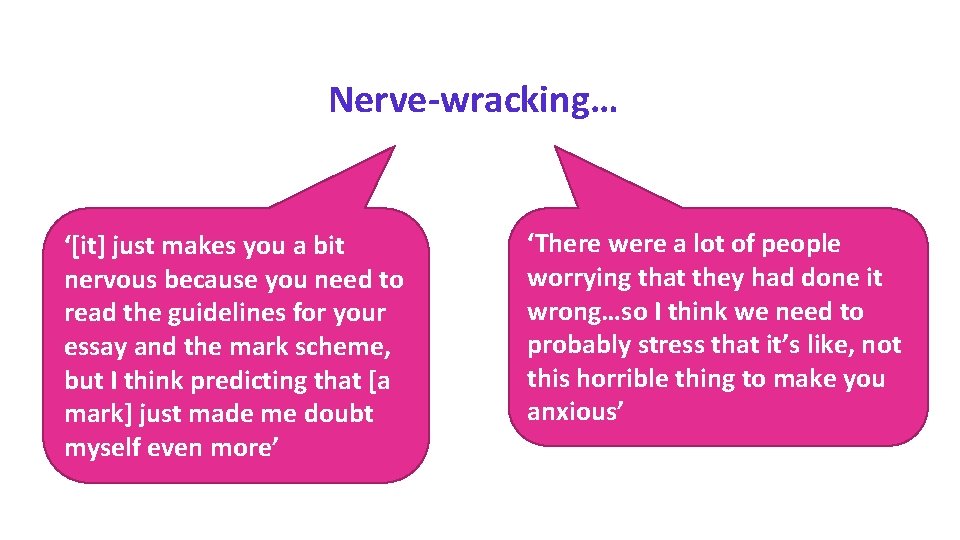
Nerve-wracking… ‘[it] just makes you a bit nervous because you need to read the guidelines for your essay and the mark scheme, but I think predicting that [a mark] just made me doubt myself even more’ ‘There were a lot of people worrying that they had done it wrong…so I think we need to probably stress that it’s like, not this horrible thing to make you anxious’
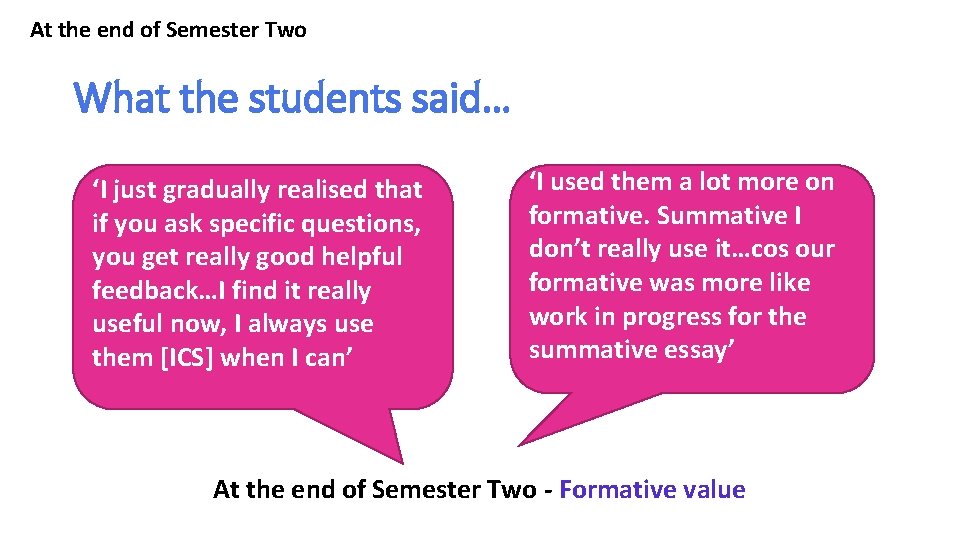
At the end of Semester Two What the students said… ‘I just gradually realised that if you ask specific questions, you get really good helpful feedback…I find it really useful now, I always use them [ICS] when I can’ ‘I used them a lot more on formative. Summative I don’t really use it…cos our formative was more like work in progress for the summative essay’ At the end of Semester Two - Formative value
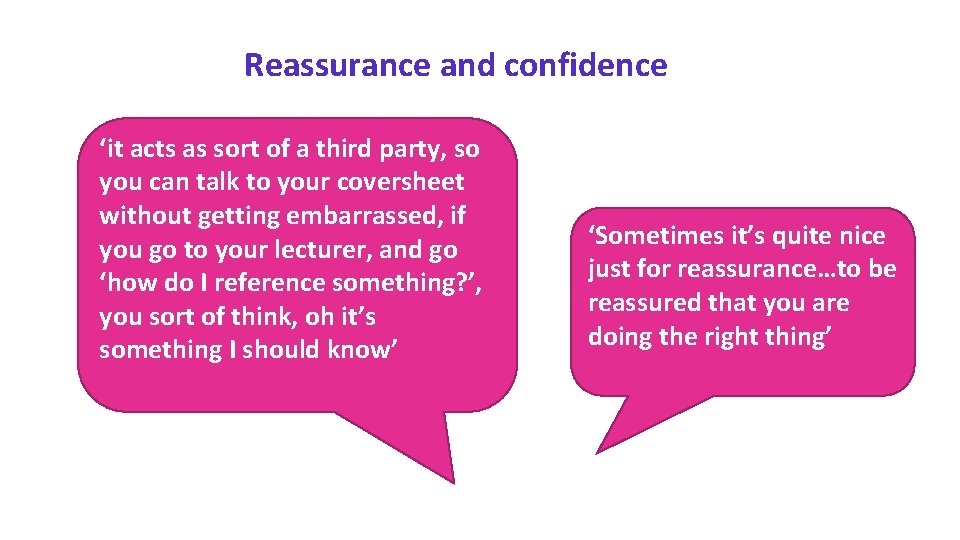
Reassurance and confidence ‘it acts as sort of a third party, so you can talk to your coversheet without getting embarrassed, if you go to your lecturer, and go ‘how do I reference something? ’, you sort of think, oh it’s something I should know’ ‘Sometimes it’s quite nice just for reassurance…to be reassured that you are doing the right thing’
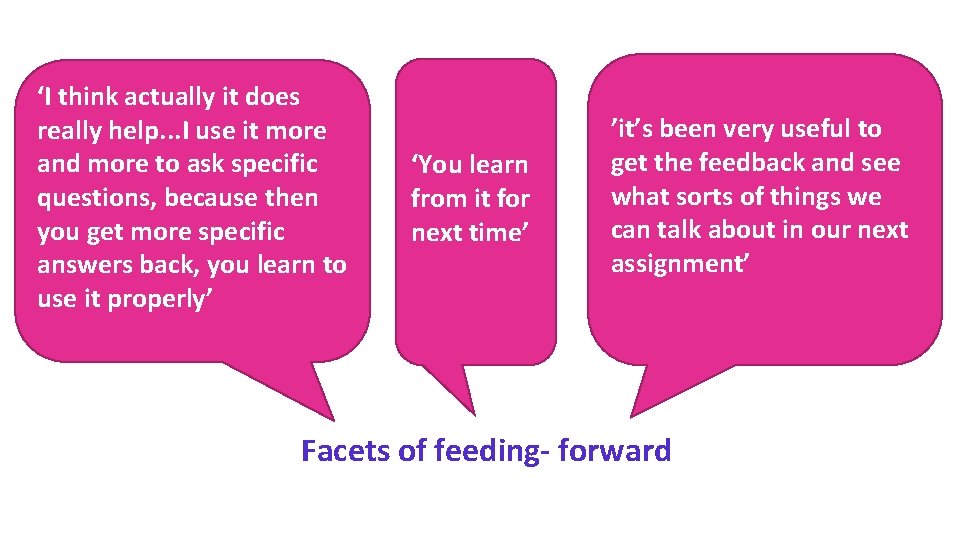
‘I think actually it does really help. . . I use it more and more to ask specific questions, because then you get more specific answers back, you learn to use it properly’ ‘You learn from it for next time’ ’it’s been very useful to get the feedback and see what sorts of things we can talk about in our next assignment’ Facets of feeding- forward
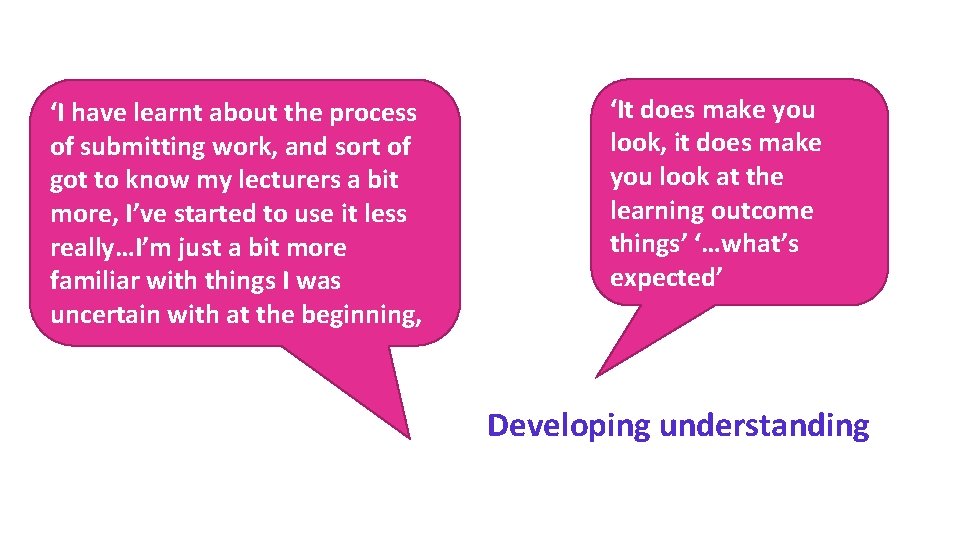
‘I have learnt about the process of submitting work, and sort of got to know my lecturers a bit more, I’ve started to use it less really…I’m just a bit more familiar with things I was uncertain with at the beginning, ‘It does make you look, it does make you look at the learning outcome things’ ‘…what’s expected’ Developing understanding
‘I think at the beginning I would go to a mentor first, but now that I am more used to it, I would go straight to the lecturer really. But the mentors were quite useful, you know, starting out…it’s reassuring…cos when we were sort of going through what questions we would ask on the coversheet, [mentor] was like “oh yes, I was unsure of this” and whatever and like talking about [their] own experiences and stuff like that’ ‘I think when you’re in your first year, you feel apprehensive like being the person going forward and saying “I want to talk to you”…[mentor] always made it so that [they are] around straight after our [module]…[they] would be there and we could ask anything’ The influence of mentoring
What the Lecturers said… ‘they’ve been encouraged to use it for every piece of submitted coursework, whether that be formative or summative, and we’ve had different experiences depending on which it is’ Lecturers found students approached and used the ICS in different ways depending on the assessment
A shift in the way students used ICS as a tool ‘it was a useful tool by which I could give them support and guidance. So in terms of the sorts of questions that they were actually putting on the forms…were structured in a way that I could actually do something positive to be able to help them. In the first semester, it was very generic in how they were using it. Could I have answered this better? Could I have chosen better examples? Whereas in the second semester I think when the students were more comfortable with it as a tool, but were also more comfortable in terms of what university demands of them, they were a bit more established here. They were able to make more of it as a tool which meant I could use it more effectively or use my response to it more effectively to help them’
A valuable tool? ‘the students, by actually thinking about and conceiving how they want to formulate a question about their work, in advance of coming for verbal feedback, would actually allow them to get more out of the feedback, and to actually control the feedback more. Because if not, we as markers sit down and say, this is the mark, these are the reasons for it and unless the student has obviously got questions in mind, it’s sometimes not until a few days afterwards that they actually come back to you and say, I didn’t quite understand what you were trying to get at here and yes. So, sometimes, because it takes time for them to absorb the feedback that they’re getting, what the ICS would allow them to do, I suppose, is to actually control that feedback process a little more, have more input into it… But that sort of demands that they are more skilled at using it than perhaps they are’.
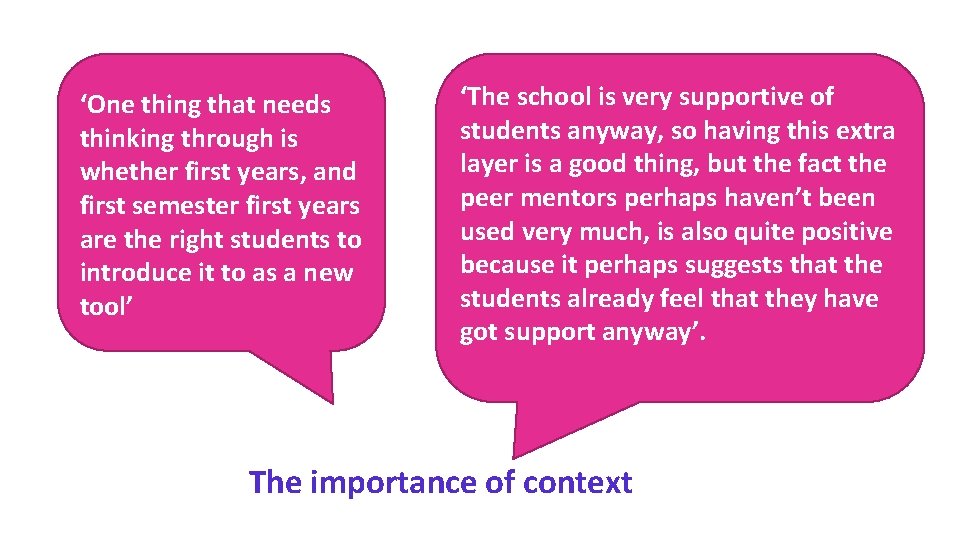
‘One thing that needs thinking through is whether first years, and first semester first years are the right students to introduce it to as a new tool’ ‘The school is very supportive of students anyway, so having this extra layer is a good thing, but the fact the peer mentors perhaps haven’t been used very much, is also quite positive because it perhaps suggests that the students already feel that they have got support anyway’. The importance of context
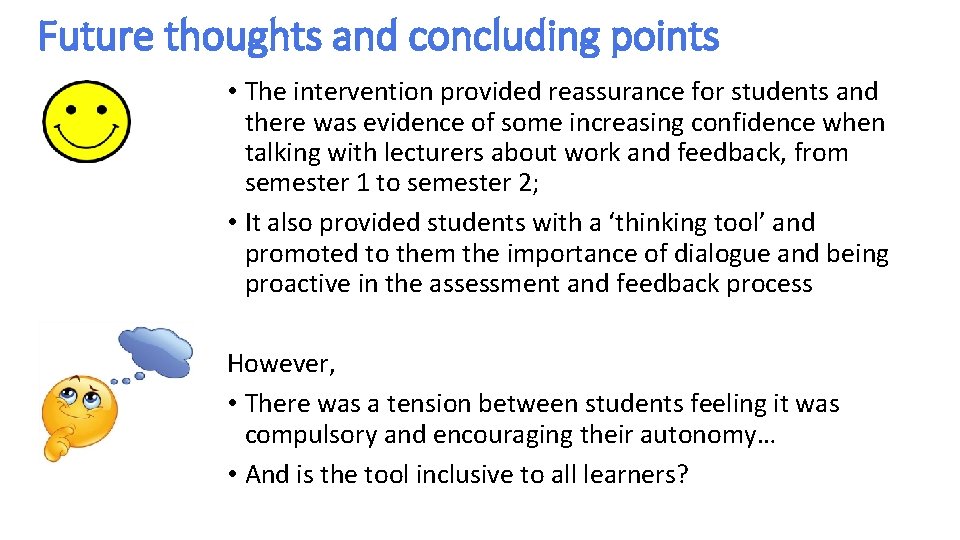
Future thoughts and concluding points • The intervention provided reassurance for students and there was evidence of some increasing confidence when talking with lecturers about work and feedback, from semester 1 to semester 2; • It also provided students with a ‘thinking tool’ and promoted to them the importance of dialogue and being proactive in the assessment and feedback process However, • There was a tension between students feeling it was compulsory and encouraging their autonomy… • And is the tool inclusive to all learners?
Do you have such a learning environment, or how can you create a learning environment in which dialogue can be enhanced and learning communities can thrive? • What opportunities are there for engagement in dialogue about formative and summative feedback (peer and/or teacher -learner) within your module or course? • To what extent, and in what ways are students given an opportunity to discuss how to learn from feedback, and to act on it? • To what extent are feedback practices inclusive to all learners?
The future? . . • Can you envisage the future where more dialogue is embedded within curriculum, assessment and feedback practices? • What does the learning process look like for the educator and learner? (Think about this in terms of short, medium and longer terms).
References/ Useful sources of info Bloxham, S. and Boyd, P. (2007) Developing effective assessment in higher education: a practical guide. Maidenhead: Open University Press. Bloxham, S. & Campbell, E. (2010) ‘Generating dialogue in assessment feedback: exploring the use of Interactive cover sheets’. Assessment and Evaluation in Higher Education Vol. 35 (3) pp. 291 — 300 Handley, K. & Williams, L. (2011) From copying to learning: using exemplars to engage students with assessment criteria and feedback. Assessment &Evaluation in Higher Education, 36: 1, pp. 95 -108 Hooks, B. (2010) Teaching Critical Thinking: Practical Wisdom. Routledge: London Hounsell, D. , Mc. Cune, V. , Hounsell, J. , & Litjens, J. (2008) ‘The Quality of Guidance and Feedback to Students’. Higher Education Research and Development, Vol. 27(1) pp. 55 -67
Nicol, D. (2010) ‘From monologue to dialogue: improving written feedback processes in mass higher education’, Assessment & Evaluation in Higher Education, 35(5), pp. 501 -517. O’Donovan, B. , Price, M. and Rust, C. (2008) ‘Developing student understanding of assessment standards: A nested hierarchy of approaches’. Teaching in Higher Education. Vol. 13 (2) pp. 205 -217 Price, M. , Rust, C. , O’Donovan, B. , Handley, K. , and Bryant, R. (2012) Assessment Literacy: The foundation for improving student learning. Oxford: ASKe, Oxford Centre for Staff and Learning Development. To, J. and Carless, D. (2015) ‘Making productive use of exemplars: Peer discussion and teacher guidance for positive transfer of strategies’, Journal of Further and Higher Education, 40(6), pp. 746 - 764. Williams, J. & Kane, D. (2008) Exploring the National Student Survey – Assessment and Feedback issues. Higher Education Academy: York
Thank you! Any questions? Rebecca Westrup R. Westrup@uea. ac. uk @beccawestrup
Webinar Series Webinar Session feedback: With thanks from your hosts Professor Geoff Crisp, PVC Education, University of New South Wales g. crisp[at]unsw. edu. au Dr Mathew Hillier, Office of the Vice-Provost Learning & Teaching Monash University mathew. hillier[at]monash. edu Recording available http: //transformingassessment. com e-Assessment SIG
- Slides: 37