
Webinar Motorcycletaxis in the Rural Context in SubSaharan
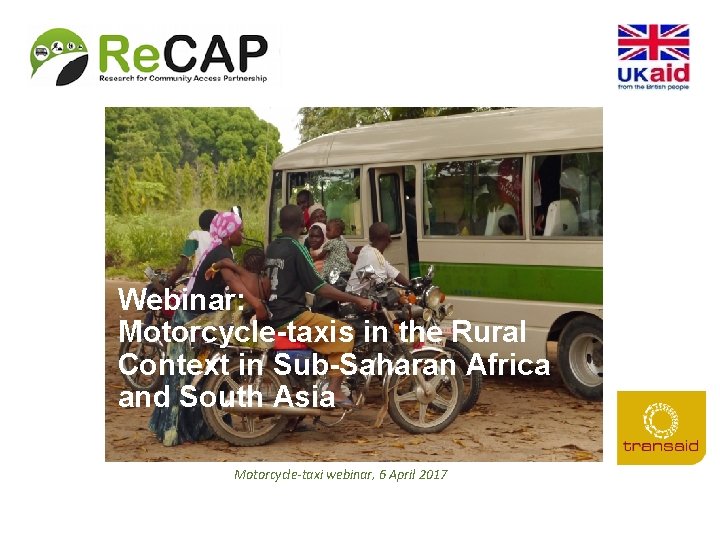
Webinar: Motorcycle-taxis in the Rural Context in Sub-Saharan Africa and South Asia Motorcycle-taxi webinar, 6 April 2017
Motorcycle taxis and Tanzania Leo Ngowi Surface and Marine Transport Regulatory Authority
Agenda • Overview of motorcycle taxis in Tanzania • Initiatives SUMATRA has been involved in • What still needs to be done in Tanzania? • Advice to other counties seeing an influx of bodas
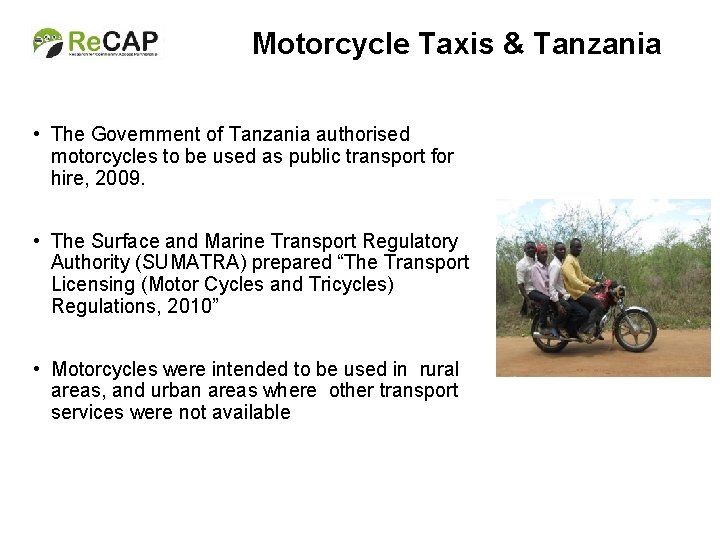
Motorcycle Taxis & Tanzania • The Government of Tanzania authorised motorcycles to be used as public transport for hire, 2009. • The Surface and Marine Transport Regulatory Authority (SUMATRA) prepared “The Transport Licensing (Motor Cycles and Tricycles) Regulations, 2010” • Motorcycles were intended to be used in rural areas, and urban areas where other transport services were not available
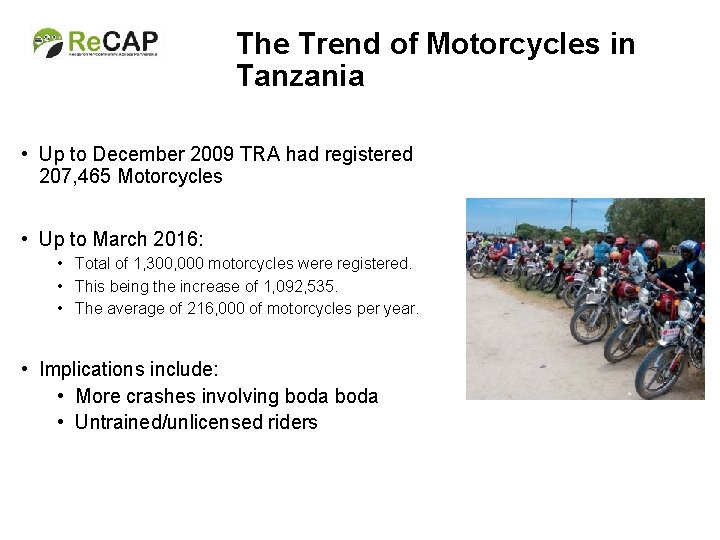
The Trend of Motorcycles in Tanzania • Up to December 2009 TRA had registered 207, 465 Motorcycles • Up to March 2016: • Total of 1, 300, 000 motorcycles were registered. • This being the increase of 1, 092, 535. • The average of 216, 000 of motorcycles per year. • Implications include: • More crashes involving boda • Untrained/unlicensed riders
Highs and Lows… • The highs • Provides flexible, convenient and often affordable means of transport • Provides jobs and economic opportunity • The lows • Hospital wing in Dar es Salaam dedicated to boda crash victims • A recent Amend study found that over 70% of all injuries suffered on rural roads [in Tanzania] involve a motorcycle and that as a result of their work, boda drivers have a 69% chance of being injured in any given year. To put this figure in perspective, that injury probability is more than 37 times higher than that of a motorcyclist in the UK’** • Poor riding skills and limited knowledge of road traffic act, regulations etc. **Amend, ‘Fact Sheet: Road Traffic Injury in Tanzania: Two Population-Based Studies’ (v. 1. 1, 29 May 2013)
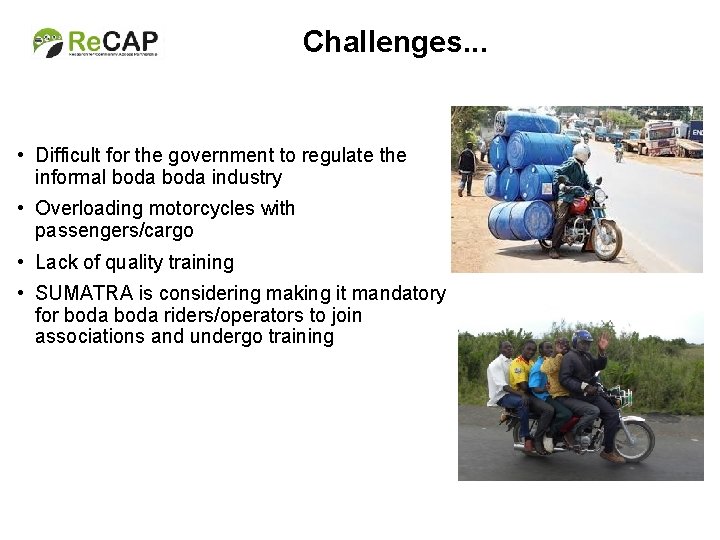
Challenges. . . • Difficult for the government to regulate the informal boda industry • Overloading motorcycles with passengers/cargo • Lack of quality training • SUMATRA is considering making it mandatory for boda riders/operators to join associations and undergo training
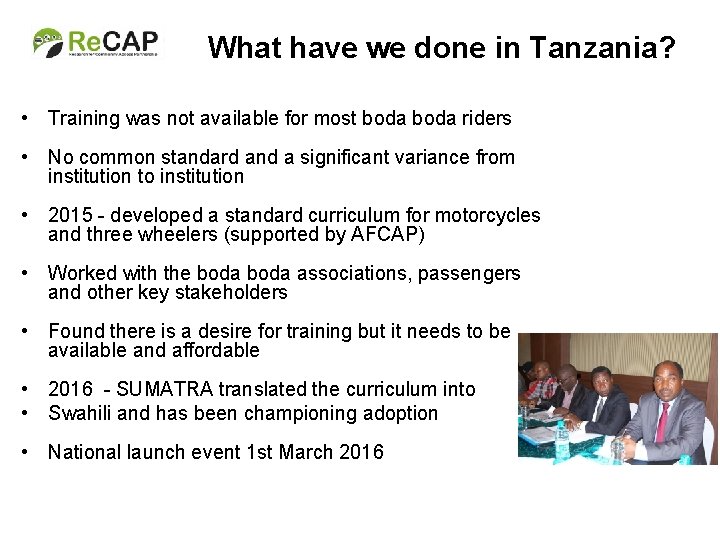
What have we done in Tanzania? • Training was not available for most boda riders • No common standard and a significant variance from institution to institution • 2015 - developed a standard curriculum for motorcycles and three wheelers (supported by AFCAP) • Worked with the boda associations, passengers and other key stakeholders • Found there is a desire for training but it needs to be available and affordable • 2016 - SUMATRA translated the curriculum into • Swahili and has been championing adoption • National launch event 1 st March 2016
Expected curriculum outcomes On completion of the training (as set out in curriculum), trainees should be able to: • Ride the motorcycle safely and responsibly • Carry passengers safely • Ensure the motorcycle is in a roadworthy condition • Comply with Road Traffic Acts and other road safety regulations, • Comply with all road signs, signals & markings, • Deliver good Customer Care
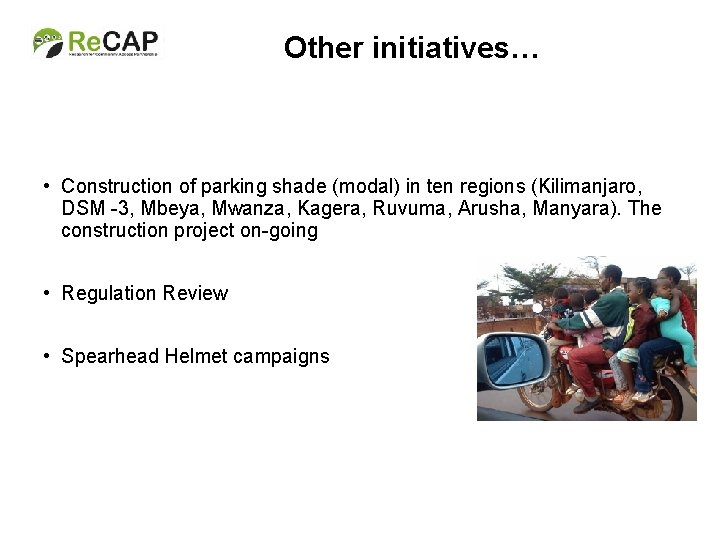
Other initiatives… • Construction of parking shade (modal) in ten regions (Kilimanjaro, DSM -3, Mbeya, Mwanza, Kagera, Ruvuma, Arusha, Manyara). The construction project on-going • Regulation Review • Spearhead Helmet campaigns
Advice to other countries seeing an influx of bodas The number of motorcycles in Africa is rising at an astonishing rate and there is a need to plan ahead… • Remember that bodas fill an important gap in the market – be careful not to over regulate • CONSULT with the public, associations, training schools and other stakeholders to find ‘win-win’ positions • Think about quality training - who can do it and where? • Can you mandate training and work with associations to make this enforceable? • Laws around helmets • How do you reach rural areas?
Helmet use - Myanmar motorcycle riders Felix Wilhelm Siebert Technical University of Berlin
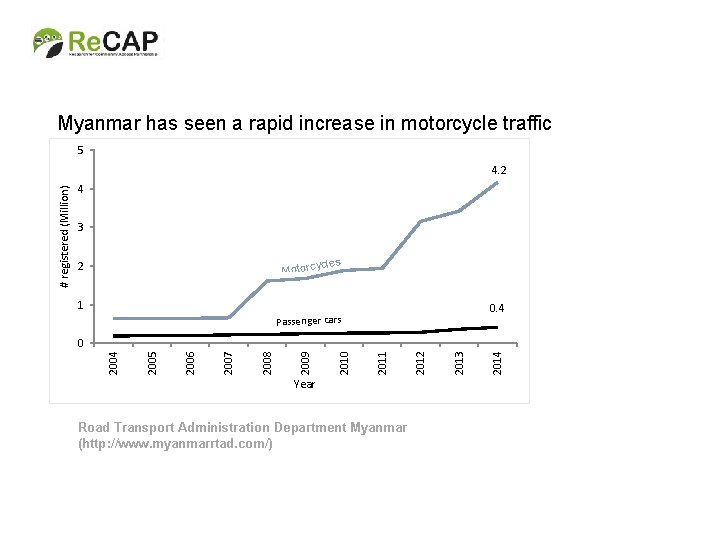
Myanmar has seen a rapid increase in motorcycle traffic 5 4 3 cles 2 Motorcy 1 0. 4 Passenger cars Year Road Transport Administration Department Myanmar (http: //www. myanmarrtad. com/) 2014 2013 2012 2011 2010 2009 2008 2007 2006 2005 0 2004 # registered (Million) 4. 2
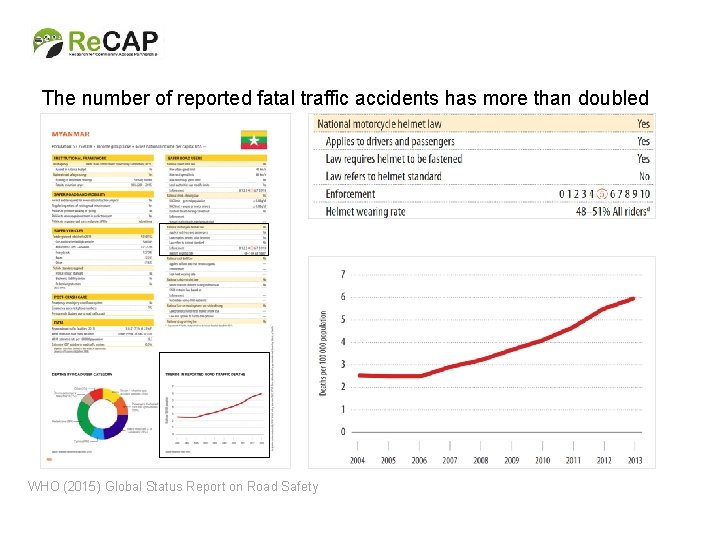
The number of reported fatal traffic accidents has more than doubled WHO (2015) Global Status Report on Road Safety
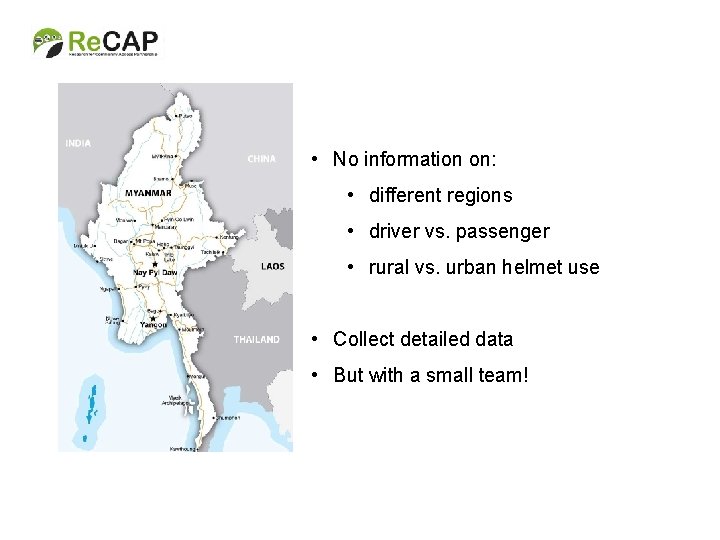
• No information on: • different regions • driver vs. passenger • rural vs. urban helmet use • Collect detailed data • But with a small team!
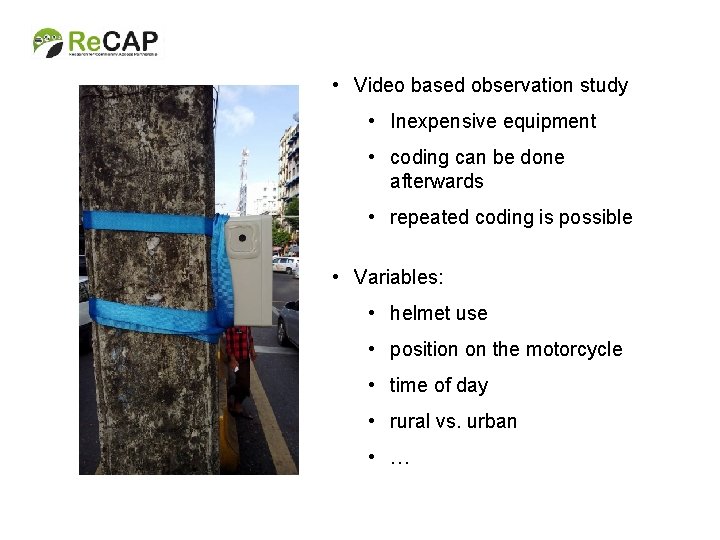
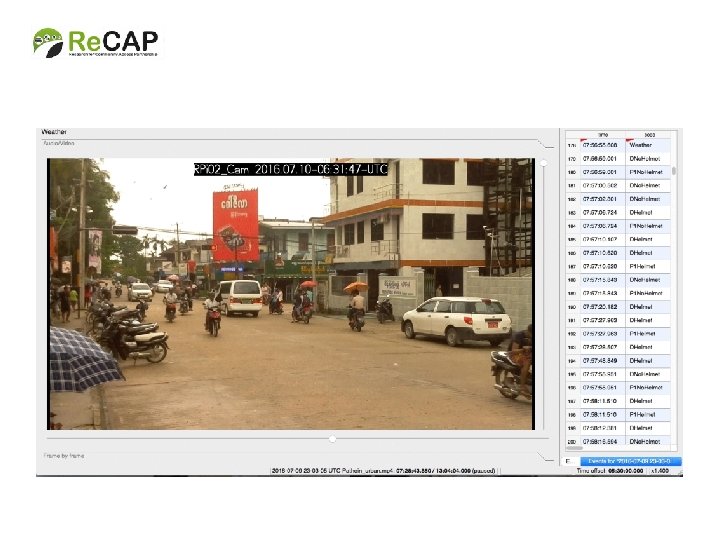
• Video based observation study • Inexpensive equipment • coding can be done afterwards • repeated coding is possible • Variables: • helmet use • position on the motorcycle • time of day • rural vs. urban • …
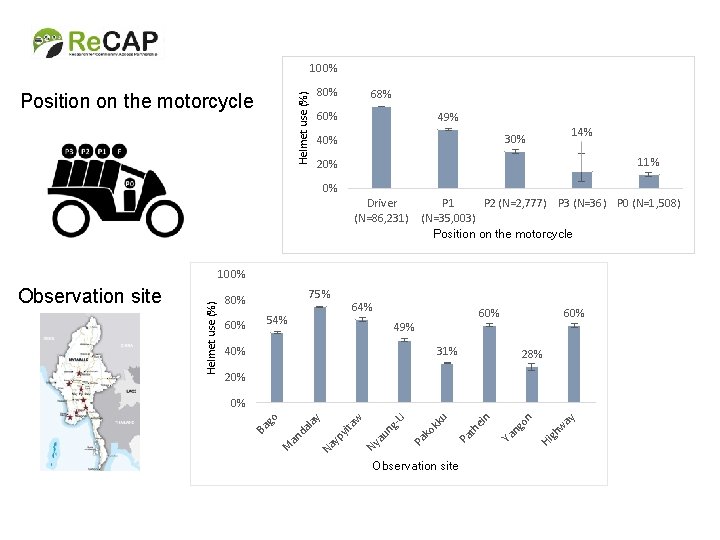
100% Helmet use (%) Position on the motorcycle 80% 68% 60% 49% 14% 30% 40% 11% 20% 0% Driver (N=86, 231) P 1 P 2 (N=2, 777) P 3 (N=36) P 0 (N=1, 508) (N=35, 003) Position on the motorcycle 75% 80% 64% 54% 60% 49% 31% 40% 28% 20% Observation site ay w gh Hi on Ya ng in Pa t he ku ok Pa k U Ny au n g- aw yit yp Na M an d al ay 0% Ba go Observation site Helmet use (%) 100%
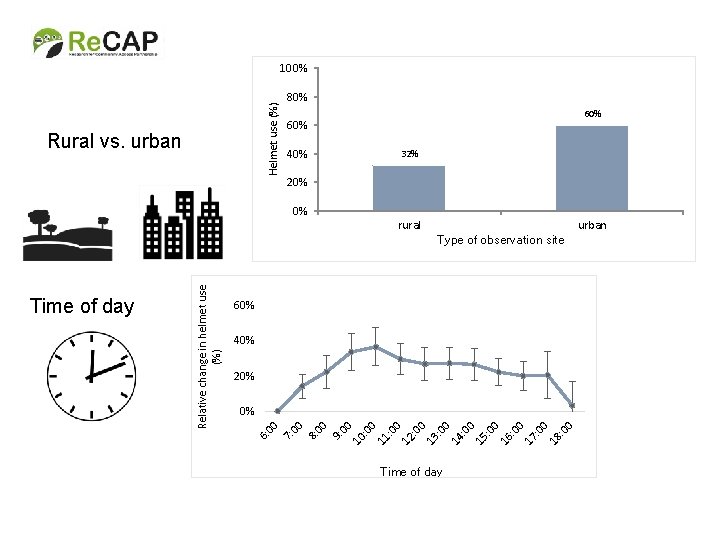
Time of day 0 0 : 0 18 : 0 0 17 16 : 0 15 0 0 : 0 14 : 0 13 0 0 0 40% : 0 12 : 0 11 : 0 10 00 9: 00 8: 00 Helmet use (%) Rural vs. urban 7: 00 6: Time of day Relative change in helmet use (%) 100% 80% 60% 32% 20% 0% rural urban Type of observation site 60% 40% 20% 0%
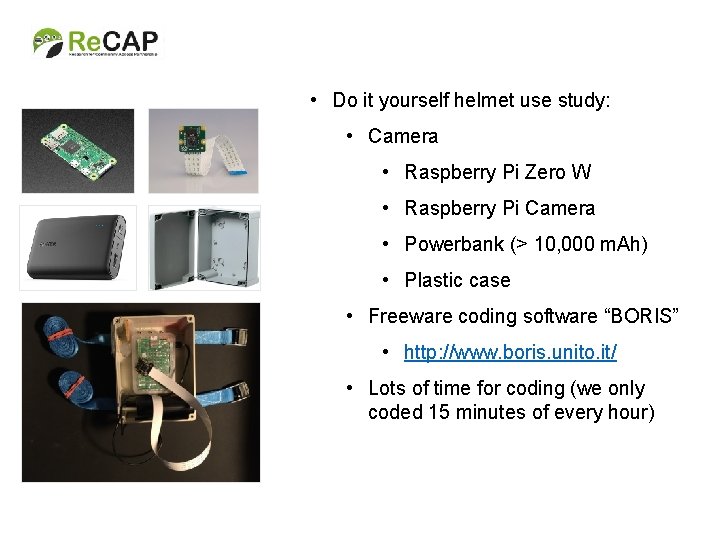
• Do it yourself helmet use study: • Camera • Raspberry Pi Zero W • Raspberry Pi Camera • Powerbank (> 10, 000 m. Ah) • Plastic case • Freeware coding software “BORIS” • http: //www. boris. unito. it/ • Lots of time for coding (we only coded 15 minutes of every hour)
Improving access to transport services using Bodas. Lessons from Eastern Uganda Elizabeth Ekirapa Kiracho Makerere University School of Public Health
Outline • Introduction and background • Brief experiences from 3 different transport programmes • Summary of lessons learned • Implications for programmes working with Bodas
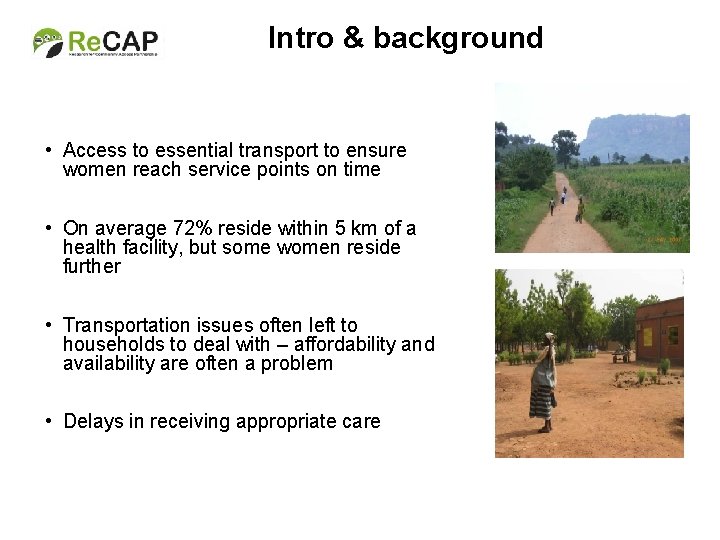
Intro & background • Access to essential transport to ensure women reach service points on time • On average 72% reside within 5 km of a health facility, but some women reside further • Transportation issues often left to households to deal with – affordability and availability are often a problem • Delays in receiving appropriate care
Main questions for today… • How did we engage the communities and transporters in providing transport services across the three different projects? • What lessons did we learn? • What are the implications of our work?
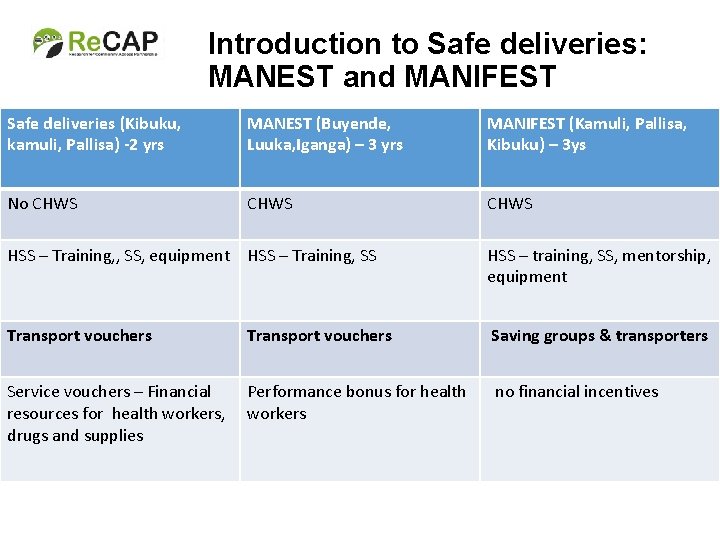
Introduction to Safe deliveries: MANEST and MANIFEST Safe deliveries (Kibuku, kamuli, Pallisa) -2 yrs MANEST (Buyende, Luuka, Iganga) – 3 yrs MANIFEST (Kamuli, Pallisa, Kibuku) – 3 ys No CHWS HSS – Training, , SS, equipment HSS – Training, SS HSS – training, SS, mentorship, equipment Transport vouchers Saving groups & transporters Service vouchers – Financial resources for health workers, drugs and supplies Performance bonus for health workers no financial incentives
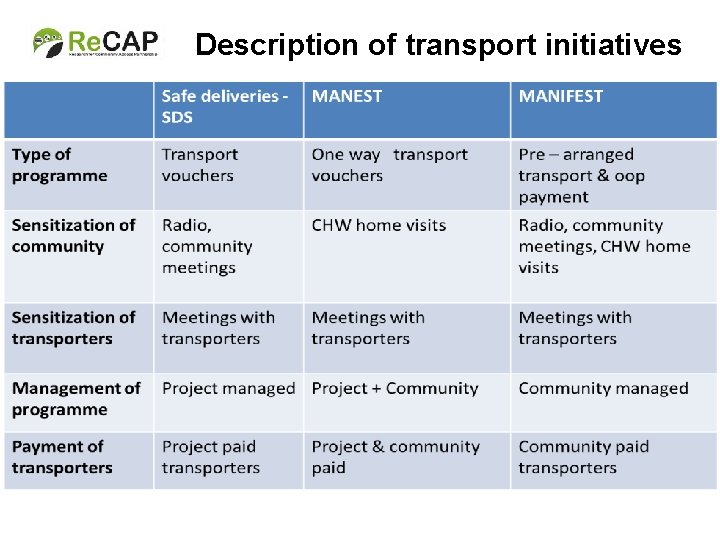
Description of transport initiatives
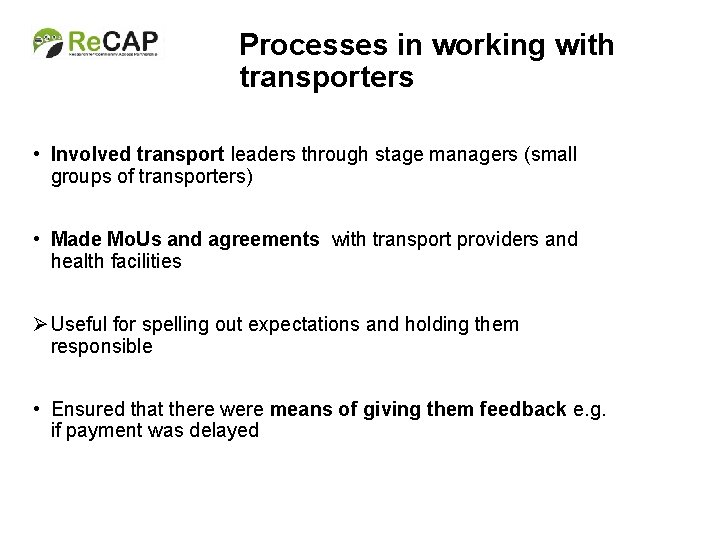
Processes in working with transporters • Involved transport leaders through stage managers (small groups of transporters) • Made Mo. Us and agreements with transport providers and health facilities Ø Useful for spelling out expectations and holding them responsible • Ensured that there were means of giving them feedback e. g. if payment was delayed
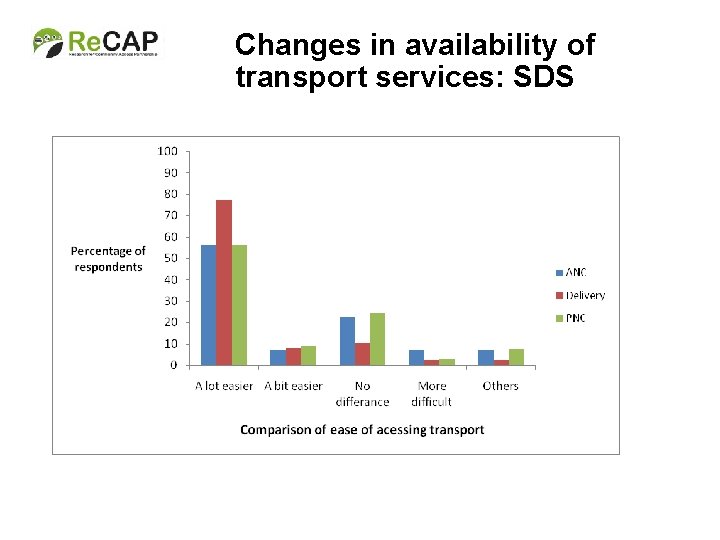
Changes in availability of transport services: SDS
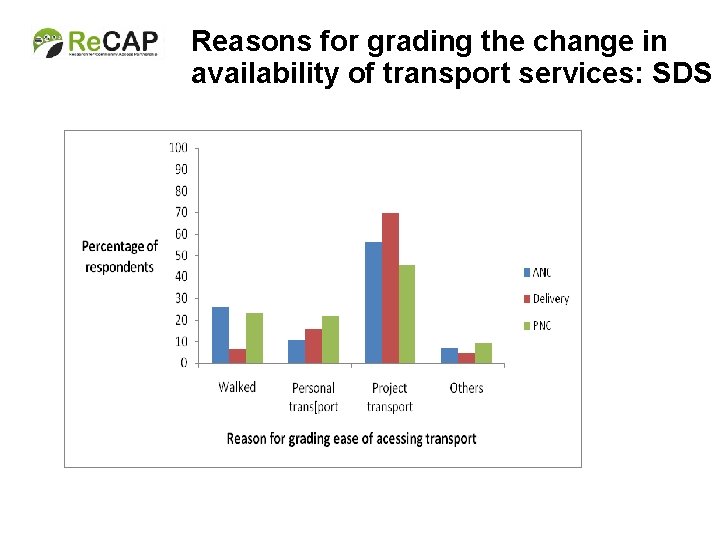
Reasons for grading the change in availability of transport services: SDS
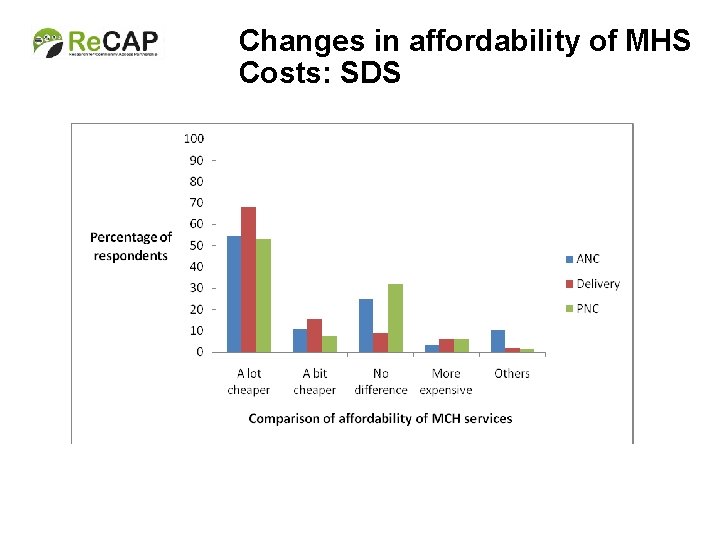
Changes in affordability of MHS Costs: SDS
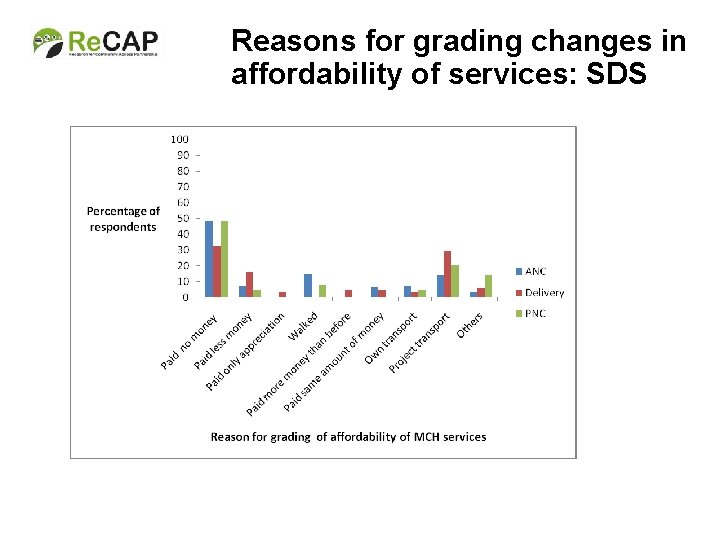
Reasons for grading changes in affordability of services: SDS
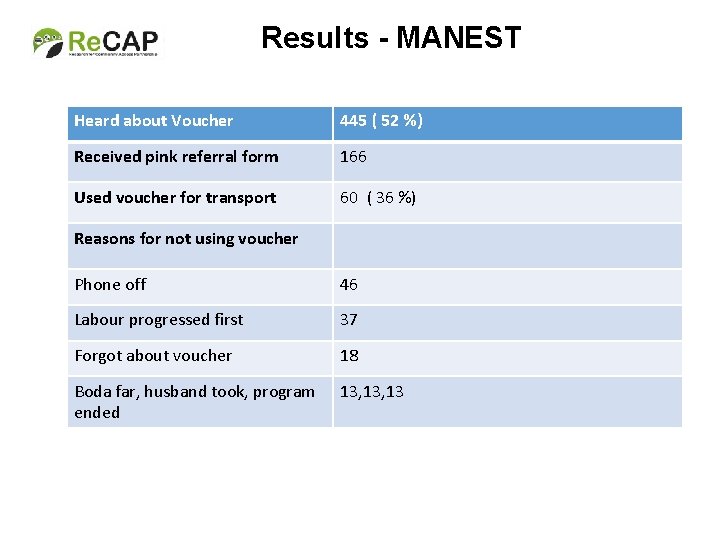
Results - MANEST Heard about Voucher 445 ( 52 %) Received pink referral form 166 Used voucher for transport 60 ( 36 %) Reasons for not using voucher Phone off 46 Labour progressed first 37 Forgot about voucher 18 Boda far, husband took, program ended 13, 13
Challenges • It was easier to engage transporters when financial benefits were high • Some villages had few transporters • Negotiating payment rates which keep changing • Issues of fraud likely to crop up if no checks and balances • Developing database for transport system to allow deeper analysis of key issues was difficult
Challenges cont. • Poor record keeping at some health facilities so verifying payment was difficult • Poor saving culture, poverty and dependence on government made it difficult for communities to contribute • Sustainability of vouchers was a challenge because of donor funding and external management • Inability to link Boda transport with motorised ambulances
Lessons learned • Transporters very active mobilisers can be useful advocates for maternal health • Transporters – engaging them is easy if they benefit and have organized leadership • Prompt payment is very important to the transporters, in the event of failure – regular communication about problem • Review of payment rates whenever there are local changes e. g. fuel prices • Multiple payment methods may be required
Lessons learned cont. • Creating awareness in the community about different types of transport arrangements is important and needs to be planned • Important to build trust between implementer and transporters, transporters and the community • Social networks are important for providing support for mothers to enable them access transport during delivery e. g. Bodas
Implications for Boda transport programmes • Community needs to benefit from services that they are trying to seek – health providers need to be engaged • Community needs to be sensitized about their role in contributing to transport costs and ensuring Bodas’ transport is safe – helmets, safe riding • Ensuring vulnerable people benefit– Boda men need to be sensitized about their social responsibility
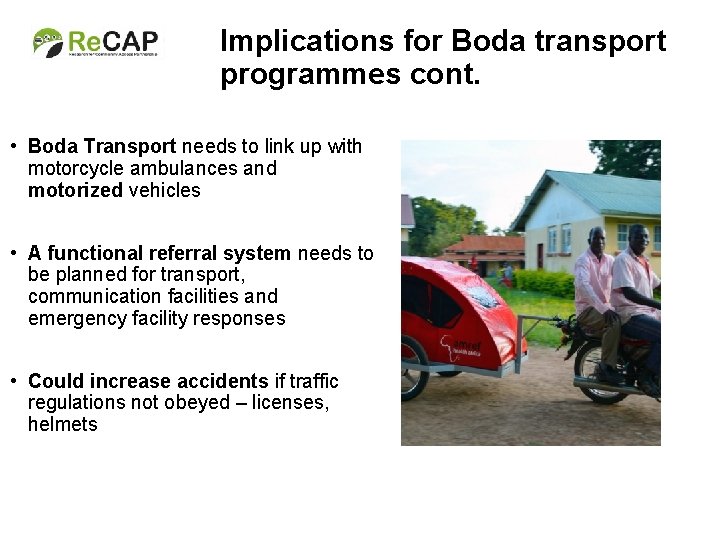
Implications for Boda transport programmes cont. • Boda Transport needs to link up with motorcycle ambulances and motorized vehicles • A functional referral system needs to be planned for transport, communication facilities and emergency facility responses • Could increase accidents if traffic regulations not obeyed – licenses, helmets
• Comic Relief • DFID • FHS partners • MAKSPH staff • District health team staff and political leaders from Kamuli, Iganga, Pallissa, Kibuku and Luuka

Questions for our Speakers – Moderator led
Technology/Innovation in Motorcycle transport in Kenya Grace Muhia
• Kenya has seen some great innovations around the motorcycle transport system. • According to Safaricom, Kenya has 67% smartphone penetration attributed to “a growing middle class that has increased the uptake of these types of phones”. • According to the Motorcycle Assembly Association of Kenya, bodas are an economic pillar with the sector generating 400 million a day. The sectors directly employs up to 100, 000 people and 14 million Kenyans ride bodas daily.
• This has in turn seen the upsurge of hail a boda apps in Kenya. These mobile apps have become very popular, i. e. Mondo, Little Rides and Safe Boda. • This has transformed the boda transport system as now the means of transport is a call away from your pick up point. • The sector has been termed as a chaotic transport system by many as it has been highly responsible for many road accidents due to inadequate regulations.
• Two brothers Joseph Muchene 27, and Charles Muchene founders of clad light have innovated wireless wearable technology for safer transportation to curb this “menace”. • The ‘Smart jacket’ for motorcycle riders has an inbuilt modified reflector. • The jackets are equipped with light-emitting diode indicators that will provide alerts to fellow motorists on directions e. g when they are about to take a turn and when they brake as well.
• The indicators also have an independent source of power that is controlled wirelessly and integrated into the motorcycle’s indication system with corresponding LED bars on the back of the jacket that light up, the riders are in a position to indicate unlike the usual hand use that risks the motorist’s stability. • For added functionality, the jacket is fitted with a GPS tracker that allows companies to keep track of riders. • The brothers have big dreams for their smart jacket, especially in a country where over 100 000 motorcycles ferry thousands of passengers every day.
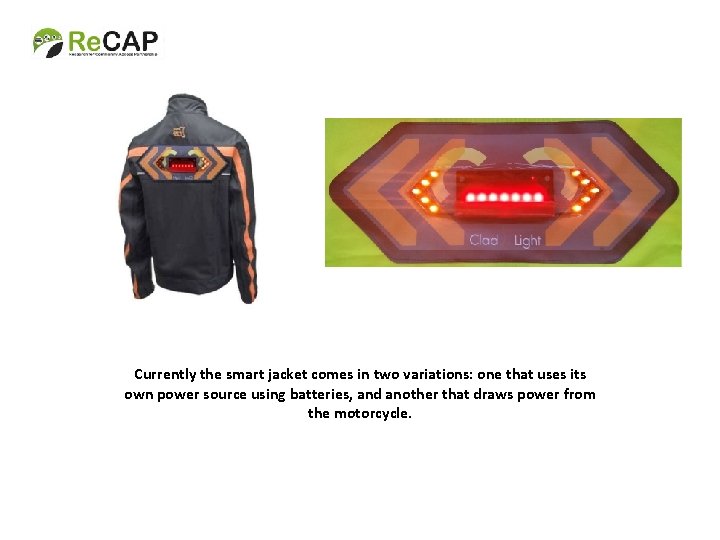
Currently the smart jacket comes in two variations: one that uses its own power source using batteries, and another that draws power from the motorcycle.

MODERATED Q & A SESSION – PLEASE JOIN THE DISCUSSION To ask questions or share your comments please use: - CHAT function (type your message and send to organisers) or - Raise your HAND (Click on the Hand symbol)

Thank you for joining the discussion www. research 4 cap. org Follow Re. CAP on:
- Slides: 48