
Webinar COVID19 Child Protection and the Health sector
Webinar: COVID-19, Child Protection and the Health sector Webinar Training March 11, 2020
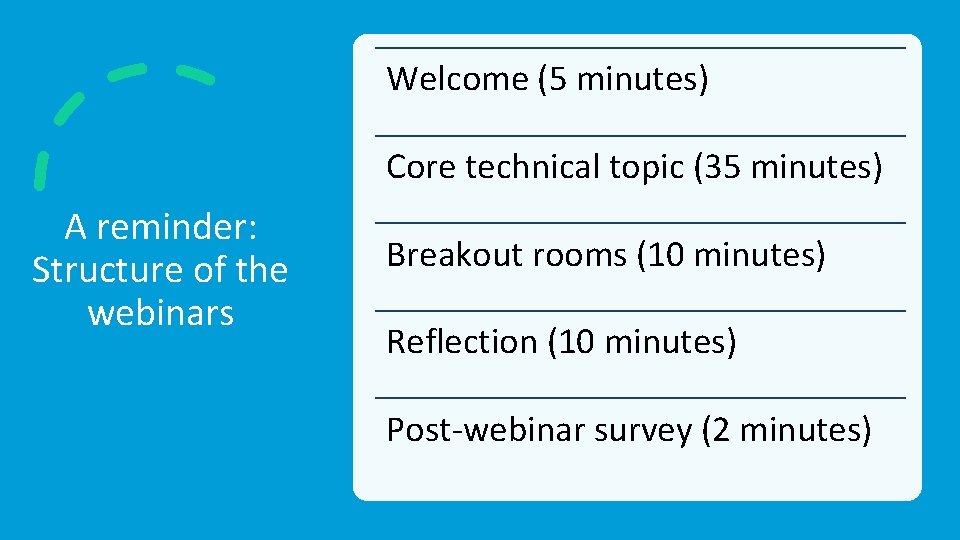
Welcome (5 minutes) Core technical topic (35 minutes) A reminder: Structure of the webinars Breakout rooms (10 minutes) Reflection (10 minutes) Post-webinar survey (2 minutes)
Outline of Session • Session 1: Welcome and Introduction • Session 2: COVID and the Health Sector • Session 3: How COVID-19 can quickly change the context in which children live • Session 4: How can the COVID-19 related child protection risks increase health risks • Session 5: Health issues that may increase protection risks • Session 6: How can the Health Sector and Social Sectors work together?
Overall objectives of the webinar Overall aim of the webinar: • To sensitize health workers on child protection issues during COVID-19 that may increase health risks • To identify priority child protection information and actions for the health sector in the context of COVID-19
Break out • What are some of the child protection issues that may be exacerbated during COVID-19? • Please respond in chat
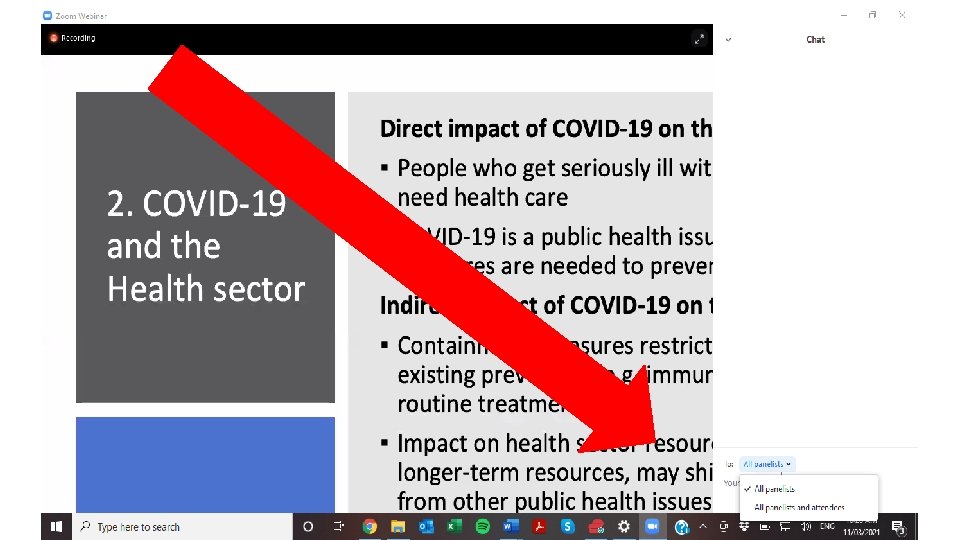
2. COVID-19 and the Health sector Direct impact of COVID-19 on the health sector ▪ People who get seriously ill with coronavirus need health care ▪ COVID-19 is a public health issue – public health measures are needed to prevent spread Indirect impact of COVID-19 on the health sector ▪ Containment measures restricting access for existing preventive (e. g. immunisation) and routine treatment ▪ Impact on health sector resources - may reduce longer-term resources, may shift focus away from other public health issues
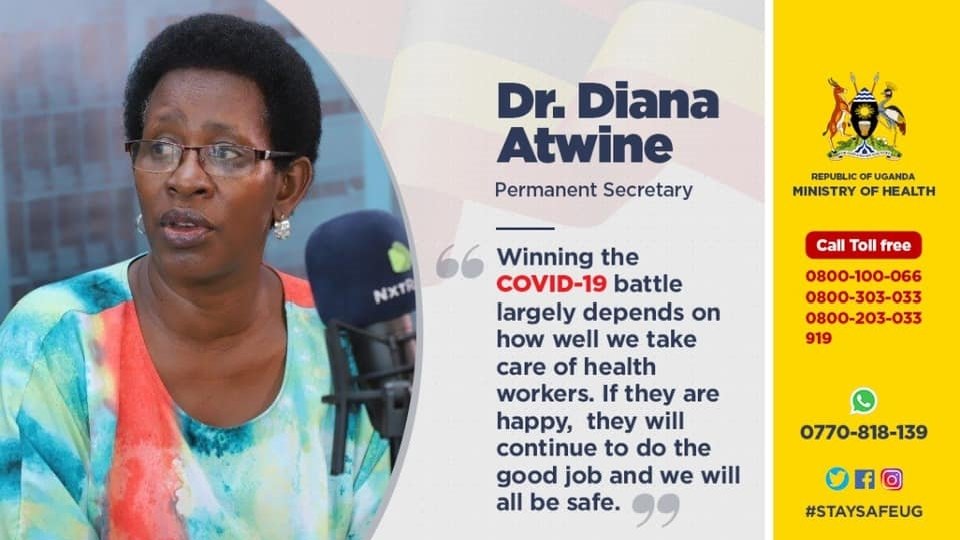
• Essential service workers • High infection rates • Lack of PPE and safe working environment • Long working hours and low compensation • Stress, anxiety, impact on psychosocial wellbeing Impact on Health care workers
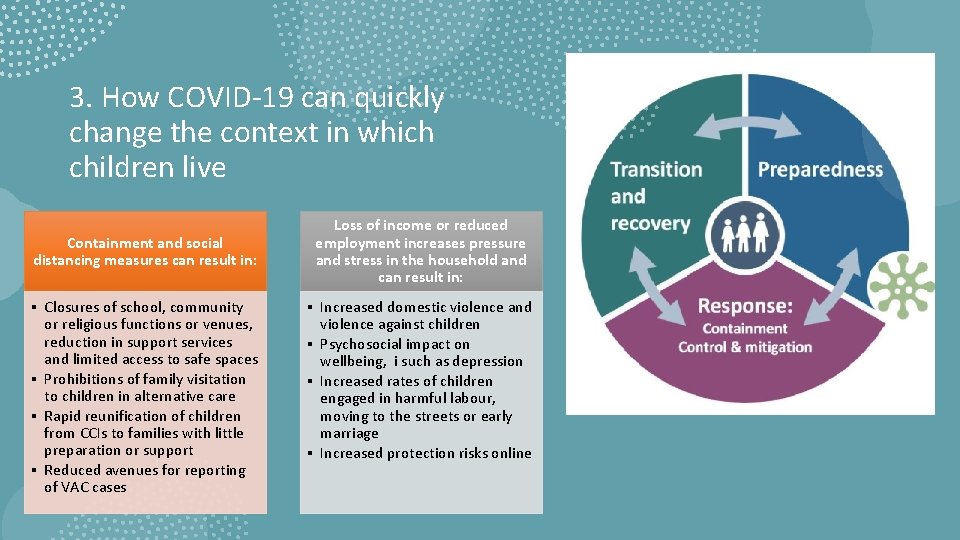
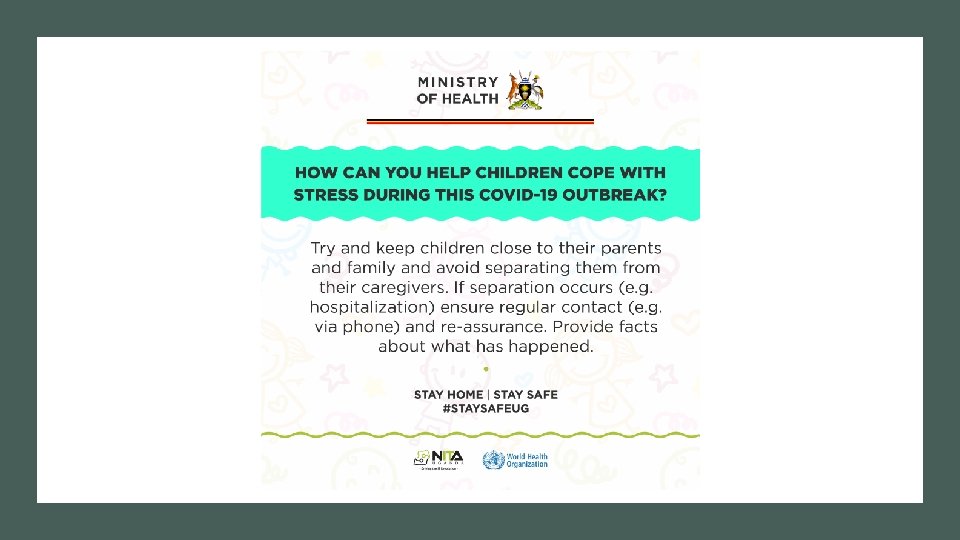
3. How COVID-19 can quickly change the context in which children live Containment and social distancing measures can result in: ▪ Closures of school, community or religious functions or venues, reduction in support services and limited access to safe spaces ▪ Prohibitions of family visitation to children in alternative care ▪ Rapid reunification of children from CCIs to families with little preparation or support ▪ Reduced avenues for reporting of VAC cases Loss of income or reduced employment increases pressure and stress in the household and can result in: ▪ Increased domestic violence and violence against children ▪ Psychosocial impact on wellbeing, i such as depression ▪ Increased rates of children engaged in harmful labour, moving to the streets or early marriage ▪ Increased protection risks online
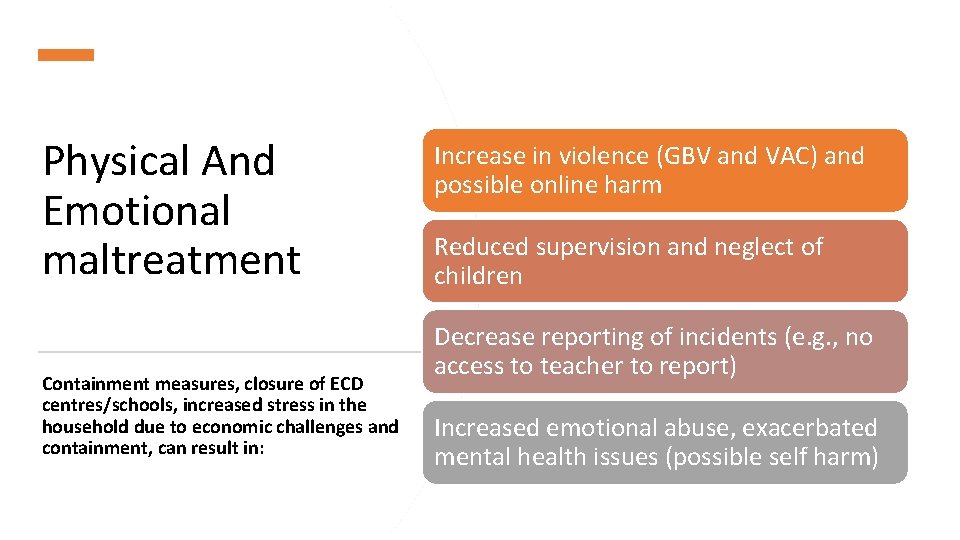
Physical And Emotional maltreatment Containment measures, closure of ECD centres/schools, increased stress in the household due to economic challenges and containment, can result in: Increase in violence (GBV and VAC) and possible online harm Reduced supervision and neglect of children Decrease reporting of incidents (e. g. , no access to teacher to report) Increased emotional abuse, exacerbated mental health issues (possible self harm)
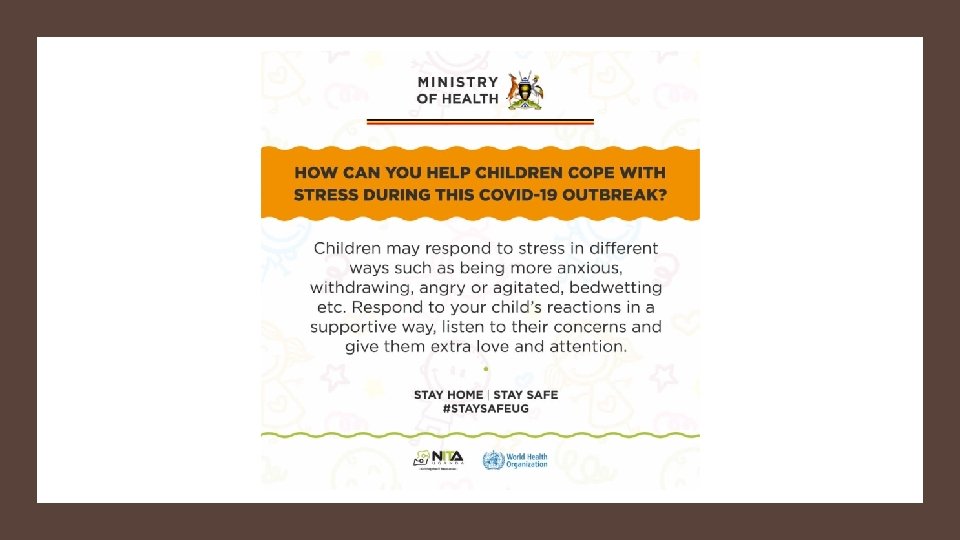
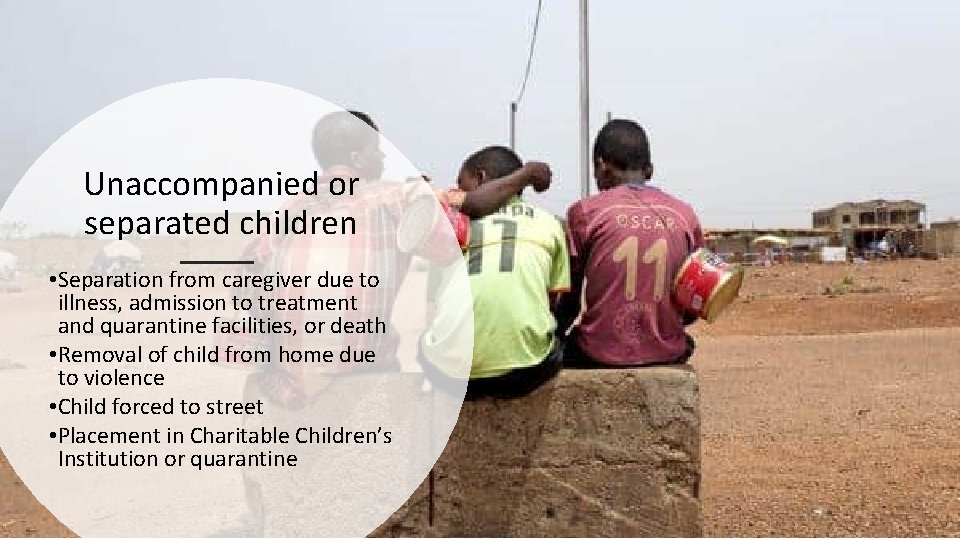
Unaccompanied or separated children • Separation from caregiver due to illness, admission to treatment and quarantine facilities, or death • Removal of child from home due to violence • Child forced to street • Placement in Charitable Children’s Institution or quarantine
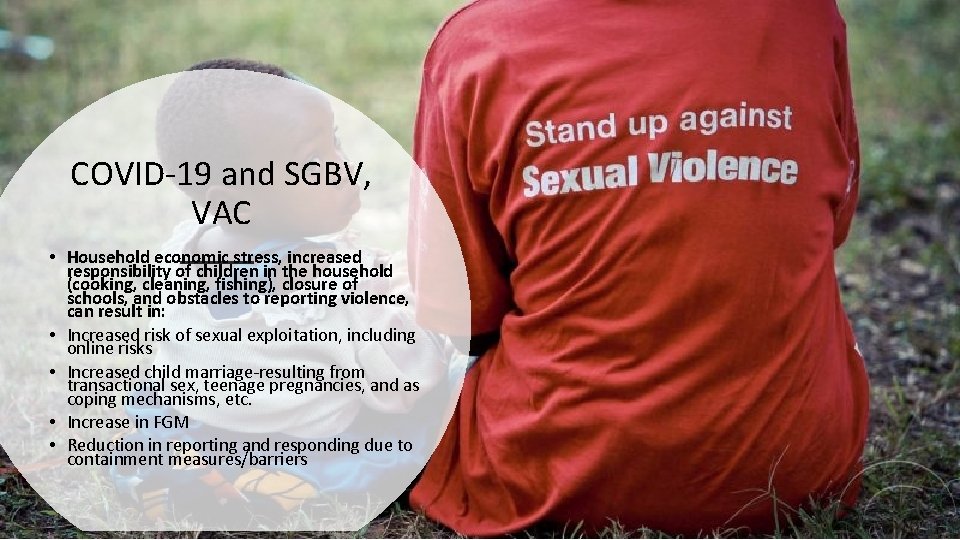
COVID-19 and SGBV, VAC • Household economic stress, increased responsibility of children in the household (cooking, cleaning, fishing), closure of schools, and obstacles to reporting violence, can result in: • Increased risk of sexual exploitation, including online risks • Increased child marriage-resulting from transactional sex, teenage pregnancies, and as coping mechanisms, etc. • Increase in FGM • Reduction in reporting and responding due to containment measures/barriers
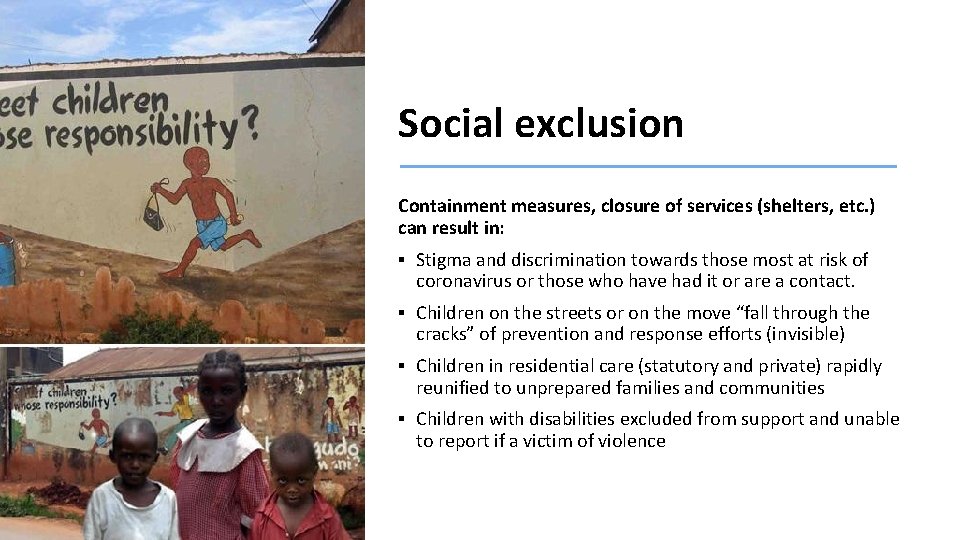
Social exclusion Containment measures, closure of services (shelters, etc. ) can result in: ▪ Stigma and discrimination towards those most at risk of coronavirus or those who have had it or are a contact. ▪ Children on the streets or on the move “fall through the cracks” of prevention and response efforts (invisible) ▪ Children in residential care (statutory and private) rapidly reunified to unprepared families and communities ▪ Children with disabilities excluded from support and unable to report if a victim of violence
• Are you seeing child protection concerns in the children and families you support? This Photo by Unknown Author is licensed under CC BY-SA Chat box
4. How can the COVID-19 related child protection risks increase health risks?
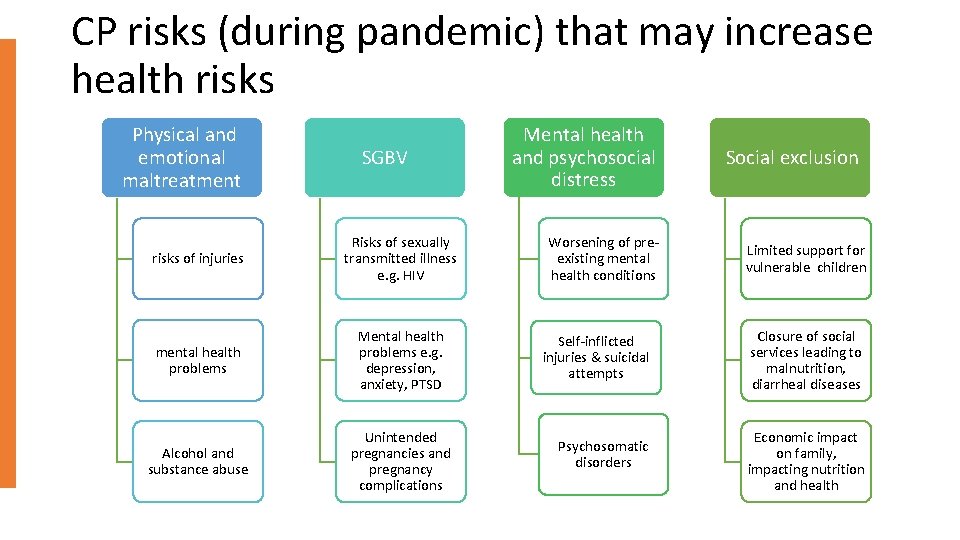
CP risks (during pandemic) that may increase health risks Physical and emotional maltreatment SGBV risks of injuries Risks of sexually transmitted illness e. g. HIV mental health problems Mental health problems e. g. depression, anxiety, PTSD Alcohol and substance abuse Unintended pregnancies and pregnancy complications Mental health and psychosocial distress Worsening of preexisting mental health conditions Social exclusion Limited support for vulnerable children Self-inflicted injuries & suicidal attempts Closure of social services leading to malnutrition, diarrheal diseases Psychosomatic disorders Economic impact on family, impacting nutrition and health
▪ Adolescent pregnancies Adolescent health issues in context of COVID-19 ▪ Concerns about increased risk of pregnancy during COVID-19 containment measures. ▪ Adolescent girls at high risk of sexual violence at all times; increase during COVID-19. ▪ Adolescent mothers may face economic stress and often lack social support – harder during public containment measures.
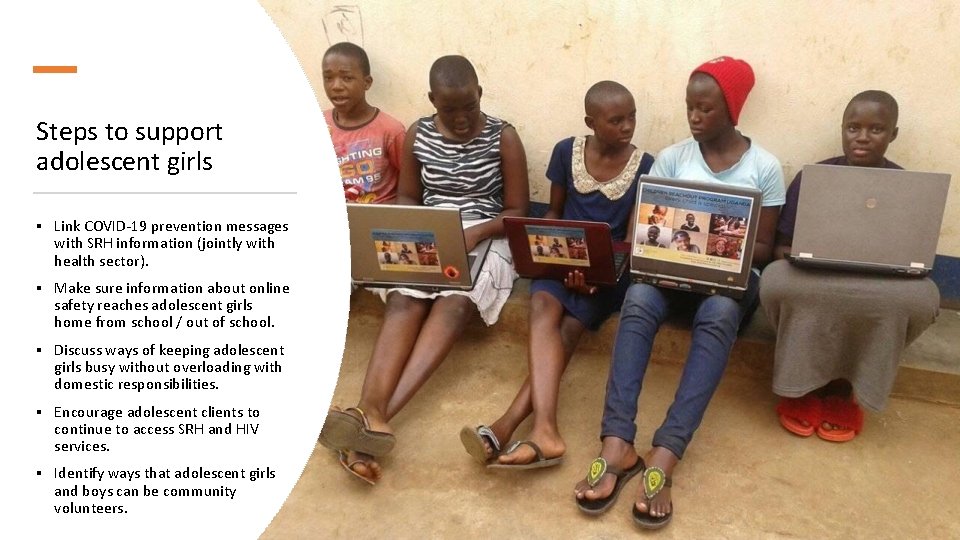
Steps to support adolescent girls ▪ Link COVID-19 prevention messages with SRH information (jointly with health sector). ▪ Make sure information about online safety reaches adolescent girls home from school / out of school. ▪ Discuss ways of keeping adolescent girls busy without overloading with domestic responsibilities. ▪ Encourage adolescent clients to continue to access SRH and HIV services. ▪ Identify ways that adolescent girls and boys can be community volunteers.
5. Health issues that may increase protection risks
Health issues that may increase protection risks Reduced access to ongoing medical care may increase stress, ill-health so possible neglect and violence For example, inconsistent access to HIV treatment Lack of access to antenatal support (formal and traditional) or early childhood care Increase in stress on caregiver and family, especially new mothers Family separation in case of sickness, isolation or quarantine Need for alternative care, but prospective caregivers may fear infection Loss of income due to sickness, isolation or quarantine Family less able to meet basic needs incl. food
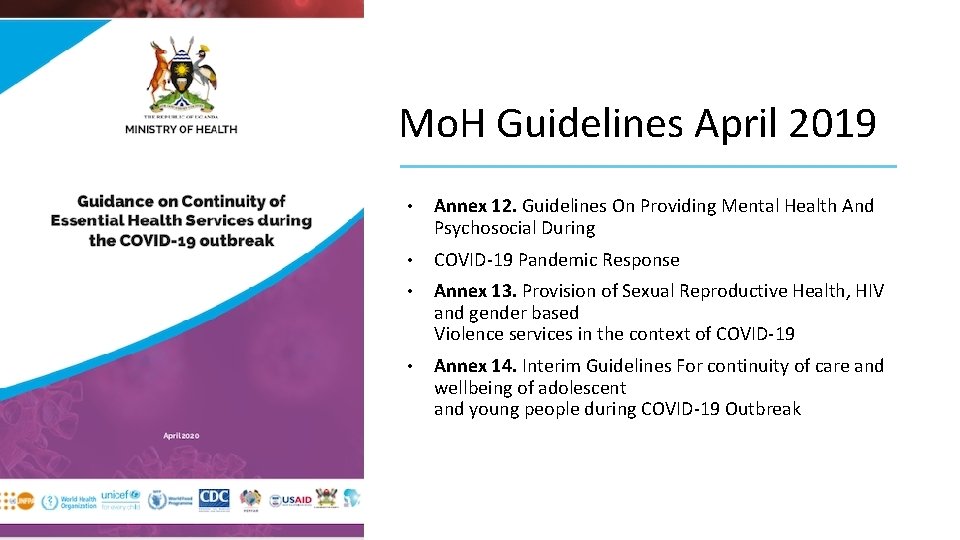
Mo. H Guidelines April 2019 • Annex 12. Guidelines On Providing Mental Health And Psychosocial During • COVID-19 Pandemic Response • Annex 13. Provision of Sexual Reproductive Health, HIV and gender based Violence services in the context of COVID-19 • Annex 14. Interim Guidelines For continuity of care and wellbeing of adolescent and young people during COVID-19 Outbreak
6. How can the Health Sector and Social Sectors work together?
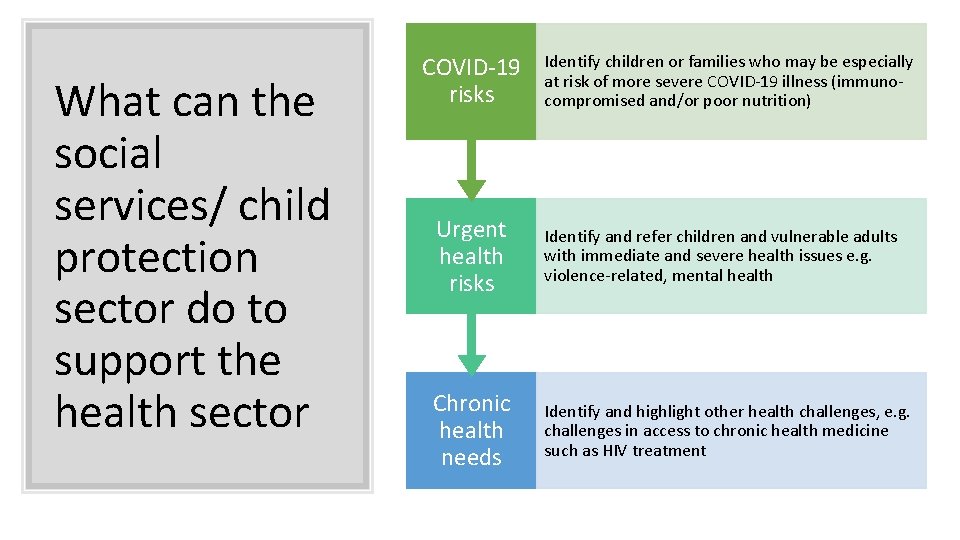
What can the social services/ child protection sector do to support the health sector COVID-19 risks Identify children or families who may be especially at risk of more severe COVID-19 illness (immunocompromised and/or poor nutrition) Urgent health risks Identify and refer children and vulnerable adults with immediate and severe health issues e. g. violence-related, mental health Chronic health needs Identify and highlight other health challenges, e. g. challenges in access to chronic health medicine such as HIV treatment
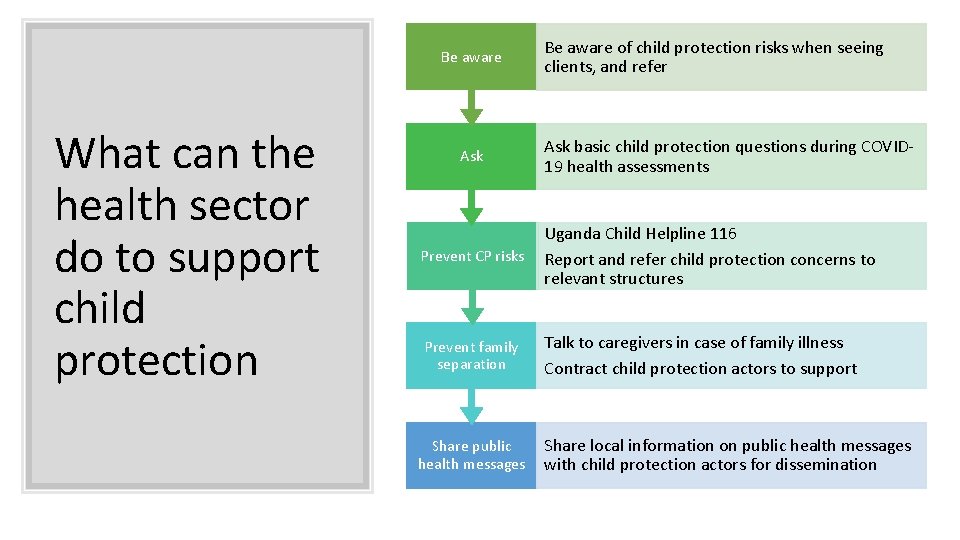
Be aware What can the health sector do to support child protection Ask Be aware of child protection risks when seeing clients, and refer Ask basic child protection questions during COVID 19 health assessments Prevent CP risks Uganda Child Helpline 116 Report and refer child protection concerns to relevant structures Prevent family separation Talk to caregivers in case of family illness Contract child protection actors to support Share public health messages Share local information on public health messages with child protection actors for dissemination
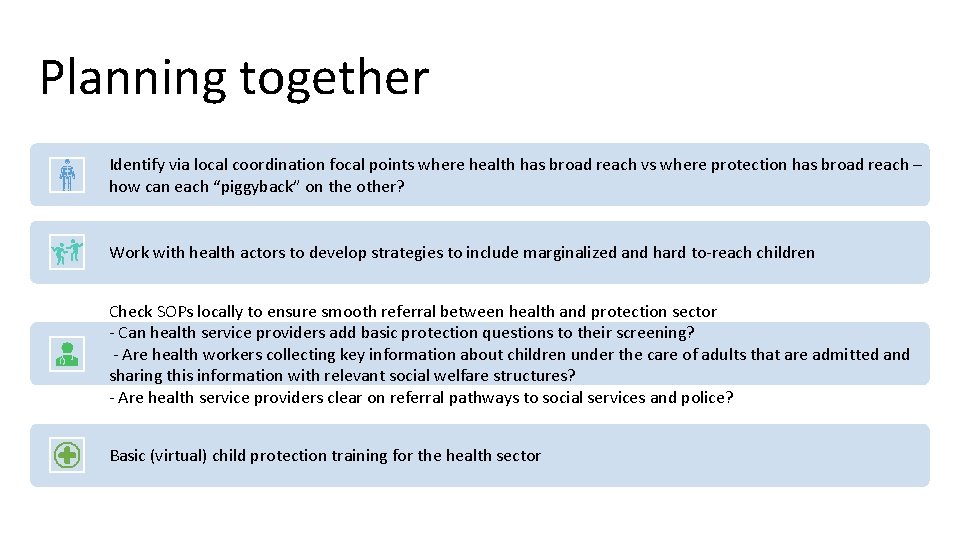
Planning together Identify via local coordination focal points where health has broad reach vs where protection has broad reach – how can each “piggyback” on the other? Work with health actors to develop strategies to include marginalized and hard to-reach children Check SOPs locally to ensure smooth referral between health and protection sector - Can health service providers add basic protection questions to their screening? - Are health workers collecting key information about children under the care of adults that are admitted and sharing this information with relevant social welfare structures? - Are health service providers clear on referral pathways to social services and police? Basic (virtual) child protection training for the health sector
Acting together Ensure children and families can access free health care Shared factsheets – staying healthy and safe, with local numbers, shared dissemination Prepare child-friendly mental health and psychosocial support care messages
“Building back better” as containment measures loosen Health & nutrition Family strengthening Contact children and families in your case load and identify priority health cases e. g. people living with HIV or other chronic conditions, families living with longer-term coronavirus effects, elderly caregivers Work with health sector to ensure ongoing prevention e. g. nutrition support Referrals & coordination Continue effective referrals Maintain or establish ongoing case conferencing and case management Utilise local coordination mechanisms which may be able to physically meet again Protective health services Continue to sensitize health sector on child protection risks Shared training and awareness raising, e. g. on violence prevention and response Adolescent focus COVID-19 has highlighted the combined protection and health challenges that adolescents and their caregivers face Need for greater focus on combined adolescent health and protection interventions
Additional reading Mo. H Uganda (April 2019): Guidance on Continuity of Essential Health Services during the COVID-19 outbreak UNICEF Kenya: Tips for adolescents https: //www. unicef. org/kenya/stories/how-teenagers-can-protecttheir-mental-health-during-coronavirus-covid-19 UNFPA, COVID-19: Working with and for young people https: //www. unfpa. org/sites/default/files/resourcepdf/COMPACTCOVID 19 -05. pdf Alliance for Child Protection in Humanitarian Action. Protection of Children During the Coronavirus Pandemic, v 2. https: //alliancecpha. org/en/system/tdf/library/attachments/the_allian ce_covid_19_tn_version_2_05. 27. 20_final_2. pdf? file=1&type=node&i d=37184
Breakout time! Please write down this question: What actions can be taken by health service provider in your community to strengthen their response to child protection risks? How should the health sector and child protection sector work together?
Thank you!
- Slides: 33