
Webinar Behind the SPR Curtain Uncover your Binding
Webinar: Behind the SPR Curtain Uncover your Binding Kinetics Data
Itinerary • What data am I missing? • SPR vs. Other Techniques • How to Get Binding Kinetics with SPR • SPR Applications • Optimizing Binding Kinetics • Nicoya’s SPR Solution • Open. SPR in 30 Seconds • Wrap Up 2
Itinerary • What data am I missing? • SPR vs. Other Techniques • How to Get Binding Kinetics with SPR • SPR Applications • Optimizing Binding Kinetics • Nicoya’s SPR Solution • Open. SPR in 30 Seconds • Wrap Up 2
Itinerary • What data am I missing? • SPR vs. Other Techniques • How to Get Binding Kinetics with SPR • SPR Applications • Optimizing Binding Kinetics • Nicoya’s SPR Solution • Open. SPR in 30 Seconds • Wrap Up 2
Itinerary • What data am I missing? • SPR vs. Other Techniques • How to Get Binding Kinetics with SPR • SPR Applications • Optimizing Binding Kinetics • Nicoya’s SPR Solution • Open. SPR in 30 Seconds • Wrap Up 2
Itinerary • What data am I missing? • SPR vs. Other Techniques • How to Get Binding Kinetics with SPR • SPR Applications • Optimizing Binding Kinetics • Nicoya’s SPR Solution • Open. SPR in 30 Seconds • Wrap Up 2
Itinerary • What data am I missing? • SPR vs. Other Techniques • How to Get Binding Kinetics with SPR • SPR Applications • Optimizing Binding Kinetics • Nicoya’s SPR Solution • Open. SPR in 30 Seconds • Wrap Up 2
Itinerary • What data am I missing? • SPR vs. Other Techniques • How to Get Binding Kinetics with SPR • SPR Applications • Optimizing Binding Kinetics • Nicoya’s SPR Solution • Open. SPR in 30 Seconds • Wrap Up 2
Itinerary • What data am I missing? • SPR vs. Other Techniques • How to Get Binding Kinetics with SPR • SPR Applications • Optimizing Binding Kinetics • Nicoya’s SPR Solution • Open. SPR in 30 Seconds • Wrap Up 2
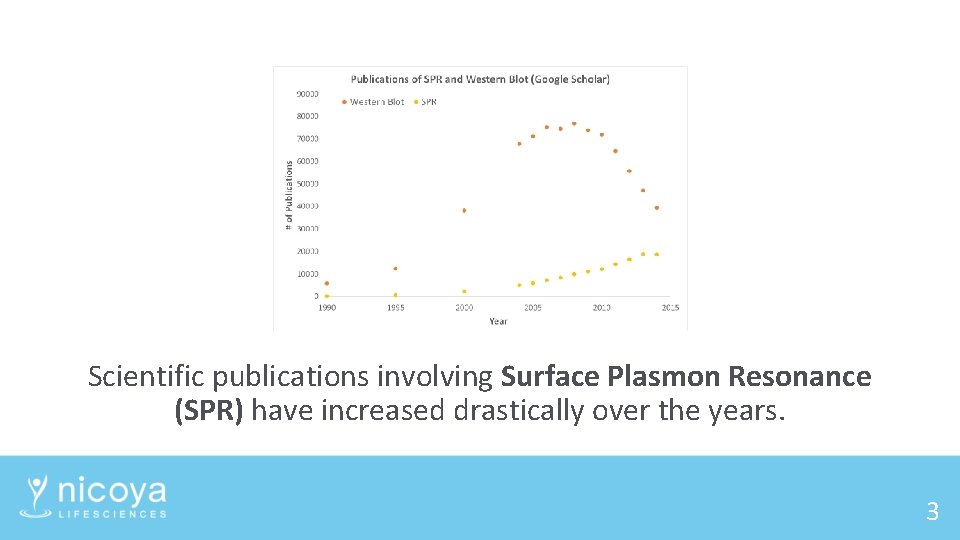
Scientific publications involving Surface Plasmon Resonance (SPR) have increased drastically over the years. 3
What type of data can I get with SPR? • On rate (kon) • Off rate (koff) • Affinity (KD) • Specificity • Yes/No Binding • Concentration 4
What type of data can I get with SPR? • On rate (kon) • Off rate (koff) • Affinity (KD) • Specificity • Yes/No Binding • Concentration 4
What type of data can I get with SPR? • On rate (kon) • Off rate (koff) • Affinity (KD) • Specificity • Yes/No Binding • Concentration 4
What type of data can I get with SPR? • On rate (kon) • Off rate (koff) • Affinity (KD) • Specificity • Yes/No Binding • Concentration 4
What type of data can I get with SPR? • On rate (kon) • Off rate (koff) • Affinity (KD) • Specificity • Yes/No Binding • Concentration 4
What type of data can I get with SPR? • On rate (kon) • Off rate (koff) • Affinity (KD) • Specificity • Yes/No Binding • Concentration 4

Yes/No Binding Koff Kon KD 5
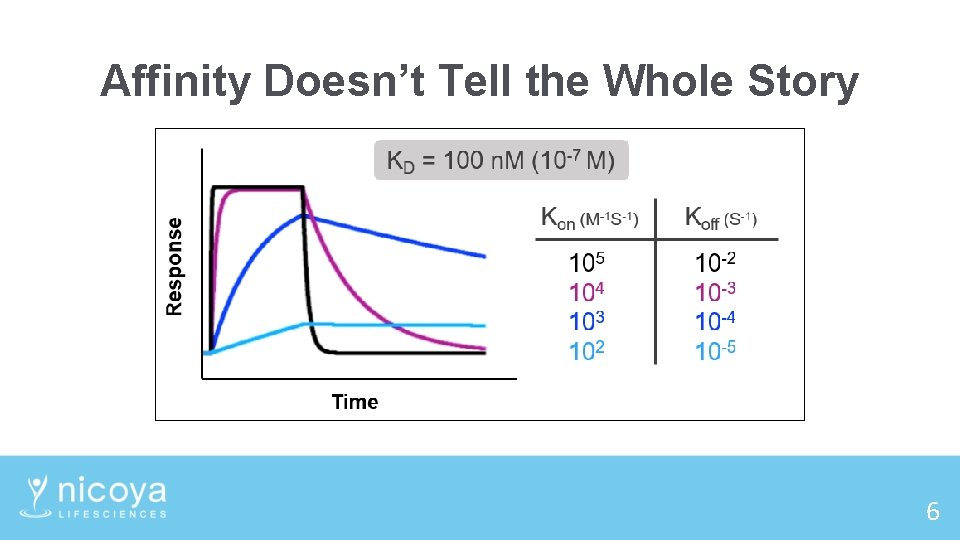
Affinity Doesn’t Tell the Whole Story 6
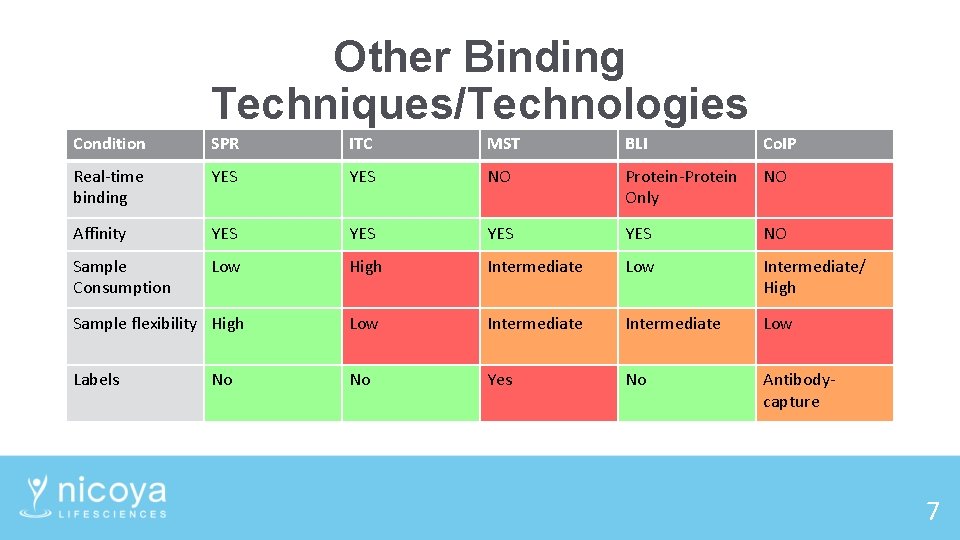
Other Binding Techniques/Technologies Condition SPR ITC MST BLI Co. IP Real-time binding YES NO Protein-Protein Only NO Affinity YES YES NO Sample Consumption Low High Intermediate Low Intermediate/ High Sample flexibility High Low Intermediate Low Labels No Yes No Antibodycapture No 7
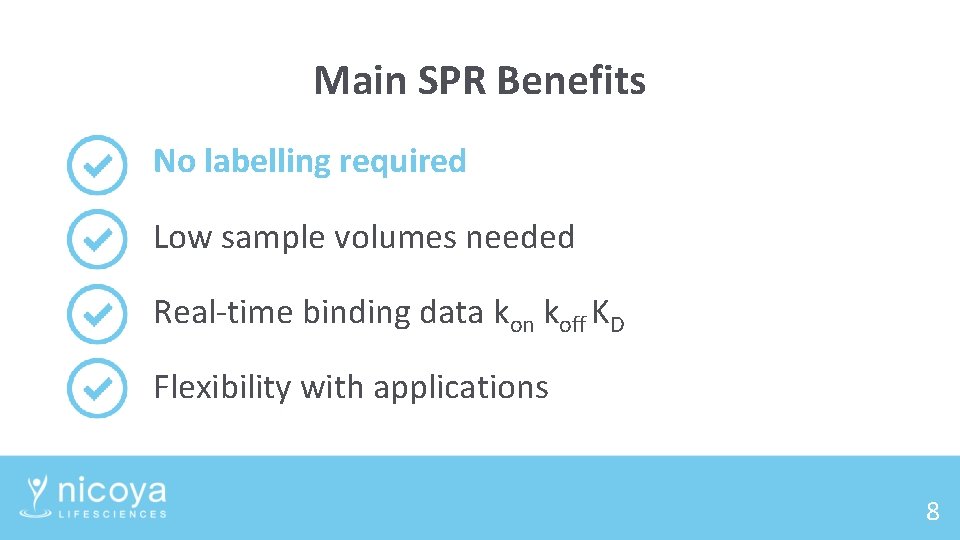
Main SPR Benefits No labelling required Low sample volumes needed Real-time binding data kon koff KD Flexibility with applications 8
Main SPR Benefits No labelling required Low sample volumes needed Real-time binding data kon koff KD Flexibility with applications 8
Main SPR Benefits No labelling required Low sample volumes needed Real-time binding data kon koff KD Flexibility with applications 8
Main SPR Benefits No labelling required Low sample volumes needed Real-time binding data kon koff KD Flexibility with applications 8
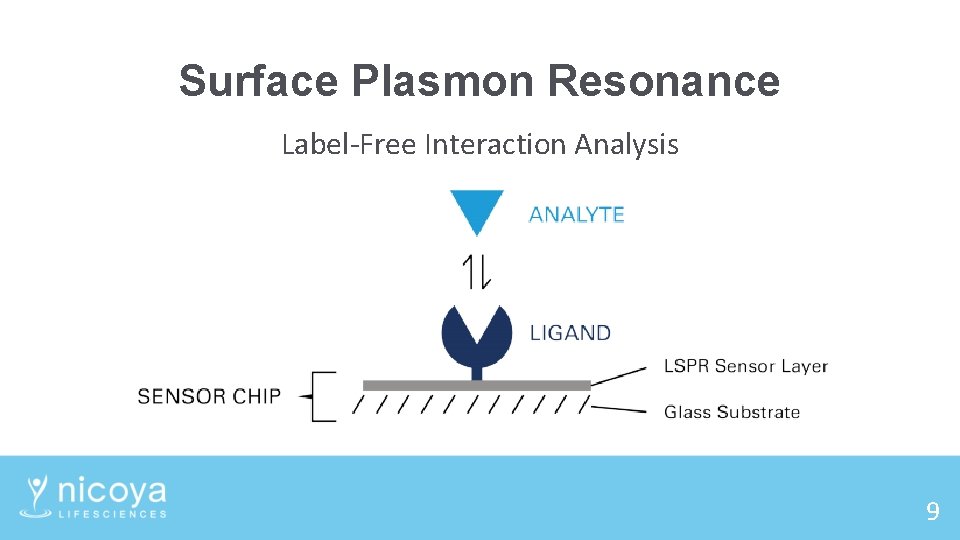
Surface Plasmon Resonance Label-Free Interaction Analysis 9
How do I get binding kinetics data? 1) 2) 3) 4) Immobilization Analyte Preparation Regeneration Fit Sensorgram Curves 10
How do I get binding kinetics data? 1) 2) 3) 4) Immobilization Analyte Preparation Regeneration Fit Sensorgram Curves 10
How do I get binding kinetics data? 1) 2) 3) 4) Immobilization Analyte Preparation Regeneration Fit Sensorgram Curves 10
How do I get binding kinetics data? 1) 2) 3) 4) Immobilization Analyte Preparation Regeneration Fit Sensorgram Curves 10
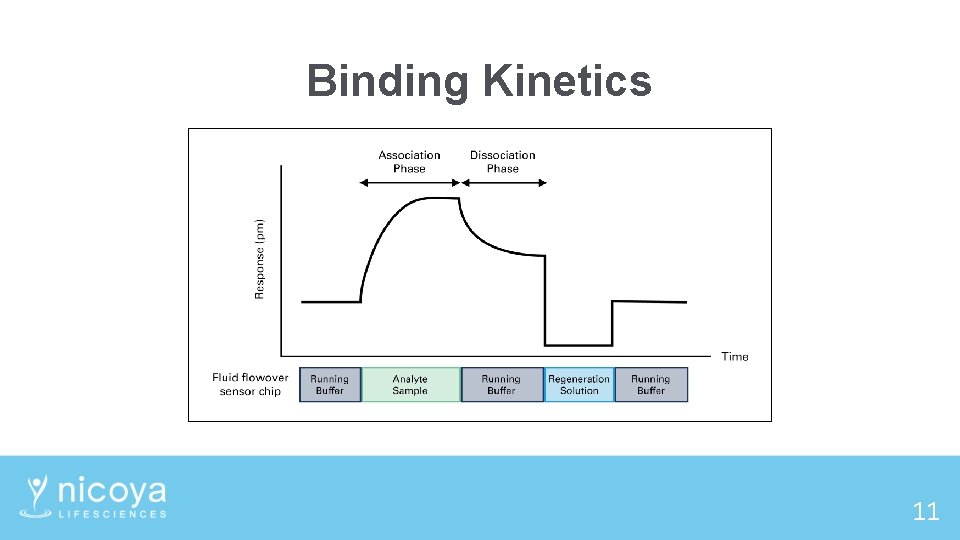
Binding Kinetics 11
Applications • Binding Kinetics/Equilibrium Constants: § § Protein-Protein-Antibody Protein-Nucleic Acid Protein-Lipid § § Protein-Carbohydrates Protein-Small Molecule Protein-Peptide Protein-Aptamer • Detection • Quantification • Materials Science 12
Applications • Binding Kinetics/Equilibrium Constants: § § Protein-Protein-Antibody Protein-Nucleic Acid Protein-Lipid § § Protein-Carbohydrates Protein-Small Molecule Protein-Peptide Protein-Aptamer • Detection • Quantification • Materials Science 12
Applications • Binding Kinetics/Equilibrium Constants: § § Protein-Protein-Antibody Protein-Nucleic Acid Protein-Lipid § § Protein-Carbohydrates Protein-Small Molecule Protein-Peptide Protein-Aptamer • Detection • Quantification • Materials Science 12
Applications • Binding Kinetics/Equilibrium Constants: § § Protein-Protein-Antibody Protein-Nucleic Acid Protein-Lipid § § Protein-Carbohydrates Protein-Small Molecule Protein-Peptide Protein-Aptamer • Detection • Quantification • Materials Science 12
Applications • Binding Kinetics/Equilibrium Constants: § § Protein-Protein-Antibody Protein-Nucleic Acid Protein-Lipid § § Protein-Carbohydrates Protein-Small Molecule Protein-Peptide Protein-Aptamer • Detection • Quantification • Materials Science 12
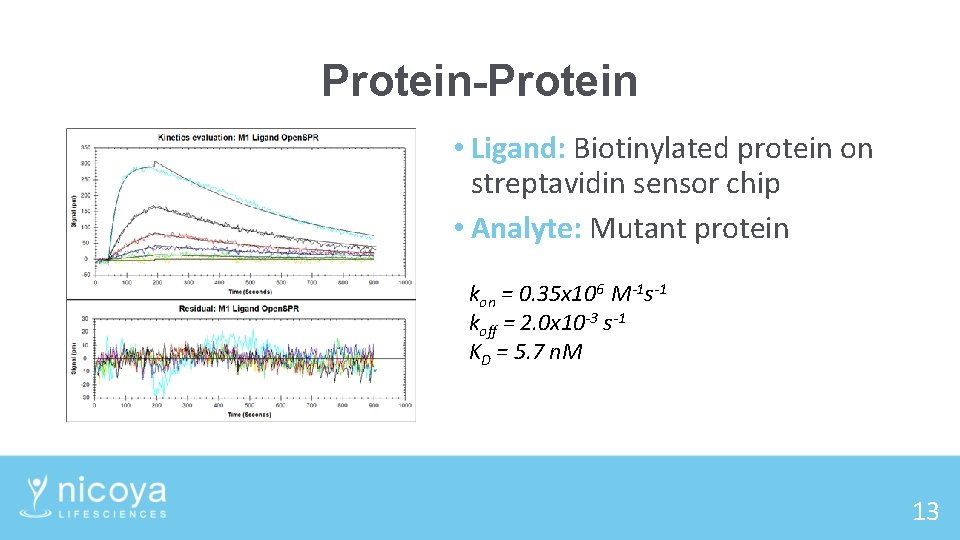
Protein-Protein • Ligand: Biotinylated protein on streptavidin sensor chip • Analyte: Mutant protein kon = 0. 35 x 106 M-1 s-1 koff = 2. 0 x 10 -3 s-1 KD = 5. 7 n. M 13
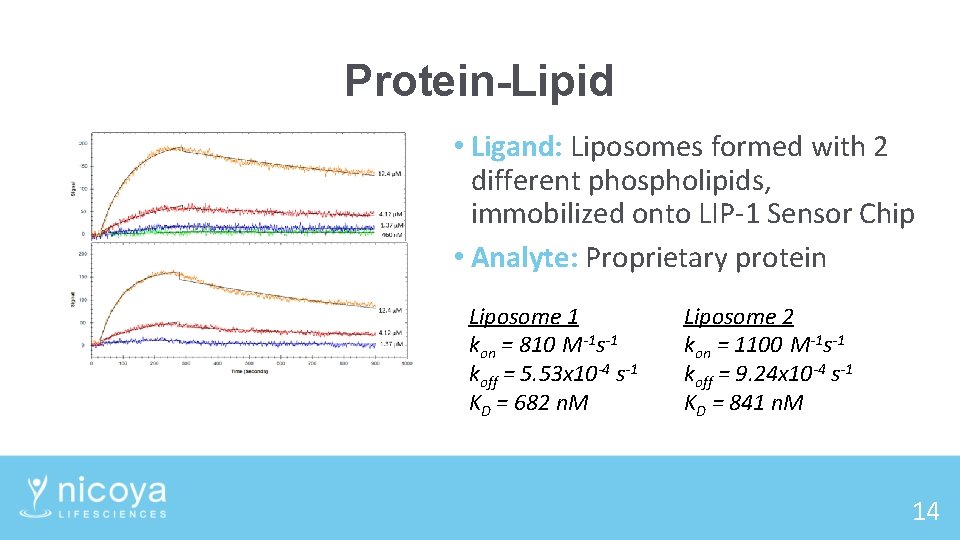
Protein-Lipid • Ligand: Liposomes formed with 2 different phospholipids, immobilized onto LIP-1 Sensor Chip • Analyte: Proprietary protein Liposome 1 kon = 810 M-1 s-1 koff = 5. 53 x 10 -4 s-1 KD = 682 n. M Liposome 2 kon = 1100 M-1 s-1 koff = 9. 24 x 10 -4 s-1 KD = 841 n. M 14
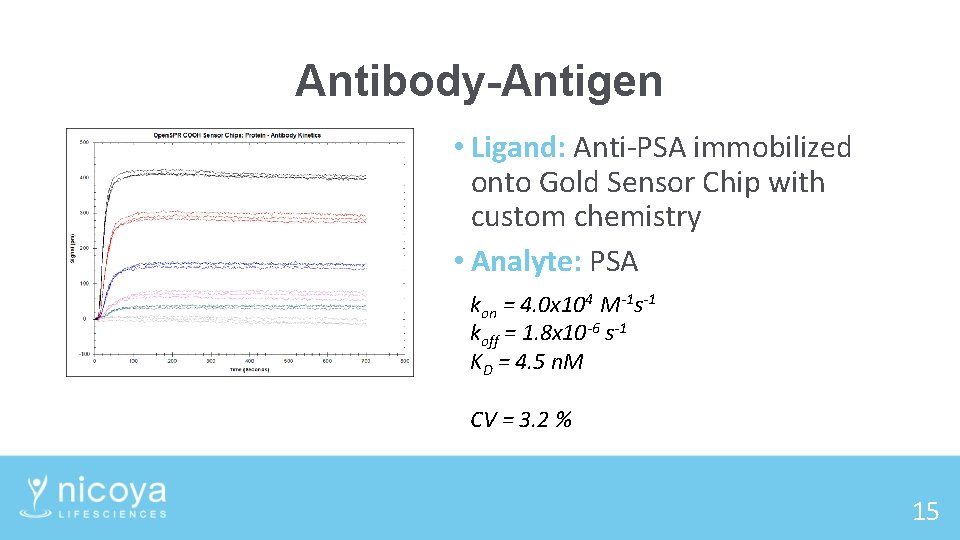
Antibody-Antigen • Ligand: Anti-PSA immobilized onto Gold Sensor Chip with custom chemistry • Analyte: PSA kon = 4. 0 x 104 M-1 s-1 koff = 1. 8 x 10 -6 s-1 KD = 4. 5 n. M CV = 3. 2 % 15
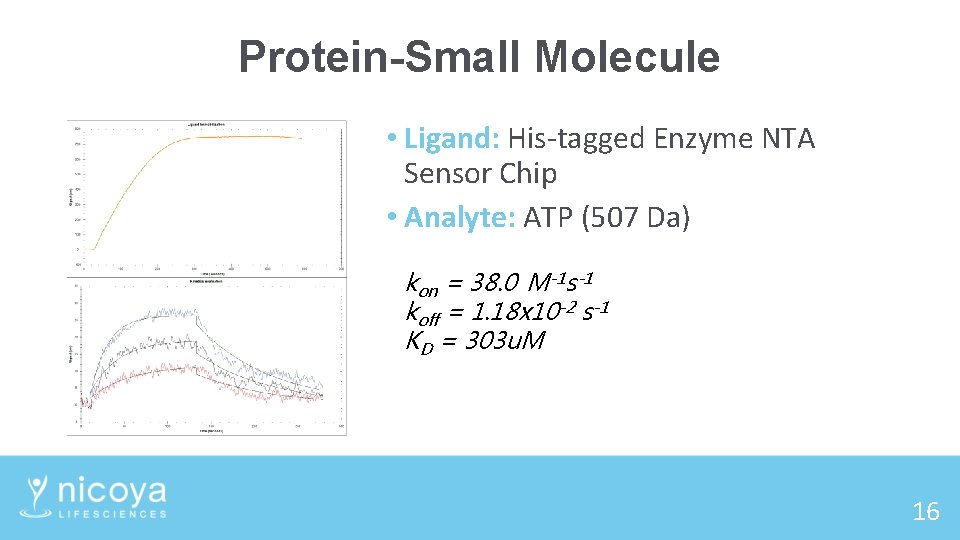
Protein-Small Molecule • Ligand: His-tagged Enzyme NTA Sensor Chip • Analyte: ATP (507 Da) kon = 38. 0 M-1 s-1 koff = 1. 18 x 10 -2 s-1 KD = 303 u. M 16
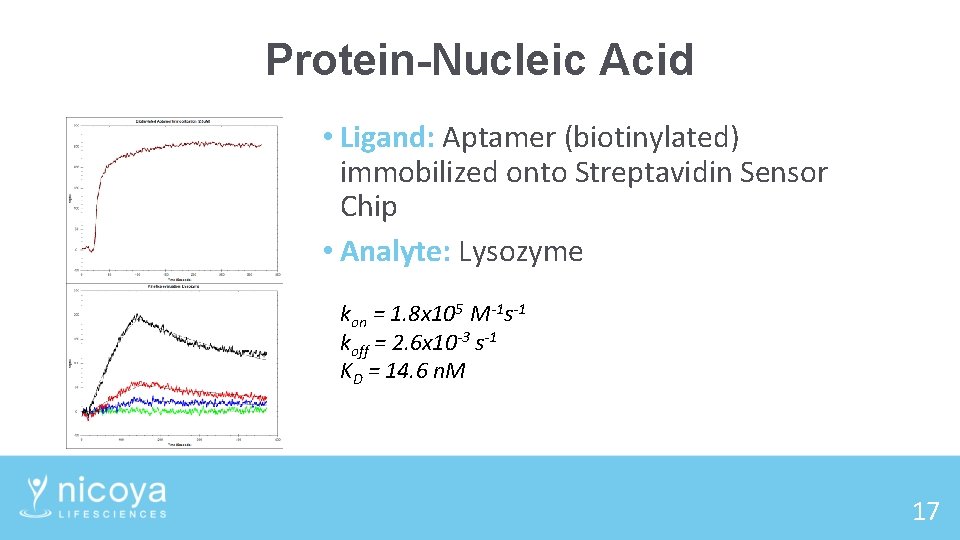
Protein-Nucleic Acid • Ligand: Aptamer (biotinylated) immobilized onto Streptavidin Sensor Chip • Analyte: Lysozyme kon = 1. 8 x 10⁵ M-1 s-1 koff = 2. 6 x 10 -3 s-1 KD = 14. 6 n. M 17
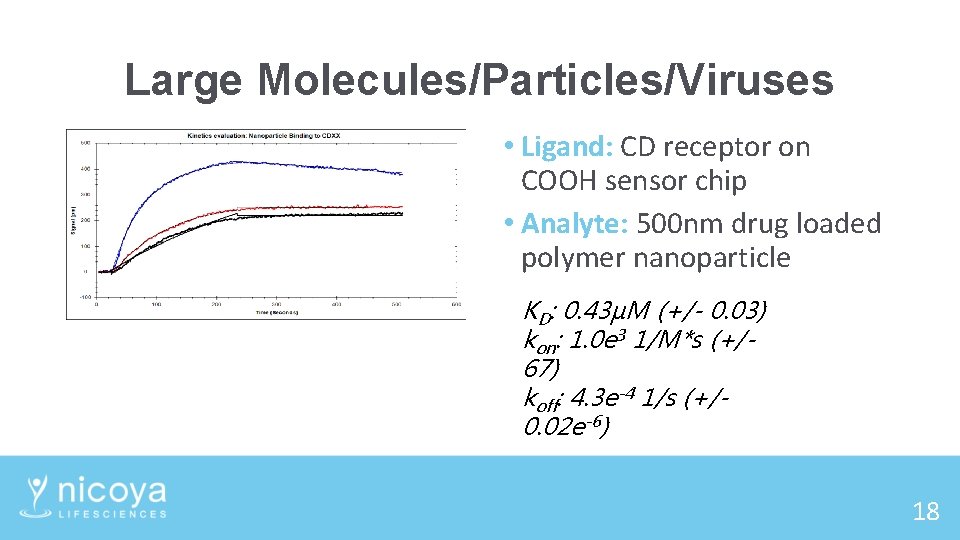
Large Molecules/Particles/Viruses • Ligand: CD receptor on COOH sensor chip • Analyte: 500 nm drug loaded polymer nanoparticle KD: 0. 43µM (+/- 0. 03) kon: 1. 0 e 3 1/M*s (+/67) koff: 4. 3 e-4 1/s (+/0. 02 e-6) 18
Optimizing Binding Kinetics
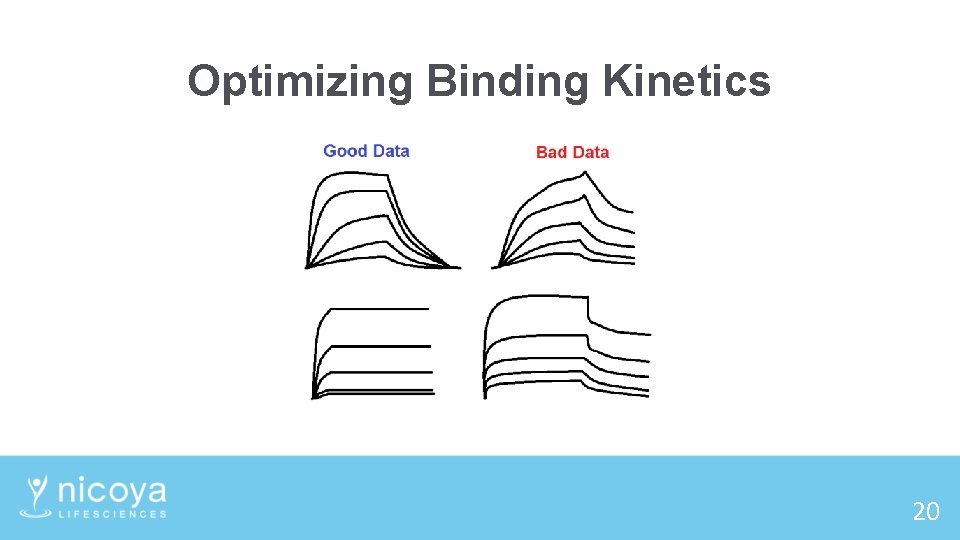
Optimizing Binding Kinetics 20
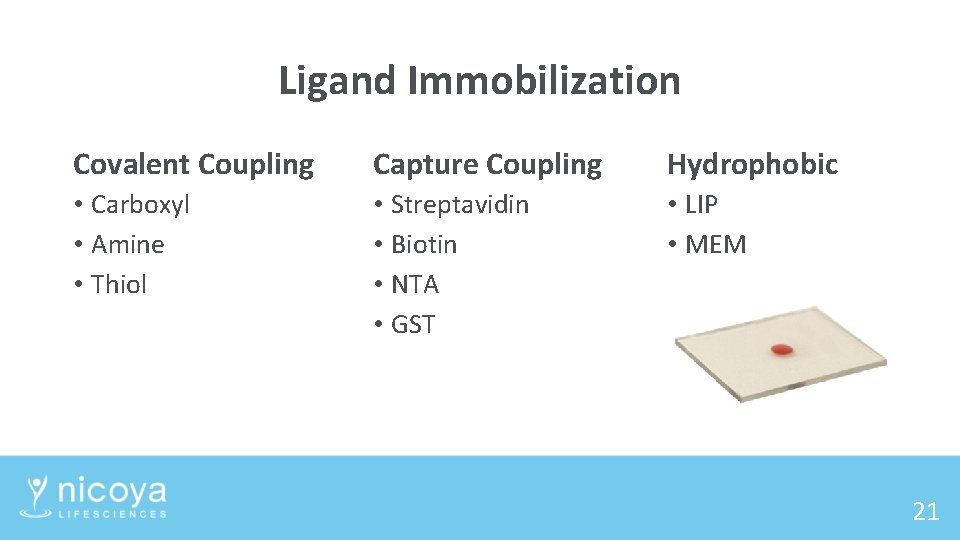
Ligand Immobilization Covalent Coupling Capture Coupling Hydrophobic • Carboxyl • Amine • Thiol • Streptavidin • Biotin • NTA • GST • LIP • MEM 21
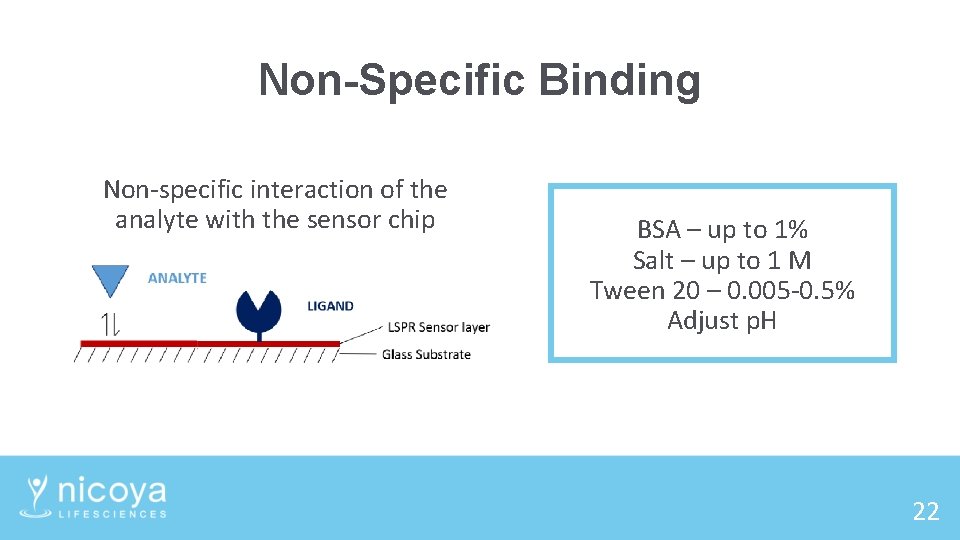
Non-Specific Binding Non-specific interaction of the analyte with the sensor chip BSA – up to 1% Salt – up to 1 M Tween 20 – 0. 005 -0. 5% Adjust p. H 22
Sample Preparation • Buffer: 1. p. H 2. degass 3. filter • Unstable additives (ex: ATP) – new buffer everyday • Degass first, then additives (detergent/BSA/DMSO) • Sample and buffer match 23
Sample Preparation • Buffer: 1. p. H 2. degass 3. filter • Unstable additives (ex: ATP) – new buffer everyday • Degass first, then additives (detergent/BSA/DMSO) • Sample and buffer match 23
Sample Preparation • Buffer: 1. p. H 2. degass 3. filter • Unstable additives (ex: ATP) – new buffer everyday • Degass first, then additives (detergent/BSA/DMSO) • Sample and buffer match 23
Sample Preparation • Buffer: 1. p. H 2. degass 3. filter • Unstable additives (ex: ATP) – new buffer everyday • Degass first, then additives (detergent/BSA/DMSO) • Sample and buffer match 23
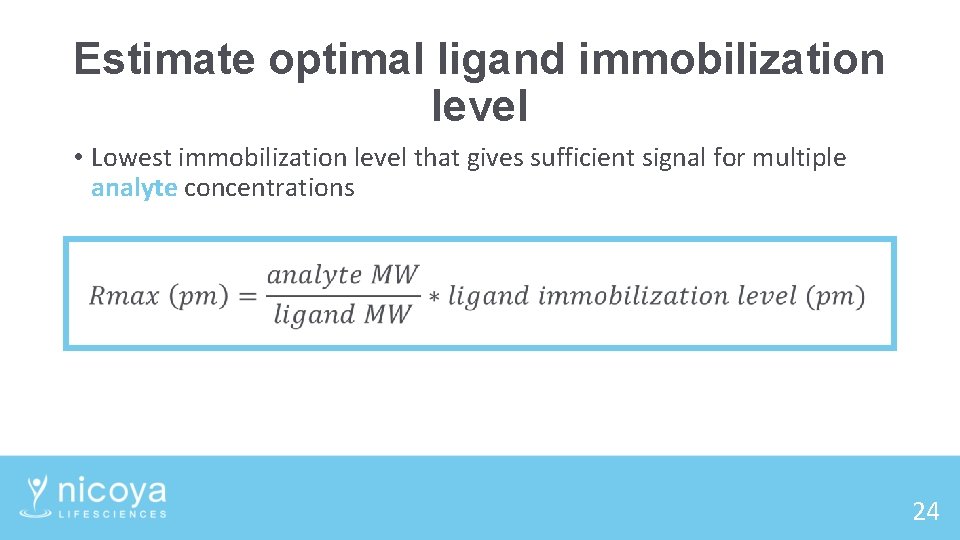
Estimate optimal ligand immobilization level • Lowest immobilization level that gives sufficient signal for multiple analyte concentrations 24
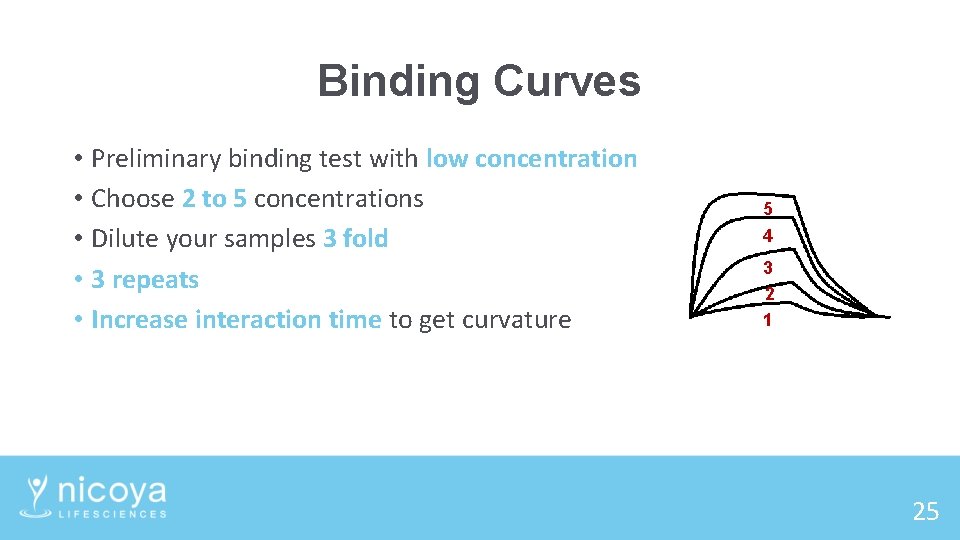
Binding Curves • Preliminary binding test with low concentration • Choose 2 to 5 concentrations • Dilute your samples 3 fold • 3 repeats • Increase interaction time to get curvature 5 4 3 2 1 25
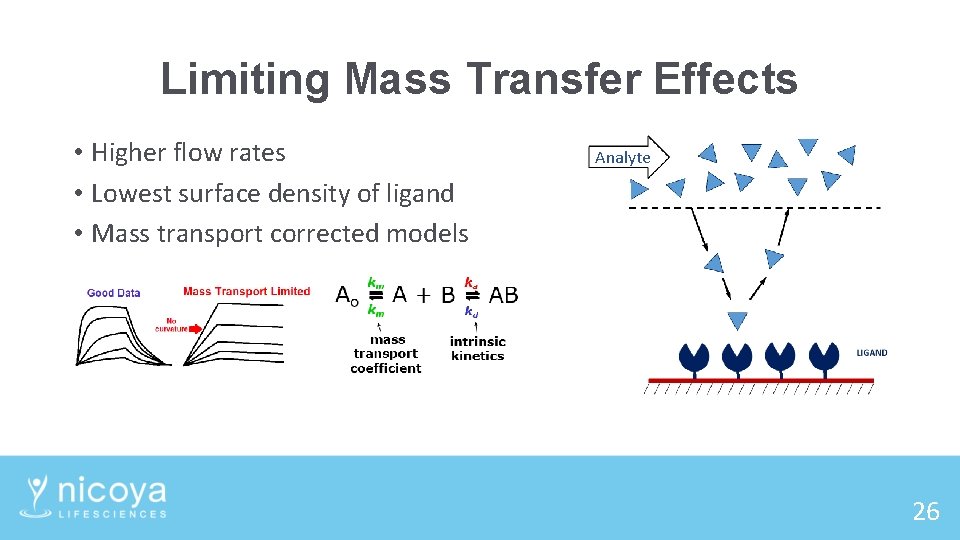
Limiting Mass Transfer Effects • Higher flow rates • Lowest surface density of ligand • Mass transport corrected models Analyte 26
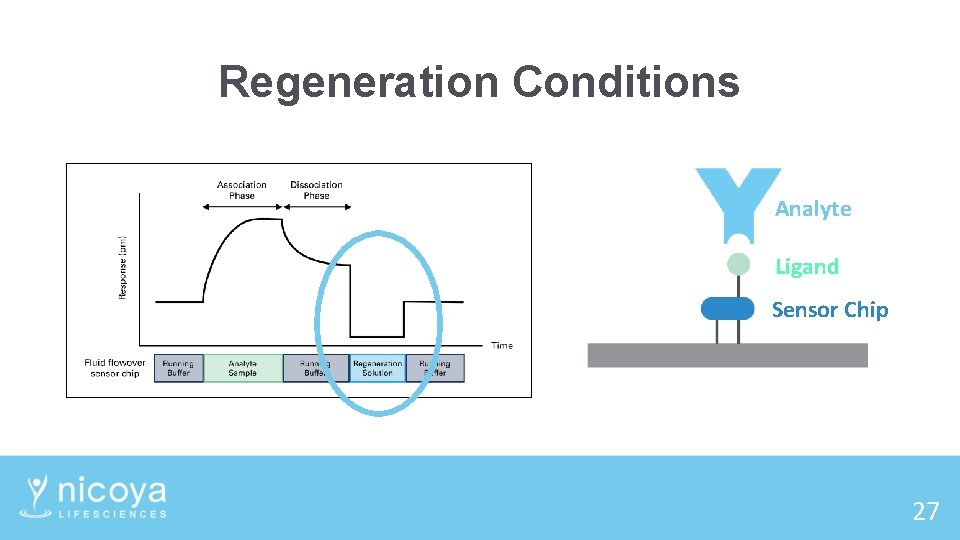
Regeneration Conditions Analyte Ligand Sensor Chip 27
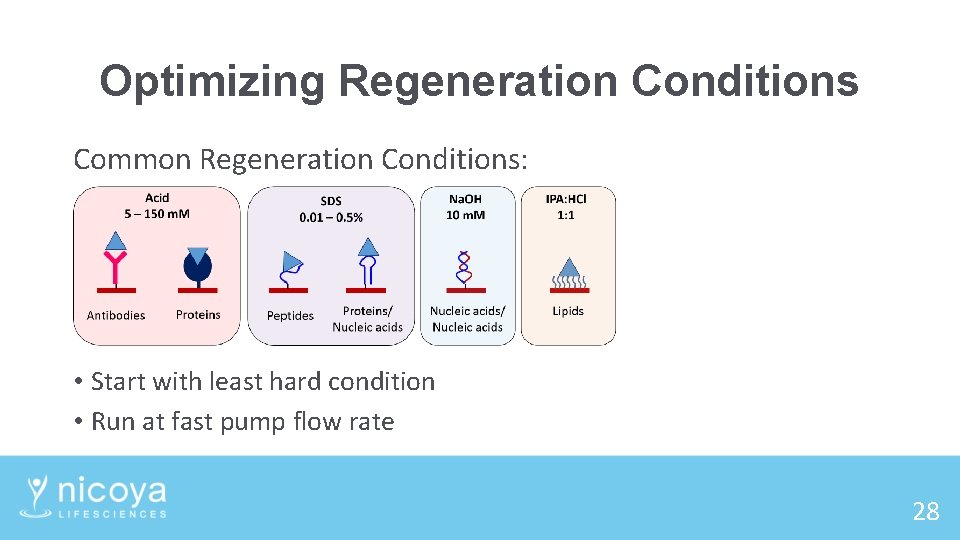
Optimizing Regeneration Conditions Common Regeneration Conditions: • Start with least hard condition • Run at fast pump flow rate 28
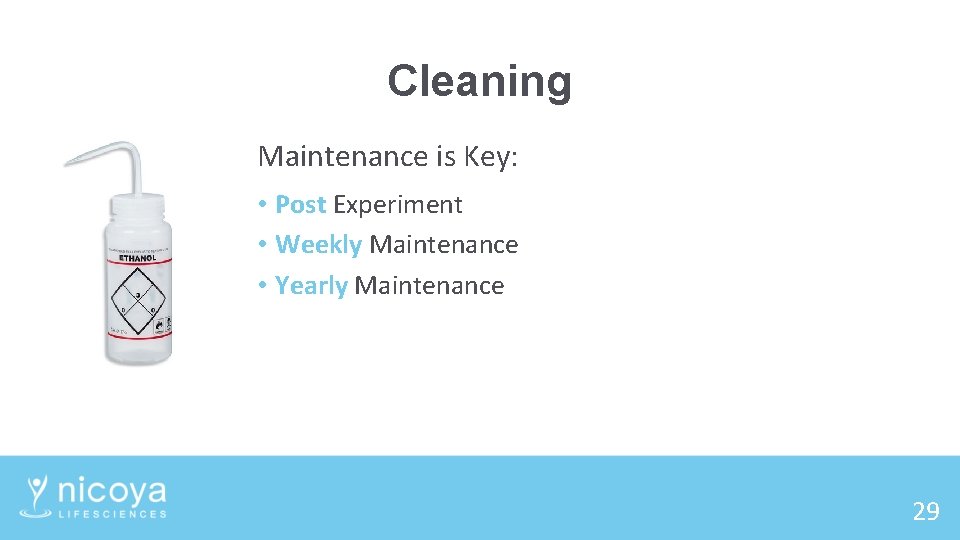
Cleaning Maintenance is Key: • Post Experiment • Weekly Maintenance • Yearly Maintenance 29
Limitations What are the biggest limitations with SPR? • No access to instrumentation • Costly core facilities • Costly maintenance contracts • Steep learning curves 30
Open. SPR is built for scientists. Our mission: Design cutting-edge sensor technology to unleash the limitless potential of lifesciences researchers so they can make their next big discovery. 31
32
Solution Benchtop User-Friendly Avoid costly & inconvenient core facilities with our affordable benchtop solution Train anyone in your lab to become an SPR expert with our user-friendly solution Real-Time Data Low Maintenance Publish faster with label-free binding kinetics & affinity data Forget about expensive service contracts so you can focus on your research 33
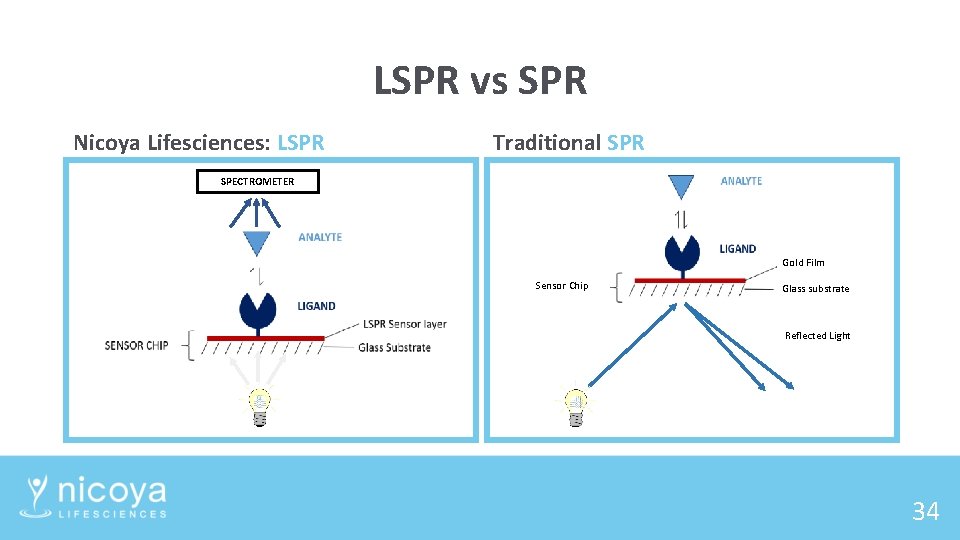
LSPR vs SPR Nicoya Lifesciences: LSPR Traditional SPR SPECTROMETER Gold Film Sensor Chip Glass substrate Reflected Light 34
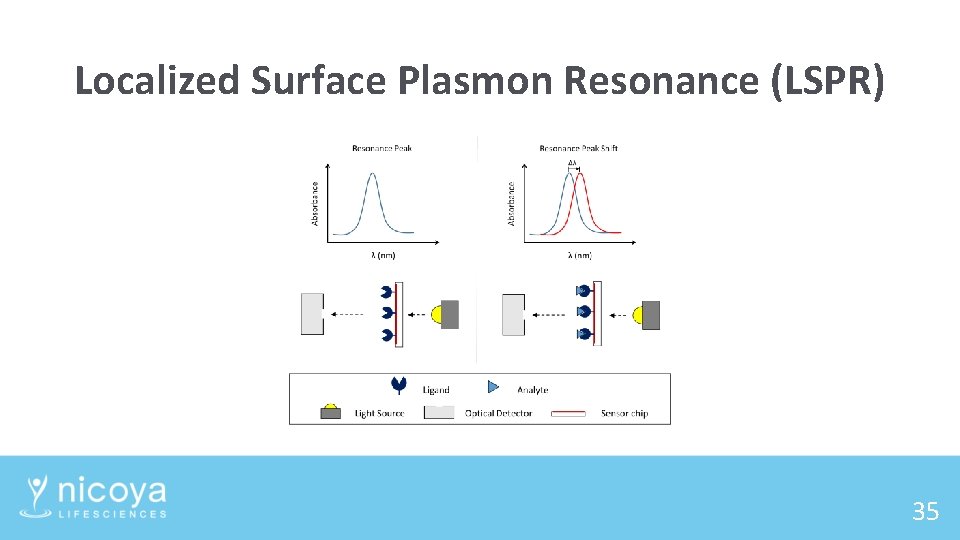
Localized Surface Plasmon Resonance (LSPR) 35
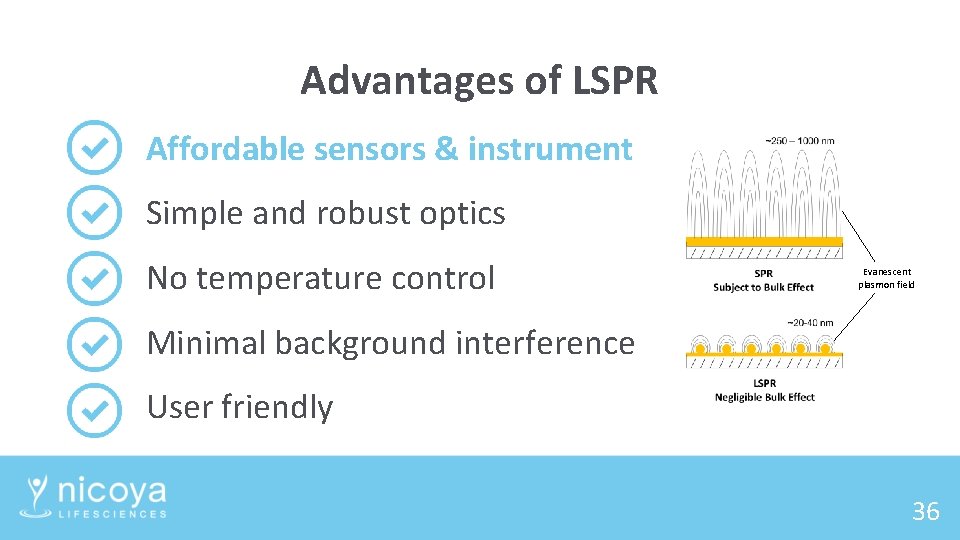
Advantages of LSPR Affordable sensors & instrument Simple and robust optics No temperature control Evanescent plasmon field Minimal background interference User friendly 36
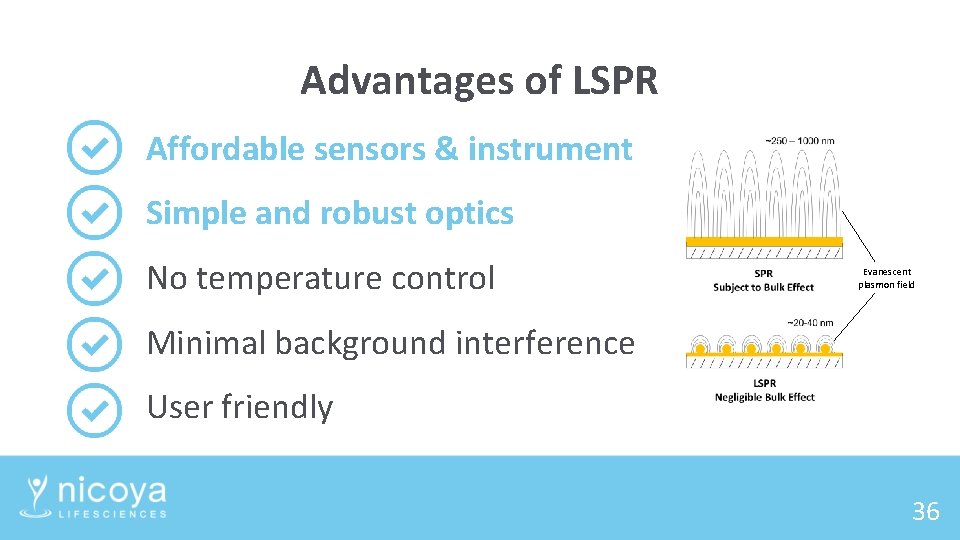
Advantages of LSPR Affordable sensors & instrument Simple and robust optics No temperature control Evanescent plasmon field Minimal background interference User friendly 36
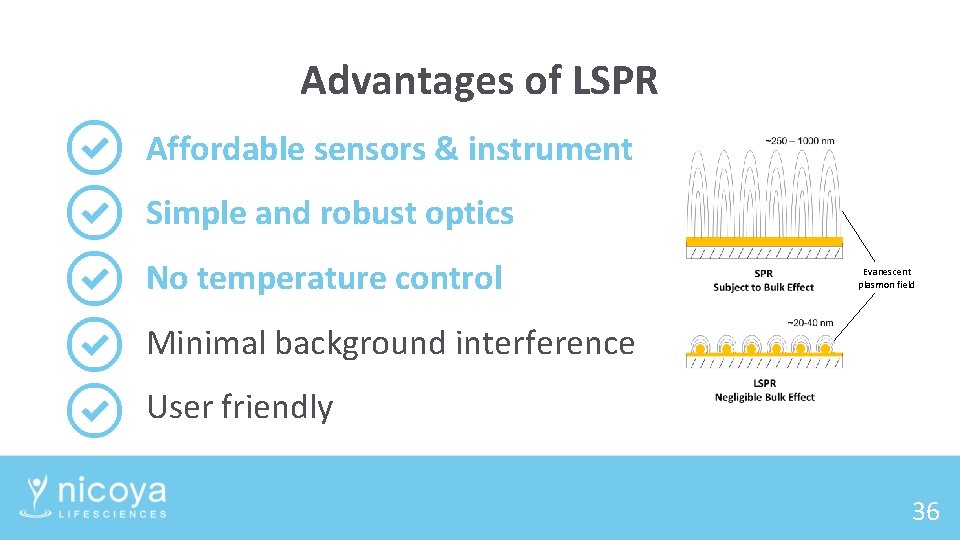
Advantages of LSPR Affordable sensors & instrument Simple and robust optics No temperature control Evanescent plasmon field Minimal background interference User friendly 36
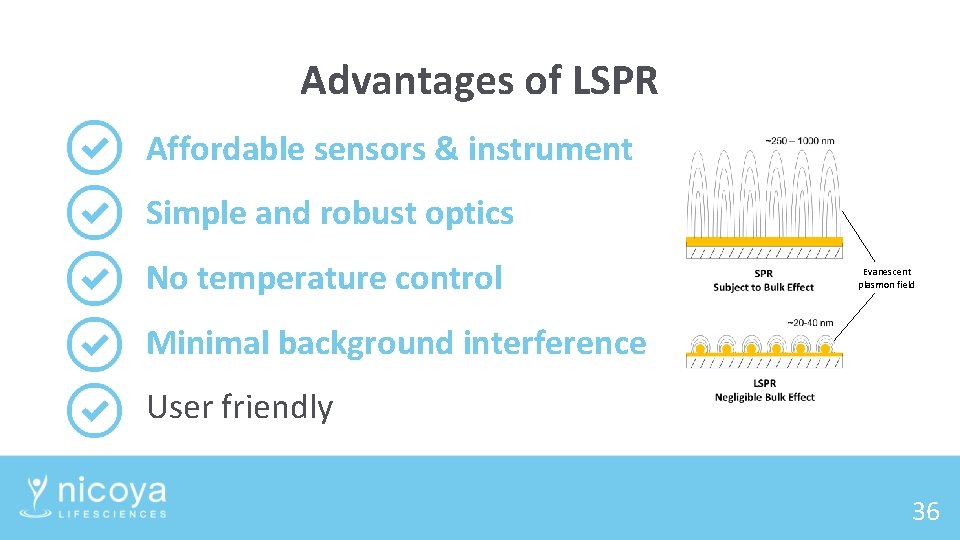
Advantages of LSPR Affordable sensors & instrument Simple and robust optics No temperature control Evanescent plasmon field Minimal background interference User friendly 36
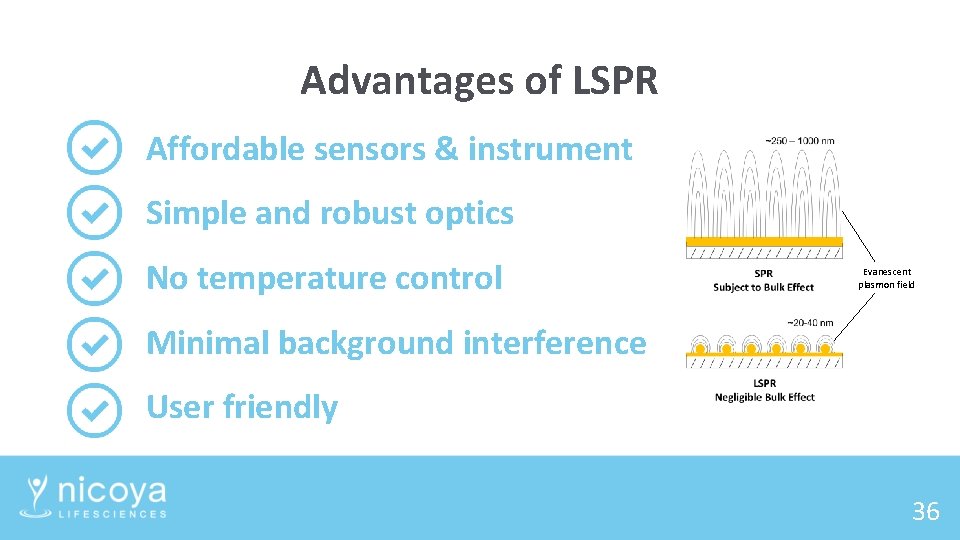
Advantages of LSPR Affordable sensors & instrument Simple and robust optics No temperature control Evanescent plasmon field Minimal background interference User friendly 36
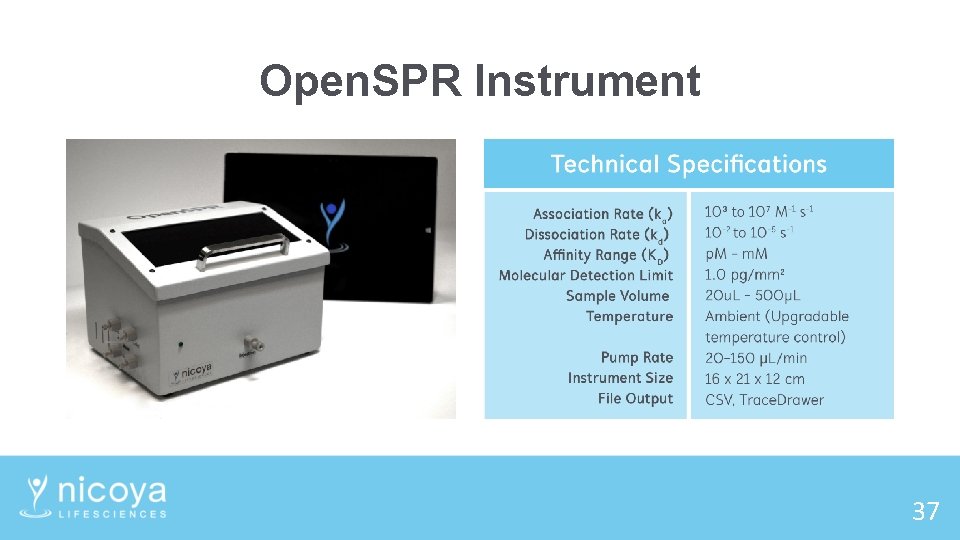
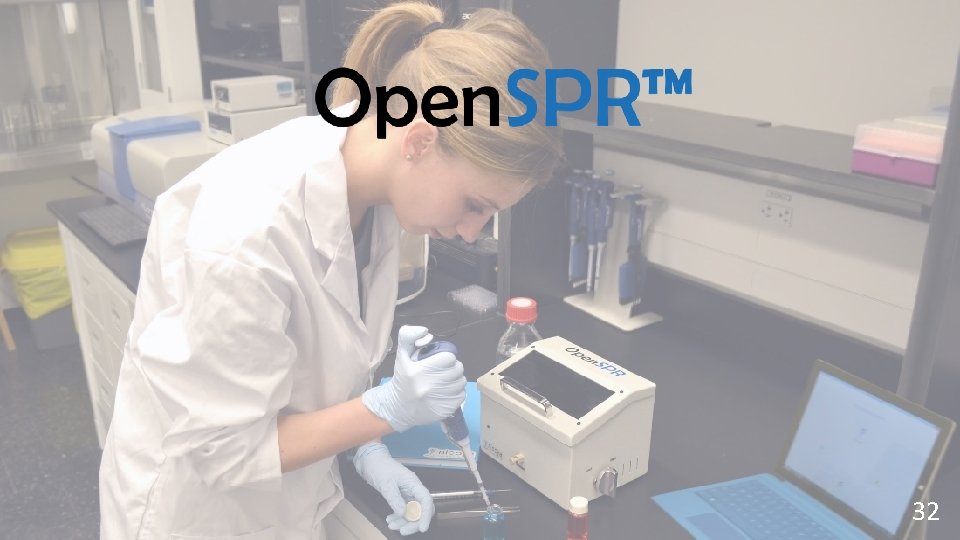
Open. SPR Instrument 37
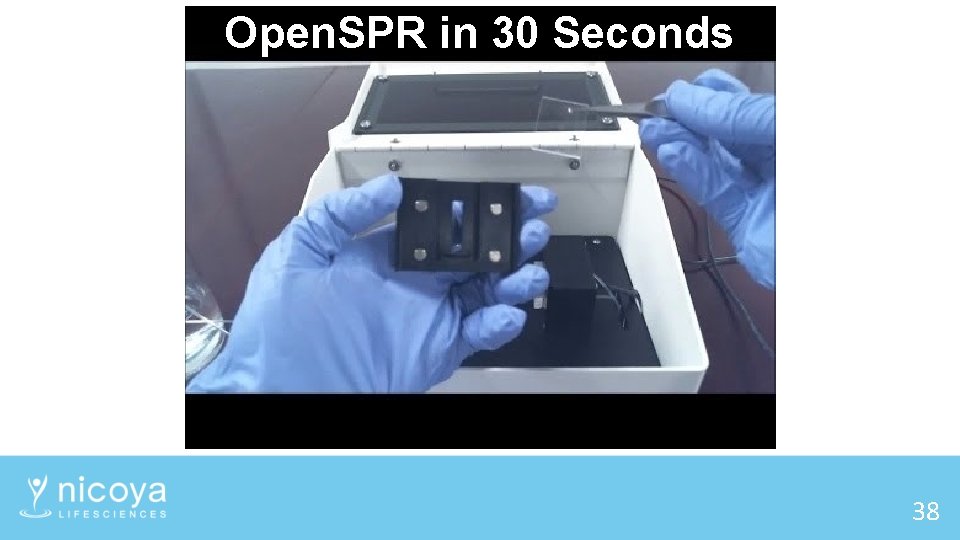
Open. SPR in 30 Seconds 38
Recap What did I learn today? • SPR data and comparison • Optimizing binding kinetics • SPR applications • 30 seconds with Open. SPR 39
Recap What did I learn today? • SPR data and comparison • Optimizing binding kinetics • SPR applications • 30 seconds with Open. SPR 39
Recap What did I learn today? • SPR data and comparison • Optimizing binding kinetics • SPR applications • 30 seconds with Open. SPR 39
Recap What did I learn today? • SPR data and comparison • Optimizing binding kinetics • SPR applications • 30 seconds with Open. SPR 39

You’re in good company. 40
Questions or Comments? Donna Nguyen Application Scientist donna@nicoyalife. com 1 877 -673 -6777 ext. 708 www. nicoyalife. com
Thanks for Listening! Let’s Connect: linkedin. com/company /nicoya-lifesciences @Nicoya. Lifesciences @Nicoya_Life @nicoyalifesciences
- Slides: 74