
WEBERS LAW AND SENSORY ADAPTATION Maneesha Ram Sanita
WEBER’S LAW AND SENSORY ADAPTATION Maneesha Ram Sanita Boparai

Difference Threshold � the minimum amount of difference between two stimuli so that a person can be able to detect the difference
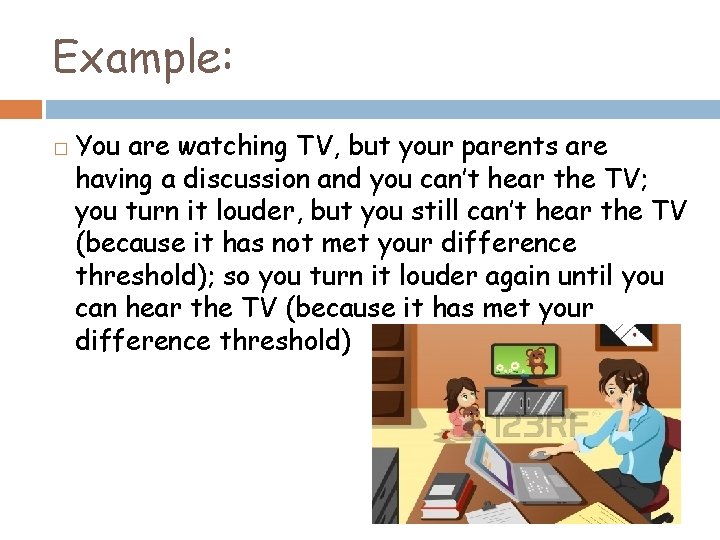
Example: � You are watching TV, but your parents are having a discussion and you can’t hear the TV; you turn it louder, but you still can’t hear the TV (because it has not met your difference threshold); so you turn it louder again until you can hear the TV (because it has met your difference threshold)
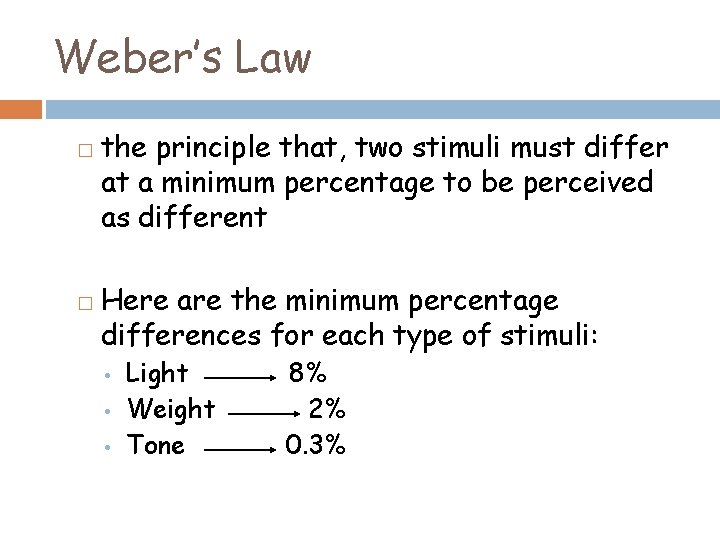
Weber’s Law � � the principle that, two stimuli must differ at a minimum percentage to be perceived as different Here are the minimum percentage differences for each type of stimuli: • • • Light Weight Tone 8% 2% 0. 3%
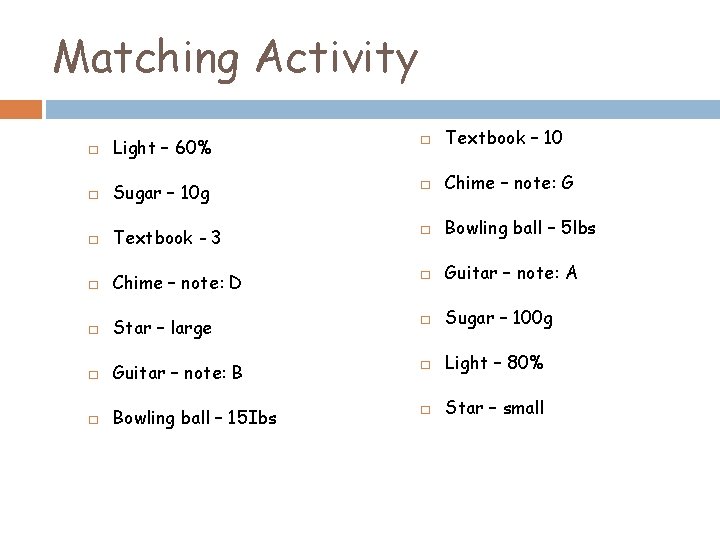
Matching Activity � Light – 60% � Textbook – 10 � Sugar – 10 g � Chime – note: G � Textbook - 3 � Bowling ball – 5 lbs � Chime – note: D � Guitar – note: A � Star – large � Sugar – 100 g � Guitar – note: B � Light – 80% � Bowling ball – 15 Ibs � Star – small

Sensory Adaptation � Diminished sensitivity as a consequence of constant stimulation ➢ After a constant exposure to a stimulus, the nerve cells in the body start to fire less
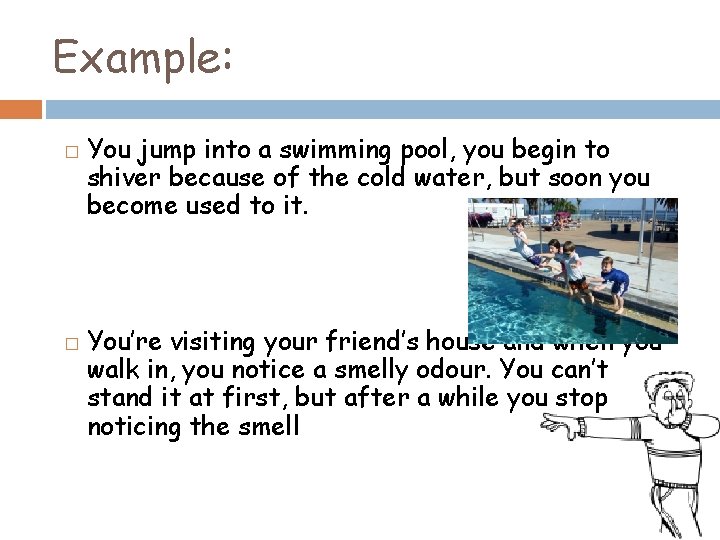
Example: � � You jump into a swimming pool, you begin to shiver because of the cold water, but soon you become used to it. You’re visiting your friend’s house and when you walk in, you notice a smelly odour. You can’t stand it at first, but after a while you stop noticing the smell
Interactive Activities � Perfume: Can you still smell the perfume we sprayed at the beginning of our presentation? � Silent Ball (Light room vs. Dark room)
- Slides: 8