
Web Metrics Sean Fox Science Education Resource Center
Web Metrics Sean Fox Science Education Resource Center Carleton College http: //serc. carleton. edu
Web Metrics/Web Analytics • Recording and analyzing direct computer interactions that we hope reflect website use by real people. • Incremental improvements on the same old ‘digging through the web logs” we did a decade ago.

Collecting the Data • Web server logs – Easy to get – Only reflects actual requests to the server (which often isn’t what we really care about…) • Javascript ‘Bugs’ – Records page views (window. on. Load events) – Avoids spiders – Easier to coordinate with 3 rd party services
The easy numbers beg to be misinterpreted • Caching. – Do you know what your headers say? • • Session Reconstruction and Proxies Cookies and Javascript turned off ? ? It’s really not that bad. Irrelevant (to us) Use? – If a visitor figures out they are in the wrong site right away and leaves was it a successful visit? – Spiders – Web services…(what’s a user/visitor? )
There’s still value there • Know what question you’re trying to ask. • Integrate web metrics into overall evaluation; ask complementary questions from multiple directions. • Look carefully, keeping all sources of error firmly in mind. Then look again even more carefully. • Fancy packages won’t give you answers. It will take thinking and digging (perhaps in addition to a fancy package).
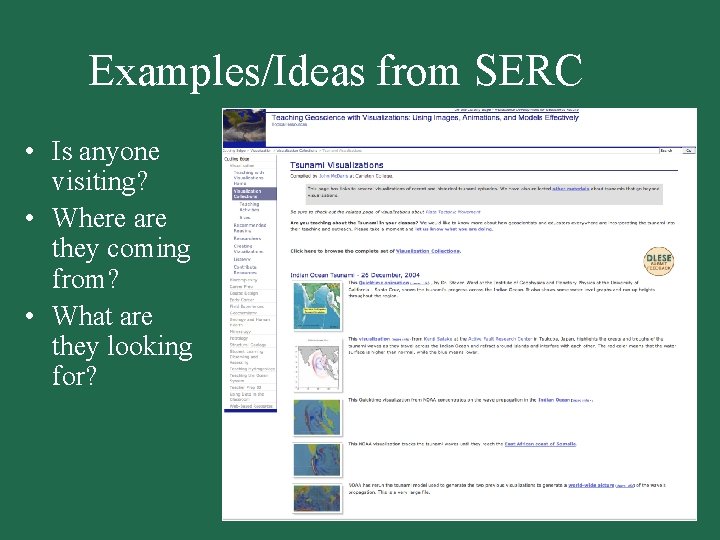
Examples/Ideas from SERC • Is anyone visiting? • Where are they coming from? • What are they looking for?

Visitors to the Tsunami Page

Try the same thing for Hurricanes Katrina, Rita, and Wilma?
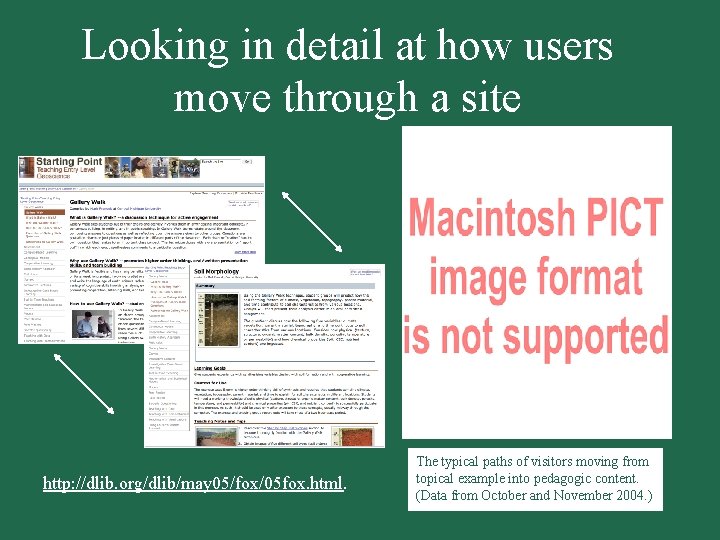
Looking in detail at how users move through a site http: //dlib. org/dlib/may 05/fox/05 fox. html. The typical paths of visitors moving from topical example into pedagogic content. (Data from October and November 2004. )

Questions? http: //serc. carleton. edu
- Slides: 10