
Weathering Weathering the breaking down and changing of
Weathering
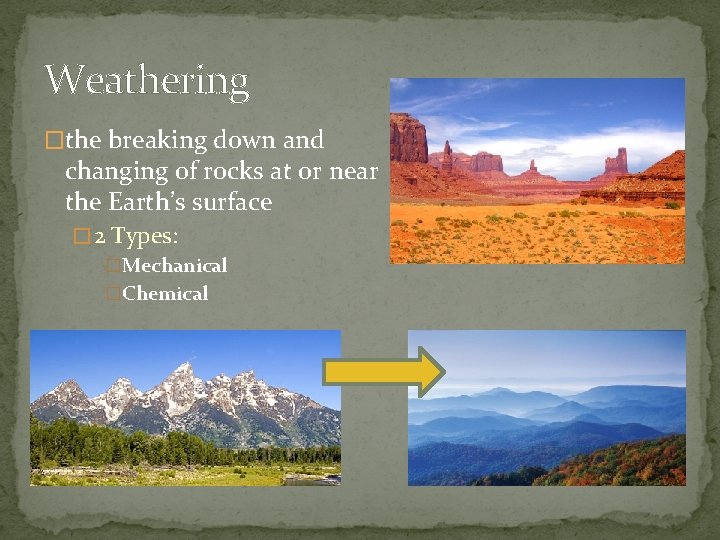
Weathering �the breaking down and changing of rocks at or near the Earth’s surface � 2 Types: �Mechanical �Chemical
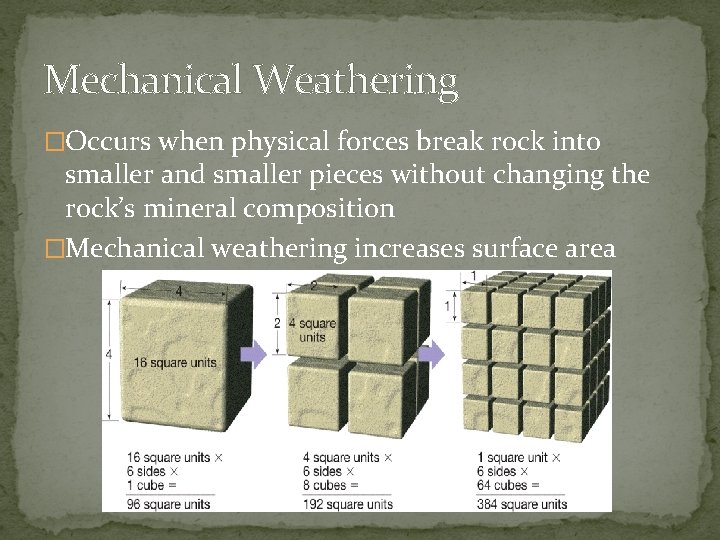
Mechanical Weathering �Occurs when physical forces break rock into smaller and smaller pieces without changing the rock’s mineral composition �Mechanical weathering increases surface area
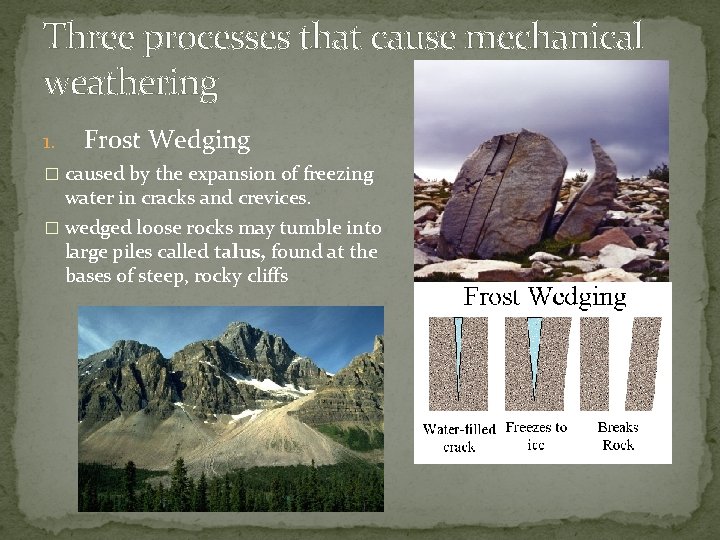
Three processes that cause mechanical weathering 1. Frost Wedging � caused by the expansion of freezing water in cracks and crevices. � wedged loose rocks may tumble into large piles called talus, found at the bases of steep, rocky cliffs

Three processes that cause mechanical weathering 2. Unloading/Exfoliation � Reduced pressure on igneous rock causes it to expand allows slabs of outer rock to break off in layers in a process called exfoliation
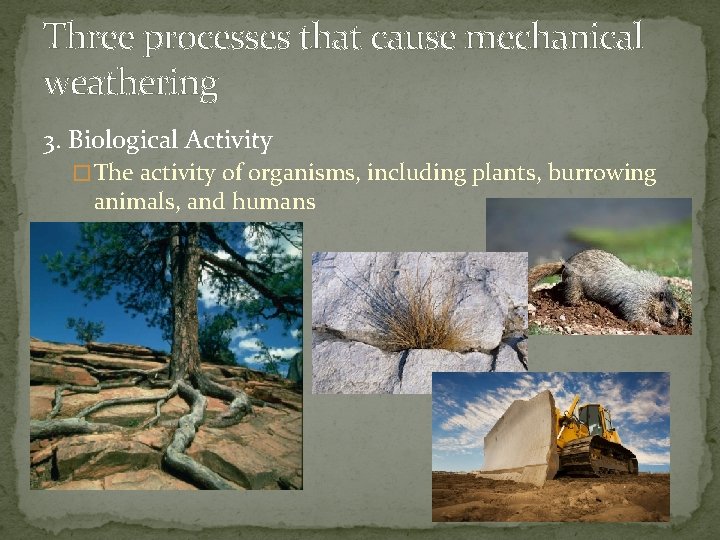
Three processes that cause mechanical weathering 3. Biological Activity � The activity of organisms, including plants, burrowing animals, and humans
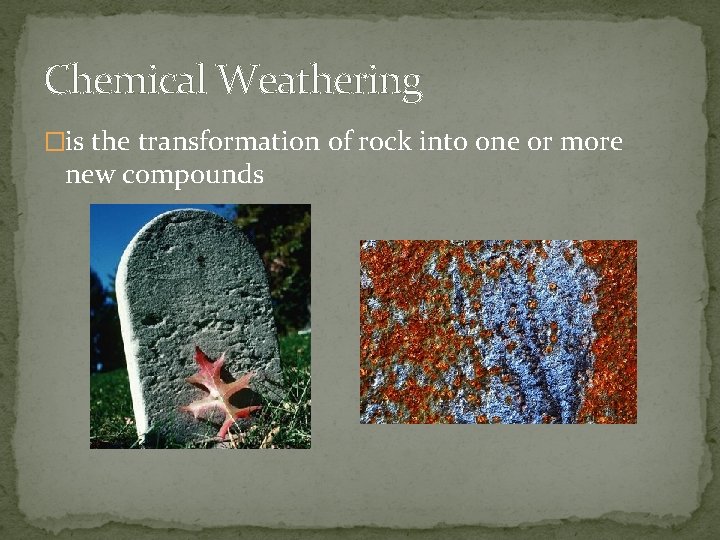
Chemical Weathering �is the transformation of rock into one or more new compounds
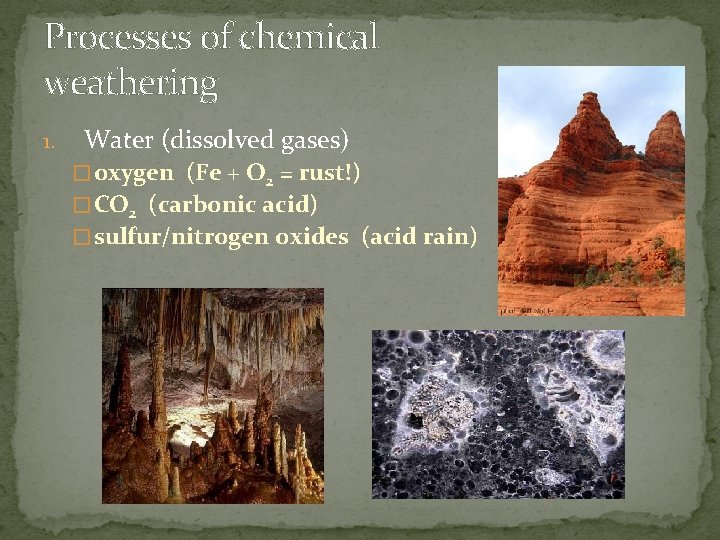
Processes of chemical weathering 1. Water (dissolved gases) � oxygen (Fe + O 2 = rust!) � CO 2 (carbonic acid) � sulfur/nitrogen oxides (acid rain)
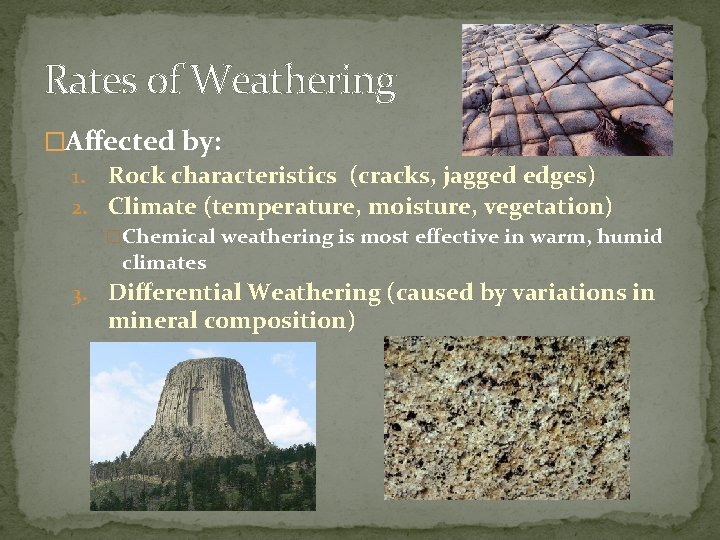
Rates of Weathering �Affected by: 1. Rock characteristics (cracks, jagged edges) 2. Climate (temperature, moisture, vegetation) �Chemical weathering is most effective in warm, humid climates 3. Differential Weathering (caused by variations in mineral composition)
- Slides: 9