
Weathering Weathering breaking down and changing the rocks
Weathering
�Weathering –breaking down and changing the rocks on Earth’s surface � 2 main types
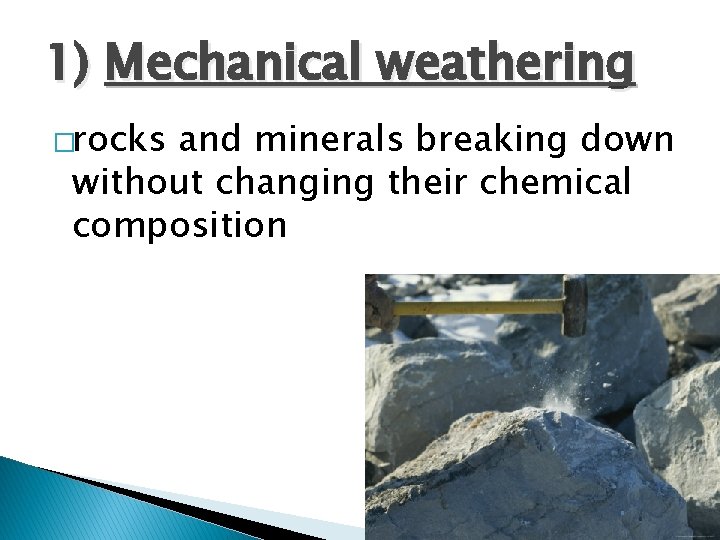
1) Mechanical weathering �rocks and minerals breaking down without changing their chemical composition
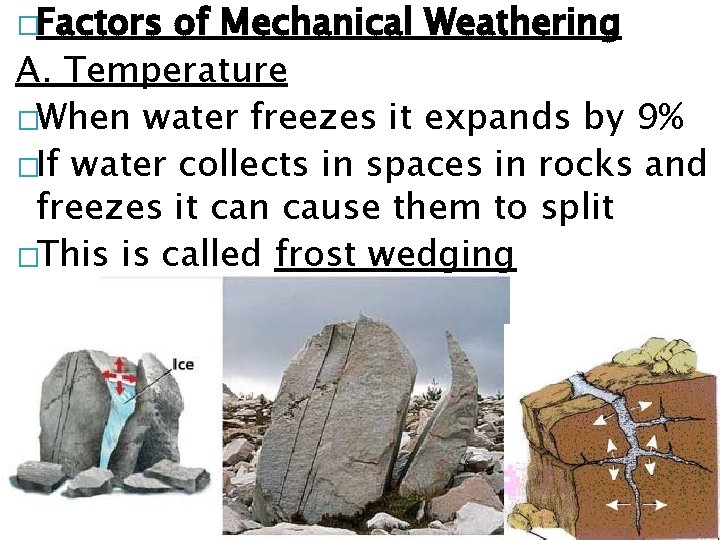
�Factors of Mechanical Weathering A. Temperature �When water freezes it expands by 9% �If water collects in spaces in rocks and freezes it can cause them to split �This is called frost wedging
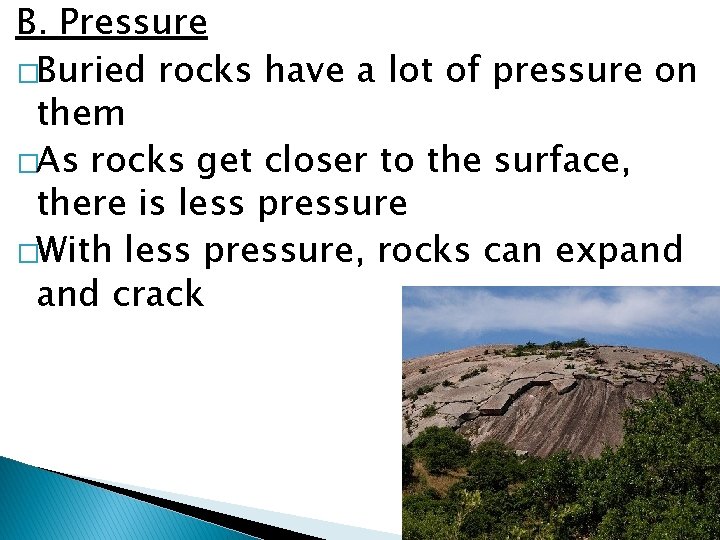
B. Pressure �Buried rocks have a lot of pressure on them �As rocks get closer to the surface, there is less pressure �With less pressure, rocks can expand crack
2) Chemical weathering �rocks and minerals undergo changes due to chemical reactions
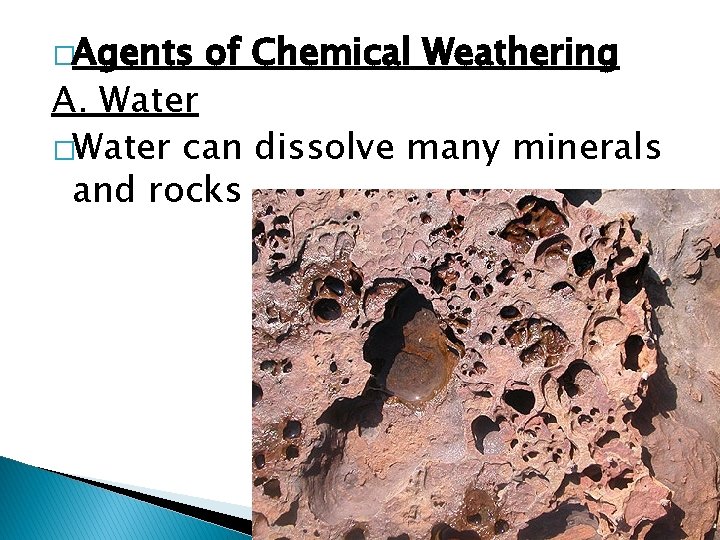
�Agents of Chemical Weathering A. Water �Water can dissolve many minerals and rocks
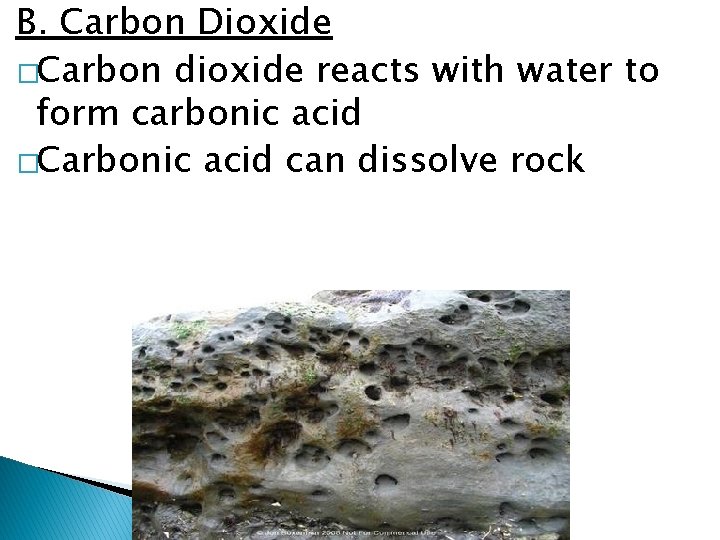
B. Carbon Dioxide �Carbon dioxide reacts with water to form carbonic acid �Carbonic acid can dissolve rock
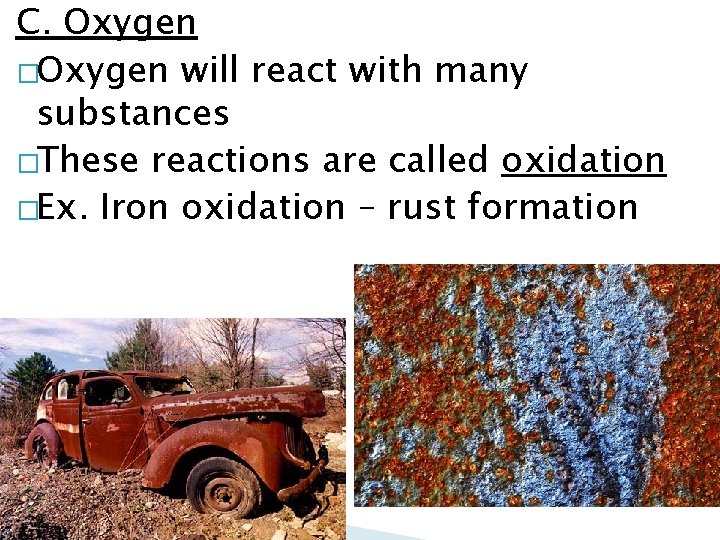
C. Oxygen �Oxygen will react with many substances �These reactions are called oxidation �Ex. Iron oxidation – rust formation

D. Acid precipitation �Caused by human activities (pollution) ◦ Sulfuric acid – burning coal ◦ Nitric acids – car exhaust �cause other problems as well
What affects rates of weathering? �Climate �High chemical weathering in warm, moist climates �High mechanical in cool, dry climates
�Rock type and composition �Igneous resist weathering �Sedimentary would be most vulnerable �Surface area �More rock above ground = more rock exposed to weathering �Topography �Level areas weather less than slopes
- Slides: 12