
Weathering Unit 4 Lesson 2 Mechanical and Chemical
- Slides: 12
Weathering Unit 4: Lesson 2 Mechanical and Chemical
TEKS: Analyze the effects of weathering, erosion, and deposition on the environment in Texas’ Eco-regions.
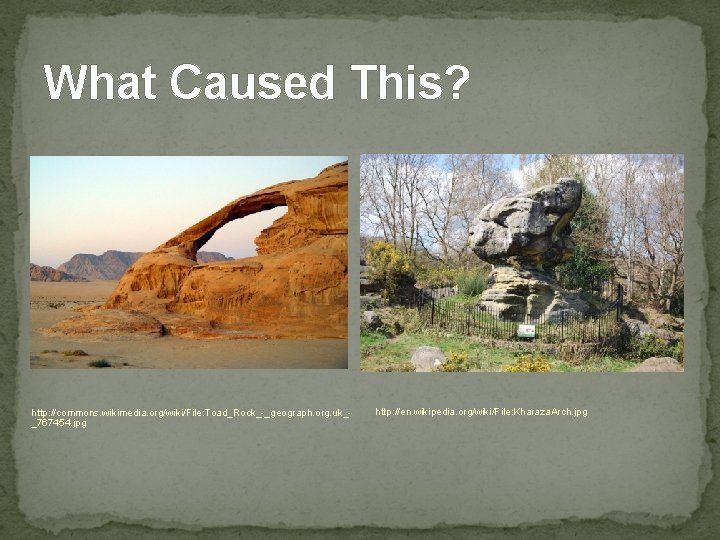
What Caused This? http: //commons. wikimedia. org/wiki/File: Toad_Rock_-_geograph. org. uk__767454. jpg http: //en. wikipedia. org/wiki/File: Kharaza. Arch. jpg
What is Weathering? • First step to forming soil and sedimentary rock – Breakdown of rock into smaller pieces – The smaller pieces do not move to a new location until erosion carries them away. – Many types of weathering
What is Mechanical Weathering? Breakdown of rock into smaller pieces without any change in the composition of its minerals Sometimes called “physical” weathering Rock is torn apart by physical force Smaller pieces do not move to a new location until erosion carries them away.
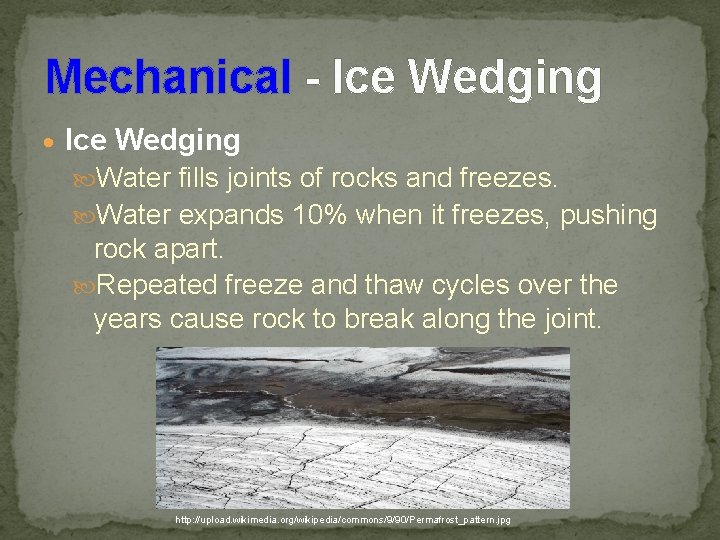
Mechanical - Ice Wedging Water fills joints of rocks and freezes. Water expands 10% when it freezes, pushing rock apart. Repeated freeze and thaw cycles over the years cause rock to break along the joint. http: //upload. wikimedia. org/wikipedia/commons/9/90/Permafrost_pattern. jpg
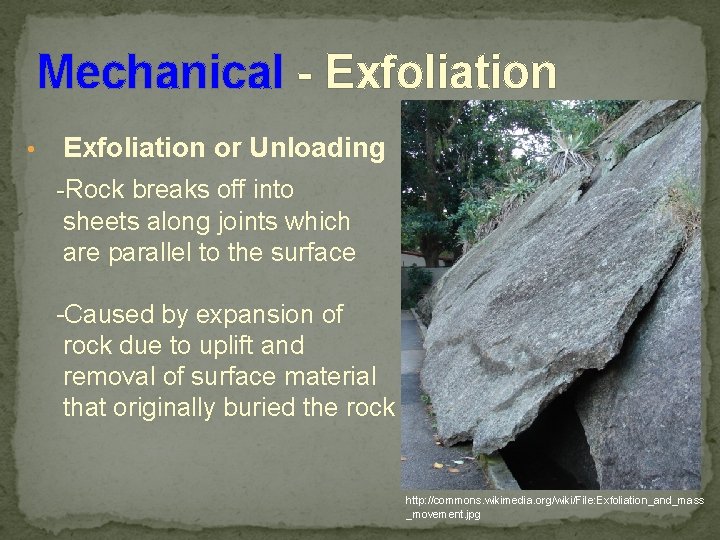
Mechanical - Exfoliation • Exfoliation or Unloading -Rock breaks off into sheets along joints which are parallel to the surface -Caused by expansion of rock due to uplift and removal of surface material that originally buried the rock http: //commons. wikimedia. org/wiki/File: Exfoliation_and_mass _movement. jpg
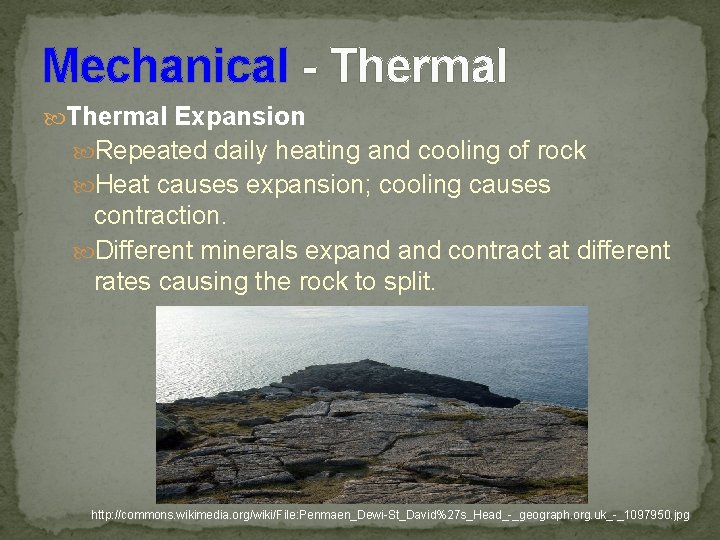
Mechanical - Thermal Expansion Repeated daily heating and cooling of rock Heat causes expansion; cooling causes contraction. Different minerals expand contract at different rates causing the rock to split. http: //commons. wikimedia. org/wiki/File: Penmaen_Dewi-St_David%27 s_Head_-_geograph. org. uk_-_1097950. jpg
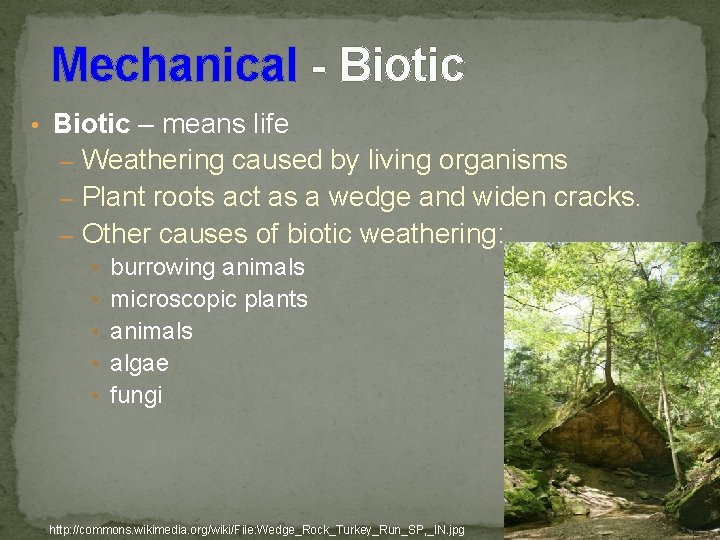
Mechanical - Biotic • Biotic – means life – Weathering caused by living organisms – Plant roots act as a wedge and widen cracks. – Other causes of biotic weathering: • burrowing animals • microscopic plants • animals • algae • fungi http: //commons. wikimedia. org/wiki/File: Wedge_Rock_Turkey_Run_SP, _IN. jpg
What is Chemical Weathering? • Chemical reactions break down the bonds holding the rocks together, causing them to fall apart. – Occurs in all types of rock. – Rock reacts with water, gases, and solutions.
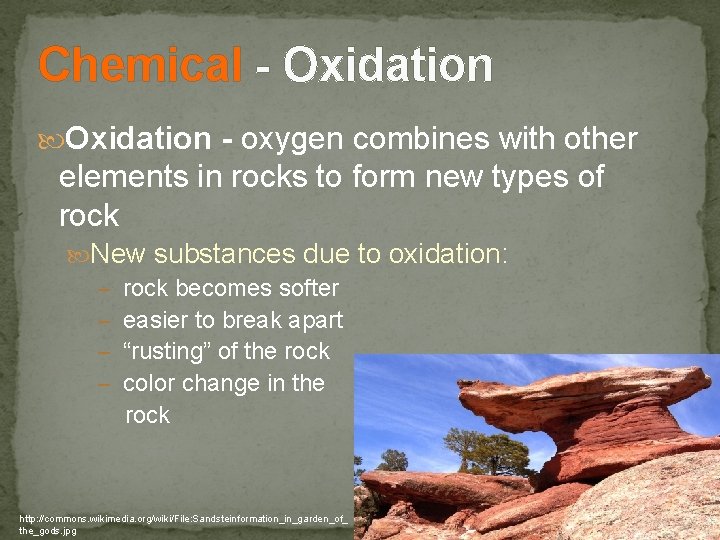
Chemical - Oxidation - oxygen combines with other elements in rocks to form new types of rock New substances due to oxidation: – rock becomes softer – easier to break apart – “rusting” of the rock – color change in the rock http: //commons. wikimedia. org/wiki/File: Sandsteinformation_in_garden_of_ the_gods. jpg
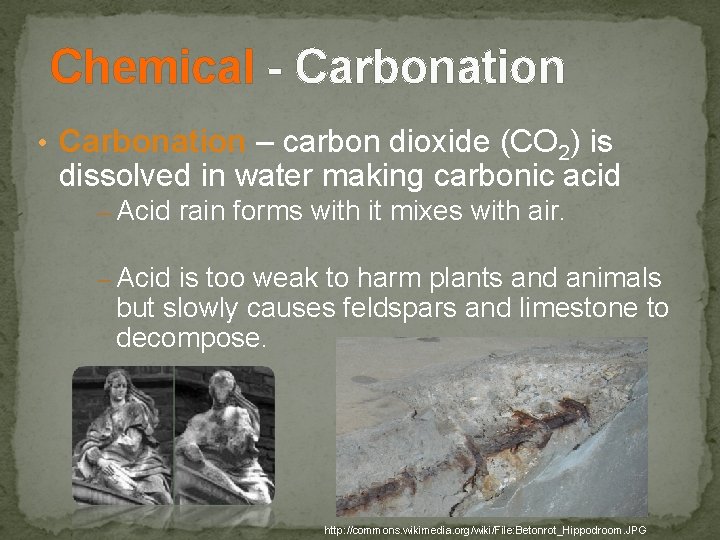
Chemical - Carbonation • Carbonation – carbon dioxide (CO 2) is dissolved in water making carbonic acid – Acid rain forms with it mixes with air. – Acid is too weak to harm plants and animals but slowly causes feldspars and limestone to decompose. http: //commons. wikimedia. org/wiki/File: Betonrot_Hippodroom. JPG