
Weathering The process by which rock is broken
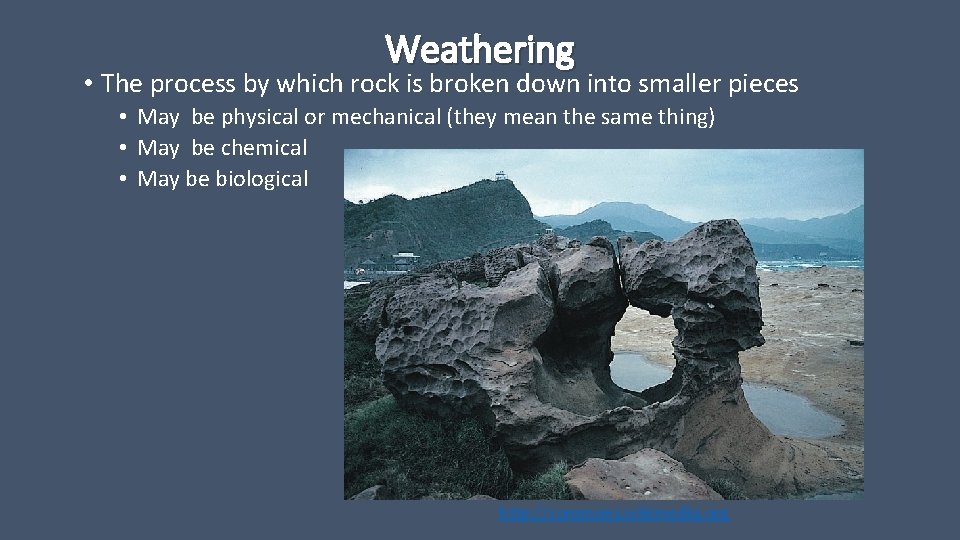
Weathering • The process by which rock is broken down into smaller pieces • May be physical or mechanical (they mean the same thing) • May be chemical • May be biological http: //commons. wikimedia. org
Physical or Mechanical • Agents (things that cause weathering): • • • Ice (changes in temperature) Wind Water Gravity Plants Animals
Physical or Mechanical - Abrasion • Abrasion – the grinding or rubbing and wearing away of rock (think sandpaper) • Wind • Blows sand silt against rocks • Water • Carries sand, pebbles over rock • In fast-moving streams and rivers, pieces of rock that are being moved by the flow rub against one another and against other pieces resting on the river bed • Other rocks • Collide or tumble against each other • Gravity carries rocks downhill (think about landslides or rock falls) • Ice & glaciers • pieces of rock that are frozen into the ice are dragged along beneath the glacier • Plants • Roots grow in cracks. As the plant grows, the root becomes larger. The pressure of a growing root can be great. The pressure makes cracks in the rocks larger, and, as roots grow, the rocks break apart. • Animals

Physical or Mechanical - Abrasion • Plants (also biological weathering) • tree roots grow into fractures in a rock and break the rock apart • Animals can dig or burrow on rocks
Physical or Mechanical Agents • Ice • Frost action – alternate freezing and thawing (cold-hot-cold-hot) • Rock expands and contracts over and over until rocks cracks and breaks • Ice wedging – • Water gets into cracks in rocks during warm weather • Freezes during cold weather, expands and cracks rocks

Chemical Weathering • The process that breaks down rock through chemical changes • The decomposition of rocks due to chemical reactions occurring between the minerals in rocks and the environment • Creates holes or soft spots in rock, so the rock breaks apart more easily http: //commons. wikimedia. org
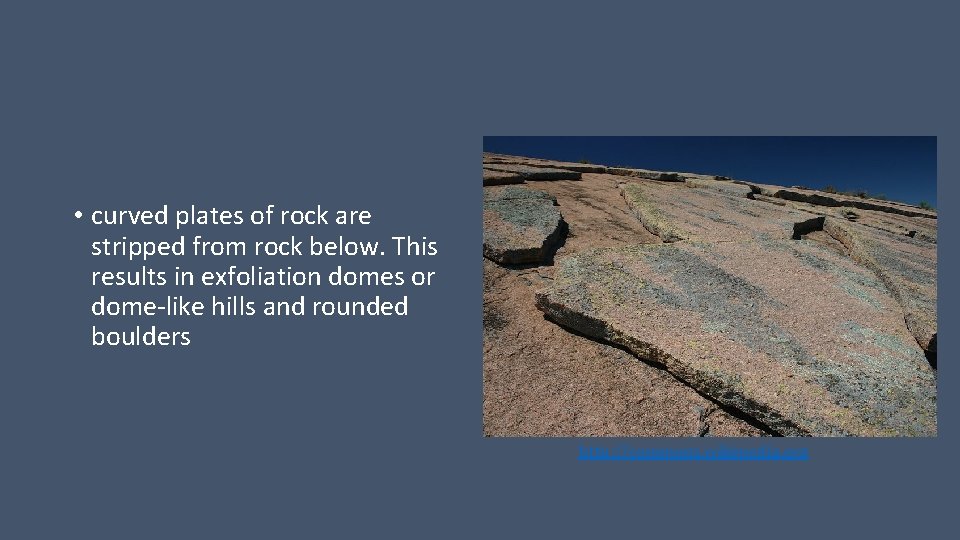
• curved plates of rock are stripped from rock below. This results in exfoliation domes or dome-like hills and rounded boulders http: //commons. wikimedia. org
Chemical Weathering • Agents (things that cause chemical weathering) • Water • The main agent of chemical weathering • Many minerals in rock react with water • Oxygen • When oxygen combines with some other substances, a new substance is formed (think about rust) • Carbon dioxide in the air or soil can combine with water • Produces a weak acid, called carbonic acid, that can dissolve rock. • Plants • Produce weak acids that dissolve the rock (biological weathering) • Lichens (combinations of fungi and algae) which live on rocks, secrete acides that break down the rock • Animals
Relationship Between Mechanical & Chemical Weathering Chemical and mechanical weathering often go hand in hand; mechanical weathering breaks rock into pieces, this exposes more surface area to chemical weathering.
- Slides: 9