
Weathering Soil Weathering its effects Surface processes that
- Slides: 15
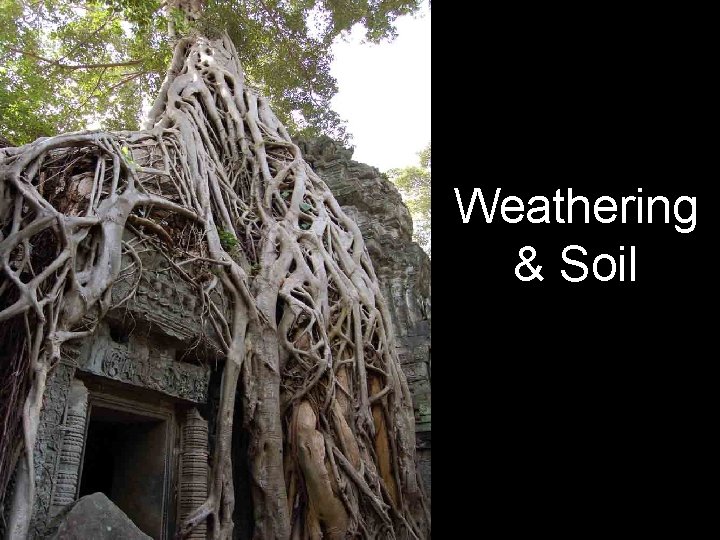
Weathering & Soil
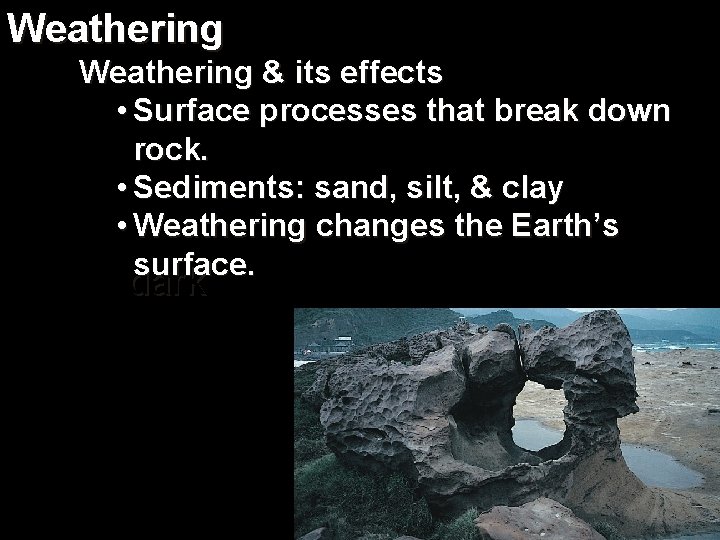
Weathering & its effects • Surface processes that break down rock. • Sediments: sand, silt, & clay • Weathering changes the Earth’s surface. dark
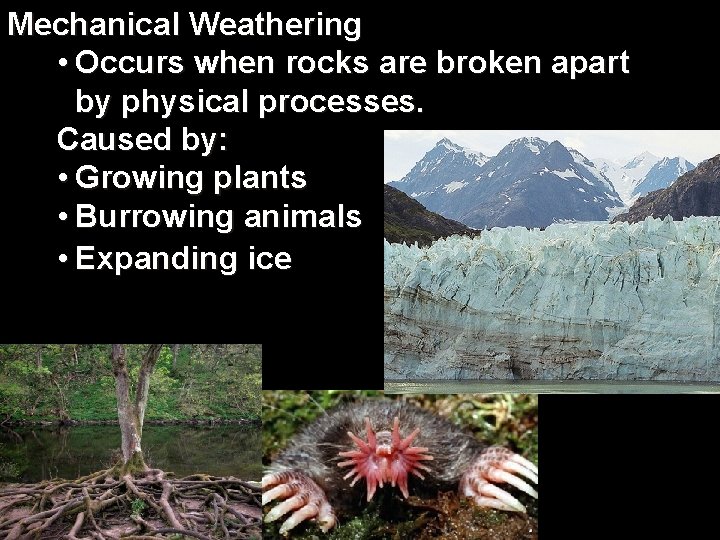
Mechanical Weathering • Occurs when rocks are broken apart by physical processes. Caused by: • Growing plants • Burrowing animals • Expanding ice
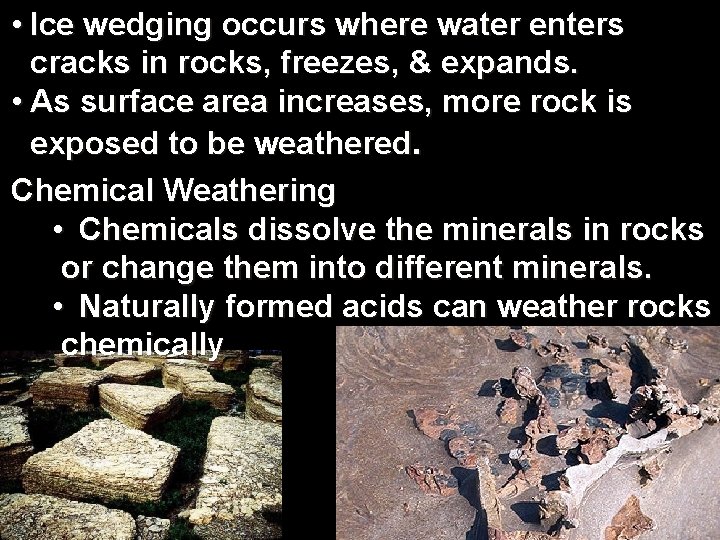
• Ice wedging occurs where water enters cracks in rocks, freezes, & expands. • As surface area increases, more rock is exposed to be weathered. Chemical Weathering • Chemicals dissolve the minerals in rocks or change them into different minerals. • Naturally formed acids can weather rocks chemically
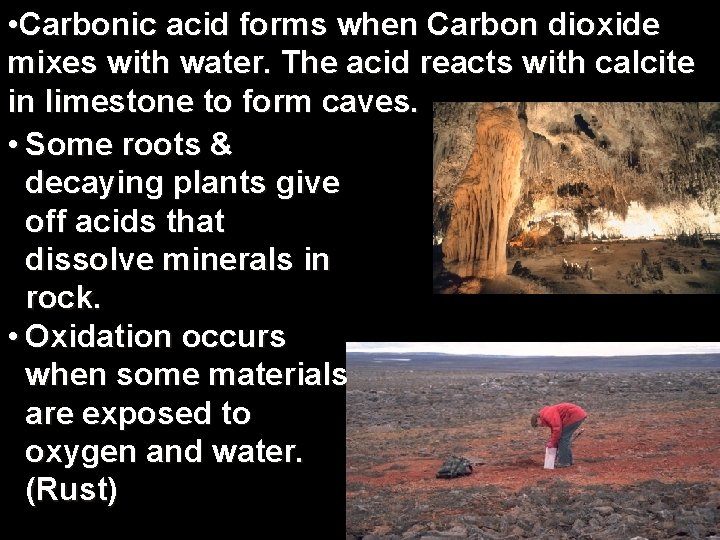
• Carbonic acid forms when Carbon dioxide mixes with water. The acid reacts with calcite in limestone to form caves. • Some roots & decaying plants give off acids that dissolve minerals in rock. • Oxidation occurs when some materials are exposed to oxygen and water. (Rust)
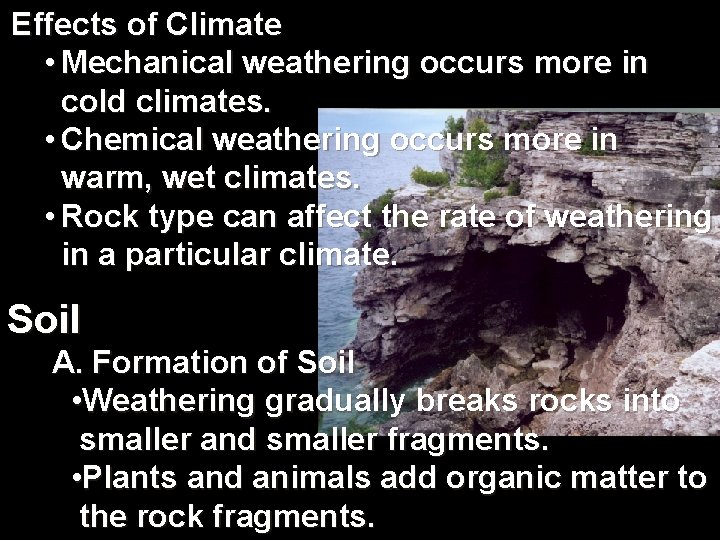
Effects of Climate • Mechanical weathering occurs more in cold climates. • Chemical weathering occurs more in warm, wet climates. • Rock type can affect the rate of weathering in a particular climate. Soil A. Formation of Soil • Weathering gradually breaks rocks into smaller and smaller fragments. • Plants and animals add organic matter to the rock fragments.
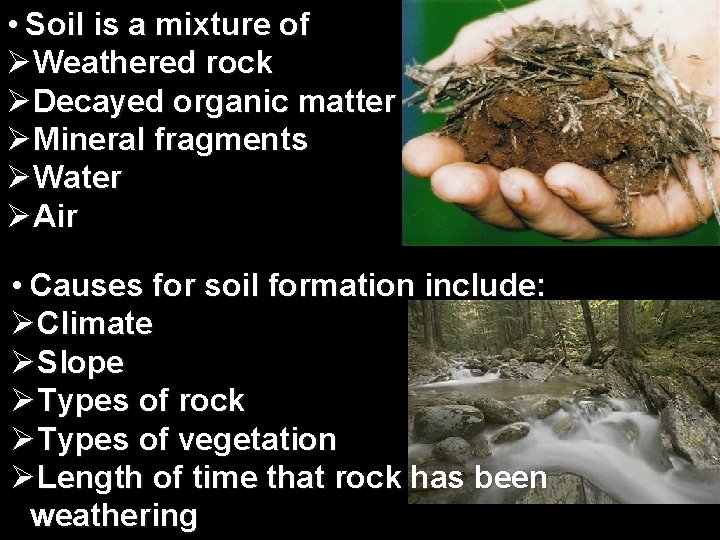
• Soil is a mixture of ØWeathered rock ØDecayed organic matter ØMineral fragments ØWater ØAir • Causes for soil formation include: ØClimate ØSlope ØTypes of rock ØTypes of vegetation ØLength of time that rock has been weathering
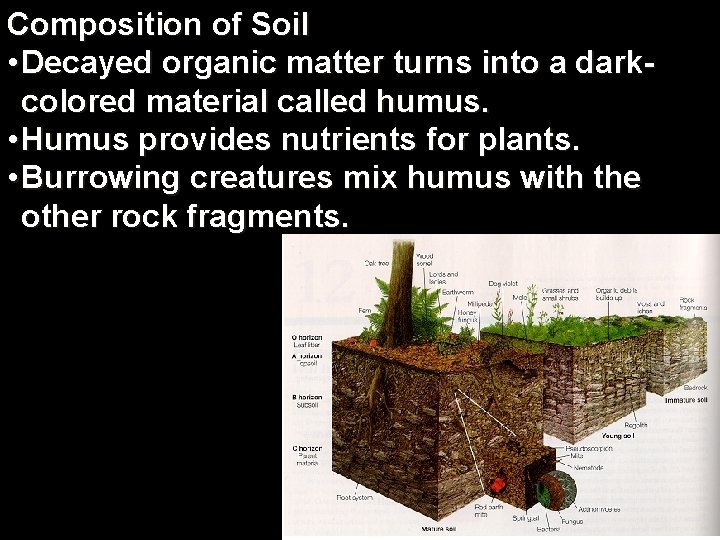
Composition of Soil • Decayed organic matter turns into a darkcolored material called humus. • Humus provides nutrients for plants. • Burrowing creatures mix humus with the other rock fragments.
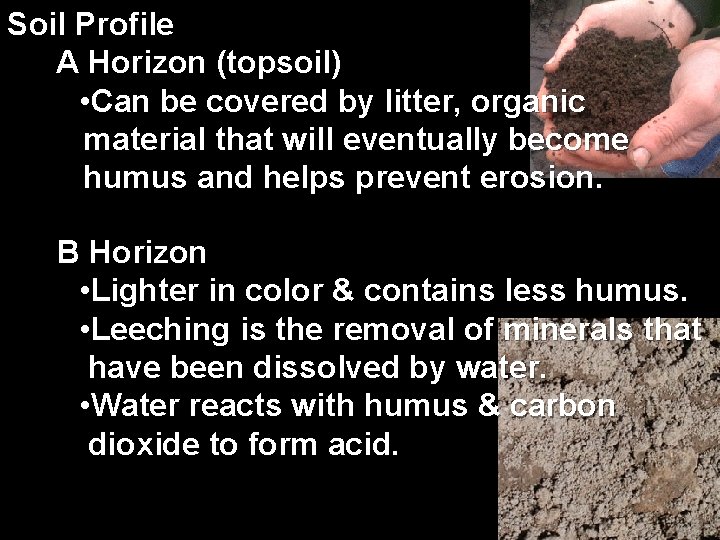
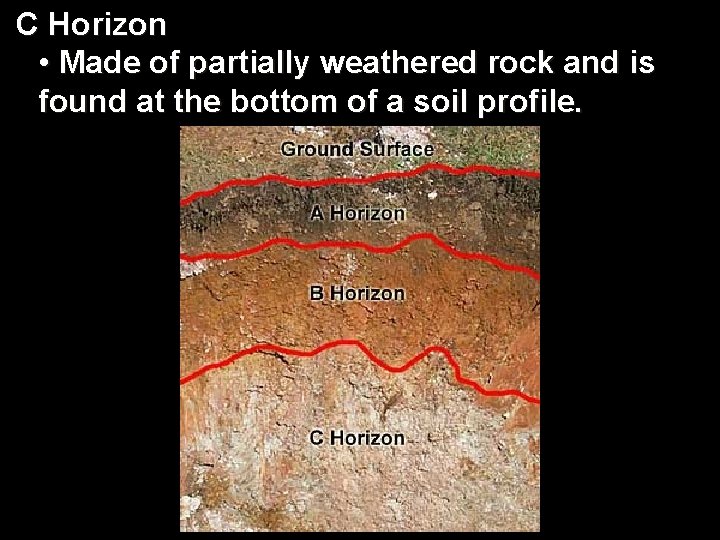
Soil Profile A Horizon (topsoil) • Can be covered by litter, organic material that will eventually become humus and helps prevent erosion. B Horizon • Lighter in color & contains less humus. • Leeching is the removal of minerals that have been dissolved by water. • Water reacts with humus & carbon dioxide to form acid.
C Horizon • Made of partially weathered rock and is found at the bottom of a soil profile.
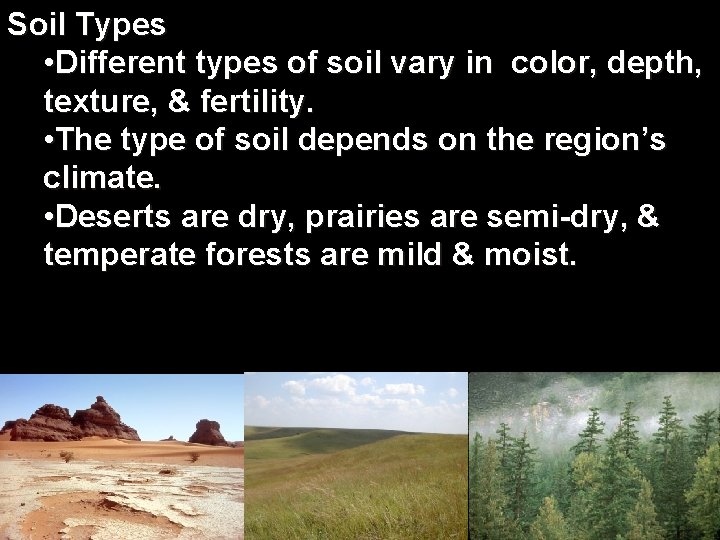
Soil Types • Different types of soil vary in color, depth, texture, & fertility. • The type of soil depends on the region’s climate. • Deserts are dry, prairies are semi-dry, & temperate forests are mild & moist.
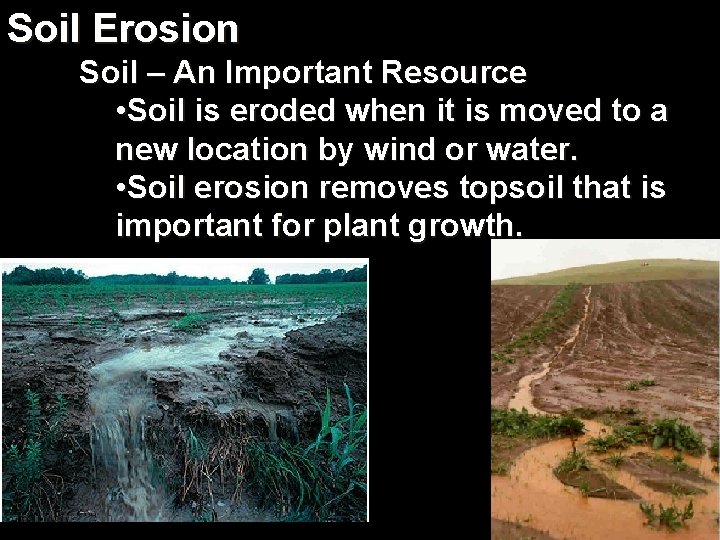
Soil Erosion Soil – An Important Resource • Soil is eroded when it is moved to a new location by wind or water. • Soil erosion removes topsoil that is important for plant growth.
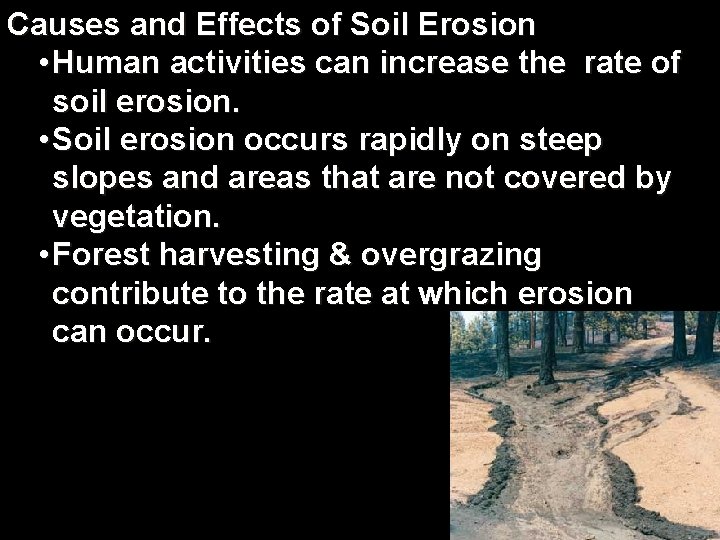
Causes and Effects of Soil Erosion • Human activities can increase the rate of soil erosion. • Soil erosion occurs rapidly on steep slopes and areas that are not covered by vegetation. • Forest harvesting & overgrazing contribute to the rate at which erosion can occur.
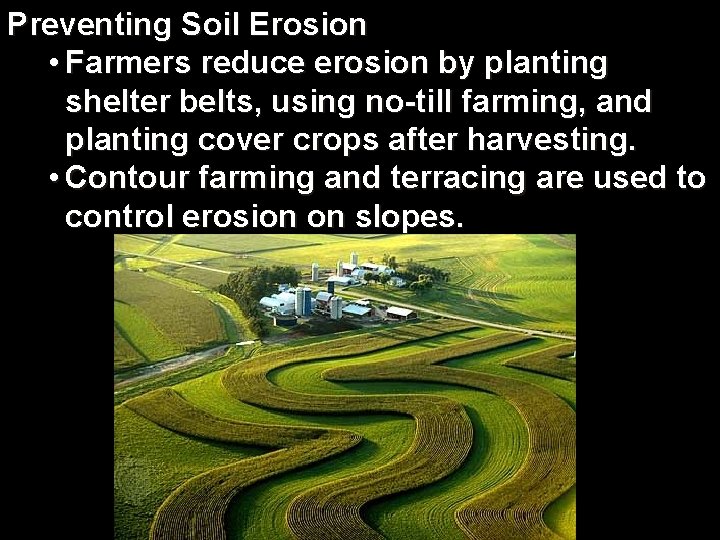
Preventing Soil Erosion • Farmers reduce erosion by planting shelter belts, using no-till farming, and planting cover crops after harvesting. • Contour farming and terracing are used to control erosion on slopes.
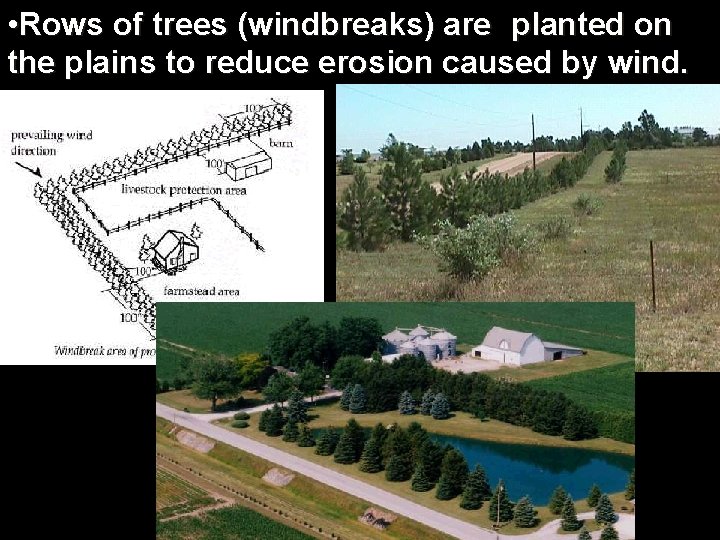
• Rows of trees (windbreaks) are planted on the plains to reduce erosion caused by wind.