
Weathering Erosion What is weathering Breakdown What is
Weathering & Erosion What is weathering? - Breakdown What is erosion? - Movement
Weathering • The breakdown of rocks into smaller particles by natural processes. – Ex: chopping up rocks into pebbles • Rocks break down into smaller pieces, and chemical reactions change them into new substances. • What causes weathering? – exposure to weather, air, water and living things • There are 2 Types of Weathering: • Physical / Mechanical and Chemical
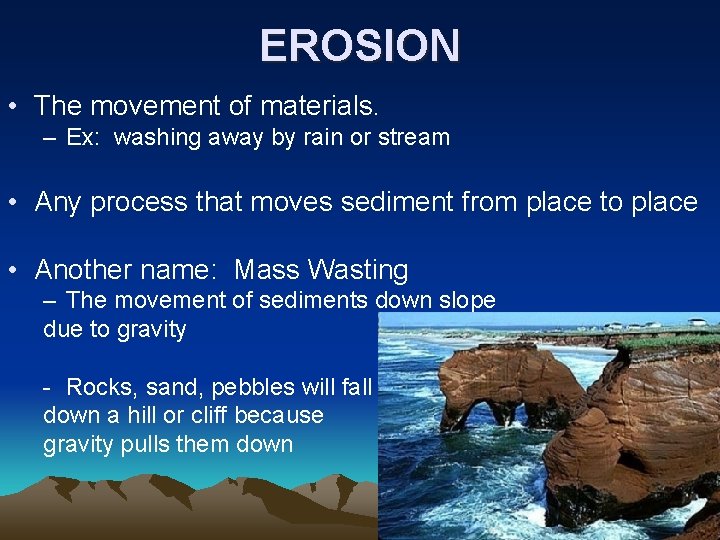
EROSION • The movement of materials. – Ex: washing away by rain or stream • Any process that moves sediment from place to place • Another name: Mass Wasting – The movement of sediments down slope due to gravity - Rocks, sand, pebbles will fall down a hill or cliff because gravity pulls them down
Types of Weathering #1 Mechanical / Physical • When rock is split or broken into loose fragments varying in size and shape. • These are processes that break down rocks without changing their chemical compositions.
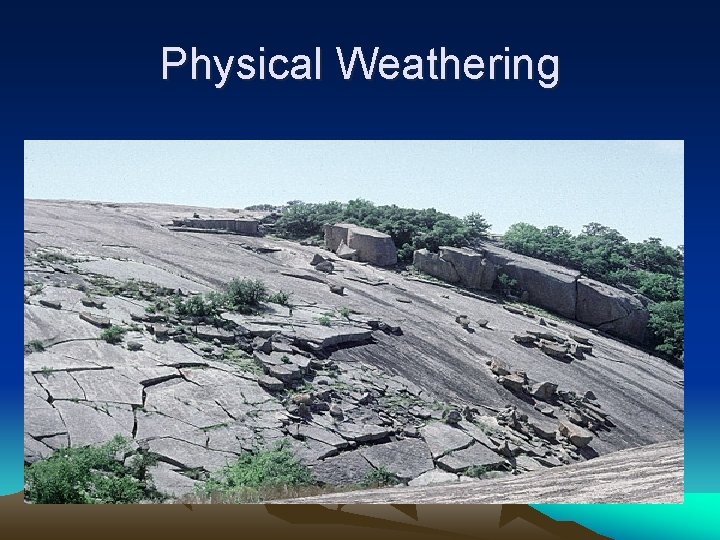
Physical Weathering
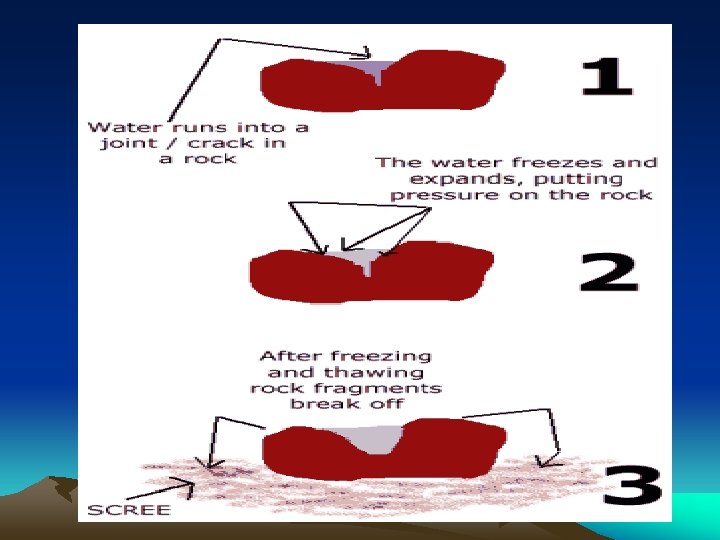
Physical Weathering • Frost Action Aka Ice-wedging. – Most significant physical weathering process. – Water enters the rocks through cracks and pores. Water freezes and expands acting as a wedge that widens the existing crack. – This process repeats itself until the rock breaks.
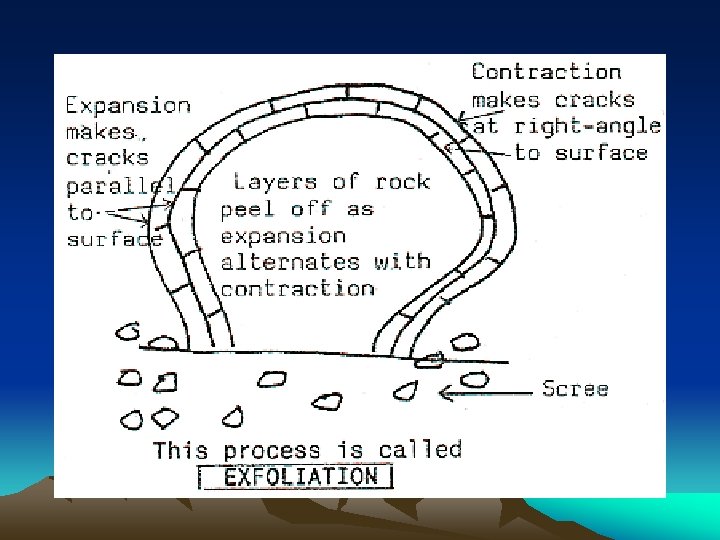
Physical Weathering • Abrasion: – Occurs when rocks rub against each other. – Happens most often when fragments are carried along by agents of erosion. • Sand wind • Exfoliation: – A physical process caused by expanding and contracting of rock. – Involves the peeling off of the surface of rocks. (feldspar)
Plant and Animal Action • Roots from plants and trees can break apart rock. – Roots grow into and further break apart existing cracks. • Visualize a sidewalk that has roots growing underneath it, its all bumpy and cracked. • Animals: worms, ants, and moles burrow into the soil: – This allows water and air to penetrate deeper and react with the underlying rock.
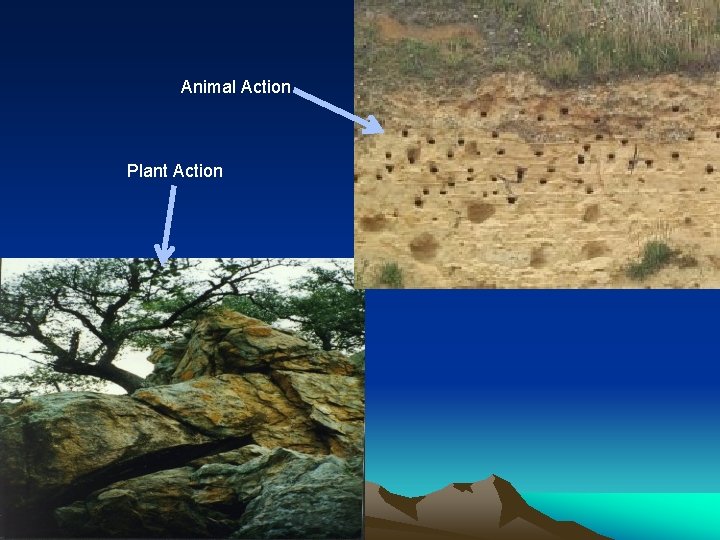
Animal Action Plant Action
• Extreme Temperature Change: – can cause mechanical weathering. – Rocks expand when heated and contract when they cool. • Pressure Unloading: – results when rocks that are formed deep in the Earth under extreme pressure reach the surface. – Rocks expand develop cracks. – Glacial activity can also cause unloading.
Types of Weathering #2 Chemical • Breaks down rocks by changing their chemical compositions. • When minerals in rocks are exposed to substances such as water, oxygen and carbon dioxide they may react to form new compounds with properties different from those of the original material.
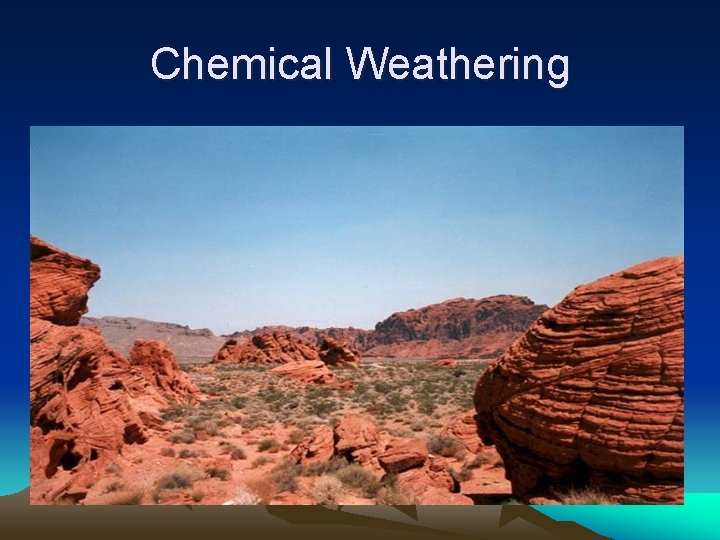
Chemical Weathering
Chemical Weathering • Water – Everyday trillions of gallons of water fall to Earth in the form of rain. – Water is part of the chemical weathering process in three primary ways. • Hydration: when water combines with another substance. – (anhydrite +water= gypsum)
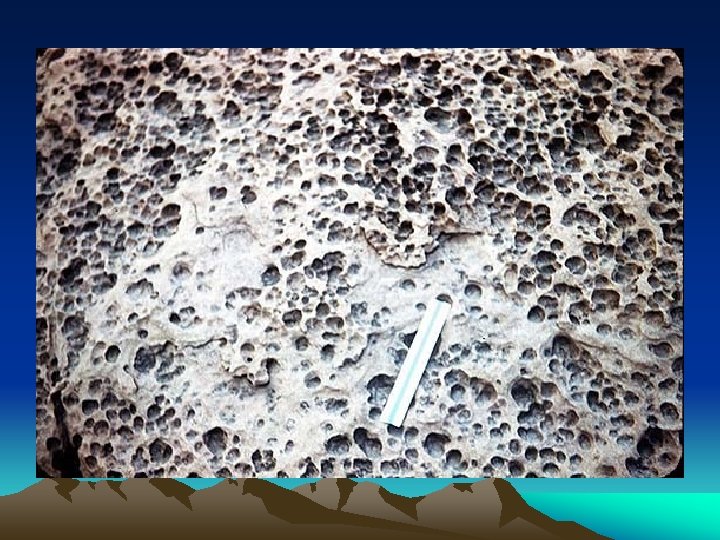
Types of Hydration • Hydrolysis: – any chemical reaction of water with other substances. • (feldspar—kaolinite). • Solution: – weathers rock by simply dissolving certain minerals. – Water is often called the universal solvent because it dissolves many different minerals.
• Carbonation: – Occurs when carbon dioxide and oxygen combine to form carbonic acid. – Easily dissolves sodium, potassium, calcite and limestone. – Caverns are great examples. • Acid Rain: – Accelerates the weathering rate of rock and man-made structures. – Human activity releases nitrogen and sulfur into the atmosphere which reacts with water and creates very strong acids. – Major environmental problem. • Smoke stacks and Canada?
Oxidation – Is the chemical reaction of oxygen with other substances. – More commonly known as rust. – Iron-bearing minerals are most easily attacked by oxygen. – Red colored rust means oxygen alone (hematite). – Brown rust, limonite is formed if water is also present.
Other Chemical Factors • Plants: – Decay of plants and animals produce natural acids. – Some plants produce acids that allow them to extract minerals from bare rock (lichens). • Man made acids: – gases produced by humans can dissolve in the water and form as waterdroplets in clouds making acid rain.
- Slides: 20