
Weathering Erosion Soils Weathering is the breakdown of
Weathering, Erosion & Soils Weathering is the breakdown of solid rock at or near the Earth's surface.
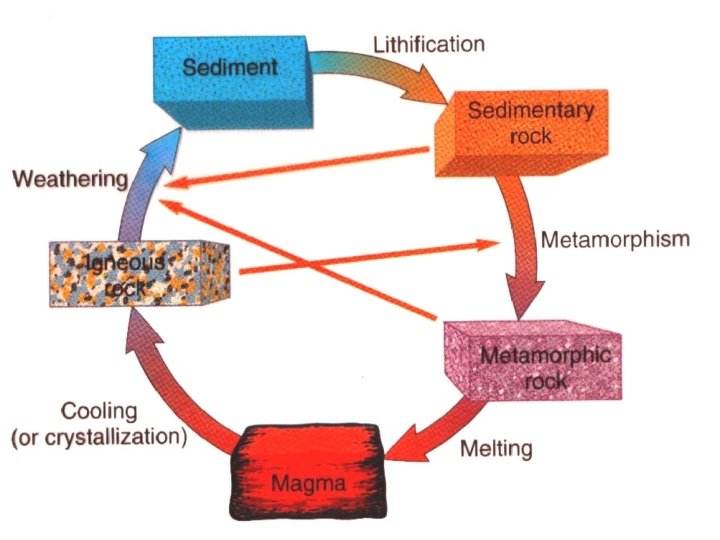
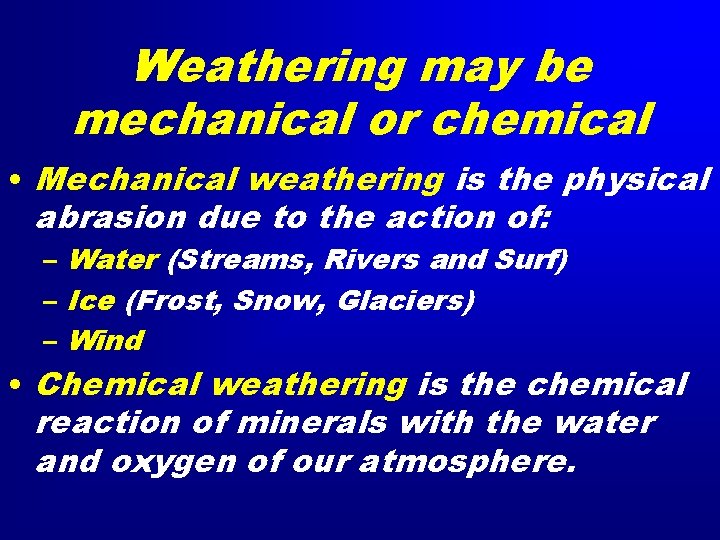
Weathering may be mechanical or chemical • Mechanical weathering is the physical abrasion due to the action of: – Water (Streams, Rivers and Surf) – Ice (Frost, Snow, Glaciers) – Wind • Chemical weathering is the chemical reaction of minerals with the water and oxygen of our atmosphere.

Mechanical Weathering • Mechanical Action of Streams and Rivers

Mechanical Weathering • By the Action of Ice
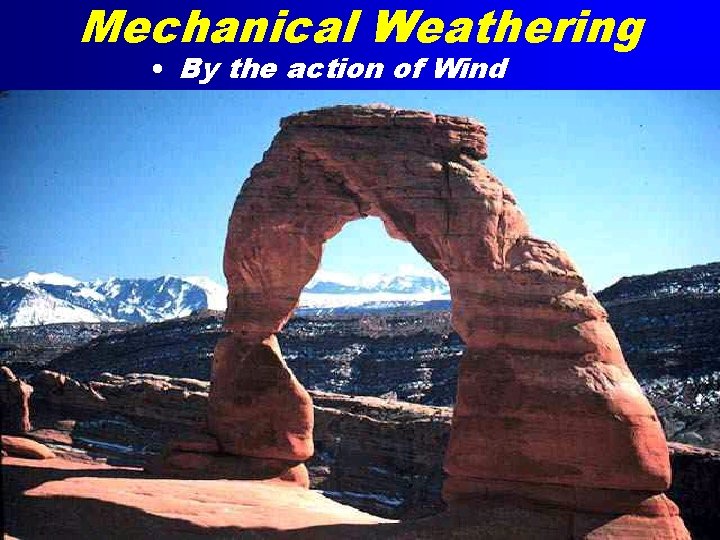
Mechanical Weathering • By the action of Wind
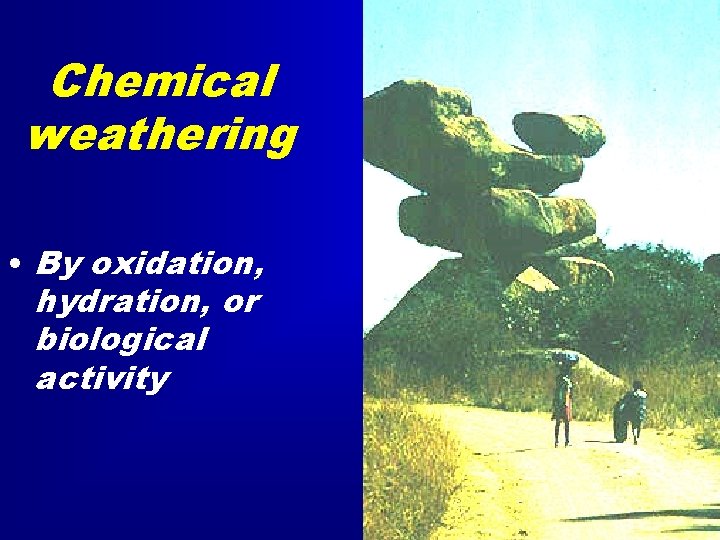
Chemical weathering • By oxidation, hydration, or biological activity
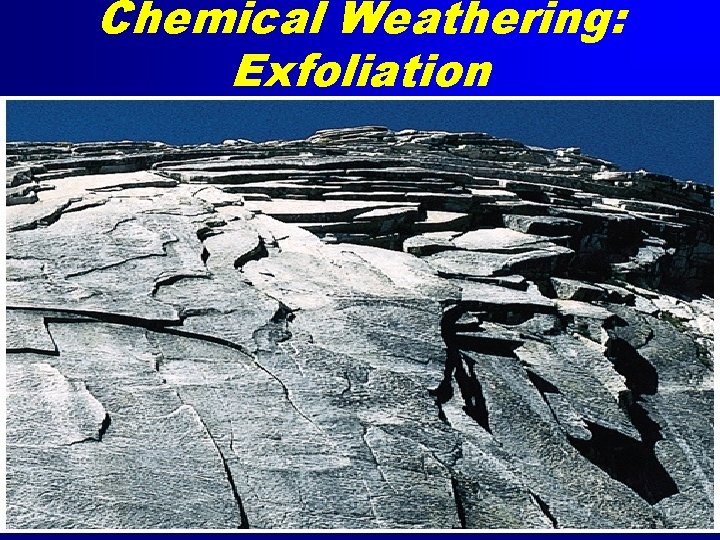
Chemical Weathering: Exfoliation
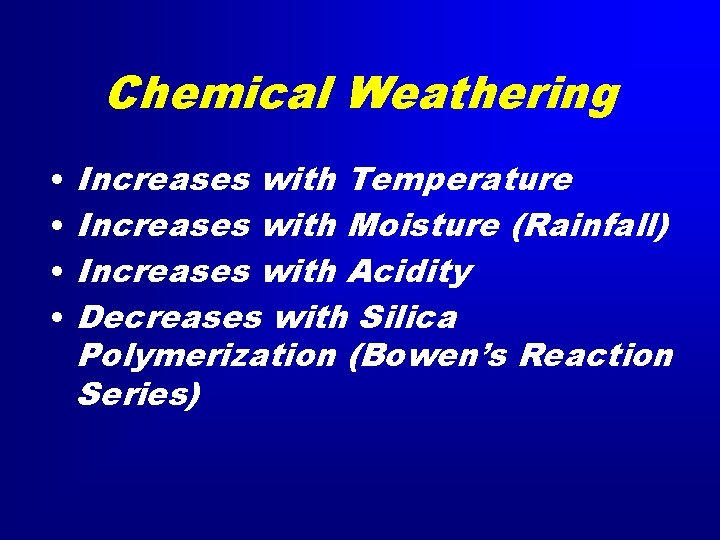
Chemical Weathering • • Increases with Temperature Increases with Moisture (Rainfall) Increases with Acidity Decreases with Silica Polymerization (Bowen’s Reaction Series)
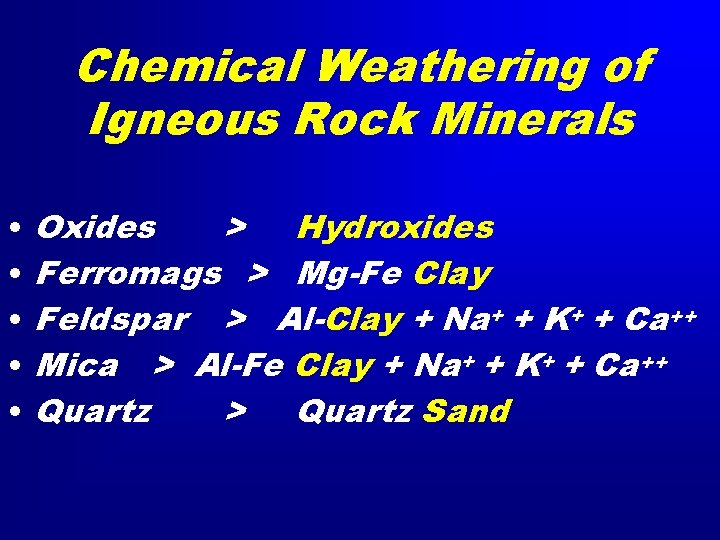
Chemical Weathering of Igneous Rock Minerals • • • Oxides > Hydroxides Ferromags > Mg-Fe Clay Feldspar > Al-Clay + Na+ + K+ + Ca++ Mica > Al-Fe Clay + Na+ + K+ + Ca++ Quartz > Quartz Sand
Erosion and Transport • Erosion is the reduction of exposed landforms. • Transport is the movement of eroded material down slope. • Transport by water sorts the particles by size. • Because different minerals dominate different size fractions, the deposited material differs from the parent rock in mineralogy and chemistry.
Weathering Products Are Sorted by Size • Coarse particles require moving water or wind – Rock grains: – Quartz: Pebbles, Cobbles, Boulders Pebbles and Sand • Fine particles require standing water. – Clays Very fine (<10 mm)
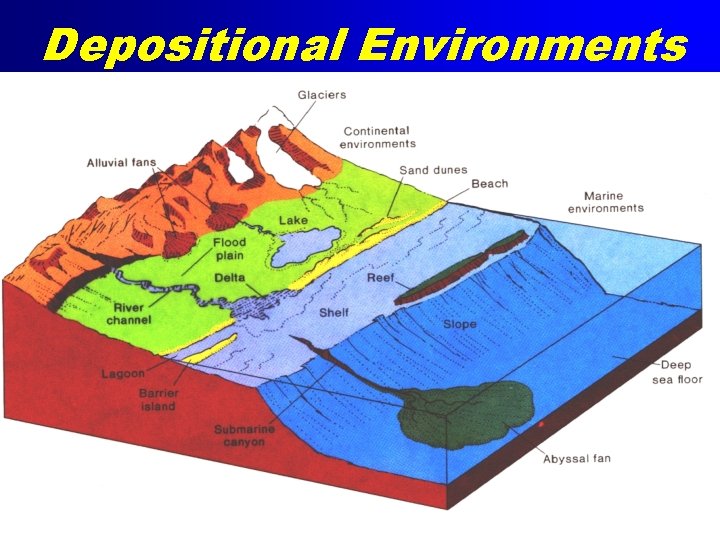
Depositional Environments
Soils • A regolith is any accumulation of fine rock material on a planetary surface. • A soil is the accumulation of weathered rock material together with organic matter. • A pedocal is a dry-climate soil containing soluble calcium minerals (calcite). • A pedalfer is a humid-climate soil rich in Al and Fe. • A laterite is an extreme pedalfer in tropical climates.
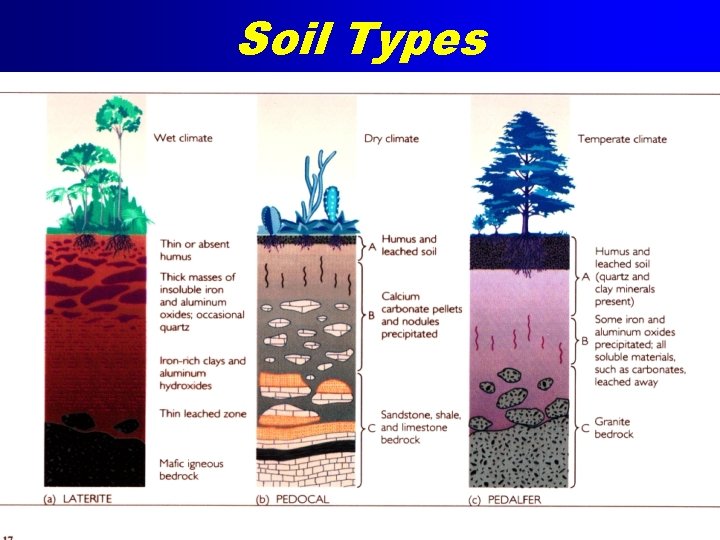
Soil Types
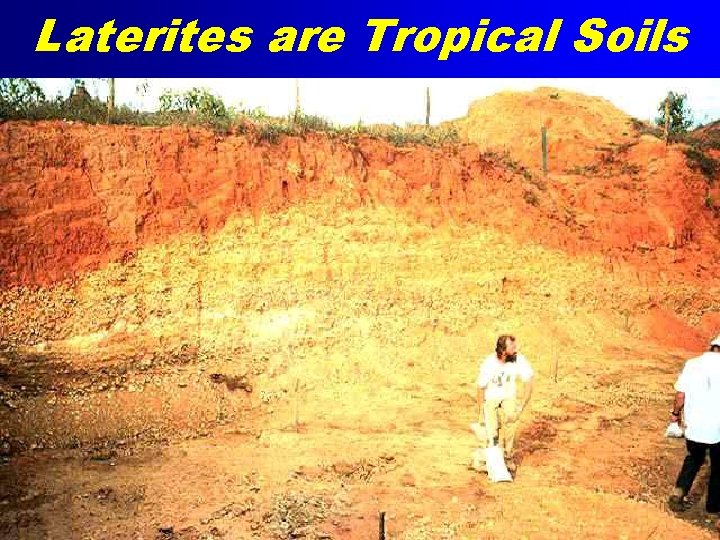
Laterites are Tropical Soils

Soil Changes in US
Acid Rain • Results from burning of sulfur-rich fossil fuels (mainly coal). • Is mainly a problem in humid temperate climates (NE US, Europe).
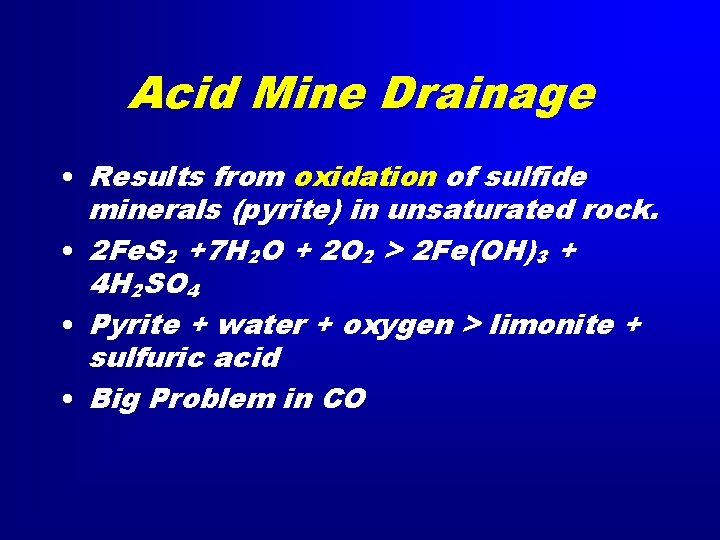
Acid Mine Drainage • Results from oxidation of sulfide minerals (pyrite) in unsaturated rock. • 2 Fe. S 2 +7 H 2 O + 2 O 2 > 2 Fe(OH)3 + 4 H 2 SO 4 • Pyrite + water + oxygen > limonite + sulfuric acid • Big Problem in CO

Acid Mine Drainage

Weathering Terms • • • Chemical weathering Mechanical weathering Spheroidal weathering Pedocal Pedalfer Laterite Bauxite Hydration Oxidation • • • Exfoliation Erosion Soil Regolith Humus Acid mine drainage
- Slides: 22