
Weathering Erosion Deposition Intro Notes Weathering is the

- Slides: 14
Weathering, Erosion, Deposition Intro Notes
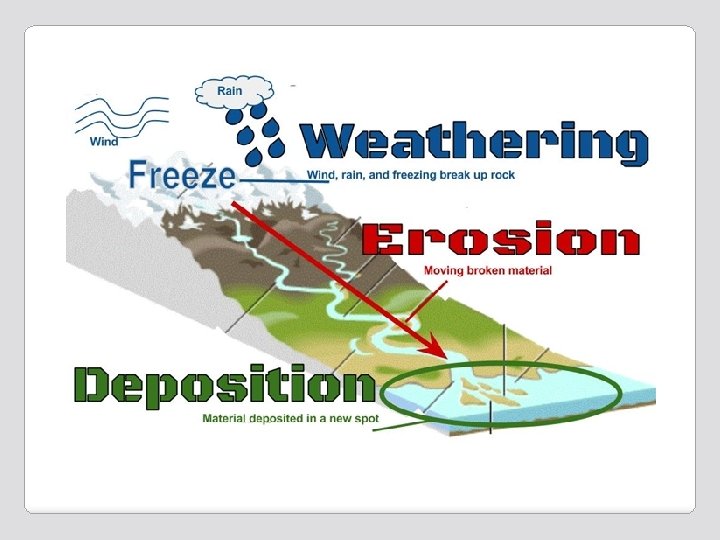
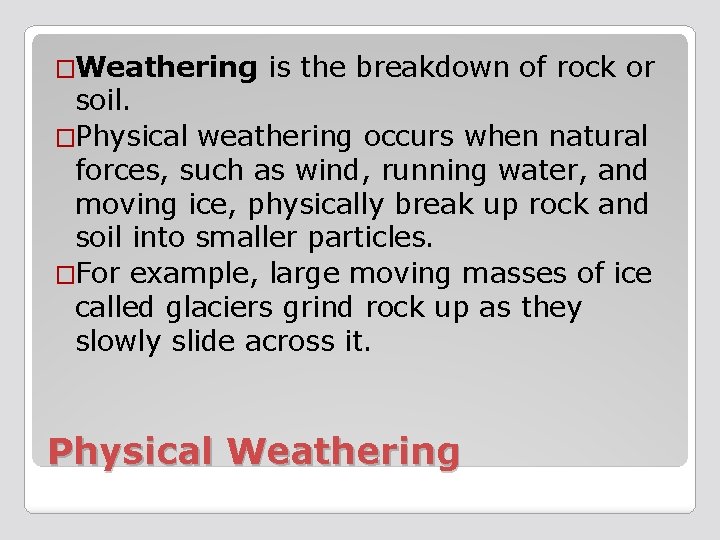
�Weathering is the breakdown of rock or soil. �Physical weathering occurs when natural forces, such as wind, running water, and moving ice, physically break up rock and soil into smaller particles. �For example, large moving masses of ice called glaciers grind rock up as they slowly slide across it. Physical Weathering
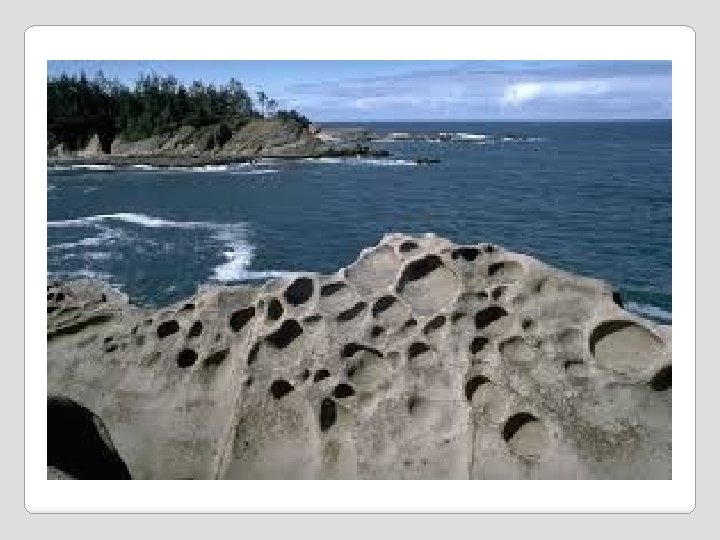
�Chemical weathering occurs when rock and soil break down as a result of chemical reactions. �For example, slightly acidic groundwater reacts with limestone to break the rock down, leaving holes in the rock. Chemical Weathering
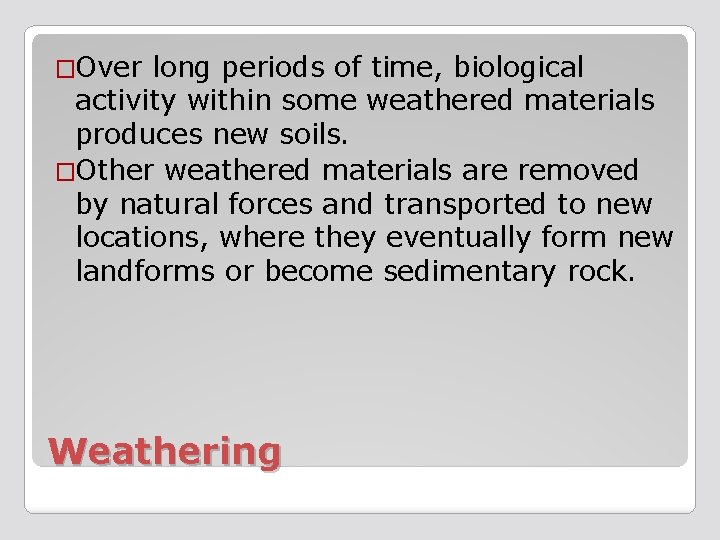
�Over long periods of time, biological activity within some weathered materials produces new soils. �Other weathered materials are removed by natural forces and transported to new locations, where they eventually form new landforms or become sedimentary rock. Weathering
Erosion
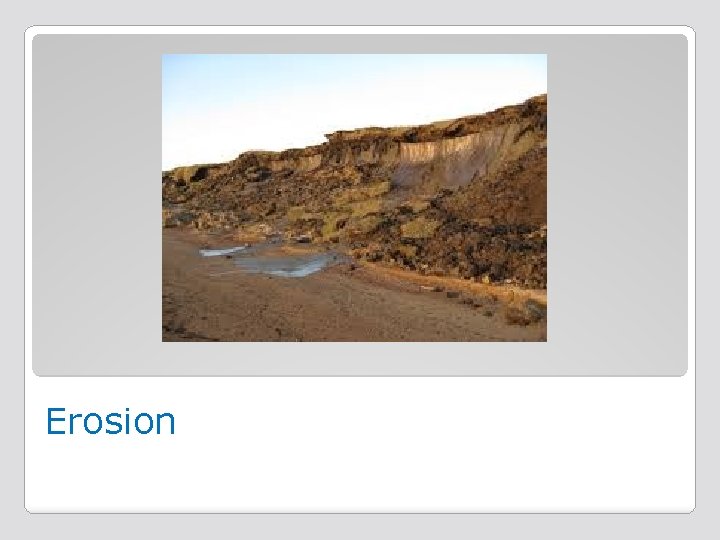
�Erosion is the transport of weathered materials from one place to another by natural forces. �For example, the force of running water in a river picks up weathered sediment and carries it downstream. �Very often, a natural force both weathers and erodes the same rock or soil. Erosion
Deposition
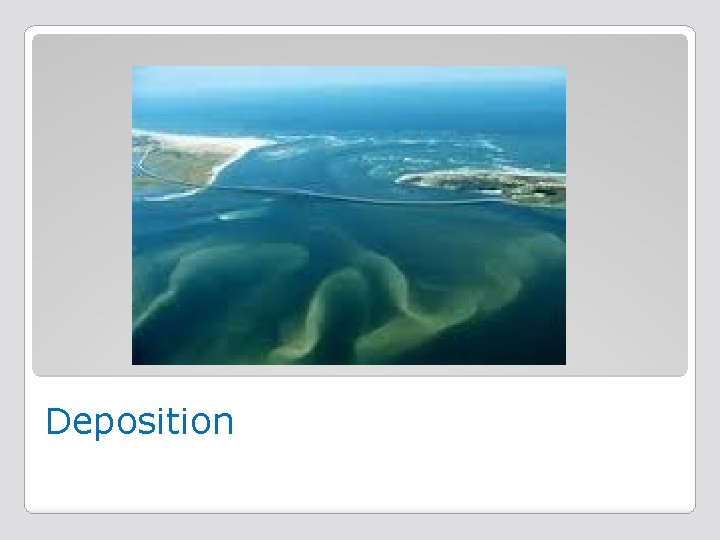
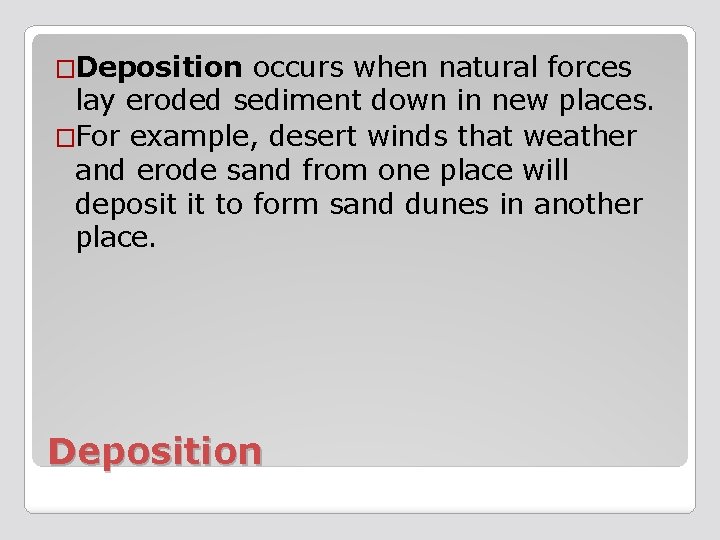
�Deposition occurs when natural forces lay eroded sediment down in new places. �For example, desert winds that weather and erode sand from one place will deposit it to form sand dunes in another place. Deposition
Processes in the Rock Cycle
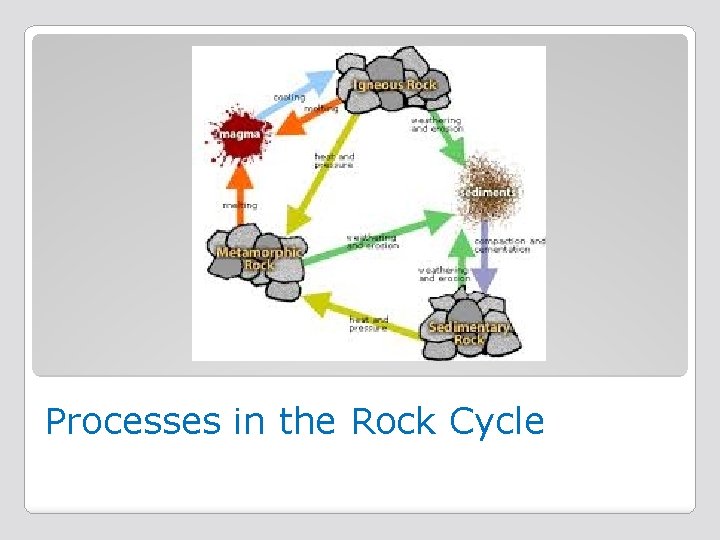
�The rock cycle would not function without the processes of weathering, erosion, and deposition. �All three of the major types of rock are broken down by weathering, carried away by erosion, and dropped in new locations by deposition. �The result is that sediment eventually build up at certain locations, and is ready form new rock. Rock Cycle and Processes
Please Remember that you have a Test on the Earth’s Layers, Rock Cycle, and these Notes on Friday! The End!