
WEATHERING EROSION DEPOSITION 1 TYPES OF CHANGE 1

- Slides: 42
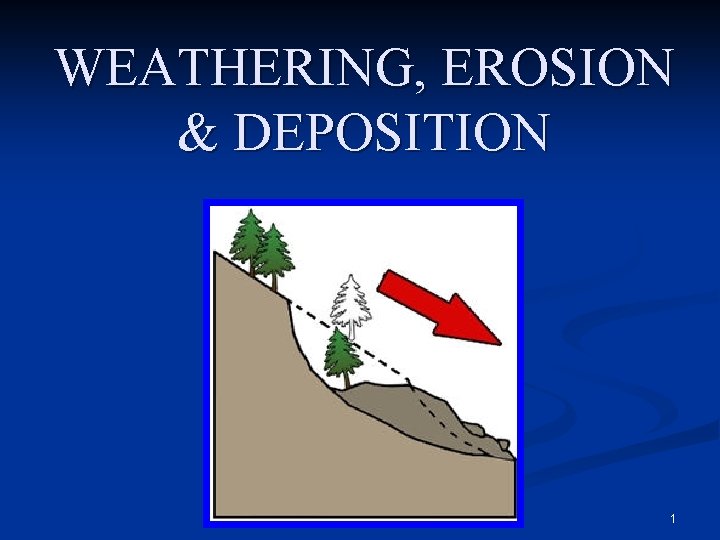
WEATHERING, EROSION & DEPOSITION 1
TYPES OF CHANGE… 1) Physical 2) Chemical 2
Physical Change Ø The new substance has the same properties as the old one. Ø No new substance(s) are produced. No change in chemical composition! Examples; ice - water – steam paper cut into pieces 3
Chemical Change Ø One or more NEW substances are created. Ø The new substance is different from the original. Examples; burning paper 4
5
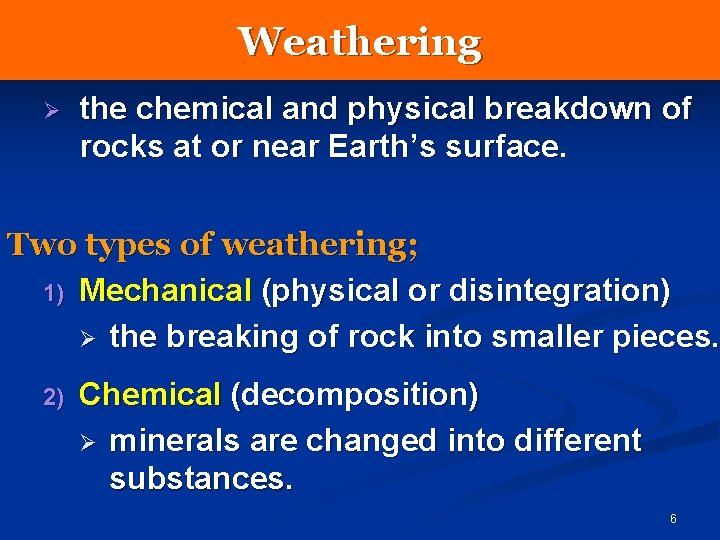
Weathering Ø the chemical and physical breakdown of rocks at or near Earth’s surface. Two types of weathering; 1) Mechanical (physical or disintegration) Ø the breaking of rock into smaller pieces. 2) Chemical (decomposition) Ø minerals are changed into different substances. 6
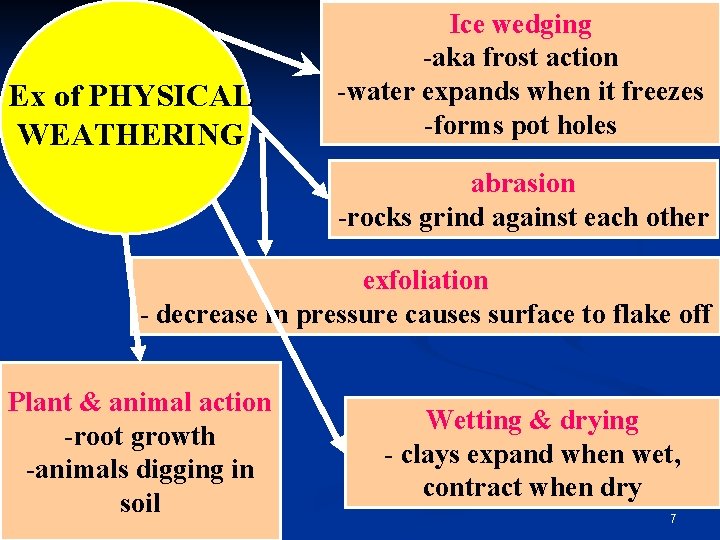
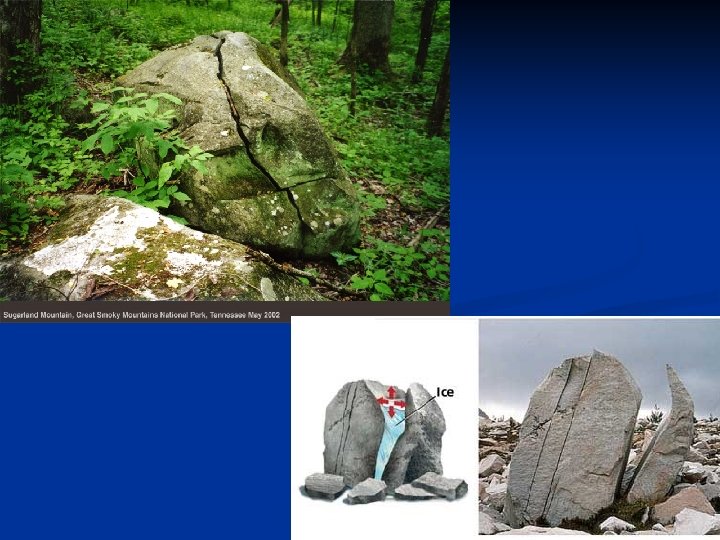
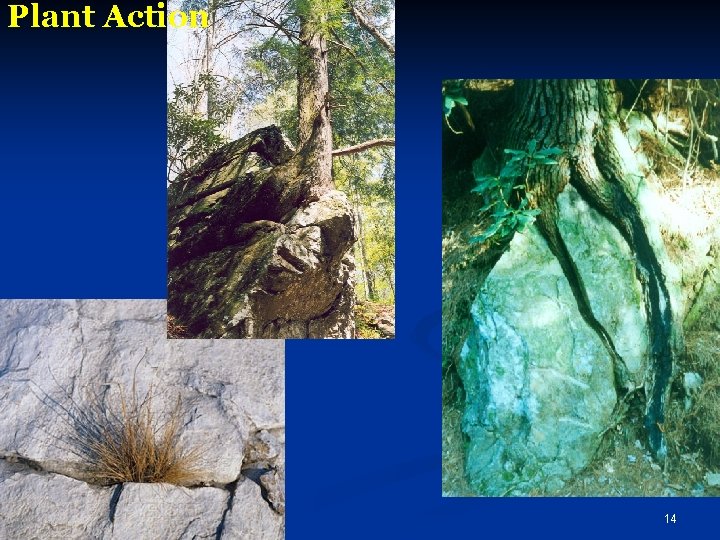
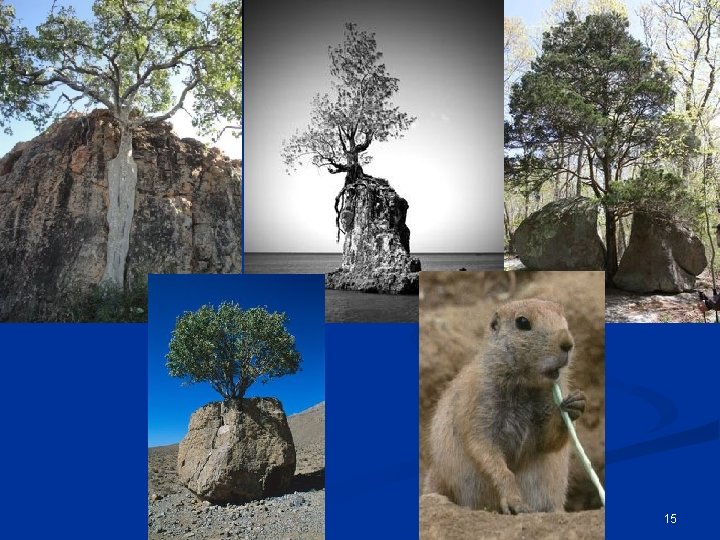
Ex of PHYSICAL WEATHERING Ice wedging -aka frost action -water expands when it freezes -forms pot holes abrasion -rocks grind against each other exfoliation - decrease in pressure causes surface to flake off Plant & animal action -root growth -animals digging in soil Wetting & drying - clays expand when wet, contract when dry 7
8
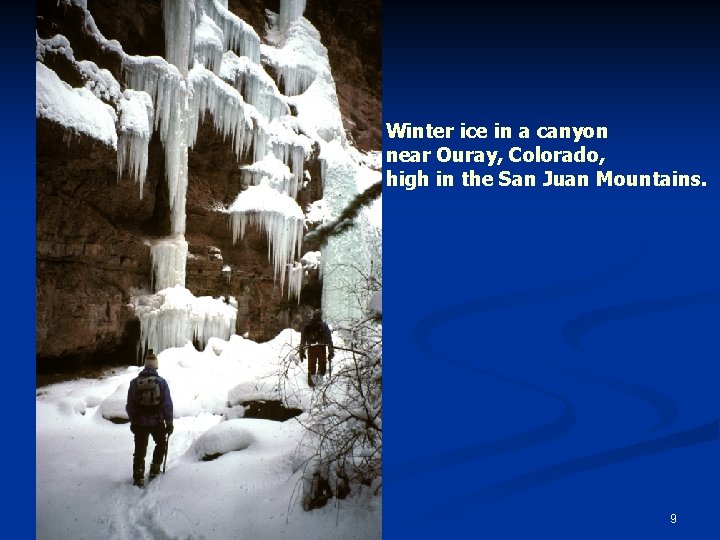
Winter ice in a canyon near Ouray, Colorado, high in the San Juan Mountains. 9
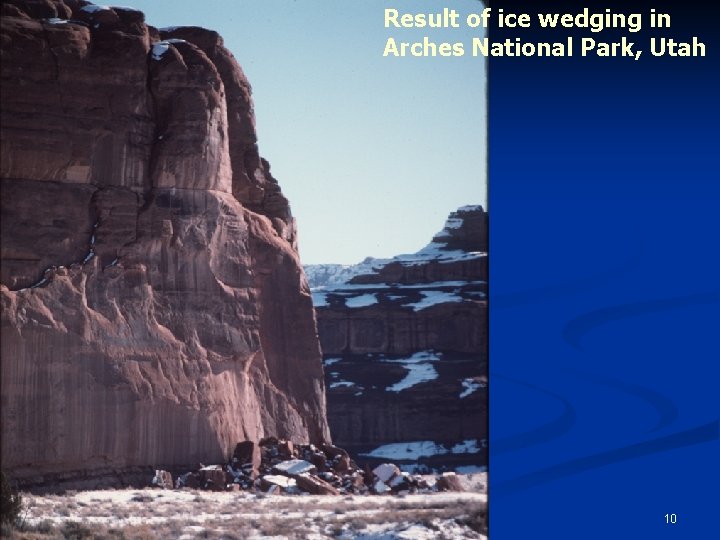
Result of ice wedging in Arches National Park, Utah 10
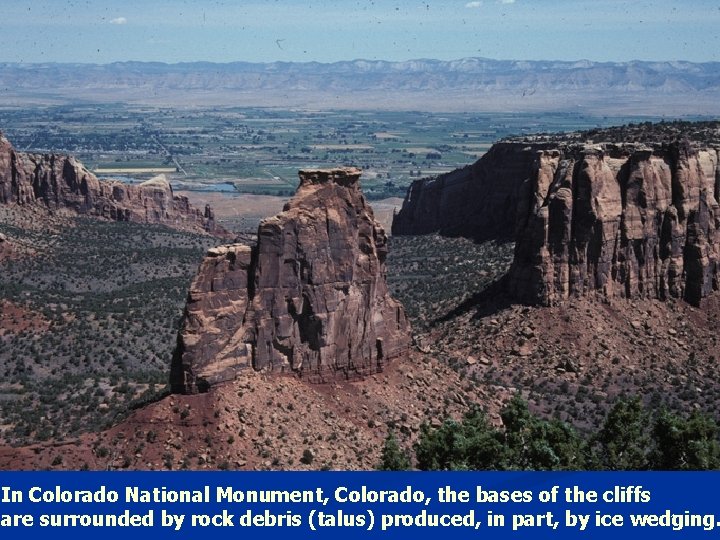
In Colorado National Monument, Colorado, the bases of the cliffs 11 are surrounded by rock debris (talus) produced, in part, by ice wedging.
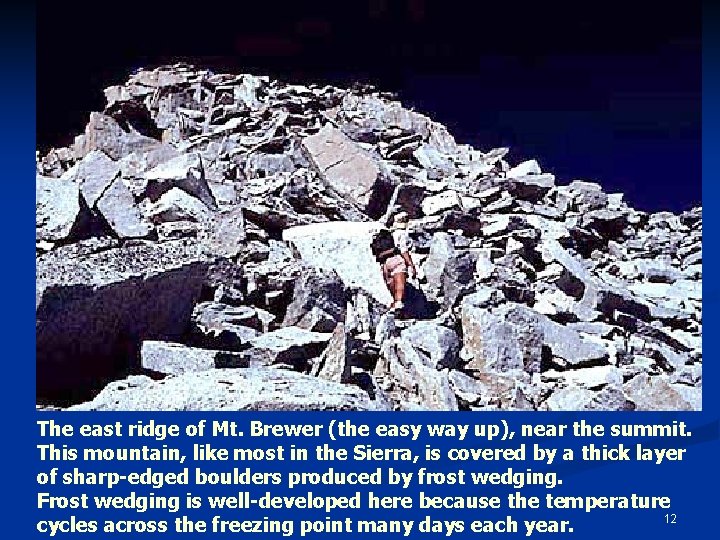
The east ridge of Mt. Brewer (the easy way up), near the summit. This mountain, like most in the Sierra, is covered by a thick layer of sharp-edged boulders produced by frost wedging. Frost wedging is well-developed here because the temperature 12 cycles across the freezing point many days each year.
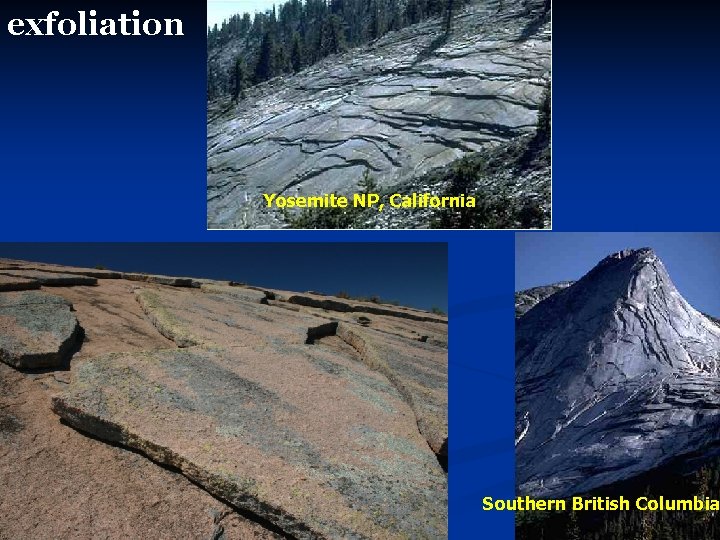
exfoliation Yosemite NP, California Southern British Columbia 13
Plant Action 14
15
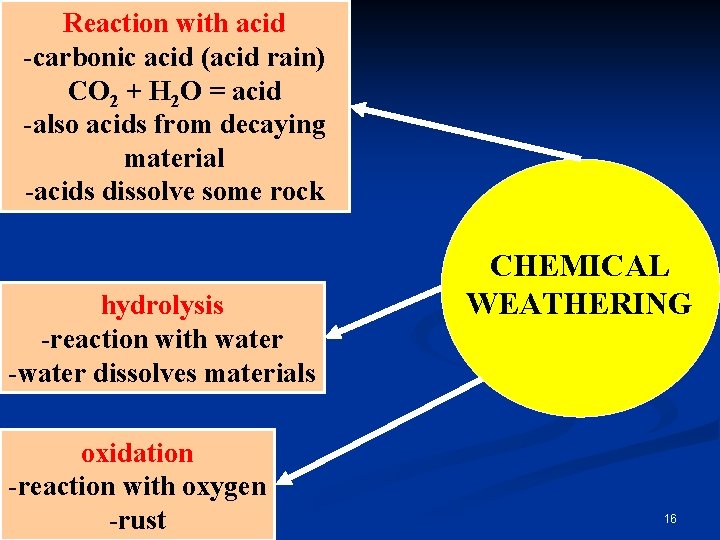
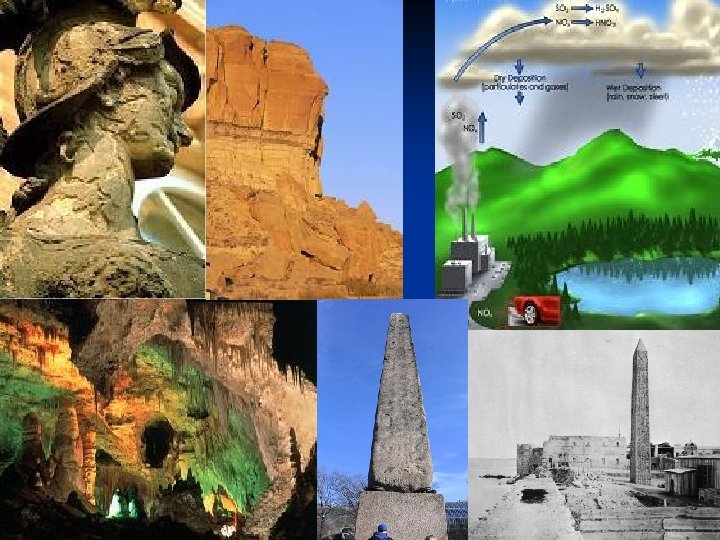
Reaction with acid -carbonic acid (acid rain) CO 2 + H 2 O = acid -also acids from decaying material -acids dissolve some rock hydrolysis -reaction with water -water dissolves materials oxidation -reaction with oxygen -rust CHEMICAL WEATHERING 16
17
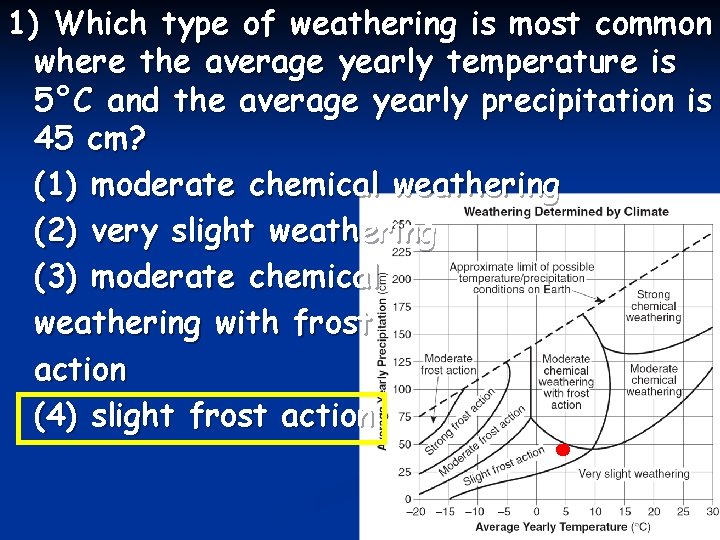
1) Which type of weathering is most common where the average yearly temperature is 5°C and the average yearly precipitation is 45 cm? (1) moderate chemical weathering (2) very slight weathering (3) moderate chemical weathering with frost action (4) slight frost action 18
2) Which activity demonstrates chemical weathering? (1) freezing of water in the cracks of a sandstone sidewalk (2) abrasion of a streambed by tumbling rocks (3) grinding of talc into a powder (4) dissolving of limestone by acid rain 19
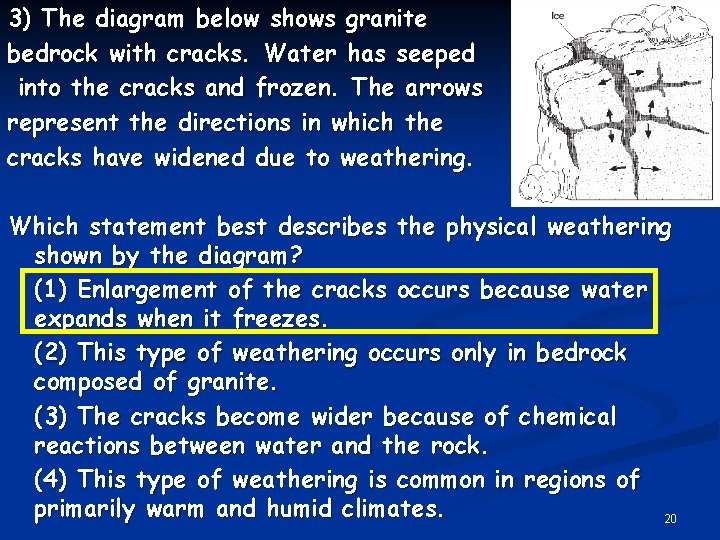
3) The diagram below shows granite bedrock with cracks. Water has seeped into the cracks and frozen. The arrows represent the directions in which the cracks have widened due to weathering. Which statement best describes the physical weathering shown by the diagram? (1) Enlargement of the cracks occurs because water expands when it freezes. (2) This type of weathering occurs only in bedrock composed of granite. (3) The cracks become wider because of chemical reactions between water and the rock. (4) This type of weathering is common in regions of primarily warm and humid climates. 20
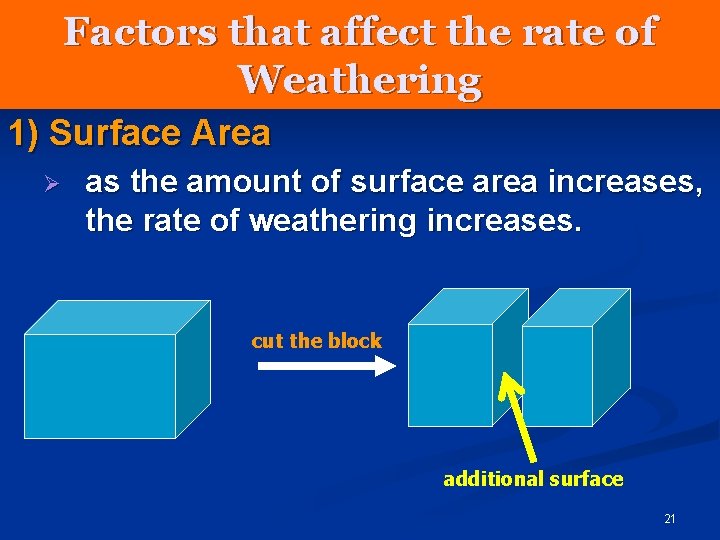
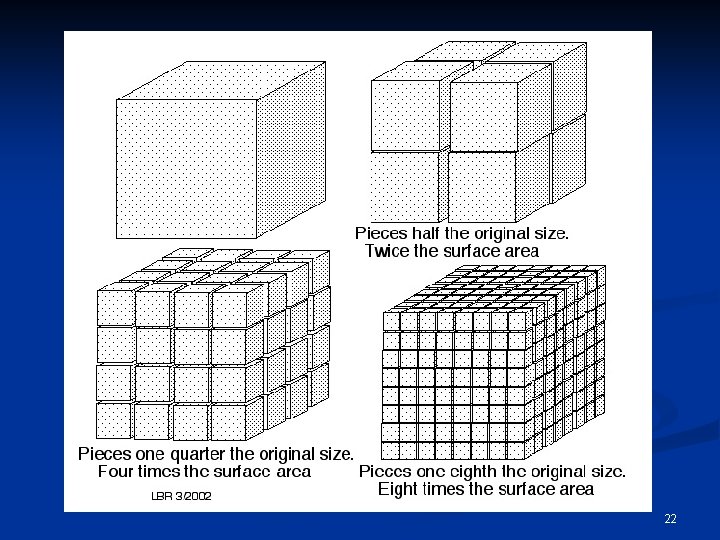
Factors that affect the rate of Weathering 1) Surface Area Ø as the amount of surface area increases, the rate of weathering increases. cut the block additional surface 21
22
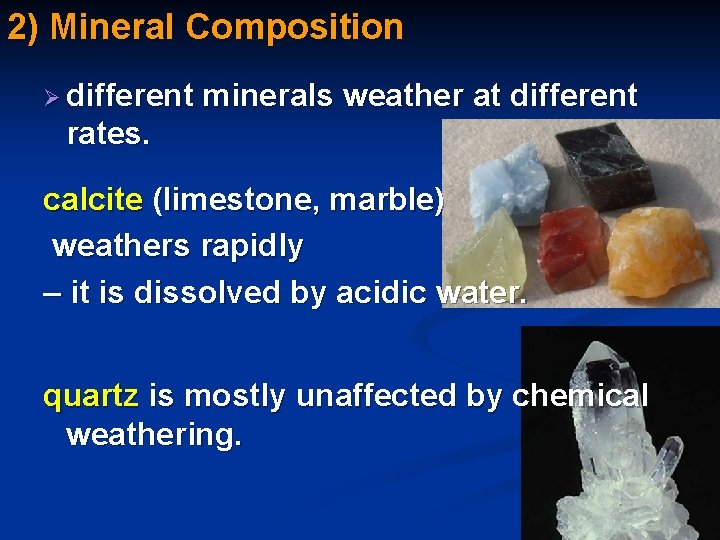
2) Mineral Composition Ø different minerals weather at different rates. calcite (limestone, marble) weathers rapidly – it is dissolved by acidic water. quartz is mostly unaffected by chemical weathering. 23
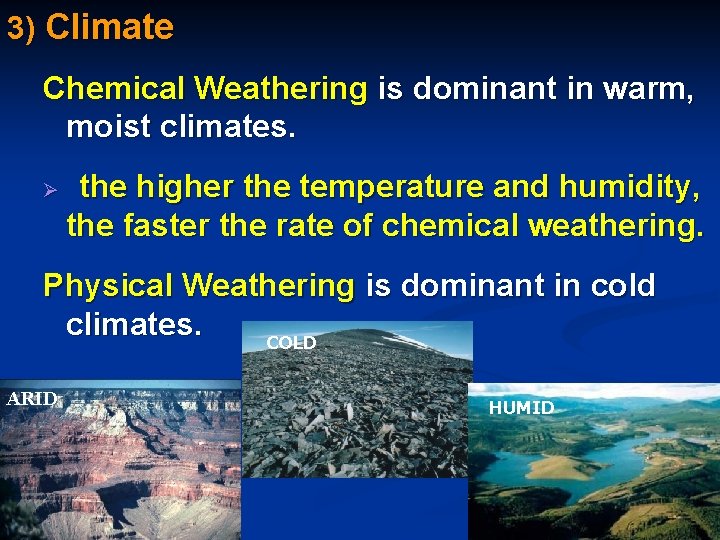
3) Climate Chemical Weathering is dominant in warm, moist climates. Ø the higher the temperature and humidity, the faster the rate of chemical weathering. Physical Weathering is dominant in cold climates. COLD ARID HUMID 24
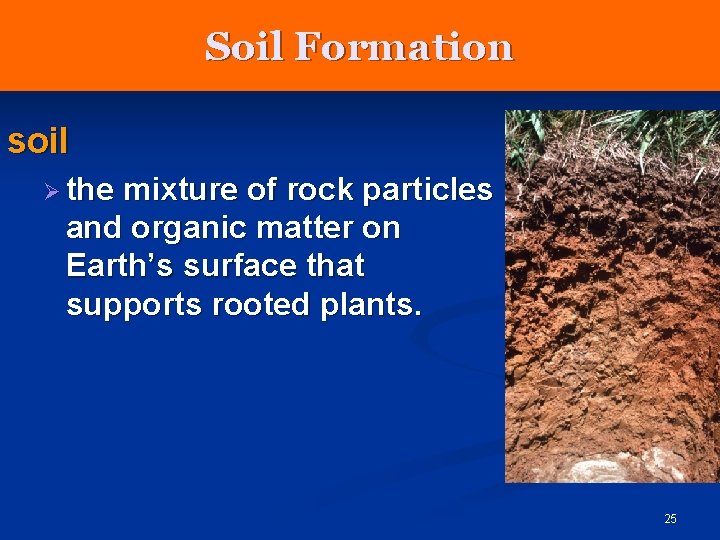
Soil Formation soil Ø the mixture of rock particles and organic matter on Earth’s surface that supports rooted plants. 25
Soils may be classified as either…. 1) Residual Soil Øsoils that form in place from the local bedrock (parent material). Øsoil characteristics are similar to the parent material. 26
2) Transported Soil Øsoil material has been transported into the area from another place (usually by wind, moving water, or ice). Øcharacteristics of the soil will not match the local bedrock. Ømost of the soil in New York state 27
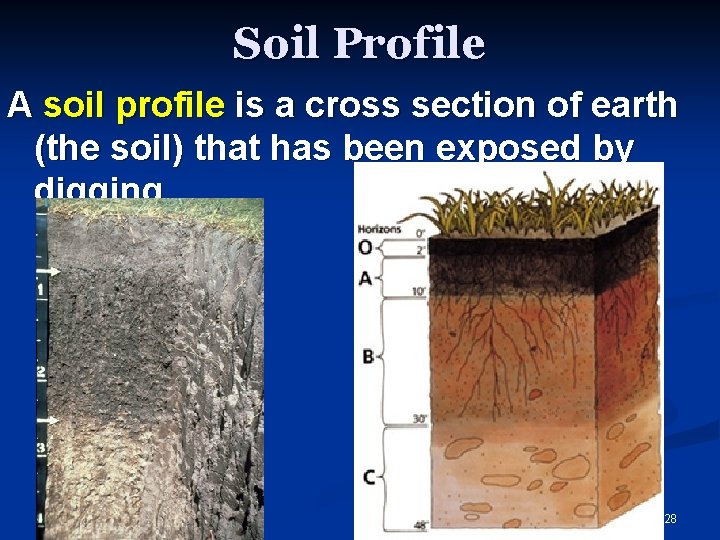
Soil Profile A soil profile is a cross section of earth (the soil) that has been exposed by digging. 28
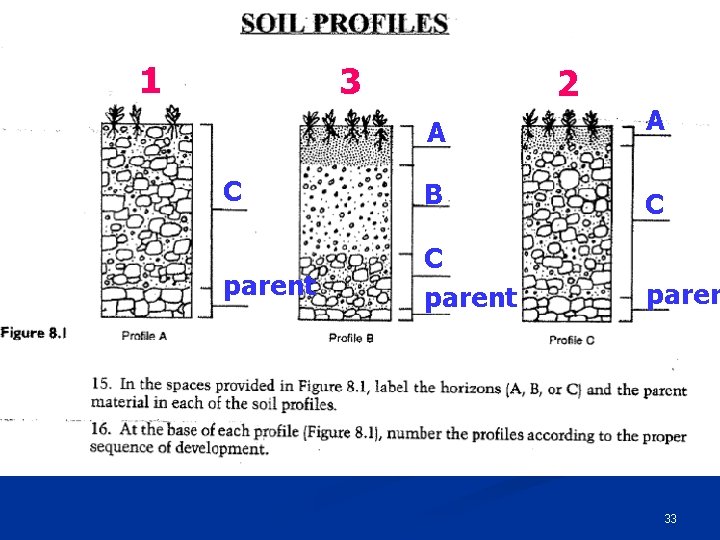
A profile is composed of several horizons (layers). Ø(O) A, B, & C Soils that have a distinct A, B and C layer are called mature soils. It takes a long time to form a mature soil. 29
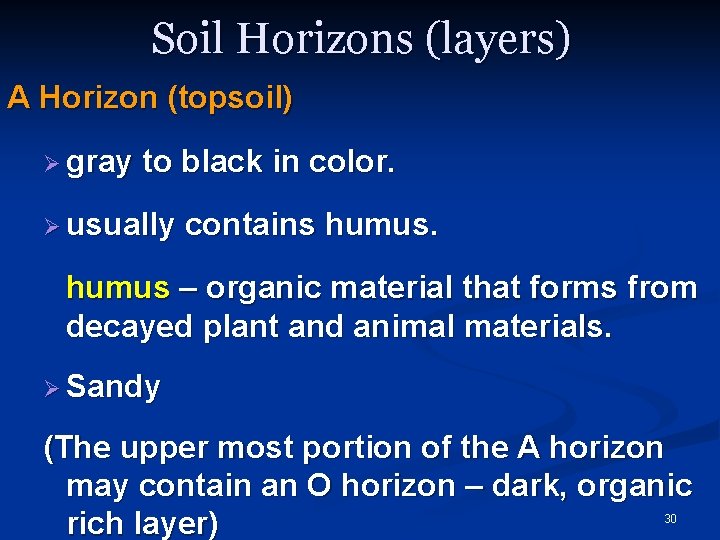
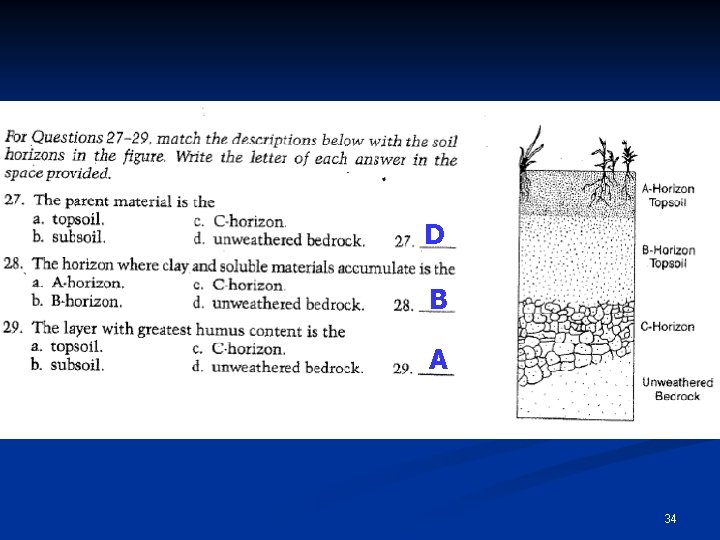
Soil Horizons (layers) A Horizon (topsoil) Ø gray to black in color. Ø usually contains humus – organic material that forms from decayed plant and animal materials. Ø Sandy (The upper most portion of the A horizon may contain an O horizon – dark, organic rich layer) 30
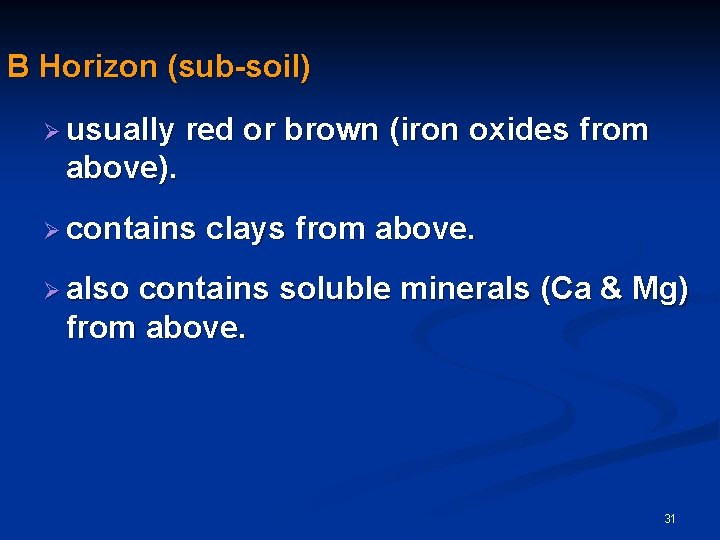
B Horizon (sub-soil) Ø usually red or brown (iron oxides from above). Ø contains clays from above. Ø also contains soluble minerals (Ca & Mg) from above. 31
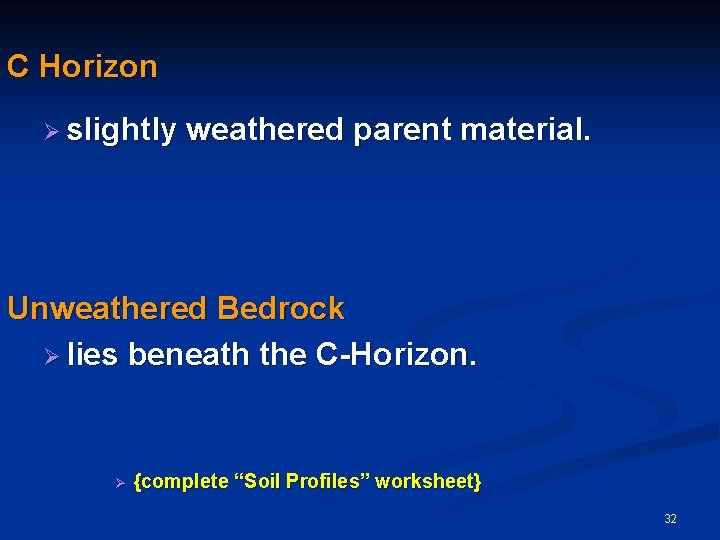
C Horizon Ø slightly weathered parent material. Unweathered Bedrock Ø lies beneath the C-Horizon. Ø {complete “Soil Profiles” worksheet} 32
1 3 2 A A C B C parent paren 33
D B A 34
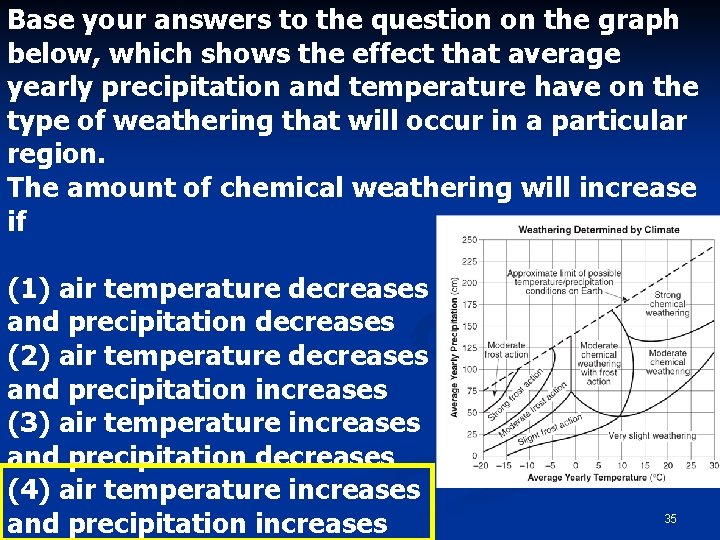
Base your answers to the question on the graph below, which shows the effect that average yearly precipitation and temperature have on the type of weathering that will occur in a particular region. The amount of chemical weathering will increase if (1) air temperature decreases and precipitation decreases (2) air temperature decreases and precipitation increases (3) air temperature increases and precipitation decreases (4) air temperature increases and precipitation increases 35
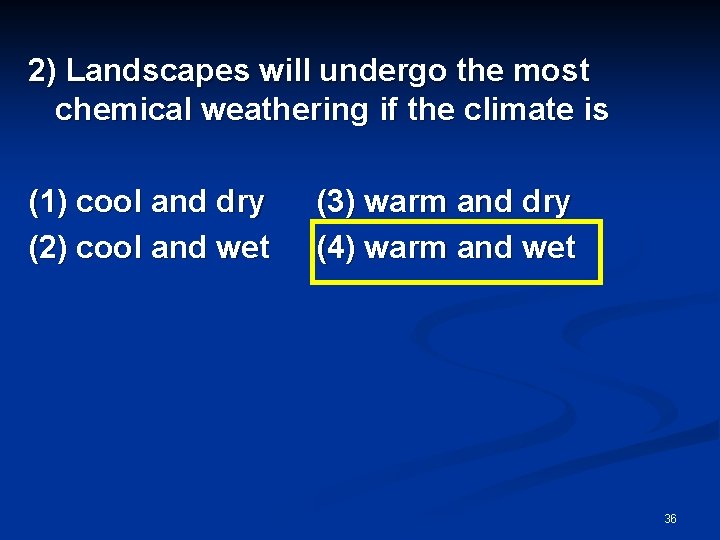
2) Landscapes will undergo the most chemical weathering if the climate is (1) cool and dry (2) cool and wet (3) warm and dry (4) warm and wet 36
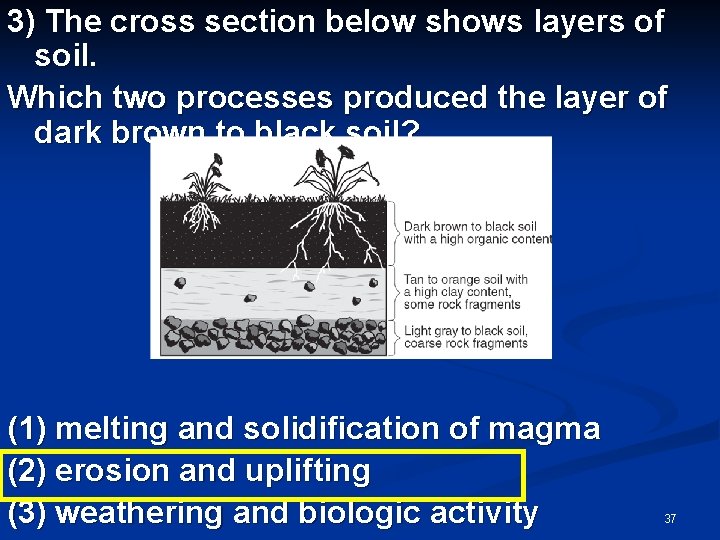
3) The cross section below shows layers of soil. Which two processes produced the layer of dark brown to black soil? (1) melting and solidification of magma (2) erosion and uplifting (3) weathering and biologic activity 37
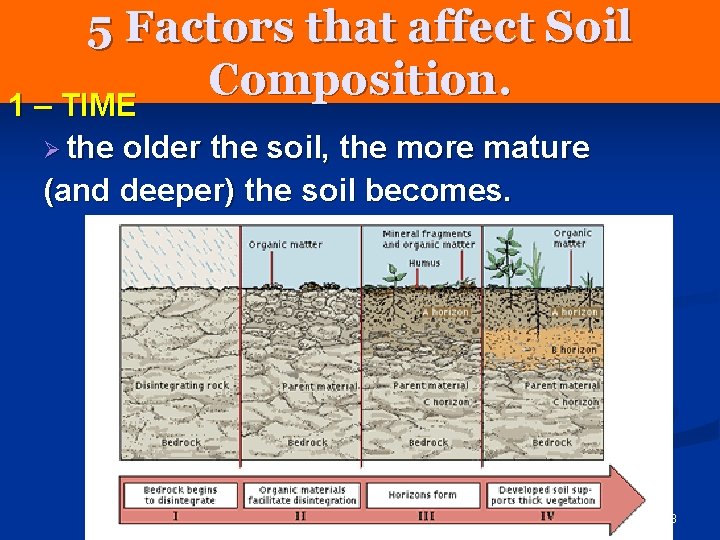
5 Factors that affect Soil Composition. 1 – TIME Ø the older the soil, the more mature (and deeper) the soil becomes. 38
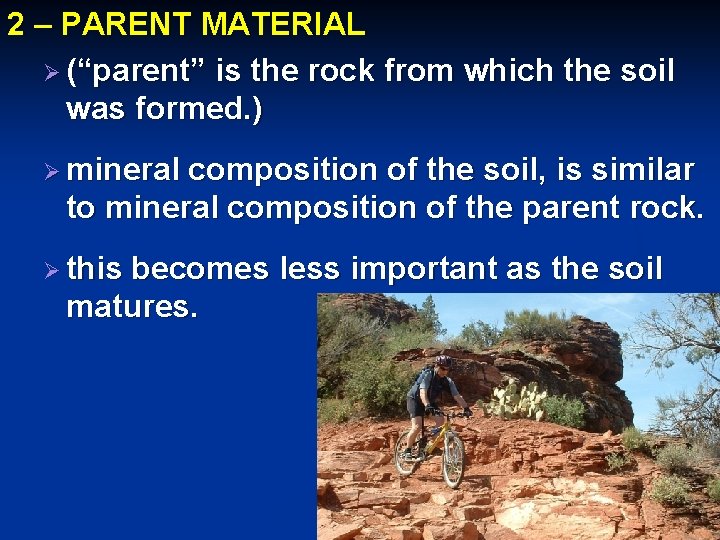
2 – PARENT MATERIAL Ø (“parent” is the rock from which the soil was formed. ) Ø mineral composition of the soil, is similar to mineral composition of the parent rock. Ø this becomes less important as the soil matures. 39
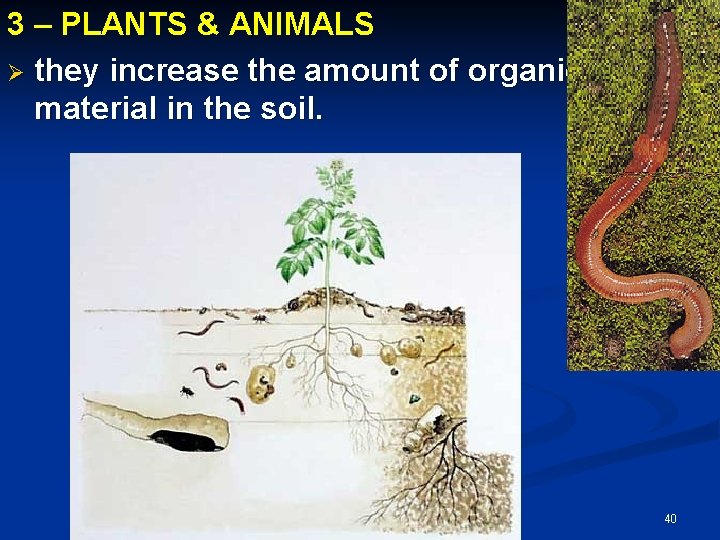
3 – PLANTS & ANIMALS Ø they increase the amount of organic material in the soil. 40
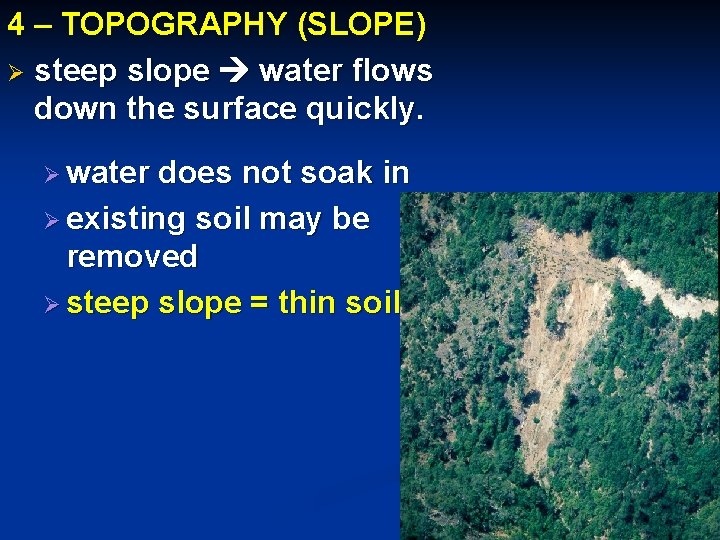
4 – TOPOGRAPHY (SLOPE) Ø steep slope water flows down the surface quickly. Ø water does not soak in Ø existing soil may be removed Ø steep slope = thin soil 41
5 – CLIMATE Ø lots of weathering occurs in hot / wet climates = thick soil. Ø soils in wet tropical climates are all similar. Ø much material is washed out of the soil (nutrients, clays and silica). 42