
Weathering Erosion and Soil How does this cartoon

- Slides: 69
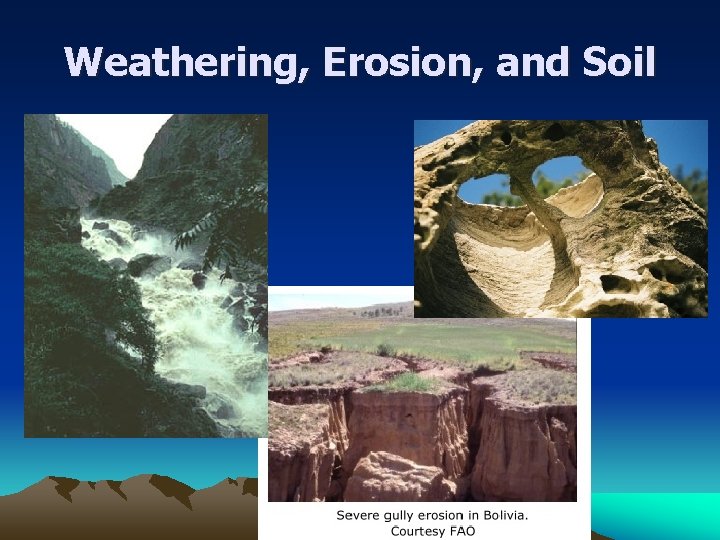
Weathering, Erosion, and Soil
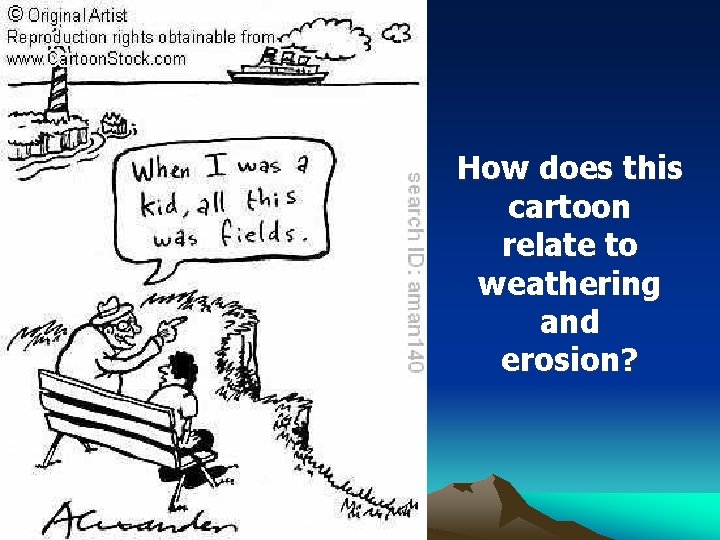
How does this cartoon relate to weathering and erosion?
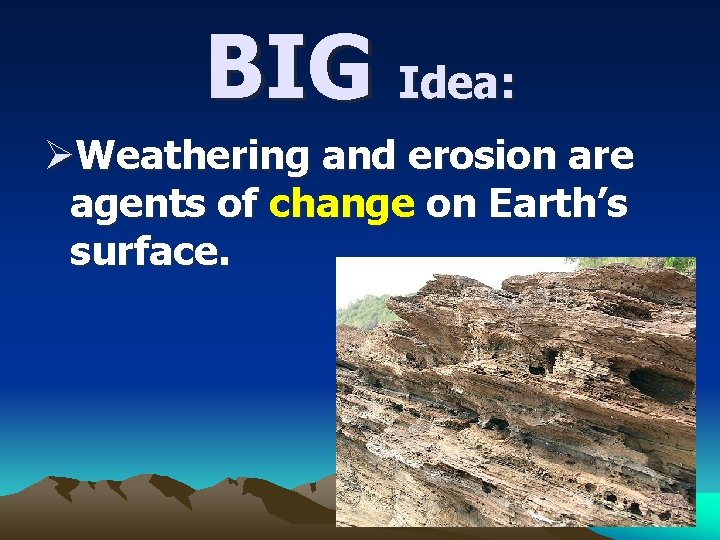
BIG Idea: ØWeathering and erosion are agents of change on Earth’s surface.
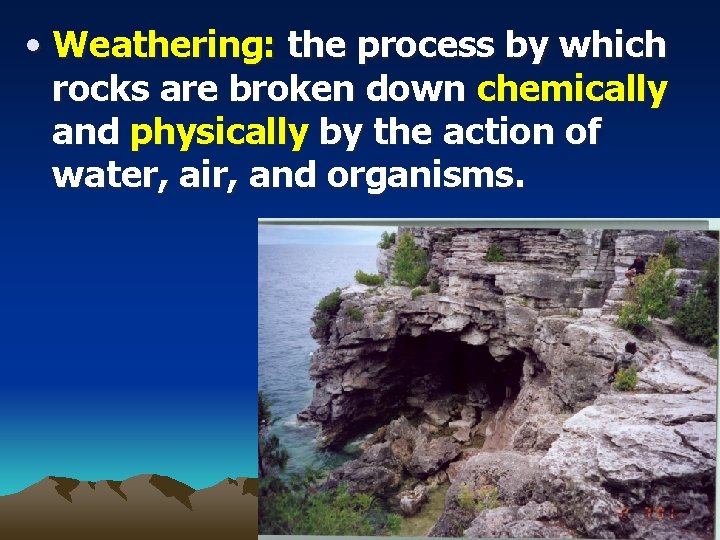
• Weathering: the process by which rocks are broken down chemically and physically by the action of water, air, and organisms.
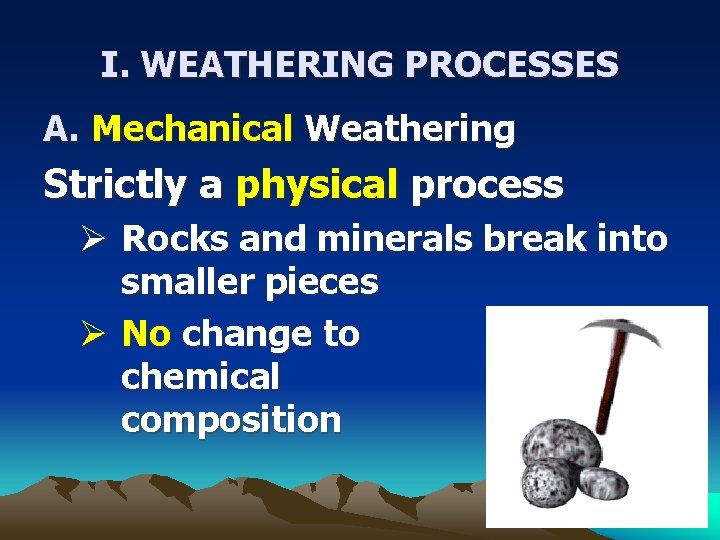
I. WEATHERING PROCESSES A. Mechanical Weathering Strictly a physical process Ø Rocks and minerals break into smaller pieces Ø No change to chemical composition
Agents of MECHANICAL Weathering: • ice • plants and animals • gravity • running water • wind
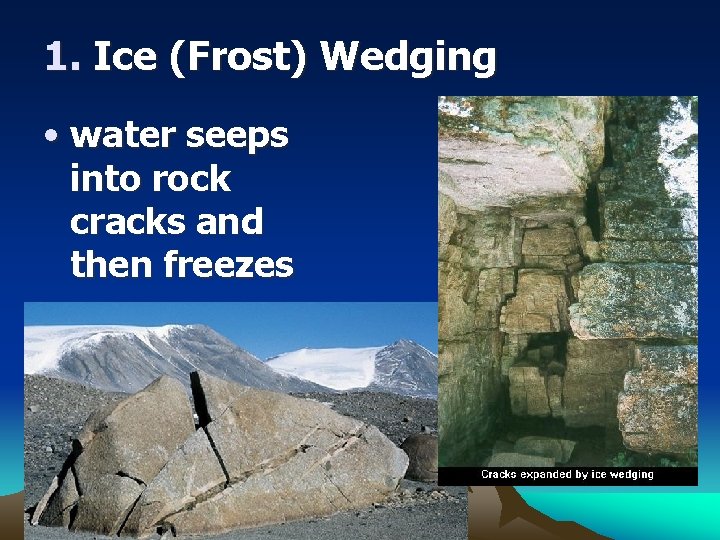
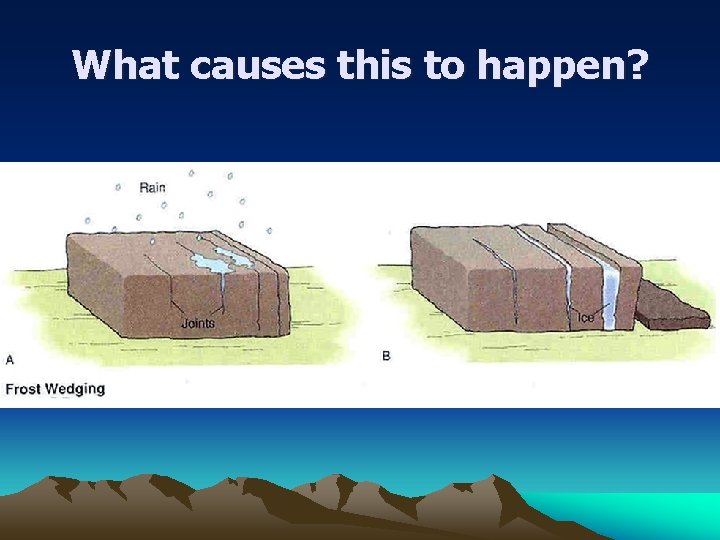
1. Ice (Frost) Wedging • water seeps into rock cracks and then freezes
What causes this to happen?
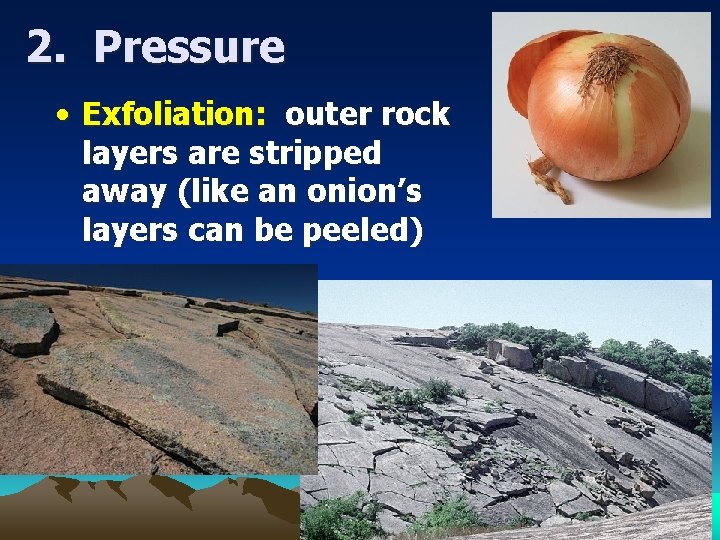
2. Pressure • Exfoliation: outer rock layers are stripped away (like an onion’s layers can be peeled)
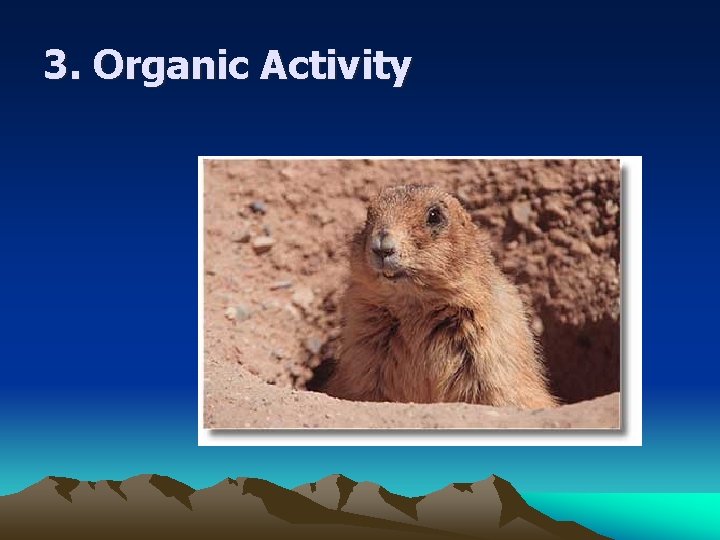
3. Organic Activity
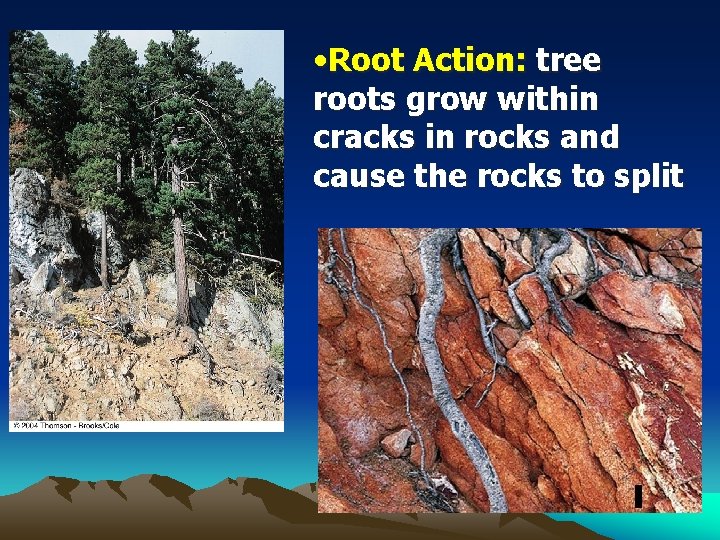
• Root Action: tree roots grow within cracks in rocks and cause the rocks to split
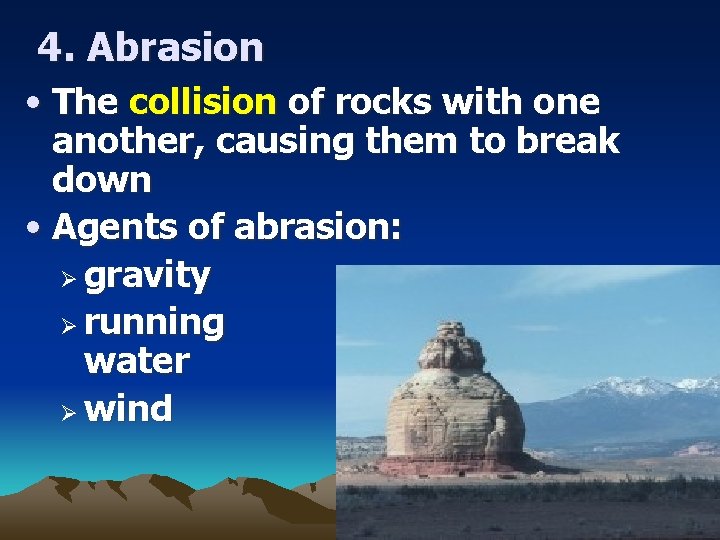
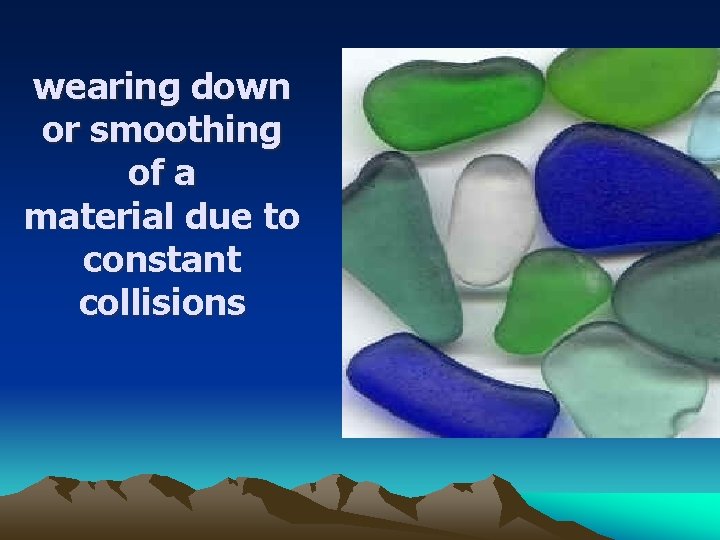
4. Abrasion • The collision of rocks with one another, causing them to break down • Agents of abrasion: Ø gravity Ø running water Ø wind
wearing down or smoothing of a material due to constant collisions
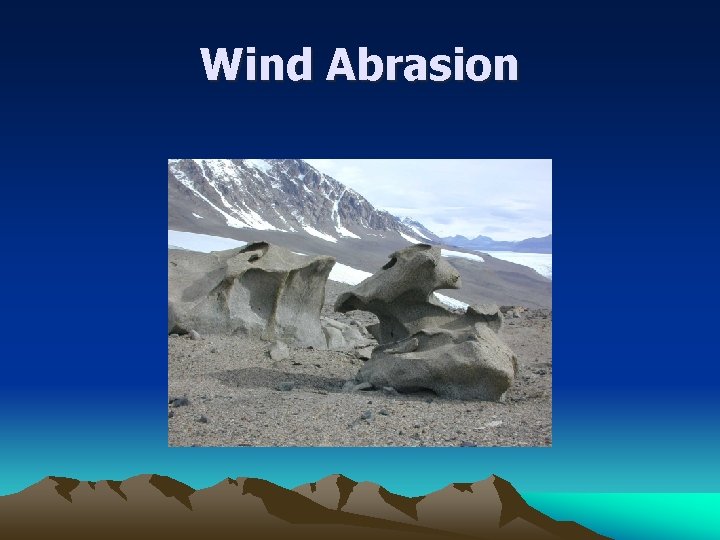
Wind Abrasion
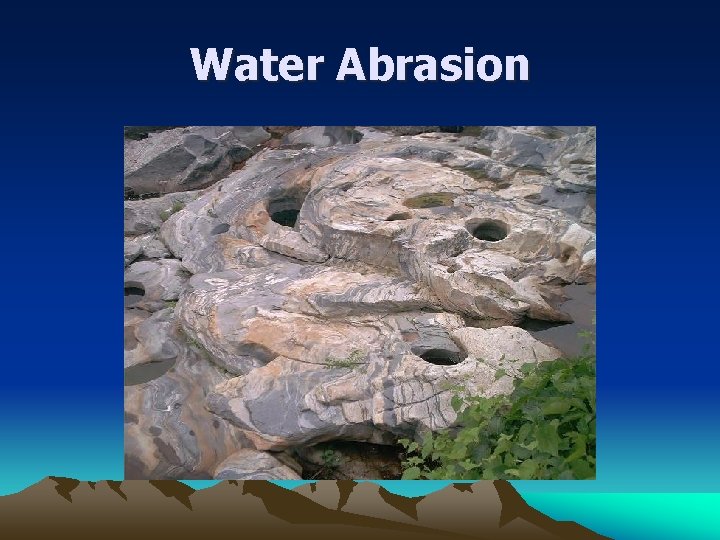
Water Abrasion
B. Chemical Weathering • Process by which rocks and minerals undergo changes in their composition – Can cause some substances to dissolve – Some new minerals form – New minerals have properties different than those of original rock
• What items have you seen rusted? • What could you do to such objects to prevent or reduce rusting?
Agents of CHEMICAL Weathering: • Water • Oxygen • Carbon dioxide • Acid precipitation
1. Hydrolysis: reacting with water 2. Carbonation: carbon dioxide combines with water to produce carbonic acid (dissolves limestone) 3. Oxidation: reacting with oxygen (rust)
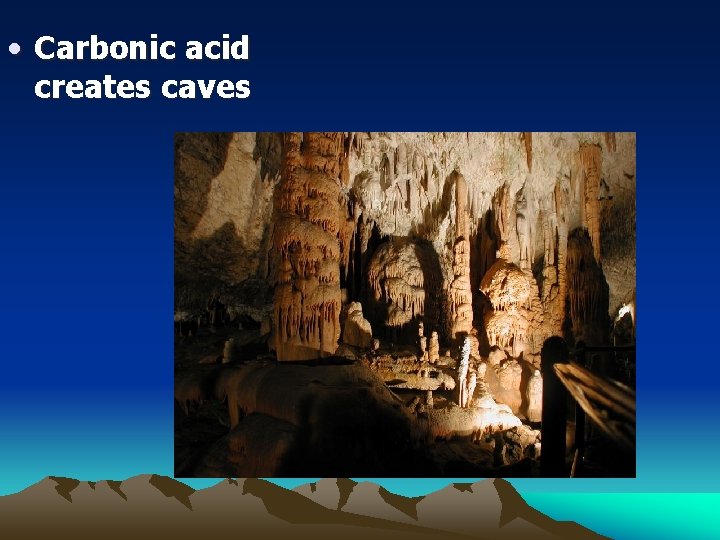
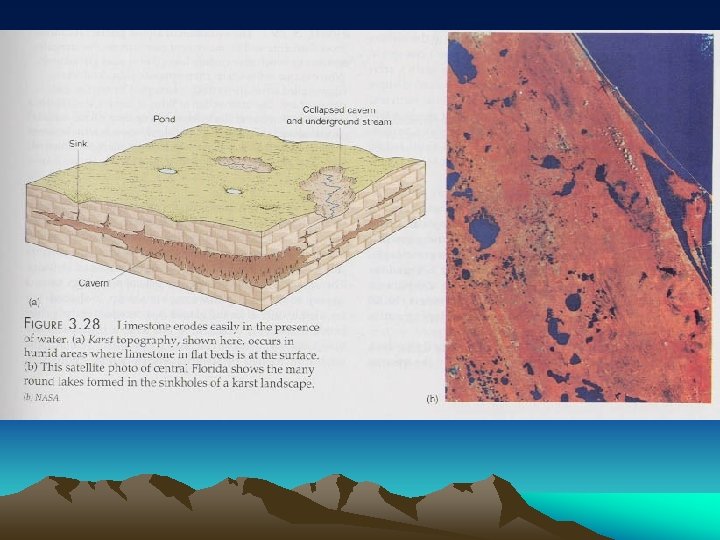
• Carbonic acid creates caves
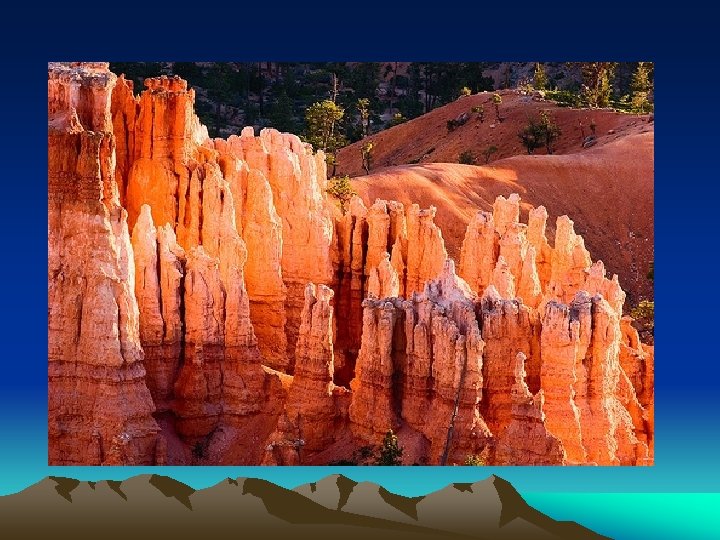
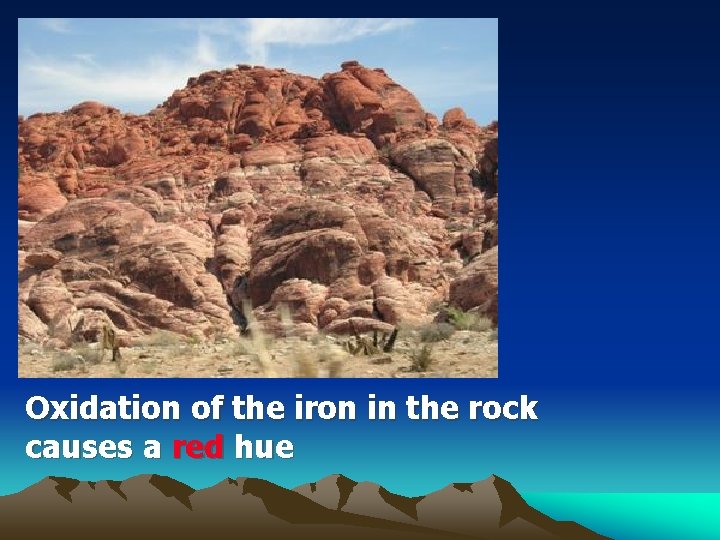
Oxidation of the iron in the rock causes a red hue
• Acid precipitation (rain): sulfur dioxide, carbon dioxide and nitrogen oxides released into atmosphere by human activities; gases combine with oxygen and water to form strong acid rains • Plant acids: from decaying plants
II. RATES OF WEATHERING • All rocks do not weather at the same rate (speed)… • Some factors that affect the rate at which rocks weather are:
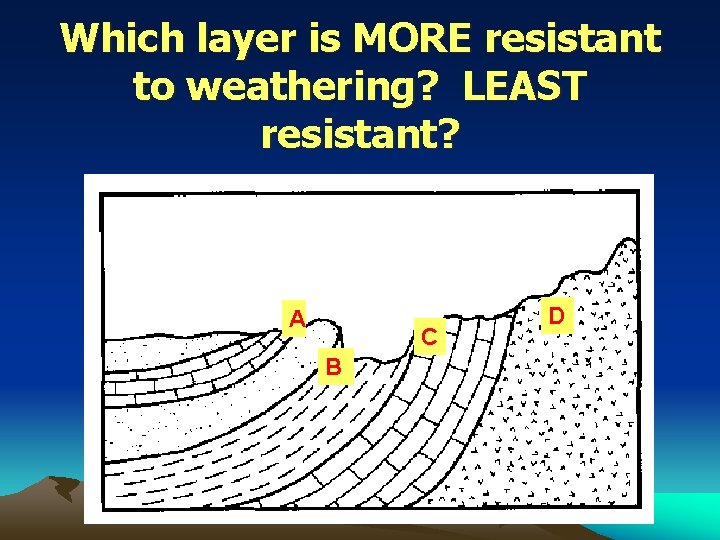
A. Rock Composition • Igneous and metamorphic rocks break down more SLOWLY • Hardest minerals resist weathering (i. e. quartz) • Rocks containing calcite weather QUICKLY
Which layer is MORE resistant to weathering? LEAST resistant? A C B D
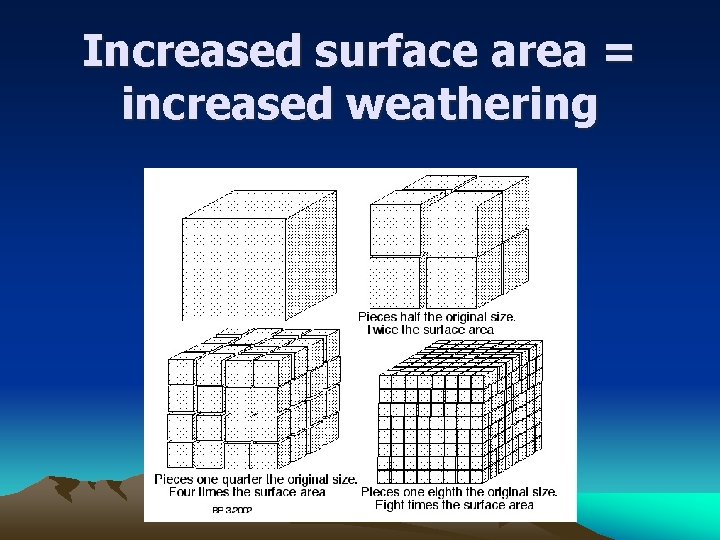
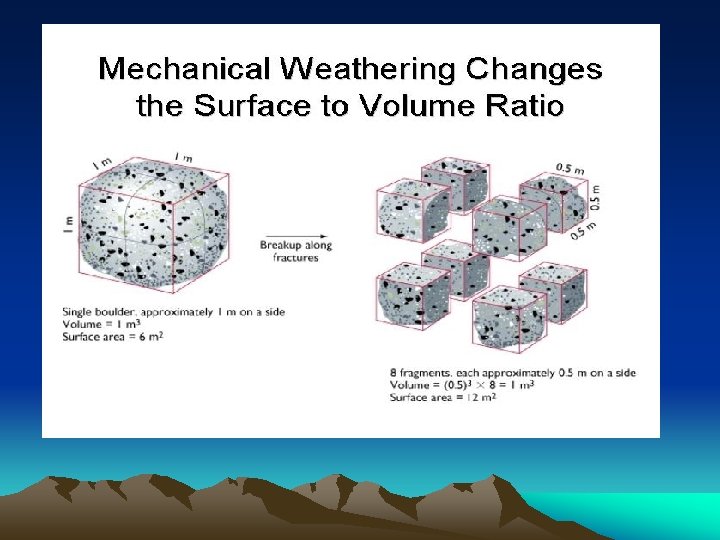
B. Amount of Exposure • time exposed • surface area
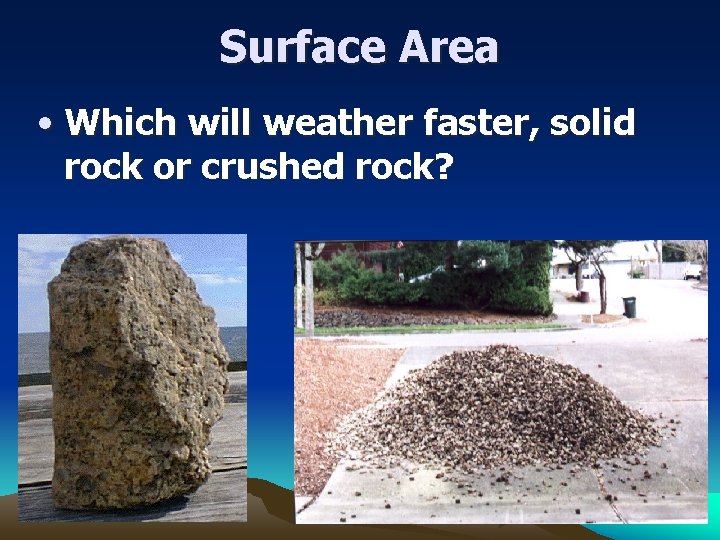
Surface Area • Which will weather faster, solid rock or crushed rock?
• The crushed rock of course! – the large rock is tightly packed and has less surface area exposed – the crushed rock is loosely packed and has more surface area exposed
Increased surface area = increased weathering
C. Climate • Rocks in tropical regions weather faster than rocks in dry desert areas • More rain, humidity, wind, and temperature range = faster weathering
• Physical Weathering: works better in a cool and dry climate • Chemical Weathering: works better in a hot and moist environment (more water = more weathering)
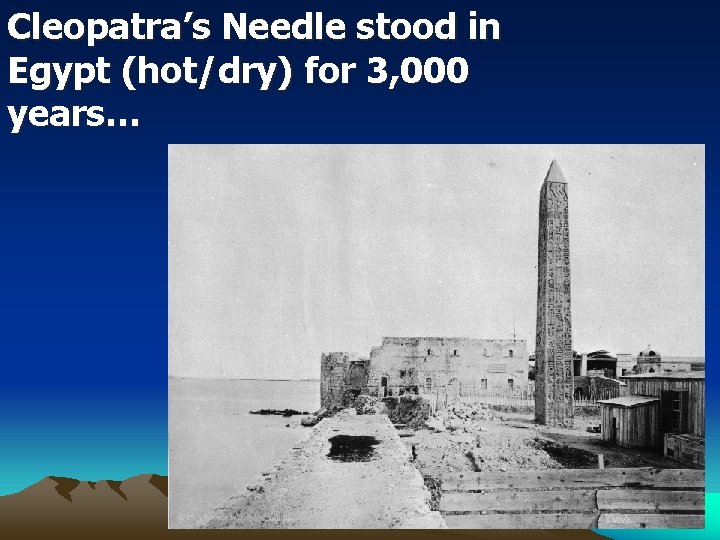
Cleopatra’s Needle stood in Egypt (hot/dry) for 3, 000 years…
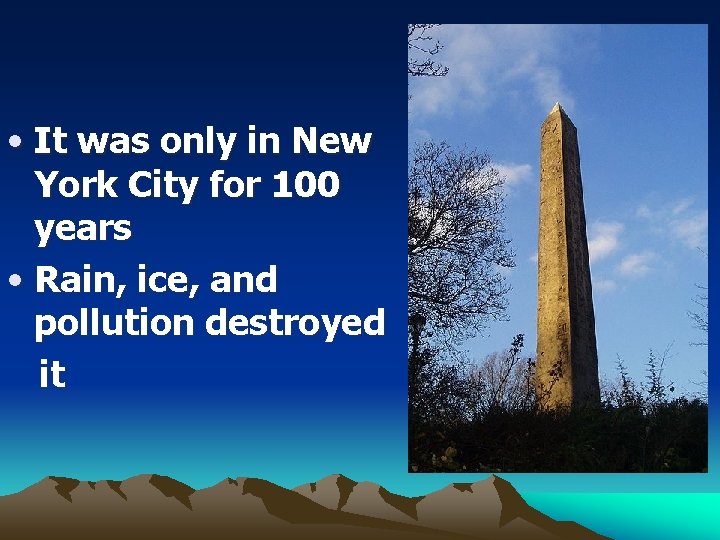
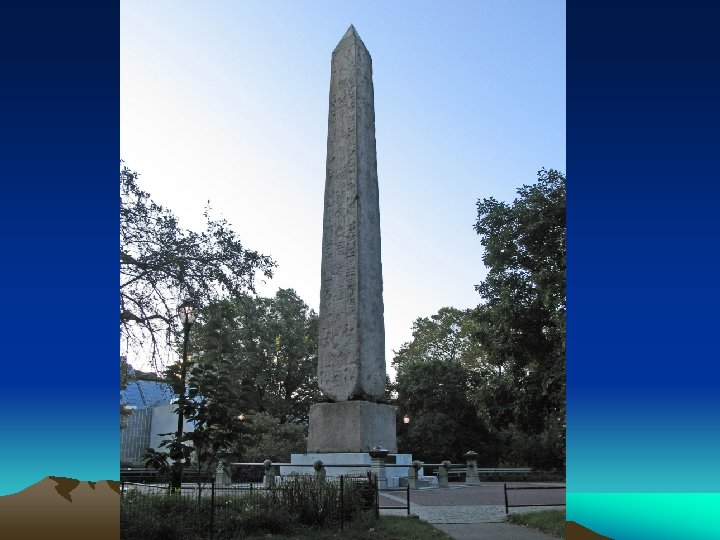
• It was only in New York City for 100 years • Rain, ice, and pollution destroyed it
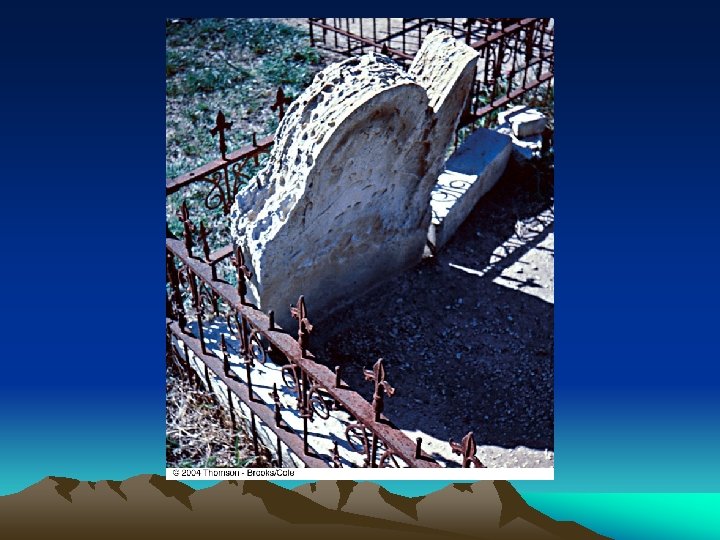
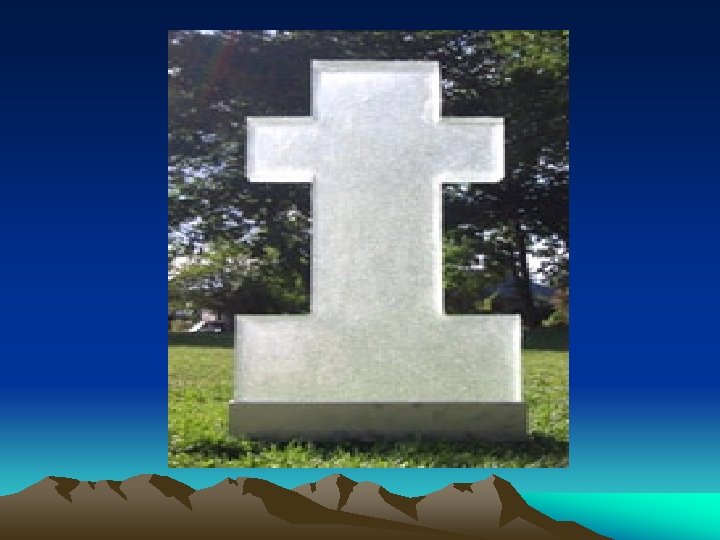
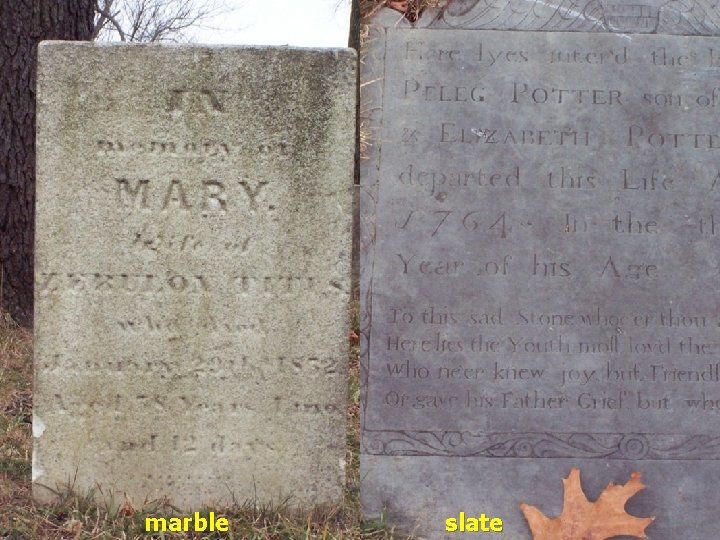
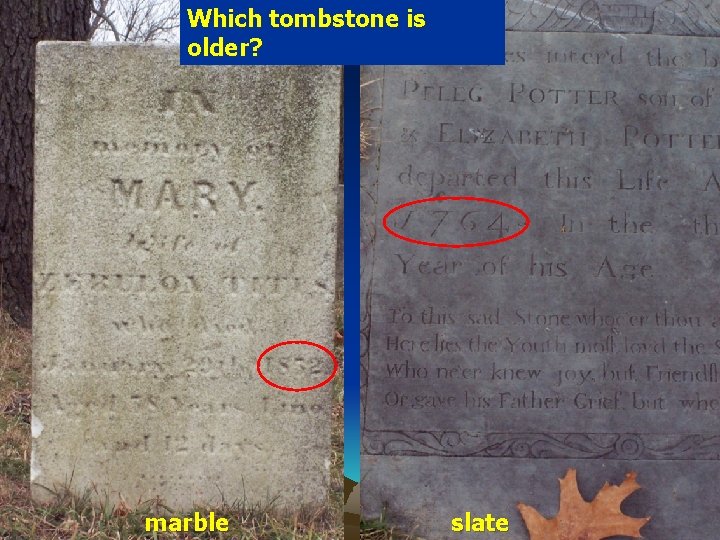
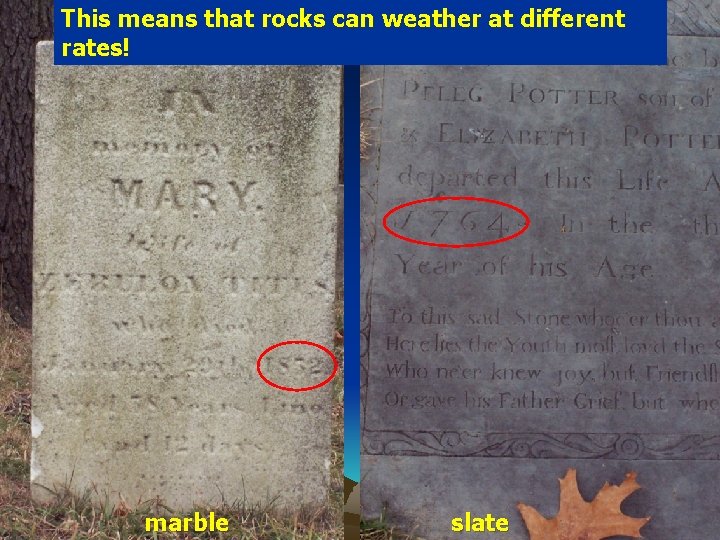
Compare the two tombstones in the next picture… ØHow do they compare in appearance? ØWhich appears more weathered?
marble slate
Which tombstone is older? marble slate
This means that rocks can weather at different rates! marble slate
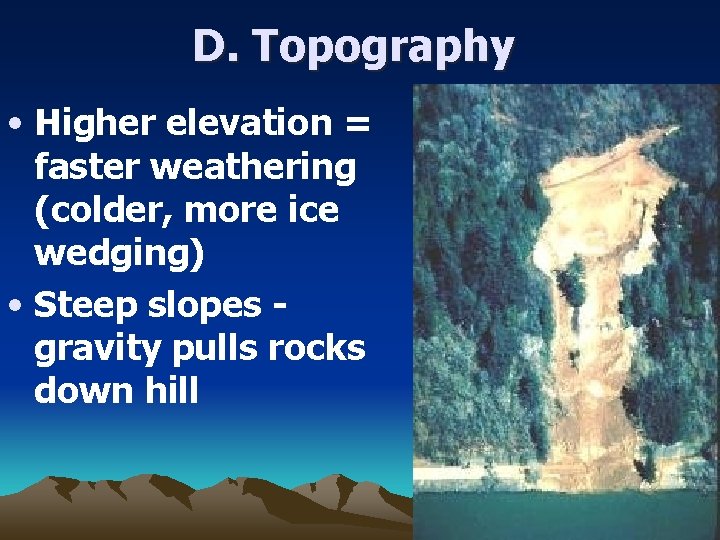
D. Topography • Higher elevation = faster weathering (colder, more ice wedging) • Steep slopes gravity pulls rocks down hill
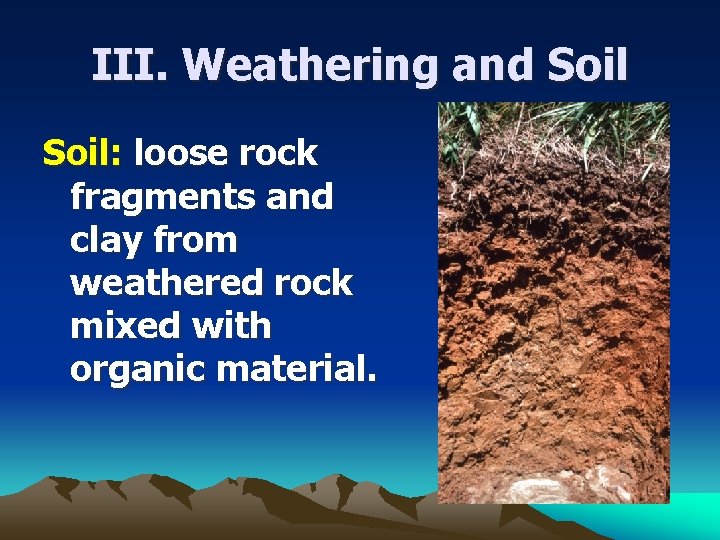
III. Weathering and Soil: loose rock fragments and clay from weathered rock mixed with organic material.
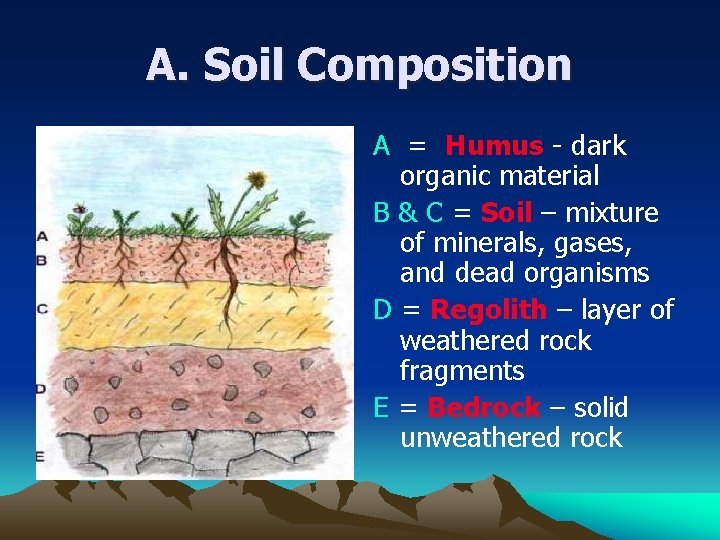
A. Soil Composition A = Humus - dark organic material B & C = Soil – mixture of minerals, gases, and dead organisms D = Regolith – layer of weathered rock fragments E = Bedrock – solid unweathered rock
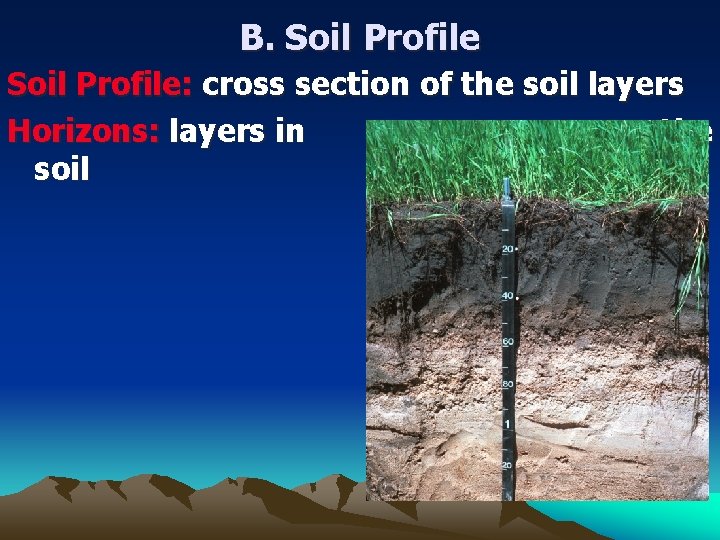
B. Soil Profile: cross section of the soil layers Horizons: layers in the soil
Two Types of Soil: 1. Residual: parent material is the local bedrock 2. Transported: develops from parent material that has been moved far from original location
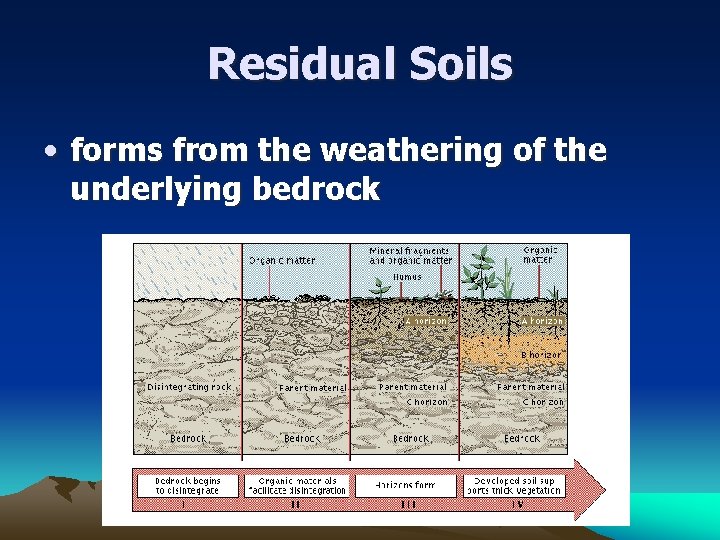
Residual Soils • forms from the weathering of the underlying bedrock
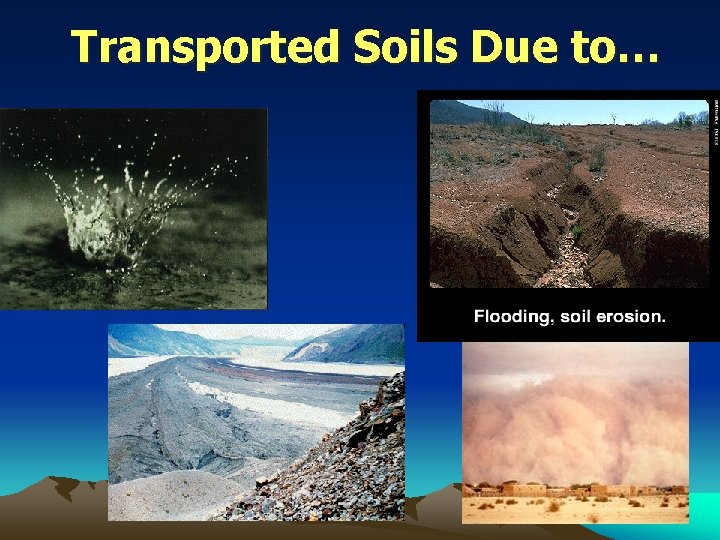
Transported Soils Due to…
IV. EROSION • Process by which the products of weathering are TRANSPORTED (moved) • Agents of erosion: • running WATER • wind • glaciers (ice)
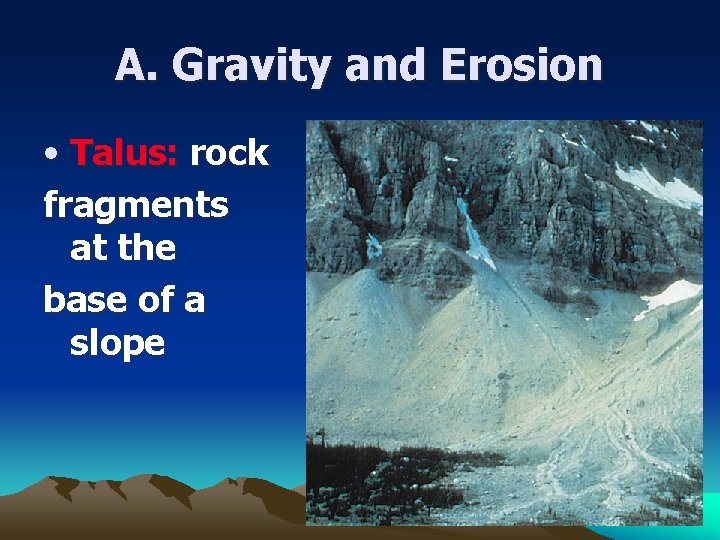
A. Gravity and Erosion • Talus: rock fragments at the base of a slope
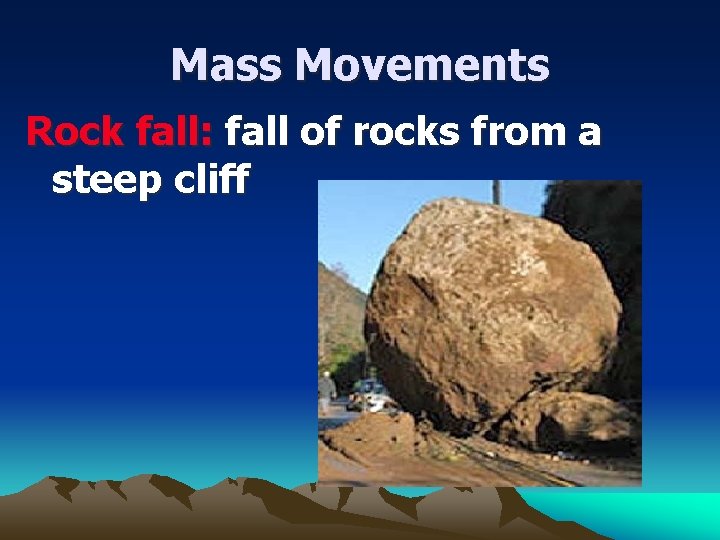
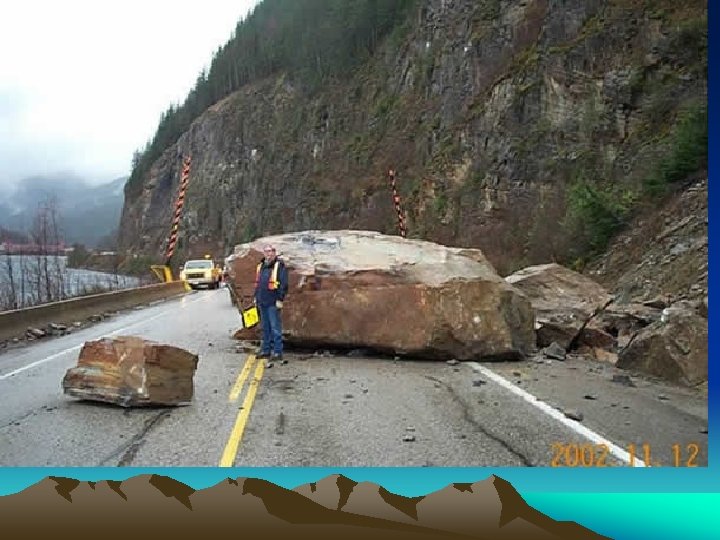
Mass Movements Rock fall: fall of rocks from a steep cliff
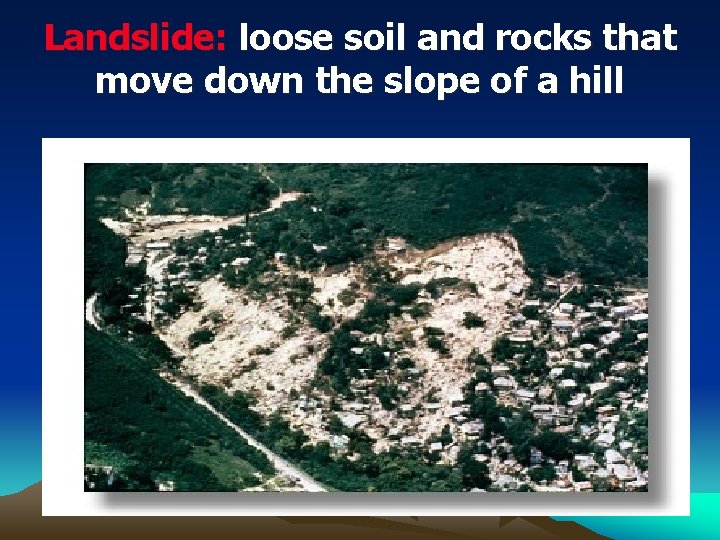
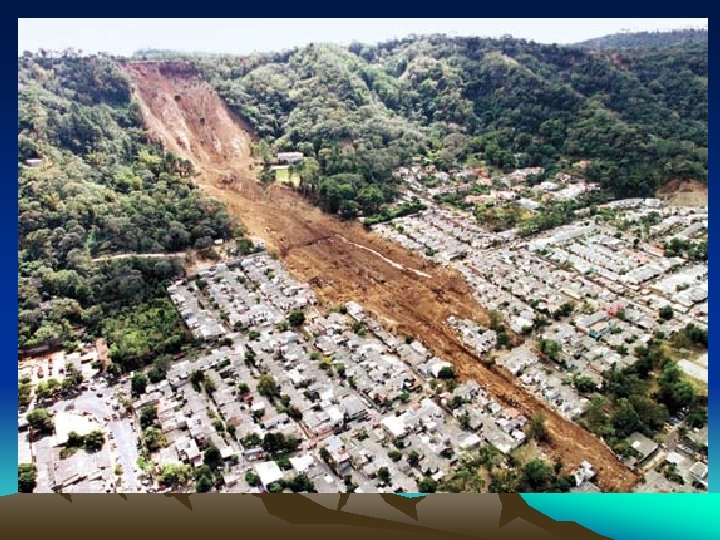
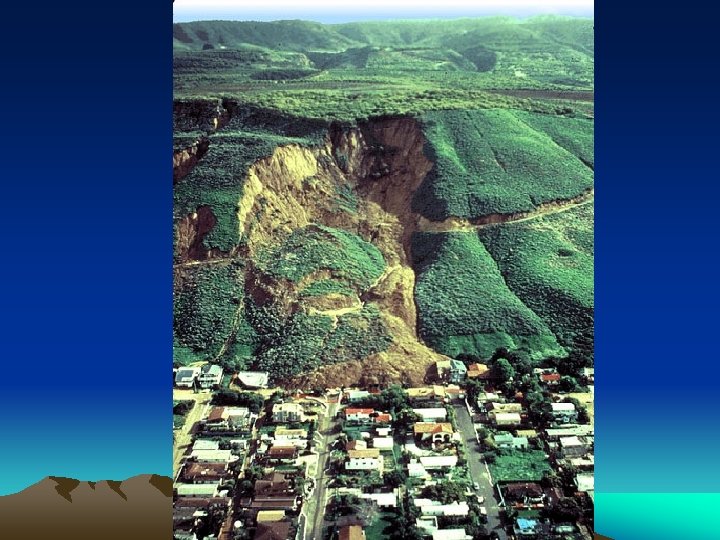
Landslide: loose soil and rocks that move down the slope of a hill
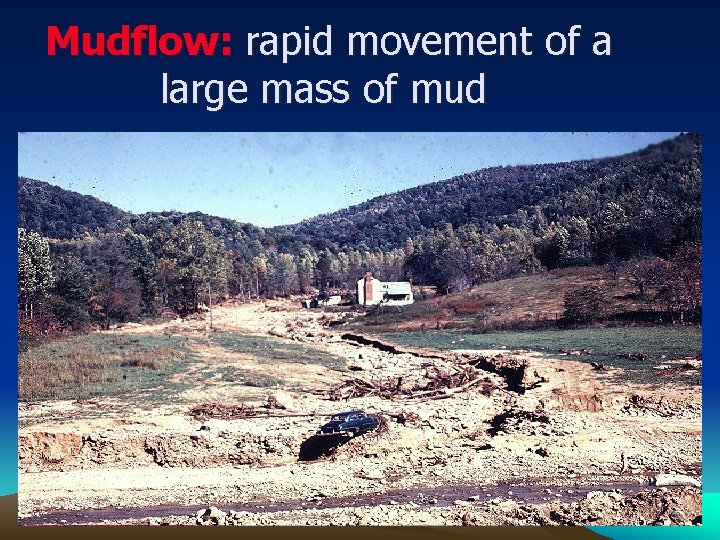
Mudflow: rapid movement of a large mass of mud
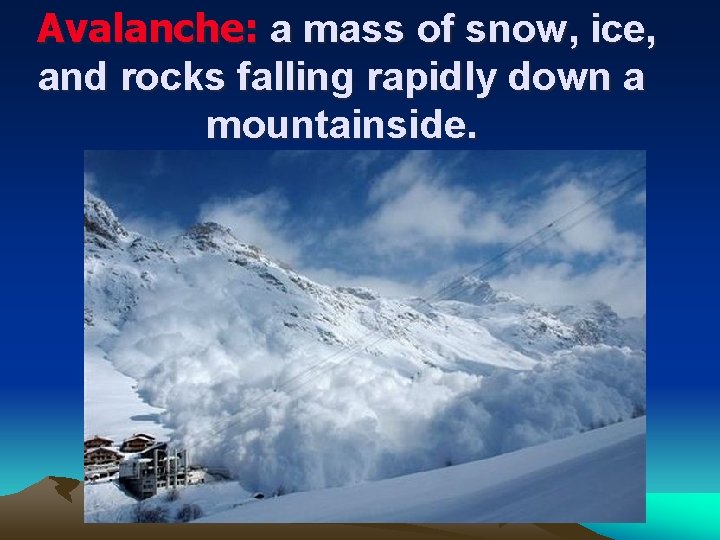
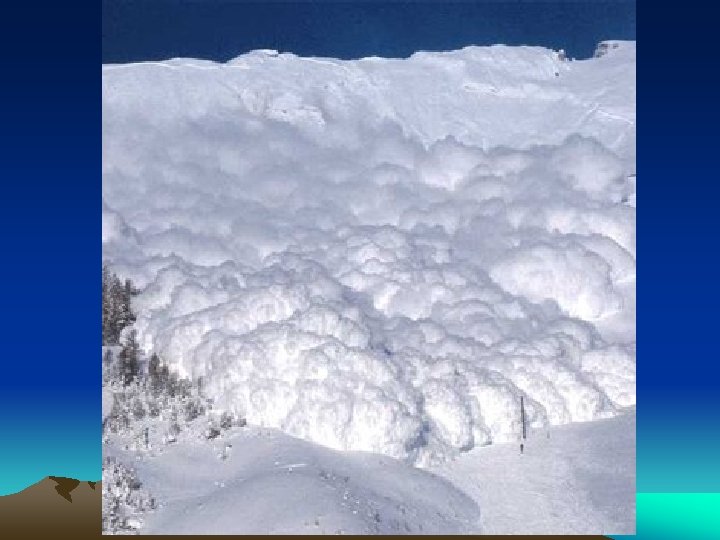
Avalanche: a mass of snow, ice, and rocks falling rapidly down a mountainside.
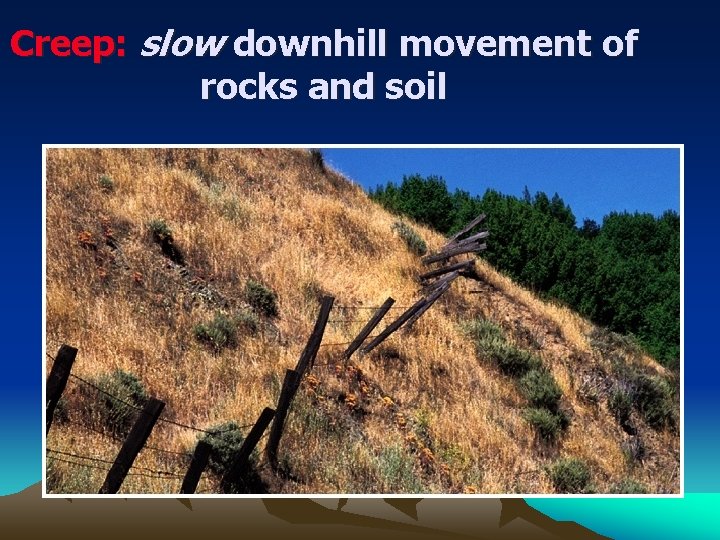
Creep: slow downhill movement of rocks and soil
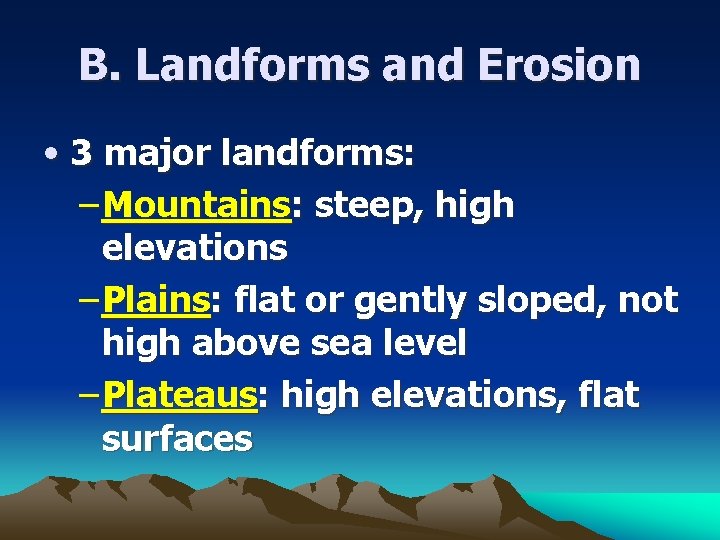
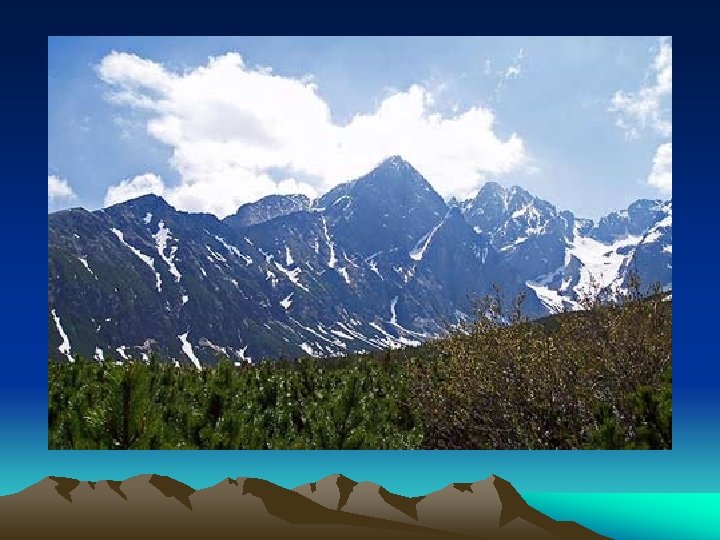
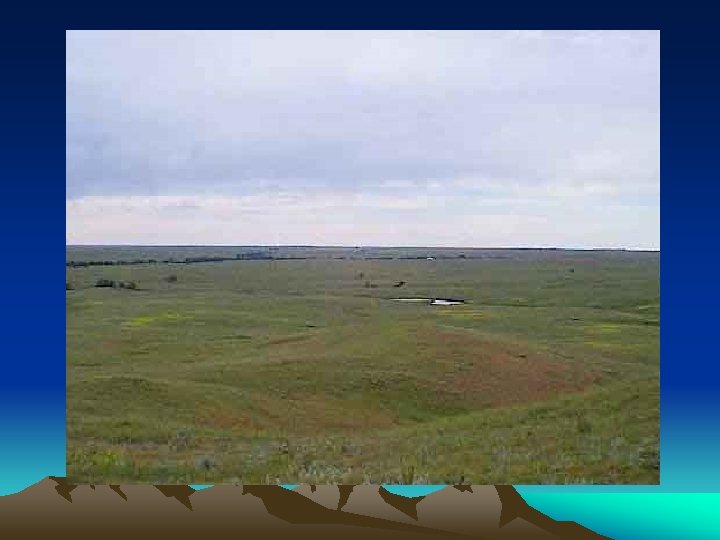
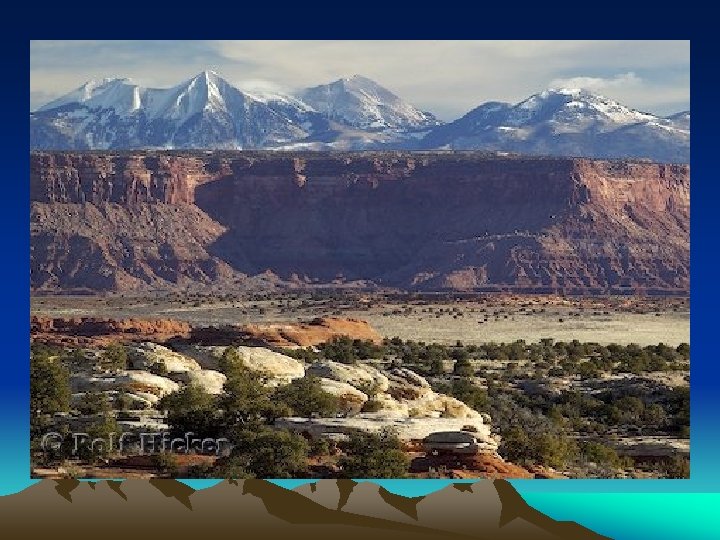
B. Landforms and Erosion • 3 major landforms: – Mountains: steep, high elevations – Plains: flat or gently sloped, not high above sea level – Plateaus: high elevations, flat surfaces