
WEATHERING Breaking down of rock in Earths surface
WEATHERING Breaking down of rock in Earth’s surface
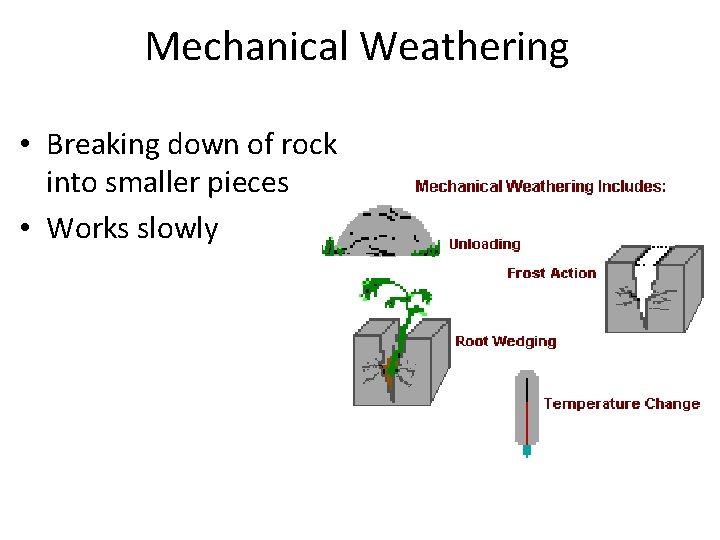
Mechanical Weathering • Breaking down of rock into smaller pieces • Works slowly
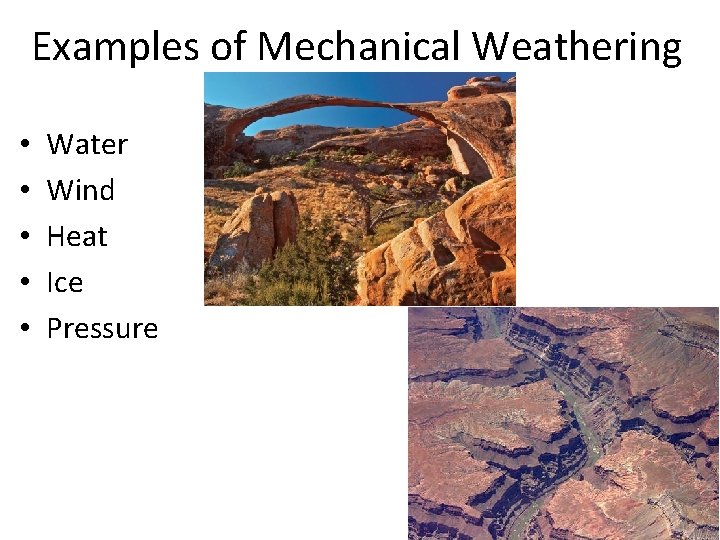
Examples of Mechanical Weathering • • • Water Wind Heat Ice Pressure
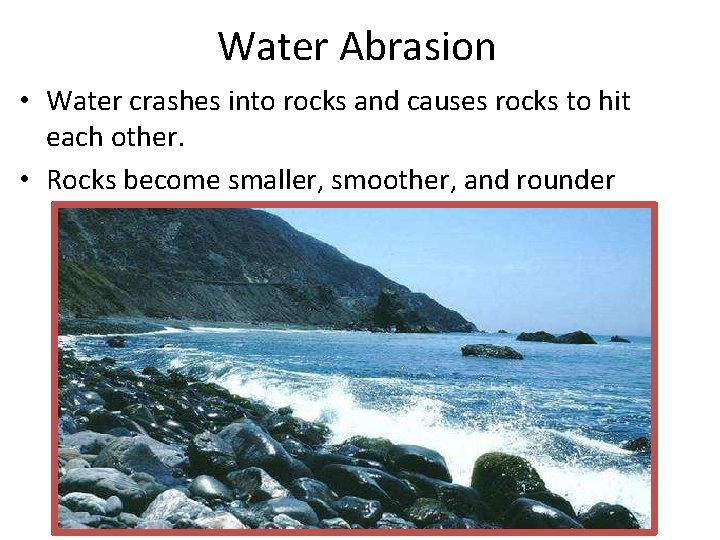
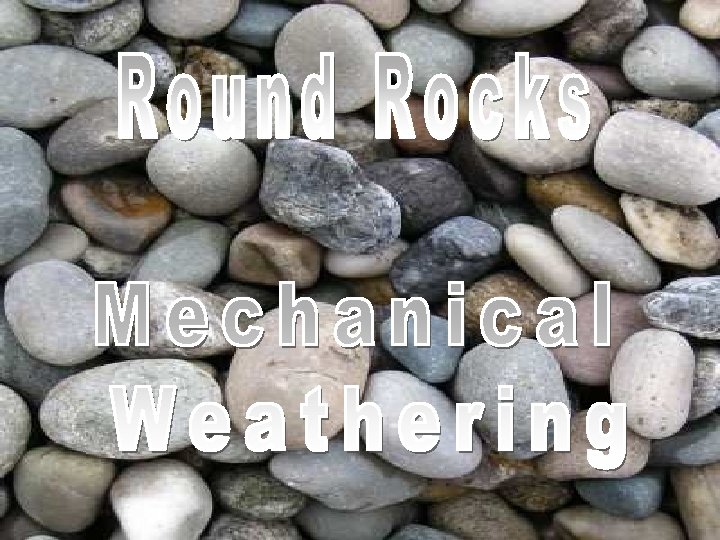
Water Abrasion • Water crashes into rocks and causes rocks to hit each other. • Rocks become smaller, smoother, and rounder
Be A Wave • Right side of the room: breath in loudly • Left side of the room: breath out loudly • Keep doing this until the rocks are all broken down.



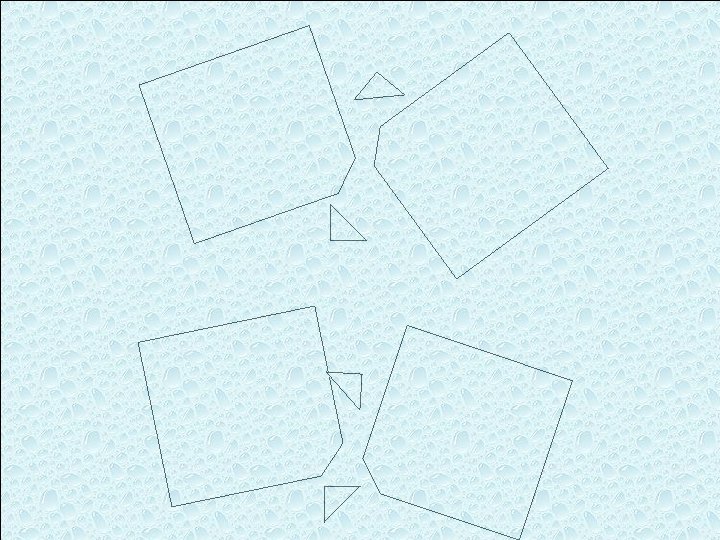
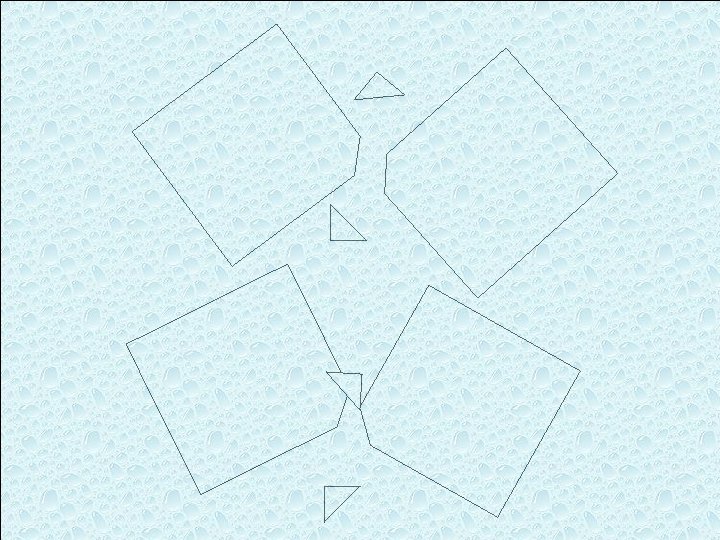
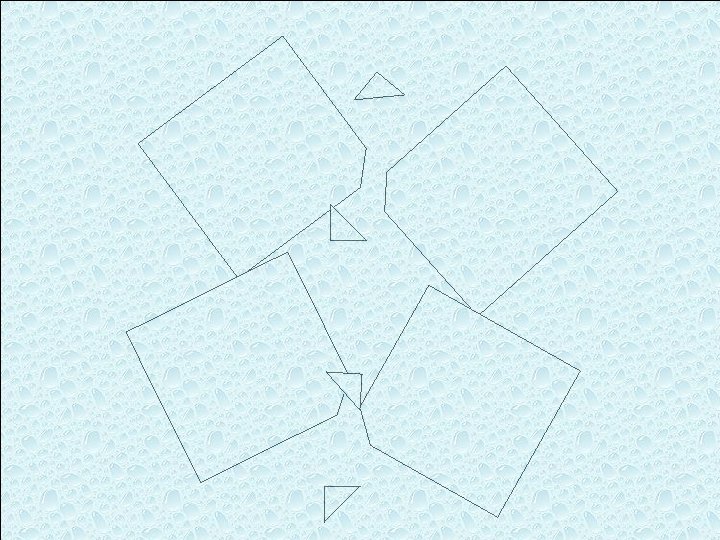








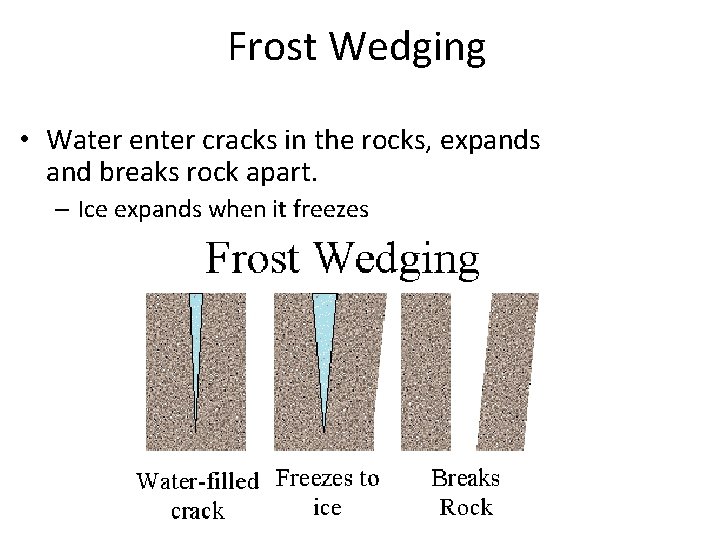
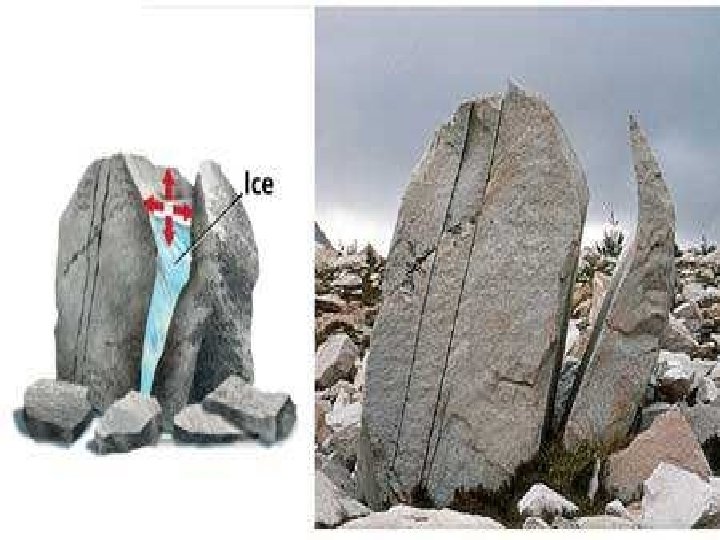
Frost Wedging • Water enter cracks in the rocks, expands and breaks rock apart. – Ice expands when it freezes
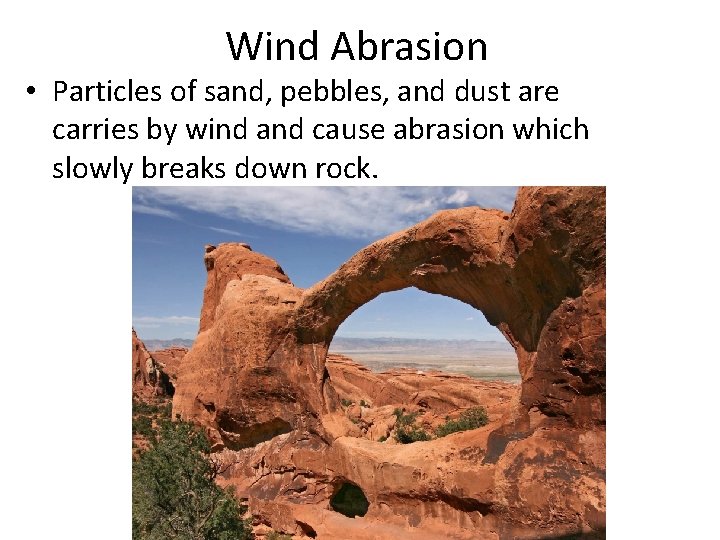
Wind Abrasion • Particles of sand, pebbles, and dust are carries by wind and cause abrasion which slowly breaks down rock.
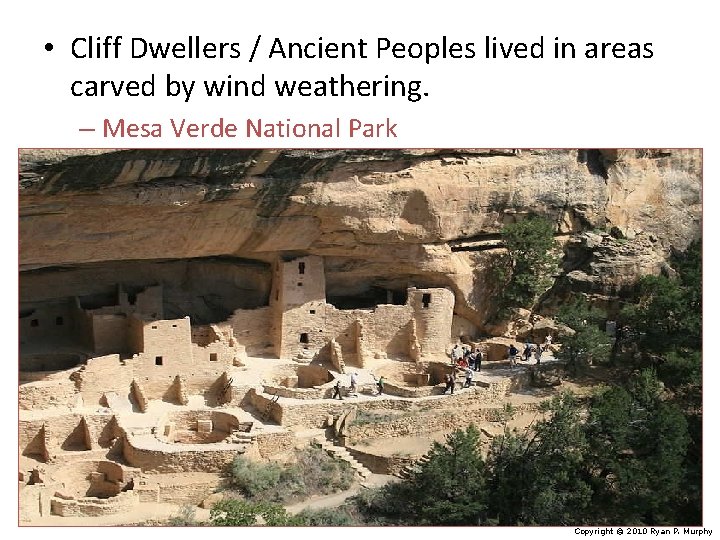
• Cliff Dwellers / Ancient Peoples lived in areas carved by wind weathering. – Mesa Verde National Park Copyright © 2010 Ryan P. Murphy
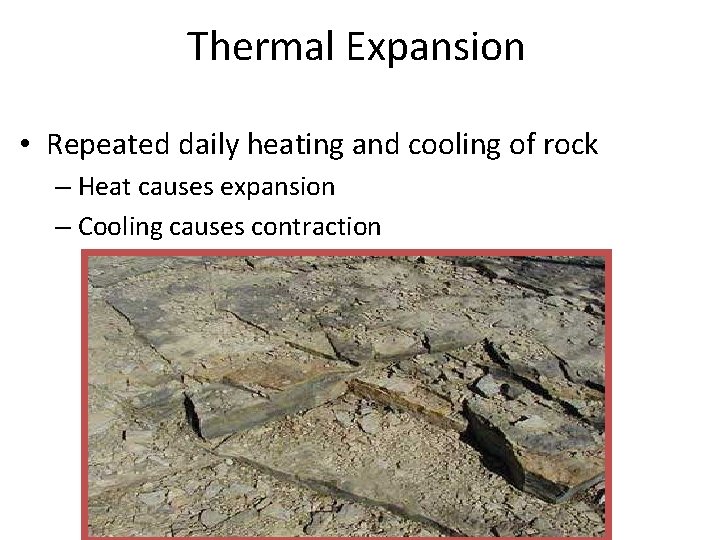
Thermal Expansion • Repeated daily heating and cooling of rock – Heat causes expansion – Cooling causes contraction
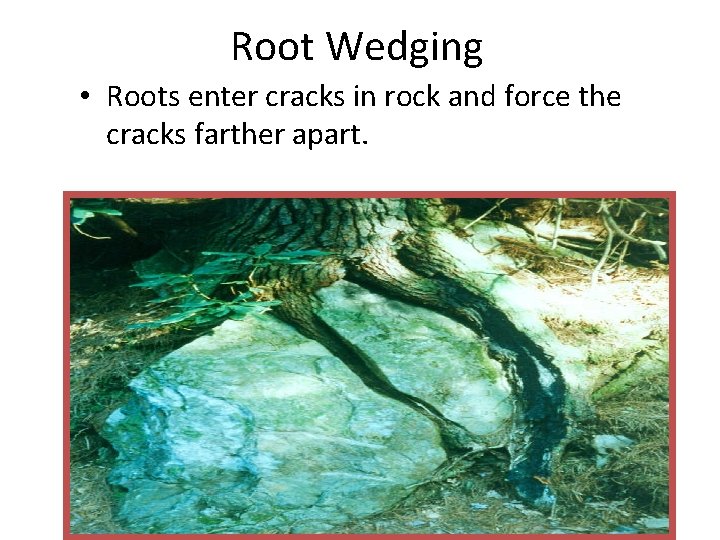
Root Wedging • Roots enter cracks in rock and force the cracks farther apart.
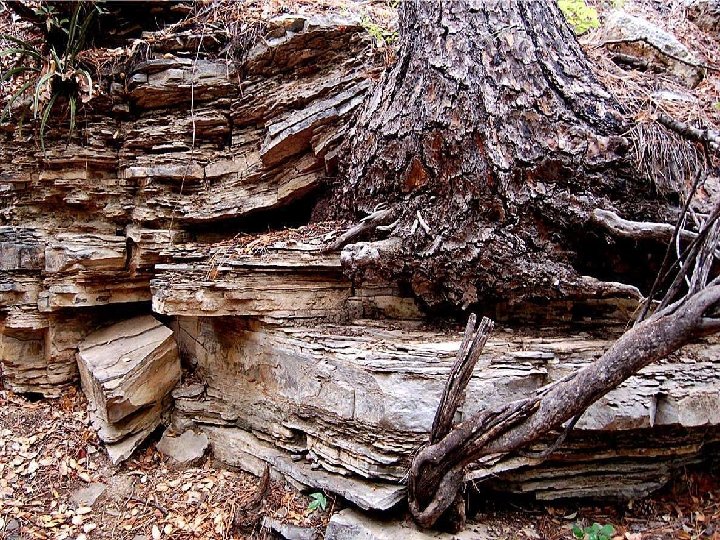
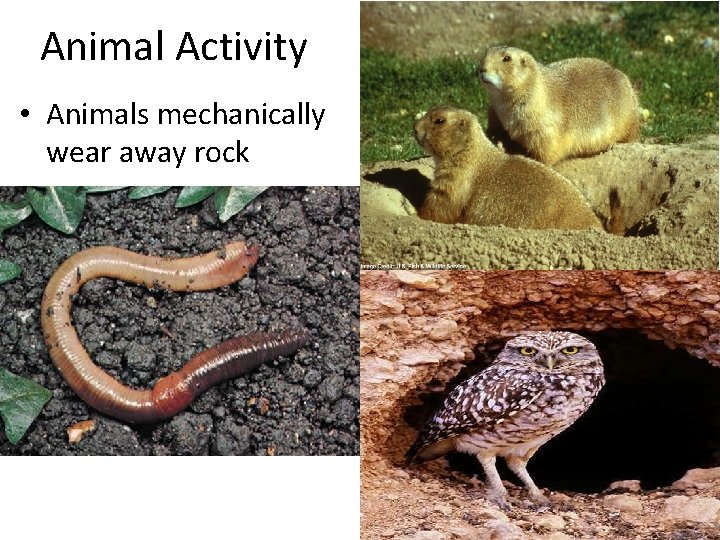
Animal Activity • Animals mechanically wear away rock
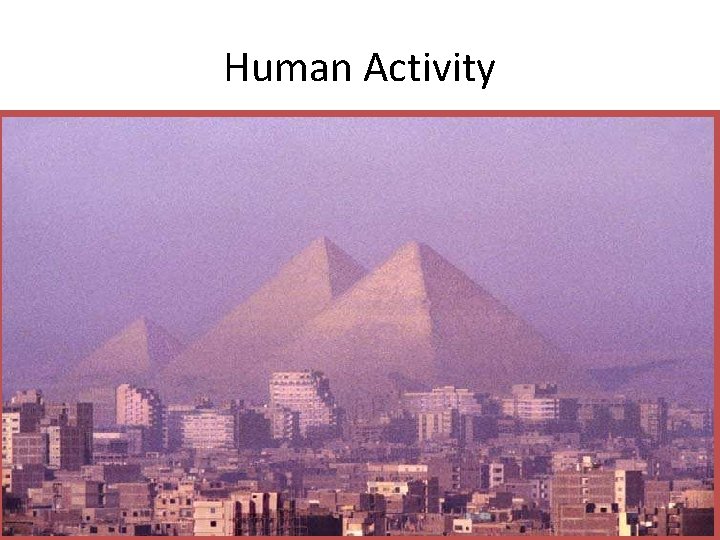
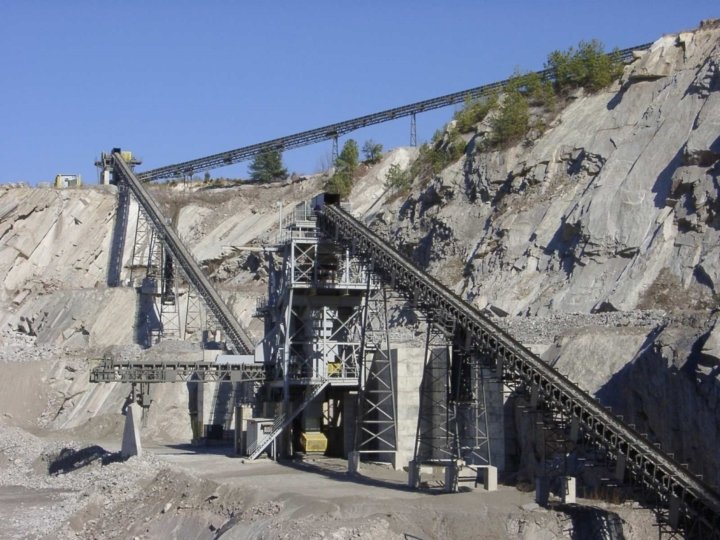
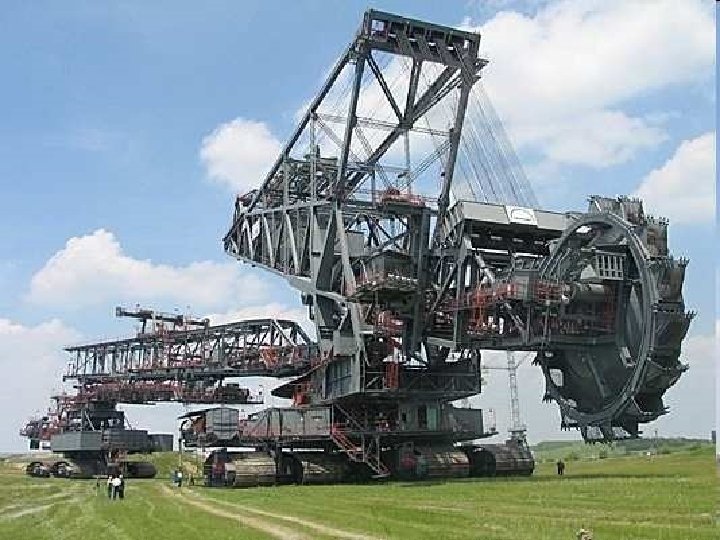
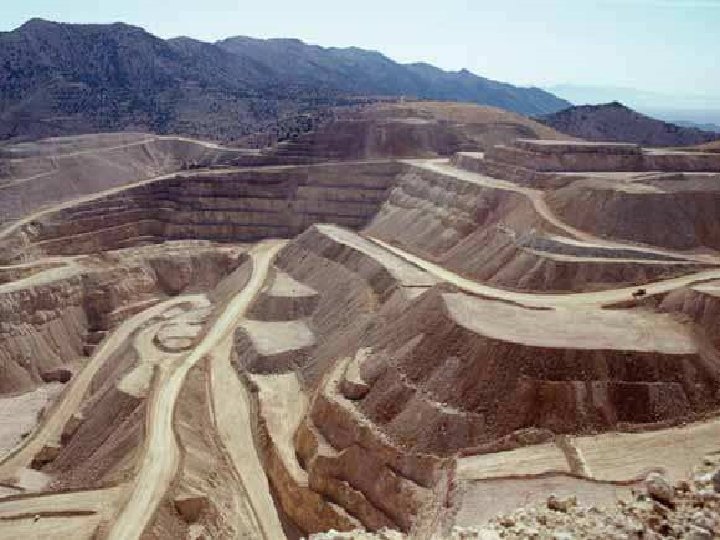
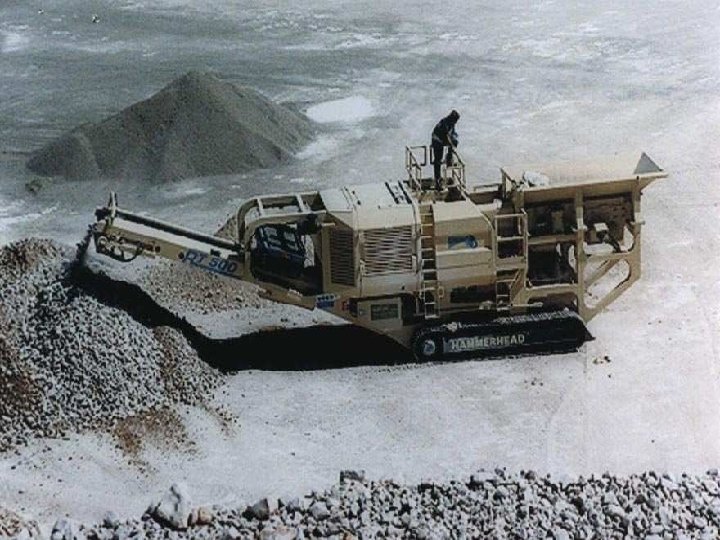
Human Activity
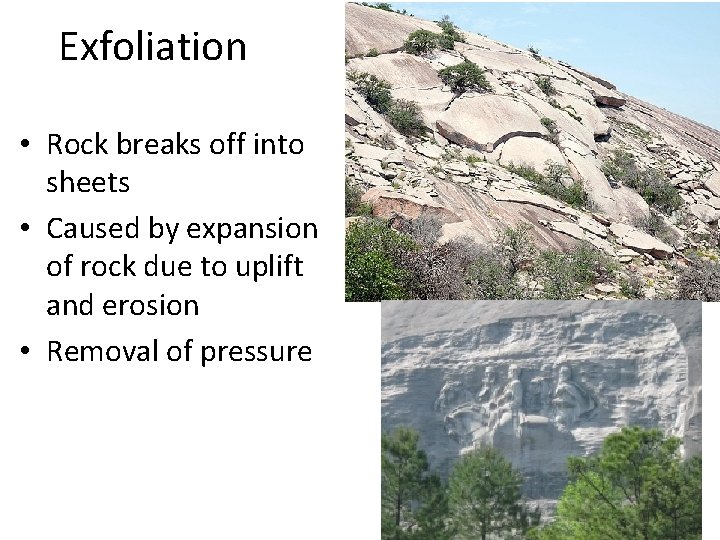
Exfoliation • Rock breaks off into sheets • Caused by expansion of rock due to uplift and erosion • Removal of pressure
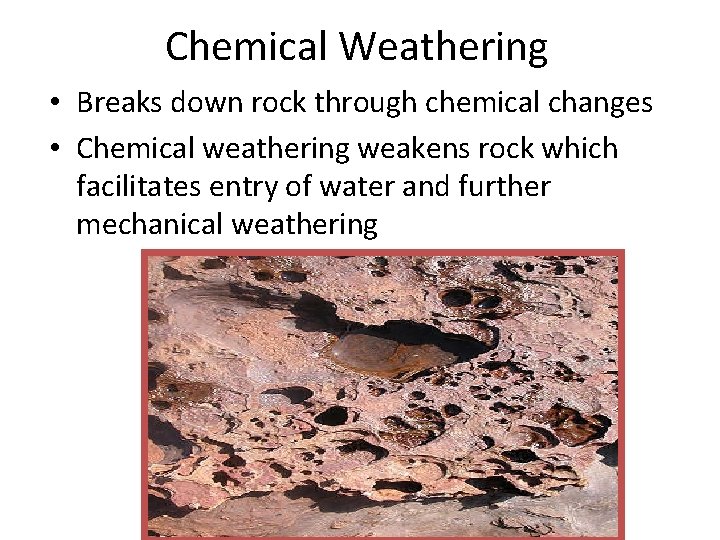
Chemical Weathering • Breaks down rock through chemical changes • Chemical weathering weakens rock which facilitates entry of water and further mechanical weathering
Causes of Chemical Weathering • Chemicals • Biological chemicals • Water – most important chemical weathering agent
Chemical Weathering Depends On: • Temperature • Amount of surface area • Availability of water or natural acid
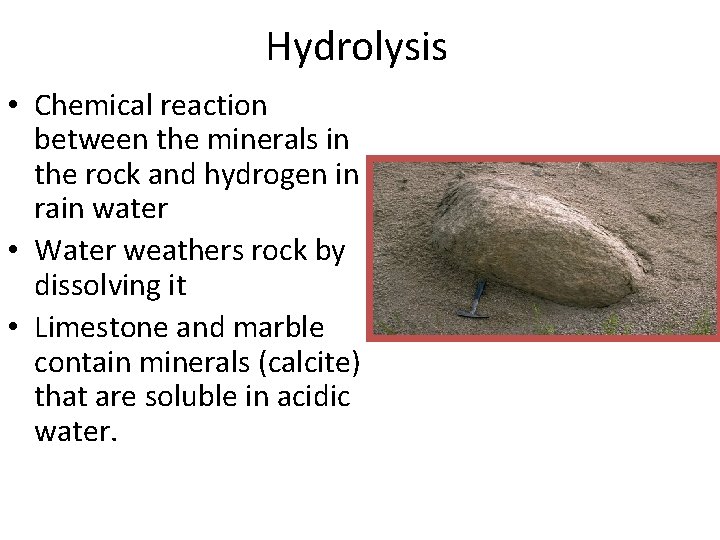
Hydrolysis • Chemical reaction between the minerals in the rock and hydrogen in rain water • Water weathers rock by dissolving it • Limestone and marble contain minerals (calcite) that are soluble in acidic water.
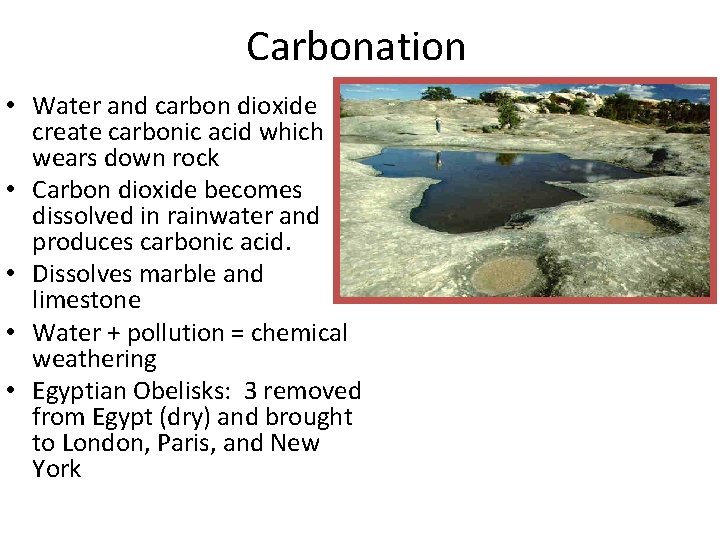
Carbonation • Water and carbon dioxide create carbonic acid which wears down rock • Carbon dioxide becomes dissolved in rainwater and produces carbonic acid. • Dissolves marble and limestone • Water + pollution = chemical weathering • Egyptian Obelisks: 3 removed from Egypt (dry) and brought to London, Paris, and New York
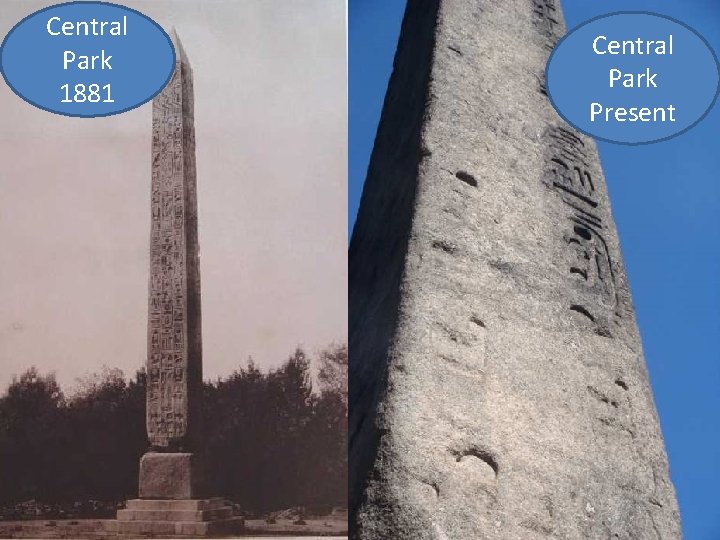
Central Park 1881 Central Park Present
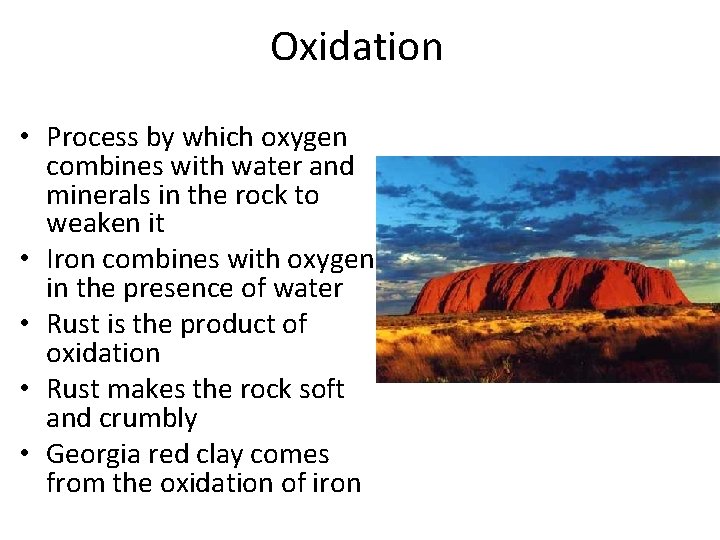
Oxidation • Process by which oxygen combines with water and minerals in the rock to weaken it • Iron combines with oxygen in the presence of water • Rust is the product of oxidation • Rust makes the rock soft and crumbly • Georgia red clay comes from the oxidation of iron
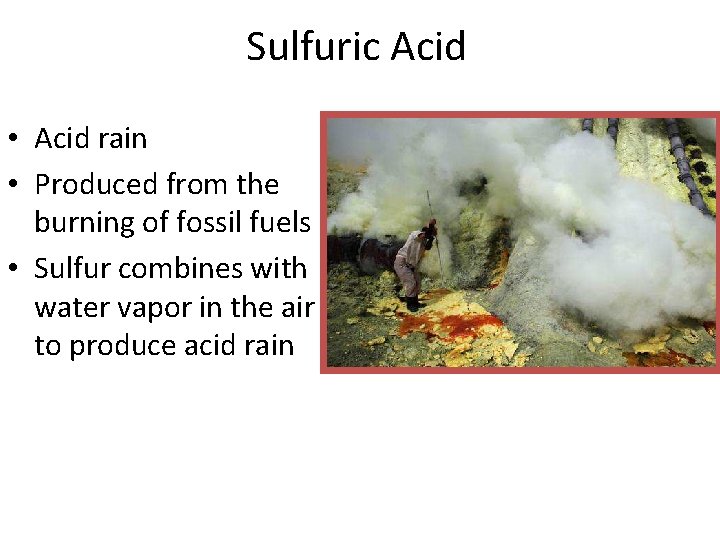
Sulfuric Acid • Acid rain • Produced from the burning of fossil fuels • Sulfur combines with water vapor in the air to produce acid rain
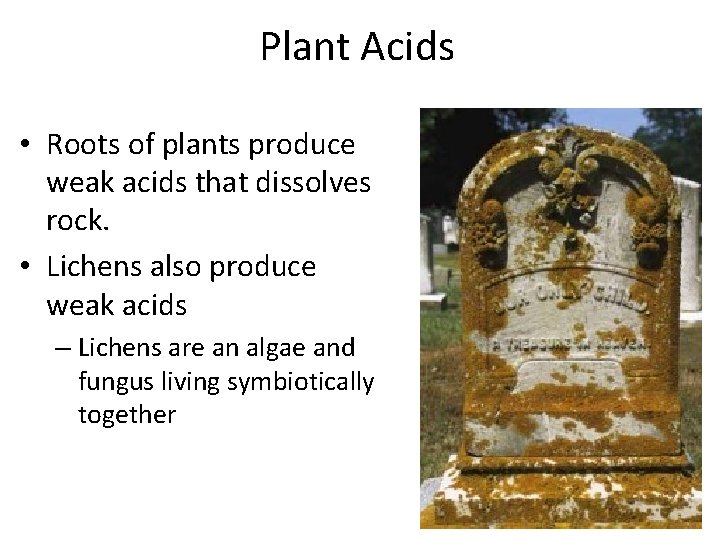
Plant Acids • Roots of plants produce weak acids that dissolves rock. • Lichens also produce weak acids – Lichens are an algae and fungus living symbiotically together

http: //www. youtube. com/watch? v=j 6 UFRIAc. Wg. Y
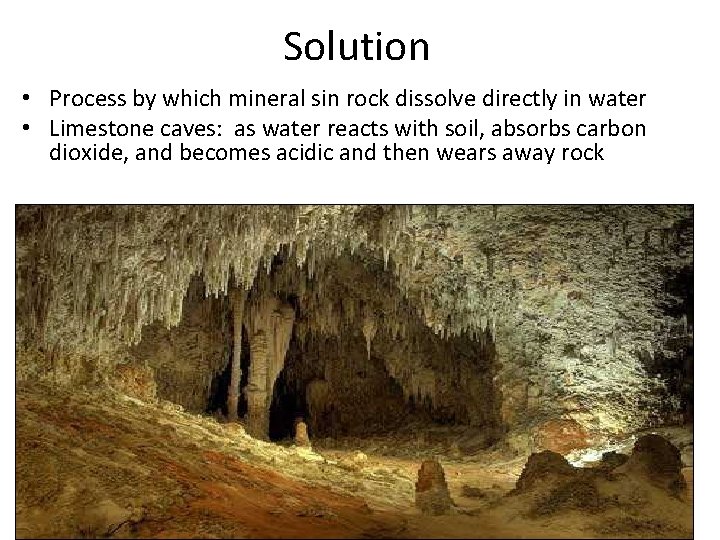
Solution • Process by which mineral sin rock dissolve directly in water • Limestone caves: as water reacts with soil, absorbs carbon dioxide, and becomes acidic and then wears away rock
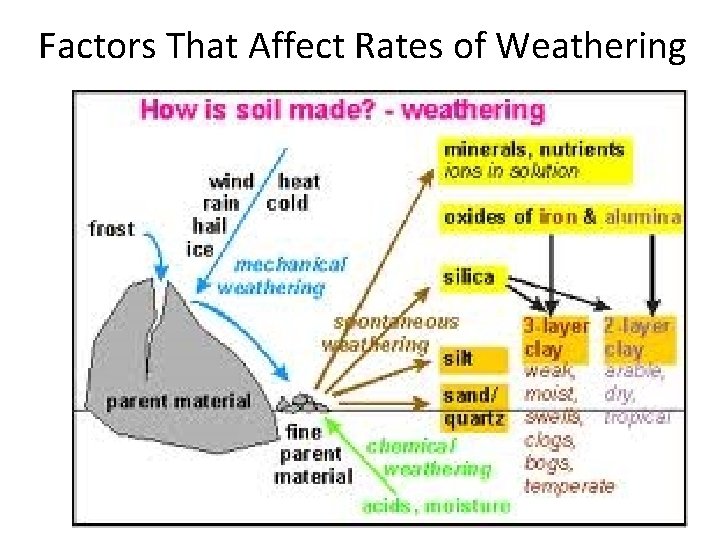
Factors That Affect Rates of Weathering
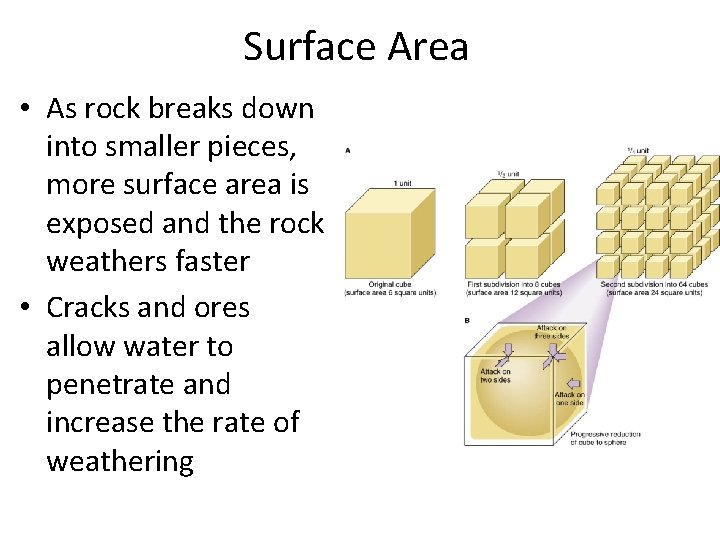
Surface Area • As rock breaks down into smaller pieces, more surface area is exposed and the rock weathers faster • Cracks and ores allow water to penetrate and increase the rate of weathering
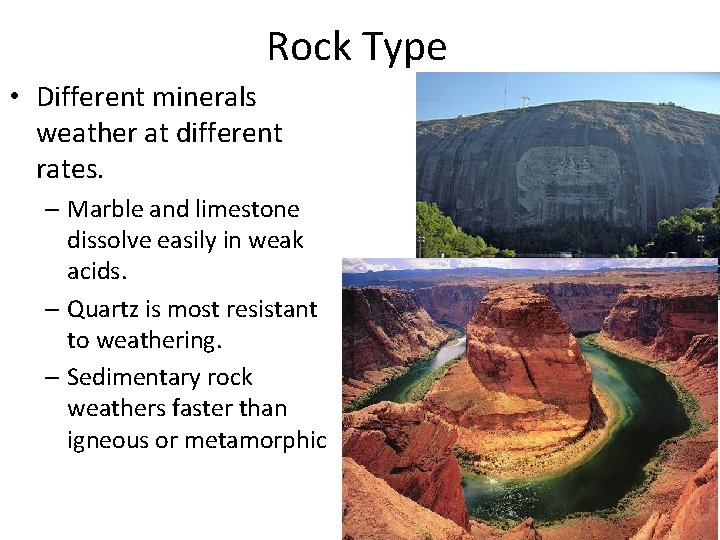
Rock Type • Different minerals weather at different rates. – Marble and limestone dissolve easily in weak acids. – Quartz is most resistant to weathering. – Sedimentary rock weathers faster than igneous or metamorphic
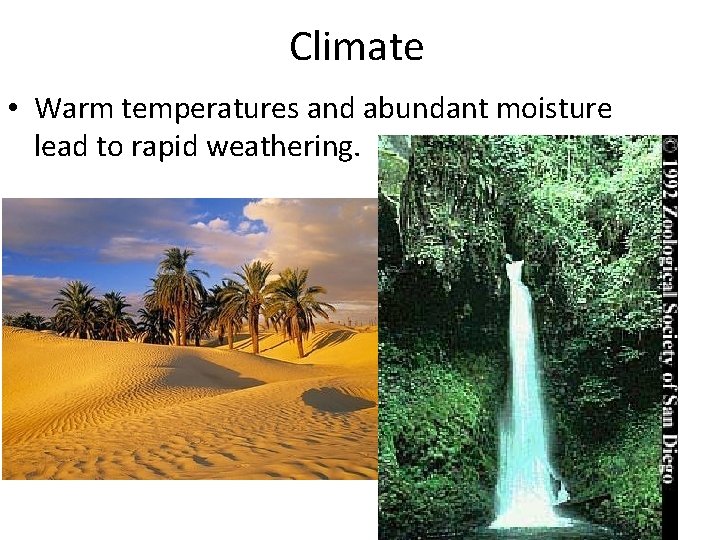
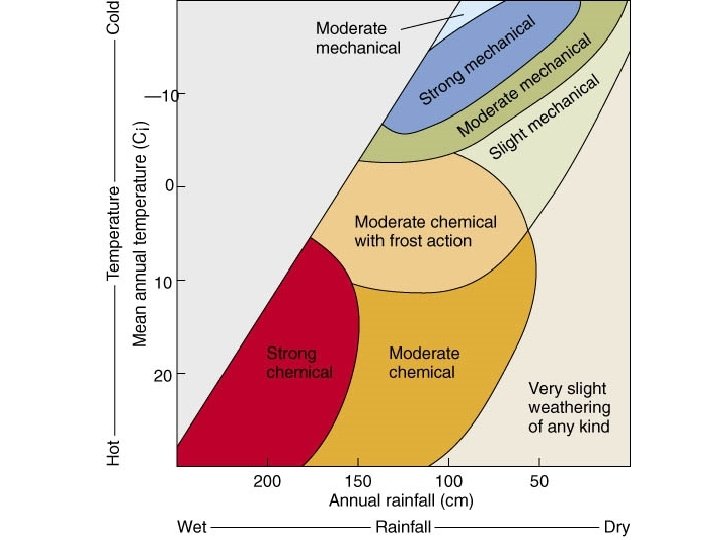
Climate • Warm temperatures and abundant moisture lead to rapid weathering.
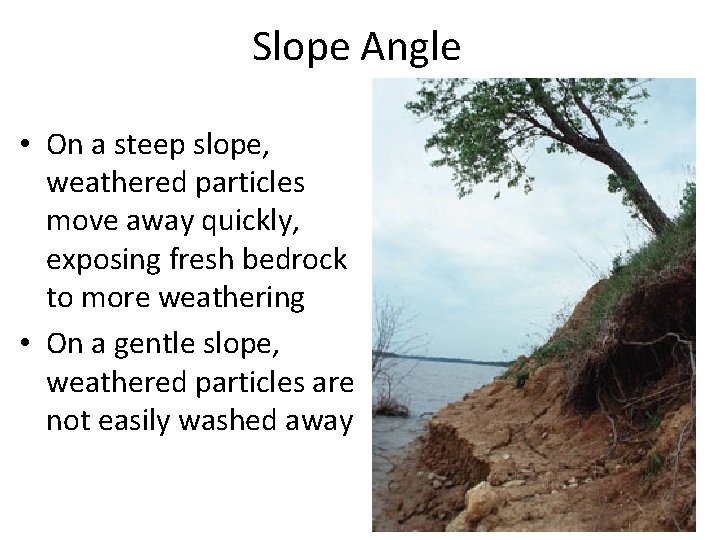
Slope Angle • On a steep slope, weathered particles move away quickly, exposing fresh bedrock to more weathering • On a gentle slope, weathered particles are not easily washed away
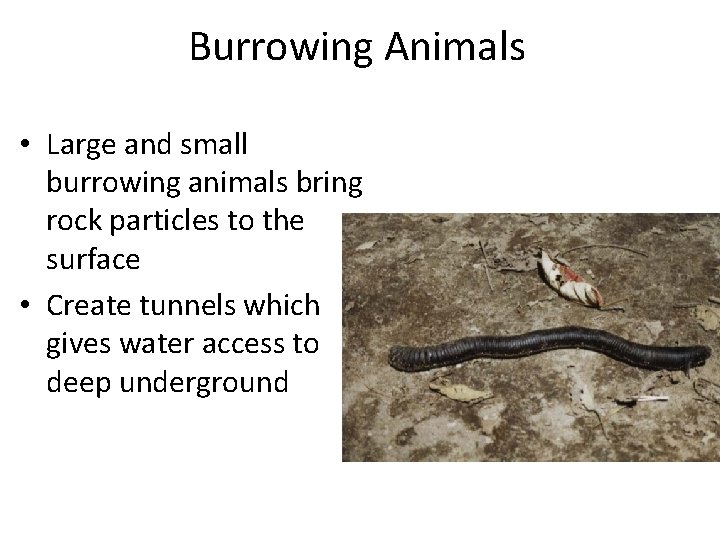
Burrowing Animals • Large and small burrowing animals bring rock particles to the surface • Create tunnels which gives water access to deep underground

http: //www. youtube. com/watch? v=Hj. VSiuj 7 Lxk
- Slides: 61