
Weathering and Erosion Weathering when rocks are exposed

- Slides: 14
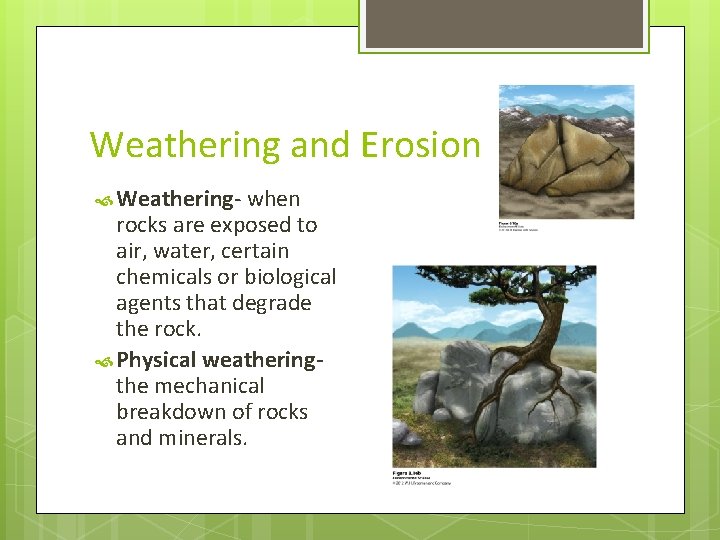
Weathering and Erosion Weathering- when rocks are exposed to air, water, certain chemicals or biological agents that degrade the rock. Physical weatheringthe mechanical breakdown of rocks and minerals.
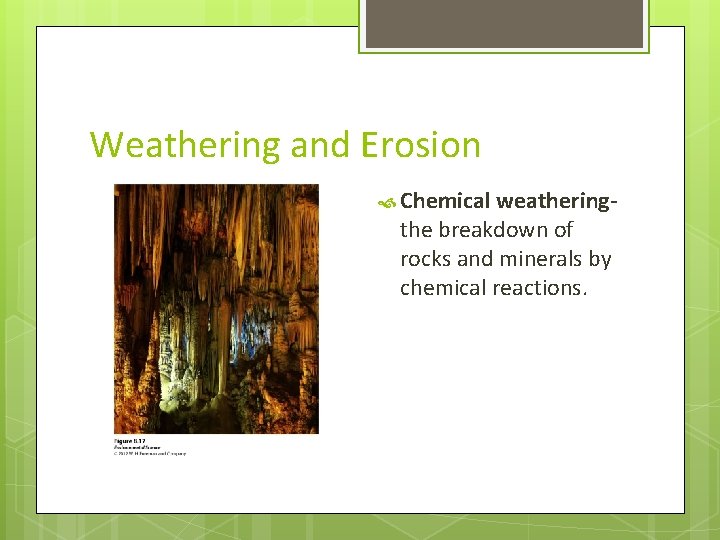
Weathering and Erosion Chemical weathering- the breakdown of rocks and minerals by chemical reactions.
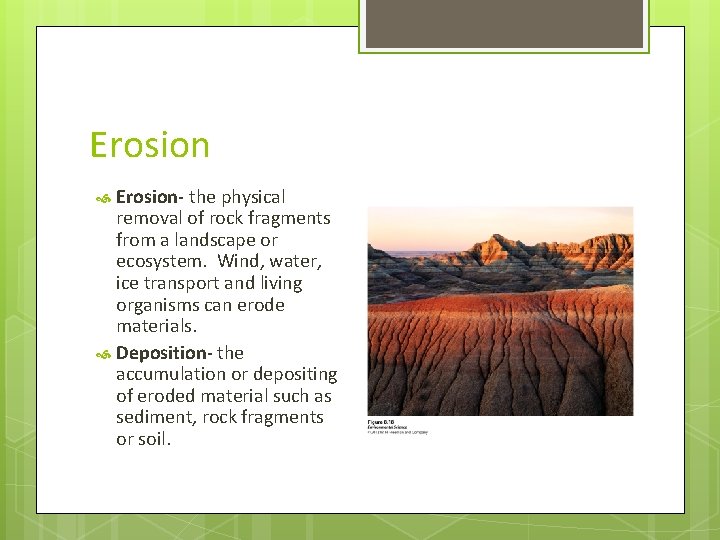
Erosion- the physical removal of rock fragments from a landscape or ecosystem. Wind, water, ice transport and living organisms can erode materials. Deposition- the accumulation or depositing of eroded material such as sediment, rock fragments or soil.
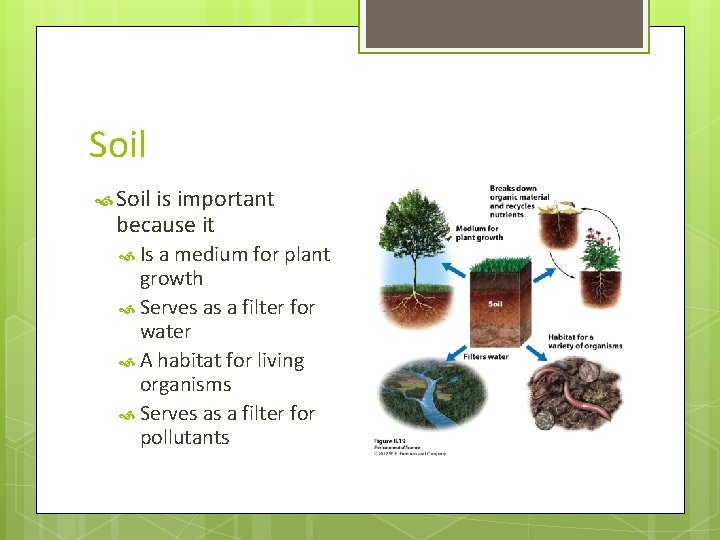
Soil is important because it Is a medium for plant growth Serves as a filter for water A habitat for living organisms Serves as a filter for pollutants
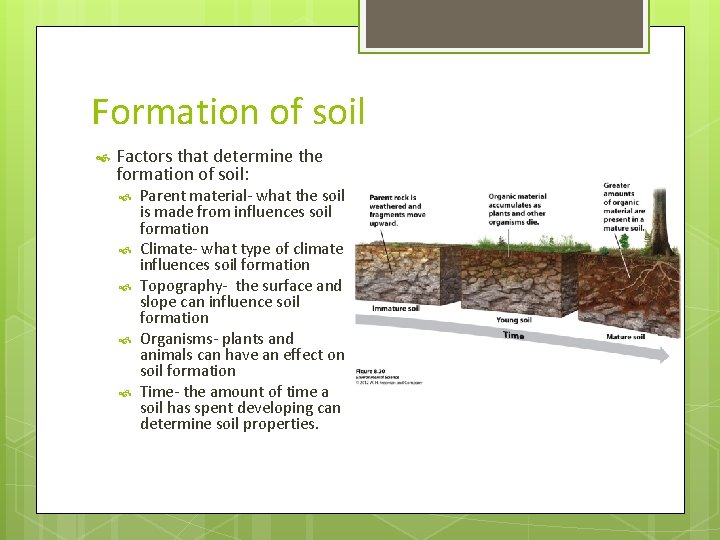
Formation of soil Factors that determine the formation of soil: Parent material- what the soil is made from influences soil formation Climate- what type of climate influences soil formation Topography- the surface and slope can influence soil formation Organisms- plants and animals can have an effect on soil formation Time- the amount of time a soil has spent developing can determine soil properties.
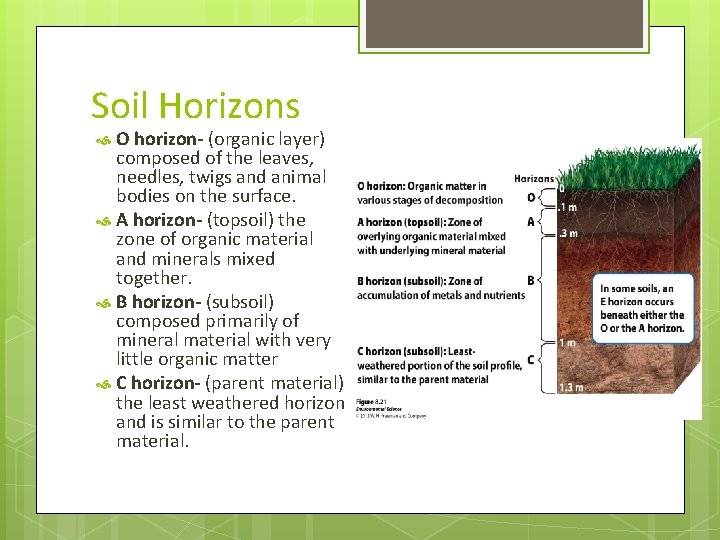
Soil Horizons O horizon- (organic layer) composed of the leaves, needles, twigs and animal bodies on the surface. A horizon- (topsoil) the zone of organic material and minerals mixed together. B horizon- (subsoil) composed primarily of mineral material with very little organic matter C horizon- (parent material) the least weathered horizon and is similar to the parent material.
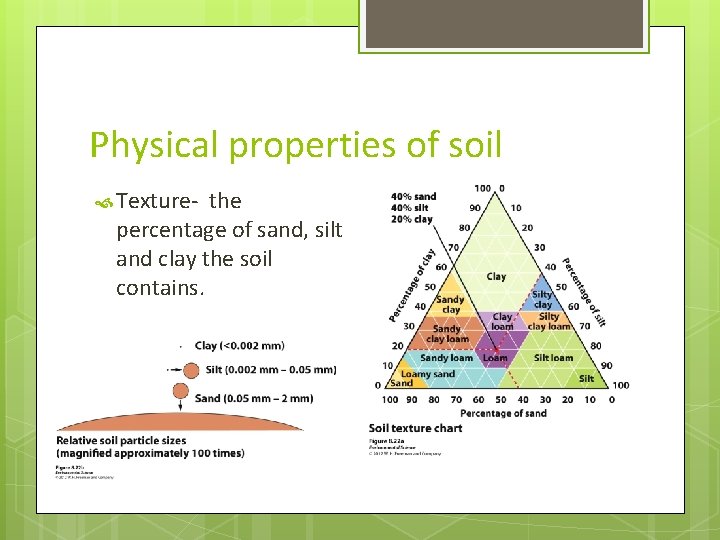
Physical properties of soil Texture- the percentage of sand, silt and clay the soil contains.
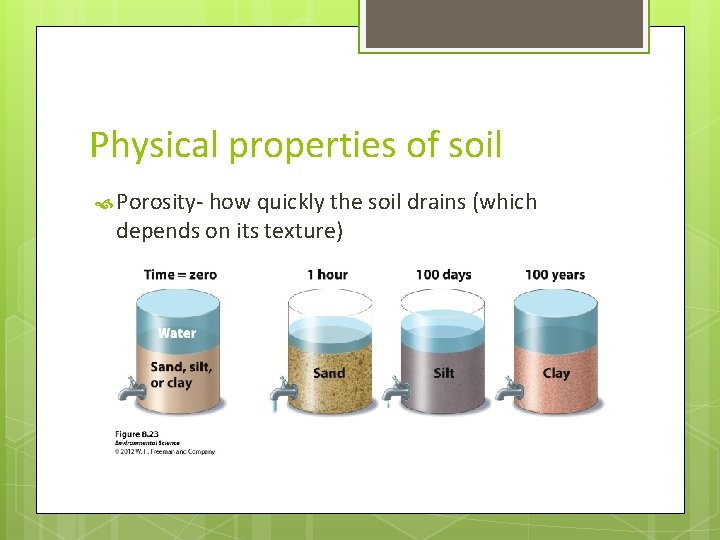
Physical properties of soil Porosity- how quickly the soil drains (which depends on its texture)
Chemical properties of soil Cation exchange capacity- the ability of a soil to adsorb and release cations, positively charged mineral ions. Soil bases- calcium, magnesium, potassium and sodium Soil Acids- aluminum and hydrogen Base saturation- the proportion of soil bases to soil acids
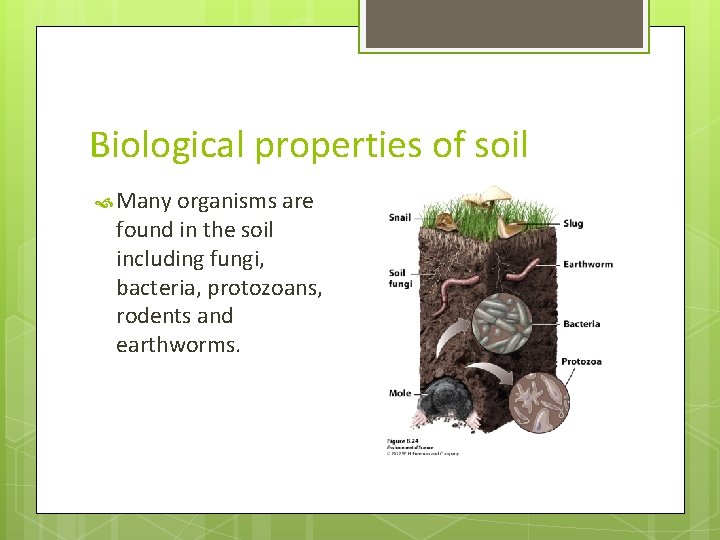
Biological properties of soil Many organisms are found in the soil including fungi, bacteria, protozoans, rodents and earthworms.
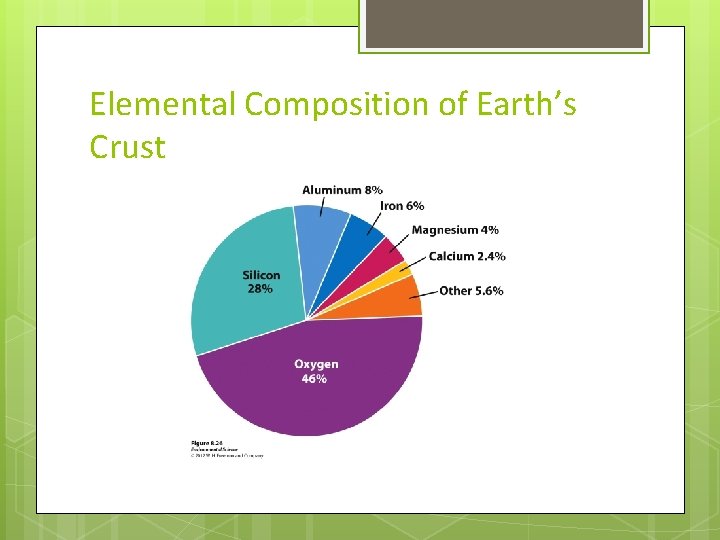
Elemental Composition of Earth’s Crust
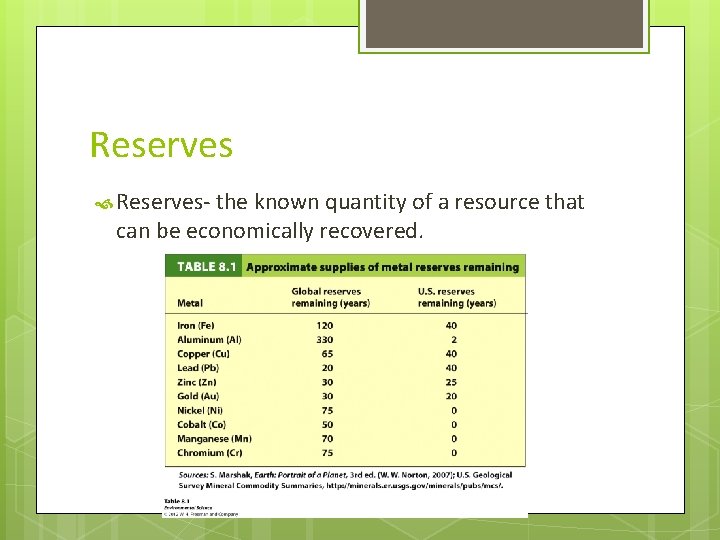
Reserves Reserves- the known quantity of a resource that can be economically recovered.
Types of mining Surface mining- removing minerals that are close to Earth’s surface. Strip mining- removing strips of soil and rock to expose ore. Open pit mining- the creation of a large pit or hole in the ground that is visible from the surface. Mountain top removal- removing the entire top of a mountain with explosives. Placer mining- looking for metals and stones in river sediments.
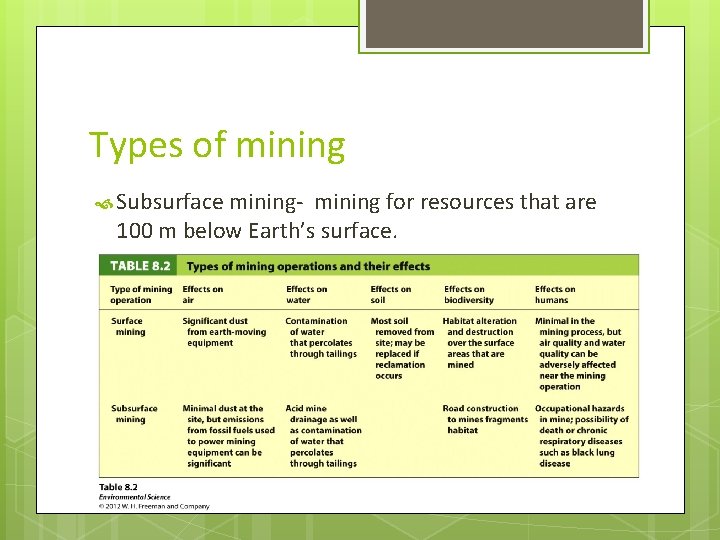
Types of mining Subsurface mining- mining for resources that are 100 m below Earth’s surface.