
Weathering and Erosion Sugar Cube Lab Step 1
Weathering and Erosion
Sugar Cube Lab • Step 1 • Draw a picture of your sugar cube in your SNB. • Break down your sugar cube. • Now draw a picture in your SNB. • Step 2 • Stack 5 sugar cubes in a paper cup. • Draw a picture of your sugar cubes in your SNB. • Use the dropper to drop 10 drops of vinegar on the cubes. • Now draw a picture of your sugar cubes in your SNB. • Step 3 • Answer the following questions in your SNB. • 1. When did physical weathering take place? Explain why. • 2. When did chemical weathering take place? Explain why. • 3. What do you think is the difference between physical and chemical weathering?
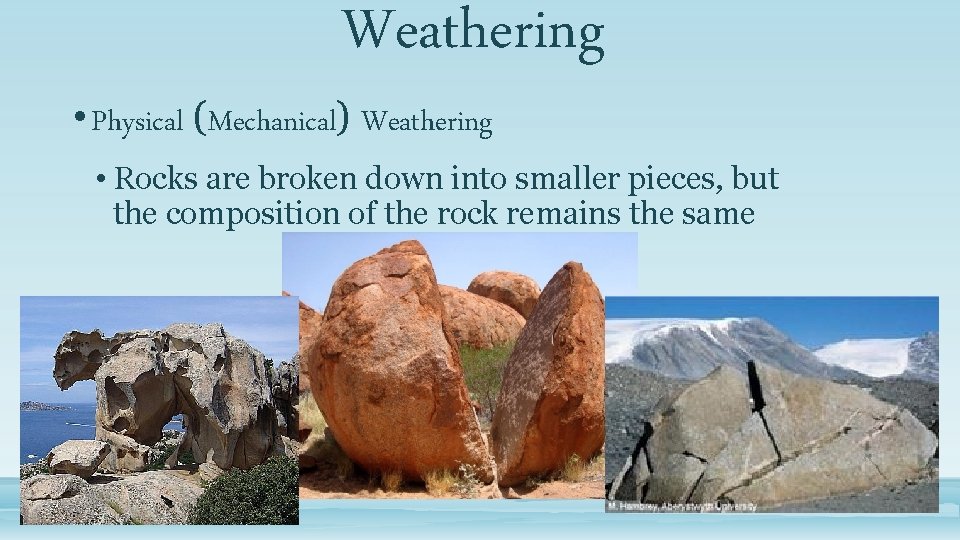
Weathering • Physical (Mechanical) Weathering • Rocks are broken down into smaller pieces, but the composition of the rock remains the same
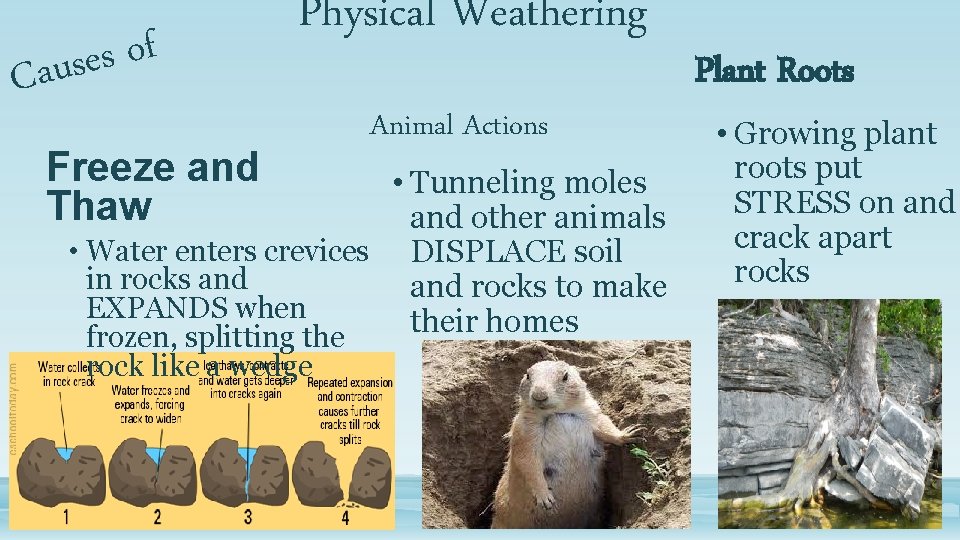
f o s e s u a C Physical Weathering Freeze and Thaw Animal Actions • Tunneling moles and other animals • Water enters crevices DISPLACE soil in rocks and rocks to make EXPANDS when their homes frozen, splitting the rock like a wedge Plant Roots • Growing plant roots put STRESS on and crack apart rocks
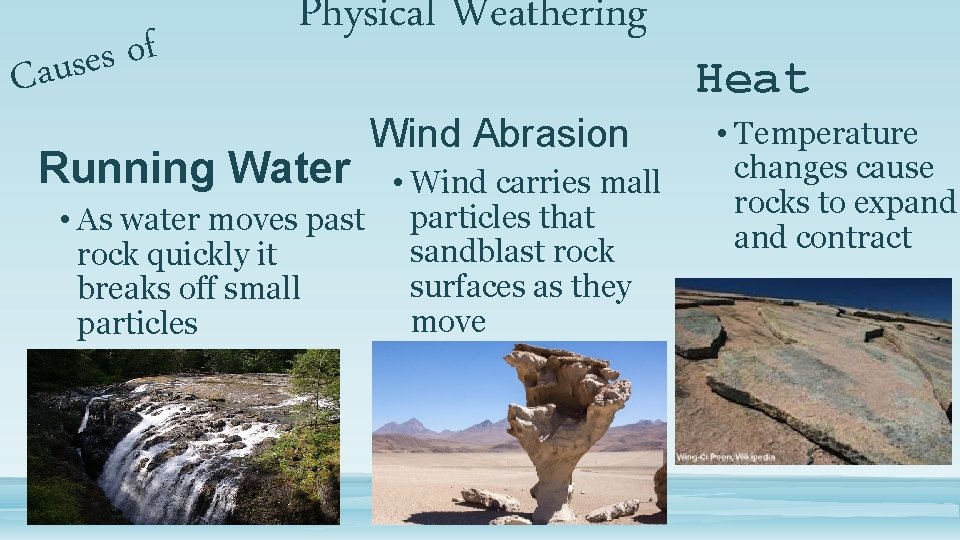
f o s e s u a C Physical Weathering Running Water Wind Abrasion • Wind carries mall • As water moves past particles that sandblast rock quickly it surfaces as they breaks off small move particles Heat • Temperature changes cause rocks to expand contract
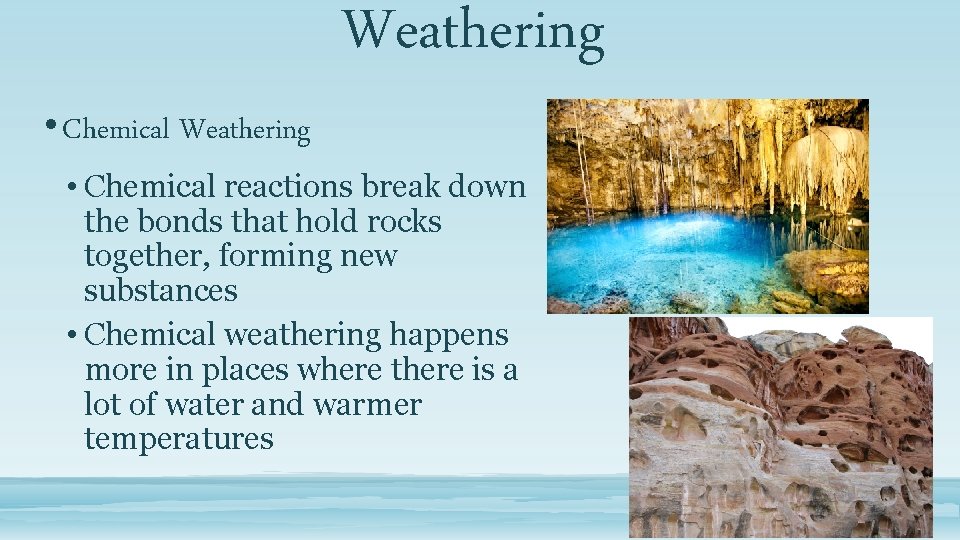
Weathering • Chemical reactions break down the bonds that hold rocks together, forming new substances • Chemical weathering happens more in places where there is a lot of water and warmer temperatures
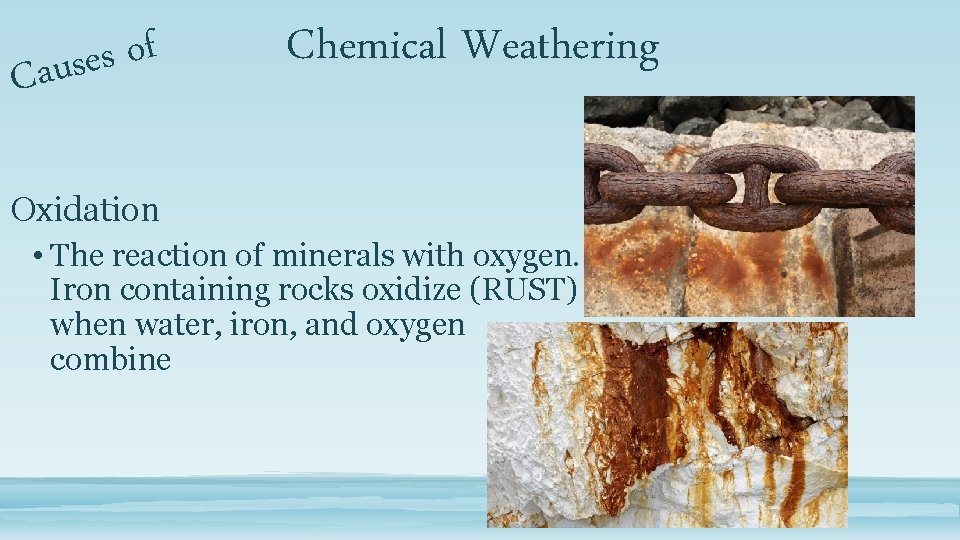
f o s e s u a C Chemical Weathering Oxidation • The reaction of minerals with oxygen. Iron containing rocks oxidize (RUST) when water, iron, and oxygen combine
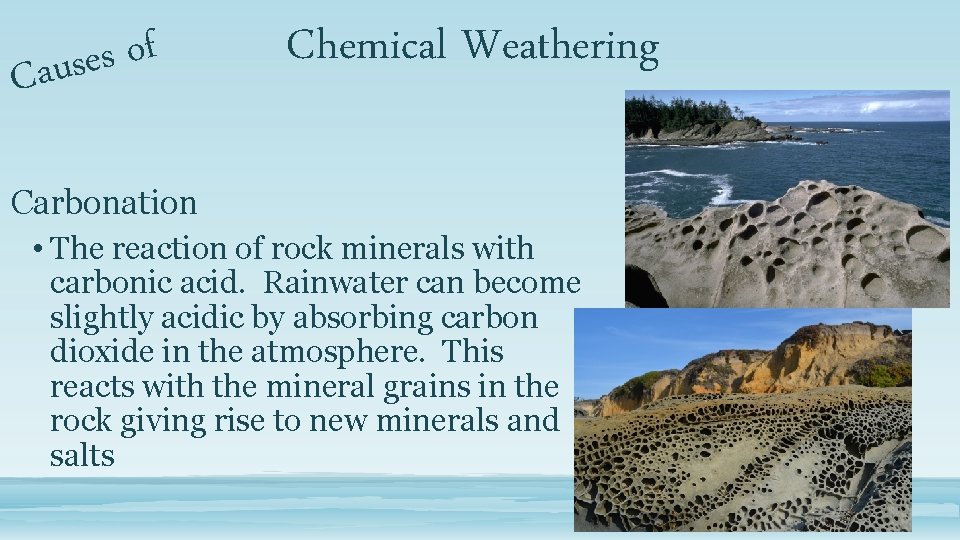
f o s e s u a C Chemical Weathering Carbonation • The reaction of rock minerals with carbonic acid. Rainwater can become slightly acidic by absorbing carbon dioxide in the atmosphere. This reacts with the mineral grains in the rock giving rise to new minerals and salts
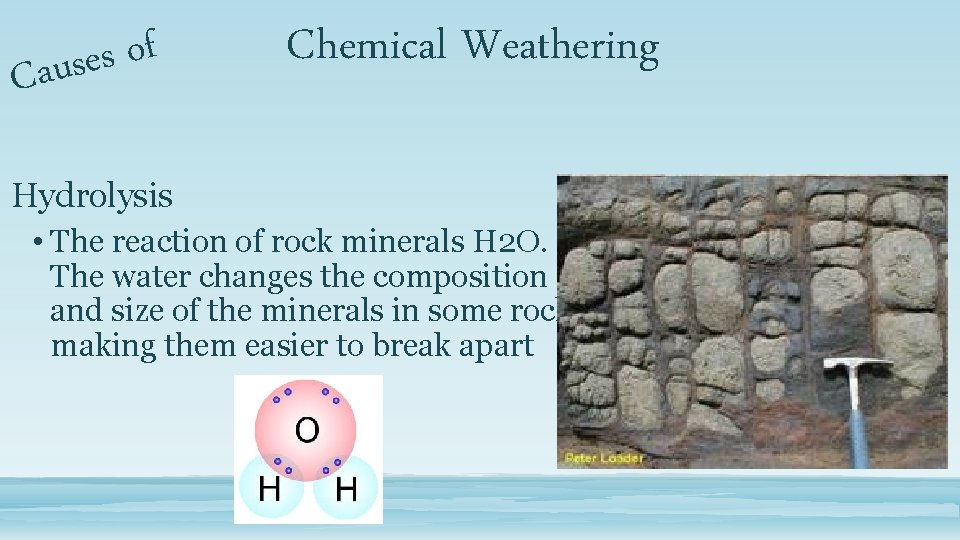
f o s e s u a C Chemical Weathering Hydrolysis • The reaction of rock minerals H 2 O. The water changes the composition and size of the minerals in some rocks making them easier to break apart

Weathering • Sediment: • Material formed from rocks broken down by weathering
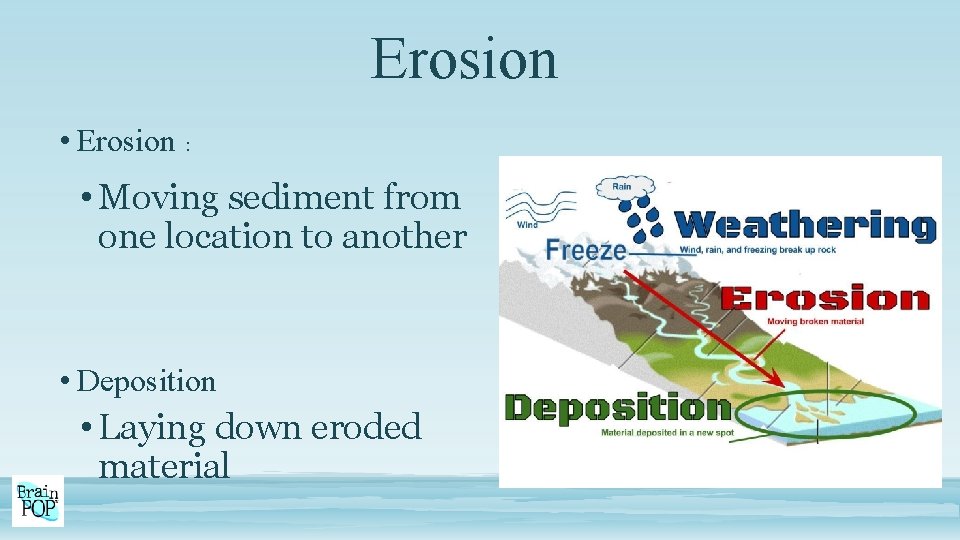
Erosion • Erosion : • Moving sediment from one location to another • Deposition • Laying down eroded material
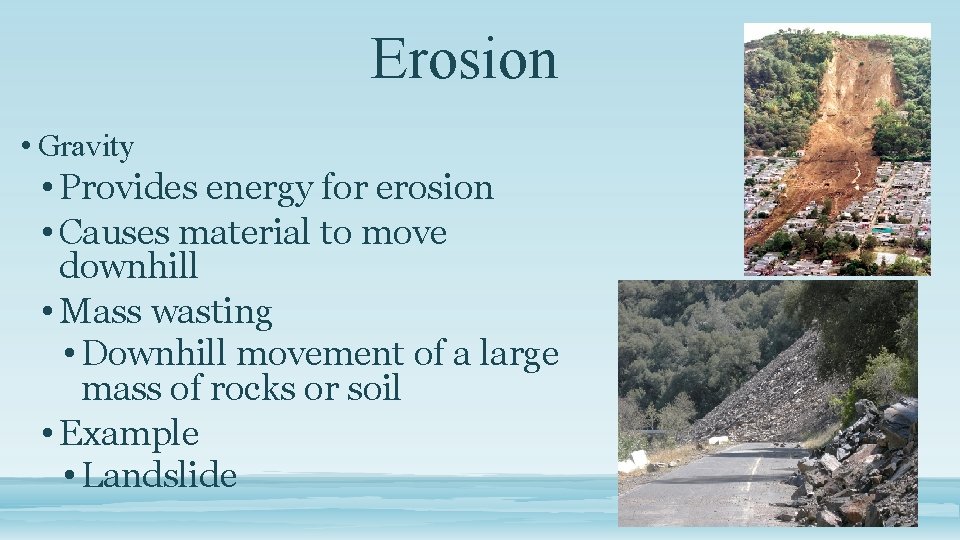
Erosion • Gravity • Provides energy for erosion • Causes material to move downhill • Mass wasting • Downhill movement of a large mass of rocks or soil • Example • Landslide
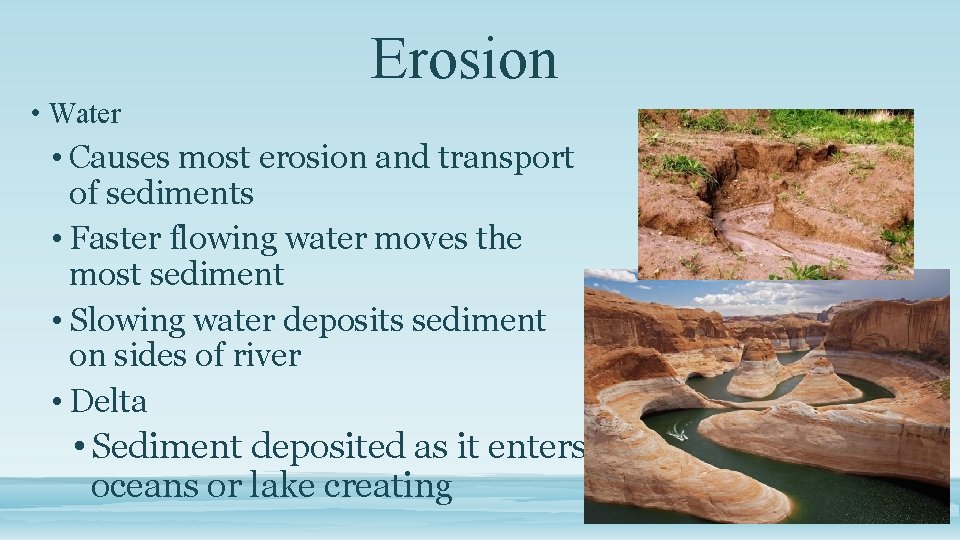
Erosion • Water • Causes most erosion and transport of sediments • Faster flowing water moves the most sediment • Slowing water deposits sediment on sides of river • Delta • Sediment deposited as it enters oceans or lake creating
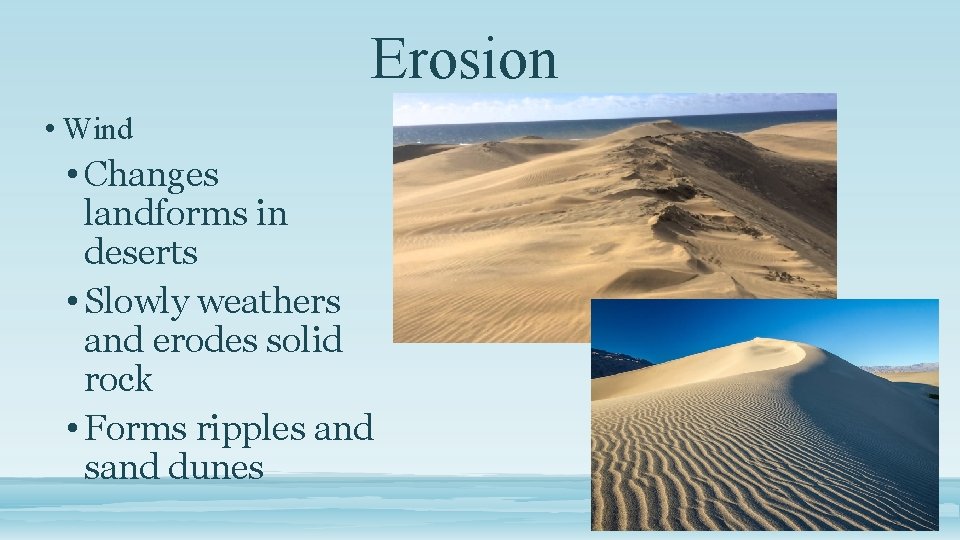
Erosion • Wind • Changes landforms in deserts • Slowly weathers and erodes solid rock • Forms ripples and sand dunes
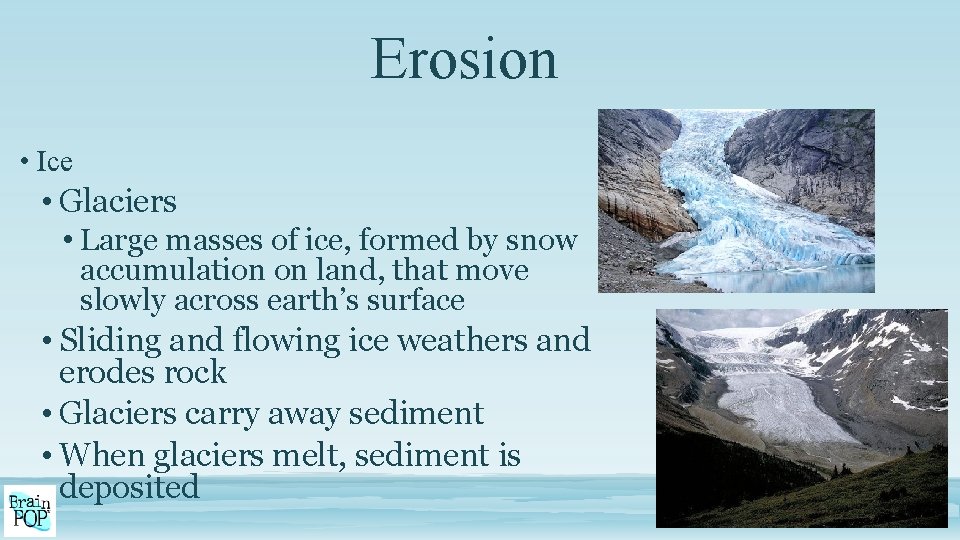
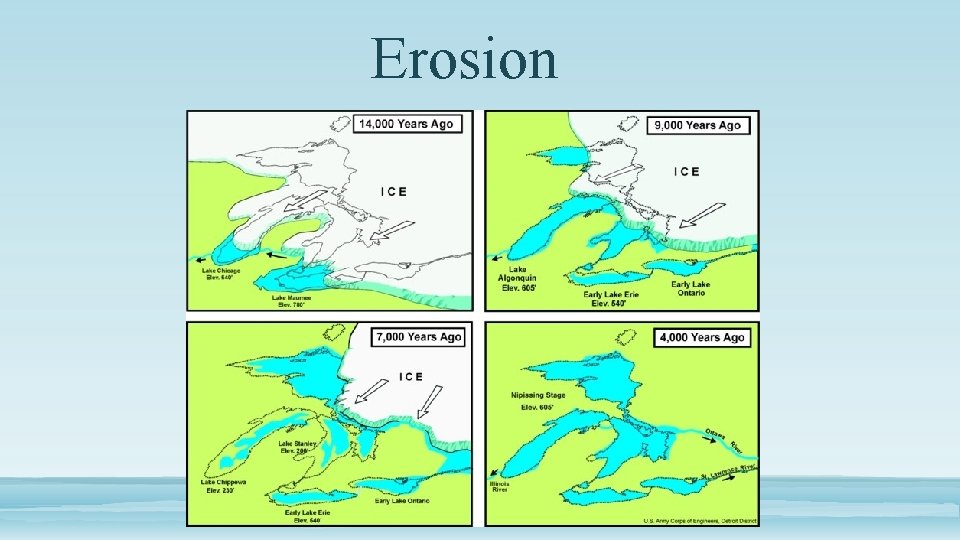
Erosion • Ice • Glaciers • Large masses of ice, formed by snow accumulation on land, that move slowly across earth’s surface • Sliding and flowing ice weathers and erodes rock • Glaciers carry away sediment • When glaciers melt, sediment is deposited
Erosion
Erosion LAB • Science Question: Which type of soil, grassy soil, sand, soil, or rooted soil, will best withstand the effects of erosion? • Hypothesis: • Independent Variable: • Dependent Variable: • Constants: • Procedure: • Use the straw to blow three big gusts at each type of soil. • Answer question 1. • Use the eye dropper to drop 10 drops on each type of soil. • Answer question 2. • Use the wood pieces to build a small house on each type of soil. • Answer question 3. • Use the squirt bottle to spray ten sprays on each type of soil. • Answer question 4. • Use the cup of water to pour on each type of soil. • Answer questions 5 and 6.
- Slides: 19