
WEATHERING AND EROSION Objectives Describe the two majors
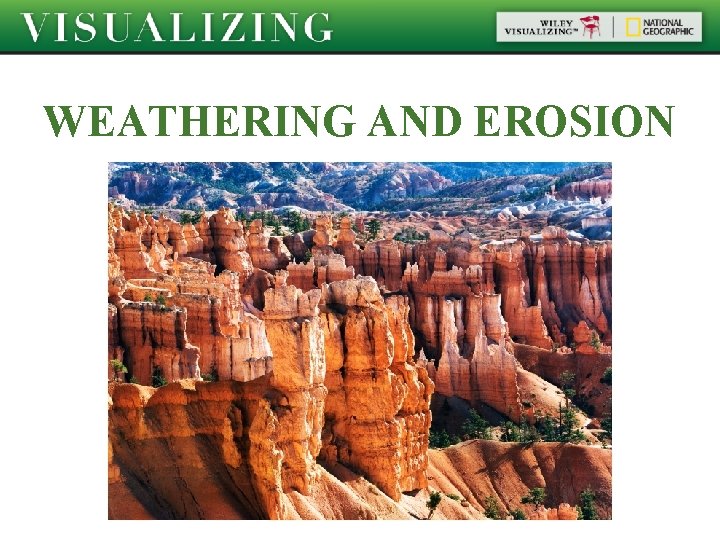
WEATHERING AND EROSION
Objectives • • Describe the two majors kinds of rock weathering. Identify three end products of weathering. Describe soil horizons. Explain the difference between weathering, erosion, and mass wasting. • Describe how ice, water, and air transport regolith across Earth’s surface. • Define and give examples of mass wasting by slope failure and/or sediment flow.
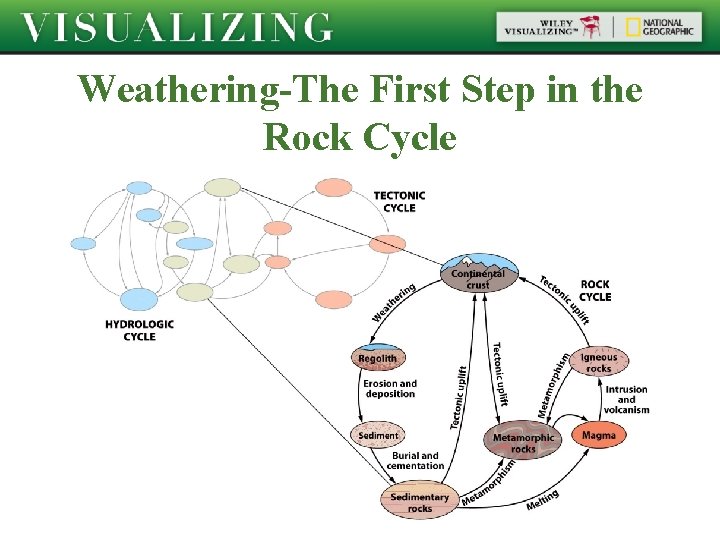
Weathering-The First Step in the Rock Cycle
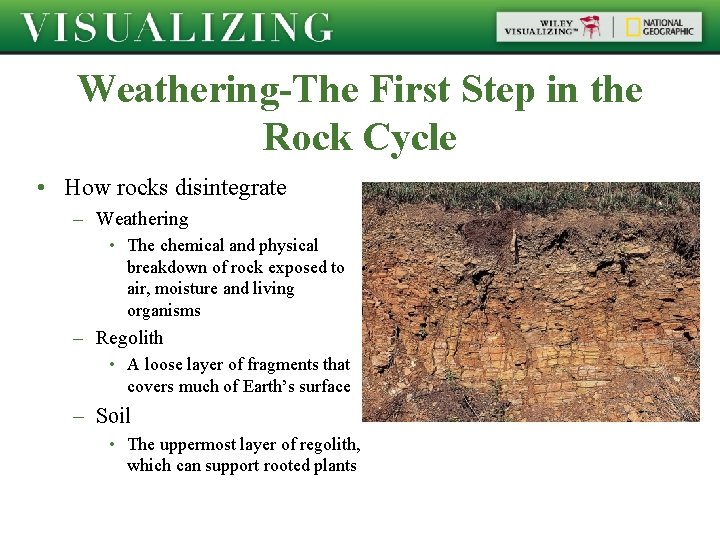
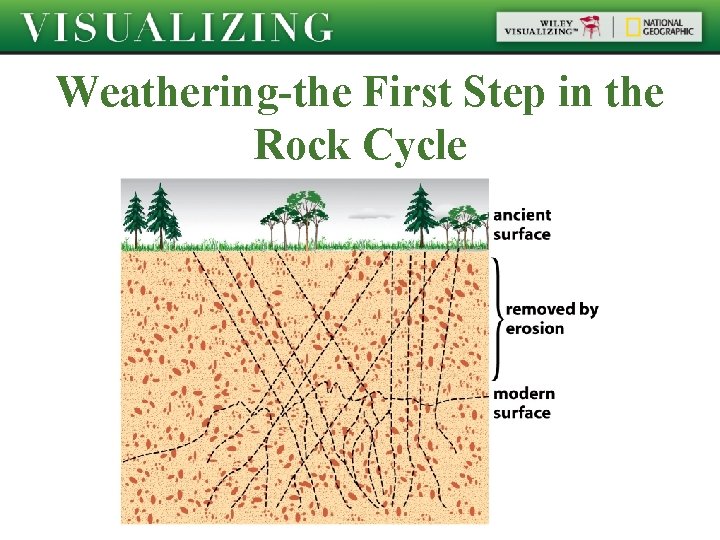
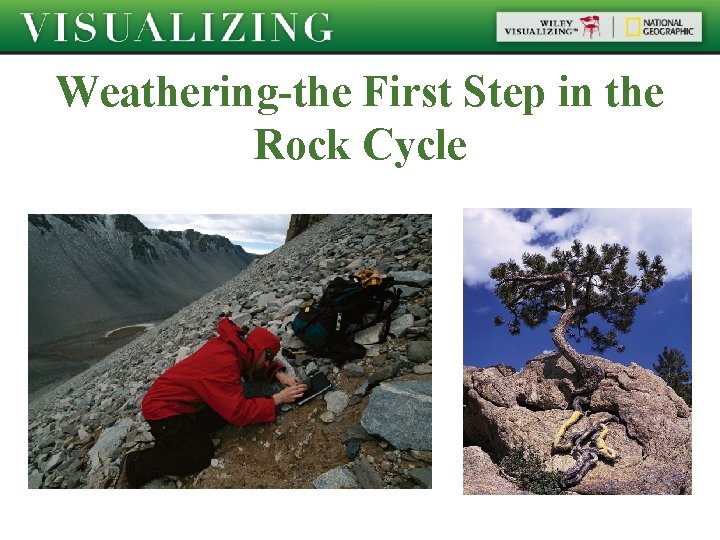
Weathering-The First Step in the Rock Cycle • How rocks disintegrate – Weathering • The chemical and physical breakdown of rock exposed to air, moisture and living organisms – Regolith • A loose layer of fragments that covers much of Earth’s surface – Soil • The uppermost layer of regolith, which can support rooted plants
Weathering-The First Step in the Rock Cycle • Mechanical engineering • The breakdown of rock into solid fragments by physical processes • Chemical composition of rock NOT altered • Chemical weathering • The decomposition of rocks and minerals by chemical and biochemical reactions
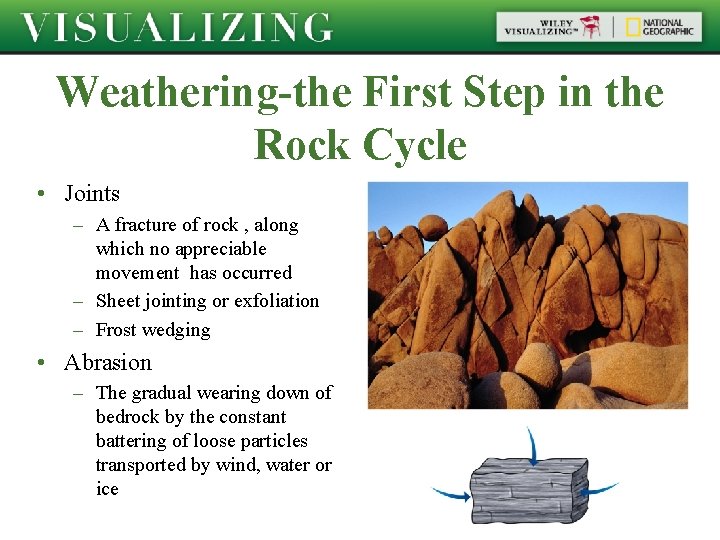
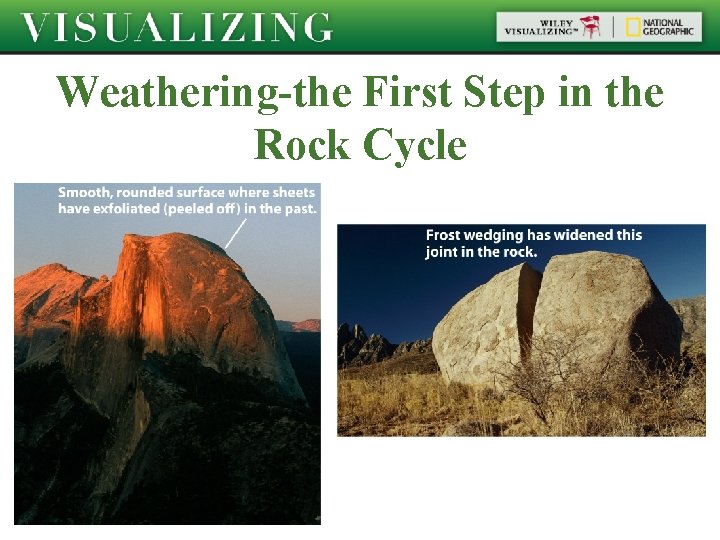
Weathering-the First Step in the Rock Cycle • Joints – A fracture of rock , along which no appreciable movement has occurred – Sheet jointing or exfoliation – Frost wedging • Abrasion – The gradual wearing down of bedrock by the constant battering of loose particles transported by wind, water or ice
Weathering-the First Step in the Rock Cycle
Weathering-the First Step in the Rock Cycle
Weathering-the First Step in the Rock Cycle

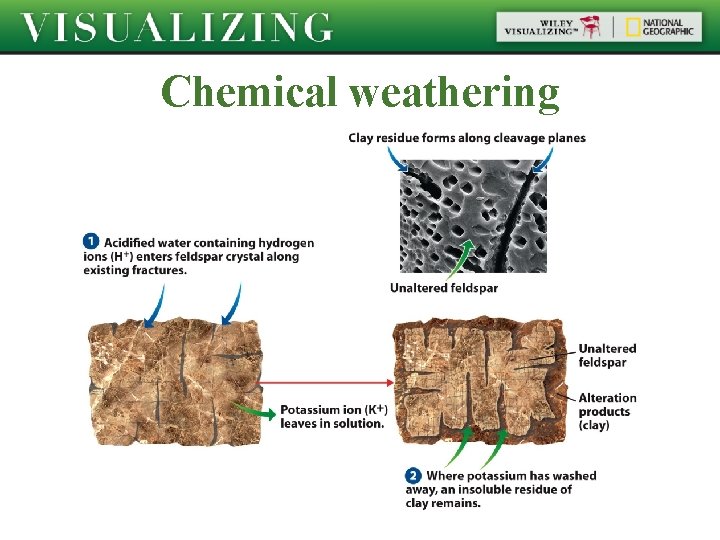
Chemical weathering • Dissolution – The separation of materials into ions in a solution by a solvent, such as water or acid – Rainwater acts as weak solution of carbonic acid – Anthropogenic actions influence acidity of rainwater
Chemical weathering
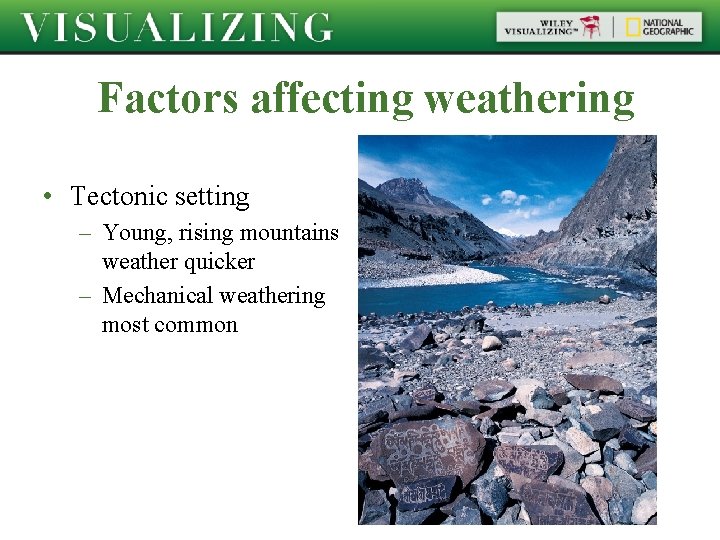
Factors affecting weathering • Tectonic setting – Young, rising mountains weather quicker – Mechanical weathering most common
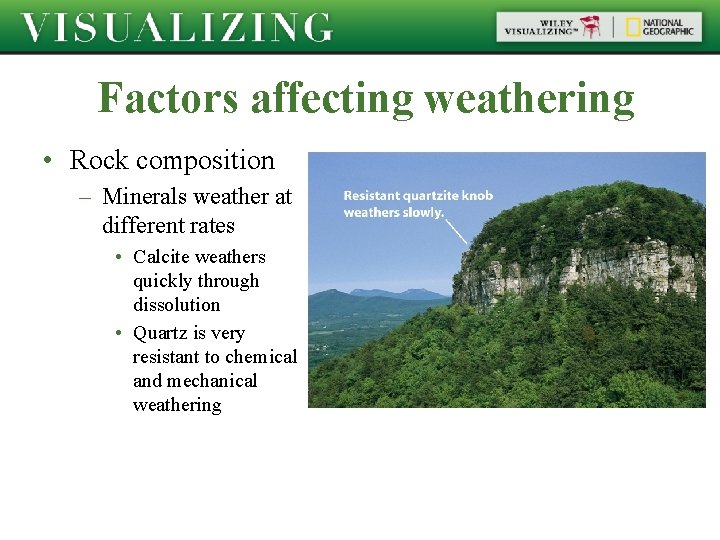
Factors affecting weathering • Rock composition – Minerals weather at different rates • Calcite weathers quickly through dissolution • Quartz is very resistant to chemical and mechanical weathering
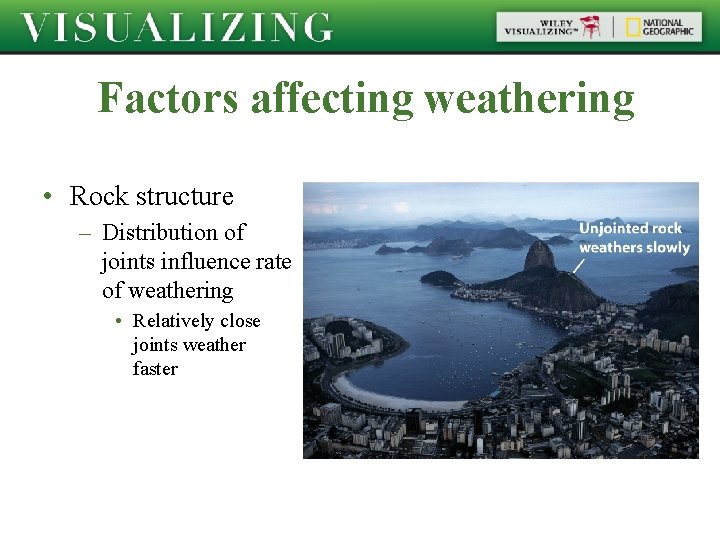
Factors affecting weathering • Rock structure – Distribution of joints influence rate of weathering • Relatively close joints weather faster

Factors affecting weathering • Topography – Weathering occurs faster on steeper slopes • Rockslides

Factors affecting weathering • Vegetation – Contribute to mechanical and chemical weathering – Promotes weathering due to increased water retention – Vegetation removal increases soil loss
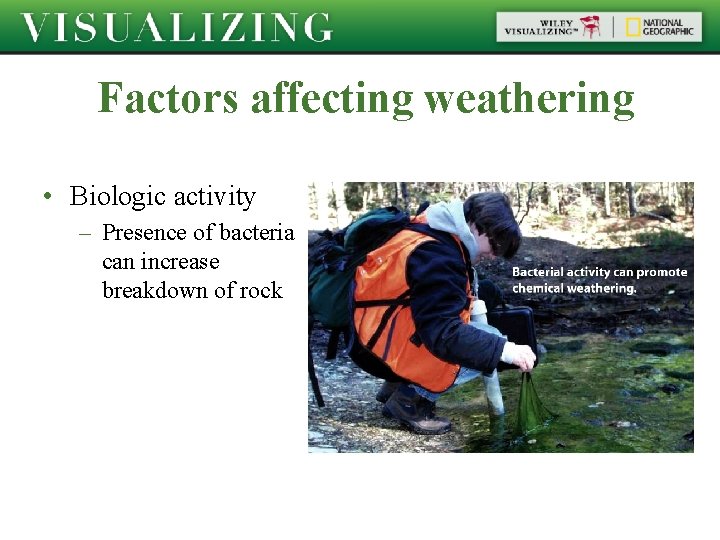
Factors affecting weathering • Biologic activity – Presence of bacteria can increase breakdown of rock
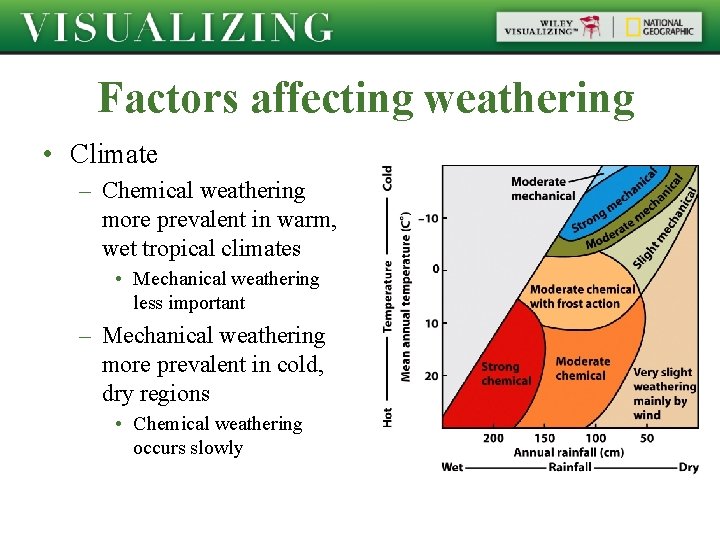
Factors affecting weathering • Climate – Chemical weathering more prevalent in warm, wet tropical climates • Mechanical weathering less important – Mechanical weathering more prevalent in cold, dry regions • Chemical weathering occurs slowly

Factors affecting weathering

Products of Weathering • Clay – Tiny mineral particles of any kind that have physical properties like those of the clay minerals – A family of hydrous alumino-silicate minerals
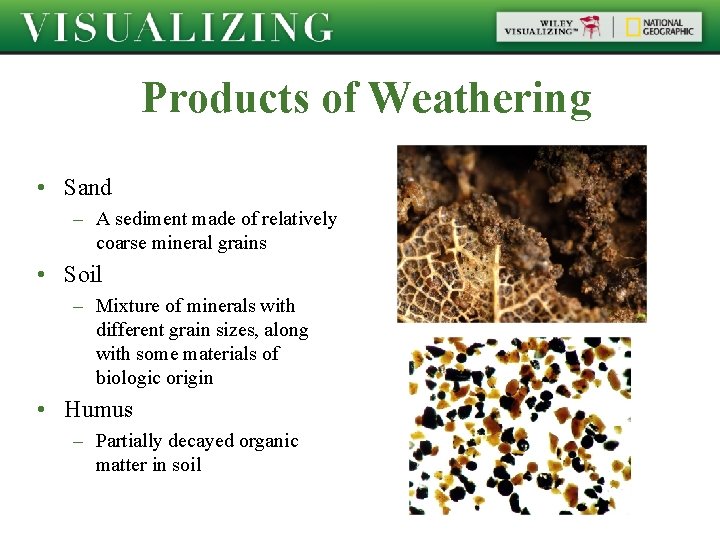
Products of Weathering • Sand – A sediment made of relatively coarse mineral grains • Soil – Mixture of minerals with different grain sizes, along with some materials of biologic origin • Humus – Partially decayed organic matter in soil
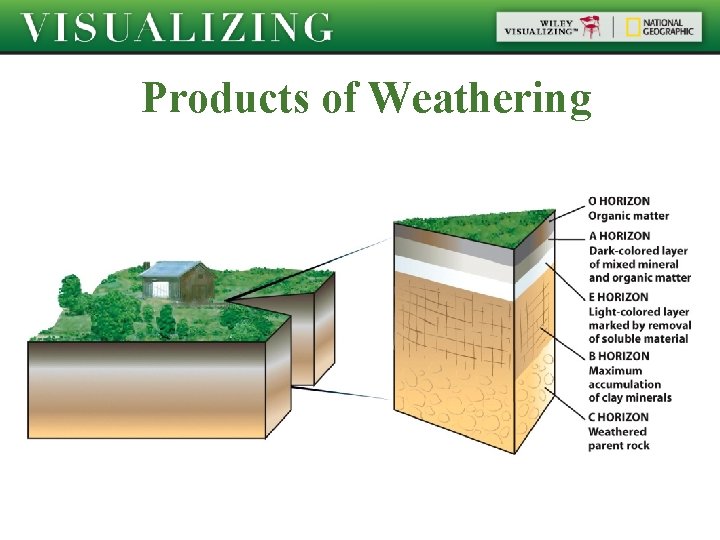
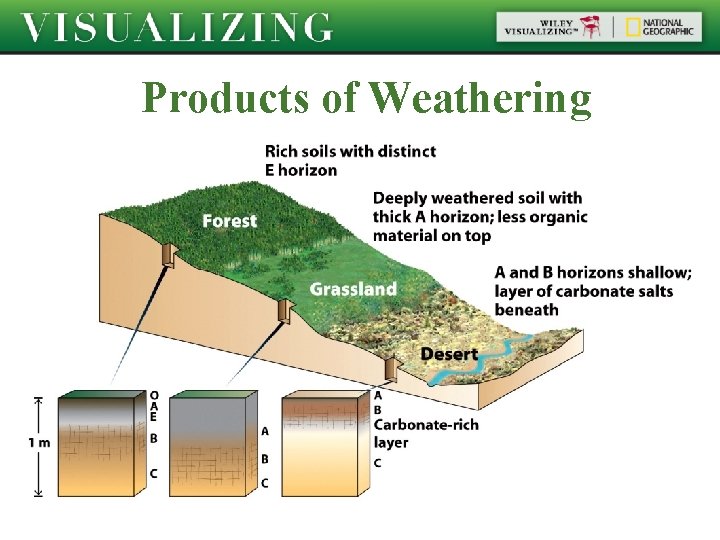
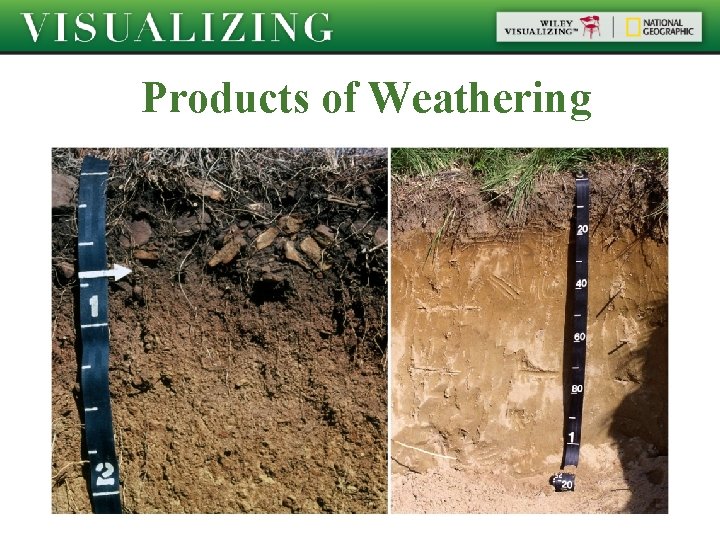
Products of Weathering • Soil horizons – One of a succession of zones or layers within a soil profile – Each horizon has a distinct physical, chemical, and biologic characteristic • Soil profiles – The sequence of soil horizons from the surface down to the underlying bedrock
Products of Weathering
Products of Weathering
Products of Weathering
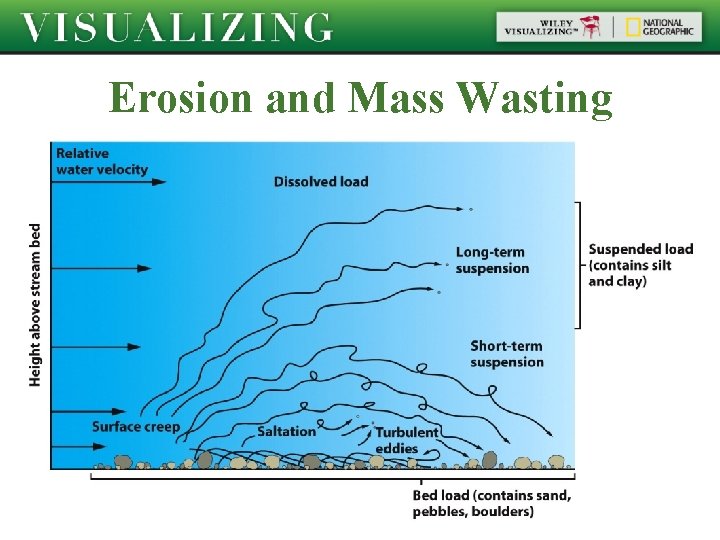
Erosion and Mass Wasting Erosion by water • Erosion – The wearing away of bedrock and transport of loosened particles by a fluid, such as water • Bed Load – Sediment moved along the bottom of a stream
Erosion and Mass Wasting
Erosion and Mass Wasting • Saltation – A transportation mechanism in which particles move forward in a series of short jumps along arc-shaped paths • Suspended load – Sediments carried in suspension by a flowing stream of water or wind
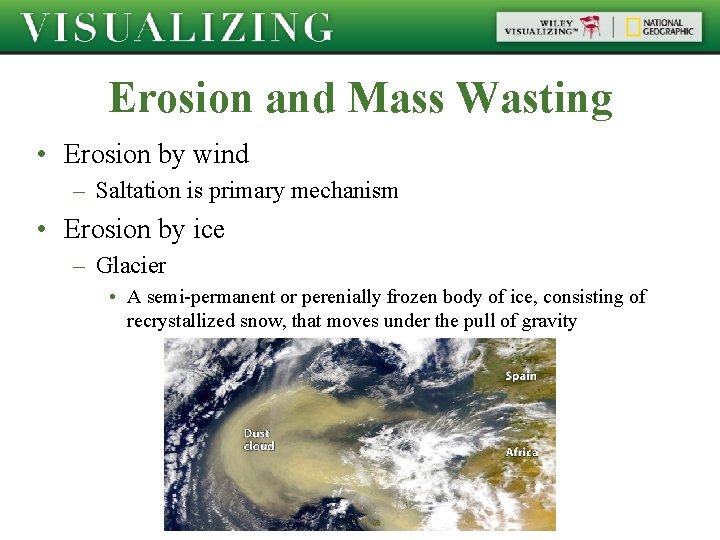
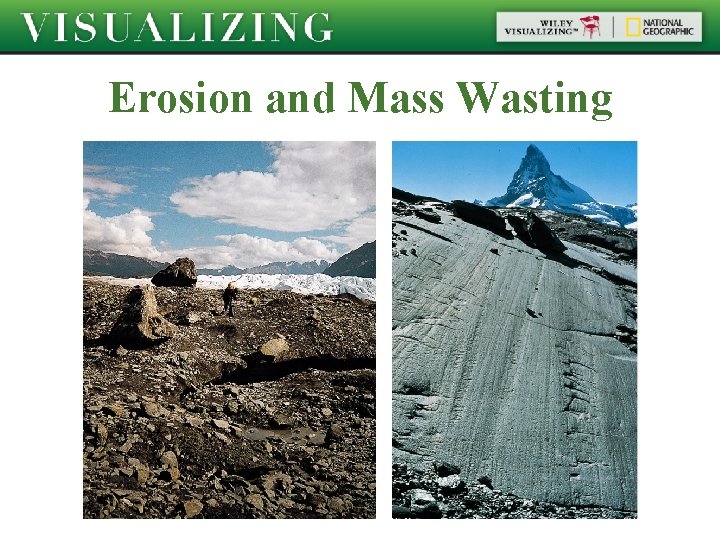
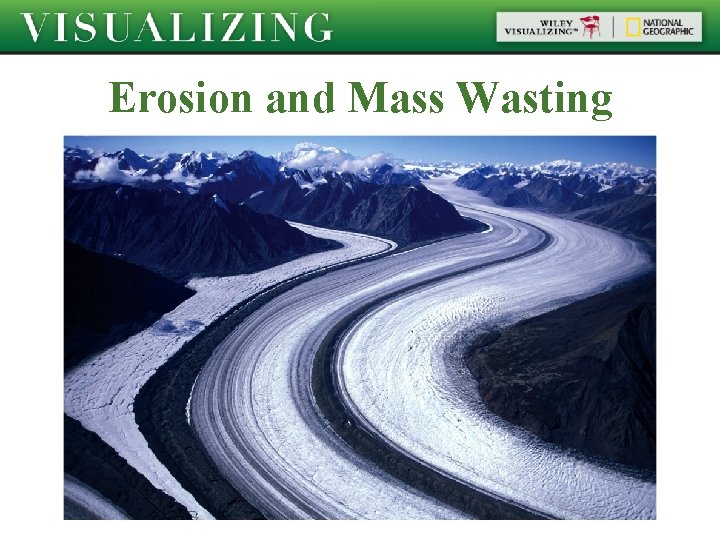
Erosion and Mass Wasting • Erosion by wind – Saltation is primary mechanism • Erosion by ice – Glacier • A semi-permanent or perenially frozen body of ice, consisting of recrystallized snow, that moves under the pull of gravity
Erosion and Mass Wasting
Erosion and Mass Wasting
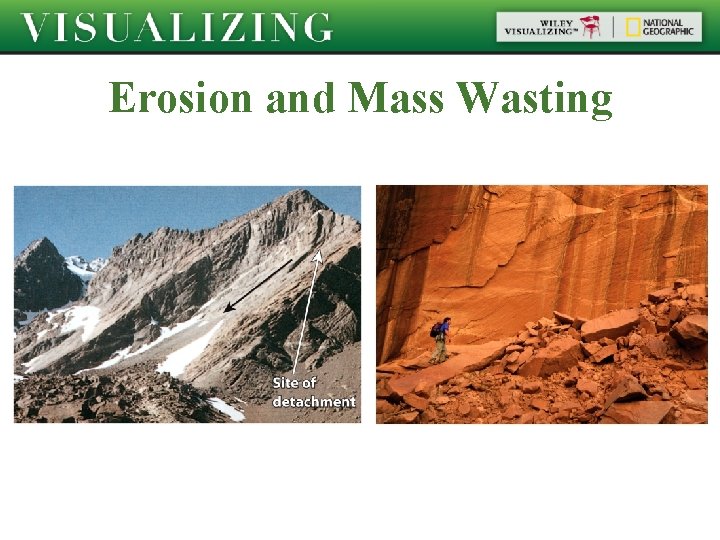
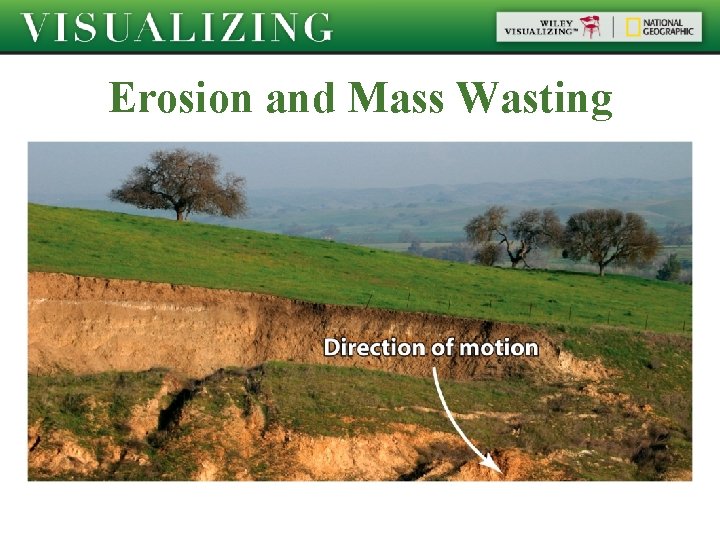
Erosion and Mass Wasting • Mass wasting – The downslope movement of regolith and/or bedrock masses due to the pull of gravity • Slope failure – Falling, slumping or sliding of relatively coherent masses of rock – Three basic types • Fall: vertical (or near vertical) drop of rock fragments • Slide: rapid displacement of rock/ regolith down steep or slippery slope • Slump: rotational movement of material
Erosion and Mass Wasting
Erosion and Mass Wasting
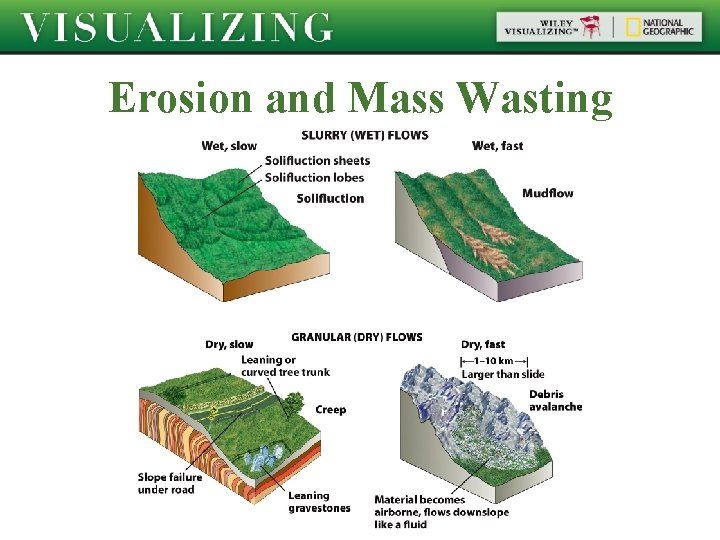
Erosion and Mass Wasting • Flow – Any mass-wasting process that involves a flowing motion of regolith containing water and/or air within it’s pores • Slurry flows • Granular flow • Creep – The imperceptibly slow downslope granular flow of regolith
Erosion and Mass Wasting
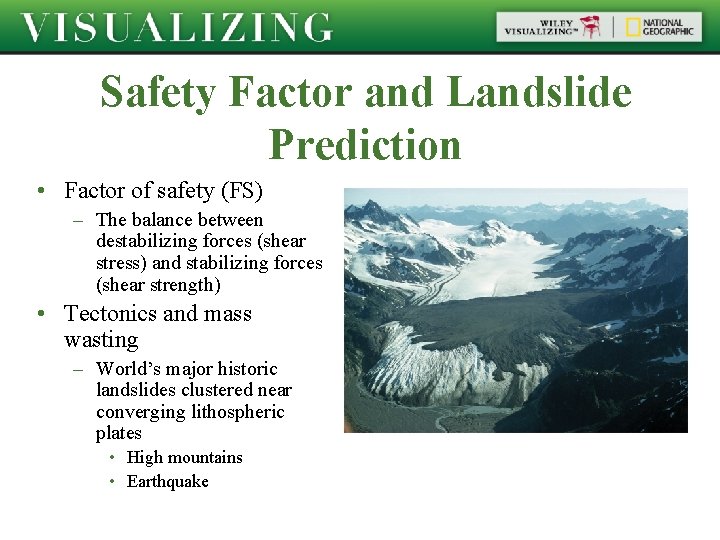
Safety Factor and Landslide Prediction • Factor of safety (FS) – The balance between destabilizing forces (shear stress) and stabilizing forces (shear strength) • Tectonics and mass wasting – World’s major historic landslides clustered near converging lithospheric plates • High mountains • Earthquake
Critical Thinking • On Earth, clay minerals are the most common products of weathering. Samples from the Moon do not contain any clay minerals. Why? • Why are some granite bodies extensively jointed, while others are essentially joint free?
- Slides: 38