
Weather Temperature winds air masses moisture air pressure
- Slides: 24
Weather: Temperature, winds, air masses, moisture, air pressure, and weather maps
Weather is. . • The current state of the atmosphere. . . what is happening right now
Main points to remember as we learn about weather: • The sun warms the earth’s surface and therefore all the air above the surface • The earth is warmed most at the equator and least at the poles. • **The air above land is warmed more quickly than air above water. • **Warm air expands and rises, creating an area of low pressure; cold air is dense and sinks, creating an area of high pressure
Temperature TEMPERATURE: the average motion of molecules ↑ TEMP= ↑movement of molecules= feels hot ↓ TEMP= ↓movement of molecules= feels cold
Air Pressure • Warm air= expanding or rising air= leaves behind Low pressure • Cold Air=sinking air= leaves an area of High pressure
Wind Movement
What causes winds? • A wind is a horizontal movement of air from a area of high pressure to an area of low pressure • It is this difference in pressure that makes the air move=wind • Winds are measured by direction and speed • The anemometer is the tool we use to measure this • Wind chill=↑ cooling the wind causes
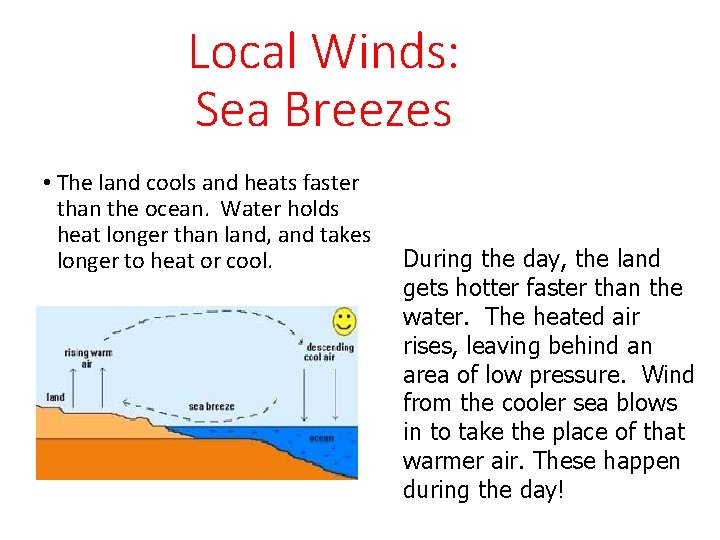
Local Winds: Sea Breezes • The land cools and heats faster than the ocean. Water holds heat longer than land, and takes longer to heat or cool. During the day, the land gets hotter faster than the water. The heated air rises, leaving behind an area of low pressure. Wind from the cooler sea blows in to take the place of that warmer air. These happen during the day!
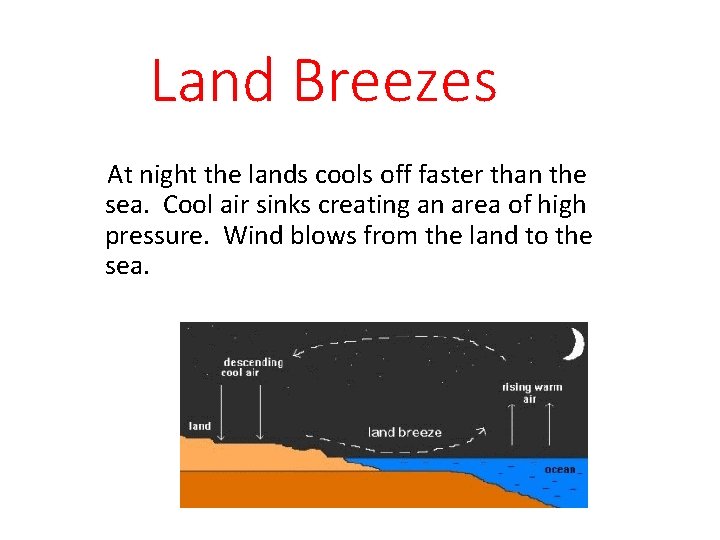
Land Breezes At night the lands cools off faster than the sea. Cool air sinks creating an area of high pressure. Wind blows from the land to the sea.
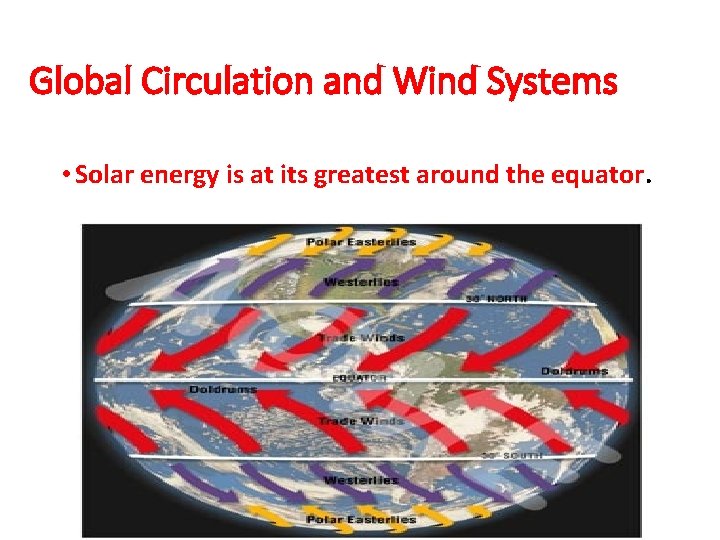
Global Circulation and Wind Systems • Solar energy is at its greatest around the equator.
Global Winds Wind belts: Horse Latitudes= 30°N and S of equator =calm winds= worlds desert areas Jet Streams: 10 km above the surface and blow from the west to the east (California to North Carolina)
Intense heat = Powerful CONVECTION • Warm, moist air rises and leaves behind an area of low pressure. This is why most rain forests are found along equatorial regions. • That air rises until it reaches the top of the troposphere, where it can’t rise any further. • It spreads out towards the polar regions HOT follows COLD wanting to share its warmth. • As it spreads it begins to cool and sink-usually 30°N and S of the equator- sinking air produces an area of H pressure with dry conditions= desert regions on earth
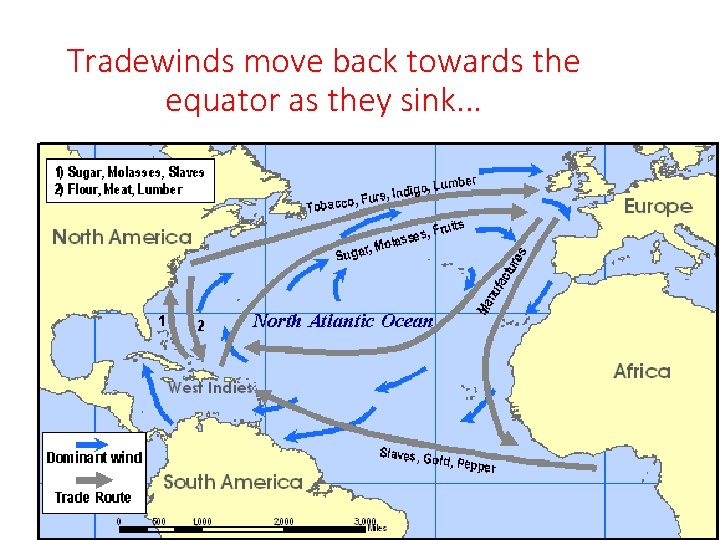
Tradewinds move back towards the equator as they sink. . .
Water in the Atmosphere
Humidity • Humidity: measure of the amount of water vapor stuck between molecules in the air. The air’s ability to hold water depends on the air temperature • The hotter the air, the more water the air can hold • Cold air: molecules move slower so droplets of water can start to stick together=condensation • Relative humidity: the amount of water vapor(%) compared to the amount the air can hold- tool used is a psychrometer. • 100%=air is saturated
Cloud Formation • Clouds form when water vapor condenses on dust, salt particles in the air • The temperature in which condensation begins is called the dew point
Air Masses
• Air masses are masses of air that have the same characteristics of the surface over which it develops • Pressure Systems High Pressure: descending (going down Low Pressure: ascending (going up
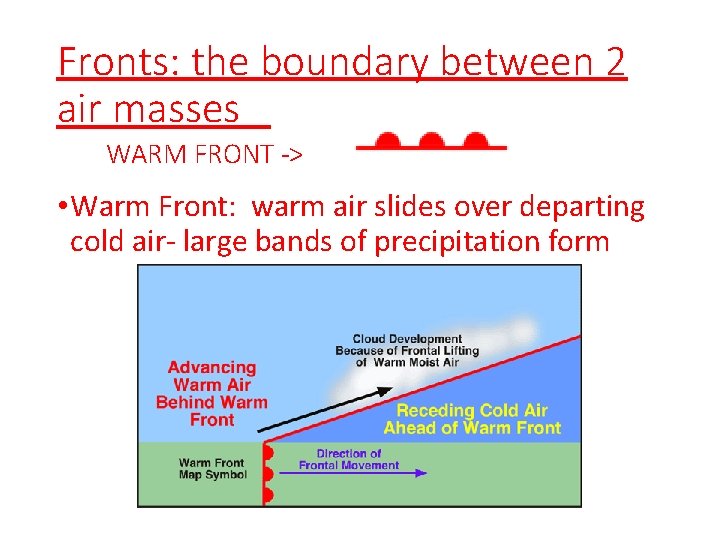
Fronts: the boundary between 2 air masses WARM FRONT -> • Warm Front: warm air slides over departing cold air- large bands of precipitation form
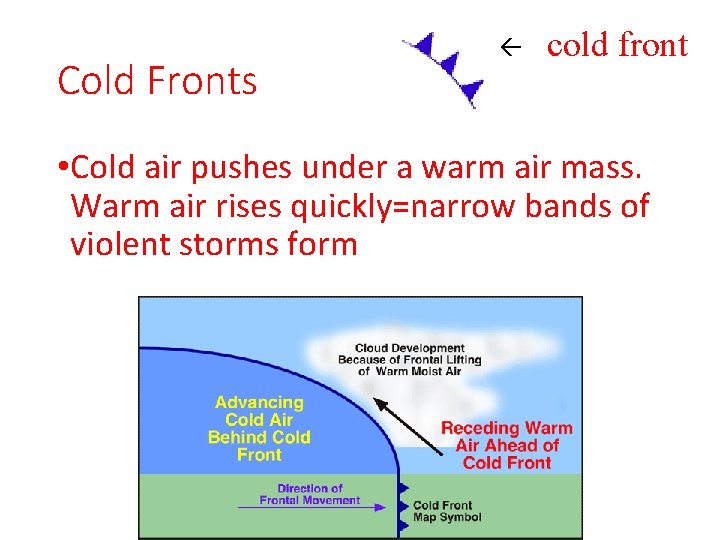
Cold Fronts cold front • Cold air pushes under a warm air mass. Warm air rises quickly=narrow bands of violent storms form
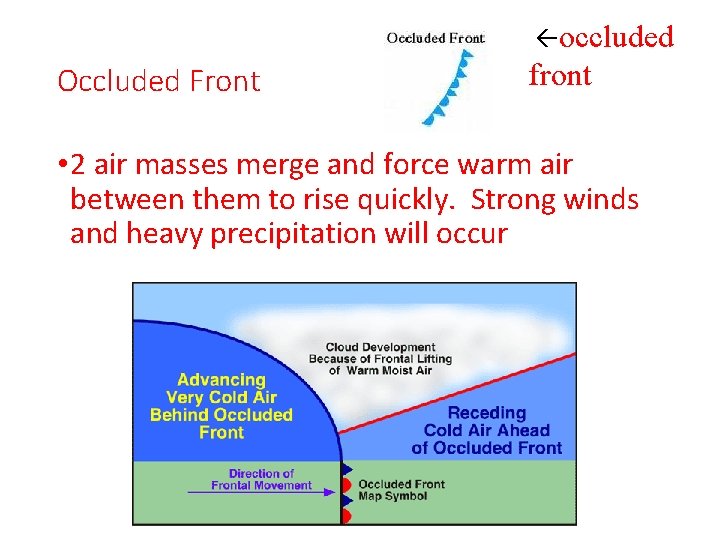
occluded Occluded Front front • 2 air masses merge and force warm air between them to rise quickly. Strong winds and heavy precipitation will occur
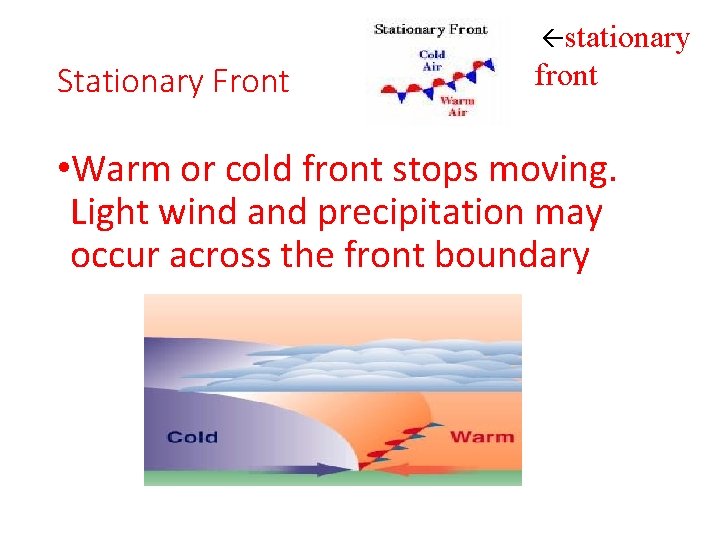
stationary Stationary Front front • Warm or cold front stops moving. Light wind and precipitation may occur across the front boundary
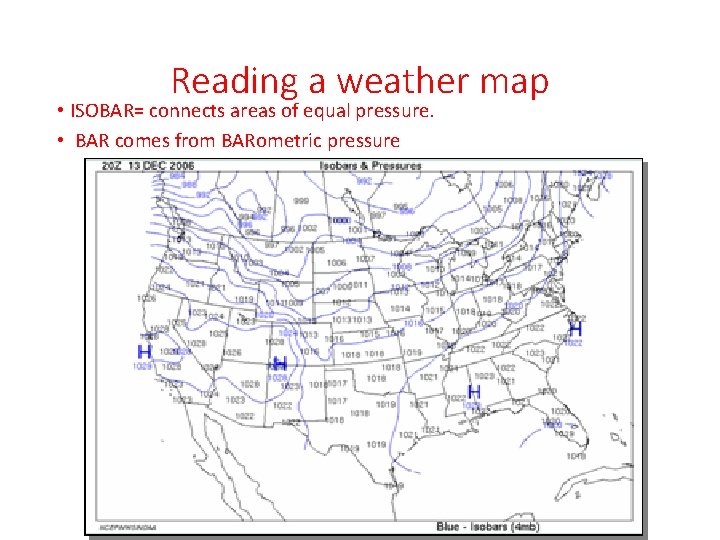
Reading a weather map • ISOBAR= connects areas of equal pressure. • BAR comes from BARometric pressure
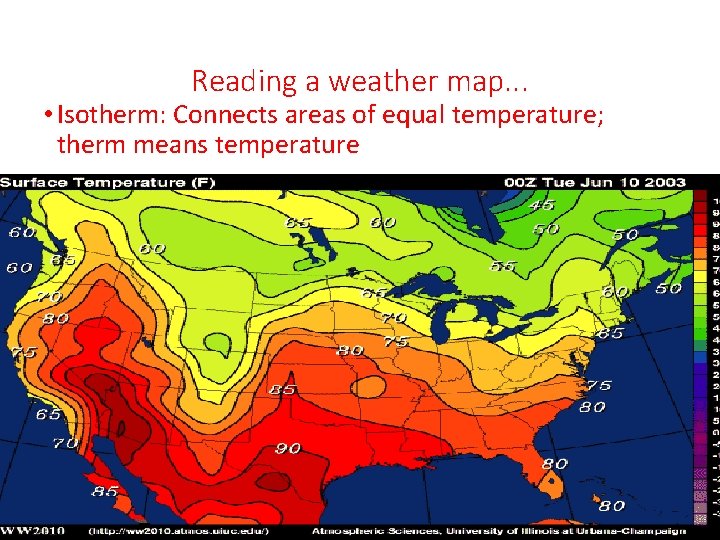
Reading a weather map. . . • Isotherm: Connects areas of equal temperature; therm means temperature