
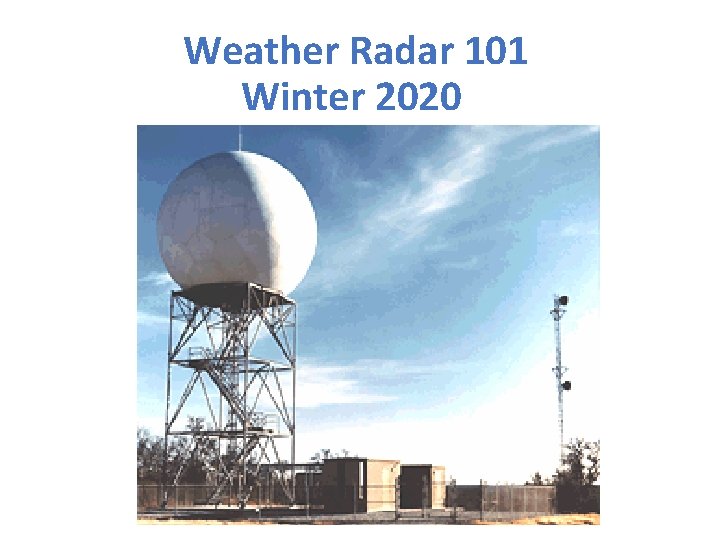
Weather Radar 101 Winter 2020 Weather Radar 101
- Slides: 46
Weather Radar 101 Winter 2020
Weather Radar 101 • Weather radars can tell where precipitation is falling • Can also tell the intensity of the precipitation • Doppler radars can also determine the precipitation/air velocity toward or away from the radar. • Radars can track storms, fronts, and other major features • An essential tool for the National Weather Service and other meteorologists.
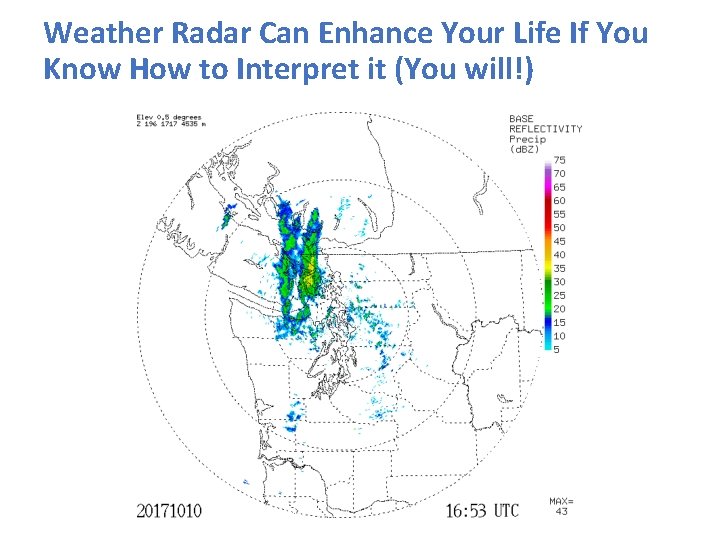
Weather Radar Can Enhance Your Life If You Know How to Interpret it (You will!)
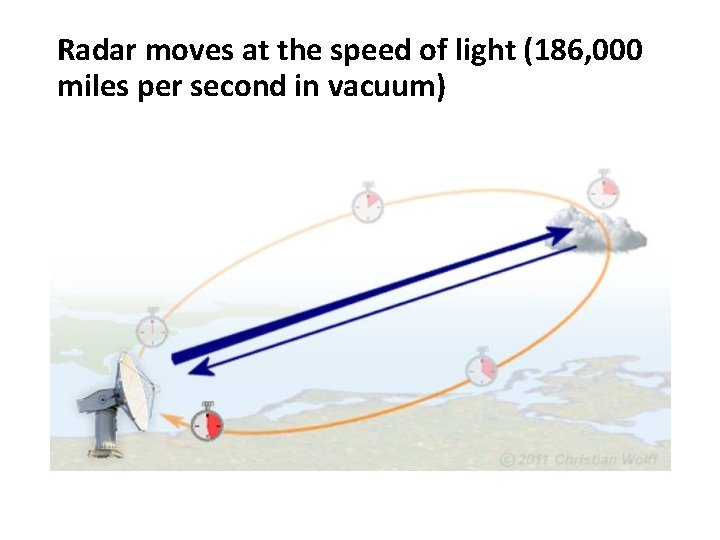
What is Radar? RAdio Detection And Ranging • Weather radars emit pulses of electromagnetic radiation in the microwave part of the spectrum • Radar wave pulses hit and are reflected or scattered back from a target (precipitation) • The time it takes to return tells the distance • The amount of return tells us about precipitation intensity and type
Radar moves at the speed of light (186, 000 miles per second in vacuum)
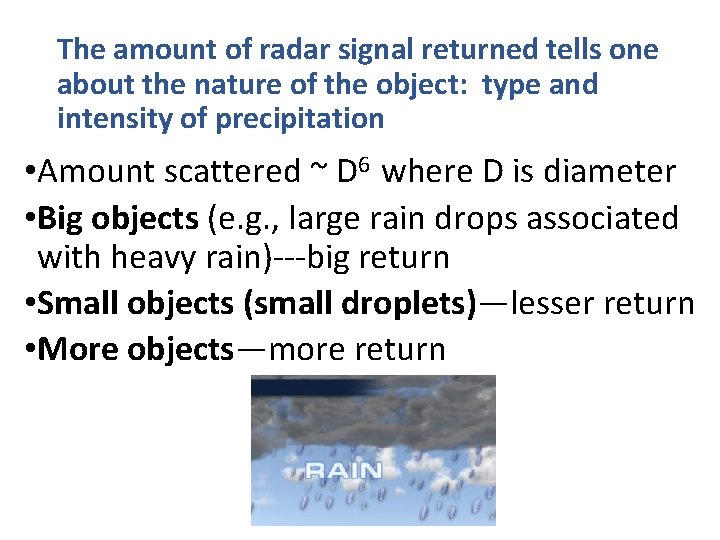
The amount of radar signal returned tells one about the nature of the object: type and intensity of precipitation • Amount scattered ~ D 6 where D is diameter • Big objects (e. g. , large rain drops associated with heavy rain)---big return • Small objects (small droplets)—lesser return • More objects—more return
Reflectivity • A fancy name for the amount of radar signal that is returned by an object: reflectivity (Z) is given in units of db. Z • db or decibels-unit of power on a logarithmic scale • Precipitation intensity is proportional to Z (or db. Z)
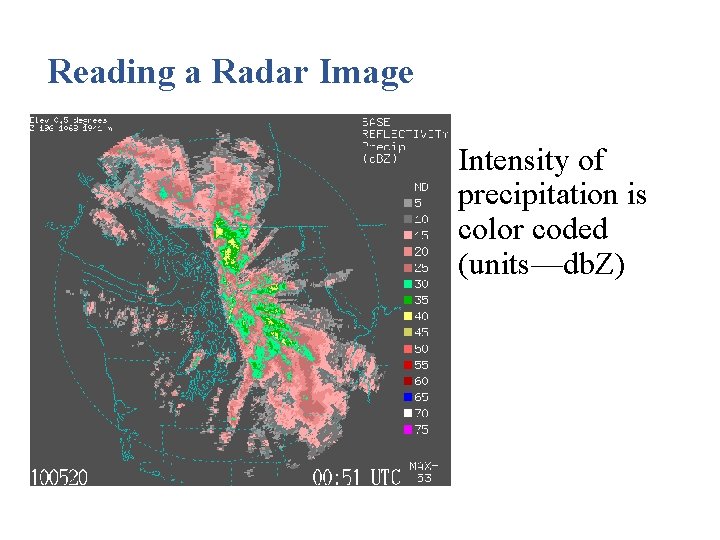
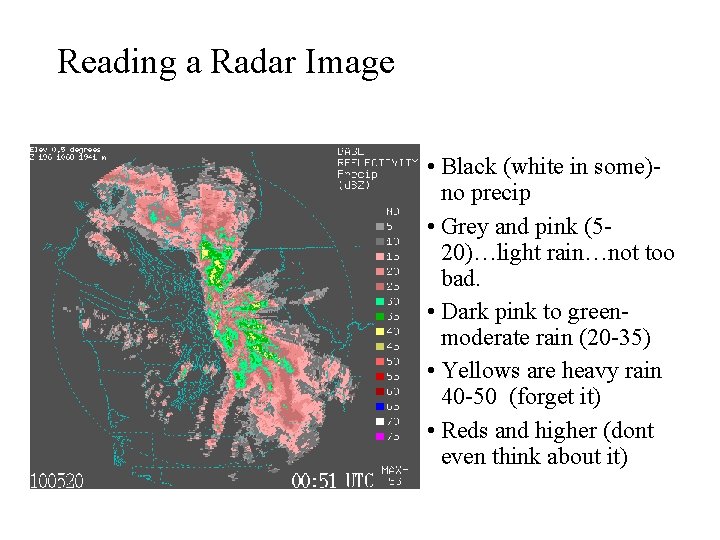
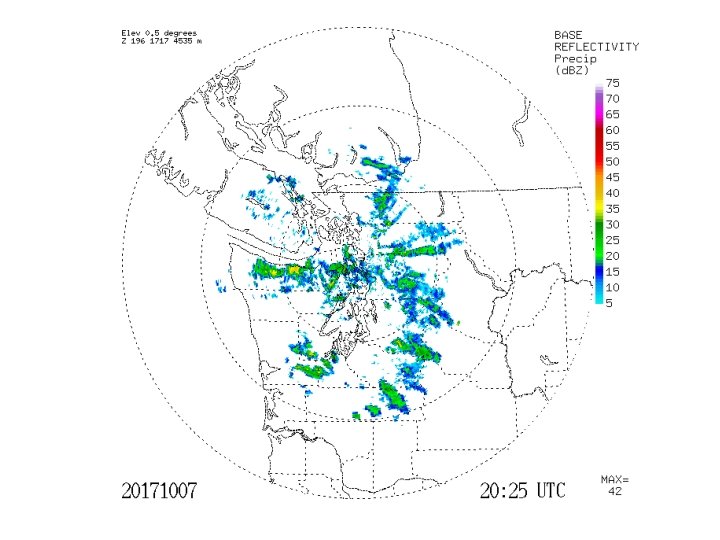
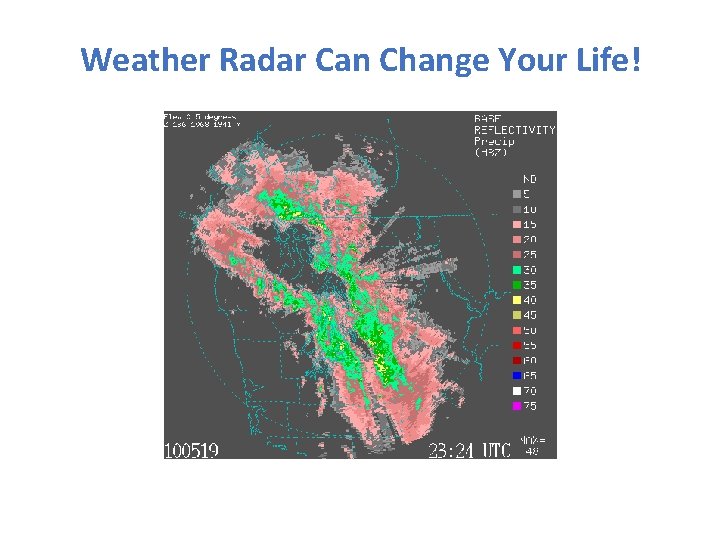
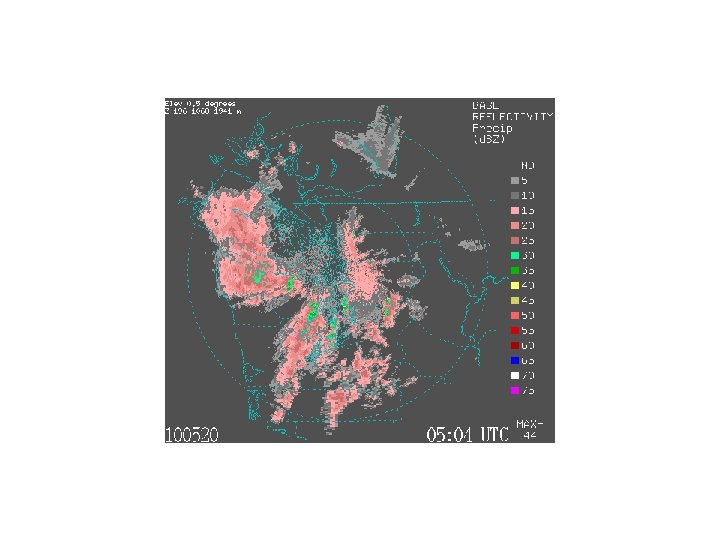
Reading a Radar Image Intensity of precipitation is color coded (units—db. Z)
Reading a Radar Image • Black (white in some)no precip • Grey and pink (520)…light rain…not too bad. • Dark pink to greenmoderate rain (20 -35) • Yellows are heavy rain 40 -50 (forget it) • Reds and higher (dont even think about it)
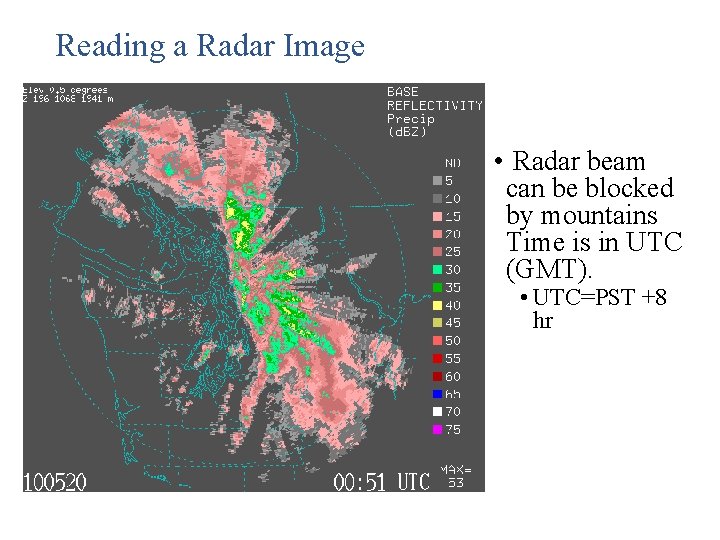
Reading a Radar Image • Radar beam can be blocked by mountains Time is in UTC (GMT). • UTC=PST +8 hr
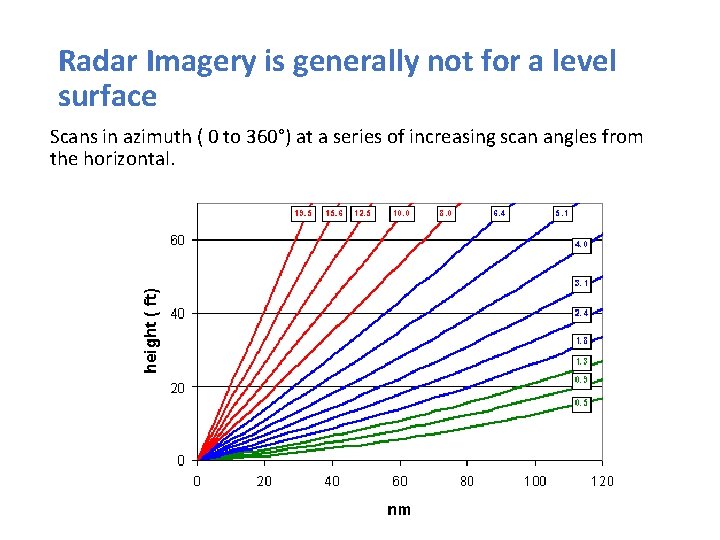
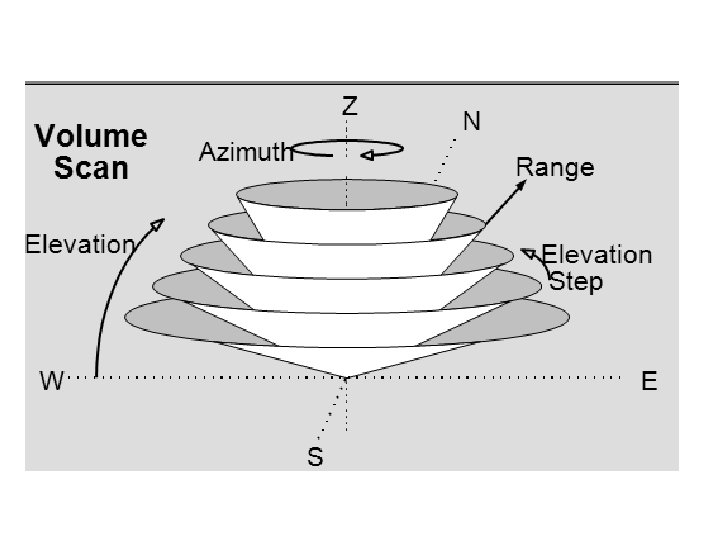
Radar Imagery is generally not for a level surface Scans in azimuth ( 0 to 360°) at a series of increasing scan angles from the horizontal.
So radar image does not show a single level, but a sloping cut through the atmosphere Thus, it is showing precipitation higher and higher up in the atmosphere as you move away from the center.
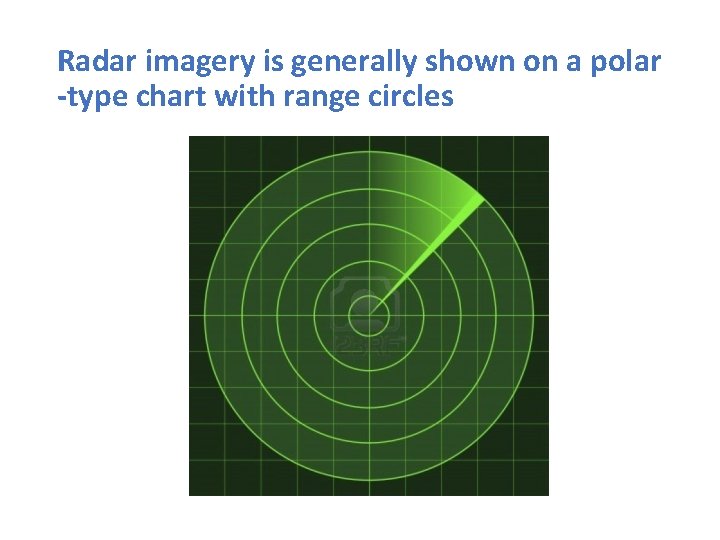
Radar imagery is generally shown on a polar -type chart with range circles
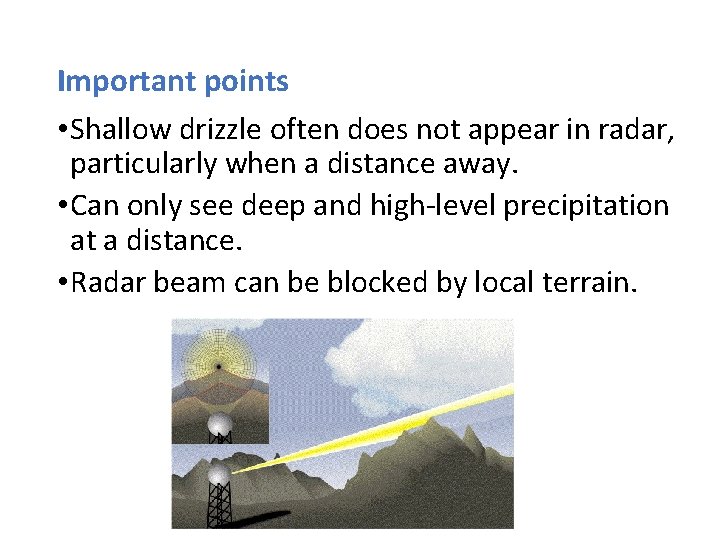
Important points • Shallow drizzle often does not appear in radar, particularly when a distance away. • Can only see deep and high-level precipitation at a distance. • Radar beam can be blocked by local terrain.
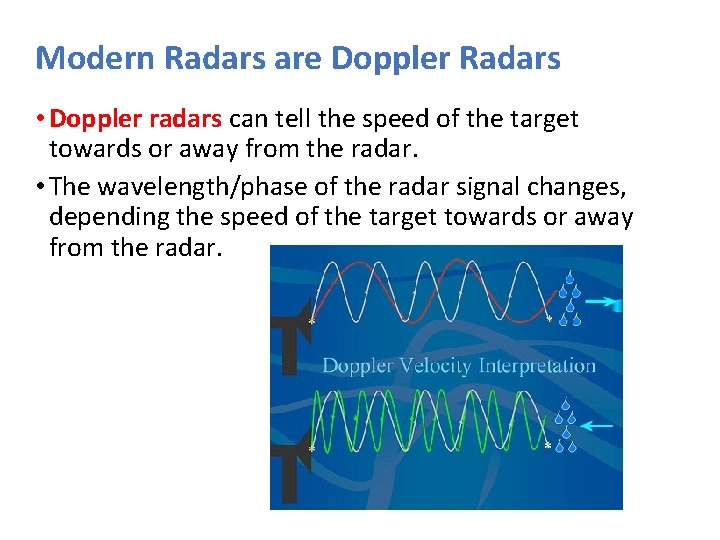
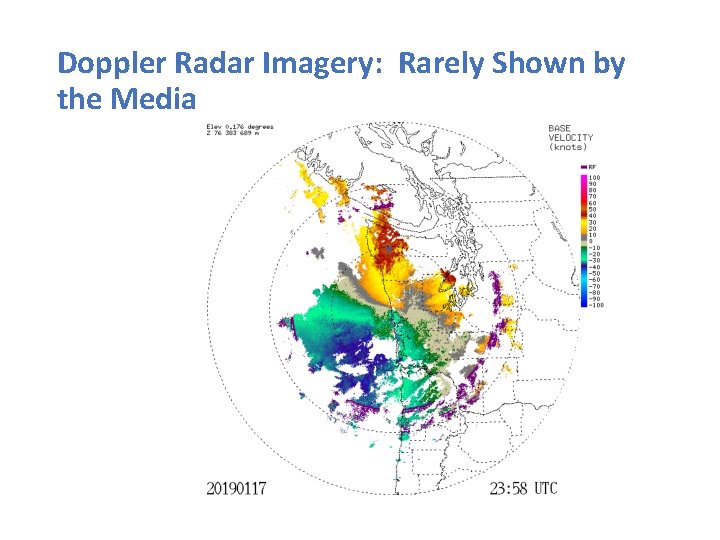
Modern Radars are Doppler Radars • Doppler radars can tell the speed of the target towards or away from the radar. • The wavelength/phase of the radar signal changes, depending the speed of the target towards or away from the radar.
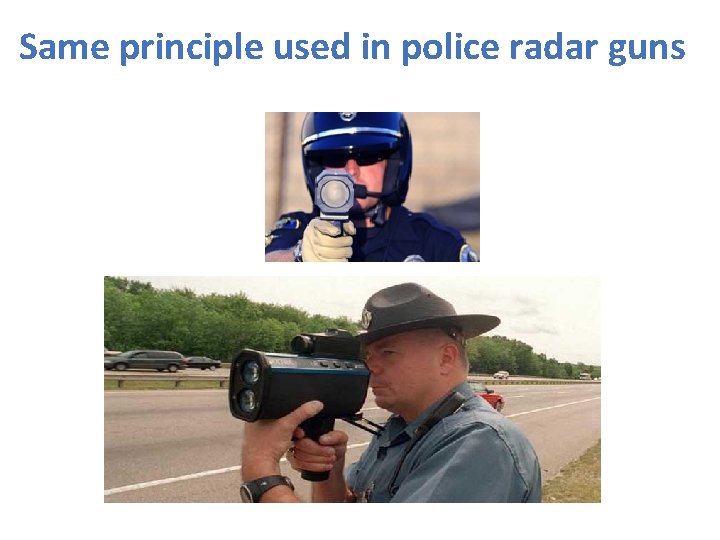
Same principle used in police radar guns
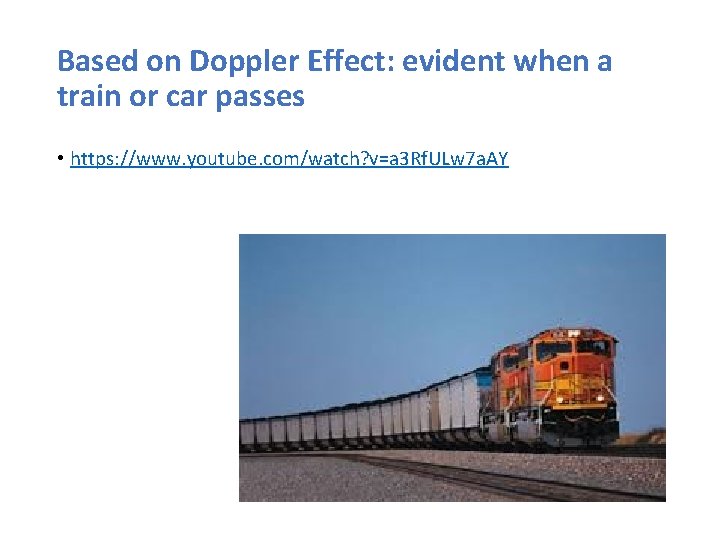
Based on Doppler Effect: evident when a train or car passes • https: //www. youtube. com/watch? v=a 3 Rf. ULw 7 a. AY
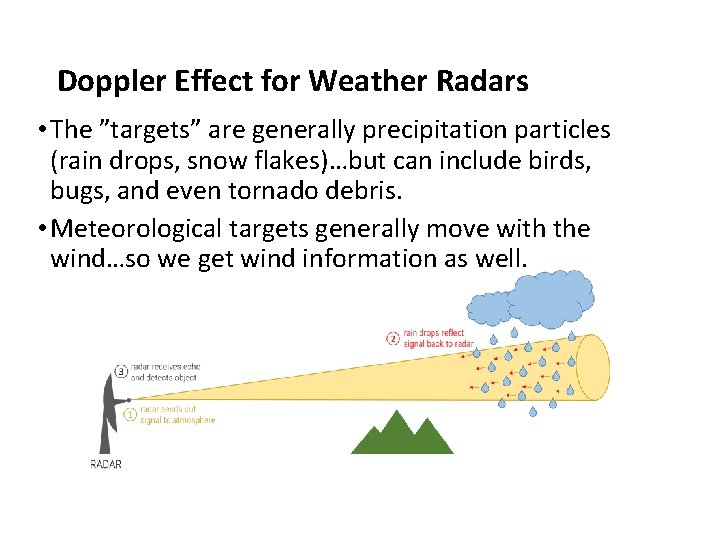
Doppler Effect for Weather Radars • The ”targets” are generally precipitation particles (rain drops, snow flakes)…but can include birds, bugs, and even tornado debris. • Meteorological targets generally move with the wind…so we get wind information as well.
Doppler Radar Imagery: Rarely Shown by the Media
Weather Radar History
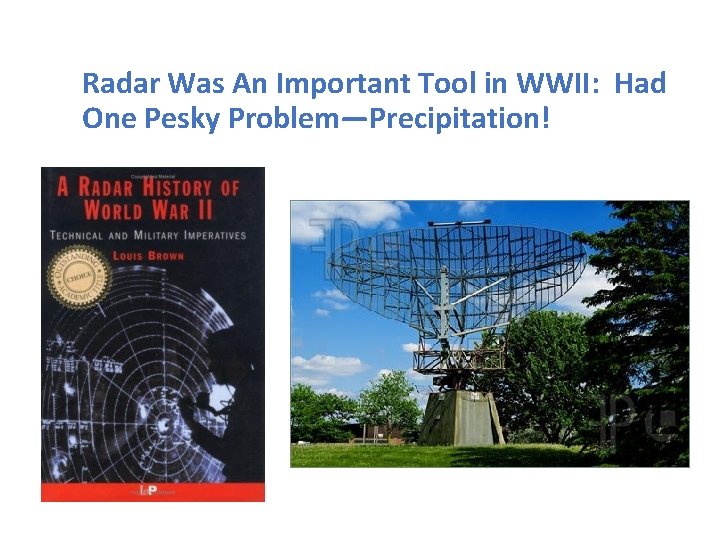
Radar Was An Important Tool in WWII: Had One Pesky Problem—Precipitation!
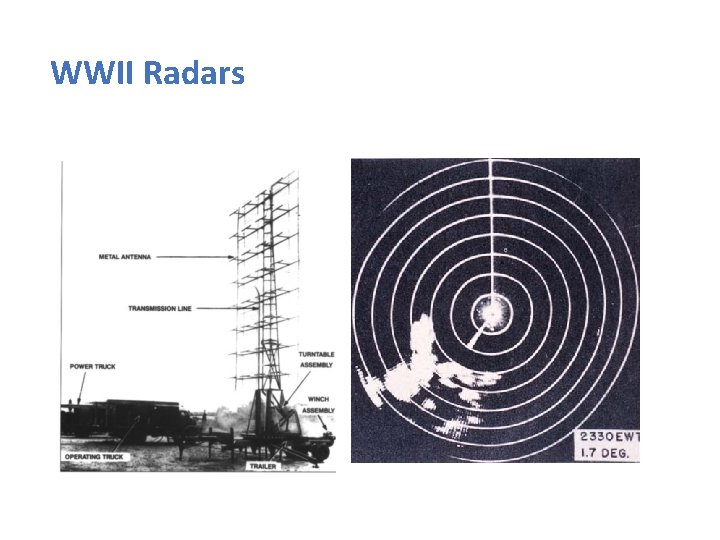
WWII Radars
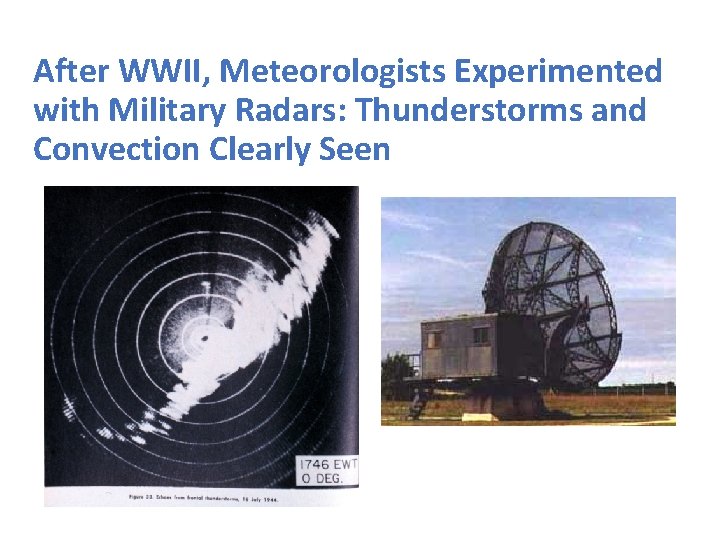
After WWII, Meteorologists Experimented with Military Radars: Thunderstorms and Convection Clearly Seen
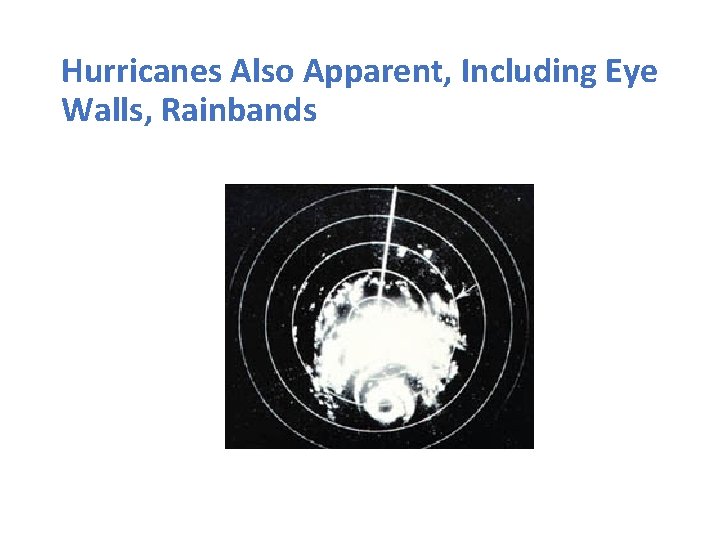
Hurricanes Also Apparent, Including Eye Walls, Rainbands
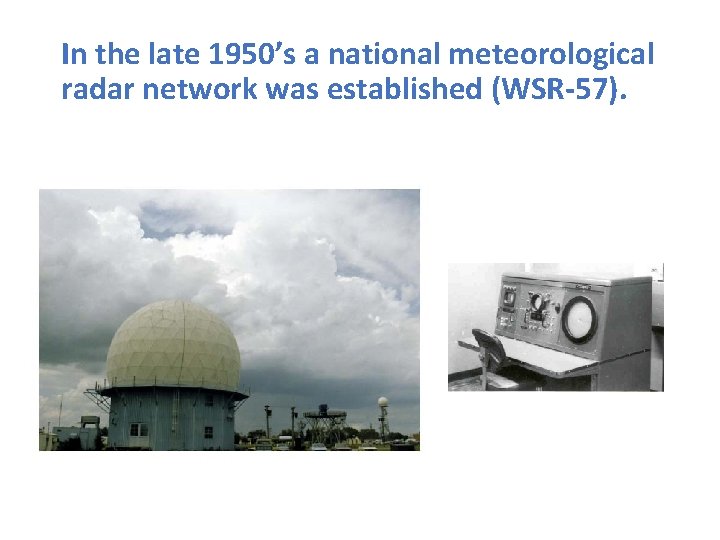
In the late 1950’s a national meteorological radar network was established (WSR-57).
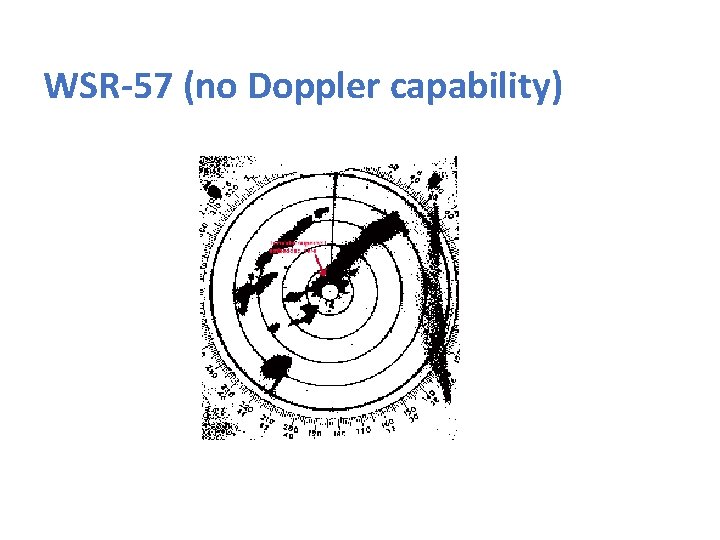
WSR-57 (no Doppler capability)
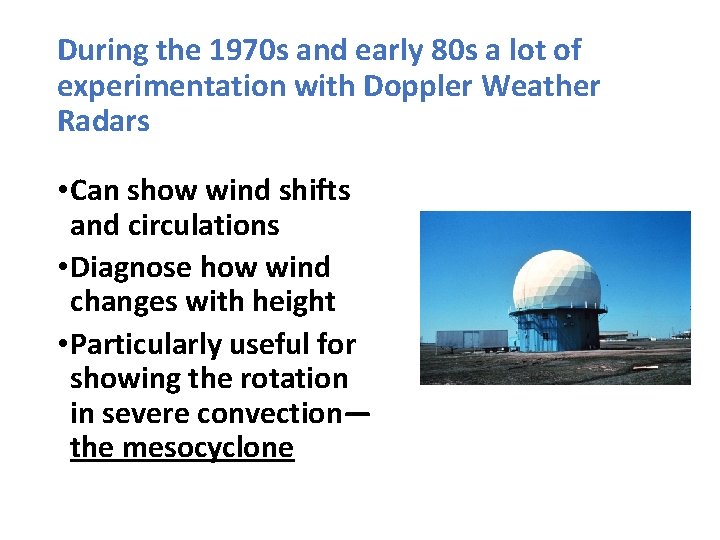
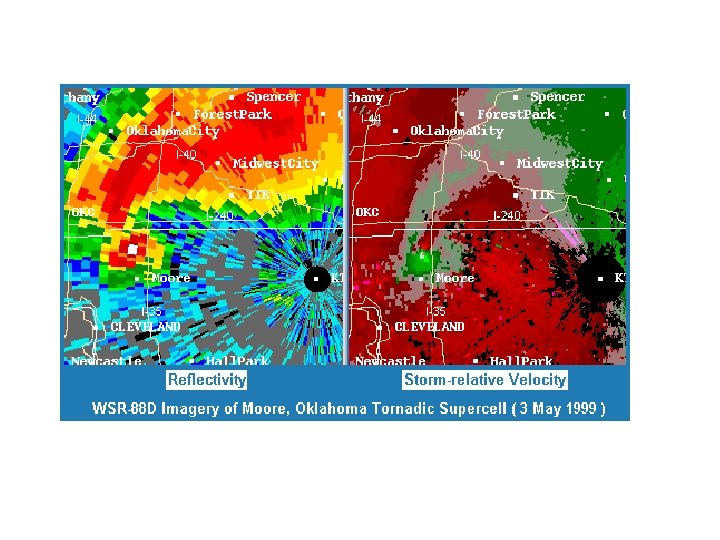
During the 1970 s and early 80 s a lot of experimentation with Doppler Weather Radars • Can show wind shifts and circulations • Diagnose how wind changes with height • Particularly useful for showing the rotation in severe convection— the mesocyclone
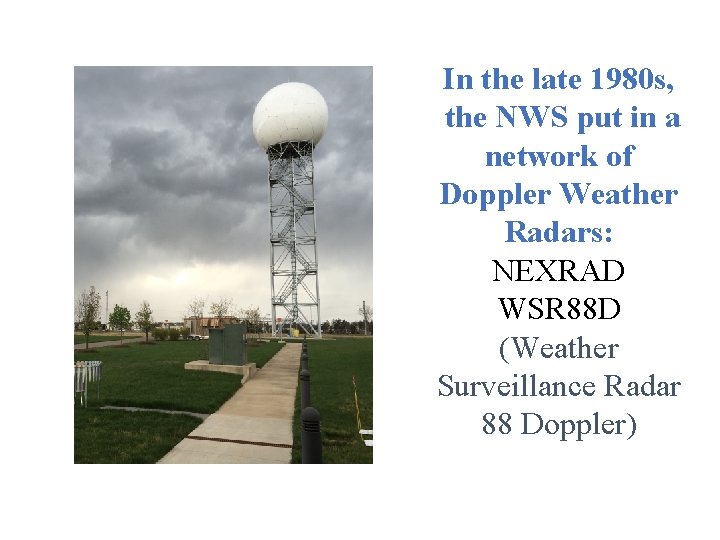
In the late 1980 s, the NWS put in a network of Doppler Weather Radars: NEXRAD WSR 88 D (Weather Surveillance Radar 88 Doppler)
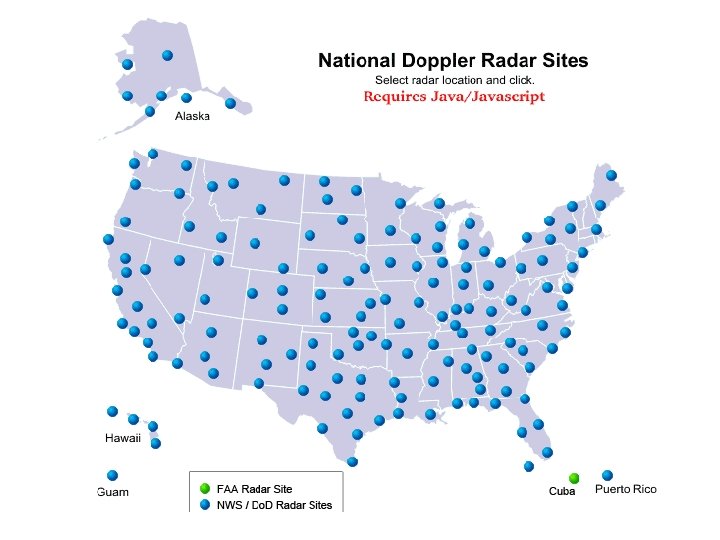
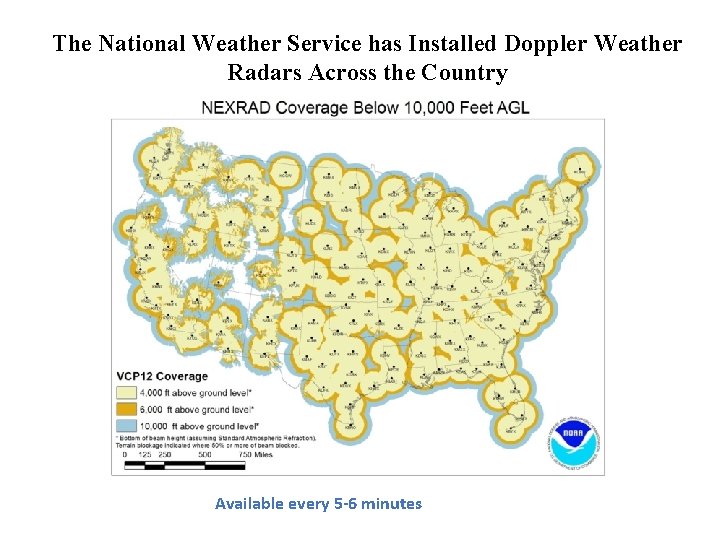
The National Weather Service has Installed Doppler Weather Radars Across the Country Available every 5 -6 minutes
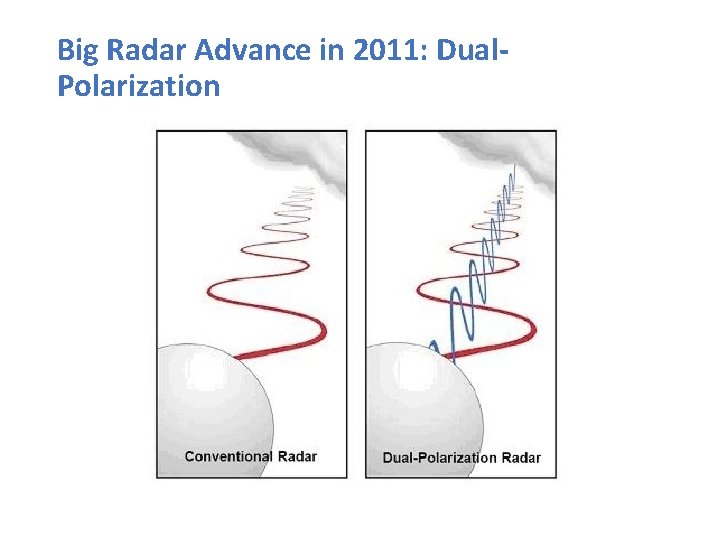
Big Radar Advance in 2011: Dual. Polarization
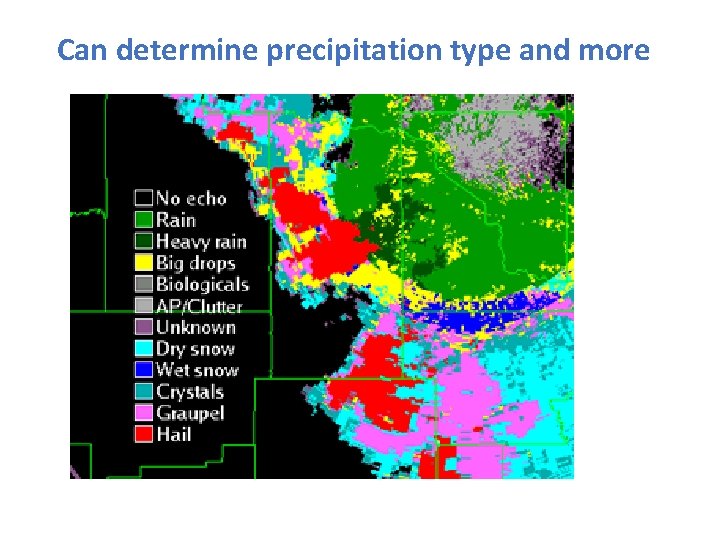
Can determine precipitation type and more
Weather Radar Can Change Your Life!
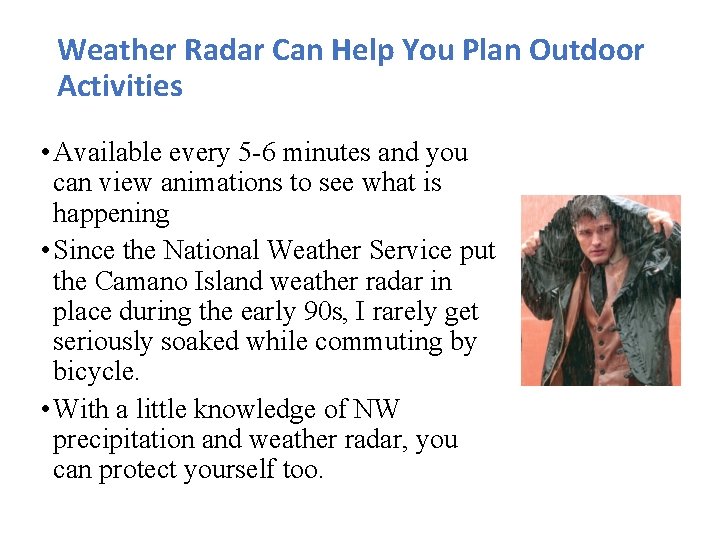
Weather Radar Can Help You Plan Outdoor Activities • Available every 5 -6 minutes and you can view animations to see what is happening • Since the National Weather Service put the Camano Island weather radar in place during the early 90 s, I rarely get seriously soaked while commuting by bicycle. • With a little knowledge of NW precipitation and weather radar, you can protect yourself too.
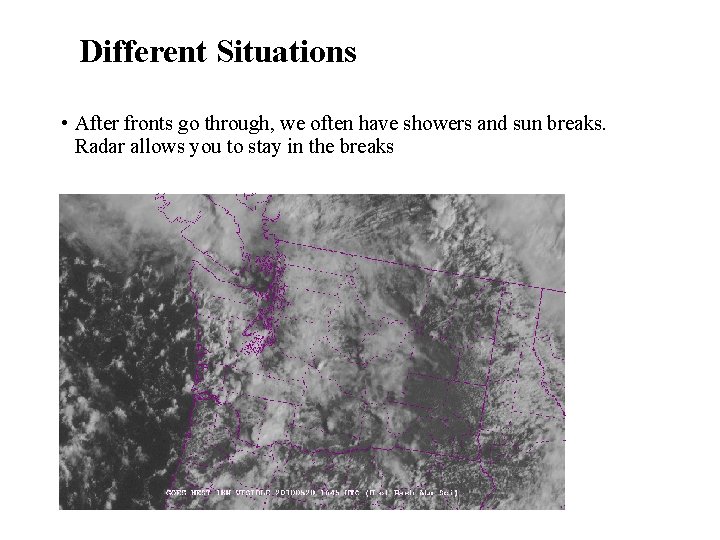
Different Situations • After fronts go through, we often have showers and sun breaks. Radar allows you to stay in the breaks
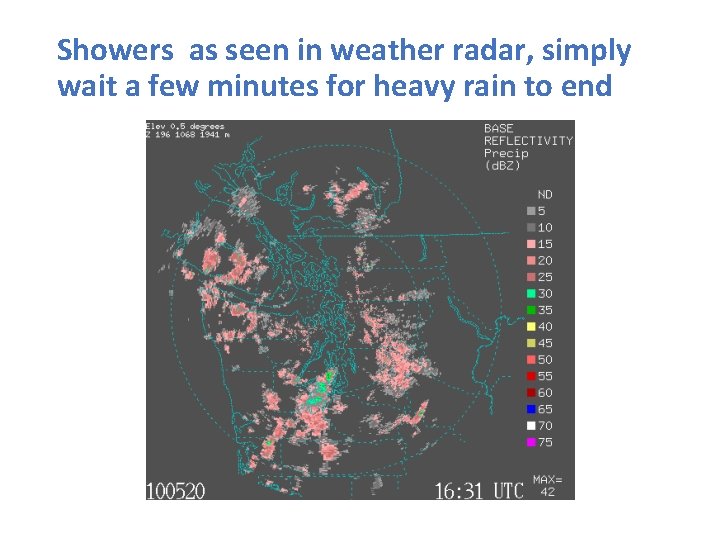
Showers as seen in weather radar, simply wait a few minutes for heavy rain to end
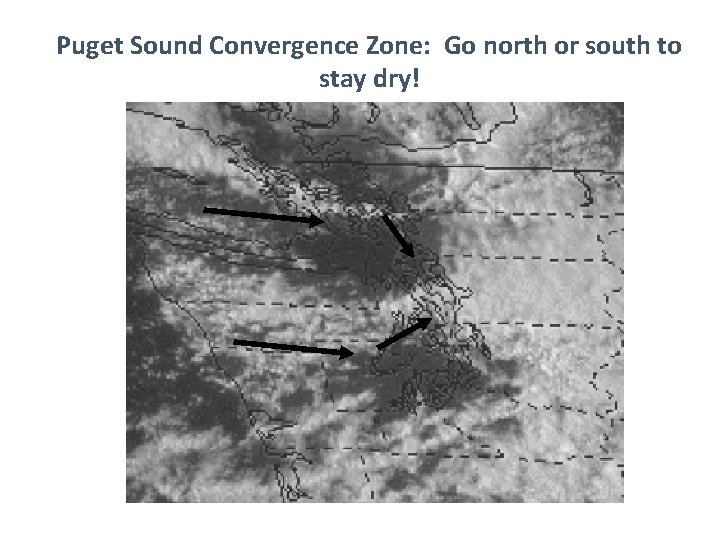
Puget Sound Convergence Zone: Go north or south to stay dry!
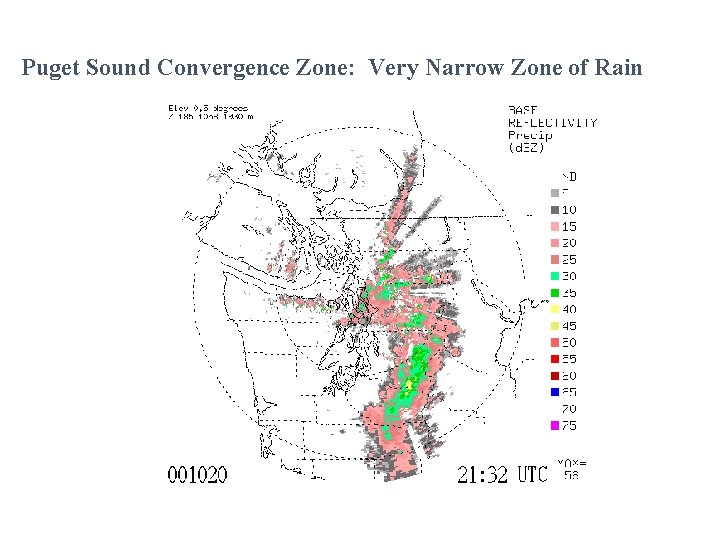
Puget Sound Convergence Zone: Very Narrow Zone of Rain
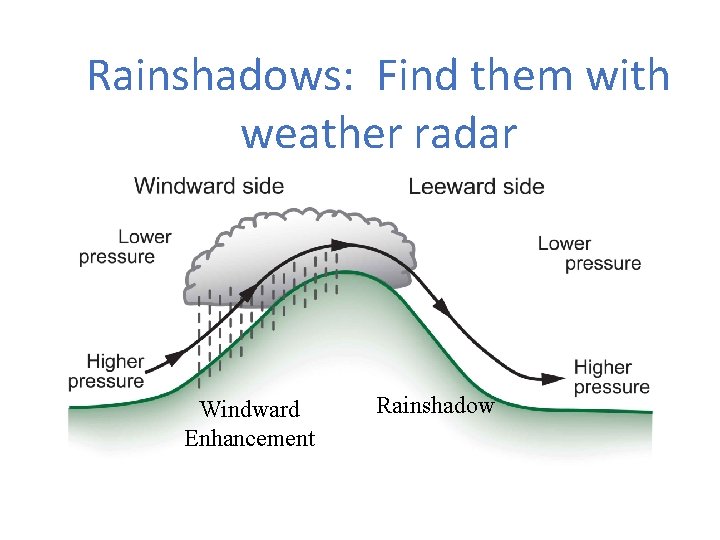
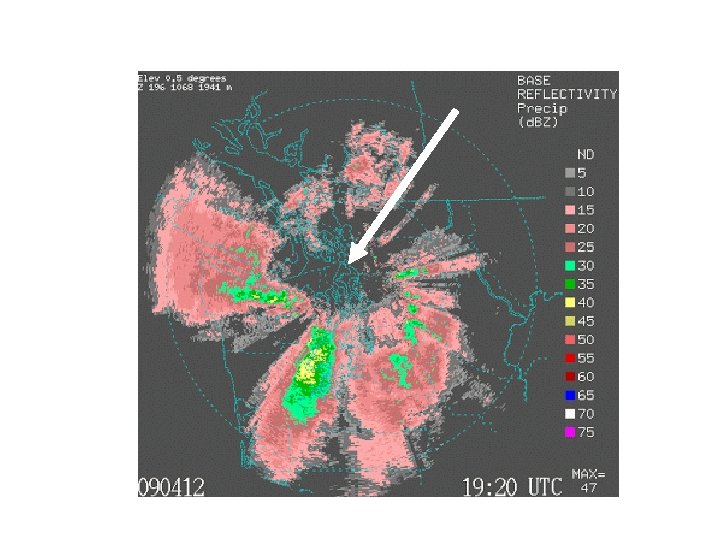
Rainshadows: Find them with weather radar Windward Enhancement Rainshadow
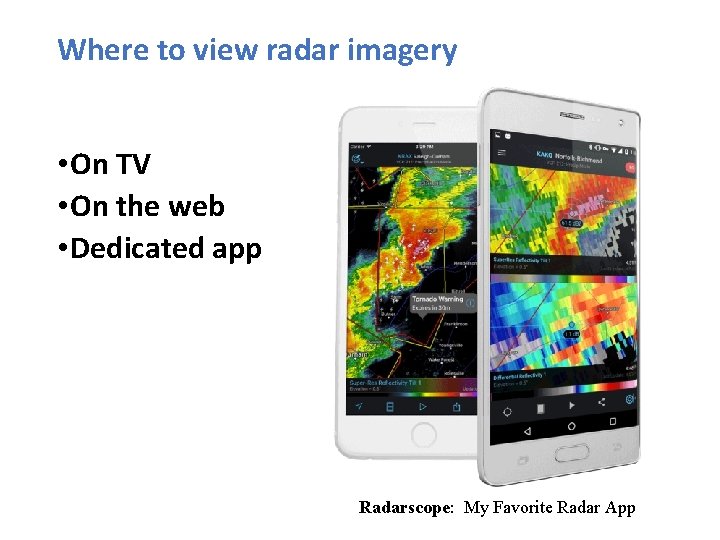
Where to view radar imagery • On TV • On the web • Dedicated app Radarscope: My Favorite Radar App
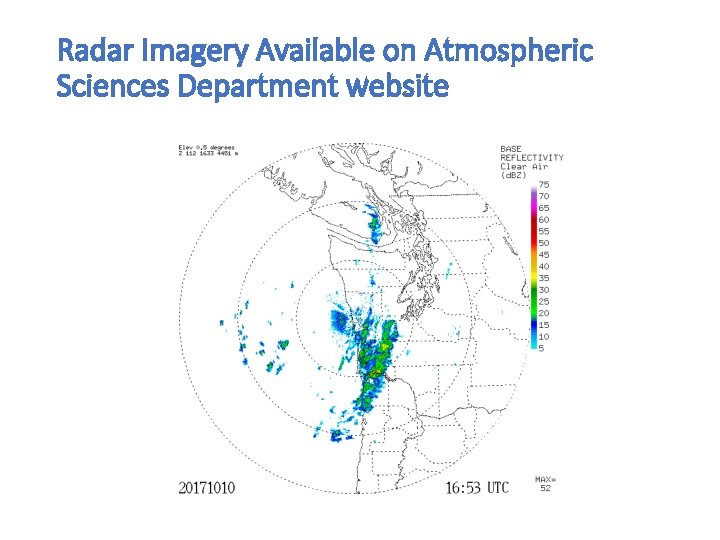
Radar Imagery Available on Atmospheric Sciences Department website