
Weather and Climate Weather Weather is the condition
- Slides: 12
Weather and Climate
Weather • Weather is the condition of the atmosphere at a certain time an place. • Air Temp – Heat in the atmosphere, measured by thermometer • Humidity – amount of water vapor in the air
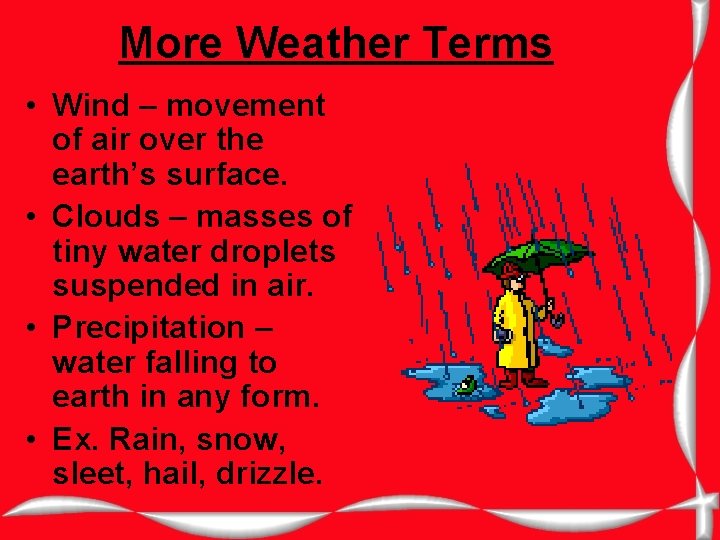
More Weather Terms • Wind – movement of air over the earth’s surface. • Clouds – masses of tiny water droplets suspended in air. • Precipitation – water falling to earth in any form. • Ex. Rain, snow, sleet, hail, drizzle.
Air Pressure • Air Pressure – weight of the air measured by barometer. • High elevation less pressure. • Low Elevation higher pressure • Cool air has more pressure……why?
The Sun • The weather on earth is caused by the uneven distribution of the sun’s energy. • Most weather systems in the US move from West to East. • The Sun powers the water cycle
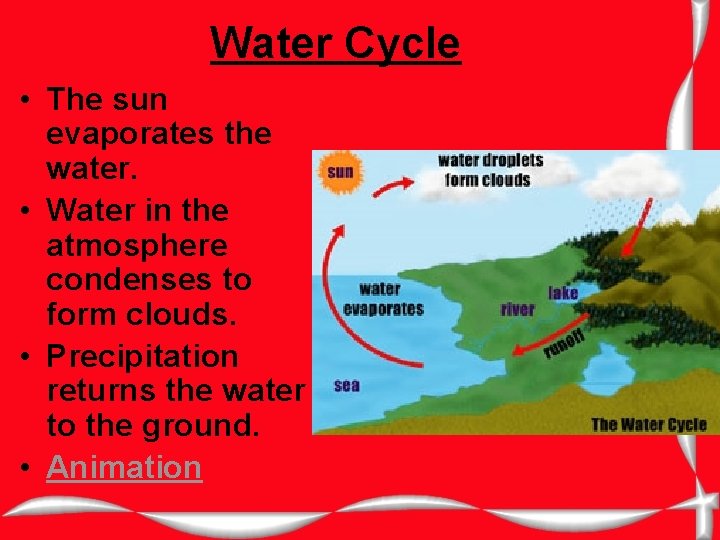
Water Cycle • The sun evaporates the water. • Water in the atmosphere condenses to form clouds. • Precipitation returns the water to the ground. • Animation
Climate • Climate is the average weather in an area. • Latitude – further from the equator, colder the climate. • Altitude – higher elevation has cooler climate • Water – the closer to water, the more cool the summers and warmer the winters.
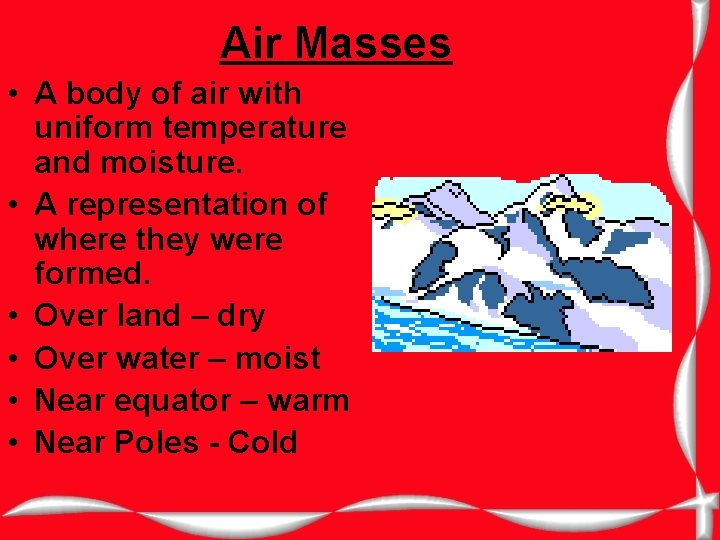
Air Masses • A body of air with uniform temperature and moisture. • A representation of where they were formed. • Over land – dry • Over water – moist • Near equator – warm • Near Poles - Cold
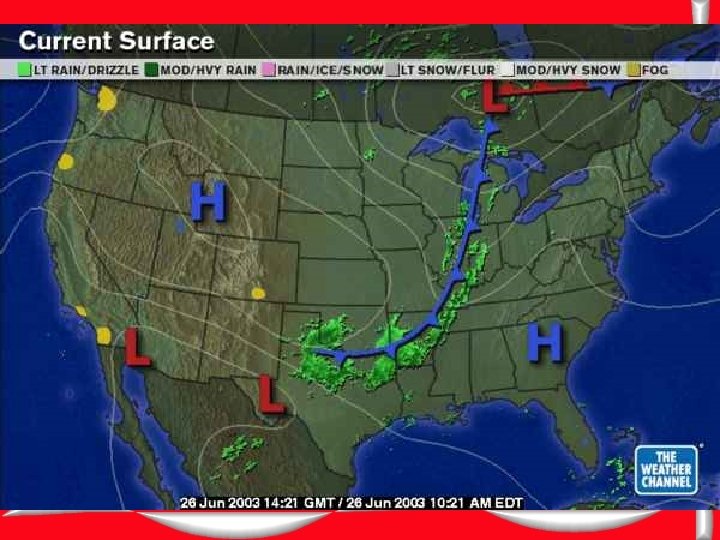
Fronts • The leading edge of an air mass. • Strong winds and precipitation occur between two fronts. • Cold air mass is called cold front • Warm air mass is called a warm front.
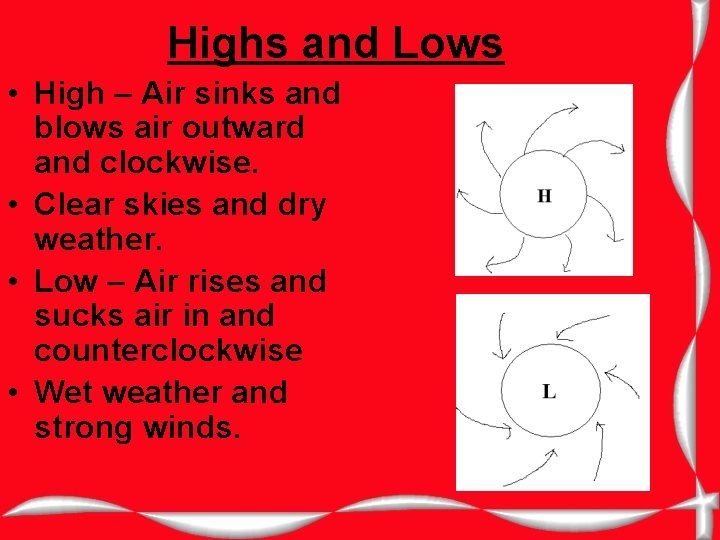
Highs and Lows • High – Air sinks and blows air outward and clockwise. • Clear skies and dry weather. • Low – Air rises and sucks air in and counterclockwise • Wet weather and strong winds.