
Weather 101 Raven Industries Balloon Weather DON DAY

Weather 101 Raven Industries Balloon Weather DON DAY JR – DAYWEATHER, INC.
Weather Forecasting • Weather forecasting is the application of science and technology to predict the conditions of the atmosphere for a given location and time. • Weather forecasts are made by collecting quantitative data about the current state of the atmosphere at a given place and using meteorology to project how the atmosphere will change over time.
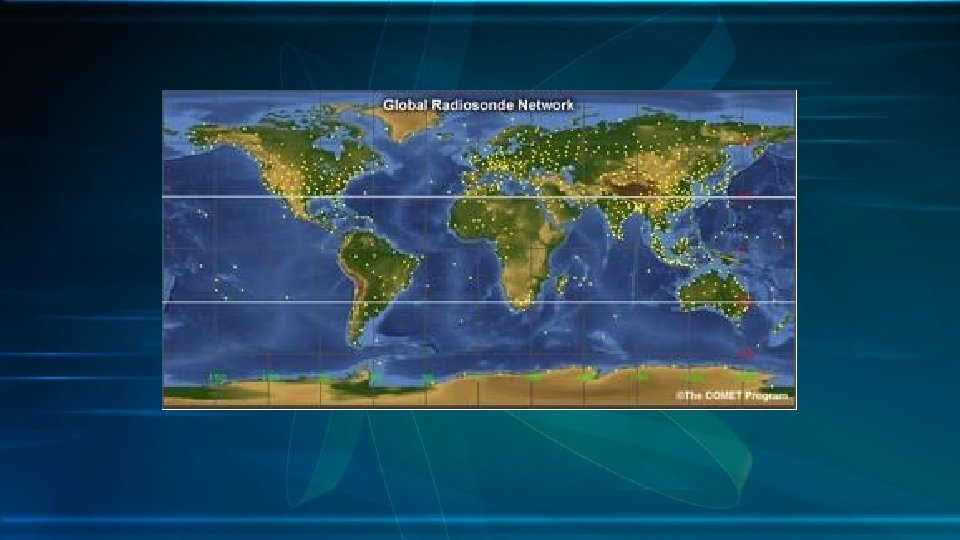
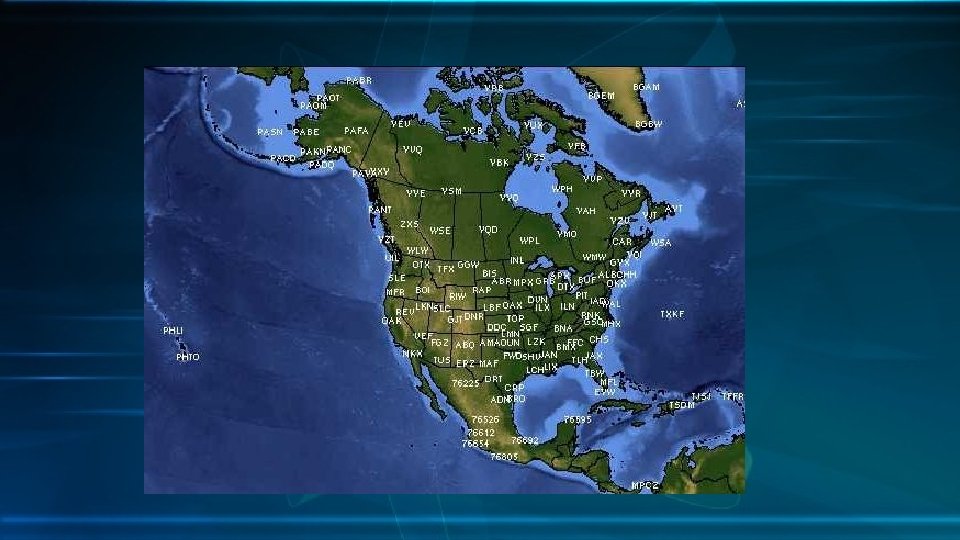
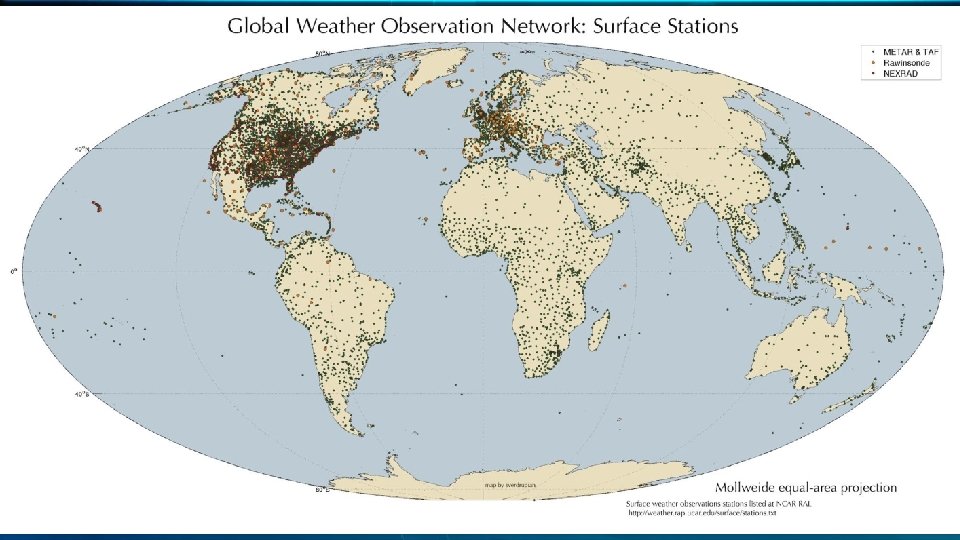
Weather Forecasting - Data • Surface Data – a network of surface weather observing stations across the globe, land, ocean buoys, airports • Upper Air Data – radiosondes launch 2 x day across the globe
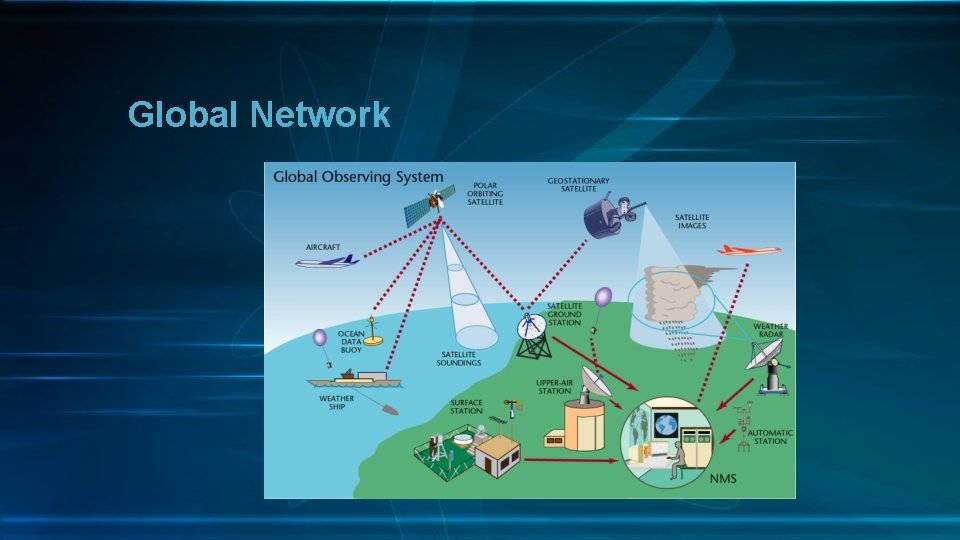
Global Network
Satellites • Visible • Infrared • GOES • Polar
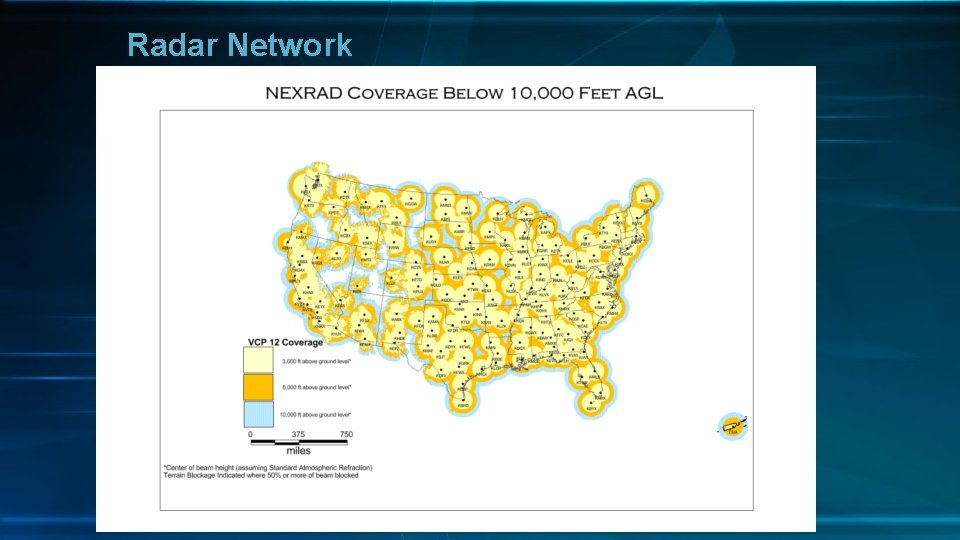
Radar Network
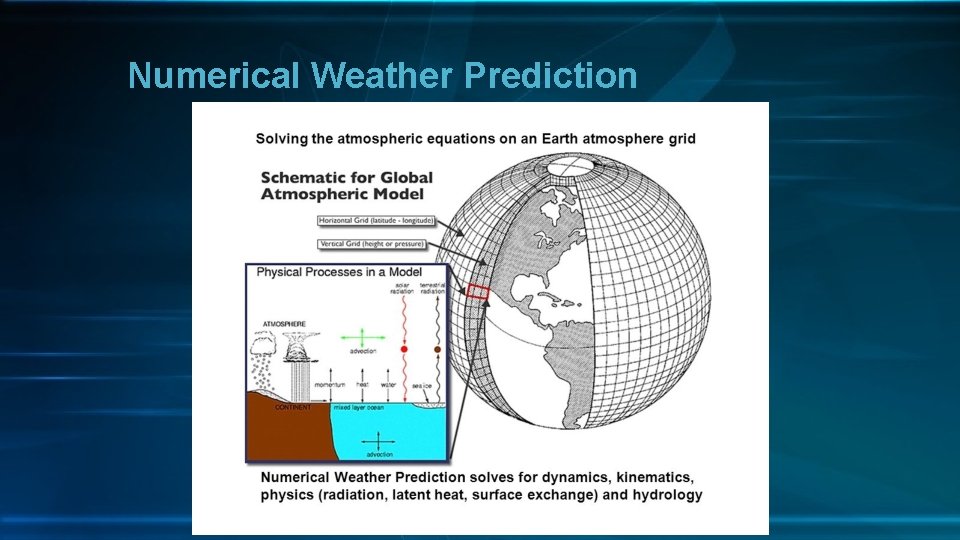
Numerical Weather Prediction
History of NWP • The history of numerical weather prediction began in the 1920 s through the efforts of Lewis Fry Richardson, who used procedures originally developed by Vilhelm Bjerknes to produce by hand a six-hour forecast for the state of the atmosphere over two points in central Europe, taking at least six weeks to do so.
History of NWP • Numerical weather prediction uses mathematical models of the atmosphere and oceans to predict the weather based on current weather conditions.
NWP - Initialization • The process of entering observation data into the model to generate initial conditions is called initialization.
NWP - Initialization • Surface observations • Radiosonde data (big one) • Terrain • Oceans • Soil moisture, etc.
Parameterization in a weather or climate model within numerical weather prediction refers to the method of replacing processes that are too small-scale or complex to be physically represented in the model by a simplified process.
Differential Equations • A fundamental problem lies in the chaotic nature of the partial differential equations used to simulate the atmosphere. It is impossible to solve these equations exactly, and small errors grow with time (doubling about every five days).
Differential Equations • Therefore, numerical weather prediction methods only obtain solutions. approximate
Time Stepping • The equations are initialized from the analysis data and rates of change are determined. These rates of change predict the state of the atmosphere a short time into the future; the time increment for this prediction is called a time step.
Time Stepping • The equations are then applied to this new atmospheric state to find new rates of change, and these new rates of change predict the atmosphere at a yet further time step into the future. This time stepping is repeated until the solution reaches the desired forecast time.

Time Stepping 1 5
Time Stepping • Time steps for global models are on the order of tens of minutes, while time steps for regional models are between one and four minutes.
Amplified Errors • Extremely small errors in temperature, winds, or other initial inputs given to numerical models will amplify and double every five days

Computer Power - ENIAC
Numerical Weather Prediction • Some meteorological processes are too small-scale or too complex to be explicitly included in numerical weather prediction models. • For example, cumulus clouds, small convective systems, etc. • Terrain has to be smoothed
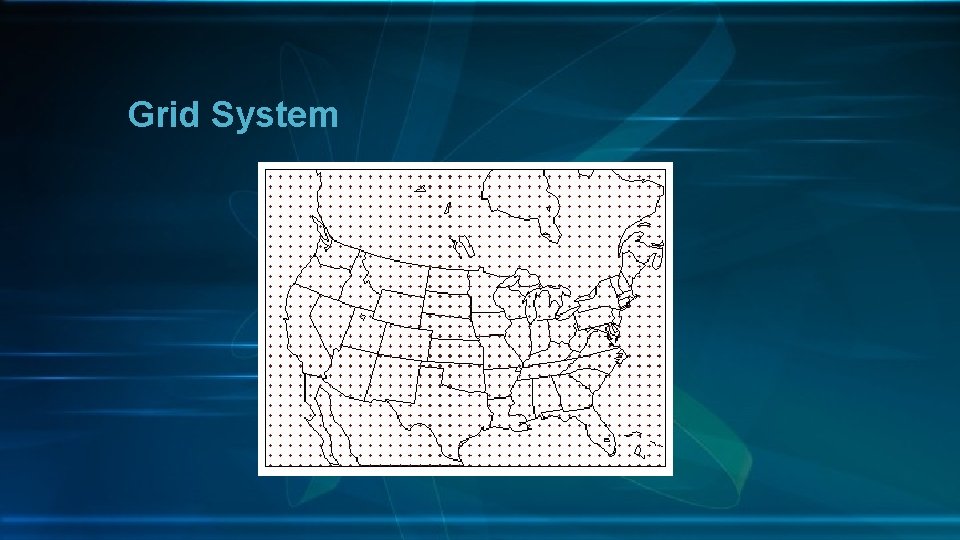
Grid System
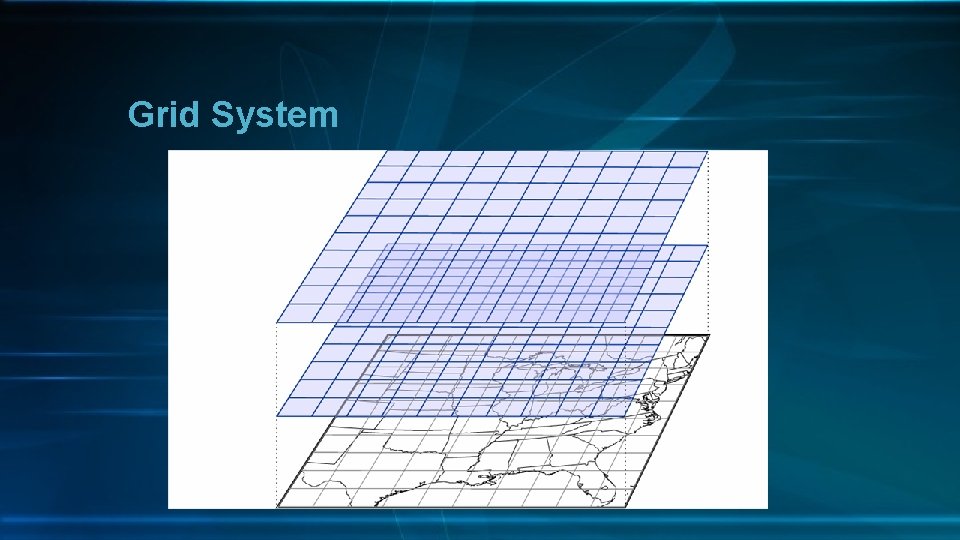
Grid System
Interpolation • Interpolation is a method of constructing new data points within the range of a discrete set of known data points.
Improving NWP Output • Because forecast models based upon the equations for atmospheric dynamics do not perfectly determine weather conditions, statistical methods have been developed to attempt to correct the forecasts.
Model Output Statistics (MOS) • MOS can correct for local effects that cannot be resolved by the model due to insufficient grid resolution, as well as model biases. Because MOS is run after its respective global or regional model, its production is known as post-processing.
Ensemble Forecasts • Since the 1990 s, ensemble forecasts have been used operationally (as routine forecasts) to account for the stochastic nature of weather processes – that is, to resolve their inherent uncertainty. This method involves analyzing multiple forecasts created with an individual forecast model by using different physical parametrizations or varying initial conditions.
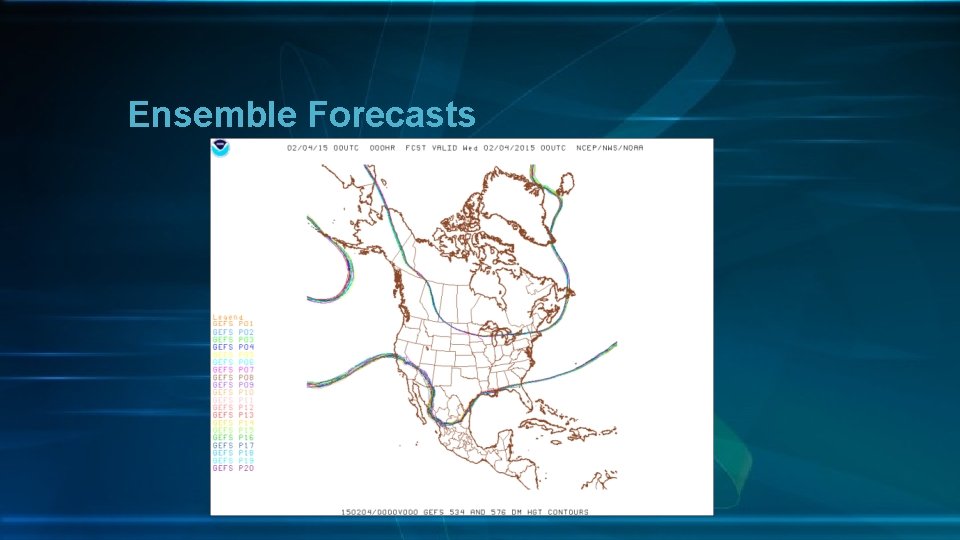
Ensemble Forecasts
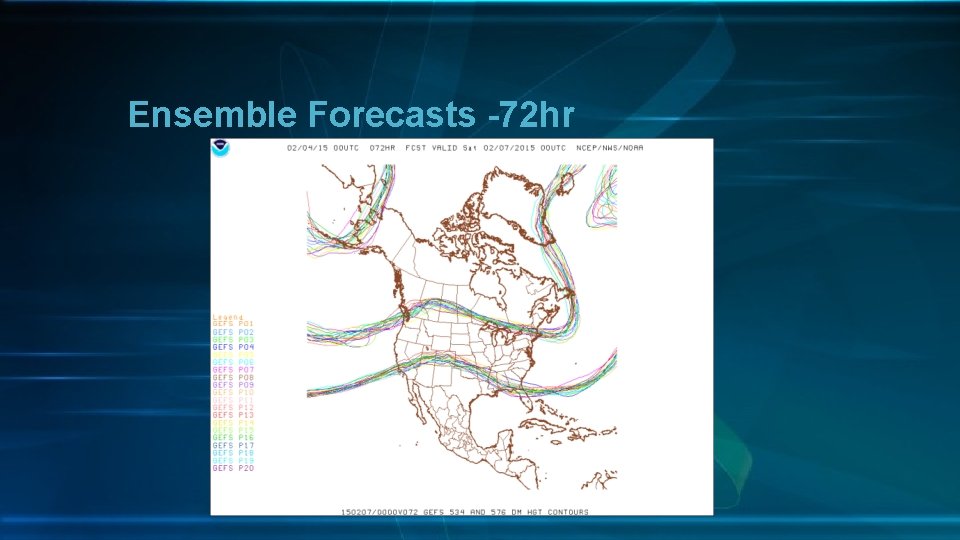
Ensemble Forecasts -72 hr
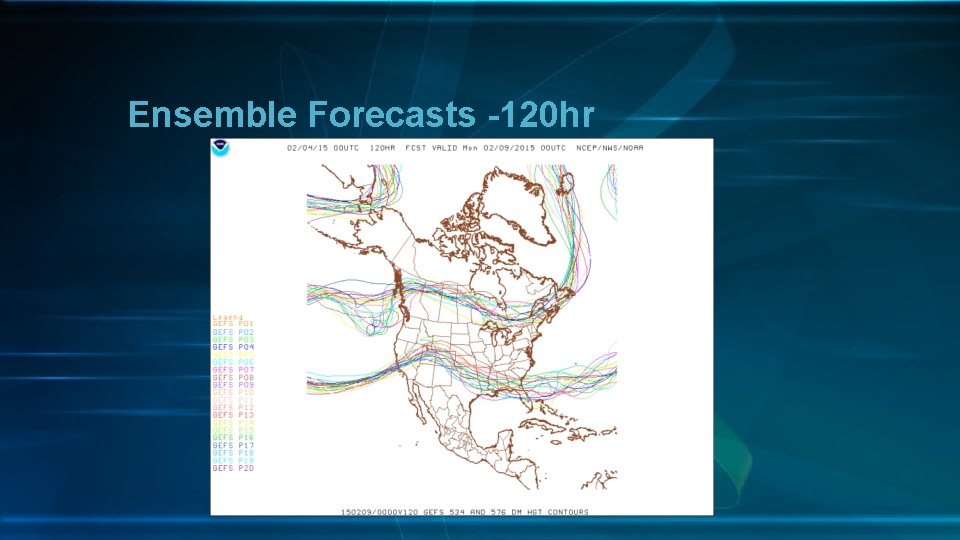
Ensemble Forecasts -120 hr
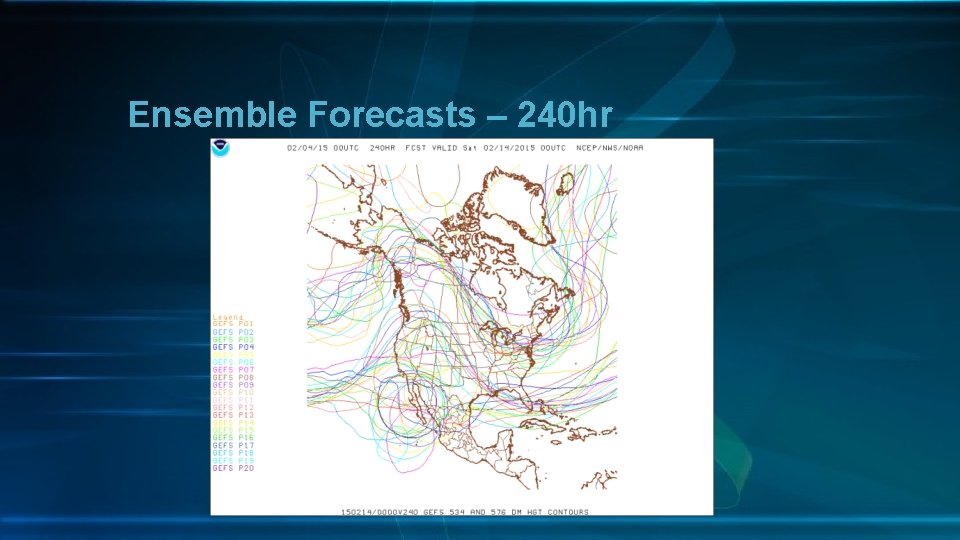
Ensemble Forecasts – 240 hr
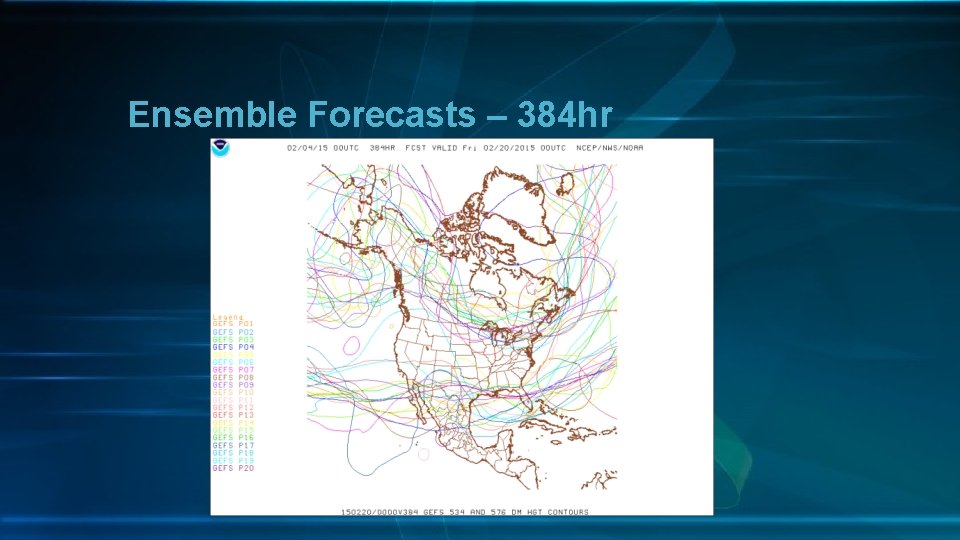
Ensemble Forecasts – 384 hr
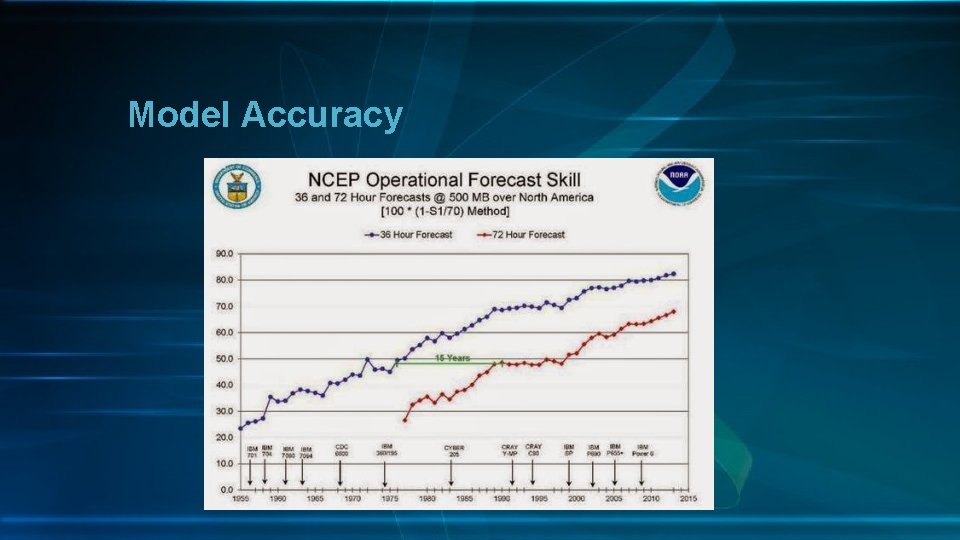
Model Accuracy
Remember! • Models are TOOLS not REALITY
How are Internet Weather Forecasts Made? • Almost all are automated, NO HUMAN INTERFACE • Almost all use the SAME data, but present it differently through different GUI – Mostly GFS • Database driven – zip code, not specific to your location • Updated when computer models are completed (many different models 00 z, 06 z, 12 z, 18 z) • Interpolation
How are Internet Weather Forecasts Made? • Remember • All forecast models come from the same dataset of observed weather (radiosondes, surface, etc. )
Weather Risk Management • Identify, characterize threats • Assess the vulnerability of critical assets to specific threats • Determine the risk (i. e. the expected likelihood and consequences of specific types of attacks on specific assets) • Identify ways to reduce those risks • Prioritize risk reduction measures based on a strategy
Weather Risk Management • Worst Case Scenario - Worst possible environment or outcome out of the several possibilities in planning or simulation.
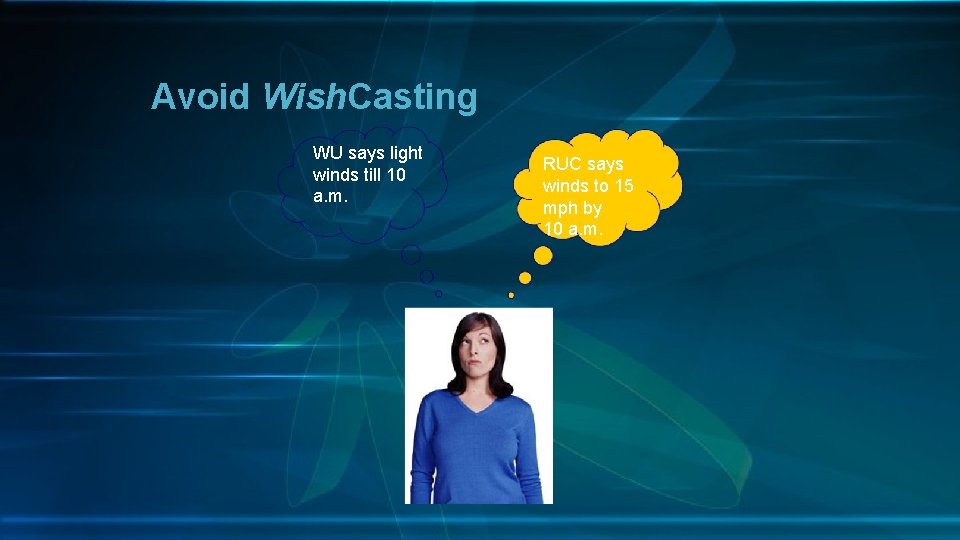
Avoid Wish. Casting WU says light winds till 10 a. m. RUC says winds to 15 mph by 10 a. m.
- Slides: 42