
Weather 1 What are the 5 types of
- Slides: 19
Weather!
1. What are the 5 types of air masses? § Continental Artic § Continental Polar § Maritime Tropical § Continental Tropical
2. For each air mass, is it hot or cold and dry or moist? § Continental Artic – very cold and dry § Continental Polar – cold and dry § Maritime Polar – cool and moist § Maritime Tropical – warm and moist § Continental Tropical – hot and dry
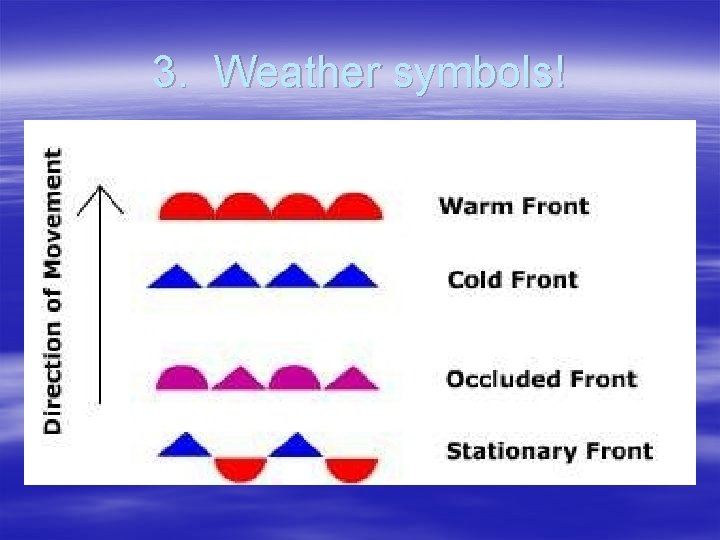
3. Weather symbols!
4. Describe weather conditions associated with warm and cold fronts § Cold: – Can have thunderstorms or no precipitation – Precipitation covers narrow band of ground, so ends quickly § Warm: – Broad band of precipitation which can last for a day or more
5. Where do thunderstorms form? § Warm, moist, unstable air
6. Why do they normally occur in the afternoon? § Surface warming throughout the day causes the air to become unstable
7. What conditions are necessary for a thunderstorm to form? § An unstable atmosphere then a trigger (a mountainside or front) standing in the way § Associated with cumulonimbus clouds!
8. What 3 things can tornados cause? § Severe property damage § Personal injury § Loss of life
9. What conditions produce a tornado? § Severe thunderstorm with a rotating updraft (a mesocyclone)
10. What scale is used to describe the intensity of tornadoes? § Fujita Scale
11. How long can a hurricane last? § A day or more
12. Where do hurricanes get energy from? § Heat of surface ocean water
13. Where are hurricane winds and rain the strongest? § The eye wall
14. What needs to happen for hurricane formation? § A supply of warm, moist air for a long period of time –Condensation releases HEAT!!! § Clouds form and then ROTATE
15. What scale is used to measure hurricane strength? § Saffir-Simpson Scale
16. What conditions are needed to form a winter storm? § Mid-latitude-low pressure system occurring in winter
17. What can winter storms produce? § Heavy snow § Ice § Rain
18. What are nor’easters? § Low-pressure systems over the North Atlantic Ocean causing Maritime Polar air to blow over land § Extremely heavy snow, but not cold enough to be a blizzard.