
Wearable Technologies for Space Earth Panel Christopher Gerty
Wearable Technologies for Space & Earth • Panel: • Christopher Gerty, NASA Johnson Space Center Informatics Subsystem Lead, Exploration Spacesuit Development • Gerard L. Coté, Texas A&M Director, Center for Remote Health Technologies & Systems • Chris Jorgensen, IPC Director, Technology Transfer • Alex Thornton, Physia Chief Executive Officer • Taiyun Chi, Rice University Assistant Professor, Electrical & Computer Engineering Dept. • Moderator: Bob Prochnow, Technology Collaboration Center Executive Director
Technology Collaboration Center • Independent 501 c 3 non-profit • Cross-sector partnership between industry, universities and NASA • Solve difficult technology problems through innovative solutions, connecting collaboration partners across technology sectors • Most TCC programs explore challenges shared between earth & space • Workshops on technologies of interest on earth and in space wearables, automation/robotics, imaging, water, data analytics, AR/VR… • Collaboration programs facilitating formation of new partnerships

TCC – Wearable Technologies 3 rd Annual Wearable Technologies Workshop April 27 -28, 2020 NASA Johnson Space Center • Day 1 – University Challenge Program Organizations provide real-world wearable challenges University student teams demonstrate project results • Day 2 – Presentation Program Presentations on latest technology developments & unmet challenges Program format encourages networking & collaboration • Now accepting university registrations and challenge submissions • Call for presentations in January • techcollaboration. center for more information
Panel Session • Each panel member has up to 5 minutes for opening remarks • Their interests in wearables for earth and space • Please defer questions until after all panel members are finished • Questions accepted from Space. Com app and the audience • Panel members available for one-on-one questions after the session
Christopher Gerty NASA Johnson Space Center Informatics Subsystem Lead, Exploration Spacesuit Development

Spacesuit Basics
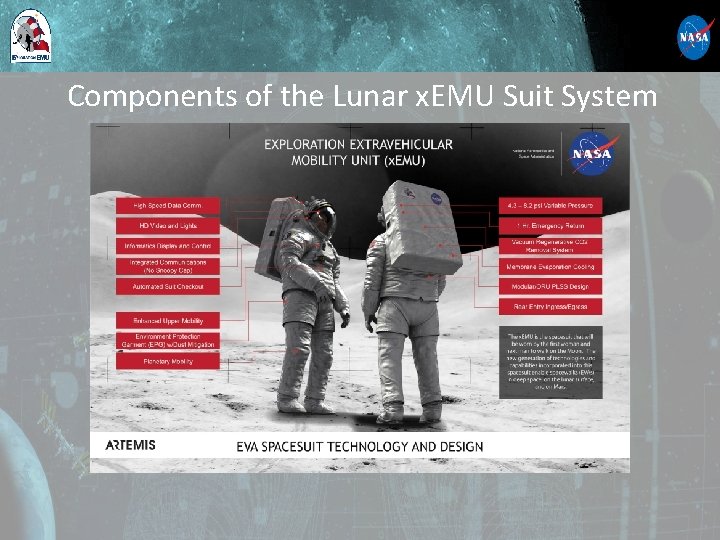
Components of the Lunar x. EMU Suit System
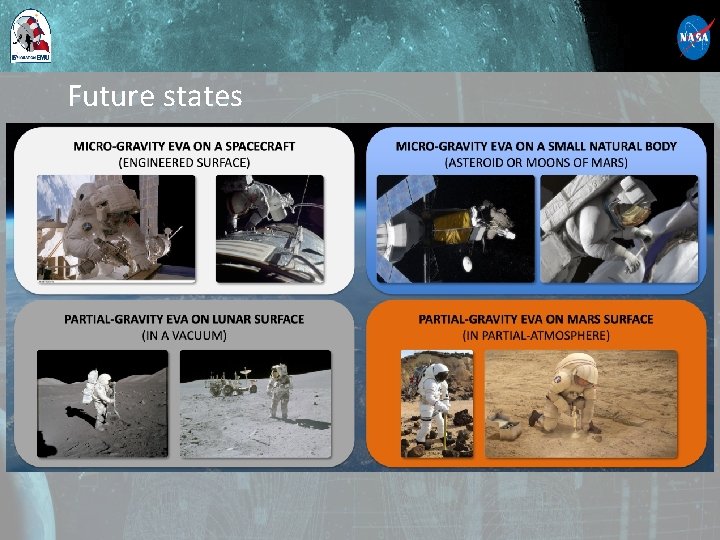
Future states
Gerard L. Coté Texas A&M University Director, Center for Remote Health Technologies & Systems

Panel: Wearable Technologies for Space and Earth Benefits • Monitoring both the patient and the habitat including things like • overall health (BP, sleep quality and nutrition, mental health, bone/muscle loss) • location on the vehicle • exercise patterns – accelerate crew training and provide operational guidance in realtime (also monitor and adjust the habitat). Challenges that can lead to Innovation Opportunities • • • Device Reliability Device Functionality • Meaningful measurements –right information to the right person at the right time Device Form Factor • Appropriate weight, size, location (implantables) https: //www. techradar. com/news/how-astronauts-manage-their-mental-health-in-space-from-the-iss-and-beyond https: //room. eu. com/article/developing-wearable-technologies-for-space-and-earth https: //www. asc-csa. gc. ca/eng/sciences/bio-monitor. asp Gerard L. Coté, Ph. D. Director, TEES Center for Remote Health Tech. and Systems Texas A&M Regents Professor, James J. Cain Professor I Biomedical Engineering, Texas A&M University
Chris Jorgensen IPC Director, Technology Transfer
IPC—Association Connecting Electronics Industries • Global trade association with more than 5, 400 member • More than 300 IPC standards for electronics manufacture • Adhere to NASA Technical Standards Program (TSP) • NASA representation/leadership on IPC working groups • Incorporate NASA requirements • Aerospace addenda to IPC standards • Qualified, shared supply chain Chris Jorgensen Director Technology Transfer IPC E-Textiles Committee liaison
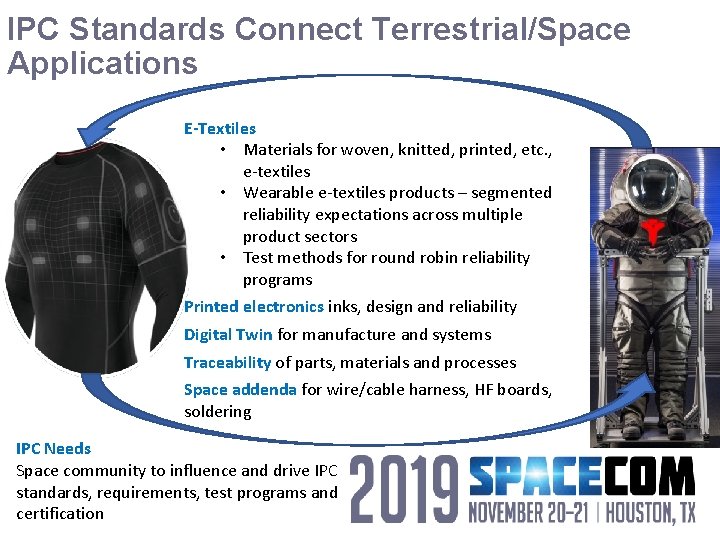
IPC Standards Connect Terrestrial/Space Applications E-Textiles • Materials for woven, knitted, printed, etc. , e-textiles • Wearable e-textiles products – segmented reliability expectations across multiple product sectors • Test methods for round robin reliability programs Printed electronics inks, design and reliability Digital Twin for manufacture and systems Traceability of parts, materials and processes Space addenda for wire/cable harness, HF boards, soldering IPC Needs Space community to influence and drive IPC standards, requirements, test programs and certification
Alex Thornton Physia Chief Executive Officer
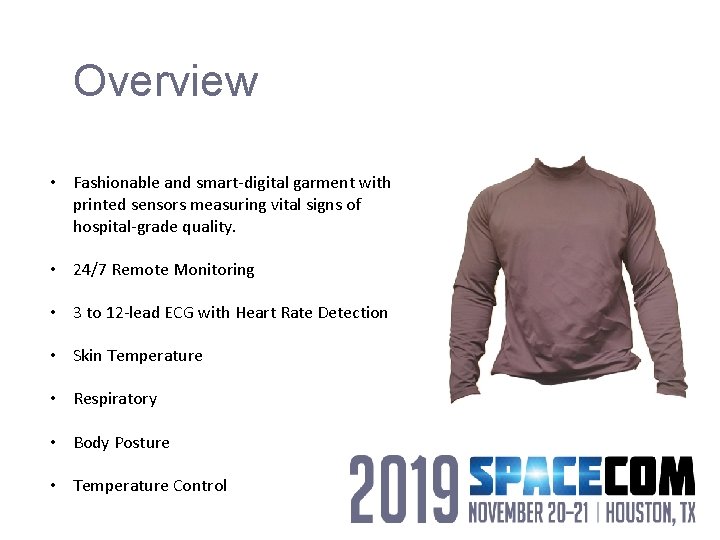
Overview • Fashionable and smart-digital garment with printed sensors measuring vital signs of hospital-grade quality. • 24/7 Remote Monitoring • 3 to 12 -lead ECG with Heart Rate Detection • Skin Temperature • Respiratory • Body Posture • Temperature Control
Taiyun Chi Rice University Assistant Professor, Electrical & Computer Engineering Dept.
Questions? • Panel: • Christopher Gerty, NASA Johnson Space Center Informatics Subsystem Lead, Exploration Spacesuit Development • Gerard L. Coté, Texas A&M Director, Center for Remote Health Technologies & Systems • Chris Jorgensen, IPC Director, Technology Transfer • Alex Thornton, Physia Chief Executive Officer • Taiyun Chi, Rice University Assistant Professor, Electrical & Computer Engineering Dept. • Moderator: Bob Prochnow, Technology Collaboration Center Executive Director
- Slides: 17