
Weapons of Microscopic Destruction babrahaminst Learning Outcomes All
Weapons of Microscopic Destruction @babrahaminst
Learning Outcomes All students will: Be able to explain how pathogens can spread Most students will: Provide a summary of the immune system – which organs are involved, the difference between innate and adaptive, and the function of some example immune cell types Some students will: Describe a technique that scientists use for detecting the spread of infectious disease Key words Pathogen, infection, innate, adaptive, immune system, latex agglutination
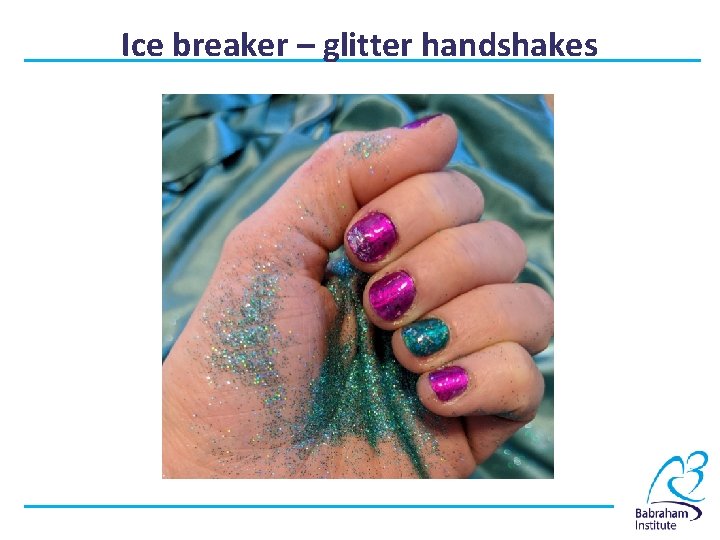
Ice breaker – glitter handshakes
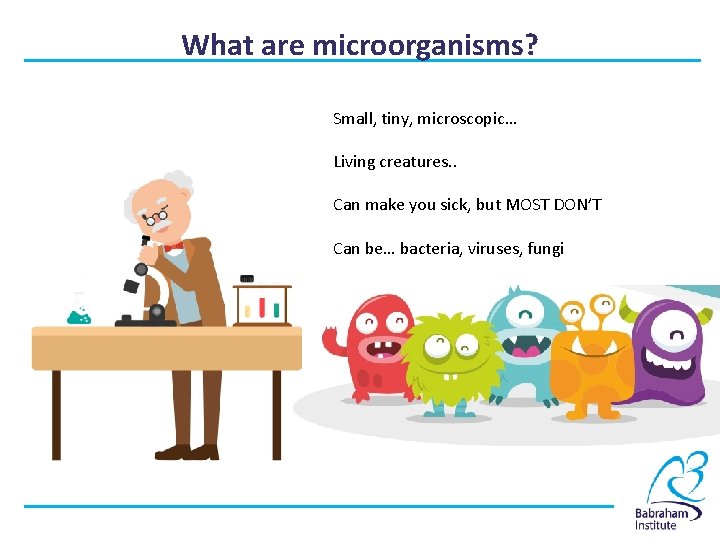
What are microorganisms? Small, tiny, microscopic… Living creatures. . Can make you sick, but MOST DON’T Can be… bacteria, viruses, fungi
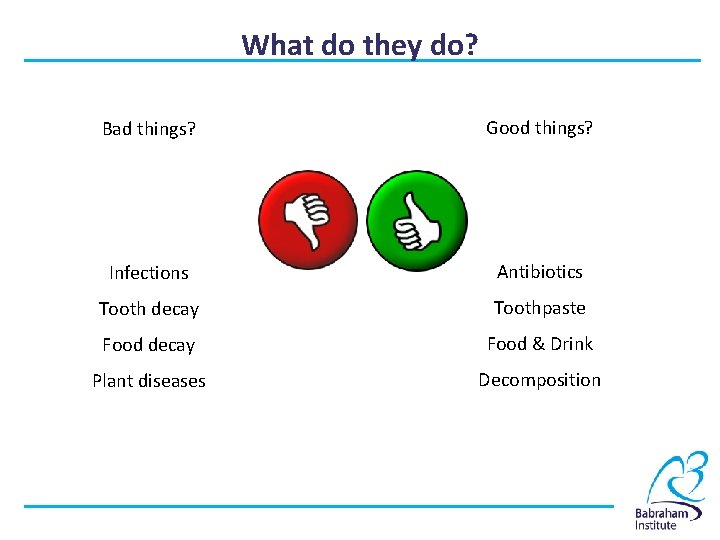
What do they do? Bad things? Good things? Infections Antibiotics Tooth decay Toothpaste Food decay Food & Drink Plant diseases Decomposition
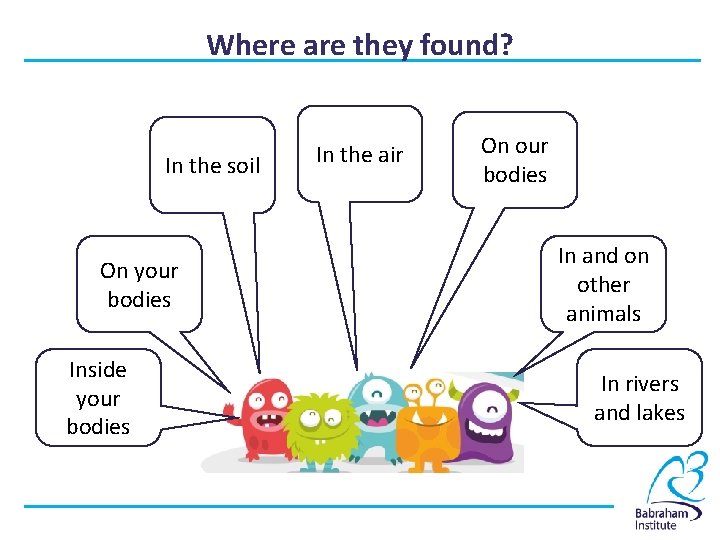
Where are they found? In the soil On your bodies Inside your bodies In the air On our bodies In and on other animals In rivers and lakes
Where are they found? Everywhere!
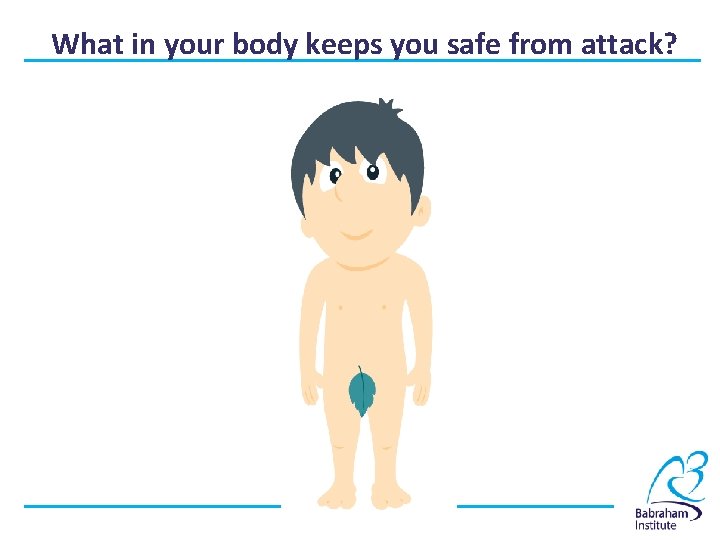
What in your body keeps you safe from attack?
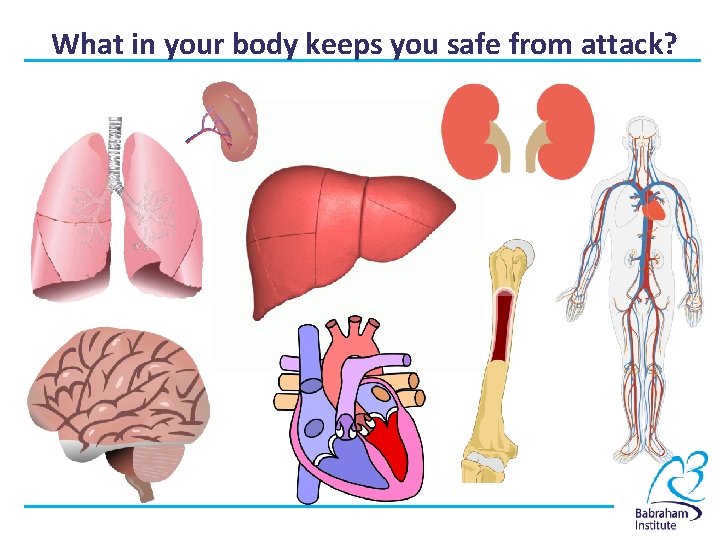
What in your body keeps you safe from attack?
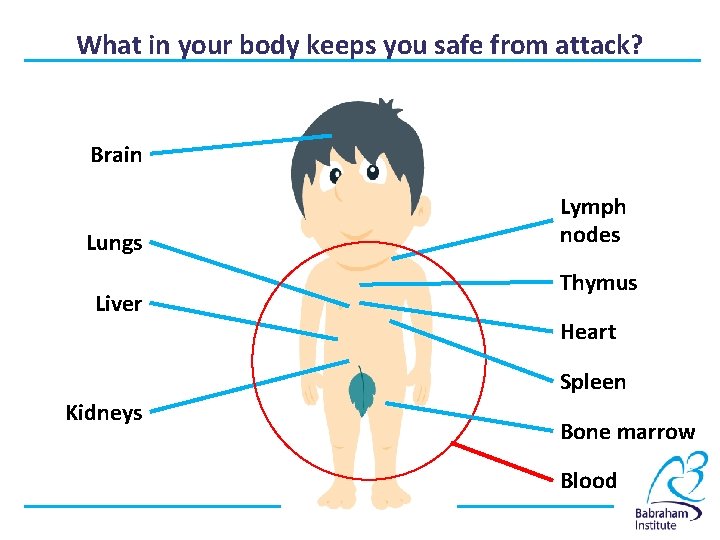
What in your body keeps you safe from attack? Brain Lungs Liver Lymph nodes Thymus Heart Spleen Kidneys Bone marrow Blood

Our Immune System Army
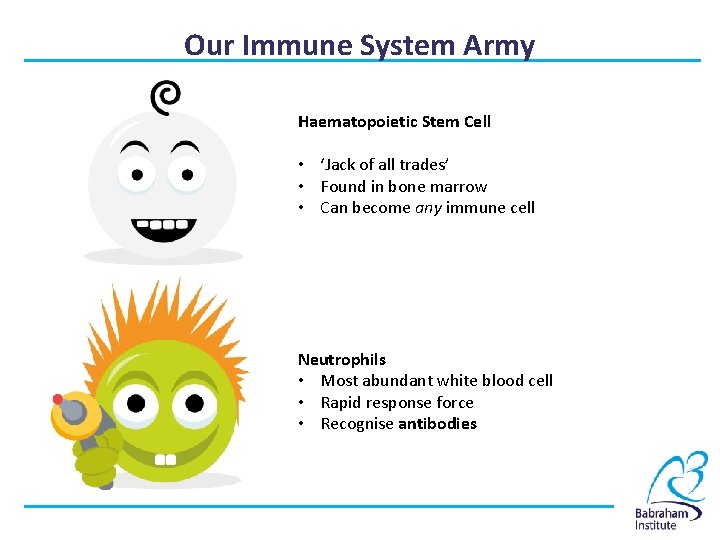
Our Immune System Army Haematopoietic Stem Cell • ‘Jack of all trades’ • Found in bone marrow • Can become any immune cell Neutrophils • Most abundant white blood cell • Rapid response force • Recognise antibodies
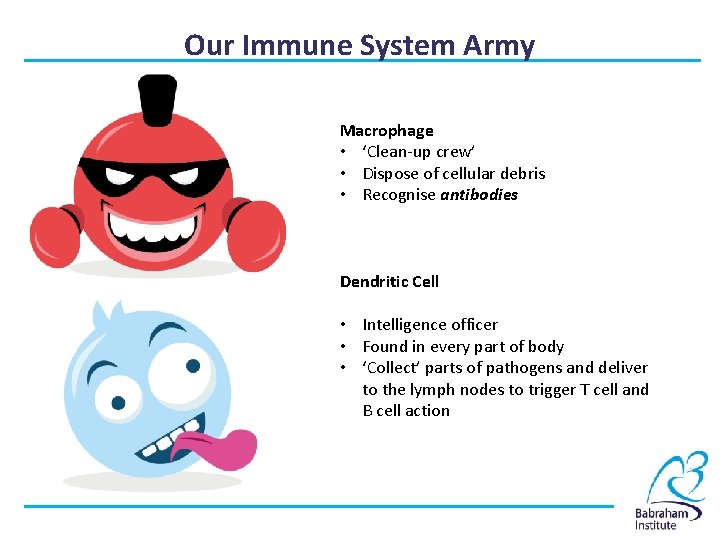
Our Immune System Army Macrophage • ‘Clean-up crew’ • Dispose of cellular debris • Recognise antibodies Dendritic Cell • Intelligence officer • Found in every part of body • ‘Collect’ parts of pathogens and deliver to the lymph nodes to trigger T cell and B cell action
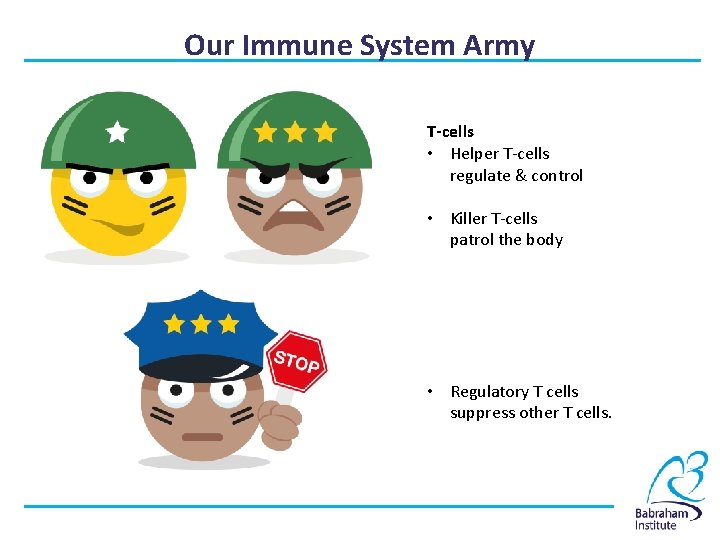
Our Immune System Army T-cells • Helper T-cells regulate & control • Killer T-cells patrol the body • Regulatory T cells suppress other T cells.
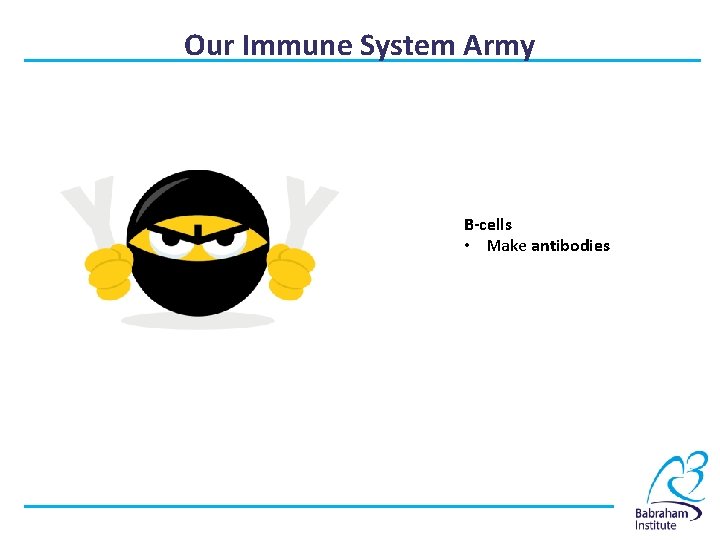
Our Immune System Army B-cells • Make antibodies
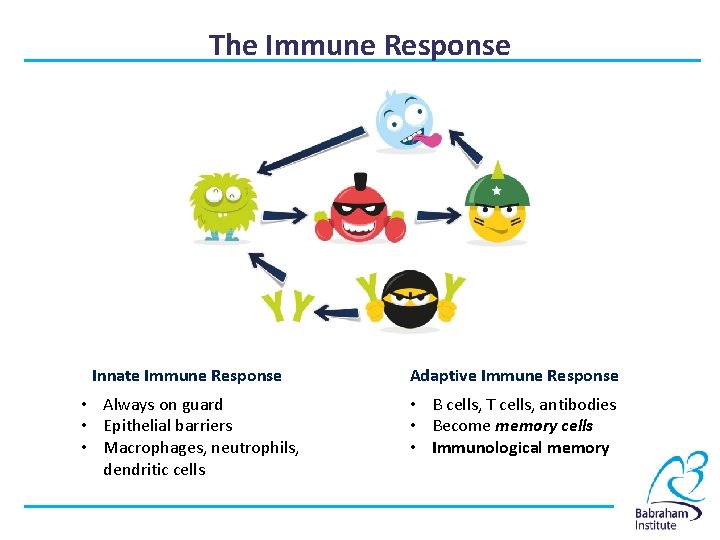
The Immune Response Innate Immune Response Adaptive Immune Response • Always on guard • Epithelial barriers • Macrophages, neutrophils, dendritic cells • B cells, T cells, antibodies • Become memory cells • Immunological memory
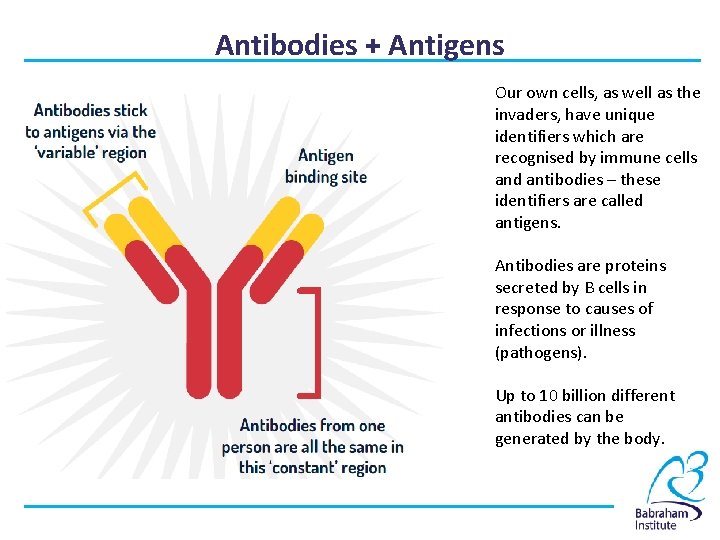
Antibodies + Antigens Our own cells, as well as the invaders, have unique identifiers which are recognised by immune cells and antibodies – these identifiers are called antigens. Antibodies are proteins secreted by B cells in response to causes of infections or illness (pathogens). Up to 10 billion different antibodies can be generated by the body.
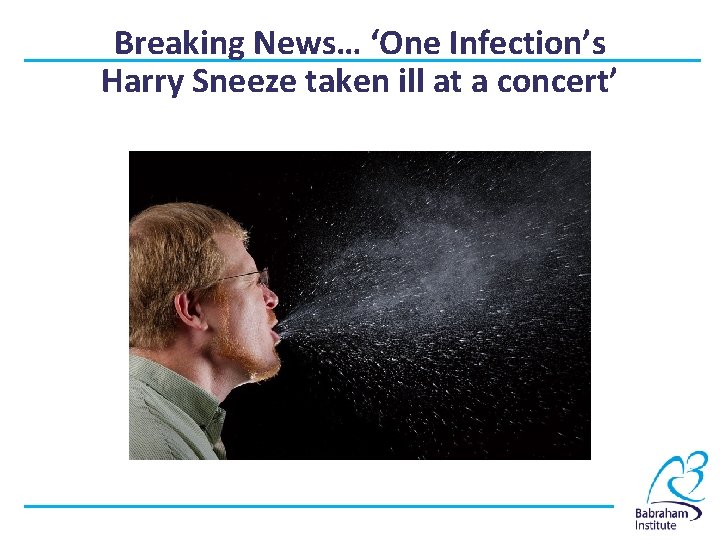
Breaking News… ‘One Infection’s Harry Sneeze taken ill at a concert’
How can we find out who in the audience has been infected?
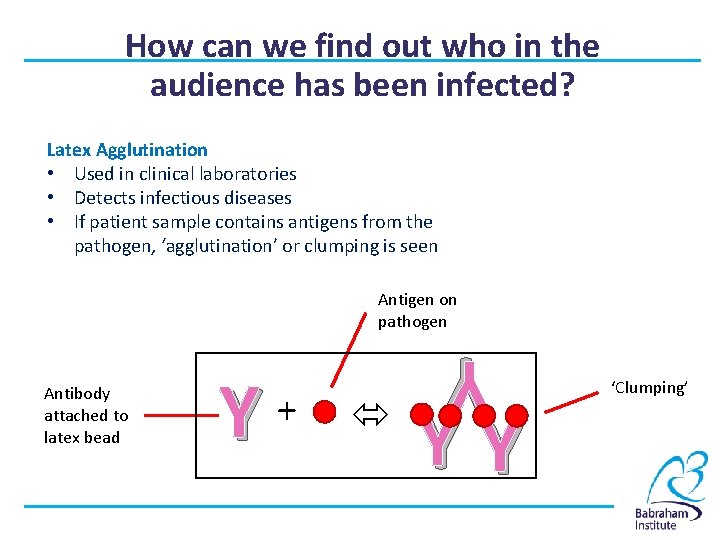
How can we find out who in the audience has been infected? Latex Agglutination • Used in clinical laboratories • Detects infectious diseases • If patient sample contains antigens from the pathogen, ‘agglutination’ or clumping is seen Antigen on pathogen Y + Y Antibody attached to latex bead YY ‘Clumping’
Experimental Protocol What you need: Patient ‘poo’ sample, buffer, positive and negative controls, pipette piece of black card, latex agglutination beads, vortexer, centrifuge What to do: 1) 2) 3) 4) 5) Place a small amount of sample in a centrifuge tube Add a small amount of buffer Vortex the tube to mix Centrifuge the sample Drop small amounts of supernatant, positive control and negative control separately on the black card 6) Mix in a small amount of latex agglutination beads 7) Observe for signs of ‘clumping’ and compare with +/- controls 8) Is your sample positive or negative?
Results – who should we treat?
What have we learnt today? • What are pathogens? • What are some barriers that our body has to fight against pathogens? • What organs are involved in our immune system? • What are some differences between our innate and adaptive immune systems? • What are some example cells of our immune system and their associated functions? • How do antibodies and antigens help our immune system fight pathogens? • How does Latex Agglutination work to detect infectious disease?
- Slides: 23