
Weapons and Explosive Hazards Management Central African Republic
Weapons and Explosive Hazards Management Central African Republic
Who Do We Work With?
Small Arms & Light Weapons (SALW) Assessment in the Central African Republic GPSO_PSC_RFP_CAR_90801_03
In Bangui alone, one offer per day in Bangui to hand in a grenade (or similar) unconditionally… … and at least one additional offer per day in exchange for something! Source: FSD/IRAD Sensitization Program, June – July 2014

Overview • The UNMAS operates under the new peacekeeping mission MINUSCA United Nations Multidimensional Integrated Stabilization Mission in CAR (MINUSCA). • Since January 2014 UNMAS CAR has coordinated the mine action sector response in CAR through The WAM ( Weapons Ammunitions Management) working group, comprising: – NGOs – International forces from France and the African Union (AU) – UN and national authorities from the Ministry of Defence.
Overview • On 1 st July 2014, the Panel of Experts on the CAR wrote to the members of the Security Council with an interim report of their activities and findings. It included: – Recommendation urging the transitional authorities of CAR to report on “measures taken – To ensure the safe management of arms and ammunition, including their registration, distribution, use and maintenance, and identify any training and infrastructure needs. ” • The UNMAS CAR programme, through its EOD and WAM/PSSM activities, will support the transitional authorities and MINUSCA to meet their SALW requirements set by international conventions, the MINUSCA mandate and international best practise.
Concept of operations At least • One internationally-recruited SALW specialist to deploy for one month in CAR • All associated life support, local staff etc
Request for proposal This contract is the starting point for implementing such assistance. • Provide an initial analysis of capacity gaps • To develop an appropriate SALW management capability within the government and MINUSCA (if possible within the time frame).
Concept of operations Mission of the SALW expert(s) • A desk analysis report by the end of the preparation phase – situation with regards to SALW in CAR – International conventions to which CAR is state party – Existing national legislation • A capacity needs assessment report by the end of the in-county phase – To identify national authorities responsible for weapons management – Infrastructure and equipment, number and types of weapons held by government agencies (as much as access permits) – Marking & recordkeeping practices and procedures (if existing) – Tracing and interoperability with relevant international law enforcement, among others, and indicating specific requirements and gaps of MINUSCA and the transitional authorities and its uniformed services.
Concept of operations Mission of the SALW expert(s) • A final report within two weeks of the end of the in-country phase. – specific recommendations for new or updated SALW laws and procedures, marking & recordkeeping guidelines, in accordance with international standards – To ensure that the government and MINUSCA can fulfil their obligations and mandates, or meet international best practise, with regards to SALW. The report must recommend specific actions to be taken, including the identification of training and equipment needs.
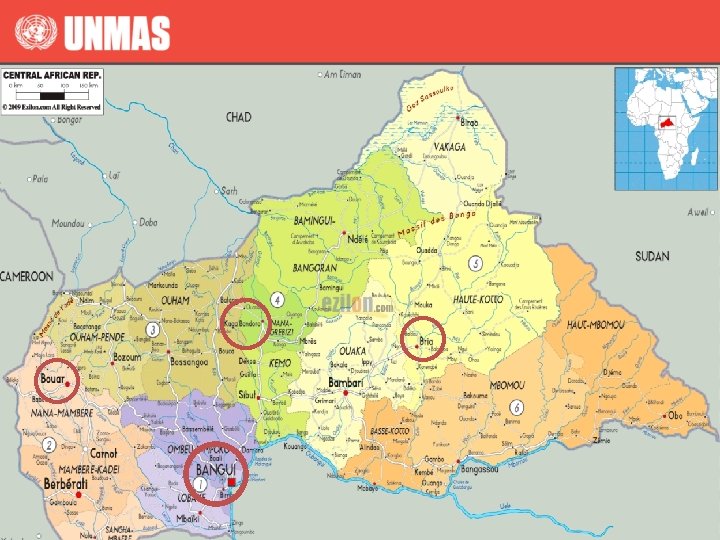
Location • Located in Bangui for the operational phase. • should be prepared to deploy for short (3 – 5 day) missions to deliver services in MINUSCA sector headquarters across CAR (currently Kaga Bandoro, Bouar, and Bria). • The contractor must budget for all accommodation. • The contractor should plan to perform the activities of the preparation and report finalization phases in their home country.
Language To produce written reports And Communicate in both French and English directly or through a translator.
Timeline This contract is anticipated to last one and a half months from October to December 2014.
3 Phases This contract has three phases, with anticipated dates below: • Preparation phase (from contract signing until 21 st October 2014) • In-country phase (from 22 nd October to 24 th November 2014) • Report finalization phase (from 25 th November to 10 th December 2014)
Transport The contractor is responsible for paying for and arranging all travel associated with this contract.
Accommodation The contractor is responsible for paying for and arranging all accommodation under this contract.
Security • All deployments outside Bangui will be subject to a route, security and accommodation availability review during planning and immediately before departure, with both UNMAS CAR and the contractor. • Operational deployments = two means of communications available 24 hours. ( UNMAS will loan satellite phone for emergencies). • Outside of Bangui: in 2 vehicle convoys • UNMAS may also provide free air transport via mission aviation if necessary. UNMAS will provide the contractor with security situation updates as much as possible.
Administration and equipment • The contractor shall be self-sufficient – Logistical – Security – Administrative and financial • UNMAS CAR will arrange for access to UN and government facilities • Will assist with the process as per the applicable Status of Forces Agreement in place • No Guarantees
Medical and Evacuation The contractor must confirm its medevac/ casevac procedures with the UNMAS CAR Chief of Operations before the start of the in-country phase. Medevac - Casevac sole responsibility of the contractor UNMAS will assist where possible.
Procurement, Logistics Facilities and Infrastructure Procurement, arrangement and management of items for the contractor’s own administrative usage are under the Contractor’s responsibilities. UNMAS will avail printing facilities whilst in country.
Performance SALW expert Ability to prepare and submit the regular reports and Key Products Analysis Ability to research, analyse and communicate, through the Key Products, the following subjects: • Relevant international conventions and national legislation pertaining to SALW. • National relevant points of contact, authorities responsible for weapons management.
Performance • Existing infrastructure and equipment • Number and types of weapons held by government agencies • Current marking & recordkeeping practices and procedures (if existing) • Recommendations for new/updated laws, marking & recordkeeping guidelines, and actions to be taken (including training and equipment needs) • Shortfalls in data or knowledge, areas for further research and proposed methodology (if deemed relevant by the contractor).
Questions ?
- Slides: 24