
Weakly Coupled Oscillators Will Penny Vladimir Litvak Lluis
- Slides: 44
Weakly Coupled Oscillators Will Penny, Vladimir Litvak, Lluis Fuentemilla, Emrah Duzel, Karl Friston Wellcome Trust Centre for Neuroimaging, University College London, UK Symposium on Multimodal Brain Imaging, University of Birmingham, May 15 th, 2009
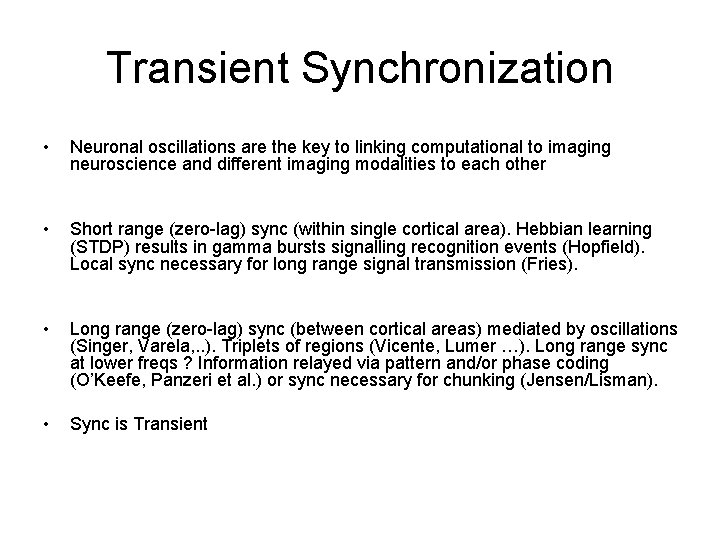
Transient Synchronization • Neuronal oscillations are the key to linking computational to imaging neuroscience and different imaging modalities to each other • Short range (zero-lag) sync (within single cortical area). Hebbian learning (STDP) results in gamma bursts signalling recognition events (Hopfield). Local sync necessary for long range signal transmission (Fries). • Long range (zero-lag) sync (between cortical areas) mediated by oscillations (Singer, Varela, . . ). Triplets of regions (Vicente, Lumer …). Long range sync at lower freqs ? Information relayed via pattern and/or phase coding (O’Keefe, Panzeri et al. ) or sync necessary for chunking (Jensen/Lisman). • Sync is Transient
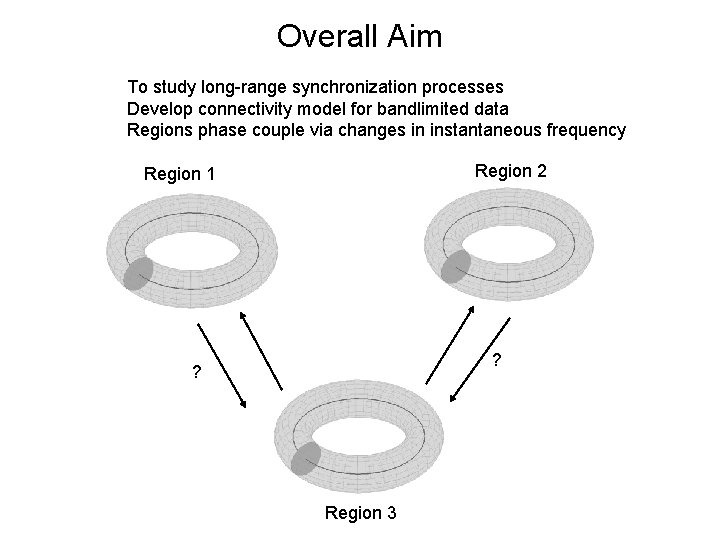
Overall Aim To study long-range synchronization processes Develop connectivity model for bandlimited data Regions phase couple via changes in instantaneous frequency Region 2 Region 1 ? ? Region 3
Overview • • • Phase Reduction Choice of Phase Interaction Function (PIF) DCM for Phase Coupling Ex 1: Finger movement Ex 2: MEG Theta visual working memory Conclusions
Overview • • • Phase Reduction Choice of Phase Interaction Function (PIF) DCM for Phase Coupling Ex 1: Finger movement Ex 2: MEG Theta visual working memory Conclusions
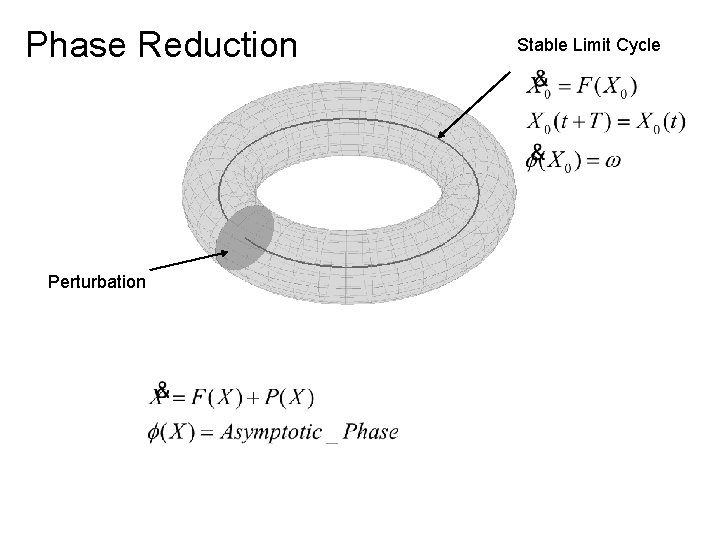
Phase Reduction Perturbation Stable Limit Cycle
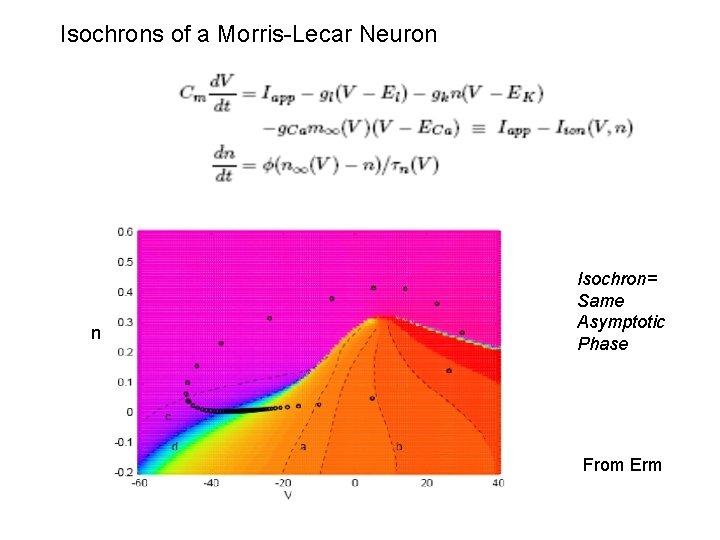
Isochrons of a Morris-Lecar Neuron n Isochron= Same Asymptotic Phase From Erm
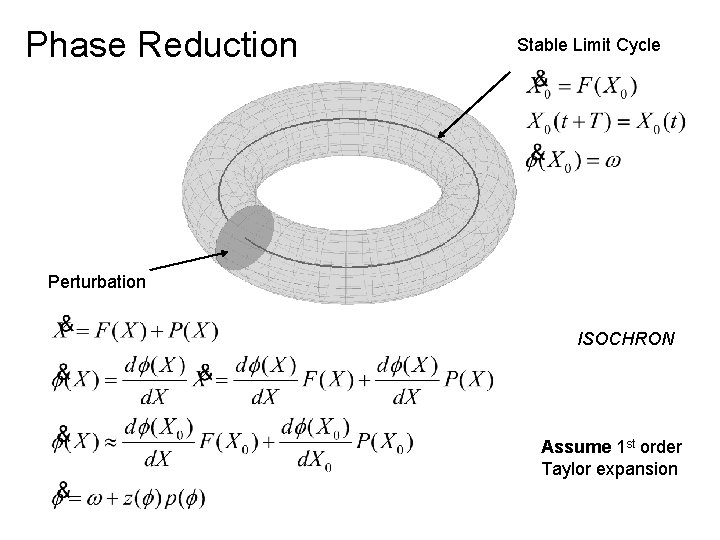
Phase Reduction Stable Limit Cycle Perturbation ISOCHRON Assume 1 st order Taylor expansion
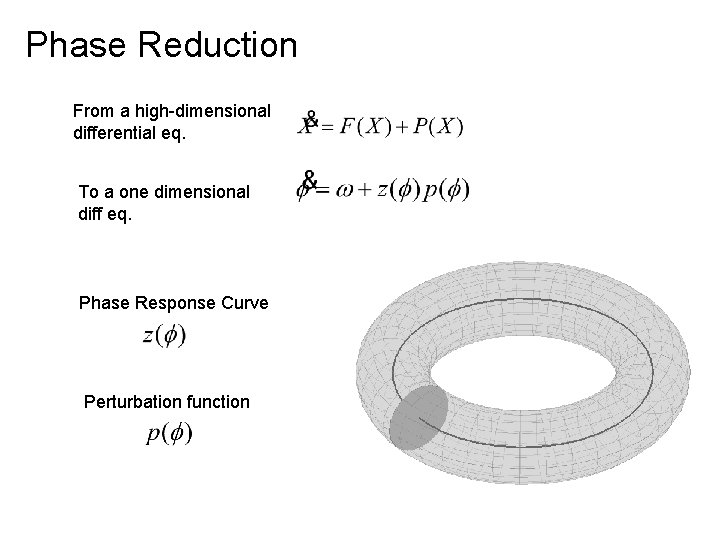
Phase Reduction From a high-dimensional differential eq. To a one dimensional diff eq. Phase Response Curve Perturbation function
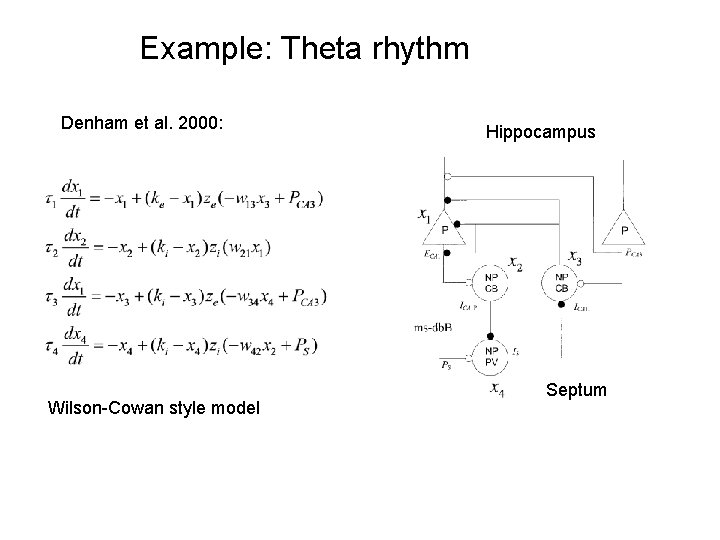
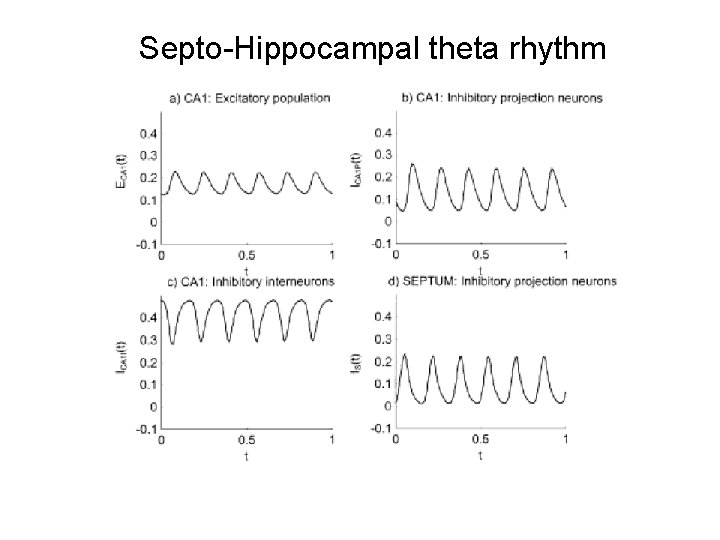
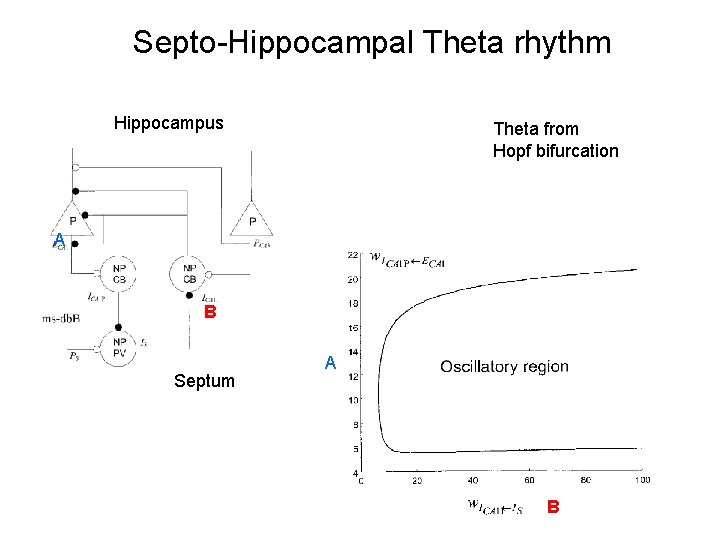
Example: Theta rhythm Denham et al. 2000: Wilson-Cowan style model Hippocampus Septum
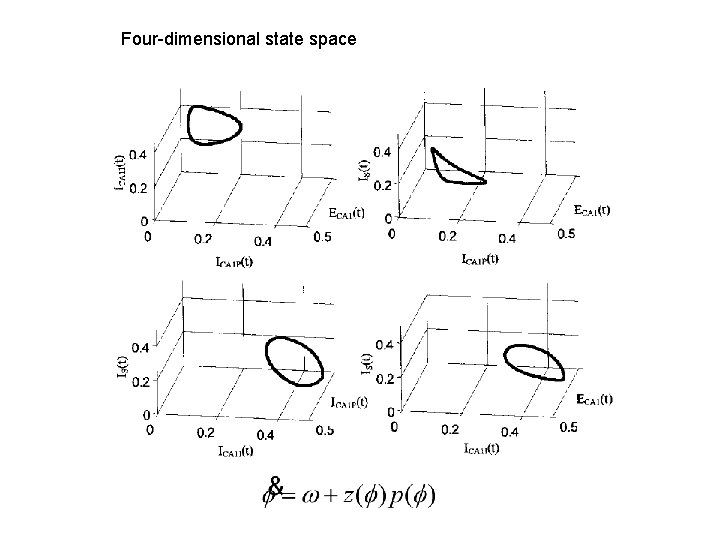
Four-dimensional state space
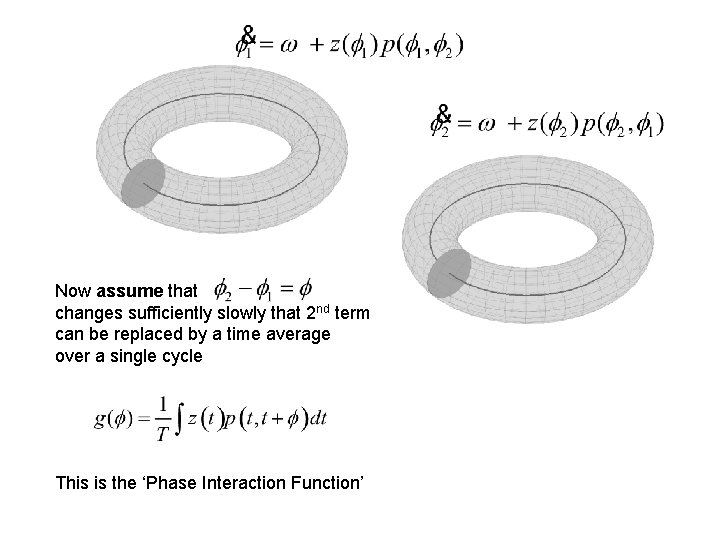
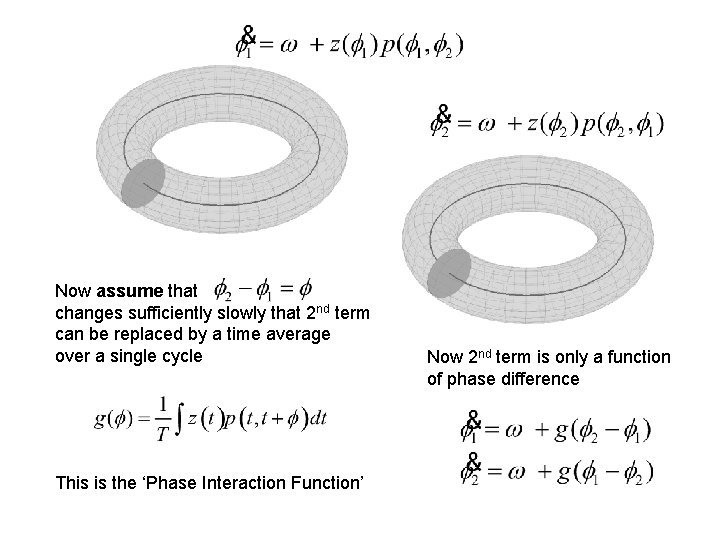
Now assume that changes sufficiently slowly that 2 nd term can be replaced by a time average over a single cycle This is the ‘Phase Interaction Function’
Now assume that changes sufficiently slowly that 2 nd term can be replaced by a time average over a single cycle This is the ‘Phase Interaction Function’ Now 2 nd term is only a function of phase difference
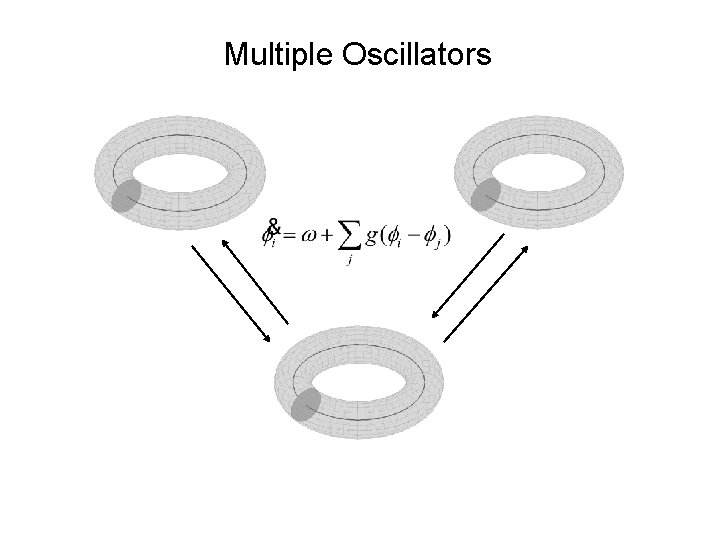
Multiple Oscillators
Overview • • • Phase Reduction Choice of Phase Interaction Function (PIF) DCM for Phase Coupling Ex 1: Finger movement Ex 2: MEG Theta visual working memory Conclusions
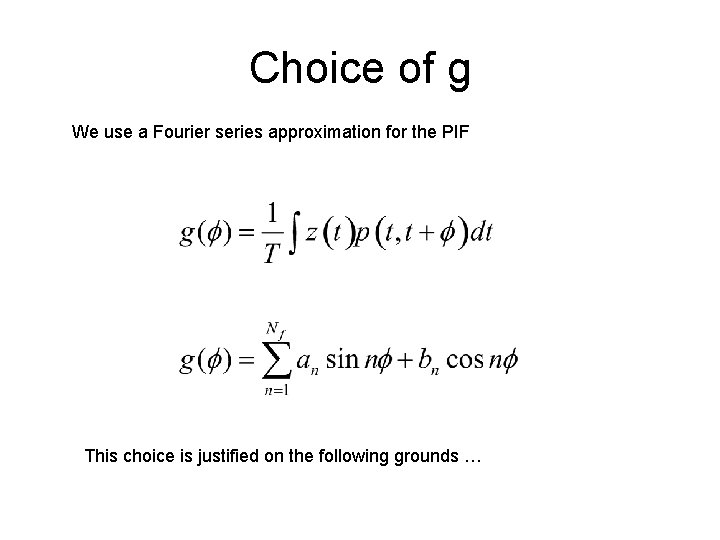
Choice of g We use a Fourier series approximation for the PIF This choice is justified on the following grounds …
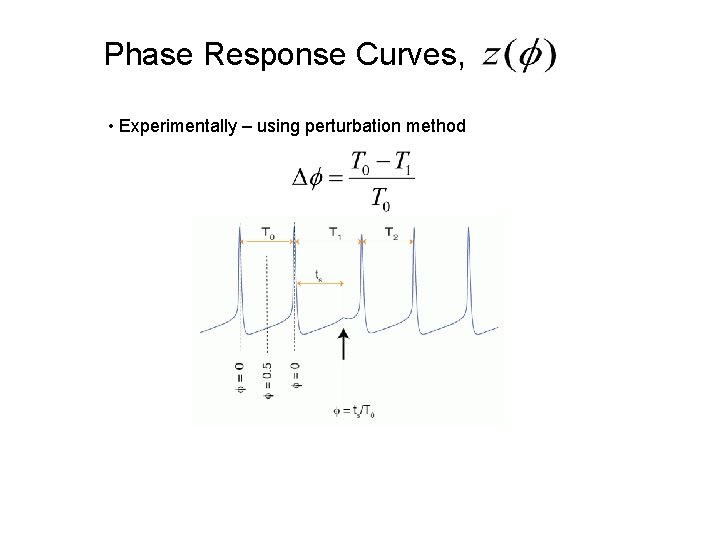
Phase Response Curves, • Experimentally – using perturbation method
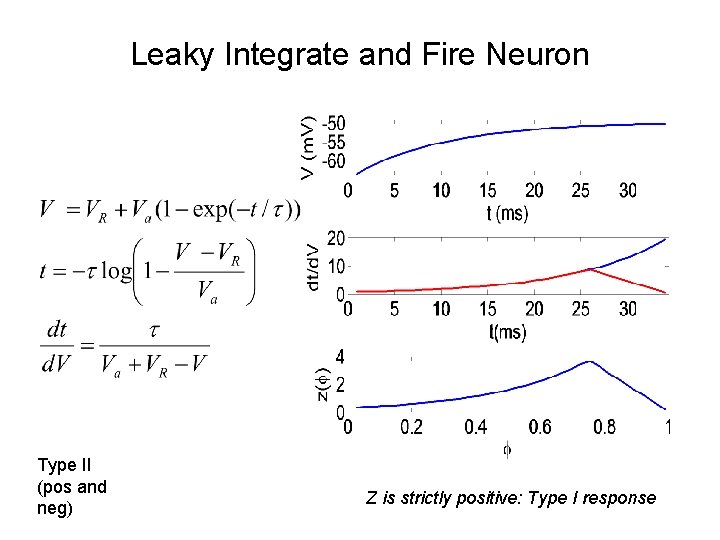
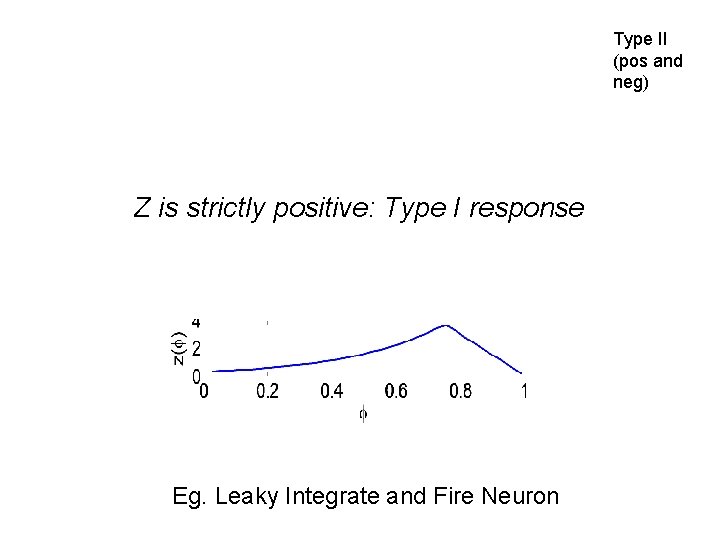
Leaky Integrate and Fire Neuron Type II (pos and neg) Z is strictly positive: Type I response
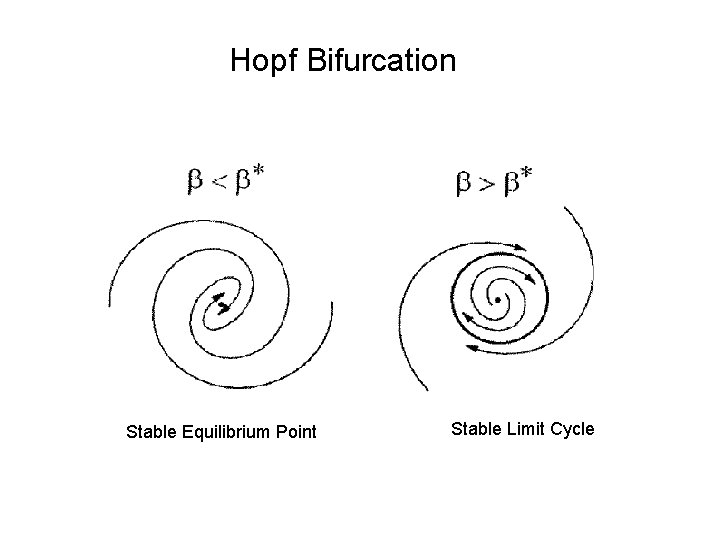
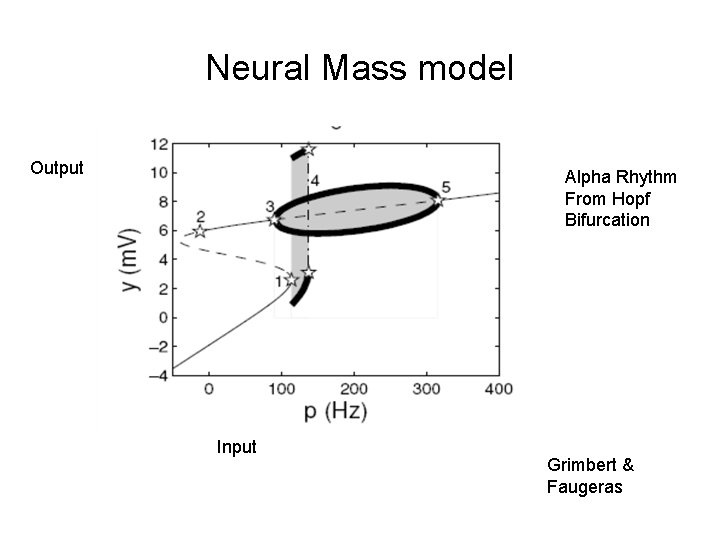
Hopf Bifurcation Stable Equilibrium Point Stable Limit Cycle
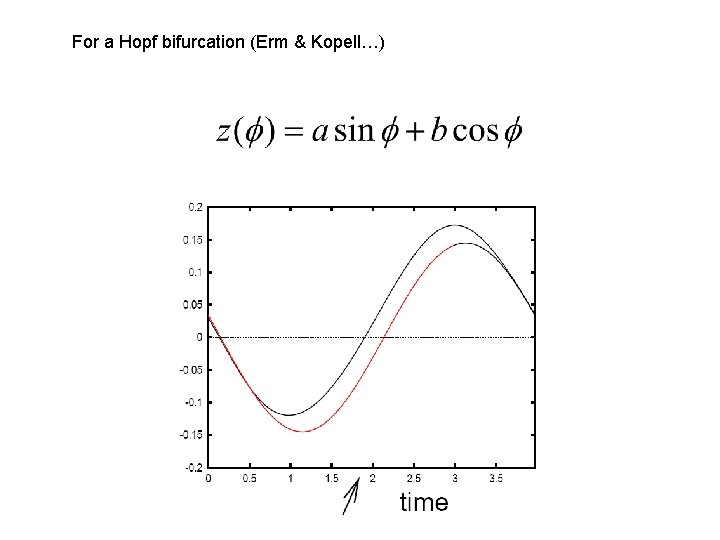
For a Hopf bifurcation (Erm & Kopell…)
Septo-Hippocampal theta rhythm
Septo-Hippocampal Theta rhythm Hippocampus Theta from Hopf bifurcation A B Septum A B
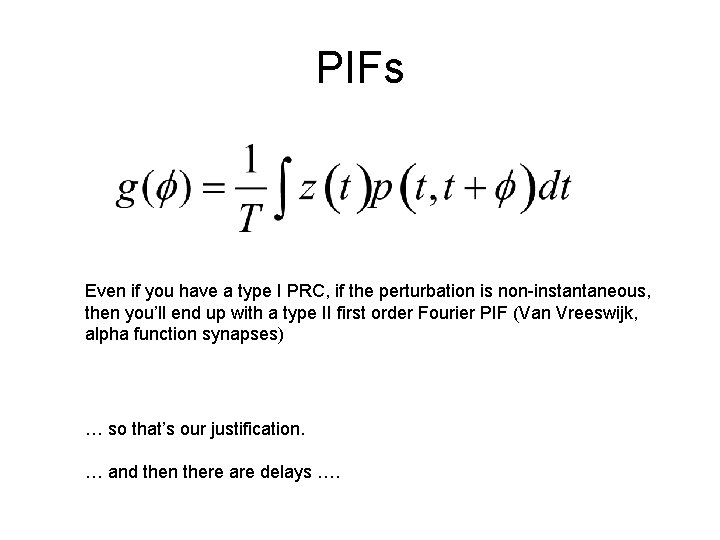
PIFs Even if you have a type I PRC, if the perturbation is non-instantaneous, then you’ll end up with a type II first order Fourier PIF (Van Vreeswijk, alpha function synapses) … so that’s our justification. … and then there are delays ….
Overview • • • Phase Reduction Choice of Phase Interaction Function (PIF) DCM for Phase Coupling Ex 1: Finger movement Ex 2: MEG Theta visual working memory Conclusions
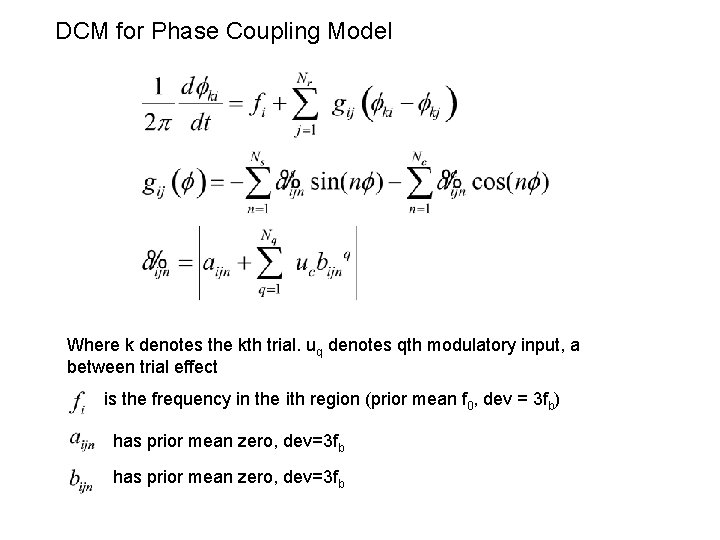
DCM for Phase Coupling Model Where k denotes the kth trial. uq denotes qth modulatory input, a between trial effect is the frequency in the ith region (prior mean f 0, dev = 3 fb) has prior mean zero, dev=3 fb
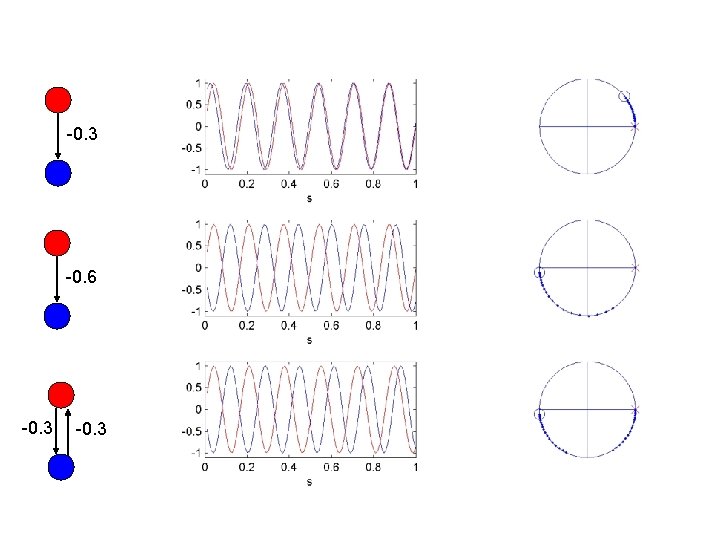
-0. 3 -0. 6 -0. 3
Overview • • • Phase Reduction Choice of Phase Interaction Function (PIF) DCM for Phase Coupling Ex 1: Finger movement Ex 2: MEG Theta visual working memory Conclusions
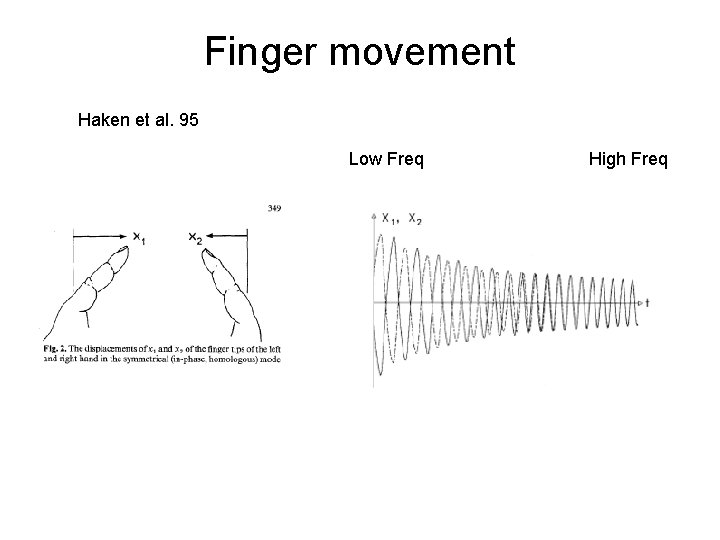
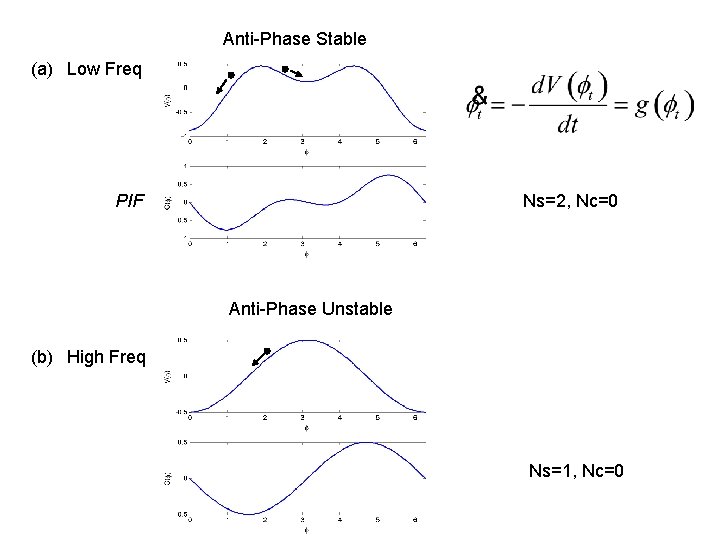
Finger movement Haken et al. 95 Low Freq High Freq
Anti-Phase Stable (a) Low Freq Ns=2, Nc=0 PIF Anti-Phase Unstable (b) High Freq Ns=1, Nc=0
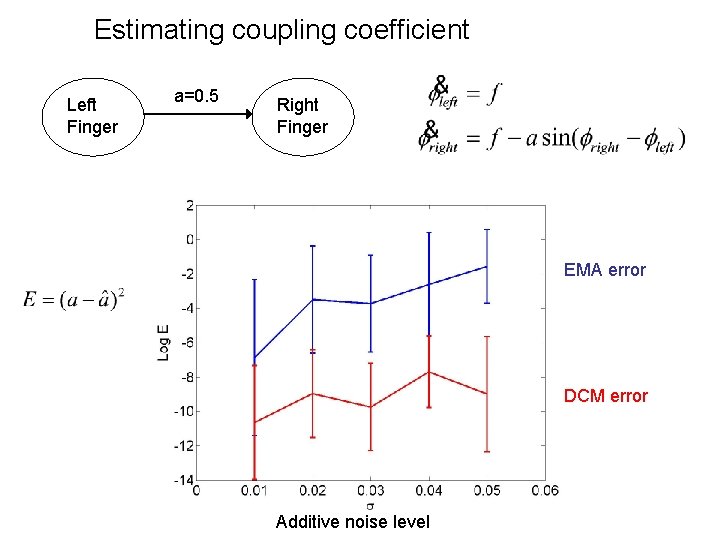
Estimating coupling coefficient Left Finger a=0. 5 Right Finger EMA error DCM error Additive noise level
Overview • • • Phase Reduction Choice of Phase Interaction Function (PIF) DCM for Phase Coupling Ex 1: Finger movement Ex 2: MEG Theta visual working memory Conclusions
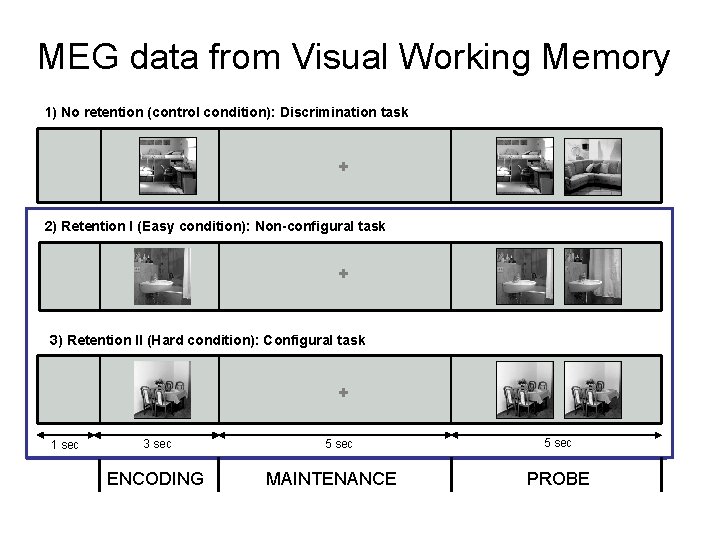
MEG data from Visual Working Memory 1) No retention (control condition): Discrimination task + 2) Retention I (Easy condition): Non-configural task + 3) Retention II (Hard condition): Configural task + 1 sec 3 sec ENCODING 5 sec MAINTENANCE 5 sec PROBE
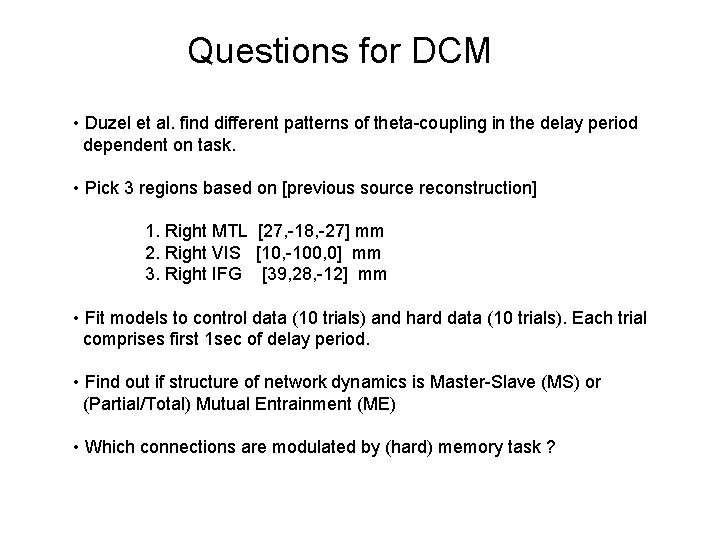
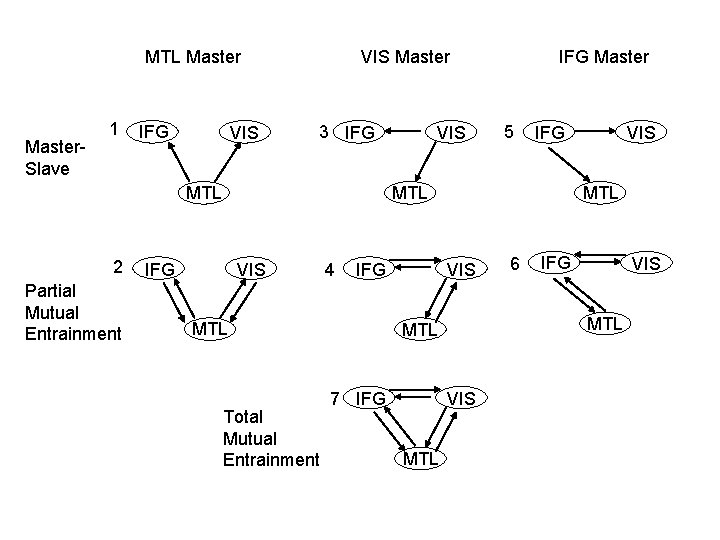
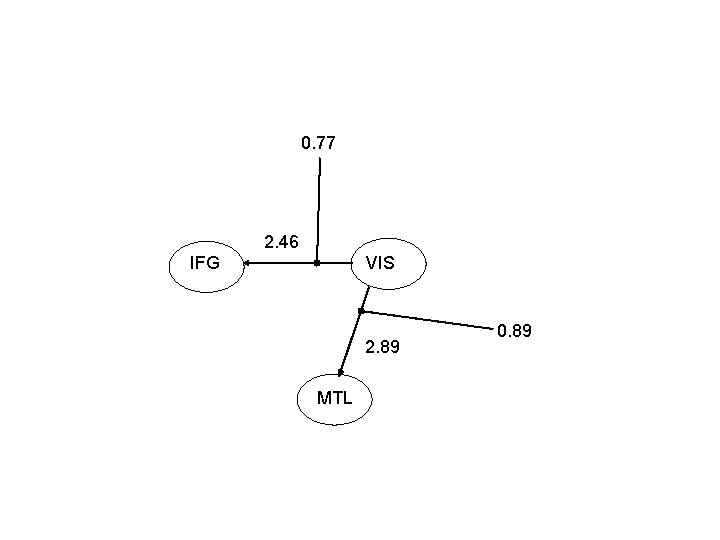
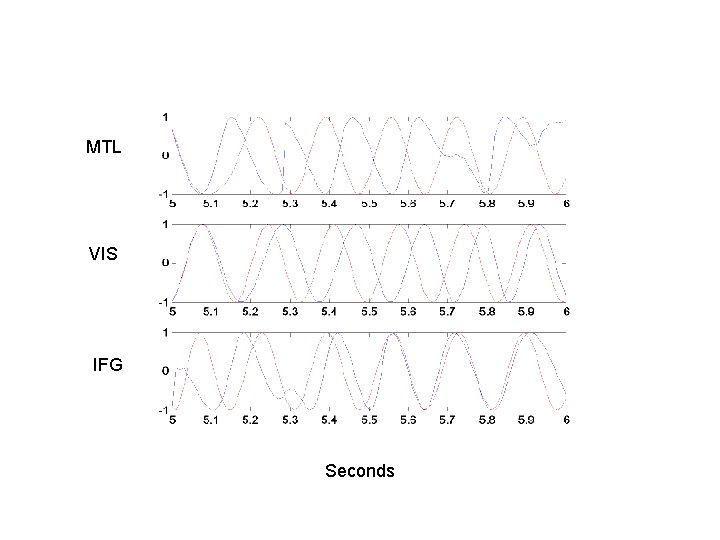
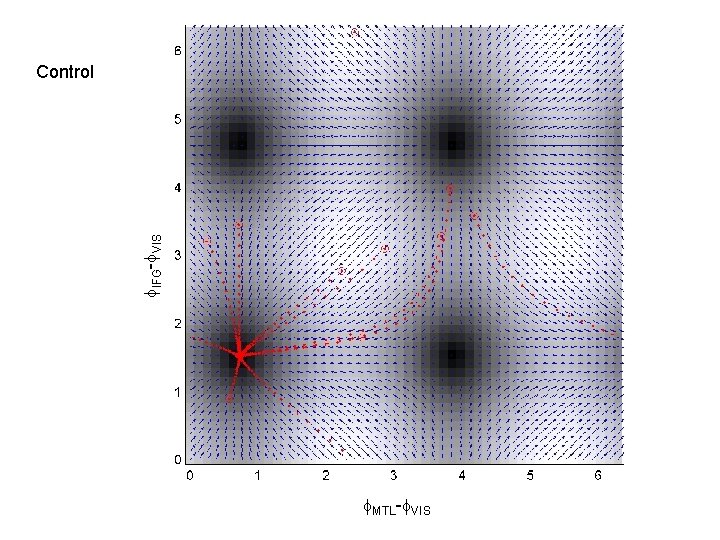
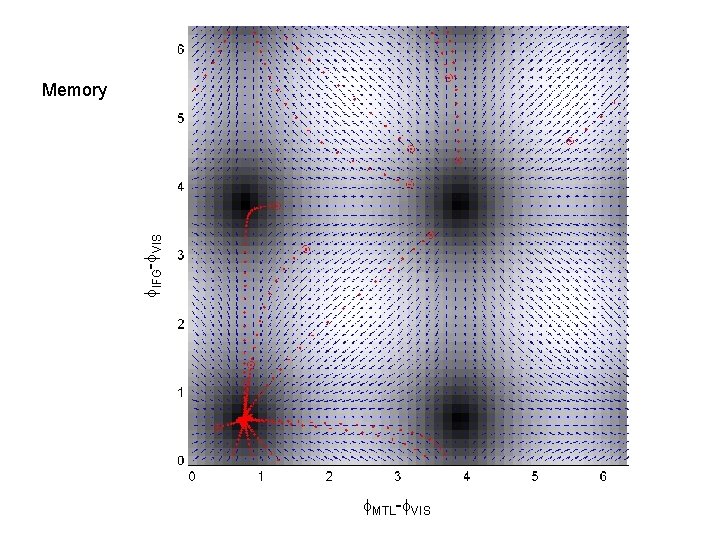
Questions for DCM • Duzel et al. find different patterns of theta-coupling in the delay period dependent on task. • Pick 3 regions based on [previous source reconstruction] 1. Right MTL [27, -18, -27] mm 2. Right VIS [10, -100, 0] mm 3. Right IFG [39, 28, -12] mm • Fit models to control data (10 trials) and hard data (10 trials). Each trial comprises first 1 sec of delay period. • Find out if structure of network dynamics is Master-Slave (MS) or (Partial/Total) Mutual Entrainment (ME) • Which connections are modulated by (hard) memory task ?
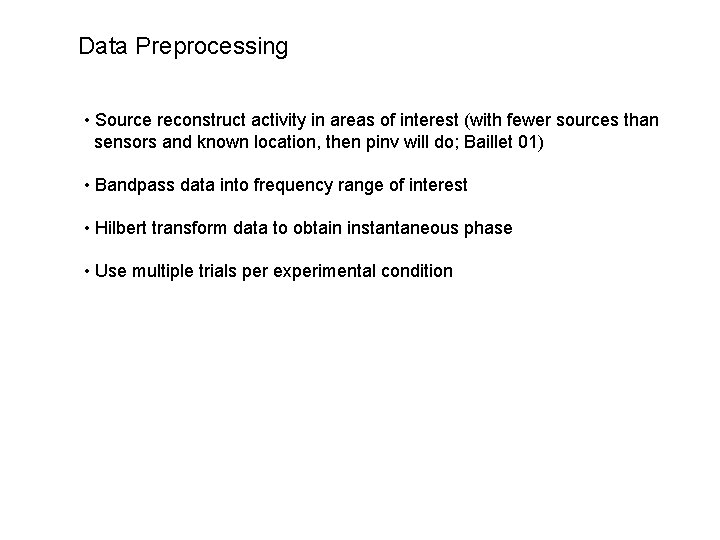
Data Preprocessing • Source reconstruct activity in areas of interest (with fewer sources than sensors and known location, then pinv will do; Baillet 01) • Bandpass data into frequency range of interest • Hilbert transform data to obtain instantaneous phase • Use multiple trials per experimental condition
MTL Master. Slave 1 IFG VIS Master 3 IFG Partial Mutual Entrainment 5 IFG MTL 2 VIS IFG Master IFG VIS 4 IFG MTL Total Mutual Entrainment MTL VIS MTL 6 IFG VIS MTL 7 IFG VIS
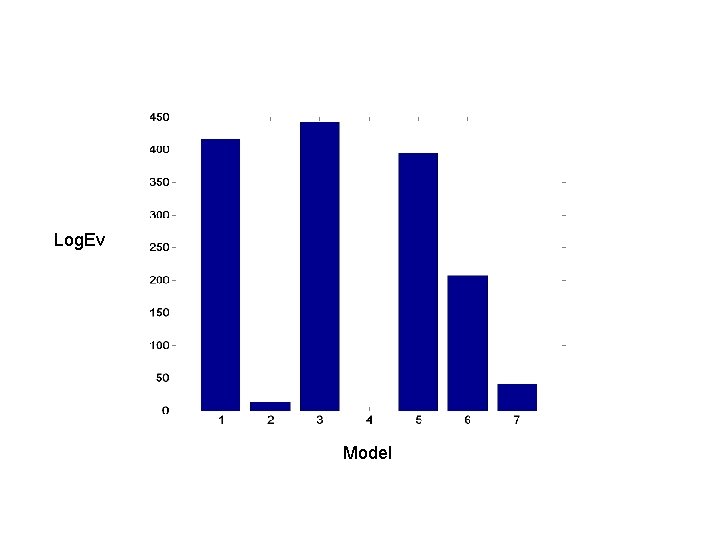
Log. Ev Model
0. 77 2. 46 IFG VIS 2. 89 MTL 0. 89
MTL VIS IFG Seconds
f. IFG-f. VIS Control f. MTL-f. VIS
f. IFG-f. VIS Memory f. MTL-f. VIS
Conclusions • Model is multivariate extension of bivariate work by Rosenblum & Pikovsky (EMA approach) • On bivariate data DCM-P is more accurate than EMA • Additionally, DCM-P allows for inferences about master-slave versus mutual entrainment mechanisms in multivariate (N>2) oscillator networks • Delay estimates from DTI • Use of phase response curves derived from specific neuronal models using XPP or MATCONT. Brunel and Wang, 03 ! • Stochastic dynamics (natural decoupling) … see Kuramoto 84, Brown 04 For within-trial inputs causing phase-sync and desync (Tass model) • What would we see in f. MRI ?
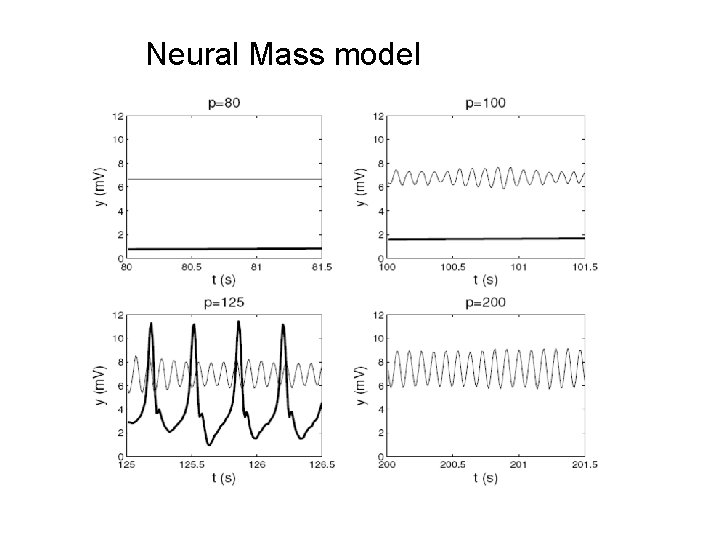
Neural Mass model
Neural Mass model Output Alpha Rhythm From Hopf Bifurcation Input Grimbert & Faugeras
Type II (pos and neg) Z is strictly positive: Type I response Eg. Leaky Integrate and Fire Neuron