
We want healthy bees BEE DISEASES Healthy Bees
We want healthy bees BEE DISEASES

Healthy Bees – How do we tell? � Observations �Look at landing board – do bees look normal? ○ In & out activity ○ Dead bees on landing board/in front of hive �Sound �After lifting inner cover �Poop on hive? (lots? yellow or brown? ) �Mites? �Wings? �How does the brood look? � Bee Temperament
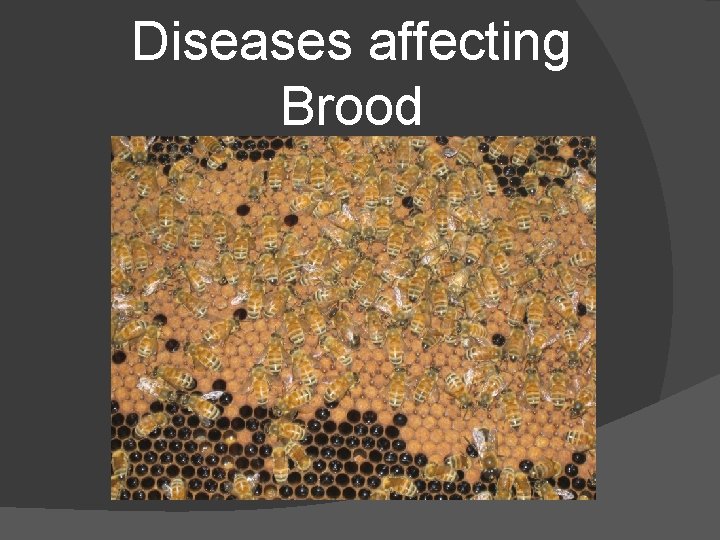
Diseases affecting Brood
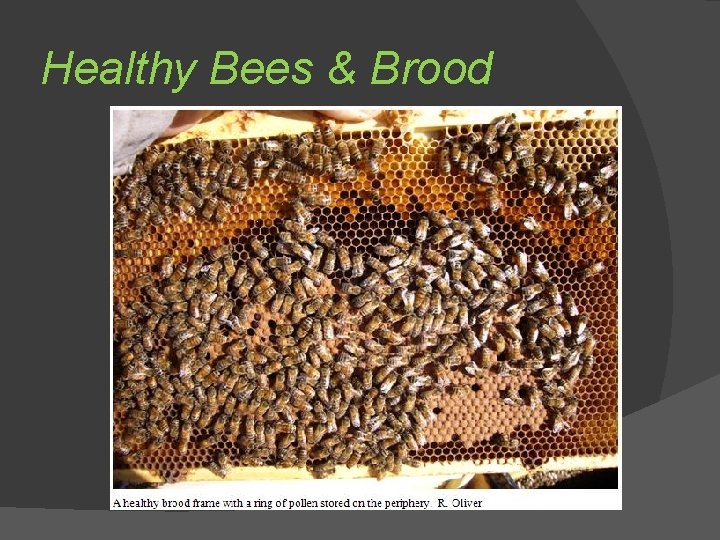
Healthy Bees & Brood
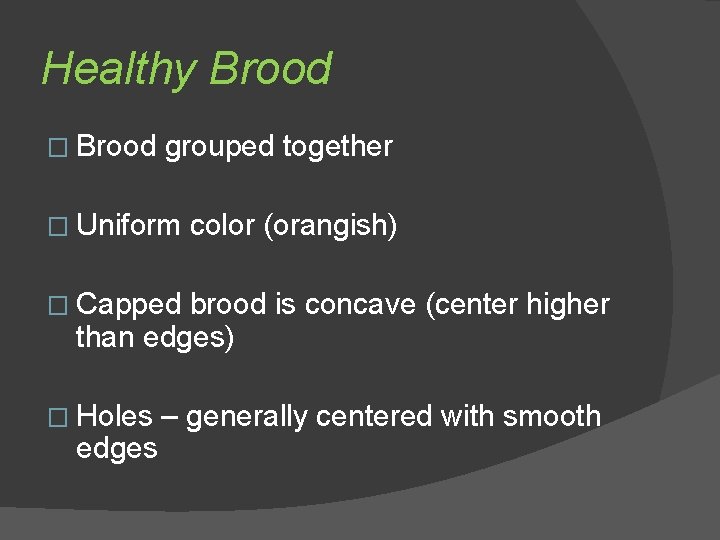
Healthy Brood � Brood grouped together � Uniform color (orangish) � Capped brood is concave (center higher than edges) � Holes edges – generally centered with smooth
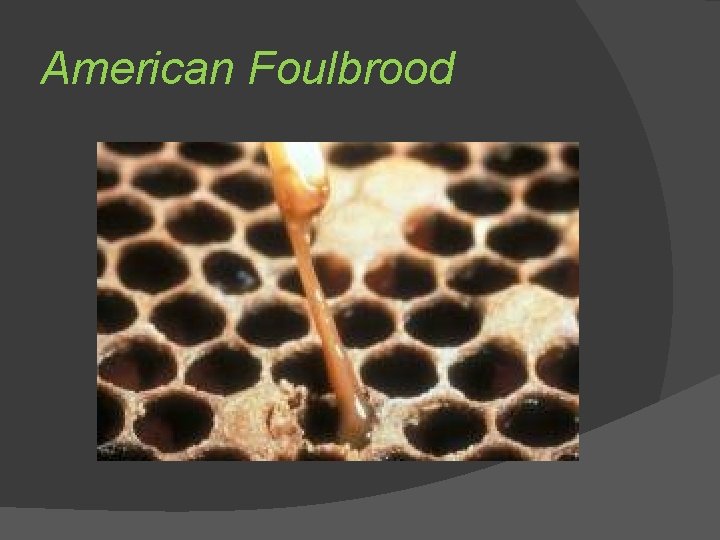
American Foulbrood � Cause: Paenibacillus (=Bacillus) larvae, a spore-forming bacterium � Only affects larva, not adult bees � Symptoms: Larva dies & darkens, brood cell cap shrinks into comb, foul smell, dead larva pulls out as dark, thready material
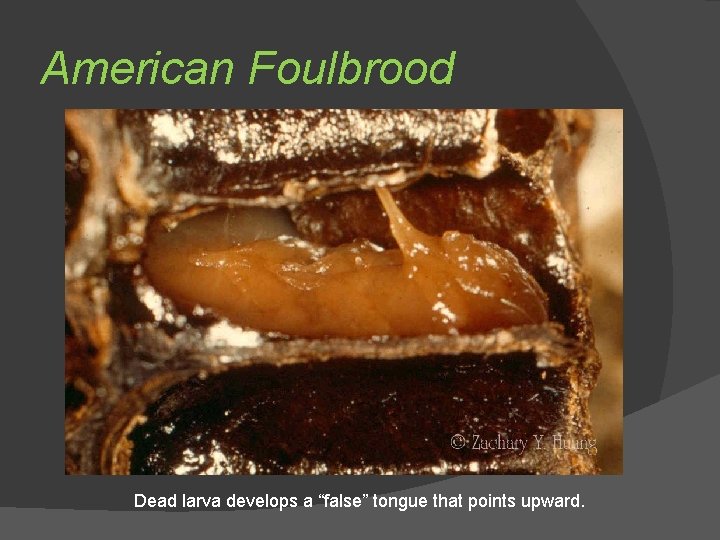
American Foulbrood Dead larva develops a “false” tongue that points upward.
American Foulbrood
American Foulbrood � Transmission: �Foulbrood goo dries and forms spores �Spores lodged in honey, dead larvae �Nurse bees accidentally feed spores to the larvae �Dried spores can last for 70+ years and are impervious to everything but high heat
American Foulbrood No Treatment, Only Prevention � If you find it, get rid of diseased combs – burn or put in plastic bags and take to landfill � Do not combine combs from diseased hive with healthy hive � If found, contact state agency that oversees beekeepers � Discard brood comb frames regularly (every 3 years)
American Foulbrood Prophylactic Issues � WASBA: Treat hives in infected area with Terramycin (antibiotic) in sugar syrup, powdered sugar dust or shortening patty – stop treatment 2 weeks before nectar flow. � Problem: Over 25% of AFB is Terramycin resistant
European Foulbrood � Cause: Melissococcus plutonius, a bacterium � Symptoms: Brown larva (dead) in uncapped cells; sour smell; larva twisted in bottom of cell � Generally, no ropy goo (although atypical EFB has short ropy thread)
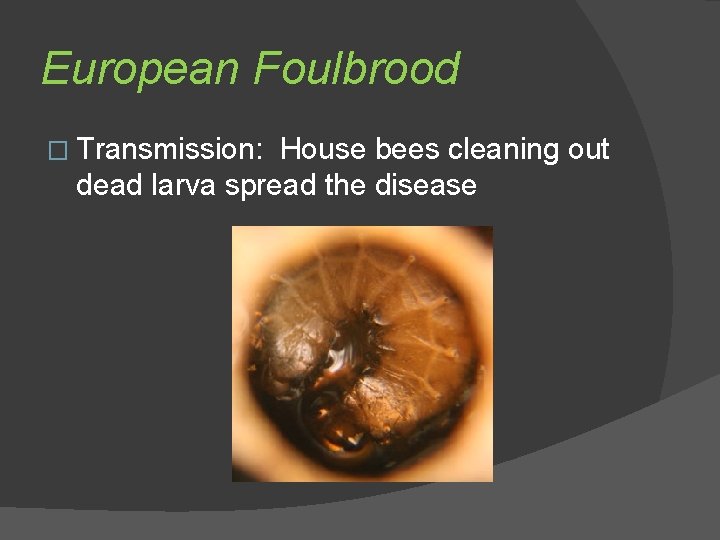
European Foulbrood � Transmission: House bees cleaning out dead larva spread the disease
European Foulbrood Prevention �Get Italian bees (cleanliness) �Healthy, well fed hives �Dry, well ventilated hives in sunny site �Requeen �Treat hives with Terramycin (like American Foulbrood) in the spring – same issues re: antibiotic overtreatment
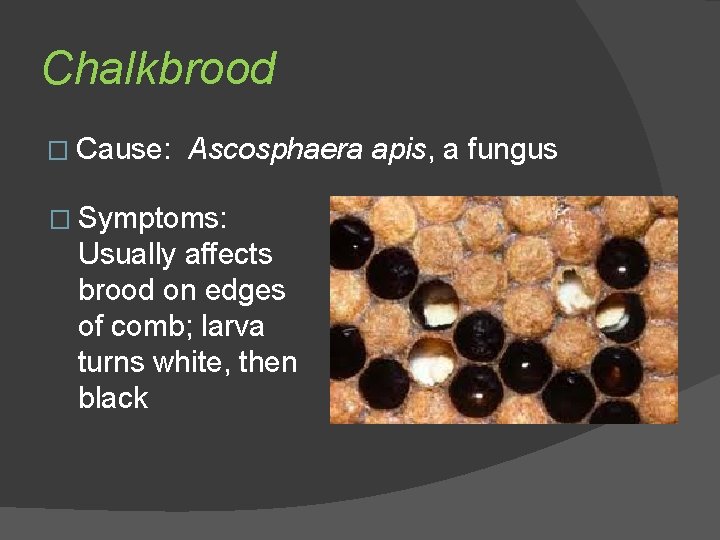
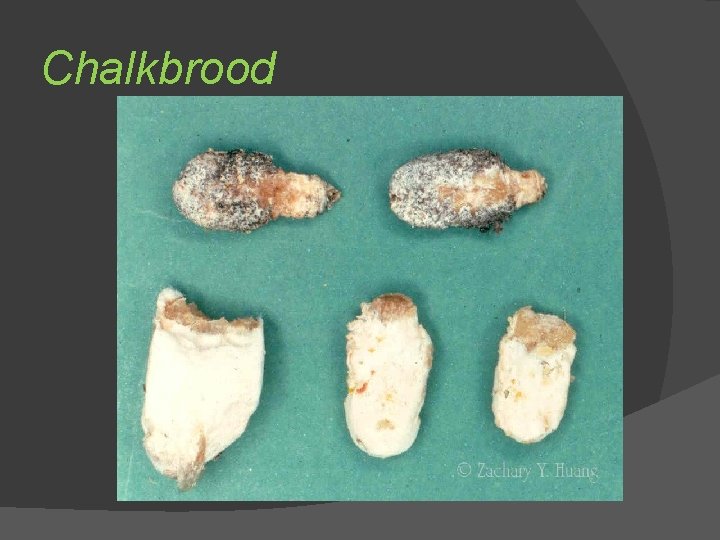
Chalkbrood � Cause: Ascosphaera apis, a fungus � Symptoms: Usually affects brood on edges of comb; larva turns white, then black
Chalkbrood

Chalkbrood
Chalkbrood �Prevention – hive cleanliness �Usual disappears on its own – during summer heat �Requeen (breeding for cleanliness) �Replace heavily infected combs �Clear hive entrance of larval mummies �Replace brood frames every 3 years
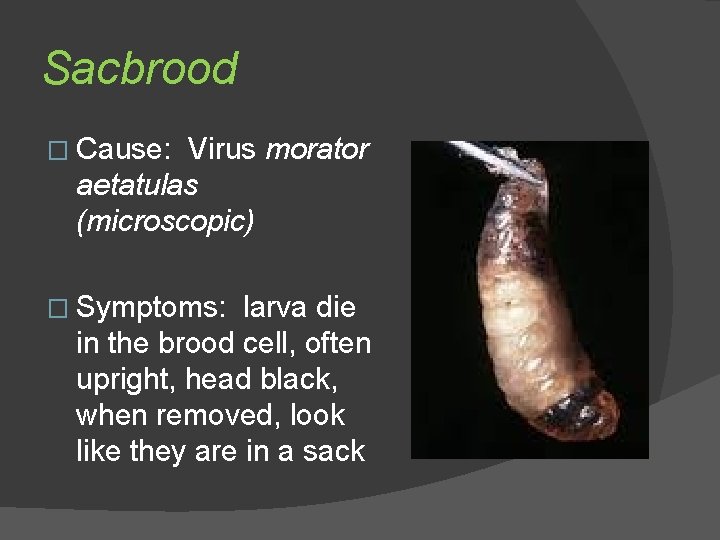
Sacbrood � Cause: Virus morator aetatulas (microscopic) � Symptoms: larva die in the brood cell, often upright, head black, when removed, look like they are in a sack
Sacbrood � Treatment �Often retreats on its own, no treatment necessary �Requeen if disease persists �Bees normally clean diseased area
Chilled brood � Cause: Brood on outside of hive dies due to neglect (comb too cold) � Don’t open the hive when temperature is below 50°F � Treatment: Leave brood in same position in hive, do not move to outside
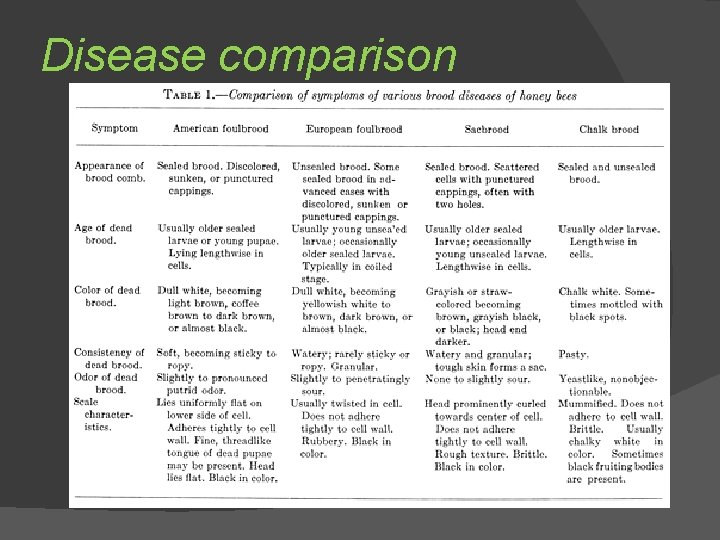
Disease comparison
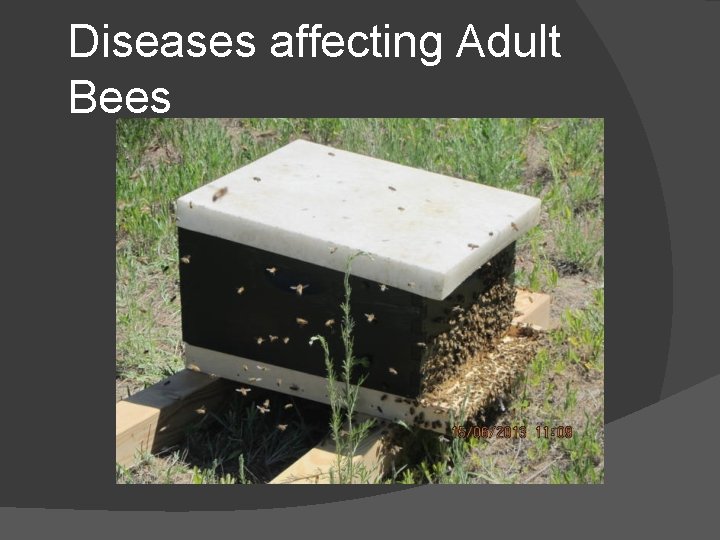
Diseases affecting Adult Bees
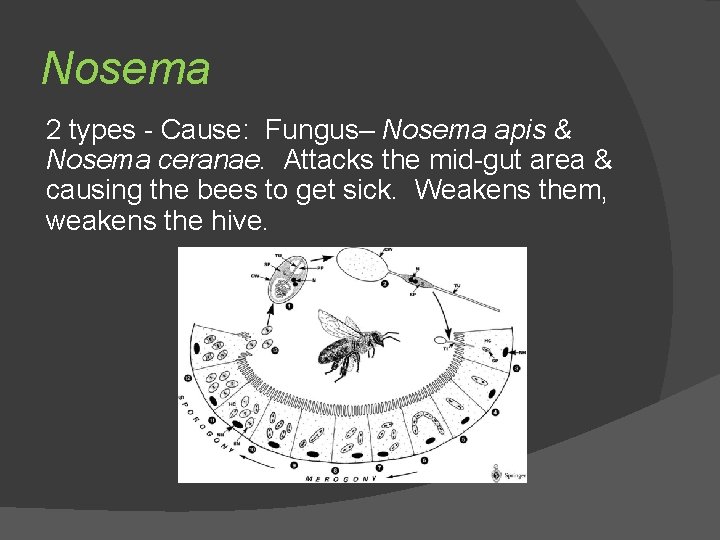
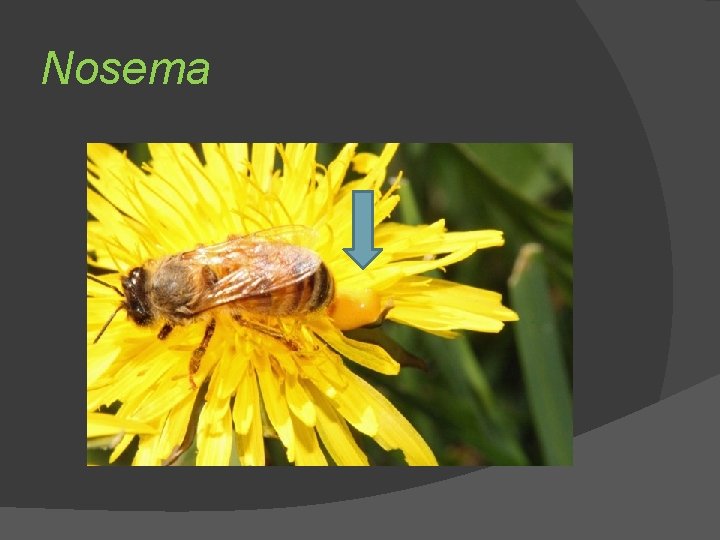
Nosema 2 types - Cause: Fungus– Nosema apis & Nosema ceranae. Attacks the mid-gut area & causing the bees to get sick. Weakens them, weakens the hive.
Nosema
Nosema
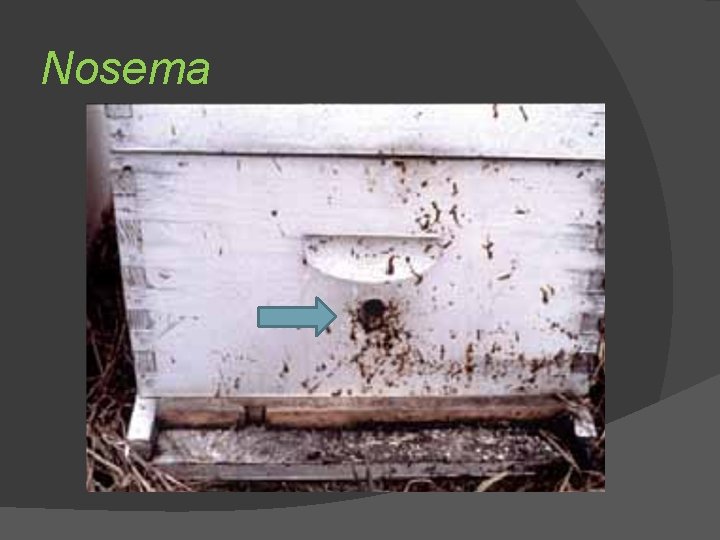
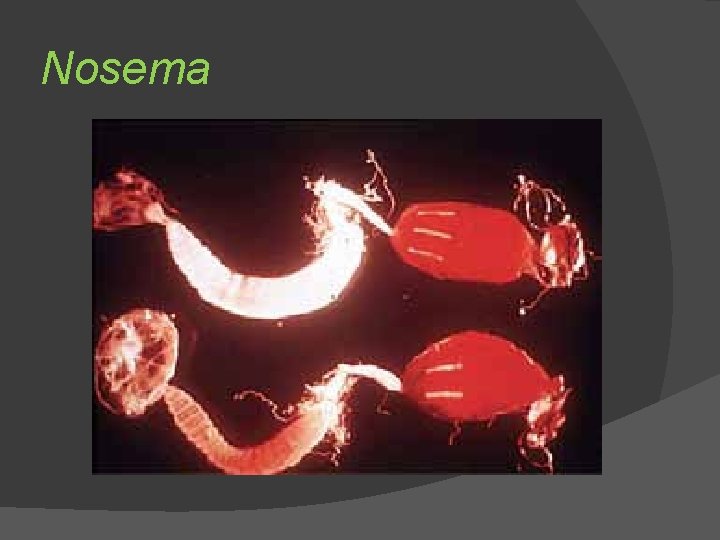
Nosema � Symptoms: Usually occurs in early spring. Will see lots of fecal material around hive � Can only tell its nosema w/dead bee & microscope – visible spores. See www. scientificbeekeeping. com for method � Bee guts look different – nosema gut swollen & white; healthy gut amber colored
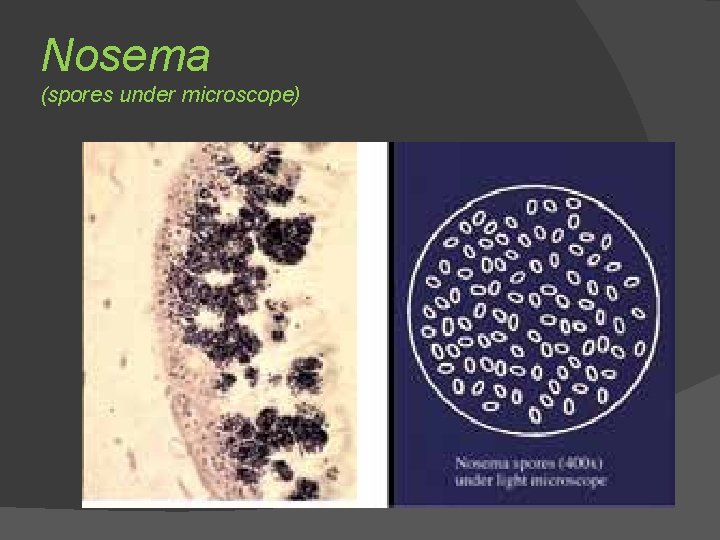
Nosema (spores under microscope)
Nosema
Nosema Treatment: �Non-traditional Essential oils added to sugar syrup: Feed 1 gallon sugar syrup with the following quantities of essential oils: 1/2 teaspoon of thyme, 1 teaspoon of Lemongrass, 1 teaspoon of Peppermint and 1 teaspoon of Sweet Orange.
Nosema Treatment: �Traditional �Feed the infected colonies ~1 gallon sugar syrup containing Fumigil-B in March/April (before nectar flow) �Fall feeding may reduce Nosema in wintering bees �Some beekeepers do preventative treatments w/Fumigillan in fall & spring
Paralysis � Cause: Viral – 2 types (Chronic/Acute) � Symptoms: bees tremble & appear to be paralyzed. If picked up by wings & dropped, fall to ground. Bees look old, shiny & greasy � Treatment: resistance Requeen to breed in
Dysentery � Condition/symptom, not a disease – essentially bee diarrhea � Cause – winter food high in solids, causing water in the gut. Bees have to defecate in the hive (which they don’t normally do) � Fecal matter inside the bee > 30 -40% of body weight. Bees just can’t hold it.
Poisoning � Bees killed by insecticide sprayed on trees & plants � Can be carried back to the hive and affect other bees & brood � Adults may have enlarged abdomens & show signs of paralysis � Brood may die, remain white but flatten, or become yellowish grey or brown
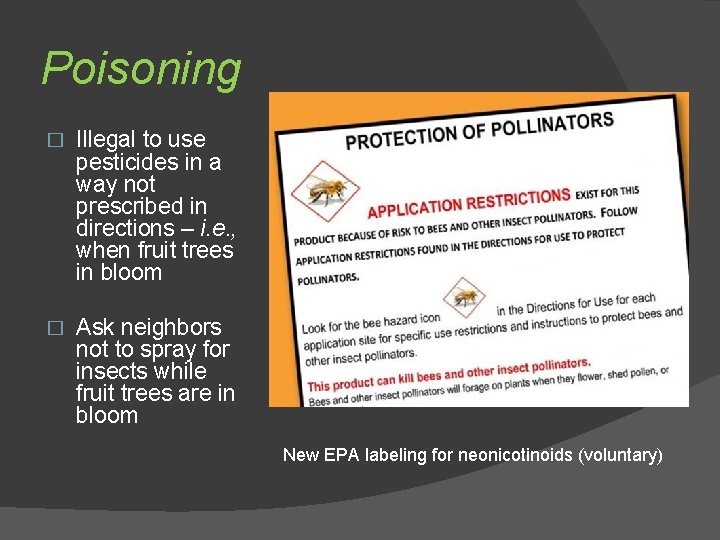
Poisoning � Illegal to use pesticides in a way not prescribed in directions – i. e. , when fruit trees in bloom � Ask neighbors not to spray for insects while fruit trees are in bloom New EPA labeling for neonicotinoids (voluntary)
Colony Collapse Disorder � Bees simply disappear from hive, leaving queen, brood and very few bees � Historically, bee disappearances in 1880 s, 1920 s, and 1960 s � 5 million colonies in 1940 s to 2. 5 million today � Between 2006 -2011, CCD caused losses of ~11% of all hive losses
Colony Collapse Disorder � What causes CCD? No one really knows. It could be – �Cyclical bee die offs �Pests? Varroa mite contributes? (High levels of varroa mites found in collapsed hives) � Management issues? Too many bees, too close together? (commercial beekeepers) �Environmental stressors? Pesticides – Neonicotinoids? Correlation, not causation �The perfect storm?
Sources � USDA Ag Research Service – www. ars. usda. gov � www. beesource. com � http: //wasba. org/ � www. cyberbee. net (photos)
Sources � Vivian, John, Keeping Bees � www. scientificbeekeeping. com � Penn state: A field guide to Honey bees and their maladies, http: //pubs. cas. psu. edu/Free. Pubs/PDFs/AGR S 116. pdf

http: //pubs. cas. psu. edu/Free. Pubs/PDFs/A GRS 116. pdf
- Slides: 40