
We remember your childhood well By Carol Ann
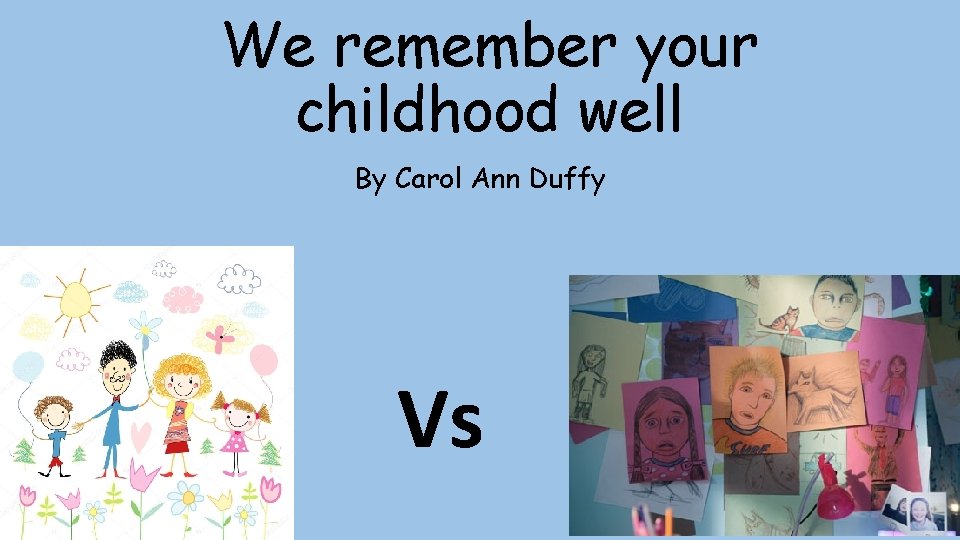
We remember your childhood well By Carol Ann Duffy Vs
Let’s look at the title… We remember your childhood well Questions: • Who could these people be? • Whose viewpoint might the poem be from? • How could this change what is in the poem? Task: Annotate your own copy of the title with your answers. Try not to read the poem!
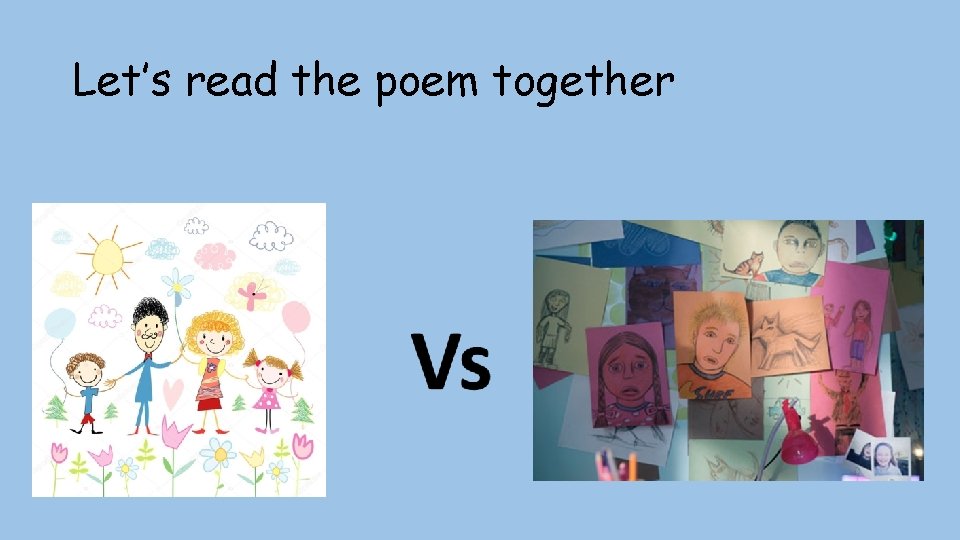
Let’s read the poem together
Quick questions on first impressions 1. Whose point of view is the poem written from? Why is this significant? 2. What is being suggested from the child’s point of view? 3. What are the main feelings and mood of the poem being presented? 4. Which point of view do you believe and why?
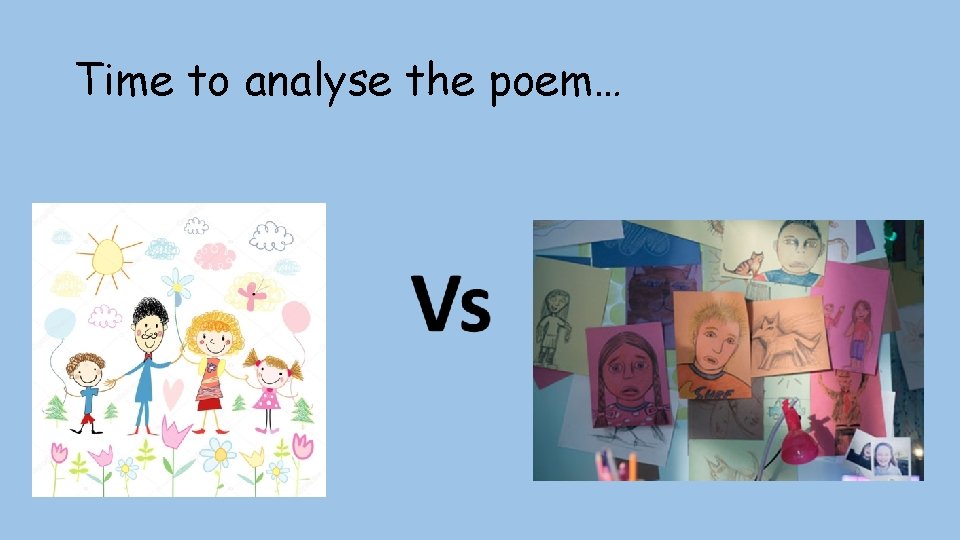
Time to analyse the poem…
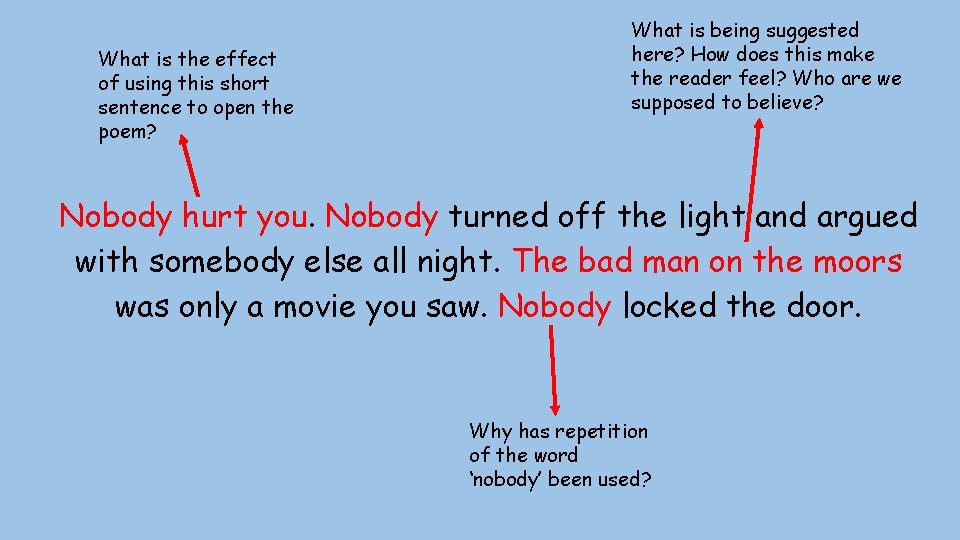
What is the effect of using this short sentence to open the poem? What is being suggested here? How does this make the reader feel? Who are we supposed to believe? Nobody hurt you. Nobody turned off the light and argued with somebody else all night. The bad man on the moors was only a movie you saw. Nobody locked the door. Why has repetition of the word ‘nobody’ been used?
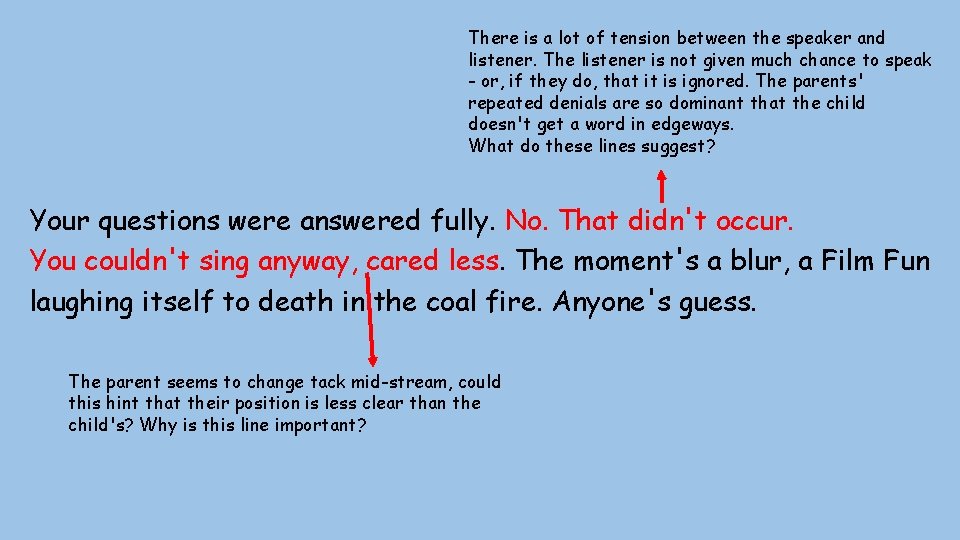
There is a lot of tension between the speaker and listener. The listener is not given much chance to speak - or, if they do, that it is ignored. The parents' repeated denials are so dominant that the child doesn't get a word in edgeways. What do these lines suggest? Your questions were answered fully. No. That didn't occur. You couldn't sing anyway, cared less. The moment's a blur, a Film Fun laughing itself to death in the coal fire. Anyone's guess. The parent seems to change tack mid-stream, could this hint that their position is less clear than the child's? Why is this line important?
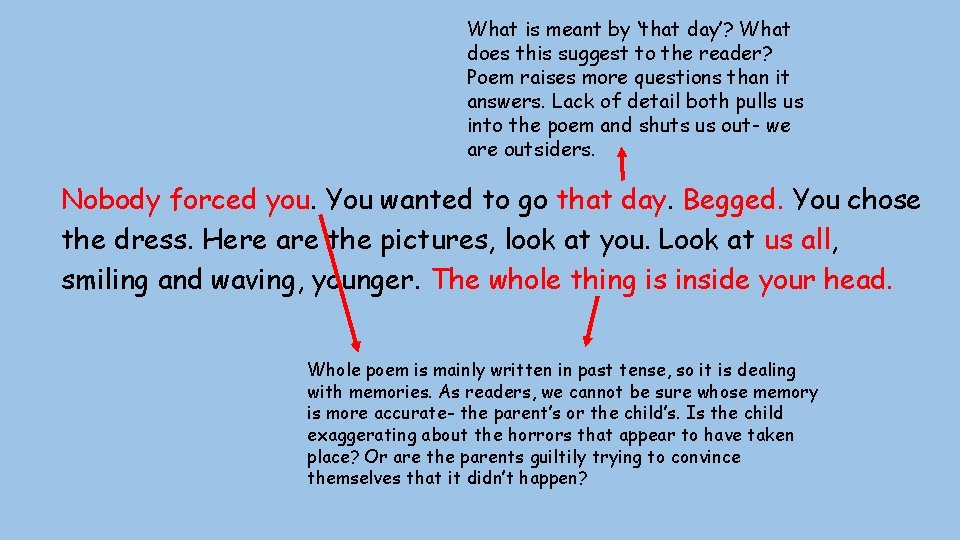
What is meant by ‘that day’? What does this suggest to the reader? Poem raises more questions than it answers. Lack of detail both pulls us into the poem and shuts us out- we are outsiders. Nobody forced you. You wanted to go that day. Begged. You chose the dress. Here are the pictures, look at you. Look at us all, smiling and waving, younger. The whole thing is inside your head. Whole poem is mainly written in past tense, so it is dealing with memories. As readers, we cannot be sure whose memory is more accurate- the parent’s or the child’s. Is the child exaggerating about the horrors that appear to have taken place? Or are the parents guiltily trying to convince themselves that it didn’t happen?
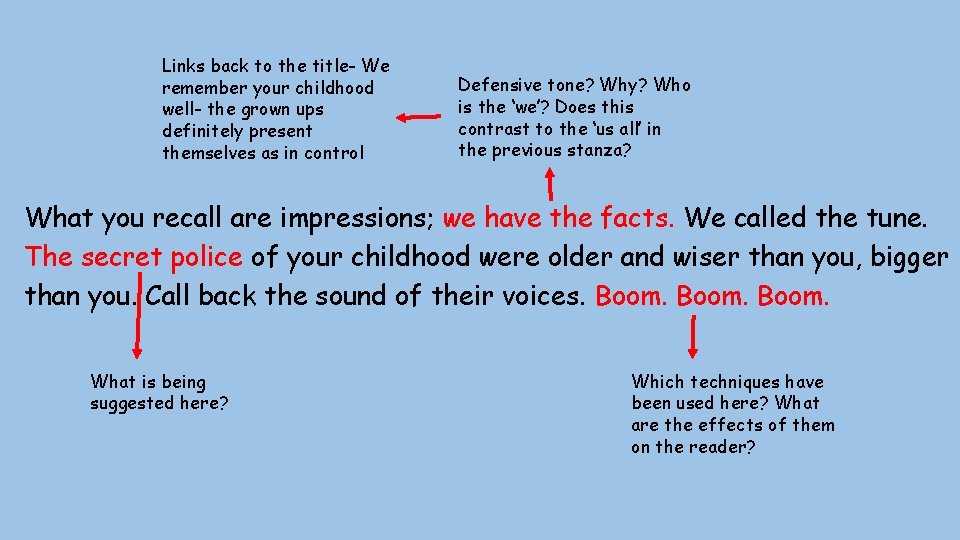
Links back to the title- We remember your childhood well- the grown ups definitely present themselves as in control Defensive tone? Why? Who is the ‘we’? Does this contrast to the ‘us all’ in the previous stanza? What you recall are impressions; we have the facts. We called the tune. The secret police of your childhood were older and wiser than you, bigger than you. Call back the sound of their voices. Boom. What is being suggested here? Which techniques have been used here? What are the effects of them on the reader?
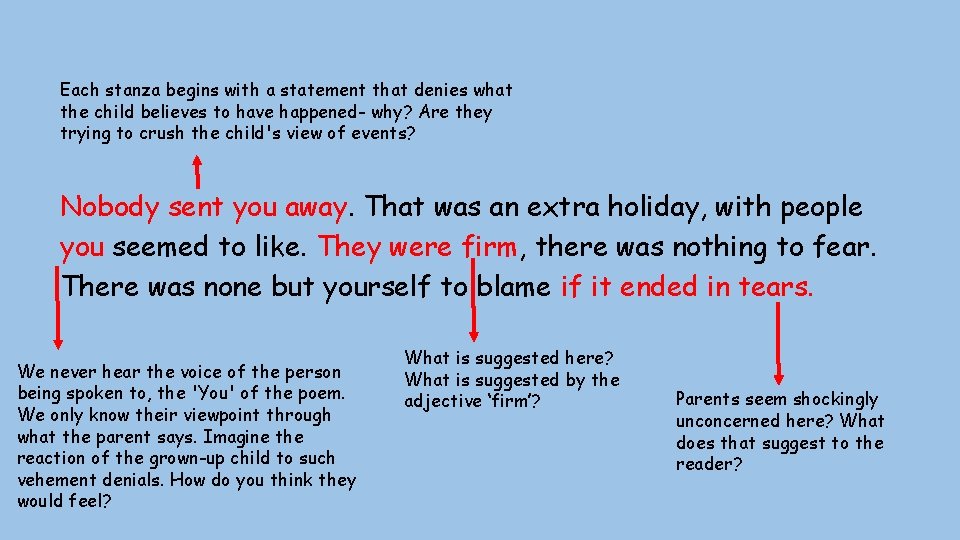
Each stanza begins with a statement that denies what the child believes to have happened- why? Are they trying to crush the child's view of events? Nobody sent you away. That was an extra holiday, with people you seemed to like. They were firm, there was nothing to fear. There was none but yourself to blame if it ended in tears. We never hear the voice of the person being spoken to, the 'You' of the poem. We only know their viewpoint through what the parent says. Imagine the reaction of the grown-up child to such vehement denials. How do you think they would feel? What is suggested here? What is suggested by the adjective ‘firm’? Parents seem shockingly unconcerned here? What does that suggest to the reader?
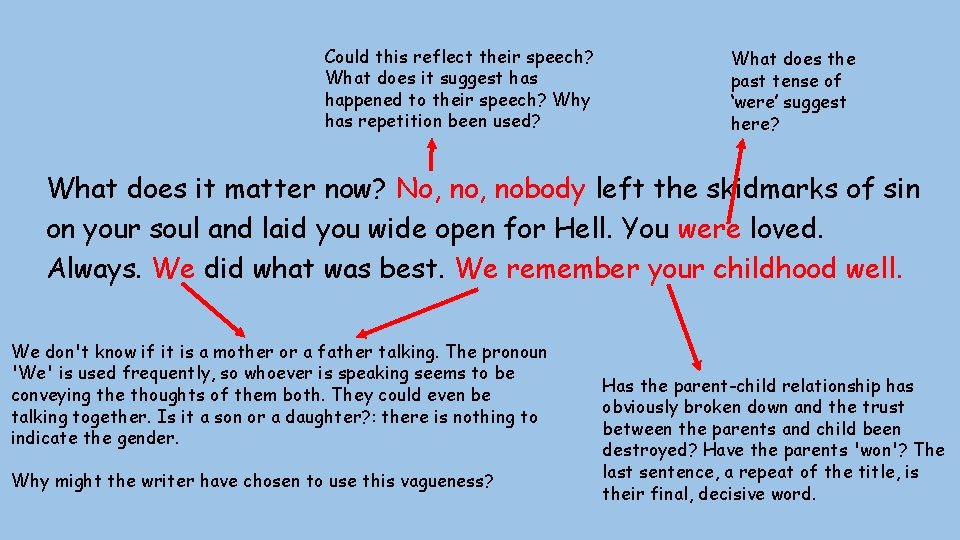
Could this reflect their speech? What does it suggest has happened to their speech? Why has repetition been used? What does the past tense of ‘were’ suggest here? What does it matter now? No, nobody left the skidmarks of sin on your soul and laid you wide open for Hell. You were loved. Always. We did what was best. We remember your childhood well. We don't know if it is a mother or a father talking. The pronoun 'We' is used frequently, so whoever is speaking seems to be conveying the thoughts of them both. They could even be talking together. Is it a son or a daughter? : there is nothing to indicate the gender. Why might the writer have chosen to use this vagueness? Has the parent-child relationship has obviously broken down and the trust between the parents and child been destroyed? Have the parents 'won'? The last sentence, a repeat of the title, is their final, decisive word.
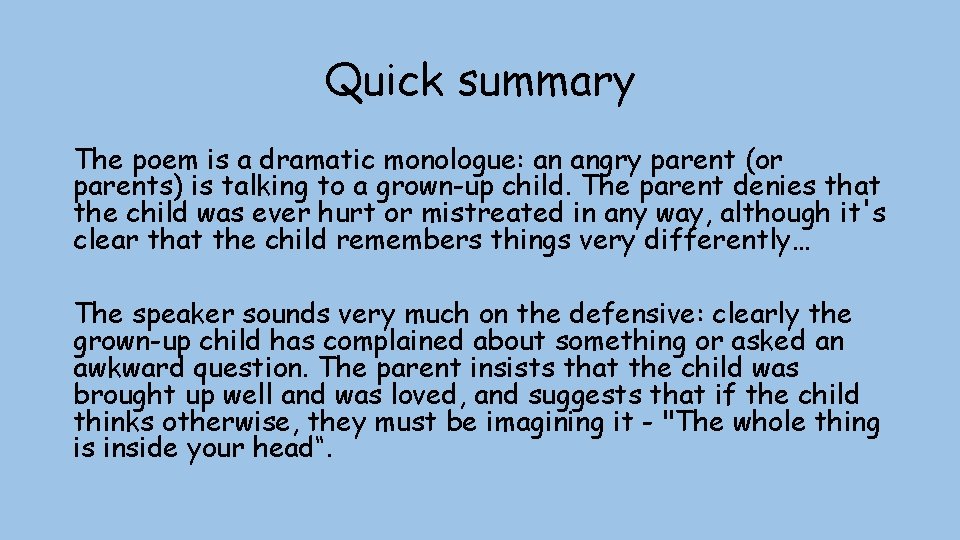
Quick summary The poem is a dramatic monologue: an angry parent (or parents) is talking to a grown-up child. The parent denies that the child was ever hurt or mistreated in any way, although it's clear that the child remembers things very differently… The speaker sounds very much on the defensive: clearly the grown-up child has complained about something or asked an awkward question. The parent insists that the child was brought up well and was loved, and suggests that if the child thinks otherwise, they must be imagining it - "The whole thing is inside your head“.
Structure and language Structure: • Dramatic monologue- shows the anger of the parent • 6 stanzas of 3 lines, each roughly the same length • Each stanza begins with a statement that denies what the child believes to have happened Language: • Written mainly in the past tense-> what is the effect of this? • Onomatopoeia-> what is the effect of this? • Violent verbs -> ‘hurt’, ‘argued’, ‘forced’, ‘begged’ -> why have they been used? • Metaphor-> why have they been used? • Repetition-> repetition of negative ‘nobody’ and ‘no’ -> what were Duffy’s intentions when using repetition?
Feelings and mood Find a line from the poem to match up to the following feelings and moods presented by Carol Ann Duffy: Sense of fear and danger -> Violence -> Guilt ->
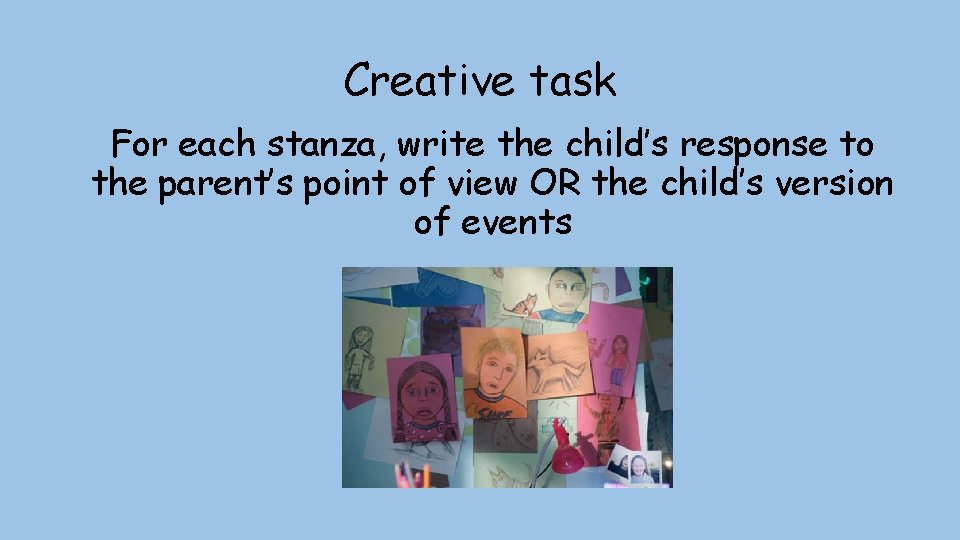
Creative task For each stanza, write the child’s response to the parent’s point of view OR the child’s version of events
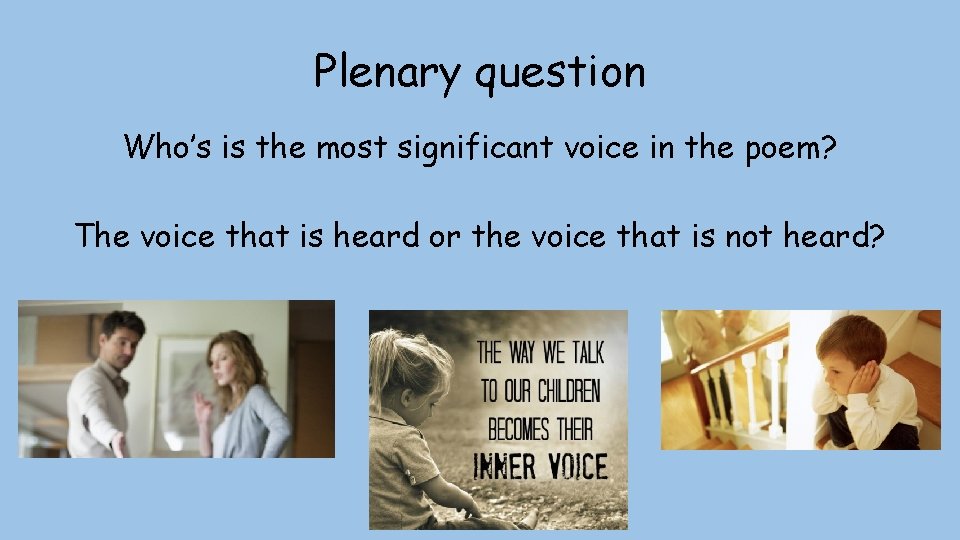
Plenary question Who’s is the most significant voice in the poem? The voice that is heard or the voice that is not heard?
- Slides: 16