
We know some misterious mutations which generate horroristic
- Slides: 24
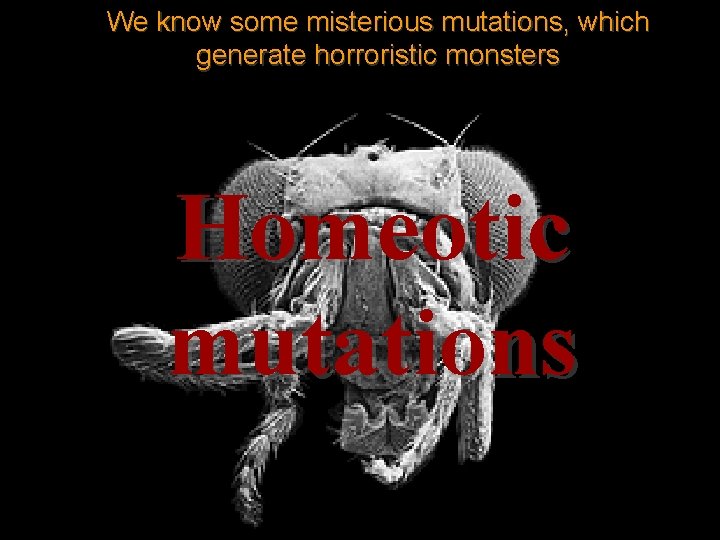
We know some misterious mutations, which generate horroristic monsters Homeotic mutations
The homeosis • Mutation, that causes transformation of an area of the body into another area • The mutated genes the so-called Homeobox genes, shortly Hox genes
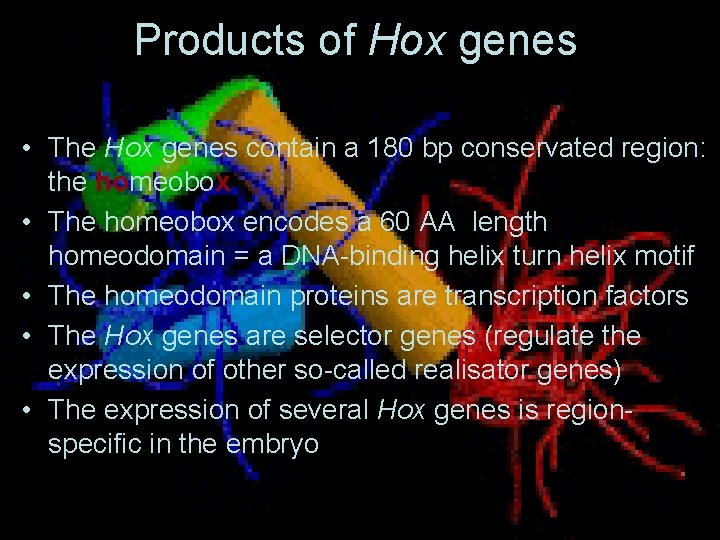
Products of Hox genes • The Hox genes contain a 180 bp conservated region: the homeobox • The homeobox encodes a 60 AA length homeodomain = a DNA-binding helix turn helix motif • The homeodomain proteins are transcription factors • The Hox genes are selector genes (regulate the expression of other so-called realisator genes) • The expression of several Hox genes is regionspecific in the embryo
• The homeotic transformations got known first in Drosophyla • The regulation of Hox expression and the role of Hox genes is well known in Drosophyla
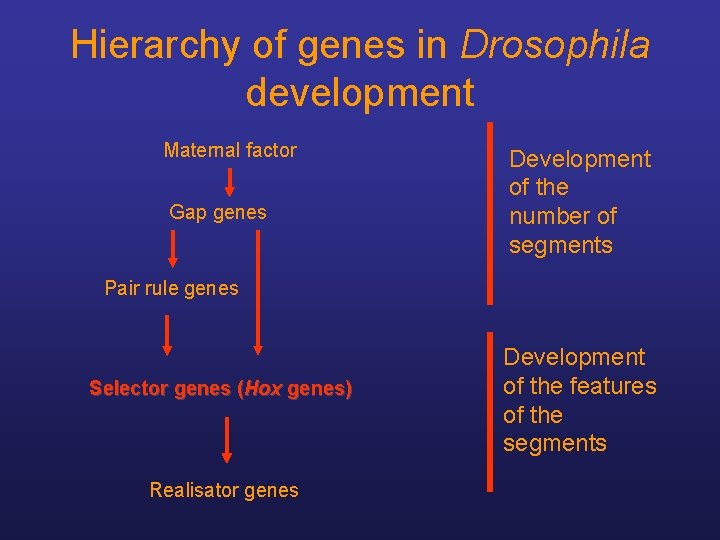
Hierarchy of genes in Drosophila development Maternal factor Gap genes Development of the number of segments Pair rule genes Selector genes (Hox genes) Realisator genes Development of the features of the segments
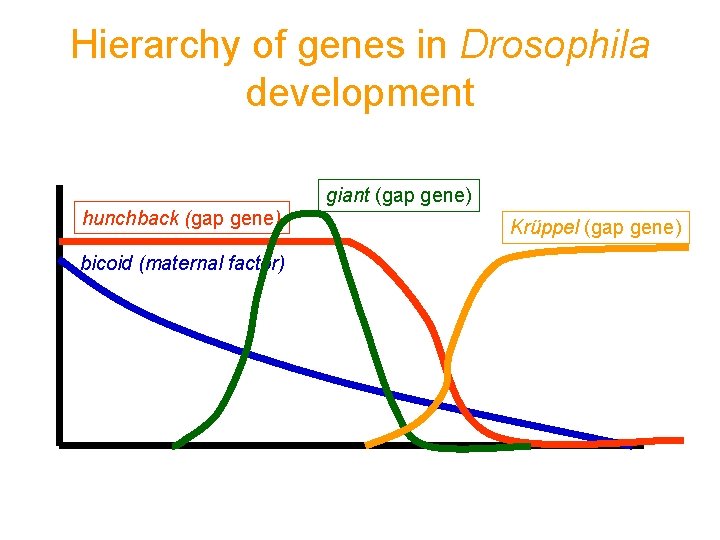
Hierarchy of genes in Drosophila development hunchback (gap gene) bicoid (maternal factor) giant (gap gene) Krüppel (gap gene)
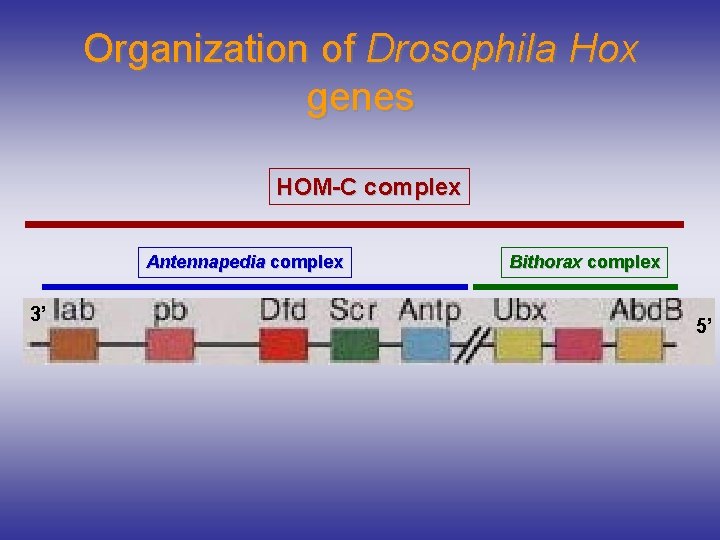
Organization of Drosophila Hox genes HOM-C complex Antennapedia complex 3’ Bithorax complex 5’
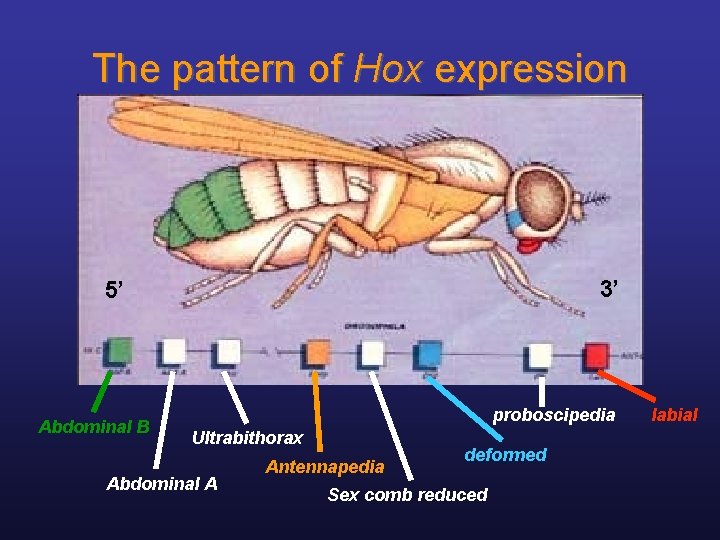
The pattern of Hox expression 3’ 5’ Abdominal B proboscipedia Ultrabithorax Abdominal A Antennapedia deformed Sex comb reduced labial
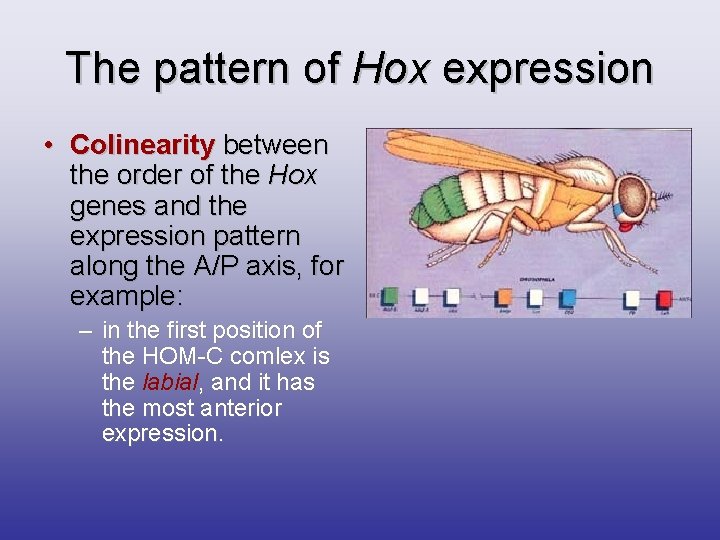
The pattern of Hox expression • Colinearity between the order of the Hox genes and the expression pattern along the A/P axis, for example: – in the first position of the HOM-C comlex is the labial, and it has the most anterior expression.
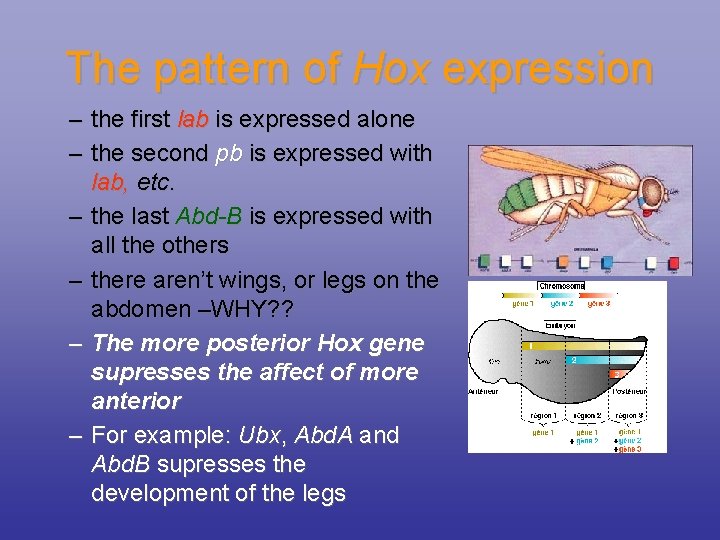
The pattern of Hox expression – the first lab is expressed alone – the second pb is expressed with lab, etc. – the last Abd-B is expressed with all the others – there aren’t wings, or legs on the abdomen –WHY? ? – The more posterior Hox gene supresses the affect of more anterior – For example: Ubx, Abd. A and Abd. B supresses the development of the legs
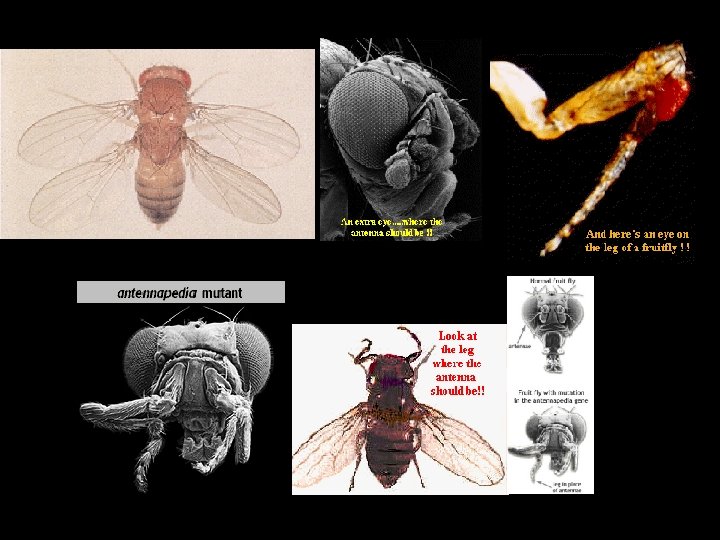
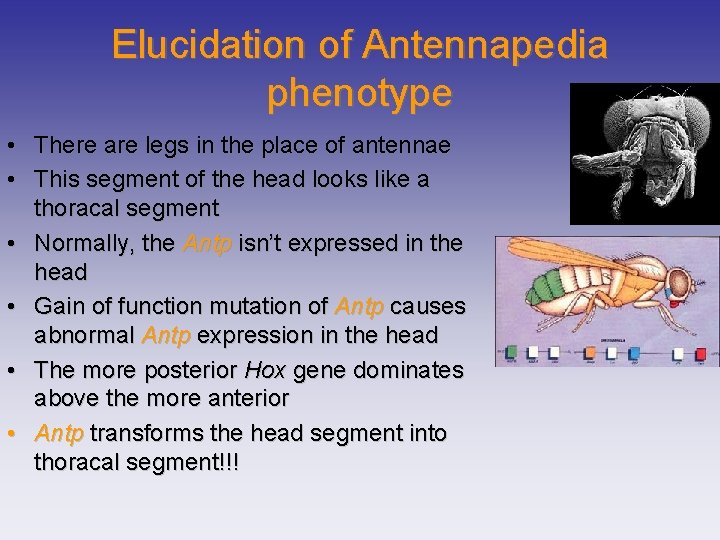
Elucidation of Antennapedia phenotype • There are legs in the place of antennae • This segment of the head looks like a thoracal segment • Normally, the Antp isn’t expressed in the head • Gain of function mutation of Antp causes abnormal Antp expression in the head • The more posterior Hox gene dominates above the more anterior • Antp transforms the head segment into thoracal segment!!!
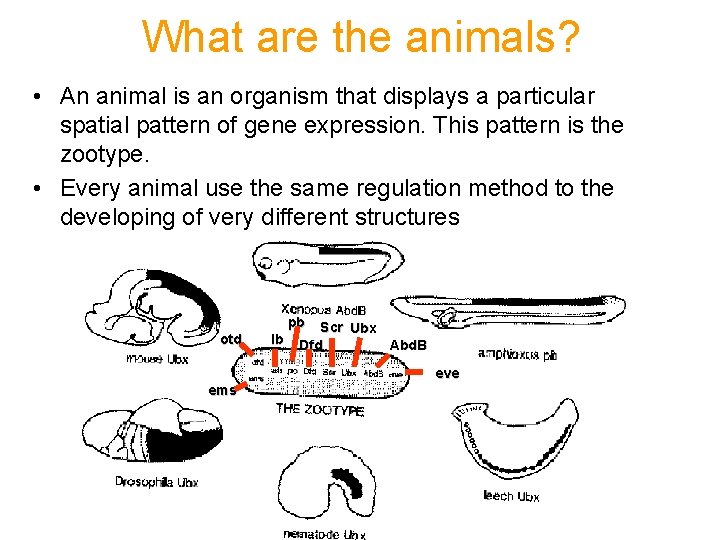
What are the animals? • An animal is an organism that displays a particular spatial pattern of gene expression. This pattern is the zootype. • Every animal use the same regulation method to the developing of very different structures pb otd lb Scr Ubx Dfd Abd. B eve ems
Mammalian Hox genes • In mice and human 4 Hox clusters have been found • Homology has been found between the Drosophyla and human Hox genes
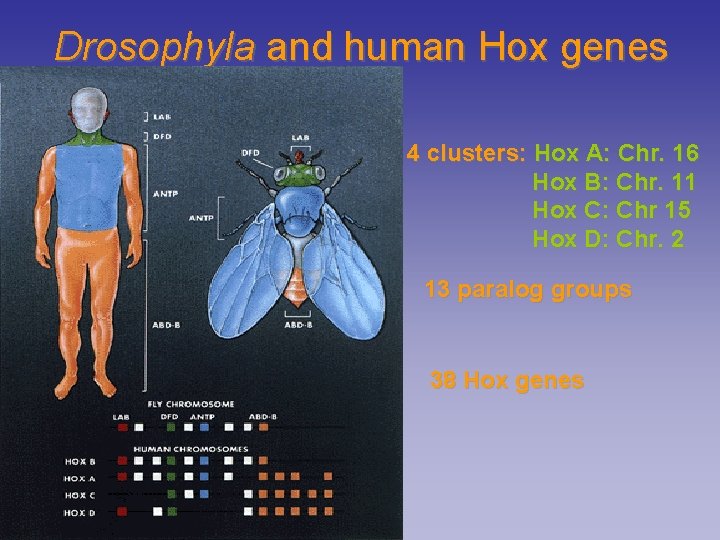
Drosophyla and human Hox genes 4 clusters: Hox A: Chr. 16 Hox B: Chr. 11 Hox C: Chr 15 Hox D: Chr. 2 13 paralog groups 38 Hox genes
The evolution of the Hox clusters Archetypal organisation of Amphioxus Hox gene cluster Jordi Garcia-Fernandez & Peter W. H. Holland Nature, 1994, vol. 370
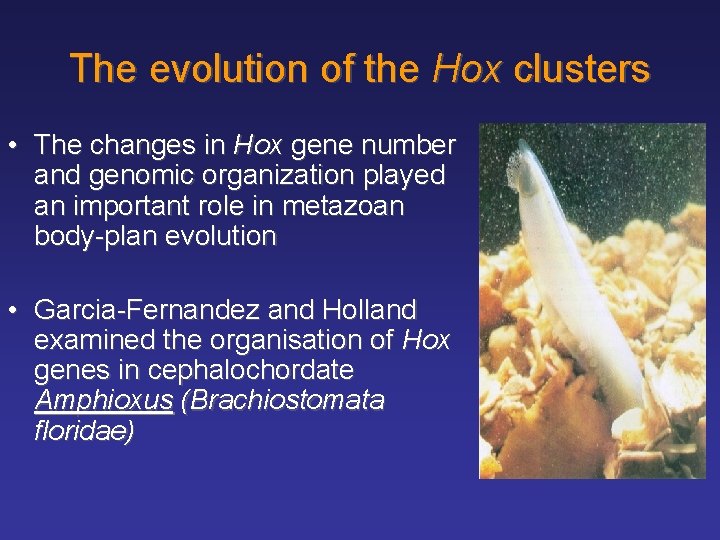
The evolution of the Hox clusters • The changes in Hox gene number and genomic organization played an important role in metazoan body-plan evolution • Garcia-Fernandez and Holland examined the organisation of Hox genes in cephalochordate Amphioxus (Brachiostomata floridae)
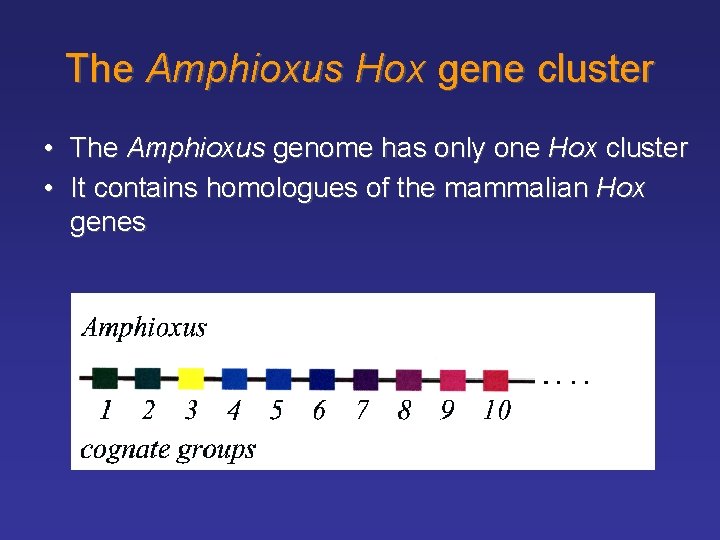
The Amphioxus Hox gene cluster • The Amphioxus genome has only one Hox cluster • It contains homologues of the mammalian Hox genes
Relationship of the Amphioxus and mammalian Hox genes • The sequence of homeobox of 10 Amphioxus Hox genes have been analised • It has been compared with members of mammalian paralog groups • Conservative amino-acid residues have been found
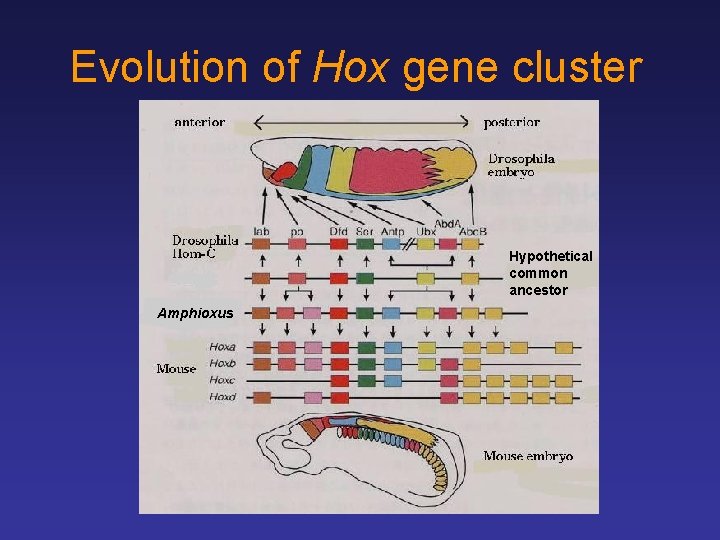
Evolution of Hox gene cluster Hypothetical common ancestor Amphioxus
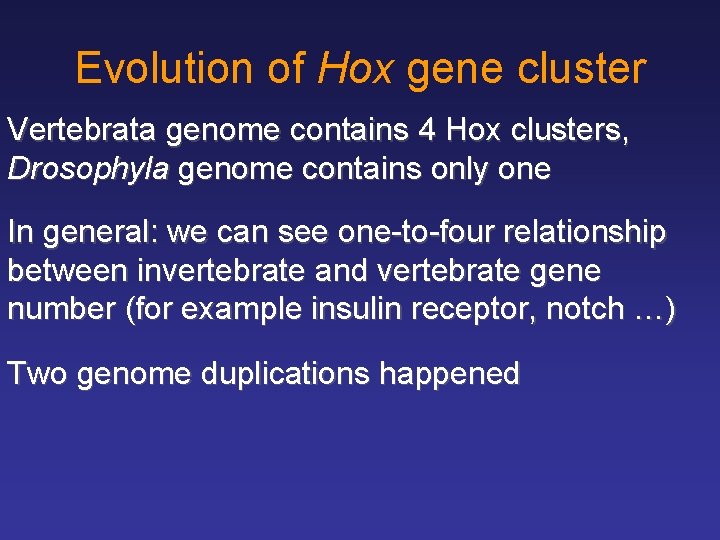
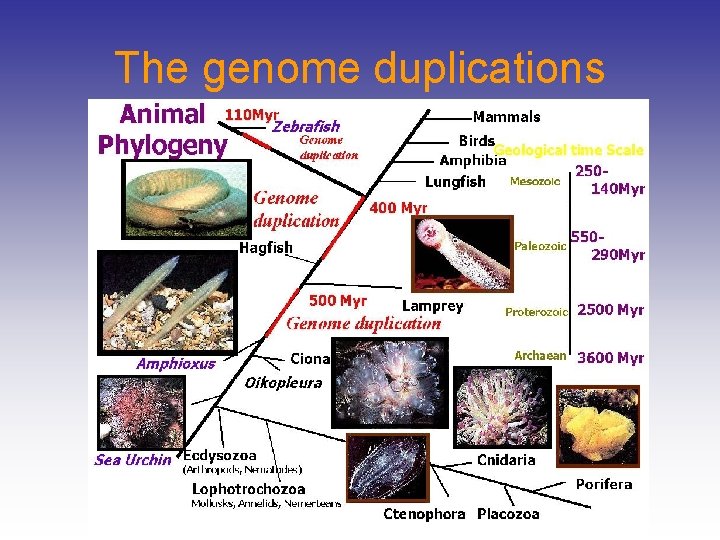
Evolution of Hox gene cluster Vertebrata genome contains 4 Hox clusters, Drosophyla genome contains only one In general: we can see one-to-four relationship between invertebrate and vertebrate gene number (for example insulin receptor, notch …) Two genome duplications happened
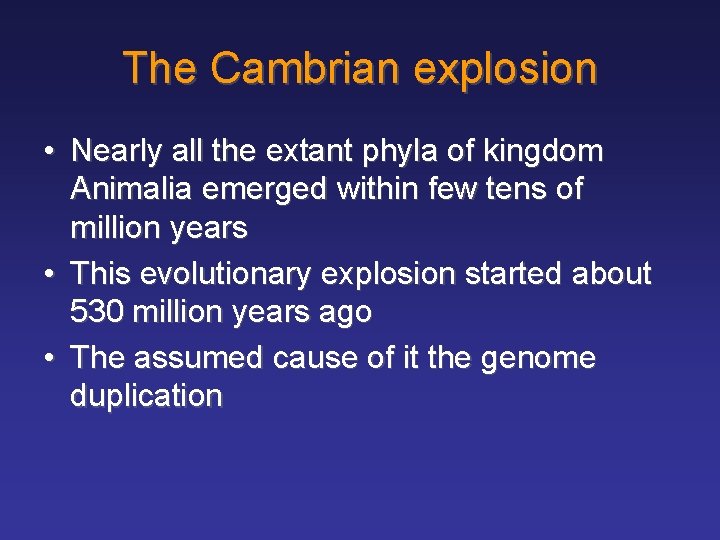
The Cambrian explosion • Nearly all the extant phyla of kingdom Animalia emerged within few tens of million years • This evolutionary explosion started about 530 million years ago • The assumed cause of it the genome duplication
The genome duplications
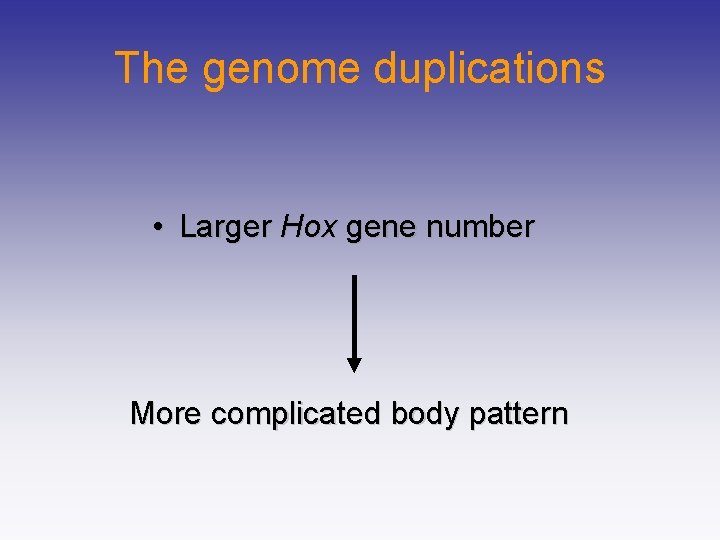
The genome duplications • Larger Hox gene number More complicated body pattern